GLM 4.7 is Available on Atlas Cloud

GLM 4.7 is Available on Atlas Cloud

GLM 4.7 is Available on Atlas Cloud

We’re excited to announce that GLM 4.7 is now available on Atlas Clouds.

GLM 4.7 is Z.ai's latest open‑source, chat‑optimized large language model, released on Hugging Face and designed for real‑world intelligent agents, reasoning, and coding scenarios. Atlas Clouds takes these open weights and delivers them as a fully managed, production‑grade API with clear, simple pricing:

  • $0.44 per 1M input tokens
  • $1.74 per 1M output tokens

This makes GLM 4.7 an attractive choice when you want near frontier‑level capability, but prefer open‑source models, predictable cost, and an OpenAI‑compatible interface.

Introduction of Z.ai's GLM 4.7

GLM 4.7 is a large‑scale language model provided by Z.ai. It follows the very popular GLM 4.6 release and is positioned as a general‑purpose backbone for real applications, not just benchmarks.

GLM 4.7 continues in this direction. It is:

  • Chat‑optimized: ships with an official chat template for consistent behavior
  • Open‑source: released under a permissive license suitable for commercial use
  • Ecosystem‑friendly: works with Transformers, vLLM, SGLang and other standard tooling out of the box

On Atlas Clouds, we expose GLM 4.7 through an OpenAI‑compatible API, making it easy to plug into existing agents and applications.


Key Features of GLM 4.7

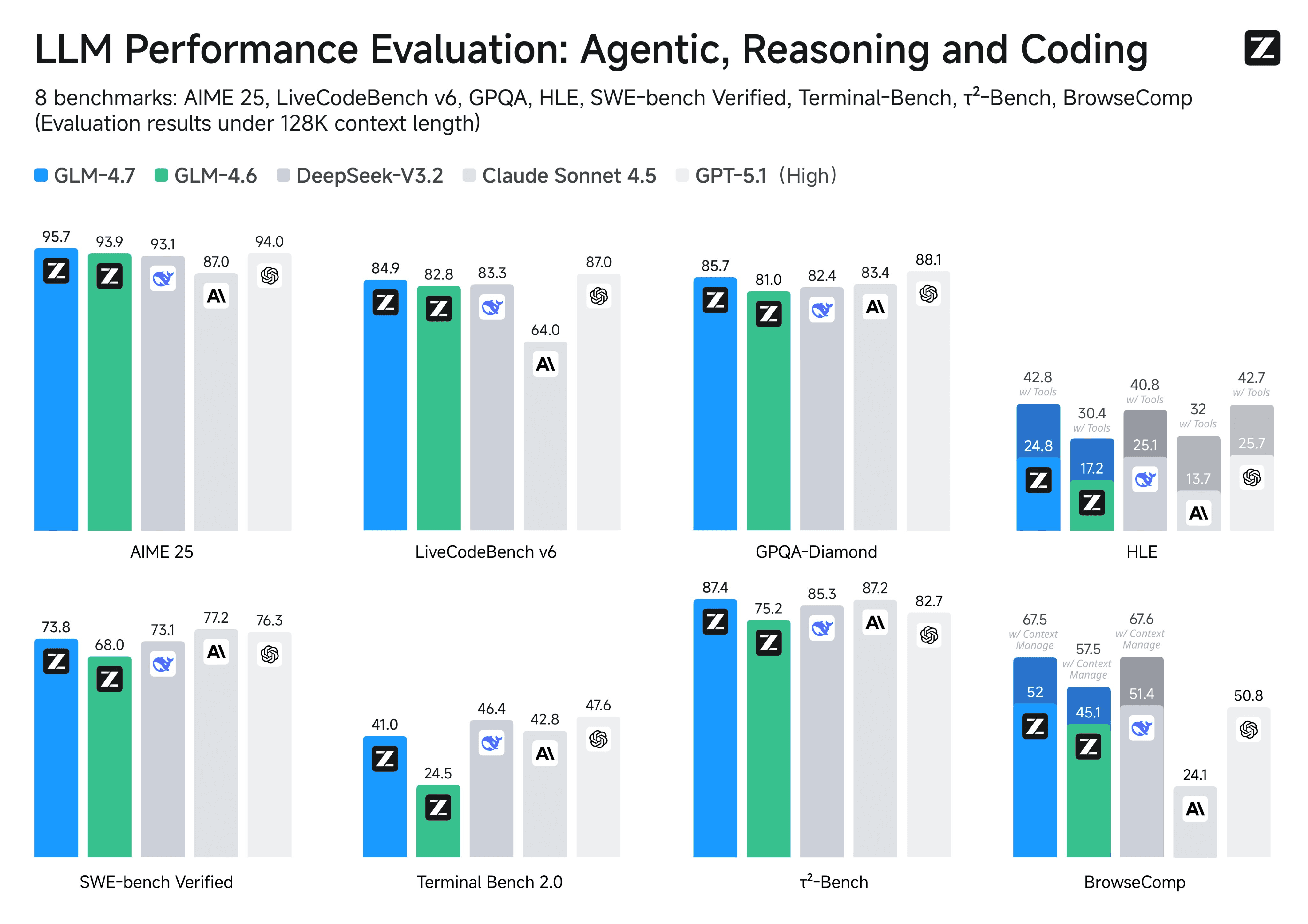
GLM‑4.7 is designed as your next‑generation coding and reasoning partner, with clear gains over GLM‑4.6 across real‑world benchmarks and agent scenarios. Below is a snapshot of its benchmark performance.

image (12).png

Core Coding Performance

GLM‑4.7 delivers substantial improvements in multilingual, agentic coding and terminal‑based workflows. On key benchmarks, it shows clear gains over GLM‑4.6:

  • SWE‑bench Verified: 73.8% (+5.8 points)
  • SWE‑bench Multilingual: 66.7% (+12.9 points)
  • Terminal Bench 2.0: 41.0% (+16.5 points)

Beyond the raw scores, GLM‑4.7 “thinks before acting” in complex coding agents, with noticeably stronger performance in mainstream frameworks such as Claude Code, Kilo Code, Cline, and Roo Code. This makes it particularly effective for long‑horizon software tasks where planning, tool use, and code edits need to stay consistent across many steps.

Vibe Coding & UI Quality

GLM‑4.7 also takes a big step forward in what the team calls “Vibe Coding”—the ability to produce code that not only works, but looks and feels right:

  • Generates cleaner, more modern webpages with better structure.
  • Produces better‑looking slides, with more accurate layout and sizing.

If you care about front‑end quality, design polish, or content presentation, GLM‑4.7’s improvements in UI generation are immediately visible.

Tool Use & Web Browsing

Tool‑using agents are another major focus. GLM‑4.7 shows significant gains in tool‑augmented workflows, with strong results on:

  • τ²‑Bench: 87.4 vs. 75.2 for GLM‑4.6
  • BrowseComp and BrowseComp‑Zh, including BrowseComp w/ Context Manage, where it handles multi‑step browsing and context management more robustly.

In practice, this means GLM‑4.7 is better at:

  • Calling tools in the right order.
  • Managing and reusing context when interacting with APIs or the web.
  • Handling complex, search‑heavy tasks that require both navigation and synthesis.

Complex Reasoning & Math

GLM‑4.7 also brings a substantial boost in mathematical and general reasoning. On the HLE (Humanity’s Last Exam) benchmark with tools, it reaches:

  • 42.8%, a +12.4 point improvement over GLM‑4.6.

Across a broader set of reasoning benchmarks (MMLU‑Pro, GPQA‑Diamond, AIME 2025, HMMT, IMOAnswerBench and more), GLM‑4.7 consistently lands in the same performance band as current top‑tier models, while remaining fully open‑source.

Better Everyday AI: Chat, Creativity, Role‑Play

Beyond coding and benchmarks, GLM‑4.7 also feels better in everyday use:

  • More natural, engaging chat.
  • Stronger creative writing and narrative control.
  • More consistent role‑play and persona handling.

Whether you’re building developer tools, agents, or user‑facing assistants, these qualitative improvements make GLM‑4.7 easier to integrate into real products.

Application of GLM 4.7

AI Coding and Intelligent Office Automation

Application Scenarios

  • Code generation, refactoring, and debugging (Python, Java, JavaScript, SQL)
  • Automatic documentation and code review
  • Intelligent office assistants: email drafting, report summarization, spreadsheet analysis
  • Workflow automation for internal enterprise systems

Case: A Spanish learning website made by GLM-4.7

Click here to see the output.


Translation and Cross-Language Intelligence

Application Scenarios

  • High-quality machine translation
  • Cross-language information retrieval and summarization
  • Multilingual customer support and knowledge base Q&A
  • Localization of technical documents and product content

Case: Translate Spanish into English

  • Before translation:

Puedo escribir los versos más tristes esta noche.

Escribir, por ejemplo: “La noche está estrellada, y tiritan, azules, los astros, a lo lejos.”

El viento de la noche gira en el cielo y canta.

Puedo escribir los versos más tristes esta noche.

  • After translation:

I can write the saddest lines tonight.

Write, for example: “The night is starry, and the stars shiver, blue, in the distance.”

The night wind revolves in the sky and sings.

I can write the saddest lines tonight.


Content Creation and Virtual Characters

Application Scenarios

  • Blog writing, marketing copy, and social media content
  • Scriptwriting for videos, games, and interactive stories
  • Virtual characters for customer service, education, and entertainment
  • Personalized conversational agents with consistent personalities

Case: Write a X post to promote GLM models

What would you create if you had no limits? 🌌

With GLM-4, the only limit is your imagination.

We’ve rebuilt the engine from the ground up to be smarter, faster, and more intuitive than ever before. Whether you're building a startup or writing a symphony, I'm ready to help you make it real.

Let's build something extraordinary.

👉 [Link]

#GLM4 #ArtificialIntelligence #Innovation #Creativity #NewEra


Intelligent Search and Deep Research

Application Scenarios

  • Semantic search across large document collections
  • Research assistance: literature review, comparison analysis, insight extraction
  • Enterprise knowledge management and internal Q&A systems
  • Decision support through multi-source reasoning

Case: Conduct a competitive comparative analysis of Claude Opus 4.5 and Gemini 3 Pro, predict their future development, and present the results as an allegorical story of fewer than 100 words that illustrates their comparison and evolution.

The Mason built towers of pure logic, deep but isolated. The Weaver spun sight and sound into vast tapestries, connected but shallow. The Mason solved the puzzle; the Weaver saw the path.

They merged. The Mason framed the Weaver’s threads with structure; the Weaver gave the Mason’s tower windows. They became a new mind—deep as the bedrock and wide as the sky—perfectly structured yet infinitely perceptive, evolving beyond competition to master both the depth of thought and the breadth of the world.


Conclusion

GLM 4.7 is positioned as a balanced, general-purpose language model aimed at real-world applicability rather than narrowly optimized benchmarks. GLM 4.7 fits scenarios where stable language performance, cross-language support, and scalable deployment are key considerations. As more technical details become available, deeper evaluations can further clarify its role within the evolving large language model landscape.

How to use GLM-4.7 on Atlas Cloud?

Atlas Cloud lets you use GLM 4.7 first in a playground, then via a single API.

Method 1: Use directly in Atlas Cloud playground

Try GLM 4.7 in the playground.

Method 2: Access via API

Step 1: Get your API key

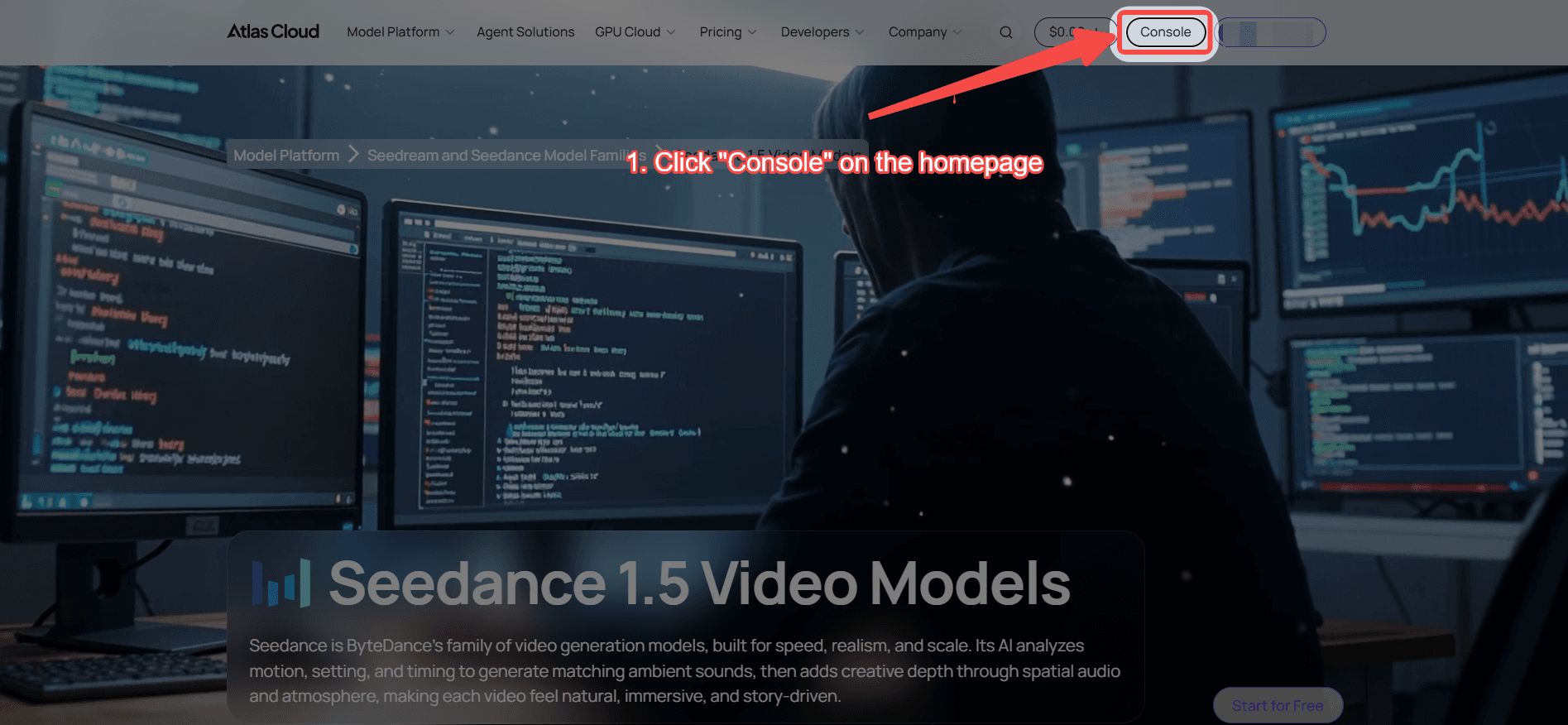
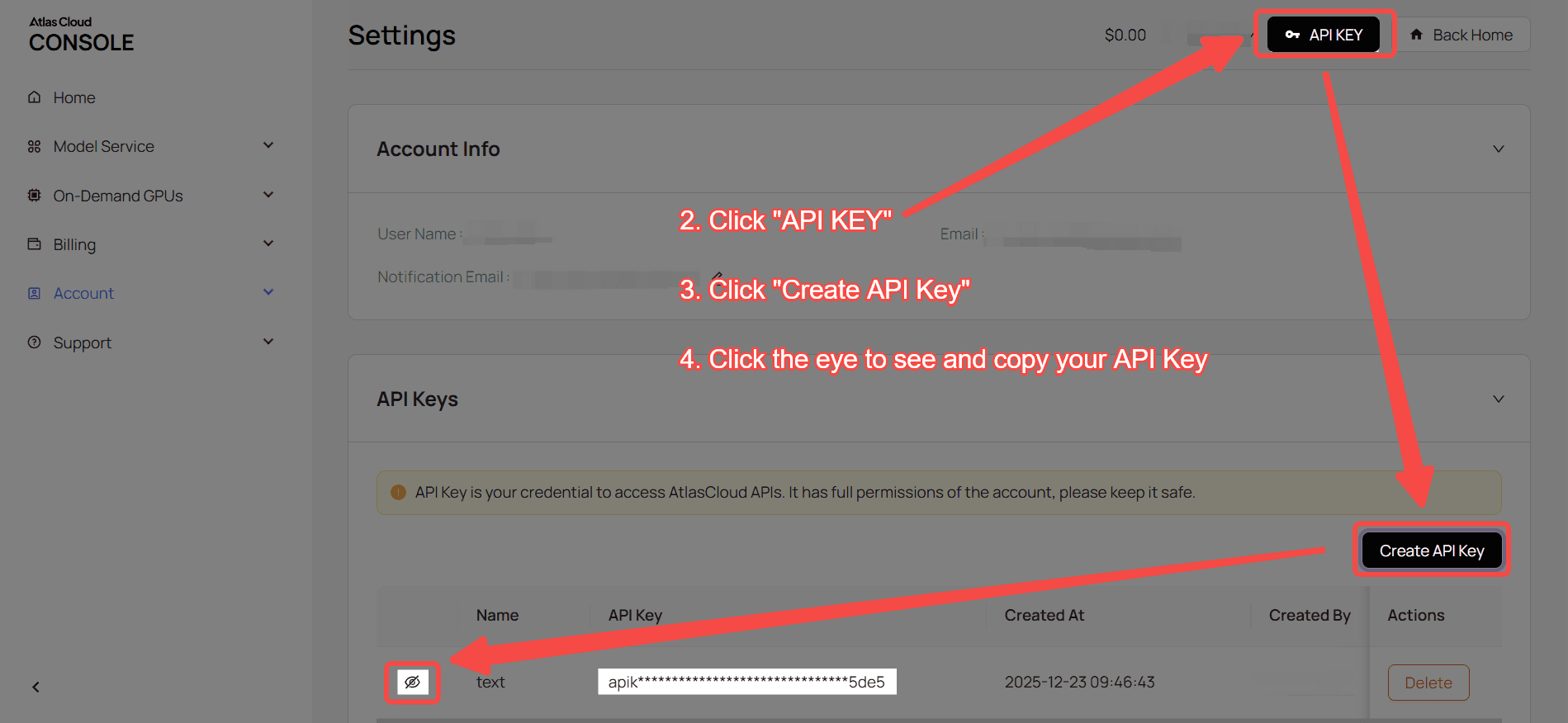
Create an API key in your console and copy it for later use.

image (13).png

image (14).png

Step 2: Check the API documentation

Review the endpoint, request parameters, and authentication method in our API docs.

Step 3: Make your first request (Python example)

Example: send a request with GLM 4.7.

import requests

url = "https://api.atlascloud.ai/v1/chat/completions"
headers = {
    "Content-Type": "application/json",
    "Authorization": "Bearer $ATLASCLOUD_API_KEY"
}
data = {
    "model": "zai-org/glm-4.7",
    "messages": [
        {
            "role": "user",
            "content": "what is difference between http and https"
        }
    ],
    "max_tokens": 65536,
    "temperature": 1,
    "stream": True
}

response = requests.post(url, headers=headers, json=data)
print(response.json())
← 返回博客
300+ 模型,即刻开启,

尽在 Atlas Cloud。