MiniMax M2.1 출시: 실제 작업을 위한 멀티 언어 프로그래밍 발전
Atlas Cloud에서 MiniMax M2.1을 선보이게 된 것을 자랑스럽게 생각합니다. 이 모델은 우수한 멀티 언어 지원과 에이전트 기능을 갖춘 복잡한 실제 프로그래밍 작업을 처리하도록 설계되었습니다.
이 서비스 구조는 MiniMax M2.1을 오픈 소스 모델의 제어, 예측 가능한 비용, OpenAI 호환 인터페이스의 용이성과 결합된 최전선 수준의 성능을 요구하는 개발자에게 최적의 솔루션으로 자리매김합니다.
주요 특징
포괄적인 멀티 언어 엔지니어링
이 모델은 Python을 넘어 소프트웨어 개발 수명 주기 전반을 체계적으로 지원하도록 프로그래밍 숙련도를 확장합니다.
- 언어 다양성: Rust, Java, Golang, C++, Kotlin, Objective-C, TypeScript 및 JavaScript에서 향상된 기능을 지원합니다.
- 복합 지침: 시스템은 정확한 논리 실행을 위해 복잡한 "복합 지침 제약 조건"을 준수합니다.
- 일반 쓰기: 기술 문서 및 일상 대화에 대한 상세하고 구조화된 응답을 제공합니다.
이러한 광범위한 기술 범위는 로우 레벨 드라이버부터 애플리케이션 레이어까지 일관성을 요구하는 시스템 아키텍트에게 이점을 제공하며, 다국어 작업에서 Claude Sonnet 4.5의 성능에 효과적으로 필적합니다.
최적화된 효율성 및 도구 통합
MiniMax M2.1은 최신 개발 환경 및 에이전트 프레임워크와 원활하게 통합하면서 작동 속도를 향상시킵니다.
- 리소스 관리: 간결한 사고 체인을 통해 토큰 소비를 줄이고 속도를 향상시킵니다.
- 프레임워크 지원: Claude Code, Droid, Cline 및 Roo Code와 같은 도구와 안정적으로 작동합니다.
- 컨텍스트 처리: Skill.md, agent.md 및 Slash Commands를 포함한 컨텍스트 메커니즘을 관리합니다. 이러한 개선 사항은 이전 반복보다 더 빠르고 비용 효율적인 상호 작용이 필요한 에이전트 기반 워크플로를 사용하는 개발자에게 이 모델을 이상적으로 만듭니다.
고급 시각 및 모바일 기능
이 모델은 디자인 이해도와 네이티브 모바일 코딩 기술을 향상시켜 업계의 격차를 해소합니다.
- 모바일 플랫폼: 네이티브 Android 및 iOS 개발을 위한 기능을 강화합니다.
- 미적 논리: 시스템은 복잡한 웹 상호 작용을 구축하기 위한 디자인 원칙을 이해합니다.
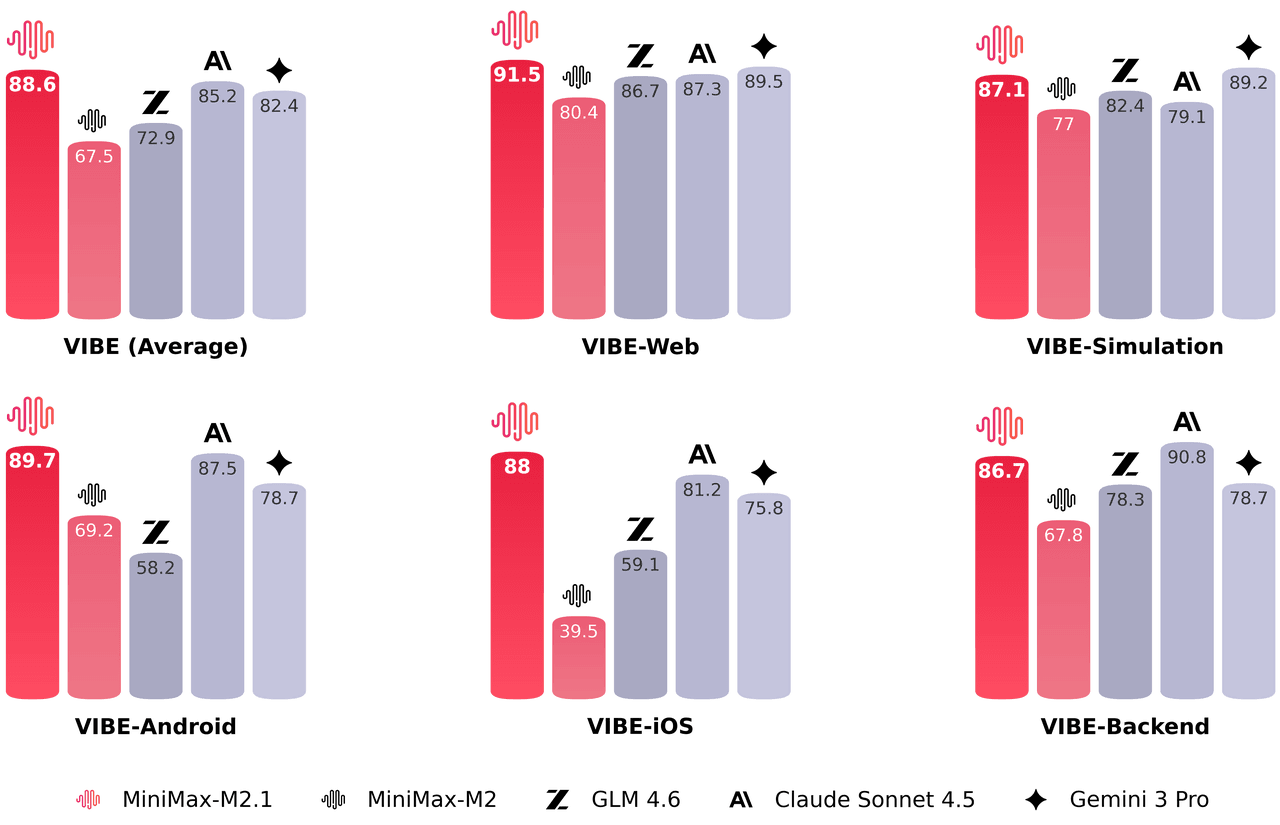
- 시뮬레이션: 3D 과학 장면 시뮬레이션 및 고품질 시각화를 처리합니다. 프런트엔드 엔지니어는 이러한 기능을 활용하여 VIBE-Web 및 VIBE-Android와 같은 벤치마크에서 높은 점수를 받는 기능적 애플리케이션을 생성할 수 있습니다.
실제 시나리오에서의 응용
대규모 시스템 유지 보수 및 개발
기업 팀은 이 모델을 활용하여 복잡한 레거시 코드베이스와 새로운 인프라 프로젝트를 관리할 수 있습니다.
- 멀티 언어 스택: 백엔드 로직을 위해 Java, Go 및 C++를 혼합하는 환경에서 지원합니다.
- 코드 검토: 시스템은 엄격한 품질 보증을 위해 검토를 수행하고 테스트 케이스를 생성합니다. 이 응용 프로그램은 소프트웨어 엔지니어링 리더보드에서 표준 M2 모델보다 뛰어난 안정적인 지원이 필요한 백엔드 엔지니어에게 적합합니다.
사례: 멀티 언어로 코드 재작성
plaintext1#Prompt: Java로 재작성하고 C++로 재작성하세요: 2#!/usr/bin/python 3# -*- coding: UTF-8 -*- 4 5for i in range(1,5): 6 for j in range(1,5): 7 for k in range(1,5): 8 if( i != k ) and (i != j) and (j != k): 9 print (i,j,k) 10 11 #output: 12 #Cpp 13 #include <iostream> 14int main() { 15 for (int i = 1; i < 5; i++) { 16 for (int j = 1; j < 5; j++) { 17 for (int k = 1; k < 5; k++) { 18 if (i != k && i != j && j != k) { 19 std::cout << i << " " << j << " " << k << std::endl; 20 } 21 } 22 } 23 } 24 return 0; 25} 26 #Java 27 public class PermutationGenerator { 28 public static void main(String[] args) { 29 for (int i = 1; i < 5; i++) { 30 for (int j = 1; j < 5; j++) { 31 for (int k = 1; k < 5; k++) { 32 if (i != k && i != j && j != k) { 33 System.out.println(i + " " + j + " " + k); 34 } 35 } 36 } 37 } 38 } 39}
엔드 투 엔드 애플리케이션 구축
개발자는 시각적 품질과 상호 작용에 중점을 두고 처음부터 완전한 애플리케이션을 구축할 수 있습니다.
- 대화형 UI: 최신 웹 플랫폼을 위한 복잡한 프런트엔드 상호 작용을 구축합니다.
- 모바일 배포: 모델은 특정 Android 및 iOS 요구 사항에 대한 배포 가능한 코드를 생성합니다. 이 시나리오는 높은 미적 기준을 가진 "제로 투 원" 제품 출시를 목표로 하는 독립 개발자 및 스타트업에 도움이 됩니다.
지속적인 에이전트 기반 워크플로
이 모델은 자동화된 코딩 에이전트 및 지속적 통합 도구를 위한 안정적인 백본 역할을 합니다.
- 지침 따르기: 컨텍스트를 잃지 않고 장기 작업에서 안정성을 유지합니다.
- 도구 실행: 시스템은 Roo Code 또는 BlackBox와 같은 스캐폴딩 내에서 명령을 실행합니다. 이 유틸리티는 복잡한 작업 실행에서 Claude Opus 4.5와 유사한 안정성을 추구하는 자동화 엔지니어에게 상당한 가치를 제공합니다.
사례: Atlas Cloud를 사용한 바이브 코딩 예시 프롬프트
plaintext1"openai SDK를 사용하되 AtlasCloud의 API 엔드포인트(https://api.atlascloud.ai/v1)를 가리키도록 구성된 Python 스크립트를 작성하세요. 이 스크립트는 '네온 색상으로 팝하게 만들어줘'와 같은 높은 수준의 추상적 설명을 입력받아 MiniMax-M2.1 모델을 사용하여 이 바이브를 해석하고 해당 CSS 및 HTML 코드를 생성하는 vibe_to_code(user_vibe) 함수를 정의해야 합니다."
결론
MiniMax M2.1은 광범위한 언어 지원과 효율적인 처리를 결합하여 실제 프로그래밍 문제를 해결합니다. 사용자에게 이러한 고급 기능을 활용하고 Atlas Cloud 플레이그라운드에서 직접 향상된 효율성을 경험해 보시기 바랍니다.
Atlas Cloud에서 MiniMax M2.1을 사용하는 방법?
Atlas Cloud를 사용하면 먼저 플레이그라운드에서 MiniMax M2.1을 사용한 다음 단일 API를 통해 사용할 수 있습니다.
방법 1: Atlas Cloud 플레이그라운드에서 직접 사용
플레이그라운드에서 MiniMax M2.1을 시도해 보세요.
방법 2: API를 통해 액세스
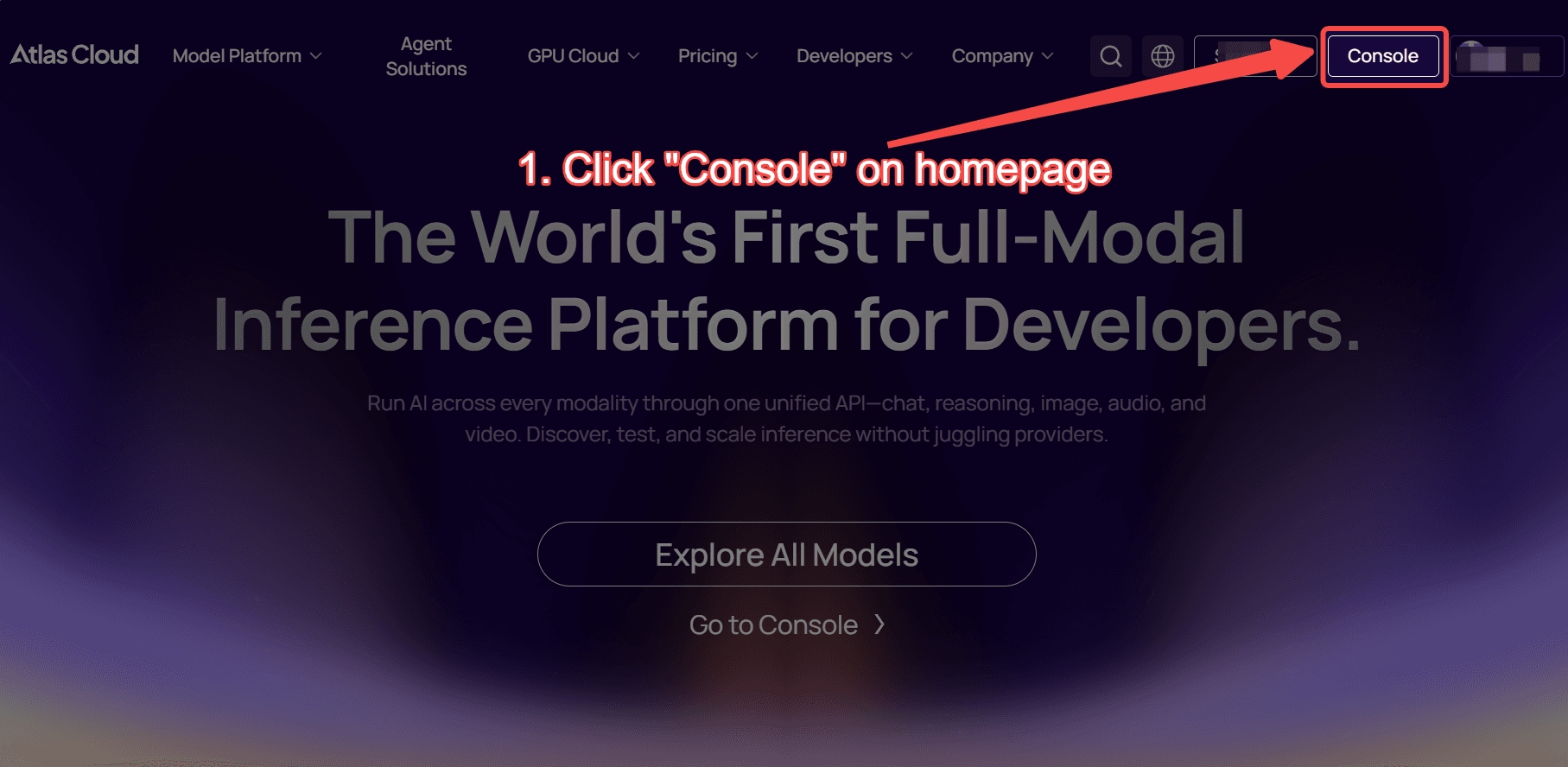
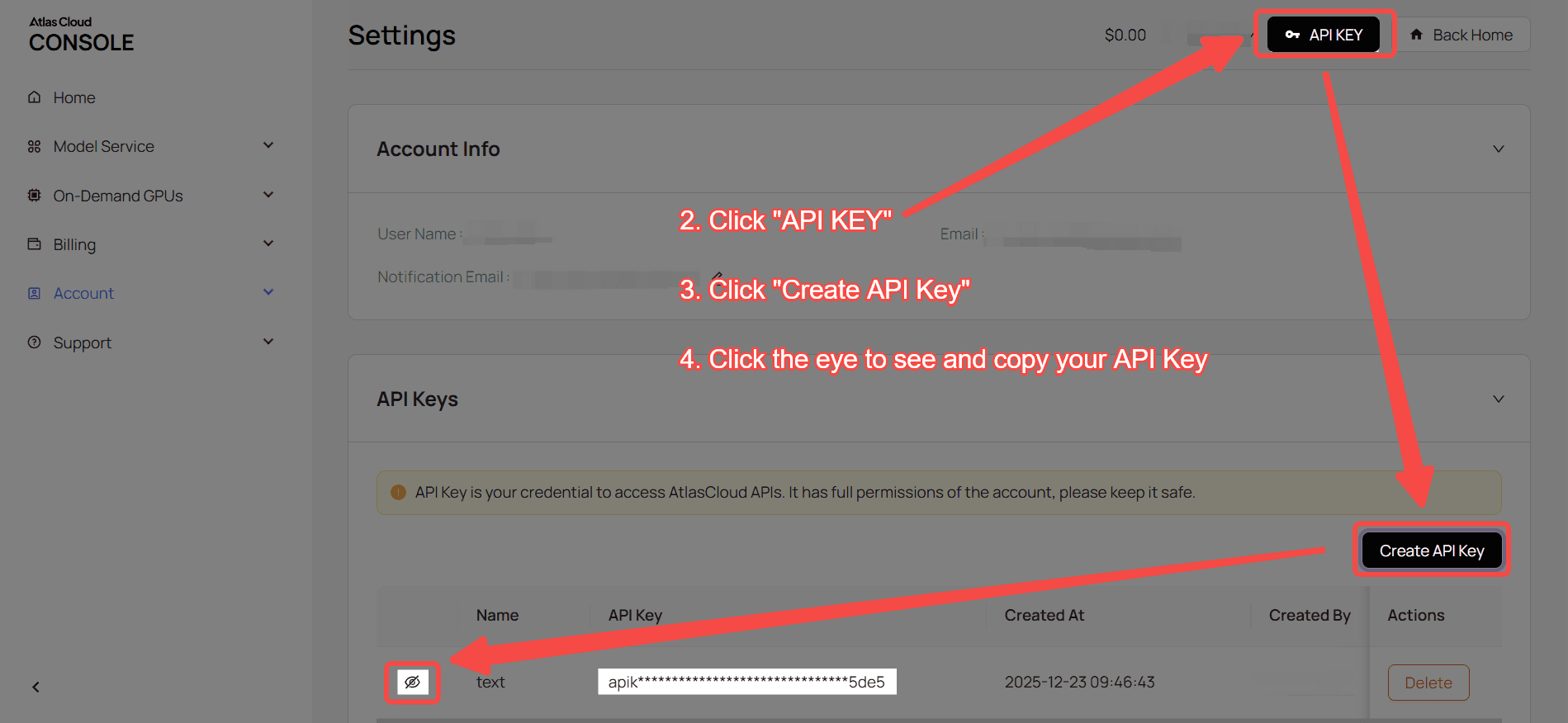
1단계: API 키 받기
콘솔에서 API 키를 생성하고 나중에 사용할 수 있도록 복사하세요.
2단계: API 문서 확인
API 문서에서 엔드포인트, 요청 매개변수 및 인증 방법을 검토하세요.
3단계: 첫 번째 요청 보내기(Python 예시)
예시: MiniMax M2.1으로 요청 보내기.
plaintext1import requests 2 3url = "https://api.atlascloud.ai/v1/chat/completions" 4headers = { 5 "Content-Type": "application/json", 6 "Authorization": "Bearer $ATLASCLOUD_API_KEY" 7} 8data = { 9 "model": "minimaxai/minimax-m2.1", 10 "messages": [ 11 { 12 "role": "user", 13 "content": "what is difference between http and https" 14 } 15 ], 16 "max_tokens": 65536, 17 "temperature": 1, 18 "stream": True 19} 20 21response = requests.post(url, headers=headers, json=data) 22print(response.json())
FAQ
MiniMax M2.1은 이전 M2 모델에 비해 어떻게 개선되었나요? MiniMax M2.1은 Python 최적화를 넘어 Rust, Java, Go, C++와 같은 언어에서 체계적인 개선을 제공합니다. 또한 네이티브 모바일 개발(iOS/Android)을 위한 강력한 기능을 도입하고 토큰 소비 및 지연 시간을 줄이기 위해 더 간결한 응답을 제공합니다.
이 모델이 "바이브 코딩" 또는 프런트엔드 작업에 적합한 이유는 무엇인가요? 이 모델은 디자인 이해도와 미적 표현에 특별한 초점을 맞춰 훈련되었습니다. 웹 및 앱 시나리오를 위한 복잡한 대화형 논리를 생성하는 데 뛰어나며, 텍스트 정확성뿐만 아니라 시각적 및 대화형 품질을 평가하는 VIBE 벤치마크에서 높은 점수를 받았습니다.
이 모델은 Claude Sonnet 4.5와 같은 경쟁사와 비교했을 때 어떤가요? 소프트웨어 엔지니어링 벤치마크에서 MiniMax M2.1은 다국어 시나리오와 코드 검토 및 테스트 케이스 생성과 같은 특정 도메인에서 Claude Sonnet 4.5를 능가합니다. Claude Opus 4.5의 성능에 근접하면서도 더 빠른 응답 속도를 제공합니다.





