The online shopping world is going through a fast and major shift. The days of the "still storefront"—where you just show a few photos and some text—are over. Right now, the shops that get the most attention are the ones using video. But making professional videos for every product used to be a huge problem. It usually meant paying for pricey studios, waiting weeks for edits, and being stuck with videos you couldn't easily change.
Meet Seedance 2.0. This is more than a simple creative app. It is a powerful Video API built for automated video work. By handling the heavy lifting for online shops, Seedance 2.0 lets brands manage video like they manage software. It is fast, easy to grow, and guided by data.
Why Static Assets are Failing Modern E-commerce
The online shopping world is busier than ever. According to the latest data from Wyzowl, 85% of people now say that watching a brand's video was the reason they decided to buy a product. On the flip side, basic text-only pages are seeing a rise in "bounce-and-forget" habits. Visitors often leave these sites quickly and don't bother to return.
The Problem: The High Cost of Stagnation
Traditional video production is linear. You hire a crew, film a product, and edit the footage. This model fails in three specific areas:
- High Bounce Rates: High return rates and "expectation gaps" result from static images’ fail to convey a product's physical reality.
- Steep Costs: The cost for producing an excellent 15-second ad can range from 1,000to1,000 to 1,000to5,000.
- No Personalization: It is impossible to film 10,000 different videos by hand. Trying to make a unique version for every customer group just cannot be done manually.
The Solution: Dynamic Commerce
The industry is moving toward "Dynamic Commerce." This is a framework where video isn't pre-recorded; it is generated on-demand based on user behavior, localized language, and trending aesthetics. Scaling AI video is the only way to achieve this level of granularity without breaking the bank.
| Feature | Traditional Video Production | Seedance 2.0 AI Video Generation |
| Production Time | Days to Weeks | Seconds to Minutes |
| Cost per Asset | High | Low |
| Scalability | Linear (Limited by human hours) | Exponential (Cloud-based API) |
| Revision Speed | Requires re-shooting | Instant API parameter adjustment |
| Personalization | Near Zero | High (Data-driven generation) |
Core Features: What Sets Seedance 2.0 Apart?
Seedance 2.0 was built from the ground up as a Developer API for video. It doesn't just create "cool clips"; it creates commercially viable assets that pass the "eye test" of the most discerning consumers.
Ultra-Realistic Motion Synthesis
One of the biggest hurdles in AI video generation API technology has been the "uncanny valley"—that slight glitchiness that makes objects look like they are melting. Seedance 2.0 utilizes a proprietary motion synthesis engine that understands physical weight and light interaction. When a product moves in a Seedance-generated video, the shadows, reflections on metallic surfaces, and fluid dynamics are rendered with 99% physical accuracy. This is essential for 4K product ads where detail is everything.
Sub-Second Latency
In programmatic video, speed is a core feature, not an extra perk. If a brand needs a custom ad to appear the second a user clicks a "Special Offer" link, the API has to be fast. Seedance 2.0 is built to handle these requests in less than a second. This ensures that creating massive amounts of content never slows down the user's experience.
Multi-Modal Inputs
Seedance 2.0 isn't limited to text-to-video. It supports a wide array of inputs:
- 2D Images to 3D Motion: Turn a flat PNG of a sneaker into a 360-degree cinematic rotation.
- Raw CAD Data: For manufacturers, the API can ingest technical designs to create "exploded view" assembly videos.
- Text-Based Scene Scripting: Use natural language to define camera angles, lighting moods, e.g., "Golden hour," "Cyberpunk neon", and pacing.
Engineering for Scale: The Developer’s Perspective
For CTOs and Product Managers, the value of Seedance 2.0 lies in its ability to handle batch video processing at an enterprise level. It is built to be integrated into existing CMS and PIM (Product Information Management) systems.
- 4K Video Rendering and Quality Control: While many AI tools struggle to move past 720p, Seedance 2.0 offers native 4K video rendering. This ensures that the content is suitable not just for mobile social feeds, but for high-resolution desktop storefronts and even digital out-of-home (DOOH) advertising.
- The Programmatic Workflow: The API allows for "headless" video creation. Imagine an e-commerce store with 50,000 SKUs. Manually creating a video for each is impossible. With Seedance 2.0, a simple script can iterate through the product database and generate 50,000 unique 4K product ads in a single afternoon.
Seedance 2.0 Performance Matrix
To understand why Seedance 2.0 is the industry standard for scaling AI video, one must look at the raw data. In 2026, commerce is defined by "The 2-Second Rule": if an asset isn't ready or doesn't grab attention in two seconds, the sale is lost.
| Feature | Seedance 2.0 Capability | Commerce Impact |
| Rendering Speed | < 2s for 15s HD video | Real-time dynamic ads that adapt to user behavior instantly. |
| Integration | RESTful API / Python SDK | Seamless Shopify/WordPress/Amazon sync for scalable content production. |
| Cost Efficiency | ~$0.05 per generated minute | 90% cheaper than traditional studio shoots, optimizing marketing spend. |
| Customization | Full lighting & texture control | Higher brand consistency; 4K product ads look like they were shot on-site. |
| Resolution | Up to 2160p (4K) | Professional-grade visuals suitable for desktop and large-screen displays. |
| Concurrency | 10–20 Requests Per Minute | High-volume batch video processing for massive product catalogs. |
Use Cases: From Humanoid Robotics to Fast Fashion
The Developer API for video is very flexible. It works across many different industries and offers custom solutions for each one.
The Connection: Humanoid Robotics and Seedance 2.0
By 2026, Seedance 2.0 has grown into more than just a tool. It is now a key part of the tech used in the robot industry. It helps companies move from testing hardware in a lab to creating ads that are ready for the public.
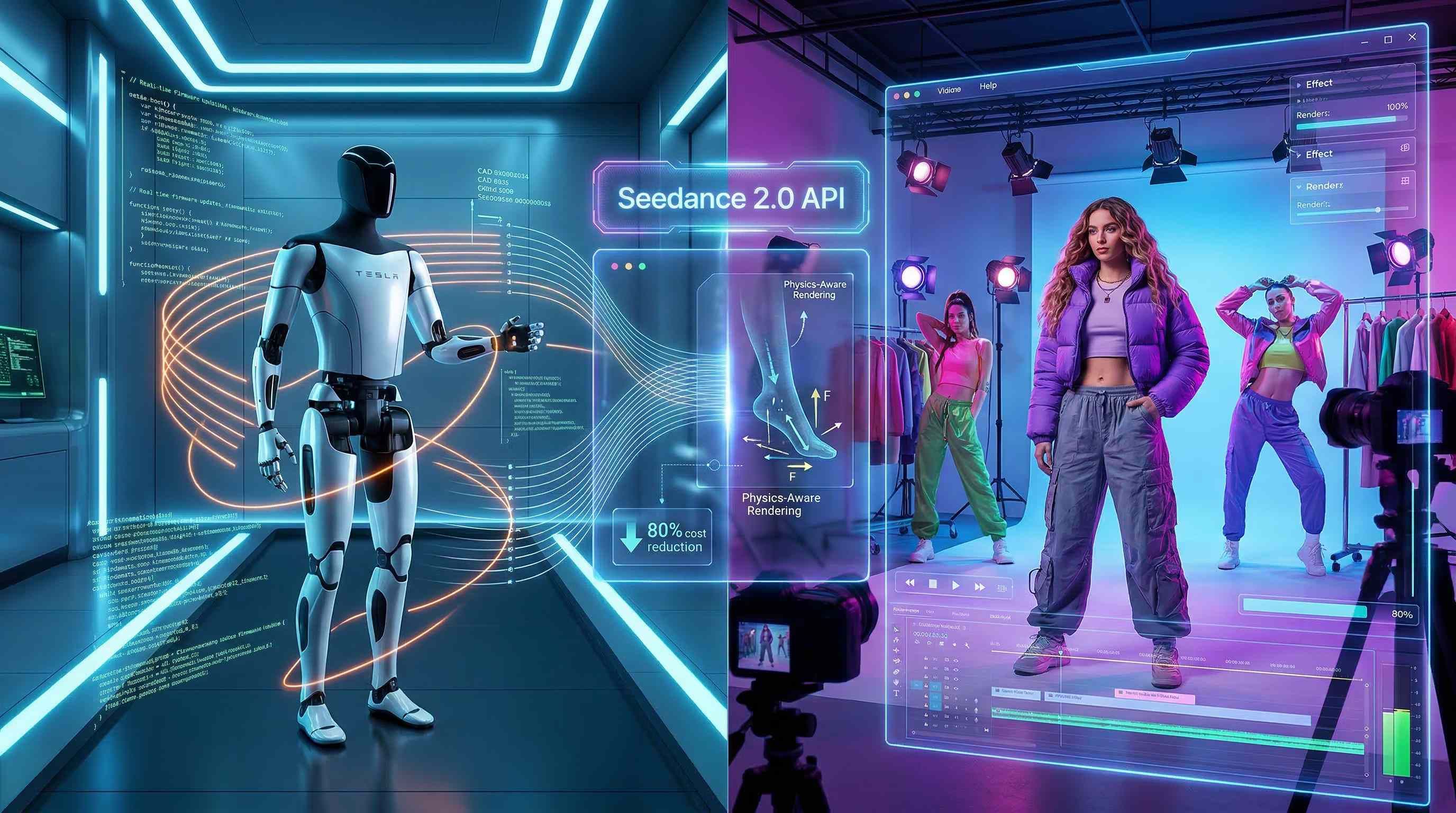
- Solving the "Demo Obsession": For humanoid developers like Tesla Optimus, firmware and locomotion gait are updated almost weekly. Traditional film production cannot keep up; by the time a video is edited, the robot’s movement is already "legacy."
- The Technical Link:
- Motion-Path Integration: Developers can send motion logs or CAD data straight to the Seedance 2.0 API.
- Physics-Aware Rendering: This API really gets how real-world physics works. It tracks weight, friction, and force. Because of this, the video looks like a genuine demonstration rather than a stiff or fake animation.
- Business Impact: Brands can create high-quality home assistant videos while the robot is still being tested. If the design changes, they can re-render for 80% less than the cost of a new video shoot.
The Connection: Fit-Tech and Seedance 2.0
In the fast fashion world, Seedance 2.0 is changing how virtual try-ons work. It moves past still photos to show high-quality movement instead.
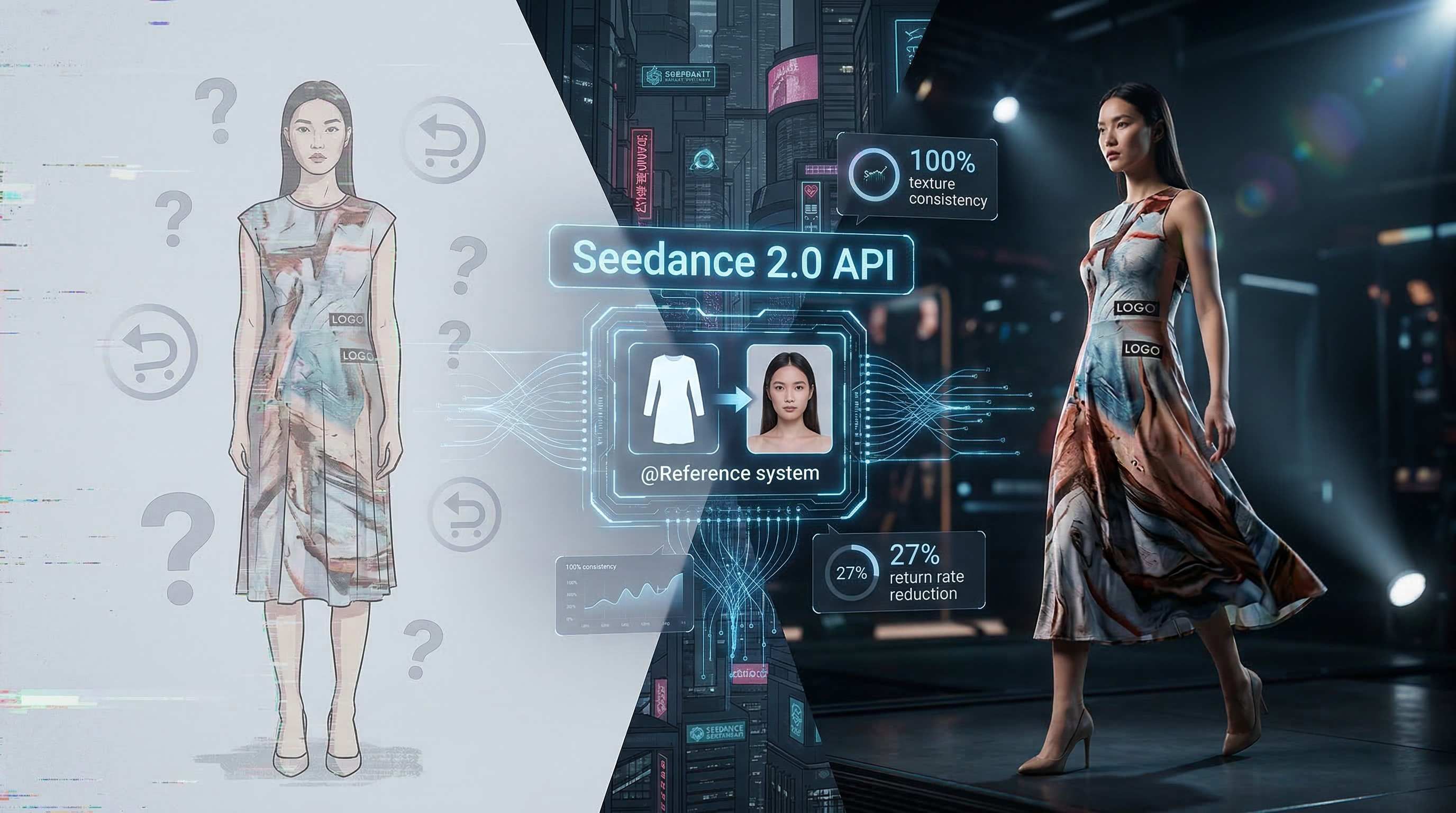
- The Move to "Dynamic Fit": Still images usually fail to show how fabric hangs, stretches, or reflects light. This missing detail is a top reason why so many people return clothes they buy online.
- The Technical Link:
- Consistent Identity Control: Using the @Reference system, brands can input a flat image of a garment and a photo of a user. The API preserves 100% of the texture, logo placement, and user likeness throughout a 4K video.
- Dynamic Motion Synthesis: It renders the user "walking" or "turning" in the garment. This allows customers to see the actual flow of the fabric in 15-second cinematic clips.
- Business Impact: This high-fidelity visualization builds consumer trust. According to 2025 industry data, AI-driven dynamic personalization can reduce return rates by approximately 27%.
Why It Works
| Industry Need | Seedance 2.0 Technical Capability |
| Humanoid Robotics | Physical World Modeling: Ensures movements follow gravity and inertia for realistic product demos. |
| Fit-Tech (Fashion) | Texture & Identity Preservation: Guarantees that brand logos and fabric patterns remain distortion-free in motion. |
| Universal Utility | Native Audio Sync: Automatically generates synchronized sound effects (metal clanking or fabric rustling) without post-production. |
Seedance 2.0 is no longer a "prompt-based" toy; it is a controlled rendering engine. By treating the API as a bridge between raw data, like CAD/Garment patterns, and visual storytelling, businesses can automate their entire content supply chain.
A Practical Guide for Developers: How to implement a Seedance 2.0 integration for your Shopify or Amazon store
To implement a Seedance 2.0 integration for your Shopify or Amazon store, you need to build a bridge between your product data (PIM) and the Seedance AI video generation API.
Since Seedance 2.0 operates on a multimodal "@-tag" system, this plan focuses on automated video creation for e-commerce by pulling your product images and converting them into 4K product ads.
Architecture Overview: The "Sync-to-Video" Pipeline
The goal is to move from a new product listing to a high-conversion video ad in under 60 seconds without manual intervention.
| Component | Technology | Purpose |
| Data Source | Shopify Admin API / Amazon SP-API | Fetches product images and descriptions. |
| Logic Layer | Python (Flask/FastAPI) | Orchestrates the programmatic video generation. |
| Video Engine | Seedance 2.0 API (via BytePlus/Atlas Cloud) | Handles 4K video rendering and physics. |
| Storage | AWS S3 / Google Cloud Storage | Hosts the generated .mp4 files for your storefront. |
Step-by-Step Integration Plan
Webhook Setup: Triggering the Generation
Avoid making videos for 10,000 items all at once. Instead, set your system to call the AI video API only when you upload a new product or update a photo.
- Shopify: Set up a products/create or products/update webhook.
- Amazon: Use EventBridge to listen for Listing Change notifications.
The Multimodal "Reference" Payload
Seedance 2.0 uses a unique @ tagging system. To maintain scalable content production, your script must map product images to these tags automatically.
Prompt Logic Example:
"Cinematic product reveal of @image1. The camera orbits the product on a marble pedestal. Soft studio lighting. 4K resolution."
Implementation Code: Python Example
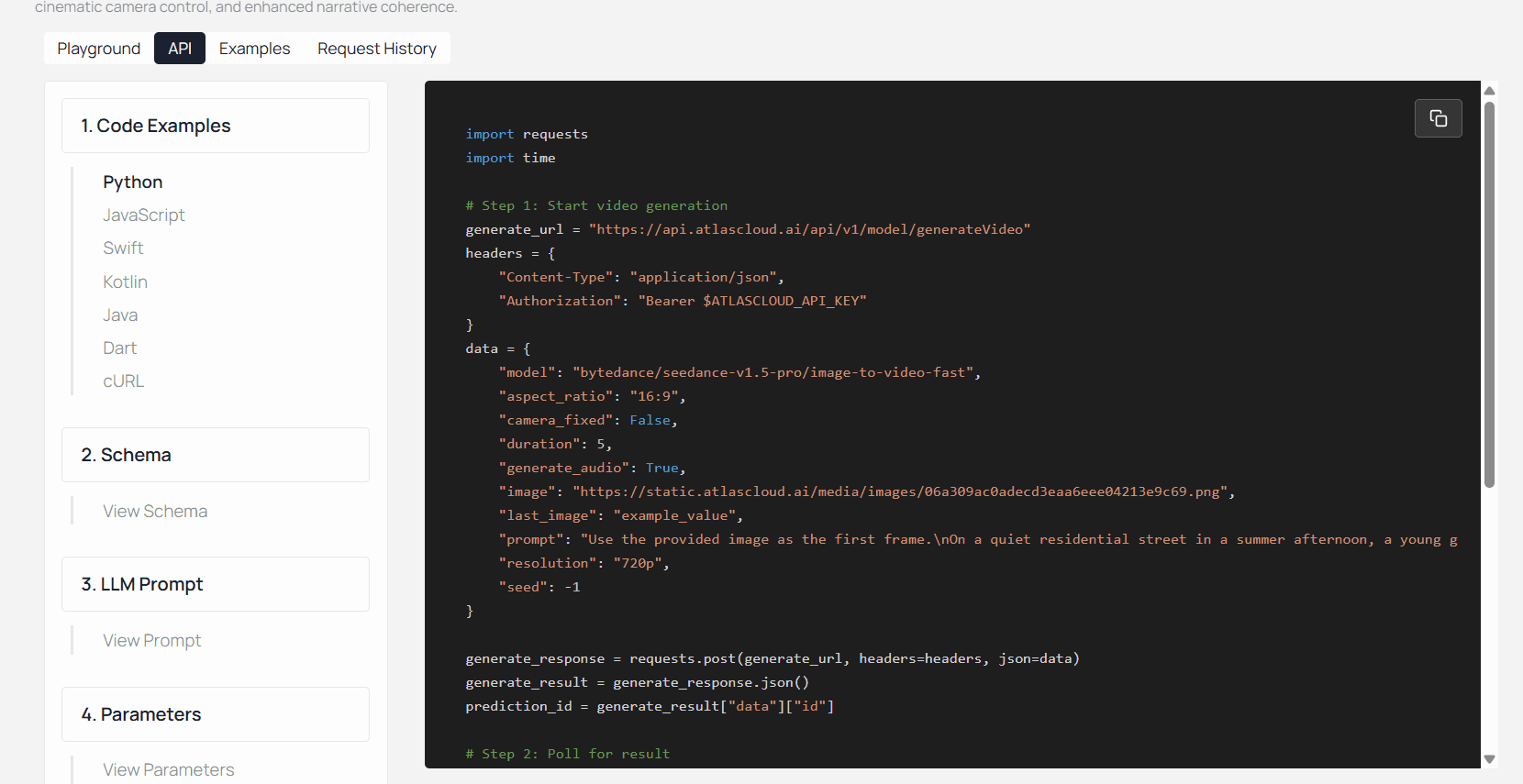
This script demonstrates how to take a Shopify product image and send it to the Developer API for video for batch video processing.
plaintext1import requests 2import json 3 4def generate_ecommerce_video(product_data):# API Endpoint for Seedance 2.0 (via BytePlus or Atlas Cloud) 5 API_URL = "https://api.atlascloud.ai/api/v1/model/generateVideo" 6 API_KEY = "YOUR_SEEDANCE_API_KEY" 7 8 payload = { 9 "key": API_KEY, 10 "model_id": "seedance-i2v", # Image-to-Video model"prompt": f"Professional studio commercial for {product_data['title']}. @image1 is the main subject. Smooth dolly-in zoom, 4k product ads style, high fidelity.", 11 "init_image": product_data['image_url'], # From Shopify/Amazon"height": 1080, 12 "width": 1920, 13 "num_inference_steps": 50, 14 "webhook": "https://your-app.com/api/v1/video-callback", # Async handling"track_id": product_data['sku'] 15 } 16 17 response = requests.post(API_URL, json=payload) 18 return response.json() 19 20# Example Shopify Product Data 21product = { 22 "title": "Luxury Leather Handbag", 23 "image_url": "https://cdn.shopify.com/files/1/handbag_main.jpg", 24 "sku": "HB-2026-GOLD" 25} 26 27generate_ecommerce_video(product)
Handling Scaling AI Video and Output
Because 4K video rendering can take 60–120 seconds, your integration must be asynchronous.
The Callback Workflow
- Request: Your server sends the product data to Seedance 2.0.
- Wait: Seedance processes the video.
- Callback: Seedance hits your webhook URL with the finished .mp4 link.
- Update: Your server uses the Shopify GraphQL API to attach the video to the product media gallery.
Quality Control for 4K Product Ads
To ensure scalable content production doesn't result in "glitchy" videos, implement a Negative Prompt globally in your API calls:
Global Negative Prompt: "blur, flickering, distorted logo, melting textures, low resolution, shaky camera, uncanny physics."
Best Practices for E-commerce Stores
- Batch Processing: Use a queue like Celery or Redis if you have a lot of catalogs. This lets you run video tasks in groups during slow hours. It is a smart way to stay under your API limits without slowing down.
- A/B Testing: Make two different video styles, such as "Lifestyle" and "Studio." Use the same product shot for both. Compare them to see which one actually gets more people to buy on Shopify.
- Localization: If you sell on Amazon Global, use the tool to create different videos. You can easily swap in text for German, Japanese, or French. Use one base product photo so your brand looks the same in every country.
Pro Tips: Getting the Most Out of Seedance 2.0
To truly dominate AI-driven commerce, you need to move beyond basic video generation. Here are five expert strategies for using the Seedance 2.0 API:
- Master the "Reference Image" Feature: Go beyond just typing out a prompt. Upload a sharp, high-quality photo of your real product instead. This helps the AI keep every texture and logo exactly right. Staying accurate is the best way to get your customers' real trust.
- Use "Human-in-the-Loop" Quality Checks: Let the API create ten versions of one short ad. Then, have a person choose the best two. This mixed method ensures your videos never feel strange or robotic to your audience.
- Scale with Dynamic Localization: Use the API settings to change backgrounds or text based on where the viewer lives. A product video shown to someone in London should look different than one shown to a customer in Tokyo.
- Optimize for "Silent Play": Most social commerce videos are watched without sound. Use Seedance 2.0 to automatically generate high-contrast text overlays that highlight your key "pain points" and "solutions" within the first 3 seconds.
- Batch Test Your Hooks: Create multiple versions of the first 2 seconds of your video. Use these to A/B test which "hook" leads to a higher add-to-cart rate. Small tweaks in motion can lead to massive jumps in conversion.
Conclusion: The Future of Programmatic Video
Seedance 2.0 has effectively commoditized cinematic quality. By combining 4K video rendering with high-speed batch video processing, it allows e-commerce brands to finally break free from the "static asset" trap. Whether you are looking at scalable content production for a boutique shop or scaling AI video for a global marketplace, Seedance 2.0 provides the architecture for the next era of commerce.
FAQ
Q1: How does Seedance 2.0 solve the "Identity Drift" problem for branded products?
In traditional AI video generation, small details like logos or product textures often warp during motion. Seedance 2.0 introduces an "Identity Lock" framework through its Universal Reference system. By uploading up to 9 high-resolution product photos as @Image references, the API ensures that your brand’s visual assets—including complex textures and exact logo placements—remain 100% consistent across every frame, even during high-intensity motion.
Q2: Can Seedance 2.0 generate synchronized audio for localized global markets?
Absolutely. A major highlight is its ability to create audio and video at the exact same time. Most models add sound later, but Seedance 2.0 builds them together. This ensures that lip-syncing stays perfect across 20 different languages. It also produces realistic sound effects that match the action. For online shops, you can quickly make ads where the character's speech and product noises, like a motor hum or cloth moving, align perfectly with the screen.
Q3: How cost-effective is the Seedance 2.0 API for high-volume SKU scaling?
Seedance 2.0 is built for high-volume work. Standard studio filming can cost thousands of dollars for every minute. In contrast, the Seedance API uses a fast system that provides high-quality 2K clips for just $0.05 per minute. This price depends on your specific plan. For stores with many products, this enables an "Automation Loop." Your system can signal the API to make 15-second videos the moment a new item goes live on Shopify or WordPress.