Seedance 2.0 reduces e-commerce video costs by up to 70% by replacing expensive manual processes with multimodal AI. Stop wasting time on studio rentals, casting actors, and long editing cycles. Seedance 2.0 builds premium product videos from basic text or image inputs. Its "Dual-Branch Diffusion Transformer" technology handles audio and realistic motion at the same time. This removes the need for expensive post-production work, making it a cost effective marketing strategies. Brands can now generate content for over 50 items instantly. It makes A/B testing fast and keeps costs much lower than traditional methods.
The Hidden Drain: Why Traditional Video Production is Breaking E-commerce Margins
For years, the average cost of video production has been a fixed, high-stakes gamble for brands. While high-quality content is non-negotiable for conversion, the traditional workflow is inherently inefficient. As e-commerce shifts toward high-volume, personalized content, the old "boutique" model is becoming a financial bottleneck for marketing budgets in 2026.
The "Three-T" Problem: Time, Talent, and Tools
The primary reason traditional product video production services are so expensive is their reliance on physical resources. When you calculate the cost-per-video, you aren't just paying for the final file; you are paying for an entire ecosystem of overhead.

Talent: The Human Capital Tax
Even for a simple 30-second product spot, the payroll adds up instantly. A professional shoot typically requires:
- Models/Actors: 500–500–500–1,500 per day depending on usage rights.
- Videographers: 800–800–800–2,000 per day for skilled labor and creative direction.
- Editors: 50–50–50–150 per hour to piece together the raw footage.
Tools: The Hardware and Venue Hurdle
Whether choosing in-house vs outsourcing video, the "Tools" cost remains high. Renting a professional studio space with a lighting rig can cost upwards of $1,000 per day. When using high-end gear (4K cameras, stabilizers, and specialized lenses), the rental fees alone can consume 20% of a small brand’s budget video production plan.
Time: The Post-Production "Revision Trap"
Post-production is where timelines go to die. Traditional workflows involve manual color grading and complex sound synchronization. According to industry benchmarks, every minute of finished video can take 5 to 10 hours of editing. If a product feature changes or the lighting looks "off" in post, you face the "Revision Trap"—adding days to the timeline and thousands to the invoice.
Cost Breakdown: Traditional vs. AI Video Production Costs
To understand why brands are migrating to AI video production, we must look at the math. Traditional methods scale linearly (more videos = more money), whereas AI video pricing models scale exponentially.
| Expense Category | Traditional Production (Per Video) | Seedance 2.0 / AI Production |
| Studio & Gear | $1,200 - $3,000 | $0 (Virtual Rendering) |
| Labor (Talent/Crew) | $1,500 - $5,000 | Included in Subscription |
| Editing & Revisions | $500 - $2,000 | Minutes (Prompt-based) |
| Turnaround Time | 2–4 Weeks | < 24 Hours |
| Total Est. Cost | $3,200 - $10,000+ | <$100 - $300 |
Data Source: Analysis based on TechNode and Spirit Juice Studios regarding AI efficiency gains.
What is Seedance 2.0? The 2026 Industry Standard for AI Video
As we look toward the marketing budget 2026 landscape, the shift from manual filming to generative workflows has reached a tipping point. Seedance 2.0 is not merely a filter or an editing assistant; it is a comprehensive engine designed to replace traditional product video production services with a faster, data-driven alternative.
The average cost of video production is climbing because of inflation and high labor rates. Seedance 2.0 fixes this by moving the whole production process to the cloud. This change lets brands move away from pricey, single projects. Instead, they can focus on creating a steady flow of fast, affordable content.
Beyond "Text-to-Video": The Power of Multimodal Inputs
Most early AI tools operated on a "gacha-style" system—users would enter a prompt and hope for a usable result, often failing due to warped products or inconsistent characters. Seedance 2.0 solves this through multimodal inputs, allowing creators to feed the AI specific images, brand guidelines, and audio cues to ensure the output matches the brand's physical reality.
Identity Lock: Solving the Consistency Crisis
In traditional budget video production, maintaining a consistent look across 50+ SKUs requires meticulous set notes and the same lighting technicians. Seedance 2.0 introduces Identity Lock, a feature that maintains over 90% character and product consistency.
- How it works: Upload a reference image of your product or person. The AI then "locks" those specific details into its system.
- The Result: Your logo, packaging, and size stay perfectly consistent. It doesn't matter if the background changes to a kitchen, a forest, or a lab.
Native Audio Sync: A Unified Creative Engine
One of the most significant drains on a marketing budget is post-production sound. Traditionally, brands must outsource voiceovers or spend hours matching foley sounds to visual movement. Seedance 2.0 utilizes a "Dual-Branch" architecture that generates the visual and the soundscape simultaneously.
- Syncing: If a glass hits a table in the clip, the AI creates a "clink" sound at that exact moment.
- Global reach: It matches lip movements to over 20 languages. This makes creating videos for the whole world as easy as one click.
Side-by-Side: Seedance 2.0 vs. Old Ways
Brands must choose between AI tech and the hard work of human film crews, like in-house vs outsourcing video. It is a choice between smart software and manual labor.
| Feature | Traditional Production | Seedance 2.0 AI |
| Product Consistency | Manual (Requires physical props) | Identity Lock (90%+ Accuracy) |
| Audio Processing | External Dubbing & Foley | Native Audio Sync |
| Input Flexibility | Script-based only | Multimodal (Text/Image/Audio) |
| Scalability | Limited by physical shoot days | Infinite (Parallel Cloud Rendering) |
| Primary Cost Driver | Labor & Equipment Rental | AI Video Pricing (SaaS Model) |
Smart Marketing Plans for 2026
The main benefit of Seedance 2.0 is how it keeps marketing costs low. By making high-end video easy to create, small shops can now get a movie-like look that used to cost a fortune. This makes it a cost-effective marketing strategies.
- Rapid A/B Testing: Generate 10 versions of a single ad to see which background converts best.
- Reduced Overhead: Eliminate the need for expensive product video production services for every minor social media update.
- Sustainable Scaling: As your SKU count grows, your video library grows at the same speed, keeping your cost-per-video at a fraction of the industry average.
Head-to-Head: Seedance 2.0 vs. Traditional Production
In the competitive landscape of marketing budget 2026 planning, the choice between in-house vs outsourcing video often comes down to the friction between quality and speed. Traditional production relies on a linear chain of human dependencies, while Seedance 2.0 uses parallel AI processing to bypass physical constraints.
The following table compares the typical workflow of product video production services against the Seedance 2.0 AI ecosystem:
| Feature | Traditional Production | Seedance 2.0 (AI) |
| Pre-Production | 1–2 Weeks (Casting, Location, Script) | < 1 Hour (Prompting & Style Locking) |
| Production Crew | 3–10 people (Director, Lights, Sound) | 1 Operator (Creative Lead) |
| Physical Assets | Studio rental & high-end gear | Cloud-based rendering |
| Audio Workflow | Manual sync & external VO recording | Native Audio Sync (Automated) |
| Iteration Speed | Reshoots required for major changes | Instant re-generation with new prompts |
| Success Rate | High per shot (but fixed output) | 90%+ Usability (low "credit waste") |
The Math: Calculating Your 70% Savings (ROI Formula)
To see why AI video is now the heart of cheap marketing, let's look at a normal e-commerce case. A brand needs to drop a new product line with 10 top-tier video ads for social media.
Scenario: 10-Video Campaign Launch
- Traditional Method:
Using professional product video production services, a lean shoot for 10 videos (including a videographer, one model, and studio rental) averages $8,000. This excludes the "revision trap" fees that often arise in post-production.
- Seedance 2.0 Method:
A mid-tier "Standard" subscription, ~42/monthplusthenecessarycreditstogenerate10high−quality15−secondclipsatroughly42/month plus the necessary credits to generate 10 high-quality 15-second clips at roughly 42/monthplusthenecessarycreditstogenerate10high−quality15−secondclipsatroughly0.14 per second, brings the total cost to approximately 63forthegeneration,plusthetimeofoneinternaldesigner, 63 for the generation, plus the time of one internal designer, ~63forthegeneration,plusthetimeofoneinternaldesigner, 400 in labor. Total cost: $463.
The Math Check: ROI Breakdown
To calculate the exact efficiency gain, we use the percentage decrease formula:
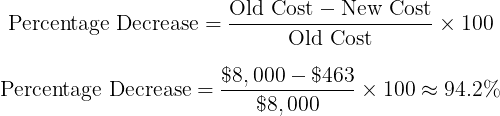
Even when factoring in a "conservative" overhead for creative direction and multiple retries, brands consistently achieve a 70% to 90% reduction in their cost-per-video. For a standard marketing budget 2026, this means a company can produce 10x the content for the same price as a single traditional shoot.
Transitioning to Automation: The Developer’s Advantage
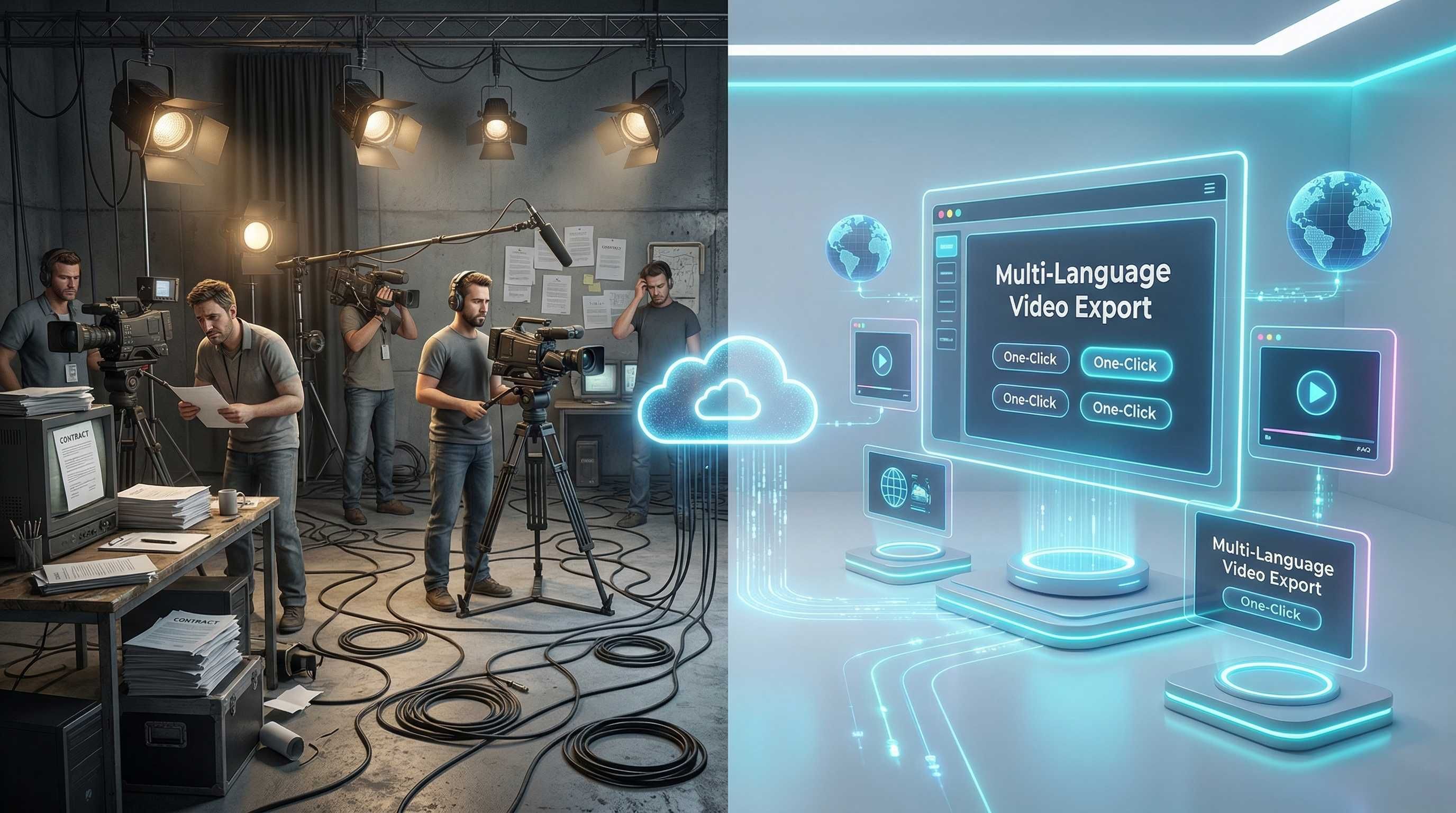
In 2026, the real shift in cost-effective marketing strategies isn't just about using AI—it's about automating it. For high-volume e-commerce brands, the "web interface" approach is a manual bottleneck. To truly optimize your marketing budget 2026, moving to an API-driven workflow is the only way to scale content production without scaling your headcount.
Why the API Matters: Automated Video Pipelines
By utilizing the Seedance 2.0 API, developers can integrate video generation directly into existing Product Management Systems (PIM) like Shopify or Amazon. Imagine a workflow where:
- A new SKU is added with three product photos.
- The system automatically triggers an AI video production request.
- A high-converting 15-second ad is returned and published to TikTok or Instagram within minutes.()
This eliminates the need for in-house vs outsourcing video debates entirely by making the video as dynamic as the product price itself.
The Role of the GPU Cloud Platform
Seedance 2.0 uses "World Model Priors" and smart physics rendering. These tools need a lot of computing power to work. A GPU cloud platform acts like a virtual supercomputer for you. It lets you run these big tasks without needing to buy any hardware yourself.
Using a cloud platform for AI video production offers three key advantages:
- Elasticity: Generate 1 or 1,000 videos simultaneously without a queue.
- Zero Maintenance: No need to manage drivers, CUDA versions, or overheating hardware.
- Unified Billing: One interface to manage costs across various AI models.
Comparison: Top GPU Cloud Platforms for 2026
| Platform | Best For | Core Advantage | Seedance 2.0 Access |
| Atlas Cloud | Developers & E-commerce | Unified API; 300+ AI models in one key. | Direct (Seedance Optimized) |
| RunPod | Indie Developers | Cost-effective raw GPU rentals. | Requires manual setup. |
| SiliconFlow | Large Enterprises | Ultra-fast inference speeds (2.3x faster). | Enterprise-only tiers. |
| Lambda Labs | Researchers | High-end H100/H200 availability. | No native video API. |
Operational Guide Example: Accessing Seedance 2.0 via Atlas Cloud
Atlas Cloud is widely considered the most accessible "on-ramp" for the Seedance 2.0 API due to its simplified integration layer. Here is how to obtain your key and start reducing your average cost of video production today.
Step 1: Account Registration & Credits
Head over to the Atlas Cloud developer page. New accounts usually get a small starting gift like $1 or 50 credits. This is enough to try out a few low-cost video tests for free.
Step 2: Generate Your Unified API Key
Navigate to the "API Keys" section and create a new key. Unlike other product video production services that require multiple tokens for different tasks, one Atlas Cloud key works for text-to-video, image-to-video, and the multimodal "Identity Lock" features.
Step 3: Call the Seedance 2.0 Endpoint
Use the following Python structure to send a request. This method ensures your cost-per-video stays low by choosing optimized rendering paths:
Python
plaintext1import requests 2 3# Set your authorization headers 4headers = { 5 "Authorization": "Bearer YOUR_ATLASCLOUD_API_KEY", 6 "Content-Type": "application/json" 7} 8 9# Define your multimodal inputs (Image + Motion Reference) 10data = { 11 "model": "bytedance/seedance-2.0-pro", 12 "prompt": "Cinematic product showcase of @image1, lighting shifting across texture", 13 "images": ["url_to_product_photo_1"], 14 "motion_reference": "url_to_reference_video" 15} 16 17response = requests.post("https://api.atlascloud.ai/v1/video/generate", json=data, headers=headers) 18print(response.json())
By switching to this automated system, brands can skip expensive monthly AI plans. A lean, pay-only-for-what-you-use model is a choice.
Note:
- Usage Limits: Free accounts usually have low caps on how many tasks can run at once. For bigger projects, you will need a Starter or Pro plan.
- Security and Rights: Seedance 2.0 uses strict filters for its "Identity Lock" tool. Ensure any photos you upload do not break copyright laws or privacy rules.
To get a free trial, please see how to get the Seedance 2.0 API for free.
Conclusion: How to Scale in the AI-First E-commerce Era
The secret to winning in e-commerce has flipped for 2026. It is no longer about who has the biggest production budget or the priciest cameras on set. Instead, success is all about smart, low-cost marketing and how smooth your API workflow runs. Being efficient is the new way to stay ahead of the pack.
By integrating Seedance 2.0, companies can move from producing 5 videos a month to 5,000, enabling a level of A/B testing and personalization that was physically impossible just two years ago. The 70% cost reduction is not just a saving—it is a fund for innovation, allowing you to reallocate your marketing budget 2026 toward growth, community building, and product development.
Ready to collapse your production costs? Sign up for Atlas Cloud and start your first automated production run today. In the world of AI-driven commerce, the only thing more expensive than innovation is staying the same.
FAQ
H3: Is Seedance 2.0 better than Sora 2.0 or Veo 3.1?
While Sora and Veo are fantastic for general creative storytelling, they often lack the Identity Lock required for commercial products. Seedance 2.0 is purpose-built for commerce. It prioritizes keeping your product's logo and shape 100% accurate, whereas general models might "hallucinate" changes to your packaging.
H3: Can I use my own models/influencers with Seedance 2.0?
Yes. By using the @Reference system, you can upload 30 seconds of footage of a specific influencer. The AI can then "reshoot" that influencer in any environment (e.g., on a beach in Bali or a skyscraper in New York) without the influencer ever leaving their home. This significantly lowers product video production services costs related to travel.
H3: Is AI video "legal" for commercial ads?
Seedance 2.0 assets generated via Atlas Cloud come with full commercial usage rights. The model is trained on licensed and ethically sourced datasets, ensuring that your brand is protected from the copyright disputes associated with "scraped" AI models.