If you are looking for a practical way to try Seedance 2.0 API without burning your budget, Atlas Cloud gives you one of the easiest on‑ramps: unified API access, generous free credits for new users, and pay‑as‑you‑go pricing once you scale up.
This guide walks you through how to access Seedance 2.0 (and current Seedance models) via Atlas Cloud, how “free” actually works in practice, and how to optimize your spend while you experiment.
What Is Seedance 2.0 and Why the API Matters
Seedance 2.0 is ByteDance’s next‑generation AI video model, built for high‑fidelity text‑to‑video and image‑to‑video generation, with strong support for complex camera motion, character consistency, and cinematic effects.
Compared with earlier versions, Seedance 2.0 emphasizes multi‑modal “reference everything” capabilities: you can mix up to around a dozen image, video, audio, and text inputs to precisely control style, motion, and rhythm in your generated videos.
For developers, the API is the key to turning these capabilities into real products: automated video ads, content creation workflows, custom editors, and more.
Current Status: Is Seedance 2.0 API Officially Available?
As of early 2026, Seedance 2.0 is still in staged rollout.
On the consumer side, paying members on Jimeng (即梦) can already generate videos with the latest model via the platform’s interface, while broader API, enterprise deployment, and global access details from ByteDance are still emerging. Meanwhile, ByteDance has already announced Seedance 2.5→Read the full announcement
Atlas Cloud positions itself as an aggregation layer: once official access is available, Seedance 2.0 will be exposed through Atlas Cloud’s unified API alongside other top‑tier models, so you can integrate it without managing separate SDKs or credentials for each vendor.
That means you can start building now against current Seedance models and Atlas Cloud’s video API flow, and seamlessly upgrade to Seedance 2.0 as it becomes fully accessible.
Can You Access Seedance 2.0 API for Free?
Atlas Cloud gives you two practical paths to get as close to “free” as possible while you experiment:
1. Claim the $1 Registration Bonus
Atlas Cloud offers a welcome credit for new developers. While "free" usually implies a limited trial, Atlas Cloud’s $1 credit is surprisingly potent. Because their inference is optimized to be 30% cheaper than direct providers, $1 can cover:
- Approximately 3-4 high-definition (1080p) video generations.
- Dozens of test runs in the Playground to refine your MRT prompts.
2. Use the "Pay-as-you-go" Daily Refresh
Atlas Cloud’s developer plans are designed to be "wallet-friendly." Even on free tiers or basic plans, the platform often provides daily refreshed credits for testing, allowing you to prototype your app's Seedance 2.0 integration without an upfront subscription. You pay only for the rendering time or tokens you actually use, which keeps early experiments very low cost and avoids large upfront commitments.
In practice, this means your first few Seedance‑style video generations can be effectively free, and subsequent usage remains tightly controllable by setting rate limits, max duration, and resolution caps in your integration.
Step‑by‑Step: How to Access Seedance 2.0 API on Atlas Cloud
Atlas Cloud lets you use models side by side — first in a playground, then via a single API.
Method 1: Use directly in the Atlas Cloud playground
Method 2: Access via API
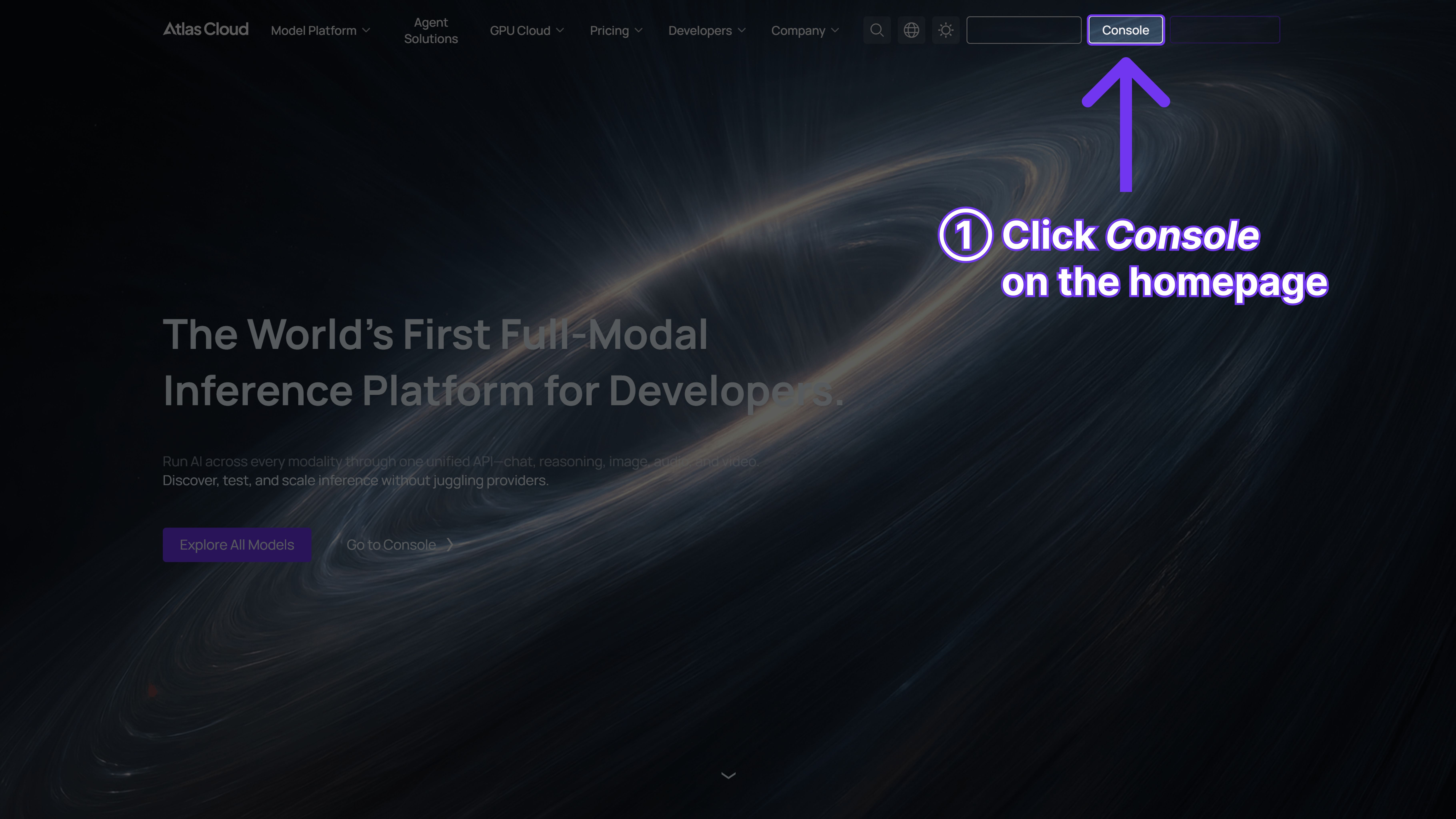
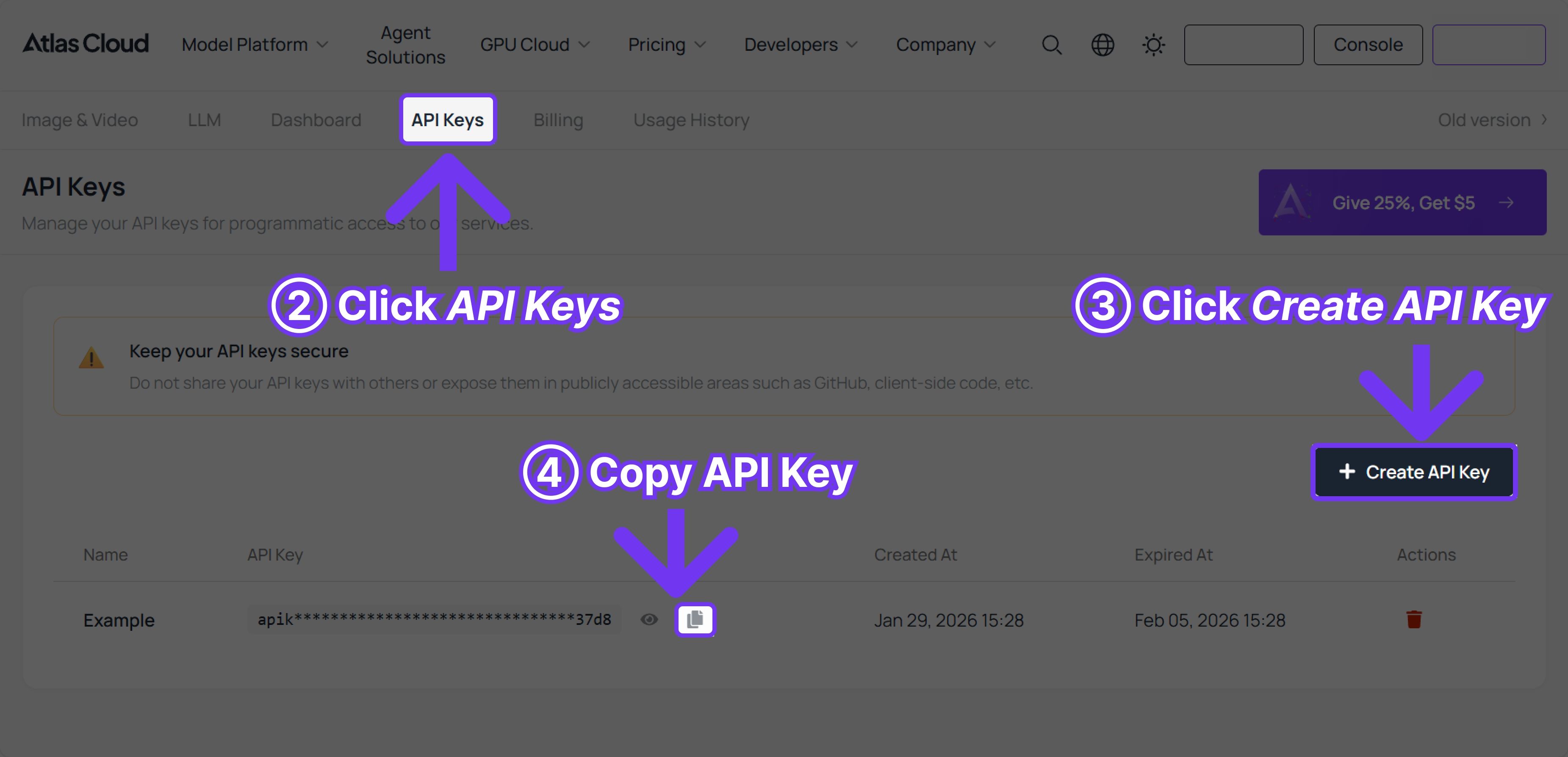
Step 1: Get your API key
Create an API key in your console and copy it for later use.
Step 2: Check the API documentation
Review the endpoint, request parameters, and authentication method in our API docs.
Step 3: Make your first request (Python example)
Example: generate a video with Bytedance/seedance-v1.5-pro/text-to-video
python1import requests 2import time 3 4# Step 1: Start video generation 5generate_url = "https://api.atlascloud.ai/api/v1/model/generateVideo" 6headers = { 7 "Content-Type": "application/json", 8 "Authorization": "Bearer $ATLASCLOUD_API_KEY" 9} 10data = { 11 "model": "bytedance/seedance-v1.5-pro/text-to-video", 12 "aspect_ratio": "16:9", 13 "camera_fixed": False, 14 "duration": 8, 15 "generate_audio": True, 16 "prompt": "A cinematic, ultra-realistic underwater scene of a majestic whale swimming gracefully through the deep blue ocean. Sunlight rays penetrate the water from above, creating soft volumetric light beams. The whale’s massive body moves slowly and smoothly, with gentle tail motions and flowing fins. Tiny air bubbles and floating particles drift through the water. Surrounding marine life appears subtly in the distance, enhancing the sense of scale. Natural ocean colors, realistic water caustics, calm and peaceful atmosphere. Smooth camera tracking alongside the whale, shallow depth of field, IMAX-quality, photorealistic, no text, no watermark.", 17 "resolution": "720p", 18 "seed": -1 19} 20 21generate_response = requests.post(generate_url, headers=headers, json=data) 22generate_result = generate_response.json() 23prediction_id = generate_result["data"]["id"] 24 25# Step 2: Poll for result 26poll_url = f"https://api.atlascloud.ai/api/v1/model/prediction/{prediction_id}" 27 28def check_status(): 29 while True: 30 response = requests.get(poll_url, headers={"Authorization": "Bearer $ATLASCLOUD_API_KEY"}) 31 result = response.json() 32 33 if result["data"]["status"] in ["completed", "succeeded"]: 34 print("Generated video:", result["data"]["outputs"][0]) 35 return result["data"]["outputs"][0] 36 elif result["data"]["status"] == "failed": 37 raise Exception(result["data"]["error"] or "Generation failed") 38 else: 39 # Still processing, wait 2 seconds 40 time.sleep(2) 41 42video_url = check_status()
How to Optimize Your “Free” and Low‑Cost Usage
To truly stretch your free credits and keep early experiments close to zero cost, you can combine several tactics in your integration.
- Start with shorter clips: Generate 3–6 second videos while prototyping; they render faster and cost less than long, cinematic sequences.
- Use lower resolutions first: Begin with lower resolution or frame rate, then upscale or re‑render the final few winning concepts at higher quality.
- Reuse reference assets: Store and reuse your best reference images, videos, and audio to avoid trial‑and‑error on every request.
- Batch testing: When you test prompts, send a small batch with varied seeds or camera hints in one session, track metrics and qualitative results, then narrow down.
- Monitor usage: Use Atlas Cloud’s analytics and billing pages to keep an eye on which models and endpoints are consuming the most credits.
If you are building a commercial product, you can start on the free credit and then move to Atlas Cloud’s subscription or volume‑discount plans, which are designed to “start for free, scale with usage, and unlock full access” to the API ecosystem as you grow.
Why Use Atlas Cloud for Seedance 2.0 Instead of Going Direct?
Once Seedance 2.0 opens more broadly, you might be able to access it through multiple channels. Atlas Cloud focuses on solving the integration, pricing, and reliability pain points for teams that want to move fast. Atlas Cloud also plans to support Seedance 2.5 as soon as it becomesavailable via API. See how Seedance 2.5 compares to 2.0 to decide which version fits your use case.
Here are key advantages:
- One integration, many models: Run Seedance 2.0 alongside other video and multimodal models (Sora, Nano Banana, DeepSeek, etc.) through a single unified API.
- Transparent, predictable pricing: Per‑token or per‑second billing with no opaque “credit packs,” plus free starting credits.
- Production‑ready reliability: Uptime targets, RBAC, and compliance‑ready logging make it suitable for production apps, not just demos.
- Developer‑friendly tools: SDKs, analytics, and workflow features help you integrate models into your existing pipelines quickly.
For teams outside of China who want Seedance‑level capabilities in a familiar developer environment, this can be significantly simpler than maintaining separate, region‑specific infrastructure.





