2026 AI sanat sahnesi, uzmanlaşmış devler arasında sert bir çatışmaya sahne oluyor. 2025, GPT Image 1.5 ve Nano Banana Pro'nun yılıyken, Alibaba'nın yeni Wan 2.7'si bu Nisan ayında oyunu değiştirdi.
Bu, herkesin beklediği "Midjourney katili" mi, yoksa kalabalık alandaki bir başka yüz mü? İşte mevcut pazar liderleriyle karşılaştırması.
Yarışmacılar: AI Elitiyle Tanışın
2026, AI sıralamalarında hızlı bir değişime tanıklık ediyor. İnsanlar eskiden basit araçları tercih ediyordu. Şimdi ise büyük bir doğrulukla düşünen modellere ihtiyaç duyuyorlar. Bu da birinci sınıf sistemlerden oluşan yeni bir dalgayı başlattı. Akıllı bir görüntü oluşturucu veya esnek bir açık kaynak modeli isteyebilirsiniz. Her iki durumda da, bu araçların temel yapısını öğrenmek hayati önem taşır. Temelleri bilmek, en iyi profesyonel çıktıyı almanıza yardımcı olur.
Skorları kontrol etmeden önce, şu anda AI görüntü pazarındaki ana liderlere bir göz atalım:
- Wan 2.7 (Alibaba): Benzersiz bir Flow Matching mimarisi kullanan yeni oyuncu. İstem sadakatine öncelik verir ve manuel maskeleme olmadan karmaşık talimat tabanlı değişikliklere izin verir.
- Nano Banana Pro (Google): DeepMind'ın en yeni güç merkezi. Görüntü oluşturmayı bir mantık bulmacası olarak ele alır ve yerel 4K çözünürlük sunmak için akıl yürütme odaklı sentez kullanır.
- GPT Image 1.5 (OpenAI): Bu araç, GPT-5 sistemi içinde çalışır. Karakterlerin aynı görünmesini sağlamada ve bir resmin belirli kısımlarını düzeltmede harikadır. Tutarlı, karakter tabanlı projeler için en iyi seçimdir.
- Seedream 5.0 (ByteDance): Bu akıllı model, güncel kalmak için canlı web aramaları kullanır. Oluşturduğu görüntülerin gerçeklere uygun olduğundan emin olmak için haberleri veya yeni teknolojileri kontrol eder.
Model Karşılaştırması: Temel Yetenekler
| Özellik | Wan 2.7 | Nano Banana Pro | GPT Image 1.5 | Seedream 5.0 |
| Birincil Güç | Mantık ve Akış | 4K Akıl Yürütme | Tutarlılık | Olgusal Doğruluk |
| Mimari | Flow Matching | Diffusion-Logic | GPT-5 Native | Search-Augmented |
| En Uygun Olduğu | Karmaşık Sahne | Yüksek Çöz. Baskı | Hikaye Anlatımı | Güncel Olaylar |
Wan 2.7'nin devlere karşı kendi isteminizle nasıl performans gösterdiğini görmek ister misiniz? Atlas Cloud'un model karşılaştırması, Wan 2.7, Nano Banana Pro ve GPT Image'ı tek geçişte yan yana koyar — aynı istem, oluşturmadan önce gösterilen fiyat — böylece sadakat ve istem takibini doğrudan değerlendirebilirsiniz.
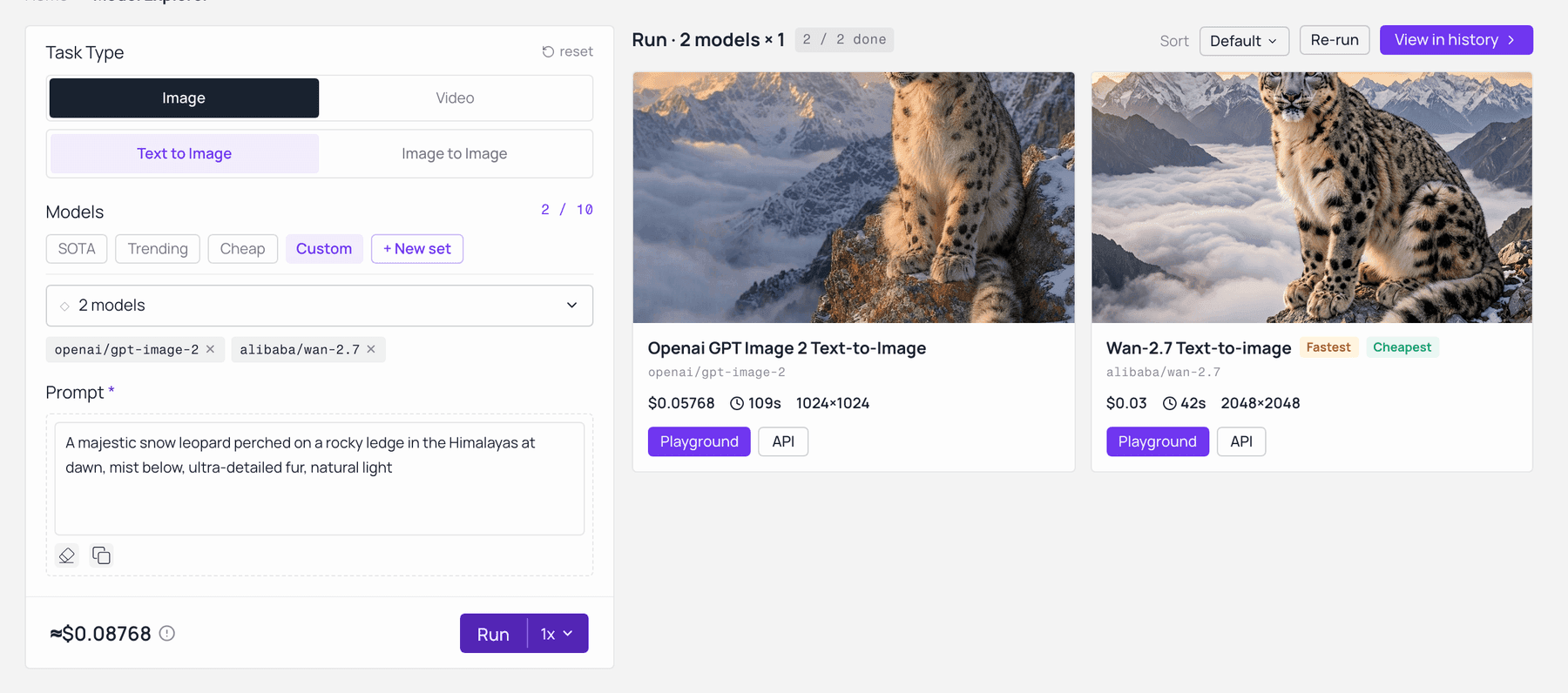
Wan 2.7 ve GPT Image 2, Atlas Cloud'un model karşılaştırmasında aynı istemle — aynı istem, oluşturmadan önce gösterilen görsel başına fiyat ve çözünürlük. Model gezgininden canlı olarak yakalandı.
İstem Sadakati ve Mantıksal Akıl Yürütme
AI sanatı eskiden "halüsinasyonlar" ile mücadele ederdi. Yaygın sorunlar arasında fazladan parmaklar veya mekansal yönergeleri takip edememe vardı. 2026'ya gelindiğinde, önde gelen modeller gelişti. Artık sadece desenleri taklit etmiyorlar, kelimelerinizin ardındaki anlamı gerçekten kavrıyorlar.
Wan 2.7, özel bir oluşturma öncesi akıl yürütme adımı sunarak bu alanda öncülük ediyor. Standart bir chat gpt image generator'un aksine, Wan 2.7 tek bir piksel çizmeden önce bir istemin mekansal ilişkileri ve fiziği hakkında "düşünür". Son kıyaslamalara göre, bu "Düşünme Modu", istem uyum puanlarını sektör rekoru olan %94'e yükseltti; 2025 ortalaması %78 idi.
Test Tasarımı: Mekansal Mantık Eylemde
Test İstemi: "Koyu meşe ahşap bir masa üzerinde duran mavi, yarı saydam cam bir vazonun fotogerçekçi yakın çekimi. Vazonun içinde, canlı yeşil sapları olan tam olarak üç kırmızı lale var. Tek bir lale yaprağı havada, masa yüzeyine doğru düşerken yakalanmış. Cam, tabanından masanın ahşap damarının kırılmasını açıkça göstermeli ve ışık yumuşak doğal sabah ışığı olmalı."
Değerlendirme Rubriği: "Üçlü Kısıtlama" Testi
| Yetenek | Performans Analizi |
| Nesne Sayma | "Üç lale" sayısını kopyalama olmadan kesinlikle korur. |
| Fizik Simülasyonu | Yaprağın "düşme" hareketini ve yerçekimine uygun yörüngesini doğru şekilde işler. |
| Şeffaflık | Mavi cam vazo boyunca ahşap masa dokusunun kırılmasını yönetir. |
- Performans Değerlendirmesi: Wan 2.7 Oluşturma
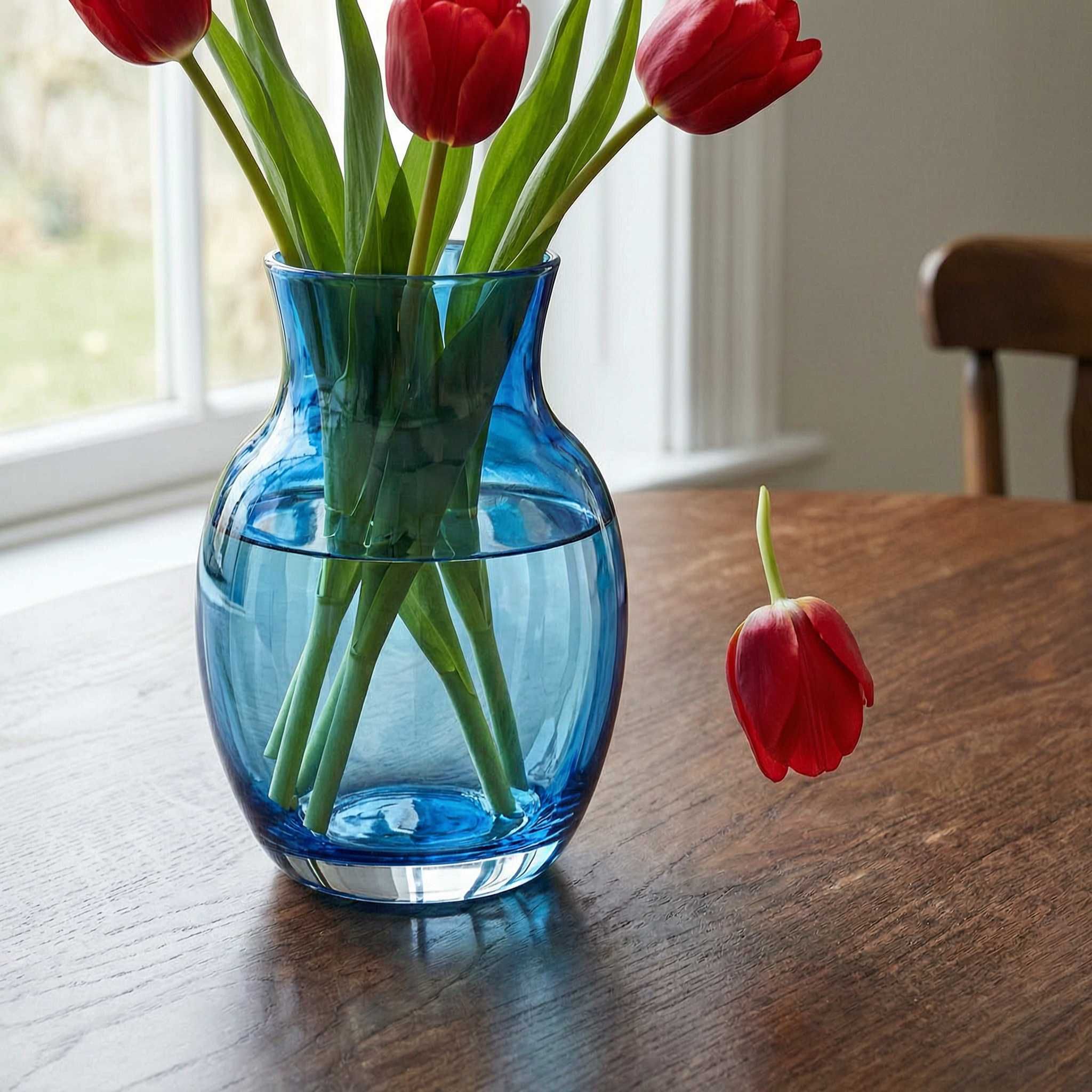
- Kısıtlama Memnuniyeti: Wan 2.7, çok katmanlı mantıksal bir talebi başarıyla ele aldı, vazonun içine yerleştirilecek "üç lale" ile düşerken işlenecek "tek" kopuk laleyi doğru bir şekilde ayırt etti. Bu, modelin oluşturma öncesi akıl yürütme mimarisinin karmaşık mekansal talimatları etkili bir şekilde yönettiğini doğruluyor.
- Fizik Mantığı: Yüzen lale, mevcut metinden görüntüye modellerinde yaygın bir başarısızlık modudur. Model, gerçek bir 3B fizik motorundan yoksun olduğu için çiçeği masaya doğru hareket eden bir nesne yerine masanın yakınında bir nesne olarak işledi.
- Güçlü Yönler: Model, malzeme biliminde mükemmeldi. Mavi camın ışıkla ve masanın meşe dokusuyla etkileşimi birinci sınıf, bu da çekirdek görsel sentezinin güçlü olduğunu kanıtlıyor, ancak mantıksal kısıtlama memnuniyetinin daha fazla ayarlanması gerekiyor.
- Performans Değerlendirmesi: Nano Banana Pro Oluşturma
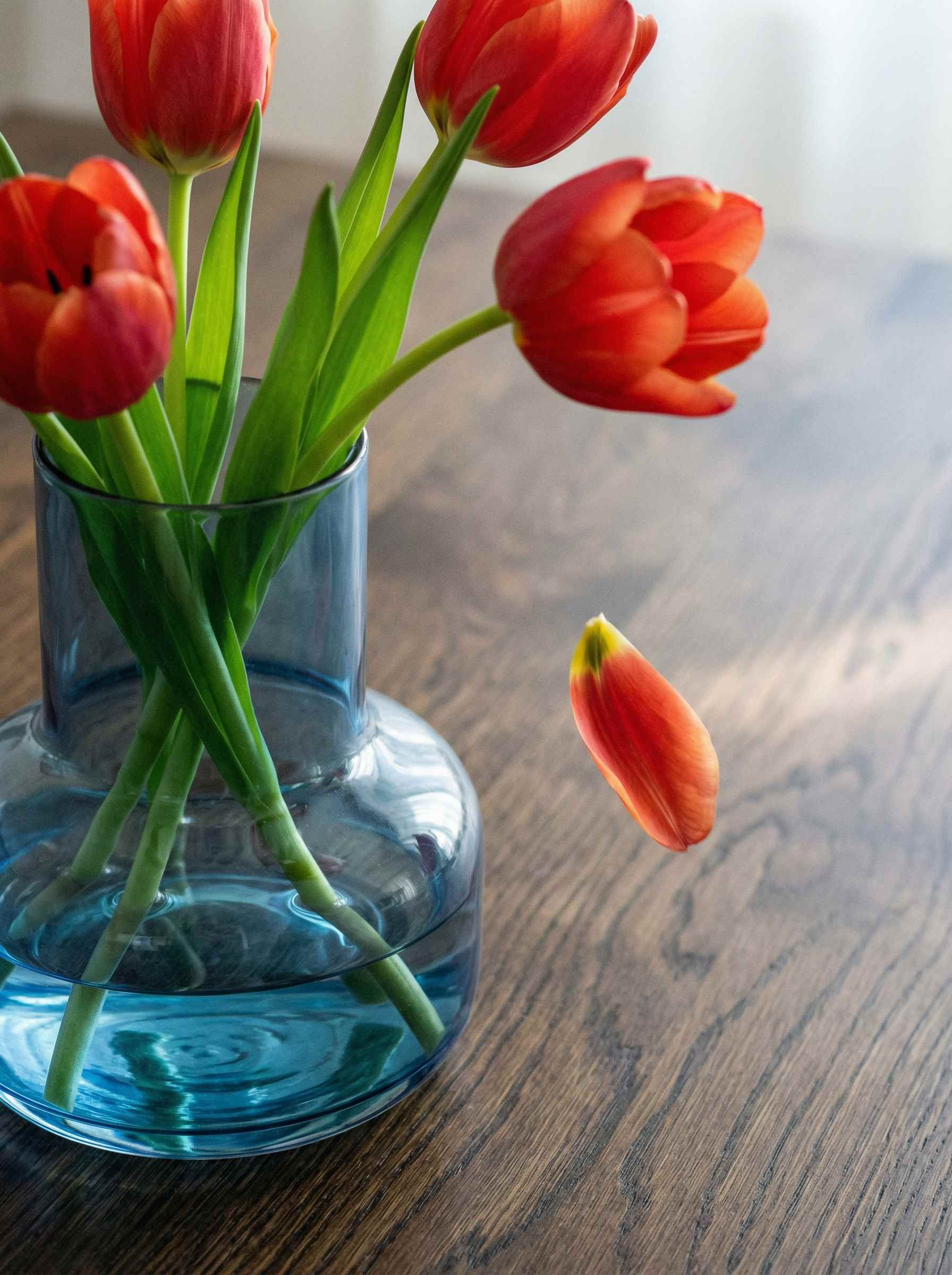
- Kısıtlama Memnuniyeti: Nano Banana Pro olağanüstü malzeme işleme (cam kırılması ve ahşap damarı dikkat çekici derecede gerçekçi) sergilerken, belirli sayma kısıtlaması ile mücadele etti ve istenenden daha fazla lale üretti. Bu, Wan 2.7'nin doğru bir şekilde tanımlayıp nesne sayısını üçle sınırlamasıyla tezat oluşturuyor.
- Fizik ve Gerçekçilik: Her iki model de yaprağın "düşme" hareketini başarıyla yakaladı. Ancak, Nano Banana Pro'nun yaprağın kendisini işlemesi, Wan 2.7 çıktısına kıyasla sahnenin ışığına biraz daha "organik" ve entegre hissettiriyor.
- Performans Değerlendirmesi: GPT Image 1.5 Oluşturma
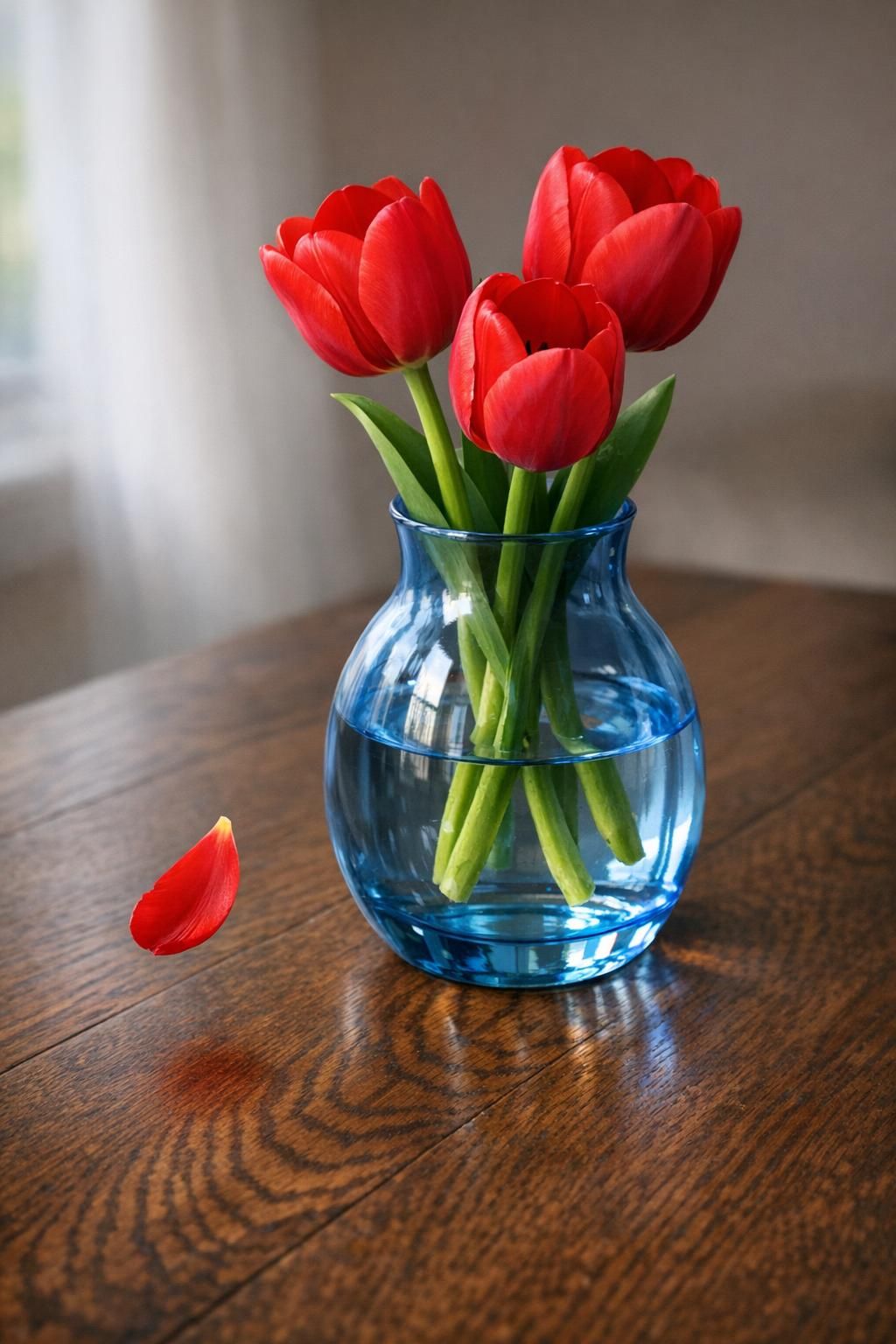
- Kısıtlama Memnuniyeti: Bu oluşturma mükemmel bir "Üçlü Geçiş". GPT Image 1.5, vazonun içindeki üç lale ile tek kopuk yaprak arasında başarıyla ayrım yaparken olağanüstü fotogerçekçiliği korudu. Nano Banana Pro'nun yaptığı gibi fazladan çiçek "halüsinasyonu" görmedi.
- Fotogerçekçilik: Camın, su seviyesinin ve yumuşak doğal ışığın meşe ahşap damarıyla etkileşiminin işlenmesi birinci sınıf. Görsel kalite olarak hem Wan 2.7 hem de Nano Banana Pro ile aynı seviyede, ancak üstün mantıksal uyum ile.
- Performans Değerlendirmesi: Seedream 5.0 Oluşturma
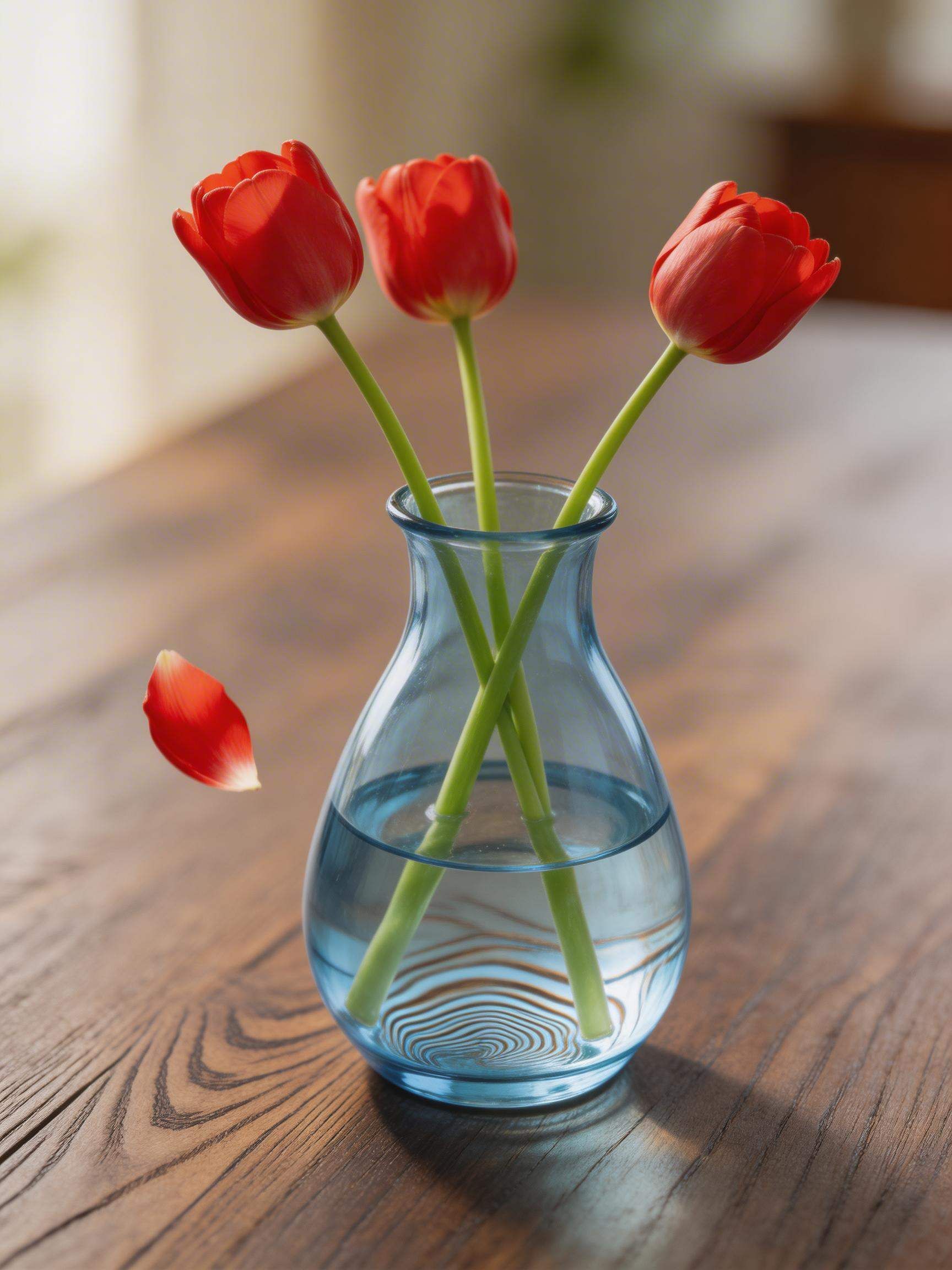
- Kısıtlama Memnuniyeti:Seedream 5.0 bir "Üçlü Geçiş" elde ediyor. Üç lale kısıtlamasını doğru bir şekilde tanımladı ve düşen yaprağın fiziğini doğru bir şekilde işledi.
- Stilistik Not: İlginç bir şekilde, Seedream 5.0, vazonun tabanında GPT Image 1.5 veya Wan 2.7 çıktılarında görülen daha "fiziksel olarak doğru" kırılmaya kıyasla daha stilize, neredeyse "sanatsal olarak yorumlanmış" bir kırılma deseni üretti. Bu, görsel niyete ve estetik çekiciliğe öncelik veren bir "Zeka-Öncelikli" model olarak doğasıyla uyumludur.
Kıyaslama Performansına Genel Bakış:
| Model | Mantıksal Uyum (Sayma) | Fiziksel Doğruluk (Düşme Hareketi) | İşleme Kalitesi (Kırılma) | Final Notu |
| Wan 2.7 | ✅ 3/3 | ✅ 2/3 | ✅ 3/3 | 8 |
| GPT Image 1.5 | ✅ 3/3 | ✅ 3/3 | ✅ 3/3 | 9 |
| Seedream 5.0 | ✅ 3/3 | ✅ 2/3 | ✅ 2/3 | 7 |
| Nano Banana Pro | ❌ 2/3 | ✅ 2/3 | ✅ 3/3 | 7 |
Metin İşleme: "Tabela" Savaşı
Yıllarca üretilen sanat eserlerinin çoğu, dağınık "AI anlamsız sözleri" tarafından mahvedildi. 2026 itibarıyla durumlar tamamen farklı görünüyor. En iyi modeller artık bu eski kusurları düzeltmek için derin dil araçları kullanıyor. Işıldayan neon tabelalardan karmaşık kılavuzlara kadar her metin parçası artık mükemmel bir netlikle görünüyor.
Test Tasarımı: "Tipografi Stres Testi"
Test İstemi: Beyaz bir masa üzerinde şık, modern bir ürün kutusunu gösteren yüksek çözünürlüklü bir stüdyo fotoğrafı. Kutunun ön yüzünde ortalanmış, net, kalın bir stilde 'RoboCompanion 2026' kelimeleri yer alıyor. Hemen altında, daha küçük bir slogan: 'Her harekette zeka.' Yazı tipi keskin ve okunması kolay. Kutunun üzerine yumuşak, eşit bir ışık düşüyor, böylece her harf tamamen net kalıyor ve bulanık görünmüyor.
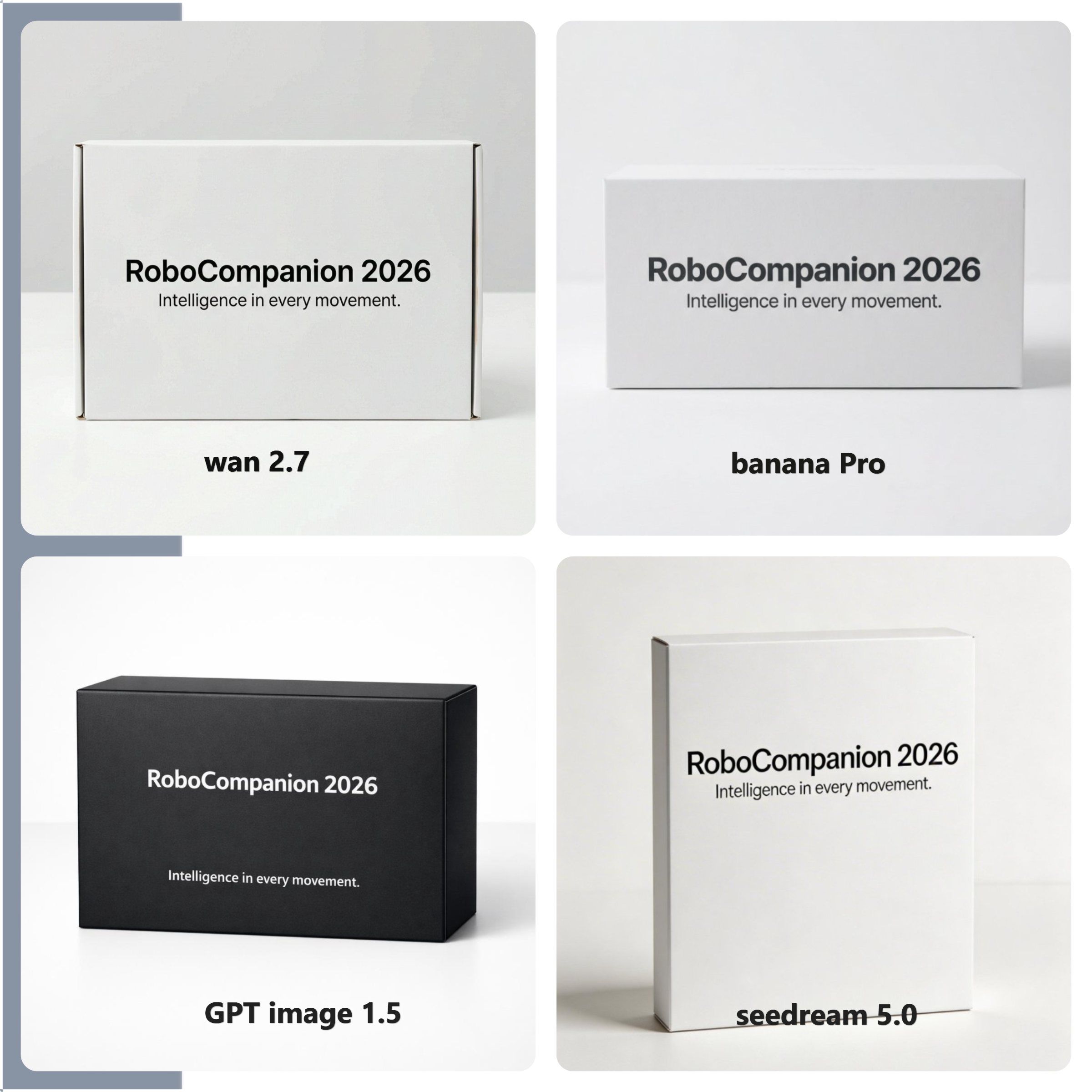
- Wan 2.7 (Hassasiyet Uzmanı): Mükemmel bir puan elde etti. "RoboCompanion 2026" metninin işlenmesi net, mükemmel şekilde aralıklı ve istenen minimalist estetiği korudu. Şu anda teknik ticari tasarım için yenilmesi gereken model.
- Nano Banana Pro (Üretim Gücü): Metni ürün ambalajına entegre etmede mükemmeldi. Metnin fiziksel malzemelerle (ışık, yüzey dokusu) nasıl etkileşime girdiğine dair en iyi anlayışı sergiledi ve bu da onu üst düzey e-ticaret görselleştirmesi için ideal seçim haline getirdi.
- GPT Image 1.5 (Talimat Dinleyici): Programlı, talimat ağırlıklı iş akışları için en güvenilir model olduğunu bir kez daha kanıtladı. İşlemesi temizdi ve düzen hiyerarşisini kesinlikle takip etti, bu da onu bütçe dostu ancak profesyonel kalitede bir seçenek haline getirdi.
- Seedream 5.0 (Çok Yönlü Düşünür): Tipografik kısıtlamaları iyi bir şekilde ele alırken imza niteliğindeki sinematik kompozisyonunu korudu. Karmaşık istem mantığını mükemmel metin işlemeyle dengeleme yeteneği, onu storyboard ve pazarlama kampanyaları için en iyi seçeneklerden biri yapıyor.
Bu açıdan hepsi çok iyi performans gösterdi; şu anda AI modelleri metni artan bir hassasiyetle işliyor. Birkaç araç zirve için rekabet ederken, uzmanlıkları gereken metnin karmaşıklığına ve diline göre değişiklik gösteriyor:
| AI Modeli | Birincil Güç | En Uygun Uygulama |
| Nano Banana Pro | Uzun metin okunabilirliği | Teknik diyagramlar ve infografikler |
| Wan 2.7 | Çok dilli karakter aralığı | Küresel marka varlıkları (12+ dil) |
| GPT Image 1.5 | Bağlamsal yerleştirme | UI/UX maketleri ve temiz başlıklar |
| Seedream 5.0 | Anlamsal-Niyet Sentezi | Olgusal tabelalar ve güncel olay varlıkları |
Akıllı Detay ve Dijital Gürültü
2026'da büyük değişim, basit keskinleştirmeden akıllı detaylandırmaya geçiş. Teknoloji artık bir görüntüye rastgele netlik eklemiyor. Konuya bakar ve anlamlı olan detayları ekler. Ciltte gerçek gözenekler veya ahşapta doğal damar desenleri göreceksiniz.
Test Tasarımı: "Makro-Doku Stres Testi"
Test İstemi: Bir insan gözünün ve bitişiğindeki şakağın aşırı makro, 4K profesyonel stüdyo fotoğrafı. Görüntü, cilt üzerinde yuvarlanan, ince, tekrarlanmayan cilt gözenekleri ve tüy tüylerinden oluşan bir kümenin tam üzerine yerleştirilmiş tek bir hiper-gerçekçi su damlasını yakalamalıdır. İris, belirgin bir pupilla bölgesi ile karmaşık, lifli doku katmanları sergilemelidir. Korneanın yansımasının içinde, dışarıda görünür bir yeşil ağaç bulunan net, küçük, bozulmamış bir pencere işlenmelidir. Aydınlatma, her bir cilt gözenek ve kıl folikülünün altında mikroskobik gölgeler oluşturmak için keskin, yönlü yan aydınlatma olmalıdır.
Değerlendirme Rubriği:
| Yetenek | Performans Analizi |
| Akışkanlar Dinamiği | Su damlasının statik boncuklanmaya karşı "yuvarlanma" fiziğini değerlendirir. |
| Mikro-Gölgeleme | Yan aydınlatmanın gözenekler ve tüy tüyleri altında gölge oluşturma yeteneğini analiz eder. |
| Optik Yansıma | Kornea üzerindeki pencere yansımasının netlik ve bozulma seviyelerini test eder. |
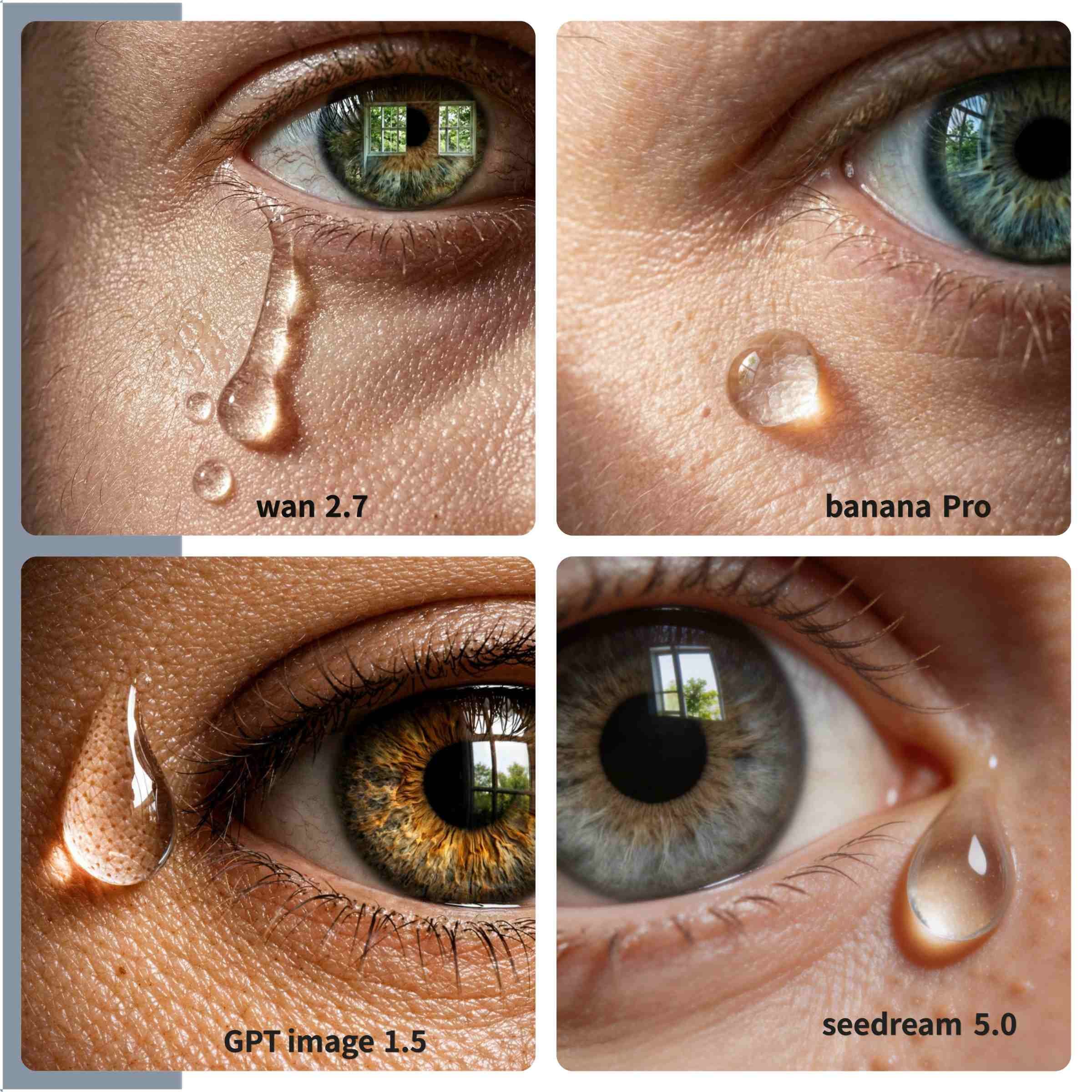
- Wan 2.7: Akışkanlar dinamiğinde üstün bir ustalık sergiler. Suyun cilt yüzeyiyle etkileşimi ("yuvarlanma" etkisi) fiziksel olarak doğru hissettirir. Gözenek dokusu iyi olsa da, ciltten irise geçiş, yan aydınlatma isteminde istenen keskin mikroskobik ayrımdan yoksundur. Statik yüzey dokusundan ziyade sıvının fiziğinin ön planda olduğu "aksiyon" makro fotoğrafçılığı için mükemmeldir.
- Banana Pro: Bu model, "keskin, yönlü yan aydınlatmayı" en başarılı şekilde yakaladı. Cilt gözenekleri ve tüy tüyleri altındaki gölgeleme burada en belirgin ve gerçekçi. Korneadaki yansıma hassas, minyatür pencereyi ve yeşil ağacı en az renk sapması ile işliyor. Gözyaşı damlası, istenen "yuvarlanma" hareketinden ziyade biraz daha "statik" veya "boncuklu". Teknik makro gerçekçilik ve aydınlatma doğruluğu için net kazanan.
- GPT Image 1.5: Iristeki renk derinliği oldukça zengin, lifli doku katmanlarını net bir şekilde gösteriyor. "Bozulmamış pencere" yansıması gereksinimi ile en çok mücadele etti. Yansıma hafifçe çarpık/dağınık görünüyor ve cilt dokusu, detaylı olmasına rağmen, diğer modellerde görülen keskin, yan aydınlatmalı gölgelerin derinliğinden yoksun. Portre veya sanatsal renk kompozisyonu için en iyisi, ancak "stüdyo makro" teknik gereksinimlerinde yetersiz kalıyor.
- Seedream 5.0: Genel olarak oldukça tutarlı görüntü dengesi. Yansımayı ve gözyaşı damlasını kompozisyonel olarak doğal hissettirecek şekilde başarıyla entegre etti. Cilt dokusu, Banana Pro'nun gözenek odaklı çıktısına kıyasla biraz "pürüzsüzleştirilmiş" hissettiriyor. Aydınlatma daha dağınık, istenen "mikroskobik gölgelerin" bir kısmını kaybediyor. Saf teknik makro doğruluğundan ziyade genel görüntü estetiğine öncelik veren güvenilir, yüksek kaliteli bir çıktı.
| Model | Doku/Gözenek Gerçekçiliği | Yansıma Doğruluğu | Makro Derinlik/Odak | Toplam Puan (1-10) |
| Wan 2.7 | Yüksek (Akışkan bağlantısı) | İyi (Bozulmamış) | Orta | 8.5 |
| Banana Pro | Yüksek (Keskin) | Mükemmel (Net) | Yüksek | 9.2 |
| GPT Image 1.5 | Orta | Orta (Dağınık) | Orta | 7 |
| Seedream 5.0 | Orta | İyi | Orta | 7.5 |
Karar: Wan 2.7 Yeni Kral mı?
AI'nın hızlı hareket eden dünyasında, kendi görevleriniz için doğru aracı seçmek zorundasınız. En son model sıralamalarına baktığımızda, herkes için tek bir "en iyi" seçenek yok. Zirve noktası gerçekten neyi inşa etmeniz gerektiğine ve kendi yaratıcı hedeflerinize bağlı.
Doğru AI Görüntü Oluşturucuyu seçmek, teknik çıktıyı özel üretim ihtiyaçlarınızla dengelemeye bağlıdır. Aşağıdaki döküm, hangi modelin hedeflerinize en iyi hizmet ettiğini tanımlamaya yardımcı olur:
| Model | Birincil Güç | İdeal Kullanım Durumu |
| Wan 2.7 | İstem Uyumu | Hassas, dil tabanlı düzenlemeler gerektiren profesyoneller. |
| Nano Banana Pro | Görsel Sadakat | Fotogerçekçilik ve 4K çıktı gerektiren üst düzey üretim. |
| GPT Image 1.5 | Tutarlılık | Hikaye anlatımına odaklanmış ChatGPT ekosistemindeki kullanıcılar. |
| Seedream 5.0 | Verimlilik | Düşük maliyetli, yüksek hızlı API ölçeklendirmesine öncelik veren geliştiriciler. |
"Kral" unvanı, tahtınıza bağlıdır
- Wan 2.7'yi seçin eğer "aşırı" istem uyumu gerekiyorsa. Muhtemelen mevcut en itaatkar modeldir; kullanıcıların kompozisyon bütünlüğünü kaybetmeden doğal dil talimatlarıyla görüntüleri değiştirmesine olanak tanır.
- Nano Banana Pro'yu seçin eğer gerçek fotoğraflara benzeyen görüntülere ihtiyacınız varsa. Yüksek kaliteli baskılar veya profesyonel ekranlar için en iyi şekilde çalışır.
- GPT Image 1.5 ile devam edin eğer ChatGPT'yi sık kullanıyorsanız. Farklı resimlerde karakterlerin aynı görünmesini sağlamada harikadır. Bu, hikaye anlatmak için çok yardımcıdır.
- Seedream 5.0'ı kullanın eğer bir API'ye hızlı bir şekilde bağlanması gereken bir uygulama yapıyorsanız. Her istek için maliyetleri düşük tutmanız gerektiğinde en iyi seçimdir.
Son Düşünce
Wan 2.7, yerleşik devleri tahtından indirmek zorunda değil, ancak en mantıklı yaratıcı ortak olarak kendine özgü bir niş oluşturdu. Sadece anahtar kelimelere dayalı çizim yapmaz; isteminizin ardındaki niyeti aktif olarak anlar, bu da onu her şeyden önce hassasiyete değer verenler için güçlü bir varlık haline getirir.
SSS
Wan 2.7 "Düşünme Modu" görüntü doğruluğunu nasıl artırır?
Geleneksel difüzyon modellerinin aksine, Wan 2.7 bir Flow Matching mimarisi ve oluşturma öncesi bir akıl yürütme adımı kullanır. Model, işleme yapmadan önce mekansal ilişkileri ve kompozisyon mantığını analiz eder. Bu, imkansız nesne oranları veya yanlış gölge yönleri gibi yaygın AI hatalarını önemli ölçüde azaltır.
Wan 2.7 yüksek hacimli API entegrasyonu için uygun mu?
Evet, Wan 2.7 özellikle Atlas Cloud gibi sağlam altyapı sağlayıcıları aracılığıyla dağıtıldığında ölçeklenebilirlik için tasarlanmıştır. Bireysel yaratıcılar web arayüzleri kullanabilirken, kurumsal kullanıcılar binlerce eşzamanlı isteği işlemek için Atlas Cloud'un sağladığı düşük gecikmeli, sunucusuz ortama ihtiyaç duyar.
Atlas Cloud, teknolojiniz için hızlı bir ağ geçidi olarak çalışır. Karma medya modellerini kolayca kurmanız için size "tek duraklı" bir API sağlar. Bu, sürekli çalışması gereken büyük projelere çok yardımcı olur. Ayrıca maliyetlerinizi düşük tutarken her şeyin çevrimiçi kalmasını sağlar.
| Entegrasyon Metriği | Atlas Cloud Standardı | Kendi Kendine Barındırma / Yerel |
| Kurulum Karmaşıklığı | Minimum (Sunucusuz API) | Yüksek (GPU Küme Yönetimi) |
| Ölçeklenebilirlik | Talebe göre otomatik ölçeklendirme | Donanıma göre sabit |
| Bakım | Atlas tarafından yönetilir | Manuel Güncellemeler/Yamalar |
| Maliyet Modeli | Görsel başına ödeme (~$0.03/görsel) | Yüksek Peşin Sermaye Gideri |
Görüntü oluşturma için ChatGPT'den daha iyi hangi AI var?
ChatGPT'yi yenen bir model seçmek gerçekten hedefinize bağlıdır. ChatGPT, anlamı anlama ve hikaye detaylarını düz tutma konusunda hala en iyisidir. Bununla birlikte, diğer üst düzey araçlar artık görüntüleri daha gerçekçi yapma konusunda daha iyidir. Bu yeni modeller, projeleriniz için daha fazla sanatsal derinlik ve daha yüksek görsel kalite sunar.
| Model | Ana Güç | En Uygun Kullanım Durumu |
| Wan 2.7 | Düşünme Modu | Hassas istem uyumu ve karmaşık mekansal mantık (ör. belirli nesneleri tam ilişkilerde yerleştirme). |
| GPT Image 1.5 | Yerel Tipografi | Kusursuz işlenmiş çok satırlı metin ve hikaye anlatımı için derin karakter tutarlılığı gerektiren tasarımlar. |
| Banana Pro | 4K Üretim | Google ekosisteminde (Gemini 3 Pro Image) profesyonel düzeyde çözünürlük ve yüksek hızlı yineleme. |
- Wan 2.7'yi seçin eğer isteminiz derin "akıl yürütme" veya çok adımlı doğal dil düzenlemesi gerektiriyorsa. Teknik yaratıcı brifler için en "itaatkar" modeldir.
- GPT Image 1.5 ile devam edin eğer tabelalar veya etiketler gibi net, okunabilir metne ihtiyacınız varsa. Ayrıca, işiniz için zaten OpenAI araçlarını kullanıyorsanız en iyi seçimdir.
- Banana Pro'yu kullanın baskı veya üst düzey dijital projeler için 4K kalitesine ihtiyacınız olduğunda. Size hızlı sonuçlar ve profesyonel görsel detayın en iyi karışımını verir.





