GLM LLM Models
GLM is a cutting-edge LLM series by Z.ai (Zhipu AI) featuring GLM-5, GLM-4.7, and GLM-4.6. Engineered for complex systems and long-horizon agentic tasks, GLM-5 outperforms top-tier closed-source models in elite benchmarks like Humanity’s Last Exam and BrowseComp. While GLM-4.7 specializes in reasoning, coding, and real-world intelligent agents, the entire GLM suite is fast, smart, and reliable, making it the ultimate tool for building websites, analyzing data, and delivering instant, high-quality answers for any professional workflow.
Poznaj Wiodące Modele
Atlas Cloud zapewnia najnowsze, wiodące w branży modele kreatywne.

Co Wyróżnia GLM LLM Models
Atlas Cloud zapewnia najnowsze, wiodące w branży modele kreatywne.

Advanced Reasoning
Tuned for strong logical reasoning, structured analysis, and multi-step problem solving.

Cost-Efficiency
Optimized architectures keep latency and costs under control.

Safety & Governance
Built-in content filters, auditing tools, and policy controls help teams deploy.

Enterprise Reliability
Production-ready SLAs, monitoring, and governance features help teams confidently ship applications.

Chinese–English Excellence
Native-strength Chinese and fluent English support enable high-quality bilingual chat, search, and generation.

Developer-Friendly Ecosystem
Clean APIs, SDKs, and tooling make it easy to integrate, fine-tune, and operate Z.ai across products and platforms.
Prędkość szczytowa
Najniższy koszt
| Model | Description |
|---|---|
| GLM-5 | GLM-5 is Z.ai's flagship LLM featuring a massive 202.75K context window optimized for complex systems and long-horizon agentic tasks. Outperforming elite closed-source models in benchmarks like Humanity’s Last Exam and BrowseComp, it provides robust programming and stable multi-step reasoning at highly competitive baseline pricing. |
| GLM-4.7 | GLM-4.7 is a high-performance LLM with a 202.75K context window specifically engineered for real-world intelligent agents, advanced reasoning, and professional coding. Fast, smart, and reliable, it serves as the ideal engine for building complex websites and automating sophisticated professional workflows with precision. |
| GLM-4.6 | GLM-4.6 is a powerful MoE LLM with a 202.75K context window designed for rapid data analysis and instant, high-fidelity answers. This dependable model excels at high-efficiency tasks like creating professional slides and web content, offering a smart balance of speed and enterprise-grade performance. |
Nowe funkcje GLM LLM Models + Showcase
Połączenie zaawansowanych modeli z platformą Atlas Cloud z akceleracją GPU zapewnia niezrównaną szybkość, skalowalność i kreatywną kontrolę w generowaniu obrazów i wideo.
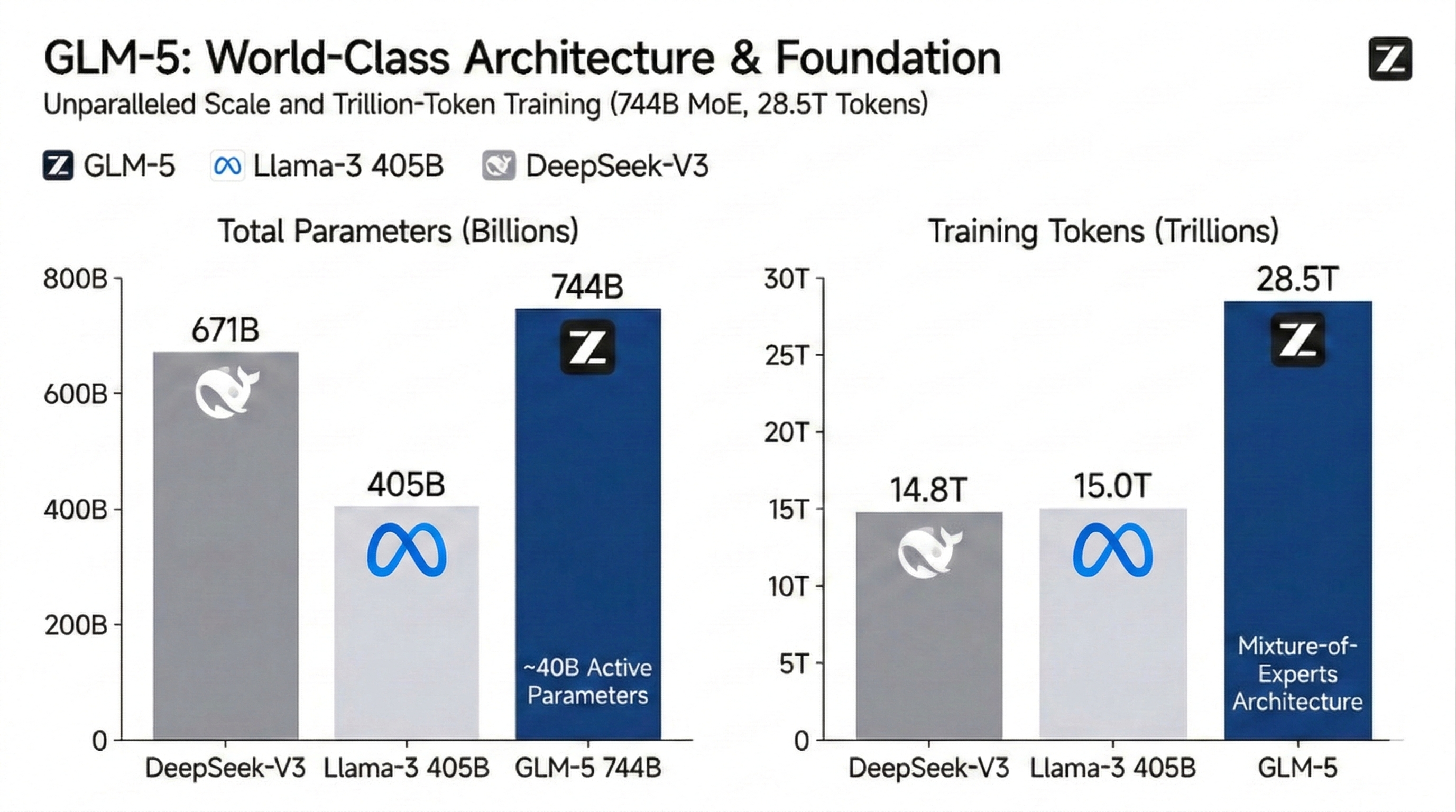
Potężna architektura MoE 744B i uniwersalna baza wiedzy
Model GLM-5 wykorzystuje architekturę Mixture-of-Experts (MoE) o 744 miliardach parametrów, wytrenowaną na oszałamiającej liczbie 28,5 biliona tokenów, aby na nowo zdefiniować pułapy wydajności open-source. Poprzez optymalizację 40 miliardów aktywnych parametrów, umożliwia ogromny skok w gęstości wiedzy o świecie i precyzji wyszukiwania. Jest to wiodący fundament dla wielkoskalowych zadań kognitywnych i syntezy złożonych danych.
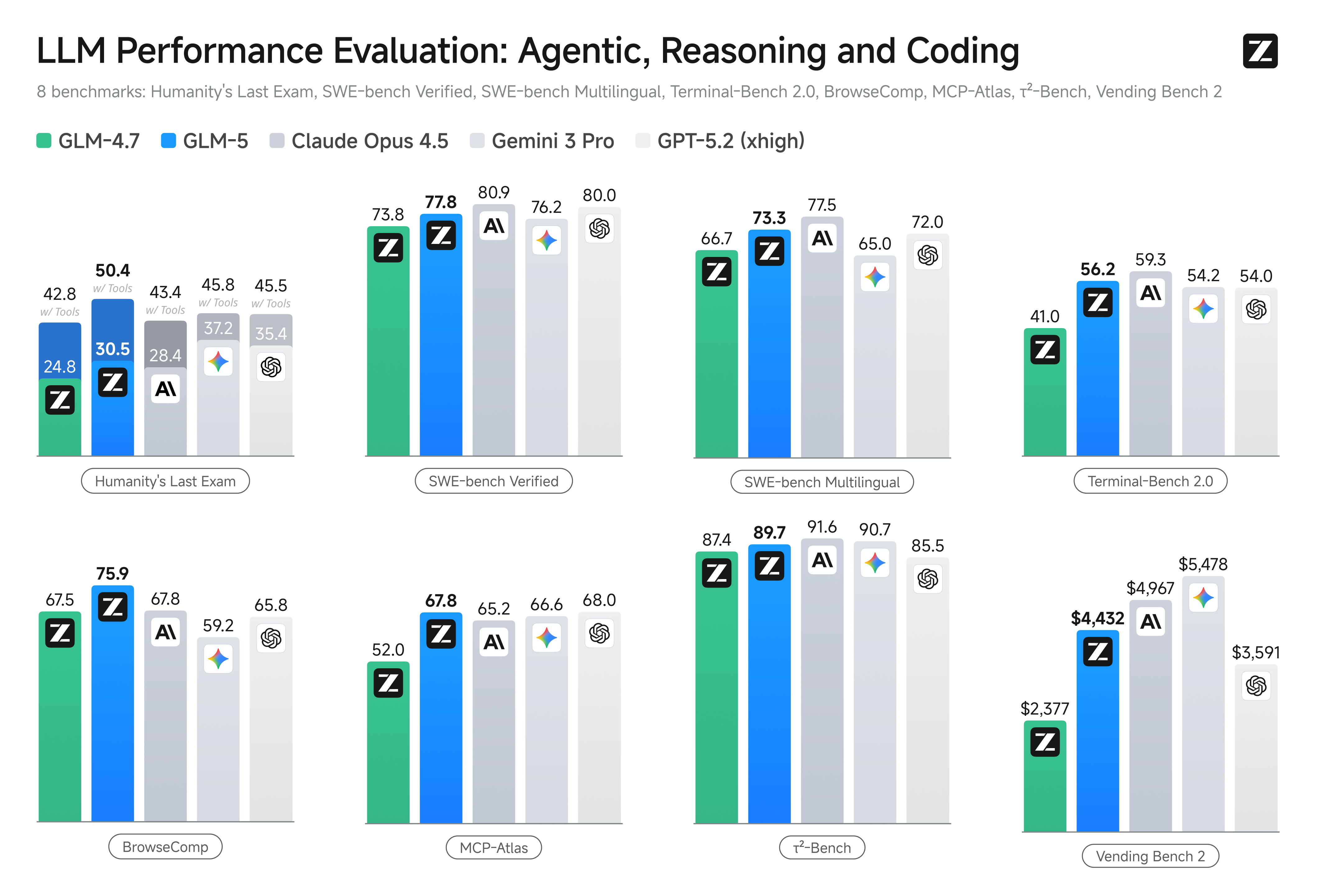
Przełomowa inżynieria systemów agentowych z GLM-5
GLM-5 wprowadza zaawansowane możliwości agenckie zaprojektowane do długofalowego, systemowego wykonywania zadań w środowiskach wieloetapowego wnioskowania. Poprzez integrację wyrafinowanej logiki planowania w swojej podstawowej architekturze, model zachowuje wyjątkową stabilność podczas zautomatyzowanego tworzenia oprogramowania i profesjonalnego sporządzania dokumentów prawnych. Służy jako ostateczny silnik dla autonomicznych przepływów pracy wymagających ekstremalnej precyzji i długoterminowej spójności.
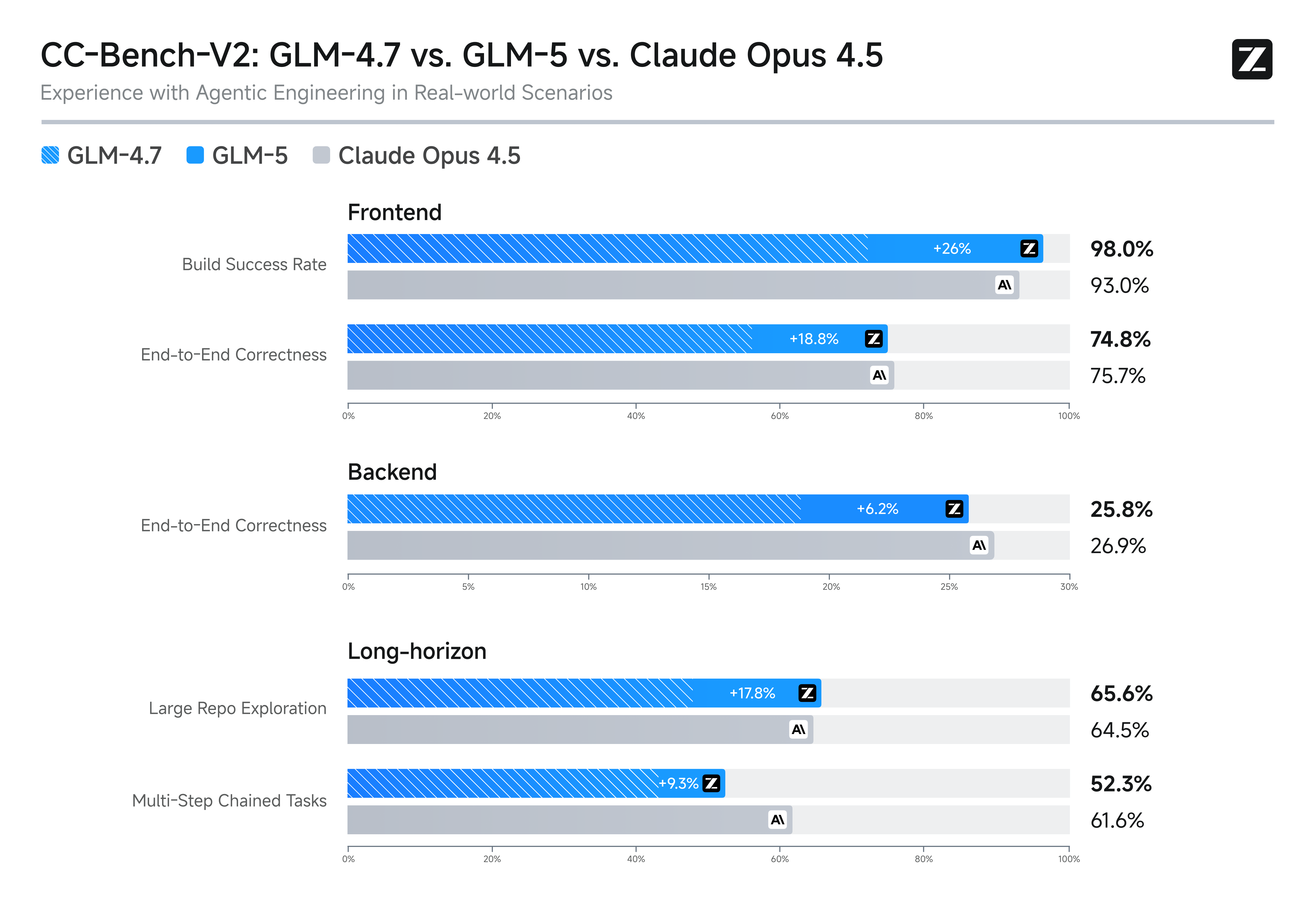
Slime: Asynchroniczne uczenie ze wzmocnieniem i ewolucja logiczna
GLM-5 wykorzystuje innowacyjną infrastrukturę asynchronicznego uczenia przez wzmacnianie „Slime”, aby zrewolucjonizować efektywność post-treningu i rygor logiczny. Ten przełom znacząco poprawia jakość generowania kodu i wnioskowanie algorytmiczne, przewyższając wcześniejsze benchmarki i zapewniając sobie pozycję najwyższej klasy modelu open-source. Jest to ostateczne rozwiązanie dla rozwoju full-stack i rozwiązywania problemów strukturalnych wysokiego poziomu.
Co Możesz Zrobić z GLM LLM Models
Odkryj praktyczne przypadki użycia i przepływy pracy, które możesz zbudować z tą rodziną modeli — od tworzenia treści i automatyzacji po aplikacje klasy produkcyjnej.
Kompleksowa inteligencja repozytorium z GLM-5
API GLM-5 umożliwia programistom przetwarzanie całych baz kodu w celu głębokiej analizy logicznej i refaktoryzacji strukturalnej. Poprzez mapowanie grafów zależności i śledzenie złożonych asynchronicznych przepływów danych, identyfikuje wyścigi (race conditions) w przypadkach brzegowych i ukryty dług techniczny. Idealne do szybkiego wdrażania zespołów, zautomatyzowanych przeglądów PR oraz utrzymywania skalowalnych, wysokowydajnych architektur mikrousług.
Natychmiastowe prototypowanie Full-Stack przy użyciu GLM-5
W przypadku programowania opartego na intuicji (vibe-driven), GLM-5 przekształca abstrakcyjne projekty wizualne i fragmentaryczne notatki w możliwe do wdrożenia komponenty React lub Next.js. Zajmuje się on ciężką pracą związaną z generowaniem kodu standardowego (boilerplate), stylizacją Tailwind CSS i zarządzaniem stanem, zapewniając jednocześnie spójność między stronami. Idealne rozwiązanie dla niezależnych założycieli (solo founders), eksperymentatorów UX i błyskawicznego dostarczania funkcjonalnych MVP.
Autonomiczna orkiestracja przepływu pracy z GLM-5
GLM-5 wyróżnia się w zarządzaniu długoterminowymi zadaniami badawczymi, które wymagają wieloetapowego rozumowania i integracji narzędzi w czasie rzeczywistym. Może niezależnie syntetyzować dane rynkowe z wielu źródeł, sporządzać zgodne z przepisami streszczenia prawne i automatyzować złożone planowanie międzyplatformowe bez utraty kontekstu. Ten przypadek użycia jest odpowiedni dla kierowników projektów, prawników i każdego, kto potrzebuje niezawodnego cyfrowego agenta do operacji systemowych.
Porównanie Modeli
Zobacz, jak wypadają modele różnych dostawców — porównaj wydajność, ceny i unikalne mocne strony, aby podjąć świadomą decyzję.
| Model | Context | Max Output | Input | Positioning |
|---|---|---|---|---|
| GLM-5 | 202.75K | 202.75K | Text | Flagship Foundation Model |
| GLM-4.7 | 202.75K | 202.75K | Text | Flagship Foundation Model |
| GLM-4.6 | 202.75K | 202.75K | Text | Efficient MoE Model |
| DeepSeek V3.2 | 163.84K | 163.84K | Text | Flagship General |
| MiniMax-M2.5 | 204.8K | 196.6K | Text | SOTA Agentic Coding |
How to Use GLM LLM Models on Atlas Cloud
Get started in minutes — follow these simple steps to integrate and deploy models through Atlas Cloud’s platform.
Create an Atlas Cloud Account
Sign up at atlascloud.ai and complete verification. New users receive free credits to explore the platform and test models.
Dlaczego Używać GLM LLM Models na Atlas Cloud
Połączenie zaawansowanych modeli GLM LLM Models z platformą GPU-akcelerowaną Atlas Cloud zapewnia niezrównaną wydajność, skalowalność i doświadczenie deweloperskie.
Wydajność i Elastyczność
Niska Latencja:
Inferencja zoptymalizowana pod GPU dla rozumowania w czasie rzeczywistym.
Zunifikowane API:
Uruchamiaj GLM LLM Models, GPT, Gemini i DeepSeek za pomocą jednej integracji.
Przejrzysta Wycena:
Przewidywalne rozliczenia za token z opcjami serverless.
Przedsiębiorstwo i Skala
Doświadczenie Dewelopera:
SDK, analityka, narzędzia dostrajania i szablony.
Niezawodność:
99,99% dostępności, RBAC i logowanie gotowe na zgodność.
Bezpieczeństwo i Zgodność:
SOC 2 Type II, zgodność z HIPAA, suwerenność danych w USA.
Często Zadawane Pytania o GLM LLM Models
Dzięki 28,5 bln tokenów danych treningowych i znakomitym wynikom testów porównawczych, GLM-5 jest powszechnie uważany za „sufit open-source”. Rywalizuje z globalnymi modelami komercyjnymi najwyższej klasy lub je przewyższa pod względem wydajności i logiki, zapewniając potężny, wysokowydajny fundament dla globalnego ekosystemu deweloperskiego.
HLE to benchmark o wysokim stopniu trudności zaprojektowany w celu sprawdzenia, czy AI posiada ludzką wiedzę i umiejętność rozumowania na poziomie eksperckim. Osiągnięcie najwyższego wyniku przez GLM-5 oznacza, że jego opanowanie nauk pionierskich i złożonej logiki osiągnęło lub przekroczyło poziom wiodących modeli o zamkniętym kodzie źródłowym.
BrowseComp to definitywny ranking zdolności "Agentic", skupiający się na planowaniu i wykonywaniu złożonych zadań w rzeczywistych środowiskach internetowych. Najwyższy wynik reprezentuje zdolność GLM-5 do autonomicznego nawigowania w przeglądarkach i integrowania informacji z wielu stron, co czyni go wiodącym silnikiem Web Agent.
Ta architektura zapewnia ogromną „bazę wiedzy” składającą się z 744 miliardów parametrów, aktywując jedynie ~40 miliardów podczas wnioskowania (inference). Dla programistów oznacza to światowej klasy gęstość wiedzy i głębię rozumowania – przewyższającą gęste modele, takie jak Llama-3 405B – przy niższych opóźnieniach i kosztach.
Całkowita liczba parametrów reprezentuje „pojemność wiedzy” modelu, a 744B pozwala na ogromne magazynowanie faktów o świecie i logiki eksperckiej. Aktywne parametry reprezentują „moc obliczeniową” wykorzystywaną przy każdym wnioskowaniu. Dzięki architekturze MoE, GLM-5 zapewnia inteligencję na poziomie 744B przy użyciu zaledwie 40B obliczeń, łącząc ogromną bazę wiedzy z wysoką szybkością i opłacalną wydajnością.
Objętość danych do wstępnego treningu determinuje „szerokość widzenia” modelu. 28,5T tokenów to jeden z największych zbiorów danych na świecie (mniej więcej dwukrotność Llama-3), obejmujący rzadkie języki, specjalistyczne artykuły naukowe i ogromne ilości wysokiej jakości kodu. Zapewnia to, że GLM-5 posiada doskonałą dokładność i zdolność generalizacji podczas radzenia sobie ze złożonymi zapytaniami typu long-tail, niuansami międzykulturowymi i niskopoziomowym programowaniem systemowym.
Poznaj Więcej Rodzin
Happy Horse 1.0
HappyHorse-1.0 is a unified multimodal AI video generation model that climbed to the top of the Artificial Analysis Video Arena blind-test leaderboard for both text-to-video and image-to-video generation. CNBC Alibaba Group confirmed ownership of HappyHorse, developed under its Alibaba Token Hub (ATH) business unit, where it leads benchmarks outperforming ByteDance's Seedance 2.0 and others. Caixin Global Led by Zhang Di — the former VP of Kuaishou who architected Kling AI — the 15-billion parameter model generates 1080p video with synchronized audio in a single pass using a unified transformer architecture that bypasses the multi-stage pipelines used by every major competitor.

Seedance 2.0 Models
Seedance 2.0(by Bytedance) is a multimodal video generation model that redefines "controllable creation," moving beyond the limitations of text or start/end frames. It supports quad-modal inputs—text, image, video, and audio—and introduces an industry-leading "Universal Reference" system. By precisely replicating the composition, camera movement, and character actions from reference assets, Seedance 2.0 solves critical issues with character consistency and physical coherence, empowering creators to act as true "directors" with deep control over their output.
GPT Image 2 Models
GPT Image 2 is a state-of-the-art multimodal foundation model engineered for exceptional text-to-image generation with unprecedented photorealism and creative versatility. Developed by OpenAI as the evolution of the DALL-E lineage, it transforms detailed natural language descriptions into hyper-realistic imagery at up to 4K resolution. With proprietary "Neural Rendering Engine" technology for precise visual control, GPT Image 2 delivers studio-quality results with accurate anatomy, lighting, and composition—making it the premier AI tool for professional creators, enterprises, and developers demanding production-ready visual assets.
Wan2.7 Models
Launching this March, Wan2.7 is the latest powerhouse in the Qwen ecosystem, delivering a massive upgrade in visual fidelity, audio synchronization, and motion consistency over version 2.6. This all-in-one AI video generator supports advanced features like first-and-last frame control, 3x3 grid synthesis, and instruction-based video editing. Outperforming competitors like Jimeng, Wan2.7 offers superior flexibility with support for real-person image inputs, up to five video references, and 1080P high-definition outputs spanning 2 to 15 seconds, making it the premier choice for professional digital storytelling and high-end content marketing.
Veo3.1 Models
Google DeepMind’s Veo 3.1 represents a paradigm shift in AI video generation, empowering creators with director-level narrative control and cinematic-grade audio quality that seamlessly integrates with its enhanced visual realism. By bridging the gap between imaginative concepts and photorealistic execution, this advanced model offers a transformative solution for a wide range of application scenarios, from professional filmmaking and high-end advertising to immersive digital content creation.
ERNIE Image Models
ERNIE-Image is an open-weight text-to-image model developed by the ERNIE-Image Team at Baidu, built on a single-stream Diffusion Transformer (DiT) with 8B parameters and paired with a lightweight Prompt Enhancer that rewrites short prompts into richer, more structured descriptions before passing them to the diffusion backbone. NYU Shanghai RITS Released on April 15, 2026 under the Apache 2.0 license, it transforms natural language descriptions into detailed imagery with particular strength in text rendering and structured layout generation. ERNIE-Image is designed not only for strong visual quality, but for controllability in practical generation scenarios where accurate content realization matters as much as aesthetics — making it well-suited for commercial posters, comics, multi-panel layouts, and other content creation tasks that require both visual quality and precise control.
GPT Image Models
The GPT Image Family is OpenAI's latest suite of multimodal image generation and editing models, built on the powerful GPT architecture. This family includes three tiers — GPT Image-1, GPT Image-1.5, and GPT Image-1 Mini — each available in both Text-to-Image and Image-to-Image variants. Combining GPT's world-class language understanding with DALL·E-class visual synthesis, these models deliver exceptional prompt adherence, photorealistic rendering, and creative versatility across illustration, photography, design, and visualization tasks. The series offers flexible pricing and quality tiers to match any workflow — from rapid prototyping and high-volume content production to professional-grade final deliverables. Whether you need ultra-fast iterations at minimal cost or maximum quality for brand campaigns, the GPT Image Family has a solution tailored to your needs.
Nano Banana2 Models
Nano Banana 2 (by Google), is a generative image model that perfectly balances lightning-fast rendering with exceptional visual quality. With an improved price-performance ratio, it achieves breakthrough micro-detail depiction, accurate native text rendering, and complex physical structure reconstruction. It serves as a highly efficient, commercial-grade visual production tool for developers, marketing teams, and content creators.
Seedream5.0 Models
Seedream 5.0, developed by ByteDance’s Jimeng AI, is a high-performance AI image generation model that integrates real-time search with intelligent reasoning. Purpose-built for time-sensitive content and complex visual logic, it excels at professional infographics, architectural design, and UI assistance. By blending live web insights with creative precision, Seedream 5.0 empowers commercial branding and marketing with a seamless, logic-driven workflow that turns sophisticated data into stunning, high-fidelity visuals.
Kling3.0 Models
Kuaishou’s flagship video generation suite, Kling 3.0, features two powerhouse models—Kling 3.0 (Upgraded from Kling 2.6) and Kling 3.0 Omni (Kling O3, Upgraded from Kling O1)—both offering high-fidelity native audio integration. While Kling 3.0 excels in intelligent cinematic storytelling, multilingual lip-syncing, and precision text rendering, Kling O3 sets a new standard for professional-grade subject consistency by supporting custom subjects and voice clones derived from video or image inputs. Together, these models provide a comprehensive solution tailored for cinematic narratives, global marketing campaigns, social media content, and digital skit production.
GLM LLM Models
GLM is a cutting-edge LLM series by Z.ai (Zhipu AI) featuring GLM-5, GLM-4.7, and GLM-4.6. Engineered for complex systems and long-horizon agentic tasks, GLM-5 outperforms top-tier closed-source models in elite benchmarks like Humanity’s Last Exam and BrowseComp. While GLM-4.7 specializes in reasoning, coding, and real-world intelligent agents, the entire GLM suite is fast, smart, and reliable, making it the ultimate tool for building websites, analyzing data, and delivering instant, high-quality answers for any professional workflow.
Open AI Model Families
Explore OpenAI’s language and video models on Atlas Cloud: ChatGPT for advanced reasoning and interaction, and Sora-2 for physics-aware video generation.
Happy Horse 1.0
HappyHorse-1.0 is a unified multimodal AI video generation model that climbed to the top of the Artificial Analysis Video Arena blind-test leaderboard for both text-to-video and image-to-video generation. CNBC Alibaba Group confirmed ownership of HappyHorse, developed under its Alibaba Token Hub (ATH) business unit, where it leads benchmarks outperforming ByteDance's Seedance 2.0 and others. Caixin Global Led by Zhang Di — the former VP of Kuaishou who architected Kling AI — the 15-billion parameter model generates 1080p video with synchronized audio in a single pass using a unified transformer architecture that bypasses the multi-stage pipelines used by every major competitor.
Seedance 2.0 Models
Seedance 2.0(by Bytedance) is a multimodal video generation model that redefines "controllable creation," moving beyond the limitations of text or start/end frames. It supports quad-modal inputs—text, image, video, and audio—and introduces an industry-leading "Universal Reference" system. By precisely replicating the composition, camera movement, and character actions from reference assets, Seedance 2.0 solves critical issues with character consistency and physical coherence, empowering creators to act as true "directors" with deep control over their output.
GPT Image 2 Models
GPT Image 2 is a state-of-the-art multimodal foundation model engineered for exceptional text-to-image generation with unprecedented photorealism and creative versatility. Developed by OpenAI as the evolution of the DALL-E lineage, it transforms detailed natural language descriptions into hyper-realistic imagery at up to 4K resolution. With proprietary "Neural Rendering Engine" technology for precise visual control, GPT Image 2 delivers studio-quality results with accurate anatomy, lighting, and composition—making it the premier AI tool for professional creators, enterprises, and developers demanding production-ready visual assets.
Wan2.7 Models
Launching this March, Wan2.7 is the latest powerhouse in the Qwen ecosystem, delivering a massive upgrade in visual fidelity, audio synchronization, and motion consistency over version 2.6. This all-in-one AI video generator supports advanced features like first-and-last frame control, 3x3 grid synthesis, and instruction-based video editing. Outperforming competitors like Jimeng, Wan2.7 offers superior flexibility with support for real-person image inputs, up to five video references, and 1080P high-definition outputs spanning 2 to 15 seconds, making it the premier choice for professional digital storytelling and high-end content marketing.
Veo3.1 Models
Google DeepMind’s Veo 3.1 represents a paradigm shift in AI video generation, empowering creators with director-level narrative control and cinematic-grade audio quality that seamlessly integrates with its enhanced visual realism. By bridging the gap between imaginative concepts and photorealistic execution, this advanced model offers a transformative solution for a wide range of application scenarios, from professional filmmaking and high-end advertising to immersive digital content creation.
ERNIE Image Models
ERNIE-Image is an open-weight text-to-image model developed by the ERNIE-Image Team at Baidu, built on a single-stream Diffusion Transformer (DiT) with 8B parameters and paired with a lightweight Prompt Enhancer that rewrites short prompts into richer, more structured descriptions before passing them to the diffusion backbone. NYU Shanghai RITS Released on April 15, 2026 under the Apache 2.0 license, it transforms natural language descriptions into detailed imagery with particular strength in text rendering and structured layout generation. ERNIE-Image is designed not only for strong visual quality, but for controllability in practical generation scenarios where accurate content realization matters as much as aesthetics — making it well-suited for commercial posters, comics, multi-panel layouts, and other content creation tasks that require both visual quality and precise control.
GPT Image Models
The GPT Image Family is OpenAI's latest suite of multimodal image generation and editing models, built on the powerful GPT architecture. This family includes three tiers — GPT Image-1, GPT Image-1.5, and GPT Image-1 Mini — each available in both Text-to-Image and Image-to-Image variants. Combining GPT's world-class language understanding with DALL·E-class visual synthesis, these models deliver exceptional prompt adherence, photorealistic rendering, and creative versatility across illustration, photography, design, and visualization tasks. The series offers flexible pricing and quality tiers to match any workflow — from rapid prototyping and high-volume content production to professional-grade final deliverables. Whether you need ultra-fast iterations at minimal cost or maximum quality for brand campaigns, the GPT Image Family has a solution tailored to your needs.
Nano Banana2 Models
Nano Banana 2 (by Google), is a generative image model that perfectly balances lightning-fast rendering with exceptional visual quality. With an improved price-performance ratio, it achieves breakthrough micro-detail depiction, accurate native text rendering, and complex physical structure reconstruction. It serves as a highly efficient, commercial-grade visual production tool for developers, marketing teams, and content creators.
Seedream5.0 Models
Seedream 5.0, developed by ByteDance’s Jimeng AI, is a high-performance AI image generation model that integrates real-time search with intelligent reasoning. Purpose-built for time-sensitive content and complex visual logic, it excels at professional infographics, architectural design, and UI assistance. By blending live web insights with creative precision, Seedream 5.0 empowers commercial branding and marketing with a seamless, logic-driven workflow that turns sophisticated data into stunning, high-fidelity visuals.
Kling3.0 Models
Kuaishou’s flagship video generation suite, Kling 3.0, features two powerhouse models—Kling 3.0 (Upgraded from Kling 2.6) and Kling 3.0 Omni (Kling O3, Upgraded from Kling O1)—both offering high-fidelity native audio integration. While Kling 3.0 excels in intelligent cinematic storytelling, multilingual lip-syncing, and precision text rendering, Kling O3 sets a new standard for professional-grade subject consistency by supporting custom subjects and voice clones derived from video or image inputs. Together, these models provide a comprehensive solution tailored for cinematic narratives, global marketing campaigns, social media content, and digital skit production.
GLM LLM Models
GLM is a cutting-edge LLM series by Z.ai (Zhipu AI) featuring GLM-5, GLM-4.7, and GLM-4.6. Engineered for complex systems and long-horizon agentic tasks, GLM-5 outperforms top-tier closed-source models in elite benchmarks like Humanity’s Last Exam and BrowseComp. While GLM-4.7 specializes in reasoning, coding, and real-world intelligent agents, the entire GLM suite is fast, smart, and reliable, making it the ultimate tool for building websites, analyzing data, and delivering instant, high-quality answers for any professional workflow.
Open AI Model Families
Explore OpenAI’s language and video models on Atlas Cloud: ChatGPT for advanced reasoning and interaction, and Sora-2 for physics-aware video generation.



