Newly Update: Seedance 2.5 officially launched on July 31, 2026, following its preview at the 2026 Volcano Engine FORCE conference.
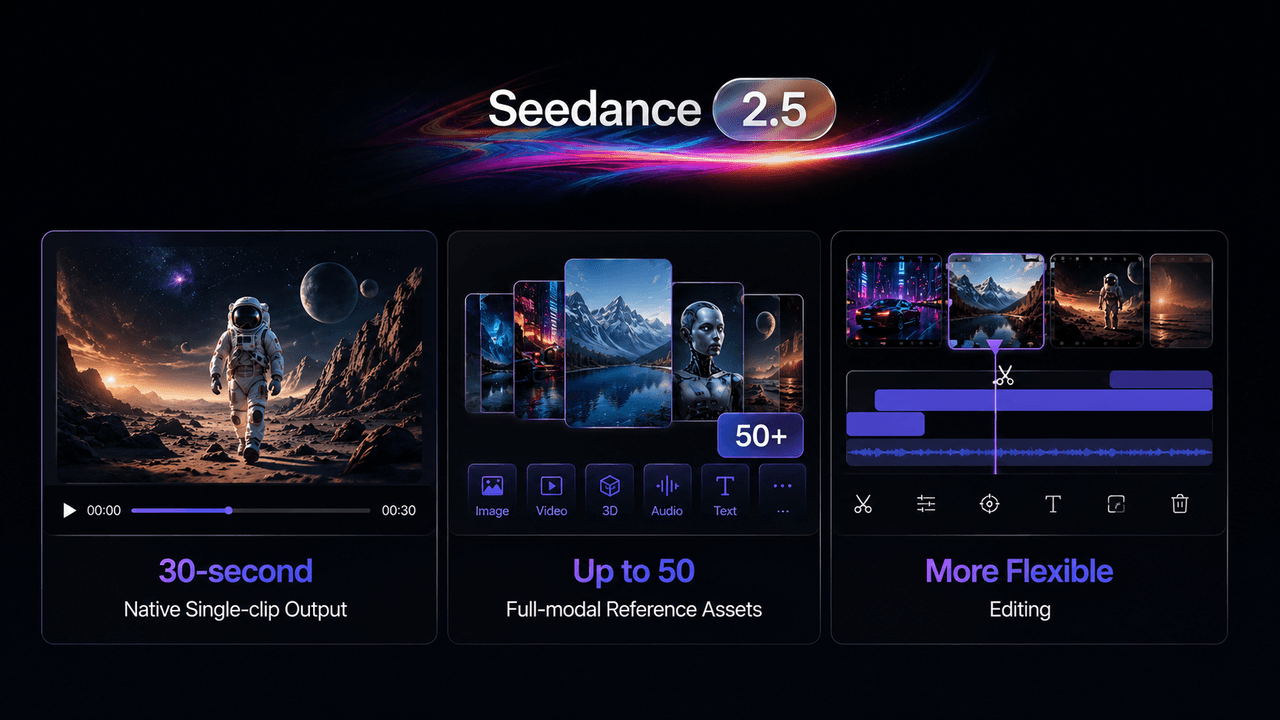
The most important numbers are clear: 30-second native single-clip output, up to 50 full-modal reference assets, more controllable video generation, more flexible editing.
Seedance 2.0 has already moved AI video toward multimodal generation with text, image, audio, and video inputs. Before Seedance 2.0, many video models were still used mainly for short UGC clips of around 5 to 10 seconds, according to Tan Dai’s presentation. After its release, 15- to 30-second ads, film-style clips, science explainers, and structured short videos became more practical for creators and teams. Now, Seedance 2.5 pushes that direction further with longer single-clip output and a much larger reference system.
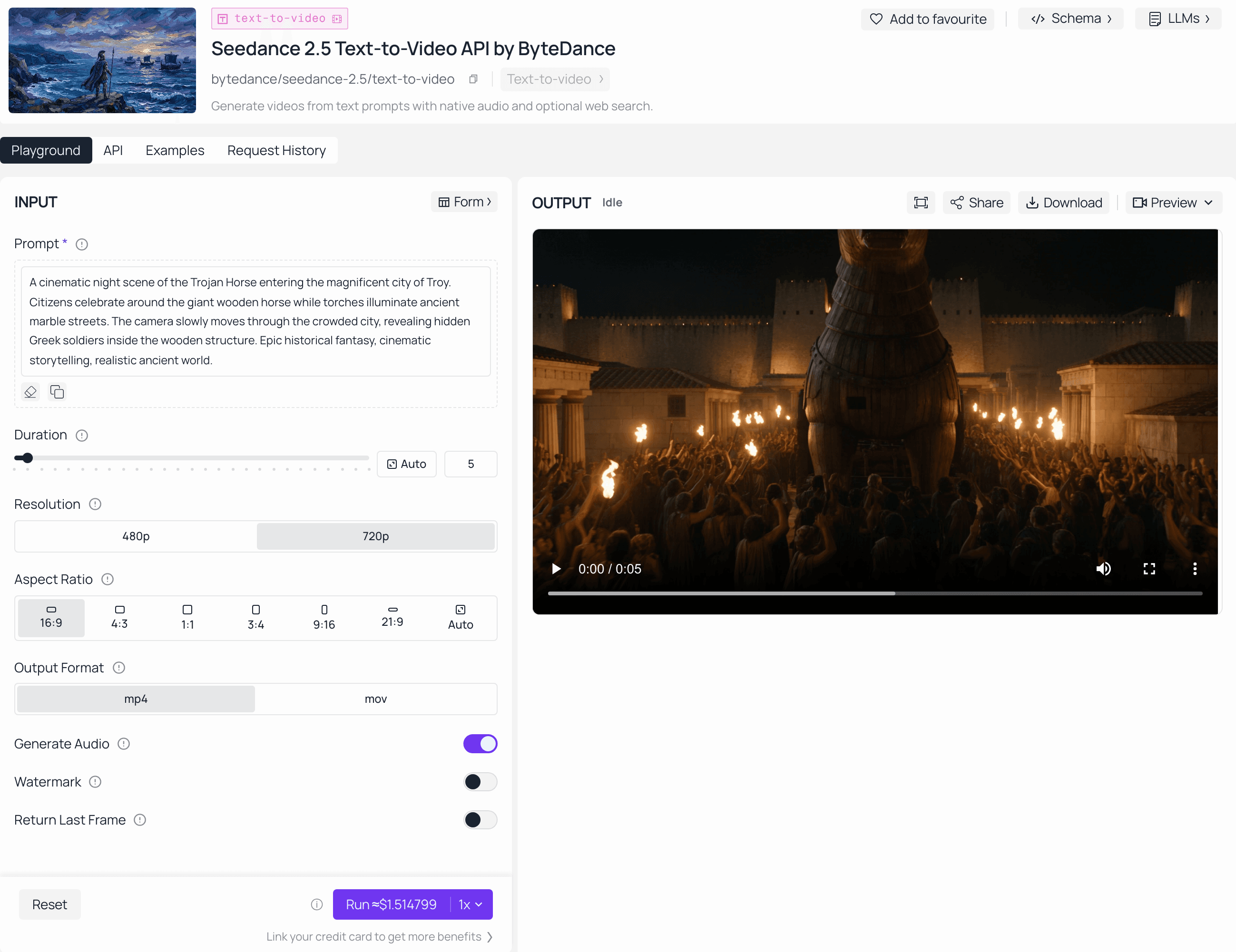
Update: the Seedance 2.5 API is now live on Atlas Cloud. All three endpoints — Text-to-Video, Image-to-Video, and Reference-to-Video — run on the same unified API that already serves Seedance 2.0 and 1.5, so you get Day-0 access with no new integration work.
Seedance 2.5 Key Features
30-Second Native Video Output
The first upgrade is video length. Seedance 2.5 can generate a single native video up to 30 seconds, according to launch information. That is a direct move beyond the 15-second range used by Seedance 2.0.
A 30-second generation changes the prompts and workflow. A 10-second clip usually works best for a single motion, a single product moment, or a short atmosphere shot. By contrast, a 30-second generator lets the user begin with a fuller scene brief, then edit inside the result. It also reduces the need to generate several small clips and stitch them together later.
In short, longer native output gives creators and developers more space for scene setup, motion progression, product demonstration, and so on
50 Full-Modal References
The second upgrade is reference capacity. Seedance 2.5 supports up to 50 full-modal reference assets. This is described in the presentation as the largest reference capacity among comparable models.
Video generation is rarely only about text prompts. This important improvement is designed to improve control and fine-grained video generation or editing. Seedance 2.0 already supports multiple reference inputs across image, video, and audio. Seedance 2.5 expands that idea into a larger reference-driven workflow.
At the launch event, one demonstration reportedly used image assets from more than ten actors and let the model arrange the scene. This suggests a workflow where users can provide a group of people, objects, or style references, then ask the model to organize them inside a generated video. For advertising, gaming, fashion, film previsualization, and e-commerce, that kind of input structure is more useful than a text-only workflow.
Flexible AI Video Editing with Better Control
The third major Seedance 2.5 upgrade is more flexible video editing. The announcement coverage describes stronger control and finer editing, directly addressing one of the recurring complaints about AI video: once a clip is generated, changing one part often breaks another part.
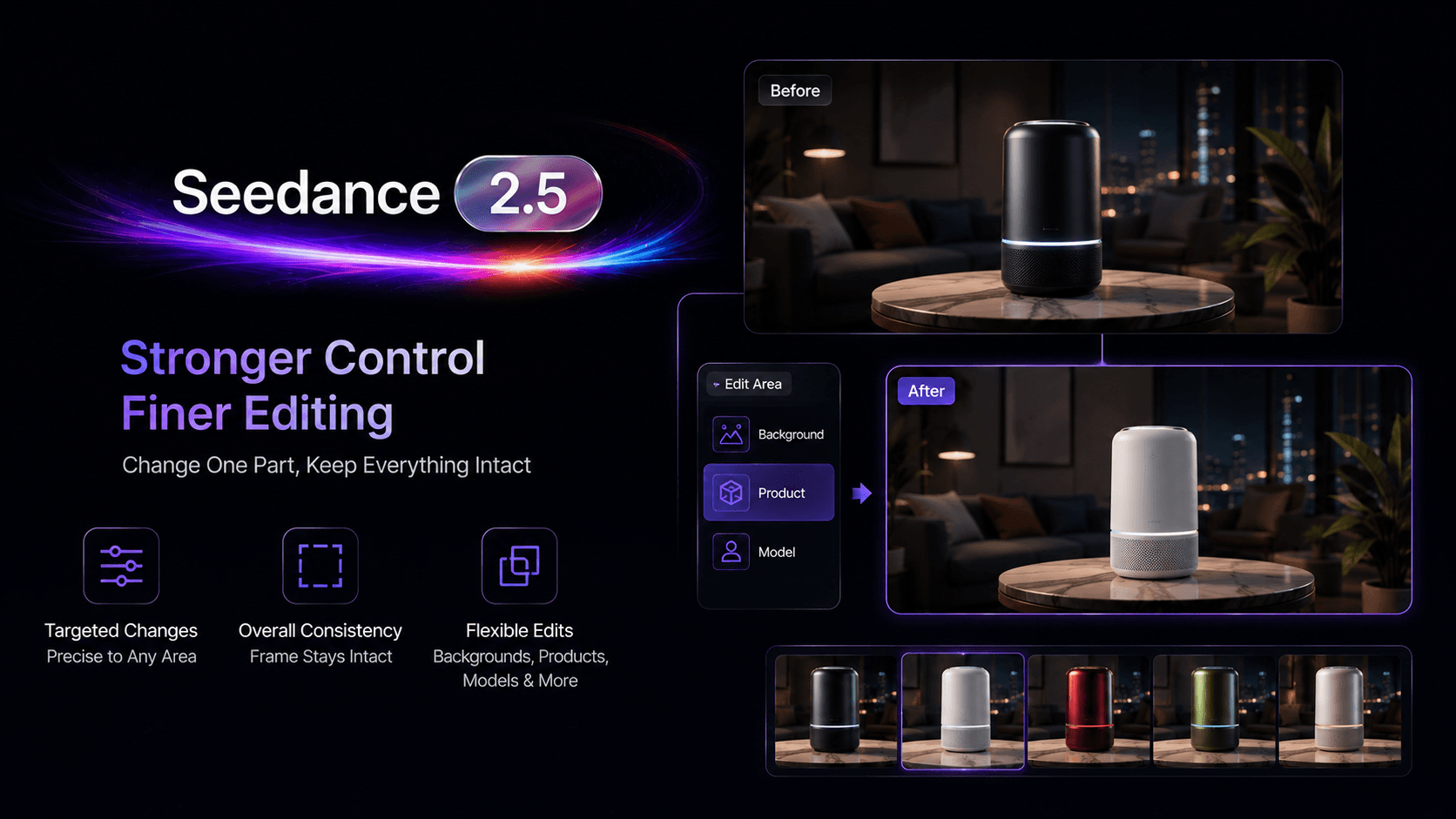
With its controllable editing, users can make targeted changes to specific parts of a video while keeping the overall frame intact, from adjusting the background to replacing a product or swapping out a model. In one lipstick ad demo, the model was used to change the lipstick choice directly inside the video.
This is where Seedance 2.5 becomes more relevant to real production. A local edit that does not break the full scene can save time compared with full regeneration.
Other Advances in Seedance 2.5
- professional workflows
The system is also designed to handle more demanding professional workflows. In one live demonstration, the team fed the model an untextured spaceship mesh with nearly 100,000 polygons, along with a rendering-material reference, and asked it to generate a simulated rendered video shot. As the camera slowly pushed in, the spacecraft’s outline, proportions and intricate structure remained stable.
- industrial applications
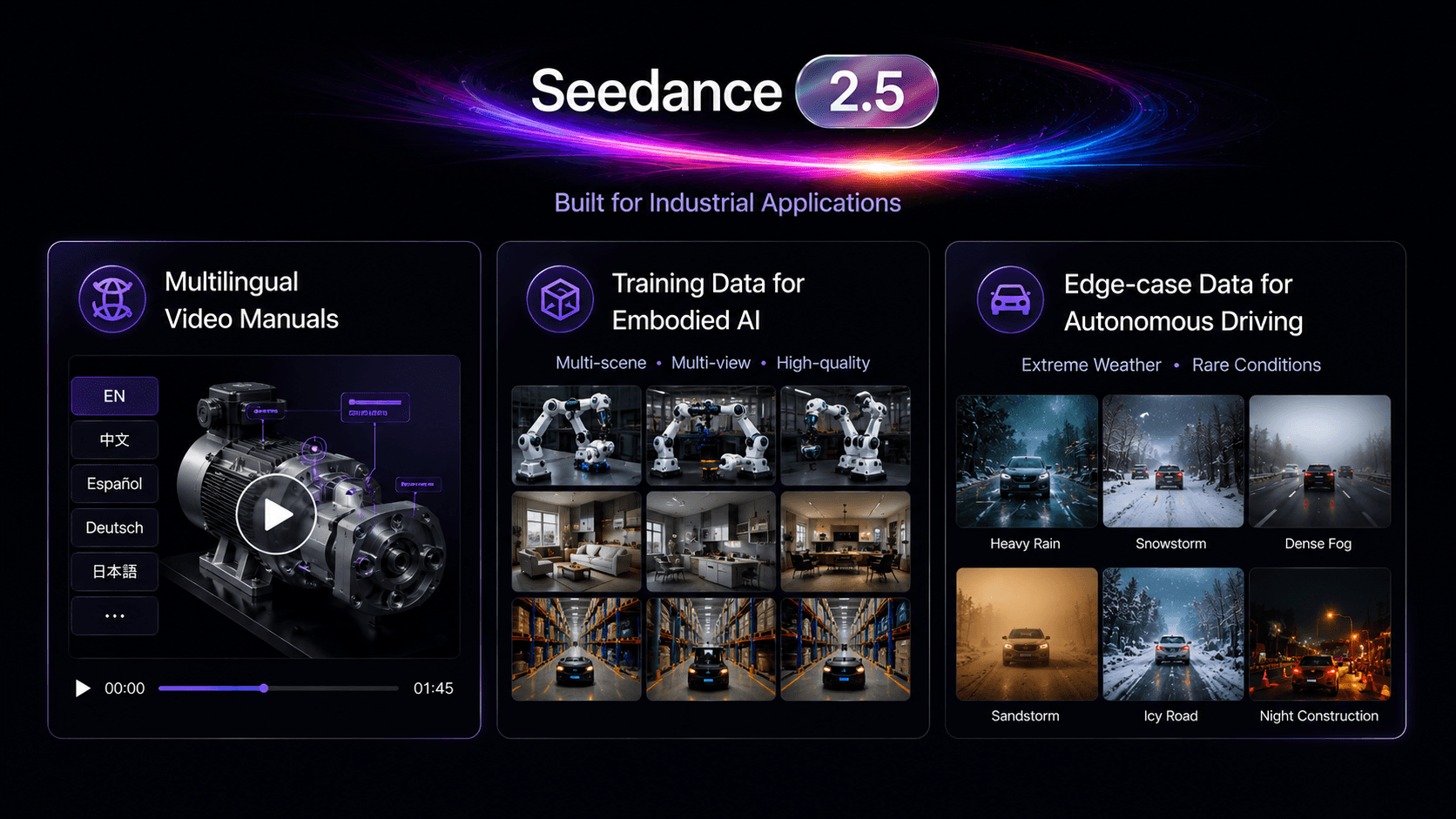
In industrial applications, Seedance 2.5 can automatically generate multilingual product video manuals. It can also synthesize high-quality, multi-scene and multi-view training data for embodied AI and produce edge-case data for autonomous-driving systems, including extreme weather and rare road conditions that are difficult to capture in the real world.
- IP protection system
There is also an IP layer around the Seedance ecosystem. Volcano Engine previewed an AI copyright commercialization platform to connect IP owners and creators. Volcano Engine has also worked with Stephen Chow’s Bingo Group on authorized AI creation for three Stephen Chow films.
What Seedance 2.5 Means for AI Video API Users
Atlas Cloud’s current Seedance 2.0 API pages already position the model around multimodal input, reference-to-video generation, audio-video output, video editing, and extension. Seedance 2.5 fits naturally into that same workflow, but with a larger creative window and stronger production control.
For now, the direction is clear. Seedance 2.5 is moving AI video from short prompt demos toward longer, more reference-driven, more editable production. Seedance 2.0 has already proved that multimodal audio-video generation can become a serious category, not just a feature experiment. Seedance 2.5 raises the production ceiling by adding time, reference capacity, and editing flexibility.
The early-July release will show how much of that promise is ready for day-one production use. To be the first to try Seedance 2.5, sign up for Atlas Cloud.





