On June 23, 2026, ByteDance walked on stage at its Volcano Engine FORCE conference and previewed Seedance 2.5, a video model that claims to generate a full 30-second clip in a single pass, at native 4K, from as many as 50 reference inputs (The Next Web, June 2026). That is a serious set of numbers, and it lands less than two months after Seedance 2 reached the top of independent blind-preference rankings for AI video. So the obvious question is whether 2.5 is a genuine generational jump or a longer, sharper version of what we already have.
This is a Seedance 2.5 vs Seedance 2 breakdown grounded in what is actually known. Below, every 2.5 number is treated as a preview claim, and every 2.0 capability is what the shipped model already does. The preview clips here come from ByteDance's official Seedance 2.5 material, with official Seedance 2 examples spread across the sections below so you can see where each model actually stands, one capability at a time.
Key takeaways
- Seedance 2.5 is previewed, not released — enterprise beta now, public launch around July 2026.
- The upgrades over Seedance 2: longer clips (~30s vs 15s), far more references (~50 vs ~12), and region-level editing.
- Seedance 2 is no slouch — audio-video generation, clip editing, extension, and top blind-preference scores.
- None of the 2.5 claims are independently benchmarked yet — treat the preview clips as direction, not verdict.
Seedance 2.5 vs Seedance 2.0: What Actually Changed
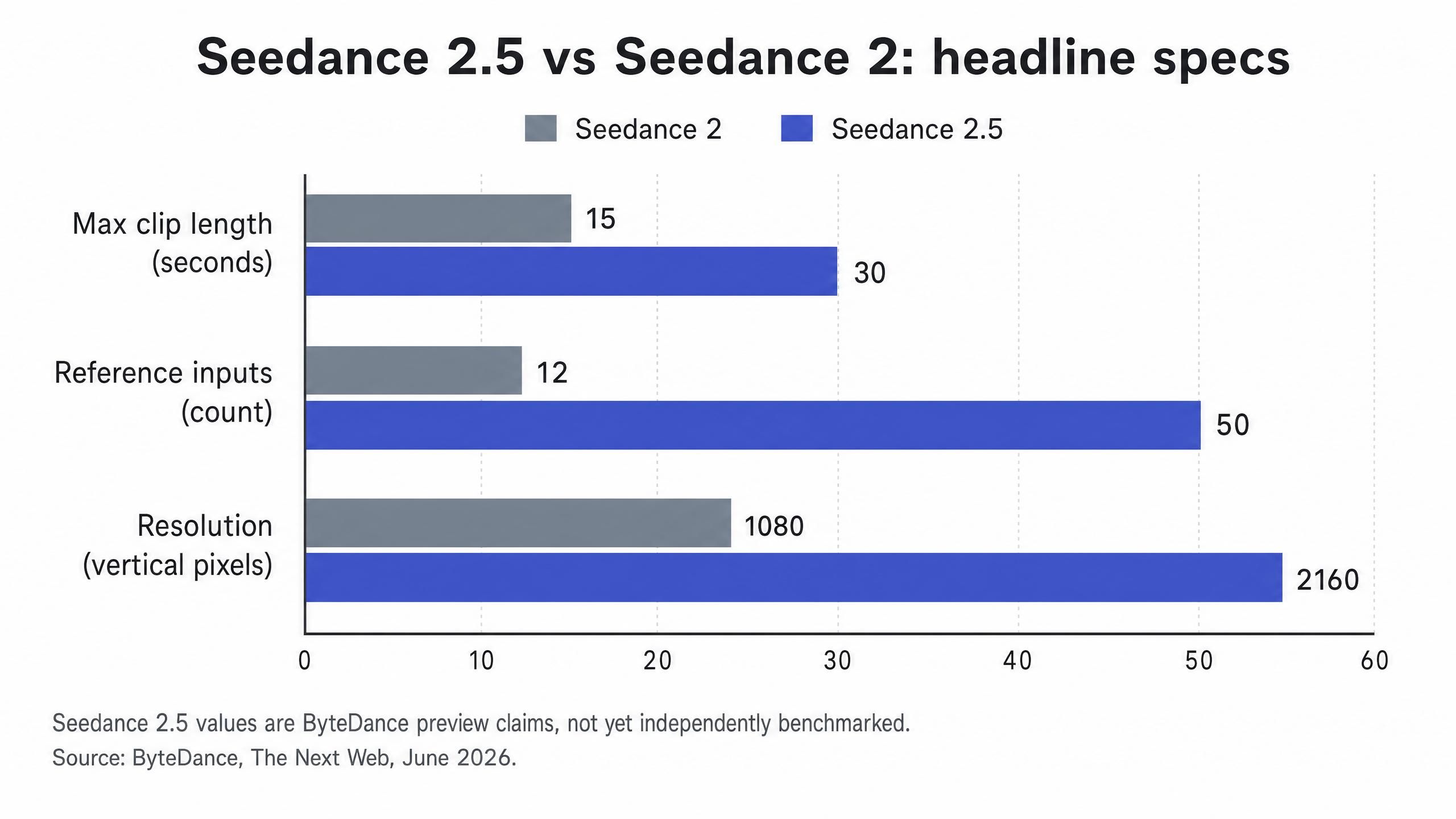
The short version: Seedance 2.5 keeps the architecture that made Seedance 2 strong and pushes hard on three axes that matter to real production work. Length goes from a 15-second ceiling to a claimed 30-second single clip generated in one pass with no stitching. Reference capacity jumps from roughly a dozen inputs to a claimed 50. And editing moves from clip-level changes to region-level control, where you alter one part of a frame and leave the rest untouched (The Next Web, June 2026).
Here is the side-by-side, with Seedance 2 reflecting the shipped model and Seedance 2.5 reflecting official preview claims:
| Dimension | Seedance 2 (shipped) | Seedance 2.5 (previewed) |
|---|---|---|
| Max single-clip length | Up to 15 seconds | Up to 30 seconds, native single pass |
| Reference inputs | Around a dozen (up to 9 images, 3 videos, 3 audio) | Up to 50 (images, video, audio, 3D, style) |
| Resolution | Up to 1080p | Native 4K, generated rather than upscaled |
| Editing | Clip, character, action, storyline edits, plus video extension | Region-level editing of part of a frame |
| Prompt adherence | Strong | ~20% better (ByteDance claim) |
| Availability | Live (for example via fal, April 2026) | Enterprise beta, public launch early July 2026 |
Seedance 2 figures: ByteDance Seed official launch. Seedance 2.5 figures: ByteDance preview claims, not independently verified.
Want to put Seedance 2.5 and Seedance 2.0 in front of the same prompt yourself? Atlas Cloud's model comparison runs them side by side in one pass — identical prompt and settings, cost estimated before you generate — so you can watch the motion and detail gap without two separate tests.
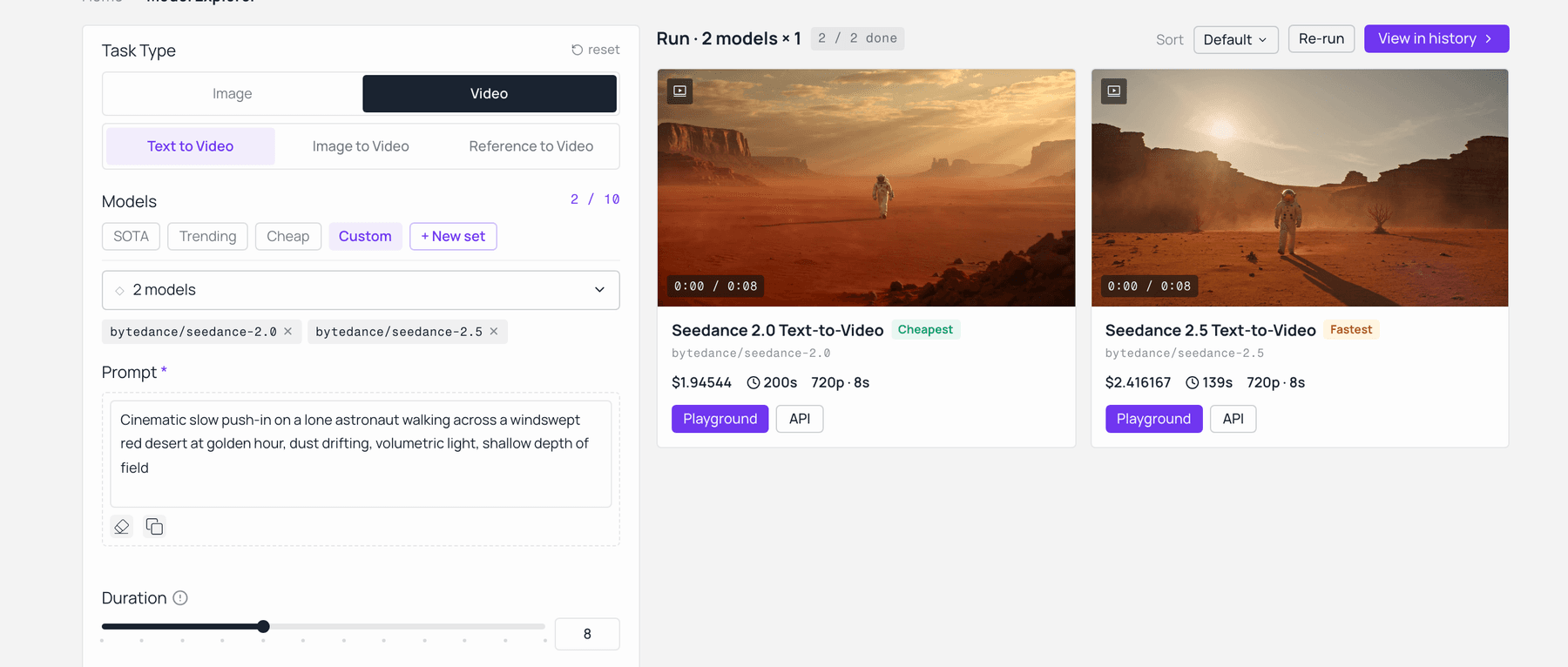
Seedance 2.5 and Seedance 2.0 on the identical prompt in Atlas Cloud’s model comparison — same prompt and settings, with each run’s price and resolution shown before you generate. Captured live on the model-explorer.
What Seedance 2.0 Already Does Well
Any honest Seedance 2.5 vs Seedance 2.0 comparison has to start by respecting how good Seedance 2 already is, because the baseline is high. Seedance 2 runs a unified multimodal architecture that jointly generates audio and video from text, image, audio, and video inputs, which is part of why its motion stability and lip-sync feel so coherent (ByteDance Seed, June 2026). It also ships real editing: you can target specific clips, characters, actions, and storylines, and extend a shot into a continuous follow-on rather than restarting from scratch.
That maturity showed up in the rankings. On independent blind-preference testing, Seedance 2 sat at the top of the AI video field, ahead of Google and major Chinese labs, and at a noticeably lower price. So the bar 2.5 has to clear is not a weak incumbent, it is the current leader. As we walk through each upgrade below, the right mental frame is extending a model that is already at the front of the pack, not rescuing a weak one. The three official Seedance 2 clips in the sections that follow each show where the current model draws its line, so the 2.5 claims have something concrete to push against.
Seedance 2.5 vs Seedance 2 on Length: The 30-Second Jump
The most concrete change in the Seedance 2.5 vs Seedance 2 story is duration. Seedance 2 tops out at 15 seconds per clip, which means longer sequences require stitching multiple generations together and managing the seams. Seedance 2.5 claims a 30-second single clip generated in one continuous pass, which, if it holds up, removes a real production headache: keeping lighting, character, and camera motion consistent across a cut you did not want in the first place.
The Seedance 2.5 preview leans straight into this, a complex camera move rendered straight through in a single 30-second take with no stitch points to manage.
0Cru44ybk0o
Seedance 2 already handles continuous camera work well. The official long-take example below runs as a single unbroken shot with no cuts, and it looks great, yet it lives inside the 15-second ceiling. That is where the real difference sits: the limit is not motion quality, it is how much story fits before you are forced to cut and stitch. The 30-second claim is 2.5 going after that ceiling, not the look.
B0ZlpfjrUNQ
The honest caveat: 30 seconds in one pass is the kind of claim that only proves itself under stress. Long generations are where drift, morphing, and physics errors usually creep in, so this is exactly the feature worth testing first when the model goes public.
Seedance 2.5 vs Seedance 2.0 on References: From a Dozen to 50 Inputs
The reference-capacity gap may be the most underrated part of the Seedance 2.5 vs Seedance 2 comparison. Seedance 2 already accepts a rich mix, up to 9 images, 3 videos, and 3 audio files. Seedance 2.5 claims to accept up to 50 reference materials in a single joint generation, spanning images, video, audio, 3D models, and style references, which ByteDance says is the highest in the industry (The Next Web, June 2026).
Why does this matter beyond a bigger number? More references is what makes consistency controllable. Feed the model a cast of character sheets and it can hold those identities across a crowded scene. Feed it a greybox 3D layout and it can respect your staging instead of inventing its own. The Seedance 2.5 preview shows both ends of that expanded budget.
First, a dense ensemble scene built from up to 50 reference materials, where the real test is whether every character keeps a consistent face and wardrobe as the camera moves through the group.
ce7IDnUss9o
Second, and quietly the more useful one for production, a white-model previz pass driven by 3D references, which turns a blocked-out greybox scene into a finished shot that respects the original staging.
ZPubxqTnt0Y
On Seedance 2, the way you get a crowd is mostly by describing it. The official chase example below fills a street with a pursuing group and keeps them moving believably, which is genuinely hard to do. The limit is control: the model is inventing those people from a prompt rather than locking onto a cast you supplied or a 3D layout you blocked out. That is the gap 50 references is meant to close, not more bodies on screen, but a say in which faces appear and whether they stay consistent shot to shot.
mbxrqVsZRSc
For anyone doing pre-visualization or repeatable brand work, the 3D-reference path shown in the previz clip above is the quietly important one. It turns the model from a slot machine into something closer to a directed render.
Seedance 2.5 vs Seedance 2.0 on Editing: Region-Level Control
Editing is where the Seedance 2.5 vs Seedance 2 difference gets practical for commercial work. Seedance 2 can already edit at the level of clips, characters, actions, and storylines. Seedance 2.5 adds region-level editing, the ability to change one region, element, or subject inside a frame while keeping everything else consistent, without re-rolling the whole generation (The Next Web, June 2026).
That capability maps directly onto a real workflow: ad localization. Swap a product, a sign, or an on-screen language for a different market while preserving the rest of the shot. The Seedance 2.5 preview clip below shows that new approach, changing one element while the surrounding composition, lighting, and motion stay intact.
lpRm3XnHtZ4
Seedance 2 is already excellent at producing a finished spot. The official multi-shot commercial below cuts across three scenes and lands a logo reveal, all generated end to end as one piece. The catch is that it is exactly that, one piece: changing a product, a sign, or a line of on-screen text means re-rolling the whole commercial rather than touching a single region. That is the friction region editing is built to remove.
85cnA_Be7-E
If region editing is as clean as the preview suggests, it changes the economics of versioning. Instead of regenerating a spot per market and praying for consistency, you edit a region and keep the take you already approved.
Seedance 2.5 vs Seedance 2.0 on Resolution and Prompt Adherence
Two more dimensions round out the Seedance 2.5 vs Seedance 2 picture, and both come with asterisks. On resolution, Seedance 2 generates up to 1080p, while the 2.5 preview is described as native 4K, meaning the model renders at 4K rather than upscaling a lower-resolution output after the fact (The Next Web, June 2026). Native 4K matters because upscaling invents detail, whereas a true 4K render carries real information into the frame.
On prompt adherence, ByteDance claims Seedance 2.5 follows instructions about 20% more precisely than its predecessor. That is a meaningful figure for anyone who has fought a model that ignored half the brief, but it is also a vendor claim with no methodology attached. File it under promising-until-proven.
What Seedance 2.5 vs Seedance 2 Still Cannot Tell Us
Here is the part most hype pieces skip. Every striking number in this Seedance 2.5 vs Seedance 2 comparison is a preview claim, and none have been independently benchmarked, because the model is not publicly out yet. Preview reels are curated by definition. They show the best takes, not the average one, and they say nothing about failure rates, generation time, or cost per second.
So the responsible read is this: the direction is clearly ambitious, and the feature set targets exactly the pain points serious users hit with Seedance 2. But until the public launch lands and people can run their own hard prompts through it, the 30-second consistency, the 50-reference fidelity, and the 20% adherence gain are claims to test, not facts to repeat. The good news is that the wait is short, with the public launch targeted for early July 2026 (Pandaily, June 2026).
How to Try Seedance 2.5 vs Seedance 2 | Now That It's Live in July 31, 2026
Update — both models are live now. Seedance 2.5 shipped on July 31, 2026 and, like Seedance 2.0, runs on Atlas Cloud’s unified Seedance API, so you can run this 2.5-vs-2.0 comparison yourself instead of taking the spec sheet on faith.
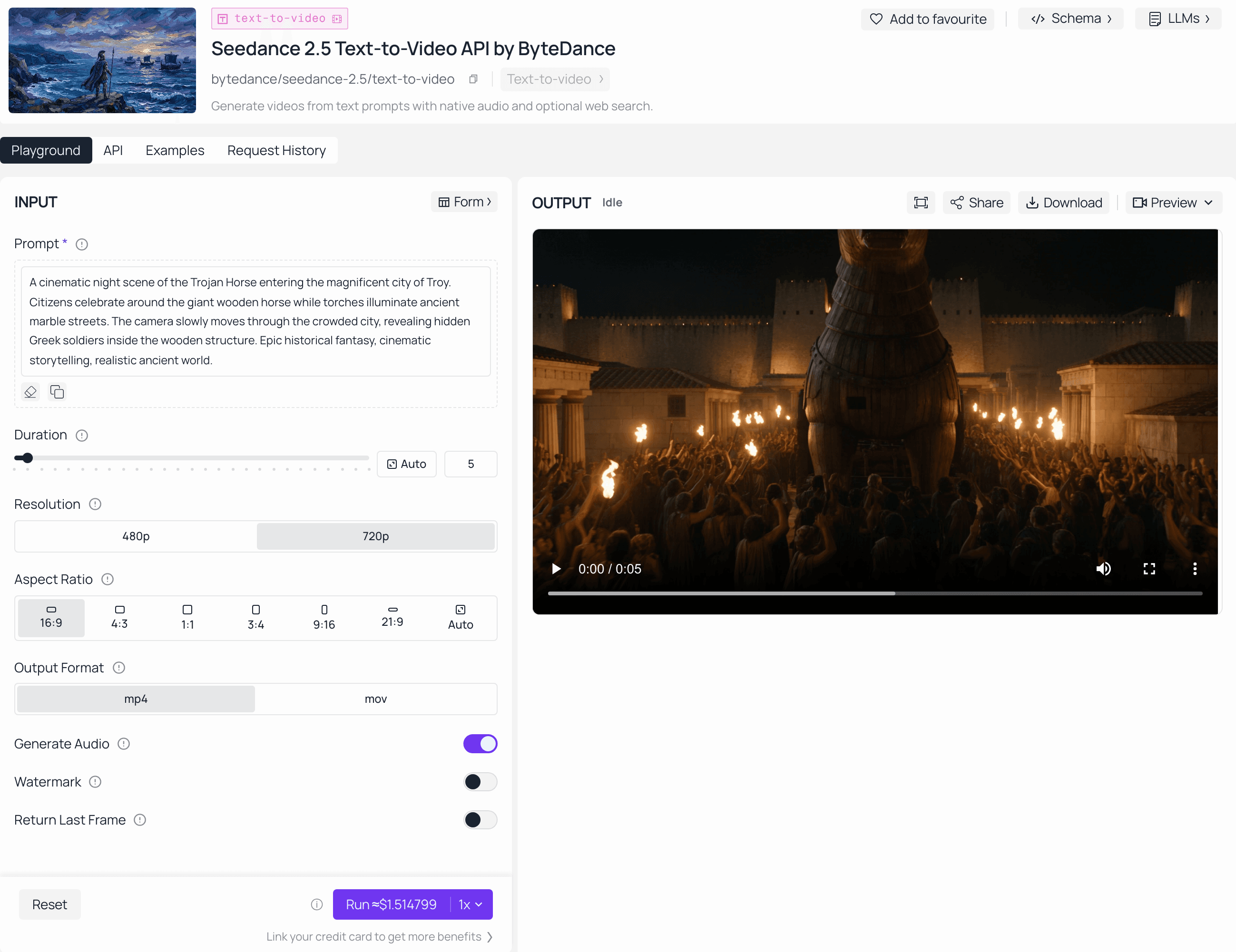
The smartest way to evaluate the Seedance 2.5 vs Seedance 2 question yourself is to run the same prompt through both and compare, rather than trusting anyone's reel, including this one. Build a small test set that targets the new claims directly: one long continuous camera move for the 30-second claim, one crowded multi-character scene for the reference claim, and one region edit on an existing shot for the editing claim.
When 2.5 reaches general availability, multi-model platforms are usually the fastest place to access a newly released model like this one. Atlas Cloud is preparing day-one access to Seedance 2.5 alongside the models creators already use, so you can A/B the two generations side by side from one place the moment it goes live. Keep your Seedance 2 baseline clips handy, because a fair comparison needs the old output sitting right next to the new.
Frequently Asked Questions: Seedance 2.5 vs Seedance 2
Is Seedance 2.5 vs Seedance 2 a real upgrade or just longer clips?
On paper it is more than length. The previewed gains span duration (claimed 30s vs 15s), reference capacity (claimed 50 vs roughly a dozen), region-level editing, and native 4K. That said, none are independently benchmarked yet, so whether the upgrade feels generational in practice depends on how the model performs on real prompts after launch.
When does Seedance 2.5 come out?
Seedance 2.5 was officially come out on July 31, 2026.
Seedance 2.5 vs Seedance 2: which should I use today?
As of the July 31, 2026 launch, both Seedance 2 and Seedance 2.5 are available, and Seedance 2 remains a strong shipped model in its own right.
Has anyone independently benchmarked Seedance 2.5 vs Seedance 2?
No. As of late June 2026 there are no independent benchmarks for Seedance 2.5, because it has not been publicly released. Every comparison number circulating now traces back to ByteDance's own preview claims, so treat them as a direction to verify rather than settled results.
Will Seedance 2.5 cost more than Seedance 2?
ByteDance has not published Seedance 2.5 pricing, so any number you see is speculation. What is known is that Seedance 2 already competed at a noticeably lower price than rival models, so the pricing posture to watch is whether 2.5 holds that value position as the features grow.
Conclusion
The Seedance 2.5 vs Seedance 2 matchup is the rare case where the previewed upgrades target genuinely useful problems: longer single takes, far more references for consistency, and region edits that survive localization. If even two of those three hold up under independent testing, 2.5 is a real step forward rather than a spec-sheet flex. The catch is that none of it is proven yet, so the only verdict worth trusting is the one you reach by running both models on your own prompts. Build your test set now, keep your Seedance 2 baselines, and be ready to compare the day 2.5 goes live.





