GLM LLM Models
GLM is a cutting-edge LLM series by Z.ai (Zhipu AI) featuring GLM-5, GLM-4.7, and GLM-4.6. Engineered for complex systems and long-horizon agentic tasks, GLM-5 outperforms top-tier closed-source models in elite benchmarks like Humanity’s Last Exam and BrowseComp. While GLM-4.7 specializes in reasoning, coding, and real-world intelligent agents, the entire GLM suite is fast, smart, and reliable, making it the ultimate tool for building websites, analyzing data, and delivering instant, high-quality answers for any professional workflow.
Erkunden Sie die Führenden Modelle
Atlas Cloud bietet Ihnen die neuesten branchenführenden kreativen Modelle.

Was GLM LLM Models Auszeichnet
Atlas Cloud bietet Ihnen die neuesten branchenführenden kreativen Modelle.

Advanced Reasoning
Tuned for strong logical reasoning, structured analysis, and multi-step problem solving.

Cost-Efficiency
Optimized architectures keep latency and costs under control.

Safety & Governance
Built-in content filters, auditing tools, and policy controls help teams deploy.

Enterprise Reliability
Production-ready SLAs, monitoring, and governance features help teams confidently ship applications.

Chinese–English Excellence
Native-strength Chinese and fluent English support enable high-quality bilingual chat, search, and generation.

Developer-Friendly Ecosystem
Clean APIs, SDKs, and tooling make it easy to integrate, fine-tune, and operate Z.ai across products and platforms.
Spitzengeschwindigkeit
Niedrigste Kosten
| Model | Description |
|---|---|
| GLM-5 | GLM-5 is Z.ai's flagship LLM featuring a massive 202.75K context window optimized for complex systems and long-horizon agentic tasks. Outperforming elite closed-source models in benchmarks like Humanity’s Last Exam and BrowseComp, it provides robust programming and stable multi-step reasoning at highly competitive baseline pricing. |
| GLM-4.7 | GLM-4.7 is a high-performance LLM with a 202.75K context window specifically engineered for real-world intelligent agents, advanced reasoning, and professional coding. Fast, smart, and reliable, it serves as the ideal engine for building complex websites and automating sophisticated professional workflows with precision. |
| GLM-4.6 | GLM-4.6 is a powerful MoE LLM with a 202.75K context window designed for rapid data analysis and instant, high-fidelity answers. This dependable model excels at high-efficiency tasks like creating professional slides and web content, offering a smart balance of speed and enterprise-grade performance. |
Neue Funktionen von GLM LLM Models + Showcase
Die Kombination fortschrittlicher Modelle mit der GPU-beschleunigten Plattform von Atlas Cloud bietet unübertroffene Geschwindigkeit, Skalierbarkeit und kreative Kontrolle für die Bild- und Videogenerierung.
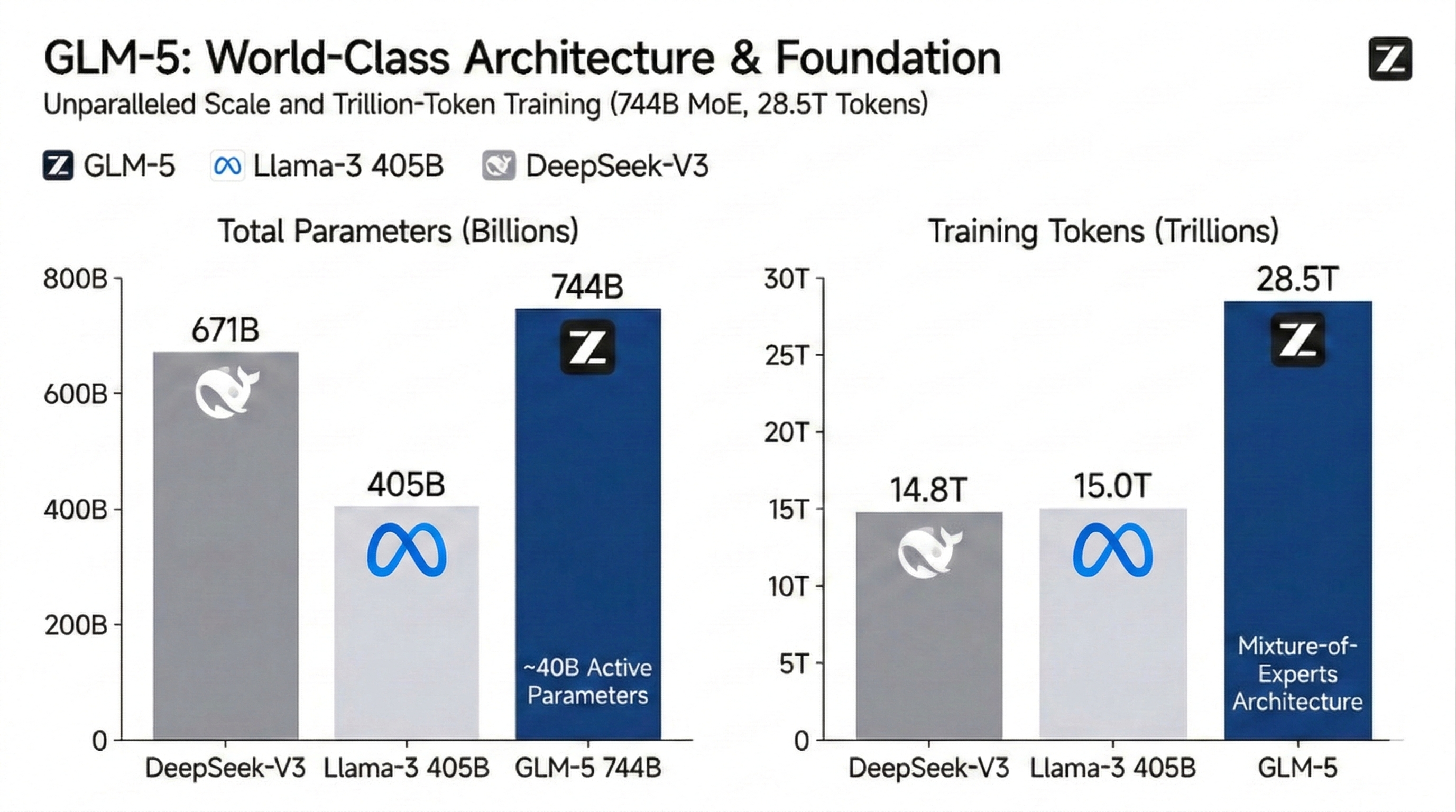
Massive 744B MoE-Architektur und universelle Wissensdatenbank
Das GLM-5-Modell nutzt eine Mixture-of-Experts (MoE)-Architektur mit 744 Milliarden Parametern, die auf erstaunlichen 28,5 Billionen Token trainiert wurde, um die Leistungsgrenzen von Open-Source neu zu definieren. Durch die Optimierung von 40 Milliarden aktiven Parametern ermöglicht es einen massiven Sprung in der Weltwissensdichte und der Abrufpräzision. Es ist die führende Grundlage für groß angelegte kognitive Aufgaben und komplexe Datensynthese.
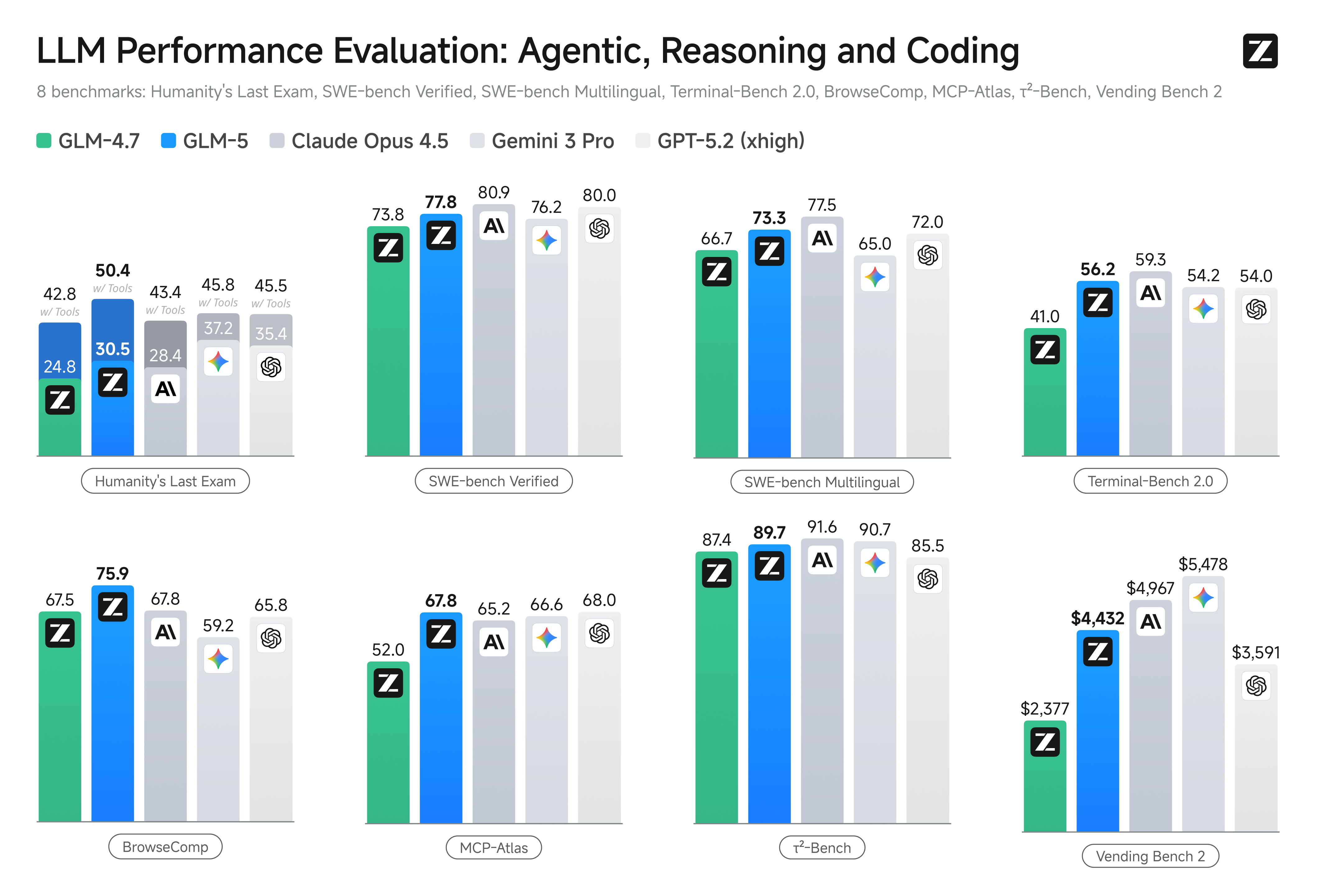
Bahnbrechendes Agentic System Engineering mit GLM-5
GLM-5 führt fortschrittliche agentische Fähigkeiten ein, die für die langfristige, systemische Aufgabenausführung in mehrstufigen Argumentationsumgebungen entwickelt wurden. Durch die Integration ausgefeilter Planungslogik in seine Kernarchitektur behält das Modell während der automatisierten Softwareentwicklung und der professionellen juristischen Entwurfserstellung außergewöhnliche Stabilität bei. Es dient als der definitive Motor für autonome Arbeitsabläufe, die extreme Präzision und langfristige Konsistenz erfordern.
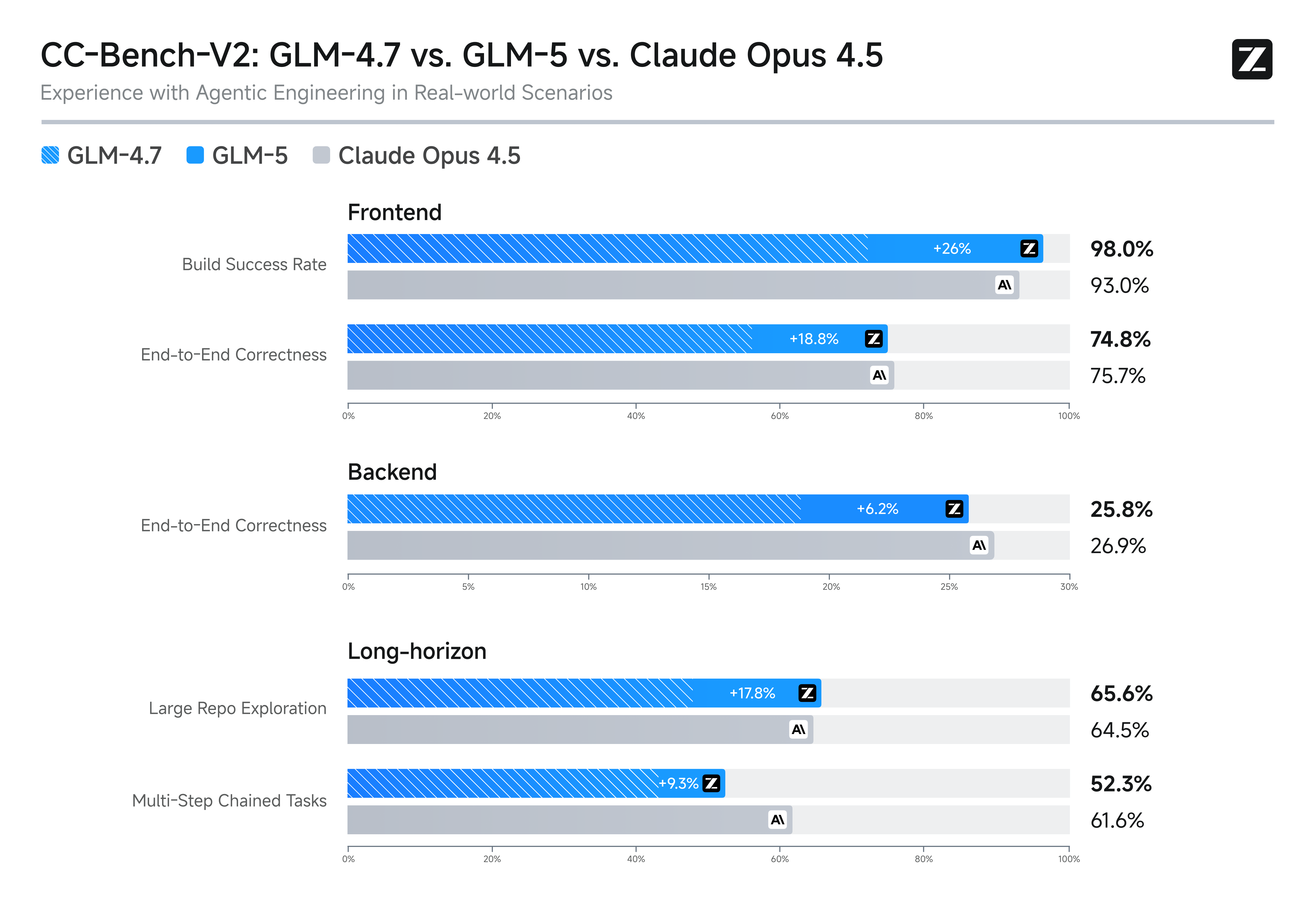
Slime Asynchrones Bestärkendes Lernen und Logikevolution
GLM-5 nutzt die innovative asynchrone Reinforcement-Learning-Infrastruktur „Slime“, um die Effizienz des Post-Trainings und die logische Strenge zu revolutionieren. Dieser Durchbruch verbessert die Qualität der Codegenerierung und das algorithmische Denken erheblich, übertrifft frühere Benchmarks und sichert seinen Rang als erstklassiges Open-Source-Modell. Es ist die ultimative Lösung für Full-Stack-Entwicklung und die Lösung hochkomplexer struktureller Probleme.
Was Sie mit GLM LLM Models Tun Können
Entdecken Sie praktische Anwendungsfälle und Workflows, die Sie mit dieser Modellfamilie erstellen können — von Content-Erstellung und Automatisierung bis hin zu produktionsreifen Anwendungen.
Umfassende Repository-Intelligenz mit GLM-5
Die GLM-5 API ermöglicht es Entwicklern, ganze Codebasen für eine tiefe Logikanalyse und strukturelles Refactoring zu verarbeiten. Durch das Mapping von Abhängigkeitsgraphen und das Verfolgen komplexer asynchroner Datenflüsse identifiziert sie Race Conditions in Randfällen und verborgene technische Schulden. Perfekt für schnelles Team-Onboarding, automatisierte PR-Reviews und die Wartung skalierbarer, leistungsstarker Microservices-Architekturen.
Sofortiges Full-Stack-Prototyping mit GLM-5
Für die Vibe-gesteuerte Entwicklung wandelt GLM-5 abstrakte visuelle Entwürfe und fragmentierte Notizen in deploybare React- oder Next.js-Komponenten um. Es übernimmt die schwere Arbeit der Boilerplate-Generierung, des Tailwind CSS-Stylings und des State-Managements und sorgt gleichzeitig für seitenübergreifende Konsistenz. Ideal für Solo-Gründer, UX-Experimentatoren und das blitzschnelle Ausliefern funktionaler MVPs.
Autonome Workflow-Orchestrierung mit GLM-5
GLM-5 zeichnet sich durch die Bewältigung langfristiger Forschungsaufgaben aus, die mehrstufiges logisches Denken und Echtzeit-Tool-Integration erfordern. Es kann unabhängig Marktdaten aus mehreren Quellen synthetisieren, konforme juristische Zusammenfassungen entwerfen und komplexe plattformübergreifende Terminplanung automatisieren, ohne den Kontext zu verlieren. Dieser Anwendungsfall eignet sich für Projektmanager, Juristen und alle, die einen hochzuverlässigen digitalen Agenten für systemische Operationen benötigen.
Modellvergleich
Sehen Sie, wie sich Modelle verschiedener Anbieter vergleichen — Leistung, Preise und einzigartige Stärken für eine fundierte Entscheidung.
| Model | Context | Max Output | Input | Positioning |
|---|---|---|---|---|
| GLM-5 | 202.75K | 202.75K | Text | Flagship Foundation Model |
| GLM-4.7 | 202.75K | 202.75K | Text | Flagship Foundation Model |
| GLM-4.6 | 202.75K | 202.75K | Text | Efficient MoE Model |
| DeepSeek V3.2 | 163.84K | 163.84K | Text | Flagship General |
| MiniMax-M2.5 | 204.8K | 196.6K | Text | SOTA Agentic Coding |
How to Use GLM LLM Models on Atlas Cloud
Get started in minutes — follow these simple steps to integrate and deploy models through Atlas Cloud’s platform.
Create an Atlas Cloud Account
Sign up at atlascloud.ai and complete verification. New users receive free credits to explore the platform and test models.
Warum GLM LLM Models auf Atlas Cloud Verwenden
Die Kombination der fortschrittlichen GLM LLM Models-Modelle mit der GPU-beschleunigten Plattform von Atlas Cloud bietet unübertroffene Leistung, Skalierbarkeit und Entwicklererfahrung.
Leistung & Flexibilität
Niedrige Latenz:
GPU-optimierte Inferenz für Echtzeit-Reasoning.
Einheitliche API:
Führen Sie GLM LLM Models, GPT, Gemini und DeepSeek mit einer Integration aus.
Transparente Preisgestaltung:
Vorhersehbare Token-basierte Abrechnung mit serverlosen Optionen.
Unternehmen & Skalierung
Entwicklererfahrung:
SDKs, Analysen, Fine-Tuning-Tools und Vorlagen.
Zuverlässigkeit:
99,99% Verfügbarkeit, RBAC und compliance-bereite Protokollierung.
Sicherheit & Compliance:
SOC 2 Type II, HIPAA-Ausrichtung, Datensouveränität in den USA.
Häufig gestellte Fragen zu GLM LLM Models
Mit 28,5 Billionen Token an Trainingsdaten und hervorragenden Benchmark-Ergebnissen gilt GLM-5 weithin als die „Decke von Open-Source“. Es konkurriert mit globalen kommerziellen Spitzenmodellen oder übertrifft diese in Kapazität und Logik und bietet eine leistungsstarke, hochperformante Grundlage für das globale Entwickler-Ökosystem.
HLE ist ein Benchmark mit hohem Schwierigkeitsgrad, der testen soll, ob KI über menschliches Wissen und logisches Denken auf Expertenniveau verfügt. Dass GLM-5 die höchste Punktzahl erreicht hat, bedeutet, dass seine Beherrschung von Spitzenforschung und komplexer Logik das Niveau führender Closed-Source-Modelle erreicht oder übertroffen hat.
BrowseComp ist eine definitive Rangliste für "Agentic"-Fähigkeiten, die sich auf die Planung und Ausführung komplexer Aufgaben in realen Web-Umgebungen konzentriert. Die höchste Punktzahl repräsentiert die Fähigkeit von GLM-5, autonom in Browsern zu navigieren und seitenübergreifende Informationen zu integrieren, was es als führende Web Agent-Engine auszeichnet.
Diese Architektur bietet eine massive „Wissensbasis“ von 744 Milliarden Parametern, aktiviert aber während der Inferenz nur ~40 Milliarden. Für Entwickler bedeutet dies eine Wissensdichte und Argumentationstiefe von Weltklasse – die dichte Modelle wie Llama-3 405B übertrifft – bei geringerer Latenz und niedrigeren Kosten.
Die Gesamtparameter repräsentieren die "Wissenskapazität" des Modells, wobei 744B eine enorme Speicherung von Weltwissen und Expertenlogik ermöglichen. Aktive Parameter repräsentieren die pro Inferenz genutzte "Rechenleistung". Dank der MoE-Architektur liefert GLM-5 eine Intelligenz auf 744B-Niveau bei nur 40B Rechenaufwand und balanciert so eine massive Wissensbasis mit hoher Geschwindigkeit und kosteneffizienter Leistung.
Das Volumen der Pre-Training-Daten bestimmt die "Sichtweite" eines Modells. 28,5T Token ist einer der größten Datensätze weltweit (etwa doppelt so groß wie der von Llama-3) und umfasst seltene Sprachen, spezialisierte wissenschaftliche Arbeiten und umfangreichen, hochwertigen Code. Dies stellt sicher, dass GLM-5 über überlegene Genauigkeit und Generalisierungsfähigkeit verfügt, wenn es komplexe Long-Tail-Anfragen, interkulturelle Nuancen und Low-Level-Systemprogrammierung bewältigt.
Weitere Familien Erkunden
Happy Horse 1.0
HappyHorse-1.0 is a unified multimodal AI video generation model that climbed to the top of the Artificial Analysis Video Arena blind-test leaderboard for both text-to-video and image-to-video generation. CNBC Alibaba Group confirmed ownership of HappyHorse, developed under its Alibaba Token Hub (ATH) business unit, where it leads benchmarks outperforming ByteDance's Seedance 2.0 and others. Caixin Global Led by Zhang Di — the former VP of Kuaishou who architected Kling AI — the 15-billion parameter model generates 1080p video with synchronized audio in a single pass using a unified transformer architecture that bypasses the multi-stage pipelines used by every major competitor.

Seedance 2.0 Models
Seedance 2.0(by Bytedance) is a multimodal video generation model that redefines "controllable creation," moving beyond the limitations of text or start/end frames. It supports quad-modal inputs—text, image, video, and audio—and introduces an industry-leading "Universal Reference" system. By precisely replicating the composition, camera movement, and character actions from reference assets, Seedance 2.0 solves critical issues with character consistency and physical coherence, empowering creators to act as true "directors" with deep control over their output.
GPT Image 2 Models
GPT Image 2 is a state-of-the-art multimodal foundation model engineered for exceptional text-to-image generation with unprecedented photorealism and creative versatility. Developed by OpenAI as the evolution of the DALL-E lineage, it transforms detailed natural language descriptions into hyper-realistic imagery at up to 4K resolution. With proprietary "Neural Rendering Engine" technology for precise visual control, GPT Image 2 delivers studio-quality results with accurate anatomy, lighting, and composition—making it the premier AI tool for professional creators, enterprises, and developers demanding production-ready visual assets.
Wan2.7 Models
Launching this March, Wan2.7 is the latest powerhouse in the Qwen ecosystem, delivering a massive upgrade in visual fidelity, audio synchronization, and motion consistency over version 2.6. This all-in-one AI video generator supports advanced features like first-and-last frame control, 3x3 grid synthesis, and instruction-based video editing. Outperforming competitors like Jimeng, Wan2.7 offers superior flexibility with support for real-person image inputs, up to five video references, and 1080P high-definition outputs spanning 2 to 15 seconds, making it the premier choice for professional digital storytelling and high-end content marketing.
Veo3.1 Models
Google DeepMind’s Veo 3.1 represents a paradigm shift in AI video generation, empowering creators with director-level narrative control and cinematic-grade audio quality that seamlessly integrates with its enhanced visual realism. By bridging the gap between imaginative concepts and photorealistic execution, this advanced model offers a transformative solution for a wide range of application scenarios, from professional filmmaking and high-end advertising to immersive digital content creation.
ERNIE Image Models
ERNIE-Image is an open-weight text-to-image model developed by the ERNIE-Image Team at Baidu, built on a single-stream Diffusion Transformer (DiT) with 8B parameters and paired with a lightweight Prompt Enhancer that rewrites short prompts into richer, more structured descriptions before passing them to the diffusion backbone. NYU Shanghai RITS Released on April 15, 2026 under the Apache 2.0 license, it transforms natural language descriptions into detailed imagery with particular strength in text rendering and structured layout generation. ERNIE-Image is designed not only for strong visual quality, but for controllability in practical generation scenarios where accurate content realization matters as much as aesthetics — making it well-suited for commercial posters, comics, multi-panel layouts, and other content creation tasks that require both visual quality and precise control.
GPT Image Models
The GPT Image Family is OpenAI's latest suite of multimodal image generation and editing models, built on the powerful GPT architecture. This family includes three tiers — GPT Image-1, GPT Image-1.5, and GPT Image-1 Mini — each available in both Text-to-Image and Image-to-Image variants. Combining GPT's world-class language understanding with DALL·E-class visual synthesis, these models deliver exceptional prompt adherence, photorealistic rendering, and creative versatility across illustration, photography, design, and visualization tasks. The series offers flexible pricing and quality tiers to match any workflow — from rapid prototyping and high-volume content production to professional-grade final deliverables. Whether you need ultra-fast iterations at minimal cost or maximum quality for brand campaigns, the GPT Image Family has a solution tailored to your needs.
Nano Banana2 Models
Nano Banana 2 (by Google), is a generative image model that perfectly balances lightning-fast rendering with exceptional visual quality. With an improved price-performance ratio, it achieves breakthrough micro-detail depiction, accurate native text rendering, and complex physical structure reconstruction. It serves as a highly efficient, commercial-grade visual production tool for developers, marketing teams, and content creators.
Seedream5.0 Models
Seedream 5.0, developed by ByteDance’s Jimeng AI, is a high-performance AI image generation model that integrates real-time search with intelligent reasoning. Purpose-built for time-sensitive content and complex visual logic, it excels at professional infographics, architectural design, and UI assistance. By blending live web insights with creative precision, Seedream 5.0 empowers commercial branding and marketing with a seamless, logic-driven workflow that turns sophisticated data into stunning, high-fidelity visuals.
Kling3.0 Models
Kuaishou’s flagship video generation suite, Kling 3.0, features two powerhouse models—Kling 3.0 (Upgraded from Kling 2.6) and Kling 3.0 Omni (Kling O3, Upgraded from Kling O1)—both offering high-fidelity native audio integration. While Kling 3.0 excels in intelligent cinematic storytelling, multilingual lip-syncing, and precision text rendering, Kling O3 sets a new standard for professional-grade subject consistency by supporting custom subjects and voice clones derived from video or image inputs. Together, these models provide a comprehensive solution tailored for cinematic narratives, global marketing campaigns, social media content, and digital skit production.
GLM LLM Models
GLM is a cutting-edge LLM series by Z.ai (Zhipu AI) featuring GLM-5, GLM-4.7, and GLM-4.6. Engineered for complex systems and long-horizon agentic tasks, GLM-5 outperforms top-tier closed-source models in elite benchmarks like Humanity’s Last Exam and BrowseComp. While GLM-4.7 specializes in reasoning, coding, and real-world intelligent agents, the entire GLM suite is fast, smart, and reliable, making it the ultimate tool for building websites, analyzing data, and delivering instant, high-quality answers for any professional workflow.
Open AI Model Families
Explore OpenAI’s language and video models on Atlas Cloud: ChatGPT for advanced reasoning and interaction, and Sora-2 for physics-aware video generation.
Happy Horse 1.0
HappyHorse-1.0 is a unified multimodal AI video generation model that climbed to the top of the Artificial Analysis Video Arena blind-test leaderboard for both text-to-video and image-to-video generation. CNBC Alibaba Group confirmed ownership of HappyHorse, developed under its Alibaba Token Hub (ATH) business unit, where it leads benchmarks outperforming ByteDance's Seedance 2.0 and others. Caixin Global Led by Zhang Di — the former VP of Kuaishou who architected Kling AI — the 15-billion parameter model generates 1080p video with synchronized audio in a single pass using a unified transformer architecture that bypasses the multi-stage pipelines used by every major competitor.
Seedance 2.0 Models
Seedance 2.0(by Bytedance) is a multimodal video generation model that redefines "controllable creation," moving beyond the limitations of text or start/end frames. It supports quad-modal inputs—text, image, video, and audio—and introduces an industry-leading "Universal Reference" system. By precisely replicating the composition, camera movement, and character actions from reference assets, Seedance 2.0 solves critical issues with character consistency and physical coherence, empowering creators to act as true "directors" with deep control over their output.
GPT Image 2 Models
GPT Image 2 is a state-of-the-art multimodal foundation model engineered for exceptional text-to-image generation with unprecedented photorealism and creative versatility. Developed by OpenAI as the evolution of the DALL-E lineage, it transforms detailed natural language descriptions into hyper-realistic imagery at up to 4K resolution. With proprietary "Neural Rendering Engine" technology for precise visual control, GPT Image 2 delivers studio-quality results with accurate anatomy, lighting, and composition—making it the premier AI tool for professional creators, enterprises, and developers demanding production-ready visual assets.
Wan2.7 Models
Launching this March, Wan2.7 is the latest powerhouse in the Qwen ecosystem, delivering a massive upgrade in visual fidelity, audio synchronization, and motion consistency over version 2.6. This all-in-one AI video generator supports advanced features like first-and-last frame control, 3x3 grid synthesis, and instruction-based video editing. Outperforming competitors like Jimeng, Wan2.7 offers superior flexibility with support for real-person image inputs, up to five video references, and 1080P high-definition outputs spanning 2 to 15 seconds, making it the premier choice for professional digital storytelling and high-end content marketing.
Veo3.1 Models
Google DeepMind’s Veo 3.1 represents a paradigm shift in AI video generation, empowering creators with director-level narrative control and cinematic-grade audio quality that seamlessly integrates with its enhanced visual realism. By bridging the gap between imaginative concepts and photorealistic execution, this advanced model offers a transformative solution for a wide range of application scenarios, from professional filmmaking and high-end advertising to immersive digital content creation.
ERNIE Image Models
ERNIE-Image is an open-weight text-to-image model developed by the ERNIE-Image Team at Baidu, built on a single-stream Diffusion Transformer (DiT) with 8B parameters and paired with a lightweight Prompt Enhancer that rewrites short prompts into richer, more structured descriptions before passing them to the diffusion backbone. NYU Shanghai RITS Released on April 15, 2026 under the Apache 2.0 license, it transforms natural language descriptions into detailed imagery with particular strength in text rendering and structured layout generation. ERNIE-Image is designed not only for strong visual quality, but for controllability in practical generation scenarios where accurate content realization matters as much as aesthetics — making it well-suited for commercial posters, comics, multi-panel layouts, and other content creation tasks that require both visual quality and precise control.
GPT Image Models
The GPT Image Family is OpenAI's latest suite of multimodal image generation and editing models, built on the powerful GPT architecture. This family includes three tiers — GPT Image-1, GPT Image-1.5, and GPT Image-1 Mini — each available in both Text-to-Image and Image-to-Image variants. Combining GPT's world-class language understanding with DALL·E-class visual synthesis, these models deliver exceptional prompt adherence, photorealistic rendering, and creative versatility across illustration, photography, design, and visualization tasks. The series offers flexible pricing and quality tiers to match any workflow — from rapid prototyping and high-volume content production to professional-grade final deliverables. Whether you need ultra-fast iterations at minimal cost or maximum quality for brand campaigns, the GPT Image Family has a solution tailored to your needs.
Nano Banana2 Models
Nano Banana 2 (by Google), is a generative image model that perfectly balances lightning-fast rendering with exceptional visual quality. With an improved price-performance ratio, it achieves breakthrough micro-detail depiction, accurate native text rendering, and complex physical structure reconstruction. It serves as a highly efficient, commercial-grade visual production tool for developers, marketing teams, and content creators.
Seedream5.0 Models
Seedream 5.0, developed by ByteDance’s Jimeng AI, is a high-performance AI image generation model that integrates real-time search with intelligent reasoning. Purpose-built for time-sensitive content and complex visual logic, it excels at professional infographics, architectural design, and UI assistance. By blending live web insights with creative precision, Seedream 5.0 empowers commercial branding and marketing with a seamless, logic-driven workflow that turns sophisticated data into stunning, high-fidelity visuals.
Kling3.0 Models
Kuaishou’s flagship video generation suite, Kling 3.0, features two powerhouse models—Kling 3.0 (Upgraded from Kling 2.6) and Kling 3.0 Omni (Kling O3, Upgraded from Kling O1)—both offering high-fidelity native audio integration. While Kling 3.0 excels in intelligent cinematic storytelling, multilingual lip-syncing, and precision text rendering, Kling O3 sets a new standard for professional-grade subject consistency by supporting custom subjects and voice clones derived from video or image inputs. Together, these models provide a comprehensive solution tailored for cinematic narratives, global marketing campaigns, social media content, and digital skit production.
GLM LLM Models
GLM is a cutting-edge LLM series by Z.ai (Zhipu AI) featuring GLM-5, GLM-4.7, and GLM-4.6. Engineered for complex systems and long-horizon agentic tasks, GLM-5 outperforms top-tier closed-source models in elite benchmarks like Humanity’s Last Exam and BrowseComp. While GLM-4.7 specializes in reasoning, coding, and real-world intelligent agents, the entire GLM suite is fast, smart, and reliable, making it the ultimate tool for building websites, analyzing data, and delivering instant, high-quality answers for any professional workflow.
Open AI Model Families
Explore OpenAI’s language and video models on Atlas Cloud: ChatGPT for advanced reasoning and interaction, and Sora-2 for physics-aware video generation.



