GLM LLM Models
GLM is a cutting-edge LLM series by Z.ai (Zhipu AI) featuring GLM-5, GLM-4.7, and GLM-4.6. Engineered for complex systems and long-horizon agentic tasks, GLM-5 outperforms top-tier closed-source models in elite benchmarks like Humanity’s Last Exam and BrowseComp. While GLM-4.7 specializes in reasoning, coding, and real-world intelligent agents, the entire GLM suite is fast, smart, and reliable, making it the ultimate tool for building websites, analyzing data, and delivering instant, high-quality answers for any professional workflow.
Explorar Modelos Líderes
Atlas Cloud le proporciona los últimos modelos creativos líderes en la industria.

Qué Hace Destacar a GLM LLM Models
Atlas Cloud le proporciona los modelos creativos líderes en la industria más recientes.

Advanced Reasoning
Tuned for strong logical reasoning, structured analysis, and multi-step problem solving.

Cost-Efficiency
Optimized architectures keep latency and costs under control.

Safety & Governance
Built-in content filters, auditing tools, and policy controls help teams deploy.

Enterprise Reliability
Production-ready SLAs, monitoring, and governance features help teams confidently ship applications.

Chinese–English Excellence
Native-strength Chinese and fluent English support enable high-quality bilingual chat, search, and generation.

Developer-Friendly Ecosystem
Clean APIs, SDKs, and tooling make it easy to integrate, fine-tune, and operate Z.ai across products and platforms.
Velocidad máxima
Costo más bajo
| Model | Description |
|---|---|
| GLM-5 | GLM-5 is Z.ai's flagship LLM featuring a massive 202.75K context window optimized for complex systems and long-horizon agentic tasks. Outperforming elite closed-source models in benchmarks like Humanity’s Last Exam and BrowseComp, it provides robust programming and stable multi-step reasoning at highly competitive baseline pricing. |
| GLM-4.7 | GLM-4.7 is a high-performance LLM with a 202.75K context window specifically engineered for real-world intelligent agents, advanced reasoning, and professional coding. Fast, smart, and reliable, it serves as the ideal engine for building complex websites and automating sophisticated professional workflows with precision. |
| GLM-4.6 | GLM-4.6 is a powerful MoE LLM with a 202.75K context window designed for rapid data analysis and instant, high-fidelity answers. This dependable model excels at high-efficiency tasks like creating professional slides and web content, offering a smart balance of speed and enterprise-grade performance. |
Nuevas funciones de GLM LLM Models + Showcase
La combinación de modelos avanzados con la plataforma acelerada por GPU de Atlas Cloud ofrece velocidad, escalabilidad y control creativo inigualables para la generación de imágenes y videos.
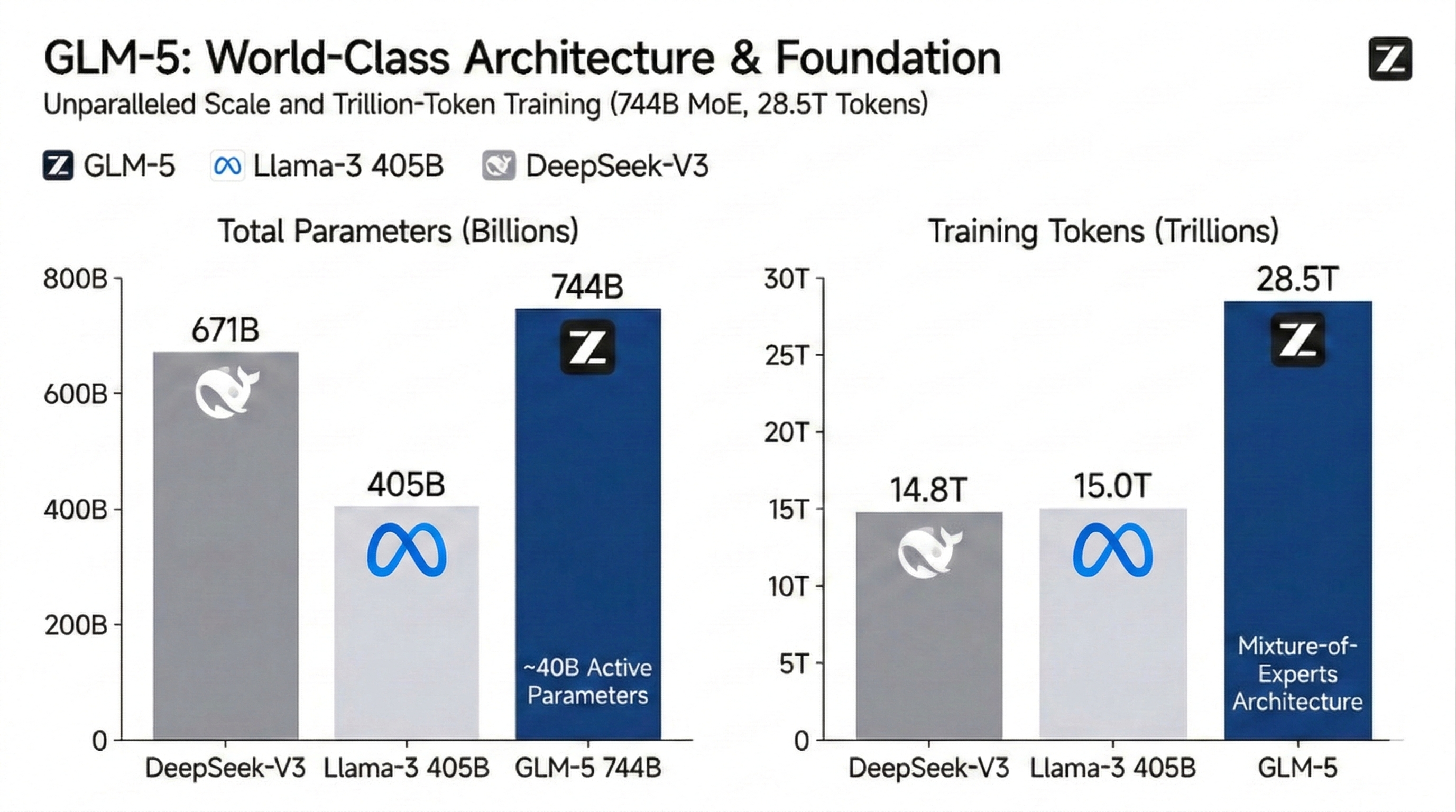
Arquitectura MoE masiva de 744B y base de conocimiento universal
El modelo GLM-5 aprovecha una arquitectura de Mezcla de Expertos (MoE) de 744 mil millones de parámetros entrenada con la asombrosa cantidad de 28,5 billones de tokens para redefinir los techos de rendimiento de código abierto. Al optimizar 40 mil millones de parámetros activos, facilita un salto masivo en la densidad del conocimiento mundial y la precisión de recuperación. Es la base principal para tareas cognitivas a gran escala y síntesis de datos complejos.
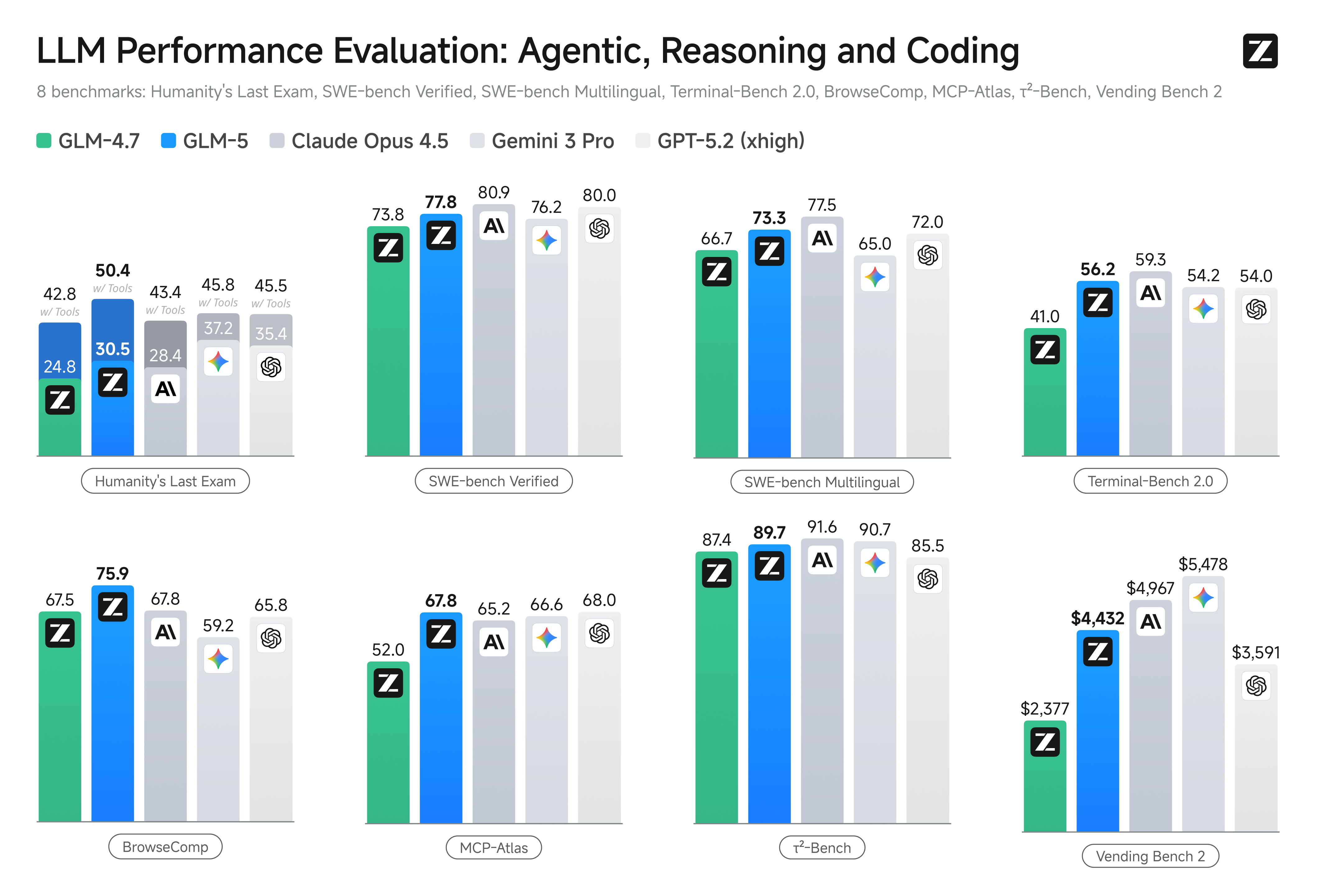
Ingeniería de sistemas agénticos revolucionaria con GLM-5
GLM-5 introduce capacidades agénticas avanzadas diseñadas para la ejecución de tareas sistémicas de largo horizonte en entornos de razonamiento de múltiples pasos. Al integrar una lógica de planificación sofisticada en su arquitectura central, el modelo mantiene una estabilidad excepcional durante el desarrollo de software automatizado y la redacción legal profesional. Sirve como el motor definitivo para flujos de trabajo autónomos que requieren una precisión extrema y coherencia a largo plazo.
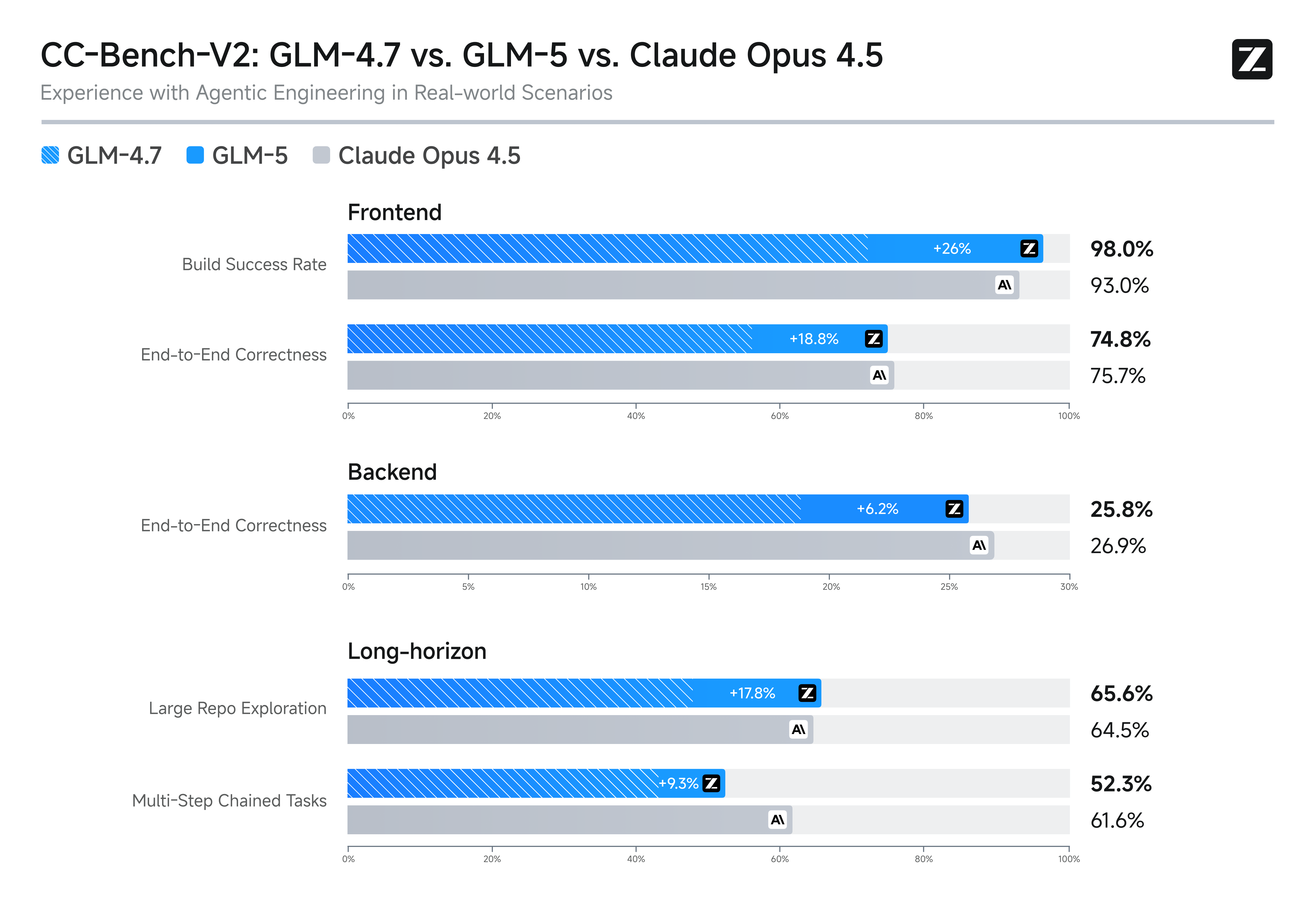
Slime: Aprendizaje por refuerzo asíncrono y evolución lógica
GLM-5 utiliza la innovadora infraestructura de aprendizaje por refuerzo asíncrono "Slime" para revolucionar la eficiencia del post-entrenamiento y el rigor lógico. Este avance mejora significativamente la calidad de la generación de código y el razonamiento algorítmico, superando los puntos de referencia anteriores y asegurando su posición como modelo de código abierto de primer nivel. Es la solución definitiva para el desarrollo full-stack y la resolución de problemas estructurales de alto nivel.
Qué Puedes Hacer con GLM LLM Models
Descubra casos de uso prácticos y flujos de trabajo que puede crear con esta familia de modelos — desde creación de contenido y automatización hasta aplicaciones de nivel producción.
Inteligencia de repositorio integral con GLM-5
La API GLM-5 permite a los desarrolladores ingerir bases de código completas para un análisis lógico profundo y una refactorización estructural. Al mapear gráficos de dependencia y rastrear flujos de datos asíncronos complejos, identifica condiciones de carrera en casos límite y deuda técnica oculta. Perfecto para la incorporación rápida de equipos, revisiones automatizadas de PR y el mantenimiento de arquitecturas de microservicios escalables y de alto rendimiento.
Prototipado Full-Stack instantáneo con GLM-5
Para el desarrollo impulsado por la intuición (vibe-driven), GLM-5 convierte bocetos visuales abstractos y notas fragmentadas en componentes de React o Next.js listos para desplegar. Se encarga del trabajo pesado de la generación de código base (boilerplate), el estilo con Tailwind CSS y la gestión del estado, al tiempo que garantiza la coherencia entre páginas. Ideal para fundadores en solitario, experimentadores de UX y para lanzar MVPs funcionales a la velocidad del rayo.
Orquestación de flujos de trabajo autónoma con GLM-5
GLM-5 se destaca en la gestión de tareas de investigación de largo horizonte que requieren razonamiento de múltiples pasos e integración de herramientas en tiempo real. Puede sintetizar de forma independiente datos de mercado de múltiples fuentes, redactar resúmenes legales conformes a la normativa y automatizar una programación compleja entre plataformas sin perder el contexto. Este caso de uso es ideal para gestores de proyectos, profesionales del derecho y cualquier persona que requiera un agente digital de alta fiabilidad para operaciones sistémicas.
Comparación de Modelos
Vea cómo se comparan los modelos de diferentes proveedores — compare rendimiento, precios y fortalezas únicas para tomar una decisión informada.
| Model | Context | Max Output | Input | Positioning |
|---|---|---|---|---|
| GLM-5 | 202.75K | 202.75K | Text | Flagship Foundation Model |
| GLM-4.7 | 202.75K | 202.75K | Text | Flagship Foundation Model |
| GLM-4.6 | 202.75K | 202.75K | Text | Efficient MoE Model |
| DeepSeek V3.2 | 163.84K | 163.84K | Text | Flagship General |
| MiniMax-M2.5 | 204.8K | 196.6K | Text | SOTA Agentic Coding |
How to Use GLM LLM Models on Atlas Cloud
Get started in minutes — follow these simple steps to integrate and deploy models through Atlas Cloud’s platform.
Create an Atlas Cloud Account
Sign up at atlascloud.ai and complete verification. New users receive free credits to explore the platform and test models.
Por Qué Usar GLM LLM Models en Atlas Cloud
Combina modelos avanzados de GLM LLM Models con la plataforma acelerada por GPU de Atlas Cloud, proporcionando rendimiento, escalabilidad y experiencia de desarrollo incomparables.
Rendimiento y Flexibilidad
Baja Latencia:
Inferencia optimizada por GPU para respuestas en tiempo real.
API Unificada:
Una sola integración para acceder a GLM LLM Models, GPT, Gemini y DeepSeek.
Precios Transparentes:
Facturación por Token, soporta modo Serverless.
Empresa y Escala
Experiencia del Desarrollador:
SDK, análisis de datos, herramientas de ajuste fino y plantillas todo en uno.
Confiabilidad:
99.99% de disponibilidad, control de permisos RBAC, registros de cumplimiento.
Seguridad y Cumplimiento:
Certificación SOC 2 Type II, cumplimiento HIPAA, soberanía de datos en EE.UU.
Preguntas Frecuentes sobre GLM LLM Models
Con 28.5T tokens de datos de entrenamiento y resultados estelares en las pruebas de referencia, GLM-5 es ampliamente considerado como el "techo del código abierto". Rivaliza o supera a los modelos comerciales globales de primer nivel en capacidad y lógica, proporcionando una base potente y de alto rendimiento para el ecosistema global de desarrolladores.
HLE es un banco de pruebas de alta dificultad diseñado para evaluar si la IA posee conocimientos y razonamiento humanos de nivel experto. Que GLM-5 logre la puntuación más alta significa que su dominio de la ciencia de frontera y la lógica compleja ha alcanzado o superado el nivel de los principales modelos de código cerrado.
BrowseComp es la clasificación definitiva para las capacidades "Agentic", centrada en la planificación y ejecución de tareas complejas en entornos web del mundo real. La puntuación más alta representa la capacidad de GLM-5 para navegar autónomamente por los navegadores e integrar información entre páginas, marcándolo como el motor de Web Agent de primer nivel.
Esta arquitectura proporciona una masiva "base de conocimientos" de 744 mil millones de parámetros, activando solo ~40 mil millones durante la inferencia. Para los desarrolladores, esto se traduce en una densidad de conocimiento y profundidad de razonamiento de clase mundial—superando a modelos densos como Llama-3 405B—con menor latencia y costo.
Los parámetros totales representan la "capacidad de conocimiento" del modelo; los 744B permiten un vasto almacenamiento de hechos mundiales y lógica experta. Los parámetros activos representan la "potencia computacional" utilizada por inferencia. Gracias a la arquitectura MoE, GLM-5 ofrece una inteligencia de nivel 744B utilizando solo 40B de cómputo, equilibrando una base de conocimientos masiva con un rendimiento de alta velocidad y rentable.
El volumen de datos de preentrenamiento determina la "amplitud de visión" de un modelo. 28.5T tokens es uno de los conjuntos de datos más grandes a nivel mundial (aproximadamente el doble que el de Llama-3), abarcando idiomas raros, artículos académicos especializados y una gran cantidad de código de alta calidad. Esto asegura que GLM-5 posea una precisión y generalización superiores al abordar consultas complejas de larga cola, matices interculturales y programación de sistemas de bajo nivel.
Explorar Más Series
Happy Horse 1.0
HappyHorse-1.0 is a unified multimodal AI video generation model that climbed to the top of the Artificial Analysis Video Arena blind-test leaderboard for both text-to-video and image-to-video generation. CNBC Alibaba Group confirmed ownership of HappyHorse, developed under its Alibaba Token Hub (ATH) business unit, where it leads benchmarks outperforming ByteDance's Seedance 2.0 and others. Caixin Global Led by Zhang Di — the former VP of Kuaishou who architected Kling AI — the 15-billion parameter model generates 1080p video with synchronized audio in a single pass using a unified transformer architecture that bypasses the multi-stage pipelines used by every major competitor.

Seedance 2.0 Models
Seedance 2.0(by Bytedance) is a multimodal video generation model that redefines "controllable creation," moving beyond the limitations of text or start/end frames. It supports quad-modal inputs—text, image, video, and audio—and introduces an industry-leading "Universal Reference" system. By precisely replicating the composition, camera movement, and character actions from reference assets, Seedance 2.0 solves critical issues with character consistency and physical coherence, empowering creators to act as true "directors" with deep control over their output.
GPT Image 2 Models
GPT Image 2 is a state-of-the-art multimodal foundation model engineered for exceptional text-to-image generation with unprecedented photorealism and creative versatility. Developed by OpenAI as the evolution of the DALL-E lineage, it transforms detailed natural language descriptions into hyper-realistic imagery at up to 4K resolution. With proprietary "Neural Rendering Engine" technology for precise visual control, GPT Image 2 delivers studio-quality results with accurate anatomy, lighting, and composition—making it the premier AI tool for professional creators, enterprises, and developers demanding production-ready visual assets.
Wan2.7 Models
Launching this March, Wan2.7 is the latest powerhouse in the Qwen ecosystem, delivering a massive upgrade in visual fidelity, audio synchronization, and motion consistency over version 2.6. This all-in-one AI video generator supports advanced features like first-and-last frame control, 3x3 grid synthesis, and instruction-based video editing. Outperforming competitors like Jimeng, Wan2.7 offers superior flexibility with support for real-person image inputs, up to five video references, and 1080P high-definition outputs spanning 2 to 15 seconds, making it the premier choice for professional digital storytelling and high-end content marketing.
Veo3.1 Models
Google DeepMind’s Veo 3.1 represents a paradigm shift in AI video generation, empowering creators with director-level narrative control and cinematic-grade audio quality that seamlessly integrates with its enhanced visual realism. By bridging the gap between imaginative concepts and photorealistic execution, this advanced model offers a transformative solution for a wide range of application scenarios, from professional filmmaking and high-end advertising to immersive digital content creation.
ERNIE Image Models
ERNIE-Image is an open-weight text-to-image model developed by the ERNIE-Image Team at Baidu, built on a single-stream Diffusion Transformer (DiT) with 8B parameters and paired with a lightweight Prompt Enhancer that rewrites short prompts into richer, more structured descriptions before passing them to the diffusion backbone. NYU Shanghai RITS Released on April 15, 2026 under the Apache 2.0 license, it transforms natural language descriptions into detailed imagery with particular strength in text rendering and structured layout generation. ERNIE-Image is designed not only for strong visual quality, but for controllability in practical generation scenarios where accurate content realization matters as much as aesthetics — making it well-suited for commercial posters, comics, multi-panel layouts, and other content creation tasks that require both visual quality and precise control.
GPT Image Models
The GPT Image Family is OpenAI's latest suite of multimodal image generation and editing models, built on the powerful GPT architecture. This family includes three tiers — GPT Image-1, GPT Image-1.5, and GPT Image-1 Mini — each available in both Text-to-Image and Image-to-Image variants. Combining GPT's world-class language understanding with DALL·E-class visual synthesis, these models deliver exceptional prompt adherence, photorealistic rendering, and creative versatility across illustration, photography, design, and visualization tasks. The series offers flexible pricing and quality tiers to match any workflow — from rapid prototyping and high-volume content production to professional-grade final deliverables. Whether you need ultra-fast iterations at minimal cost or maximum quality for brand campaigns, the GPT Image Family has a solution tailored to your needs.
Nano Banana2 Models
Nano Banana 2 (by Google), is a generative image model that perfectly balances lightning-fast rendering with exceptional visual quality. With an improved price-performance ratio, it achieves breakthrough micro-detail depiction, accurate native text rendering, and complex physical structure reconstruction. It serves as a highly efficient, commercial-grade visual production tool for developers, marketing teams, and content creators.
Seedream5.0 Models
Seedream 5.0, developed by ByteDance’s Jimeng AI, is a high-performance AI image generation model that integrates real-time search with intelligent reasoning. Purpose-built for time-sensitive content and complex visual logic, it excels at professional infographics, architectural design, and UI assistance. By blending live web insights with creative precision, Seedream 5.0 empowers commercial branding and marketing with a seamless, logic-driven workflow that turns sophisticated data into stunning, high-fidelity visuals.
Kling3.0 Models
Kuaishou’s flagship video generation suite, Kling 3.0, features two powerhouse models—Kling 3.0 (Upgraded from Kling 2.6) and Kling 3.0 Omni (Kling O3, Upgraded from Kling O1)—both offering high-fidelity native audio integration. While Kling 3.0 excels in intelligent cinematic storytelling, multilingual lip-syncing, and precision text rendering, Kling O3 sets a new standard for professional-grade subject consistency by supporting custom subjects and voice clones derived from video or image inputs. Together, these models provide a comprehensive solution tailored for cinematic narratives, global marketing campaigns, social media content, and digital skit production.
GLM LLM Models
GLM is a cutting-edge LLM series by Z.ai (Zhipu AI) featuring GLM-5, GLM-4.7, and GLM-4.6. Engineered for complex systems and long-horizon agentic tasks, GLM-5 outperforms top-tier closed-source models in elite benchmarks like Humanity’s Last Exam and BrowseComp. While GLM-4.7 specializes in reasoning, coding, and real-world intelligent agents, the entire GLM suite is fast, smart, and reliable, making it the ultimate tool for building websites, analyzing data, and delivering instant, high-quality answers for any professional workflow.
Open AI Model Families
Explore OpenAI’s language and video models on Atlas Cloud: ChatGPT for advanced reasoning and interaction, and Sora-2 for physics-aware video generation.
Happy Horse 1.0
HappyHorse-1.0 is a unified multimodal AI video generation model that climbed to the top of the Artificial Analysis Video Arena blind-test leaderboard for both text-to-video and image-to-video generation. CNBC Alibaba Group confirmed ownership of HappyHorse, developed under its Alibaba Token Hub (ATH) business unit, where it leads benchmarks outperforming ByteDance's Seedance 2.0 and others. Caixin Global Led by Zhang Di — the former VP of Kuaishou who architected Kling AI — the 15-billion parameter model generates 1080p video with synchronized audio in a single pass using a unified transformer architecture that bypasses the multi-stage pipelines used by every major competitor.
Seedance 2.0 Models
Seedance 2.0(by Bytedance) is a multimodal video generation model that redefines "controllable creation," moving beyond the limitations of text or start/end frames. It supports quad-modal inputs—text, image, video, and audio—and introduces an industry-leading "Universal Reference" system. By precisely replicating the composition, camera movement, and character actions from reference assets, Seedance 2.0 solves critical issues with character consistency and physical coherence, empowering creators to act as true "directors" with deep control over their output.
GPT Image 2 Models
GPT Image 2 is a state-of-the-art multimodal foundation model engineered for exceptional text-to-image generation with unprecedented photorealism and creative versatility. Developed by OpenAI as the evolution of the DALL-E lineage, it transforms detailed natural language descriptions into hyper-realistic imagery at up to 4K resolution. With proprietary "Neural Rendering Engine" technology for precise visual control, GPT Image 2 delivers studio-quality results with accurate anatomy, lighting, and composition—making it the premier AI tool for professional creators, enterprises, and developers demanding production-ready visual assets.
Wan2.7 Models
Launching this March, Wan2.7 is the latest powerhouse in the Qwen ecosystem, delivering a massive upgrade in visual fidelity, audio synchronization, and motion consistency over version 2.6. This all-in-one AI video generator supports advanced features like first-and-last frame control, 3x3 grid synthesis, and instruction-based video editing. Outperforming competitors like Jimeng, Wan2.7 offers superior flexibility with support for real-person image inputs, up to five video references, and 1080P high-definition outputs spanning 2 to 15 seconds, making it the premier choice for professional digital storytelling and high-end content marketing.
Veo3.1 Models
Google DeepMind’s Veo 3.1 represents a paradigm shift in AI video generation, empowering creators with director-level narrative control and cinematic-grade audio quality that seamlessly integrates with its enhanced visual realism. By bridging the gap between imaginative concepts and photorealistic execution, this advanced model offers a transformative solution for a wide range of application scenarios, from professional filmmaking and high-end advertising to immersive digital content creation.
ERNIE Image Models
ERNIE-Image is an open-weight text-to-image model developed by the ERNIE-Image Team at Baidu, built on a single-stream Diffusion Transformer (DiT) with 8B parameters and paired with a lightweight Prompt Enhancer that rewrites short prompts into richer, more structured descriptions before passing them to the diffusion backbone. NYU Shanghai RITS Released on April 15, 2026 under the Apache 2.0 license, it transforms natural language descriptions into detailed imagery with particular strength in text rendering and structured layout generation. ERNIE-Image is designed not only for strong visual quality, but for controllability in practical generation scenarios where accurate content realization matters as much as aesthetics — making it well-suited for commercial posters, comics, multi-panel layouts, and other content creation tasks that require both visual quality and precise control.
GPT Image Models
The GPT Image Family is OpenAI's latest suite of multimodal image generation and editing models, built on the powerful GPT architecture. This family includes three tiers — GPT Image-1, GPT Image-1.5, and GPT Image-1 Mini — each available in both Text-to-Image and Image-to-Image variants. Combining GPT's world-class language understanding with DALL·E-class visual synthesis, these models deliver exceptional prompt adherence, photorealistic rendering, and creative versatility across illustration, photography, design, and visualization tasks. The series offers flexible pricing and quality tiers to match any workflow — from rapid prototyping and high-volume content production to professional-grade final deliverables. Whether you need ultra-fast iterations at minimal cost or maximum quality for brand campaigns, the GPT Image Family has a solution tailored to your needs.
Nano Banana2 Models
Nano Banana 2 (by Google), is a generative image model that perfectly balances lightning-fast rendering with exceptional visual quality. With an improved price-performance ratio, it achieves breakthrough micro-detail depiction, accurate native text rendering, and complex physical structure reconstruction. It serves as a highly efficient, commercial-grade visual production tool for developers, marketing teams, and content creators.
Seedream5.0 Models
Seedream 5.0, developed by ByteDance’s Jimeng AI, is a high-performance AI image generation model that integrates real-time search with intelligent reasoning. Purpose-built for time-sensitive content and complex visual logic, it excels at professional infographics, architectural design, and UI assistance. By blending live web insights with creative precision, Seedream 5.0 empowers commercial branding and marketing with a seamless, logic-driven workflow that turns sophisticated data into stunning, high-fidelity visuals.
Kling3.0 Models
Kuaishou’s flagship video generation suite, Kling 3.0, features two powerhouse models—Kling 3.0 (Upgraded from Kling 2.6) and Kling 3.0 Omni (Kling O3, Upgraded from Kling O1)—both offering high-fidelity native audio integration. While Kling 3.0 excels in intelligent cinematic storytelling, multilingual lip-syncing, and precision text rendering, Kling O3 sets a new standard for professional-grade subject consistency by supporting custom subjects and voice clones derived from video or image inputs. Together, these models provide a comprehensive solution tailored for cinematic narratives, global marketing campaigns, social media content, and digital skit production.
GLM LLM Models
GLM is a cutting-edge LLM series by Z.ai (Zhipu AI) featuring GLM-5, GLM-4.7, and GLM-4.6. Engineered for complex systems and long-horizon agentic tasks, GLM-5 outperforms top-tier closed-source models in elite benchmarks like Humanity’s Last Exam and BrowseComp. While GLM-4.7 specializes in reasoning, coding, and real-world intelligent agents, the entire GLM suite is fast, smart, and reliable, making it the ultimate tool for building websites, analyzing data, and delivering instant, high-quality answers for any professional workflow.
Open AI Model Families
Explore OpenAI’s language and video models on Atlas Cloud: ChatGPT for advanced reasoning and interaction, and Sora-2 for physics-aware video generation.



