GLM LLM Models
GLM is a cutting-edge LLM series by Z.ai (Zhipu AI) featuring GLM-5, GLM-4.7, and GLM-4.6. Engineered for complex systems and long-horizon agentic tasks, GLM-5 outperforms top-tier closed-source models in elite benchmarks like Humanity’s Last Exam and BrowseComp. While GLM-4.7 specializes in reasoning, coding, and real-world intelligent agents, the entire GLM suite is fast, smart, and reliable, making it the ultimate tool for building websites, analyzing data, and delivering instant, high-quality answers for any professional workflow.
主要モデルを探索
Atlas Cloudは、業界をリードする最新のクリエイティブモデルを提供します。

GLM LLM Modelsの特徴
Atlas Cloudは、業界をリードする最新のクリエイティブモデルを提供します。

Advanced Reasoning
Tuned for strong logical reasoning, structured analysis, and multi-step problem solving.

Cost-Efficiency
Optimized architectures keep latency and costs under control.

Safety & Governance
Built-in content filters, auditing tools, and policy controls help teams deploy.

Enterprise Reliability
Production-ready SLAs, monitoring, and governance features help teams confidently ship applications.

Chinese–English Excellence
Native-strength Chinese and fluent English support enable high-quality bilingual chat, search, and generation.

Developer-Friendly Ecosystem
Clean APIs, SDKs, and tooling make it easy to integrate, fine-tune, and operate Z.ai across products and platforms.
最高速度
最低コスト
| Model | Description |
|---|---|
| GLM-5 | GLM-5 is Z.ai's flagship LLM featuring a massive 202.75K context window optimized for complex systems and long-horizon agentic tasks. Outperforming elite closed-source models in benchmarks like Humanity’s Last Exam and BrowseComp, it provides robust programming and stable multi-step reasoning at highly competitive baseline pricing. |
| GLM-4.7 | GLM-4.7 is a high-performance LLM with a 202.75K context window specifically engineered for real-world intelligent agents, advanced reasoning, and professional coding. Fast, smart, and reliable, it serves as the ideal engine for building complex websites and automating sophisticated professional workflows with precision. |
| GLM-4.6 | GLM-4.6 is a powerful MoE LLM with a 202.75K context window designed for rapid data analysis and instant, high-fidelity answers. This dependable model excels at high-efficiency tasks like creating professional slides and web content, offering a smart balance of speed and enterprise-grade performance. |
GLM LLM Models の新機能 + ショーケース
先進的なモデルと Atlas Cloud の GPU アクセラレーションプラットフォームを組み合わせ、画像・動画生成において比類のない速度、拡張性、クリエイティブコントロールを実現します。
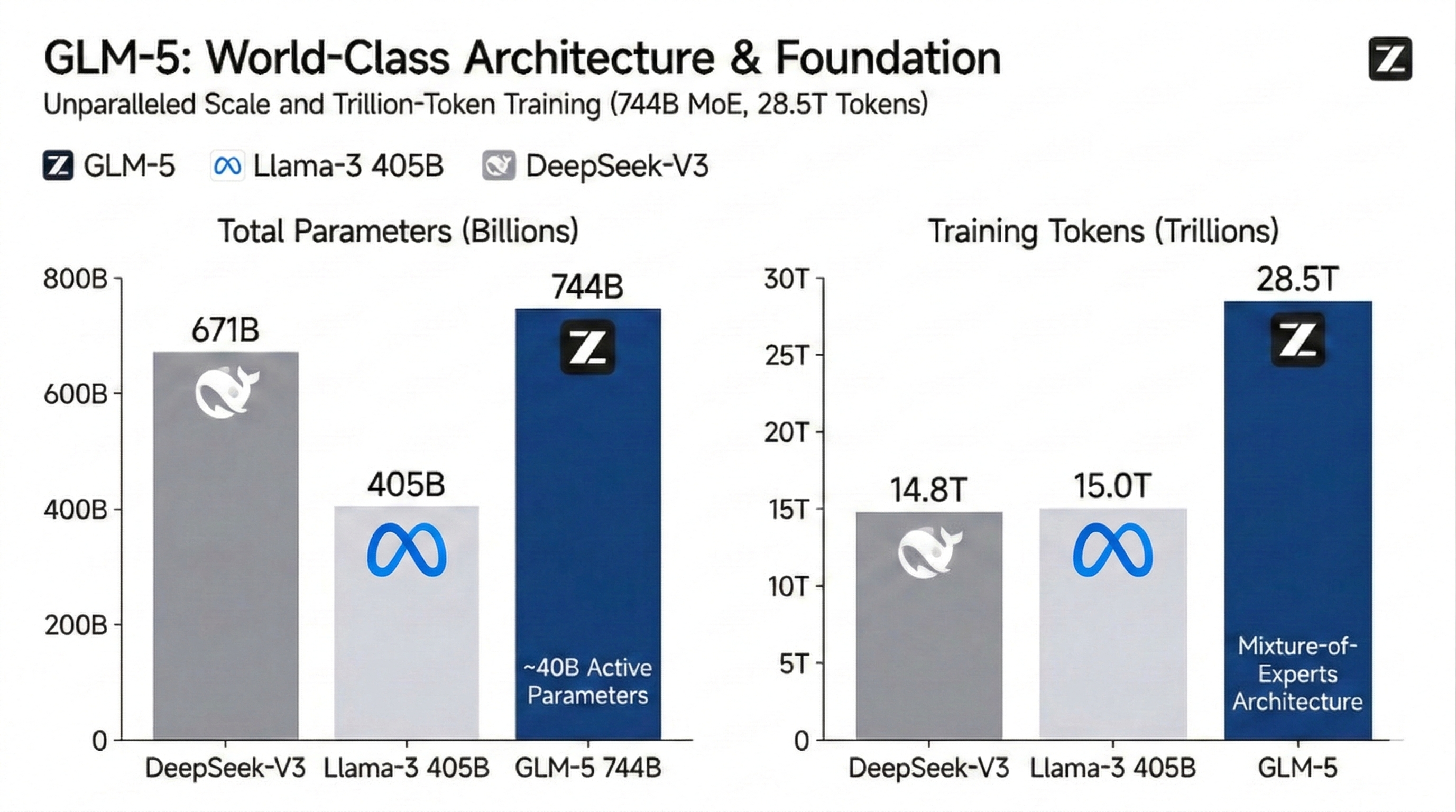
大規模な744B MoEアーキテクチャと汎用知識ベース
GLM-5モデルは、驚異的な28.5兆トークンで学習された7,440億パラメータのMixture-of-Experts(MoE)アーキテクチャを活用し、オープンソースのパフォーマンス上限を再定義します。400億の能動的パラメータ(アクティブパラメータ)を最適化することで、世界知識の密度と検索精度における飛躍的な向上を実現します。これは、大規模な認知タスクや複雑なデータ合成のための最高の基盤となります。
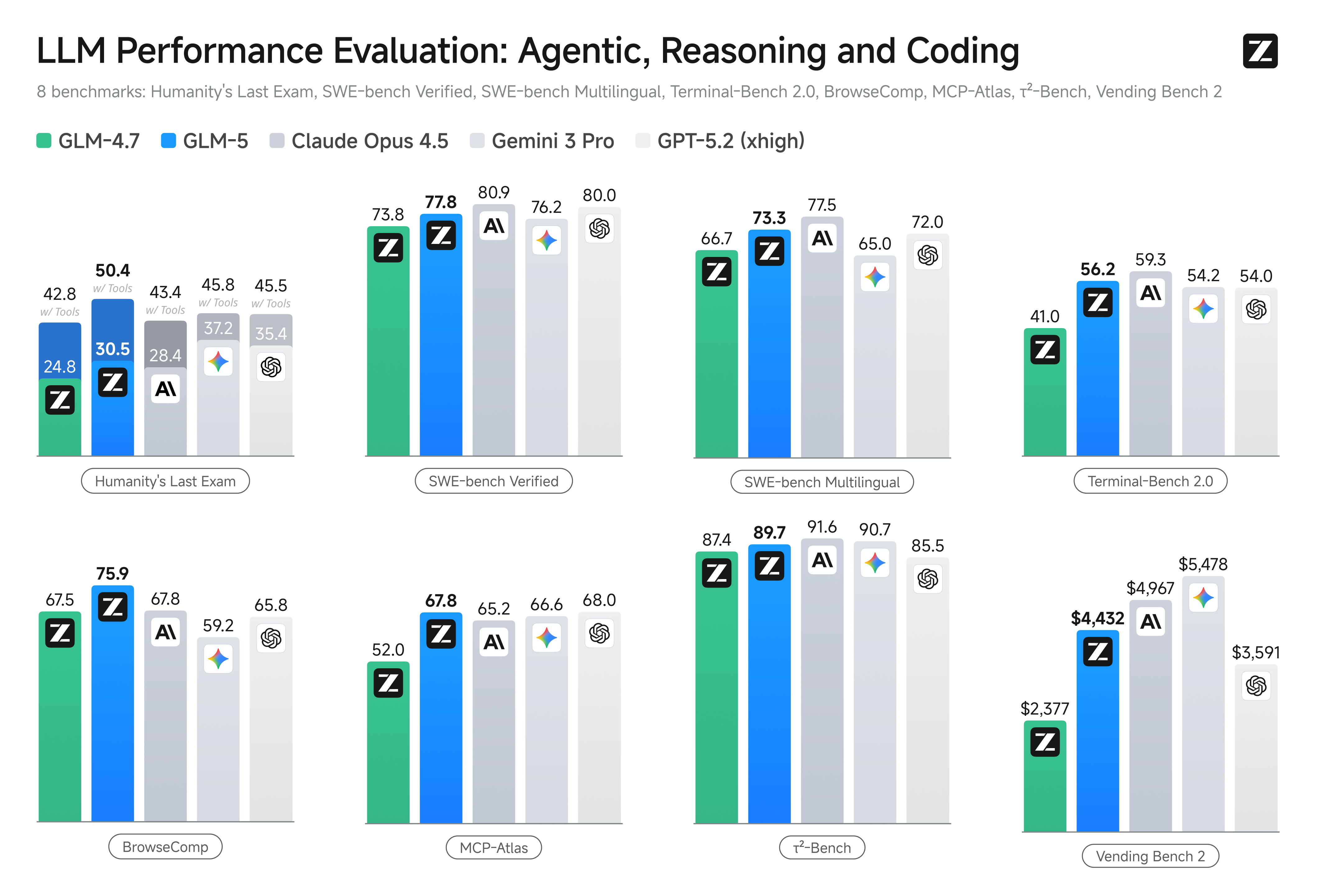
GLM-5による画期的なエージェンティック・システム・エンジニアリング
GLM-5は、マルチステップの推論環境における長期的かつ体系的なタスク実行のために設計された、高度なエージェント機能を導入しています。洗練された計画ロジックをコアアーキテクチャに統合することで、このモデルは自動ソフトウェア開発や専門的な法的文書作成において卓越した安定性を維持します。これは、極めて高い精度と長期的な一貫性を必要とする自律型ワークフローのための決定的なエンジンとして機能します。
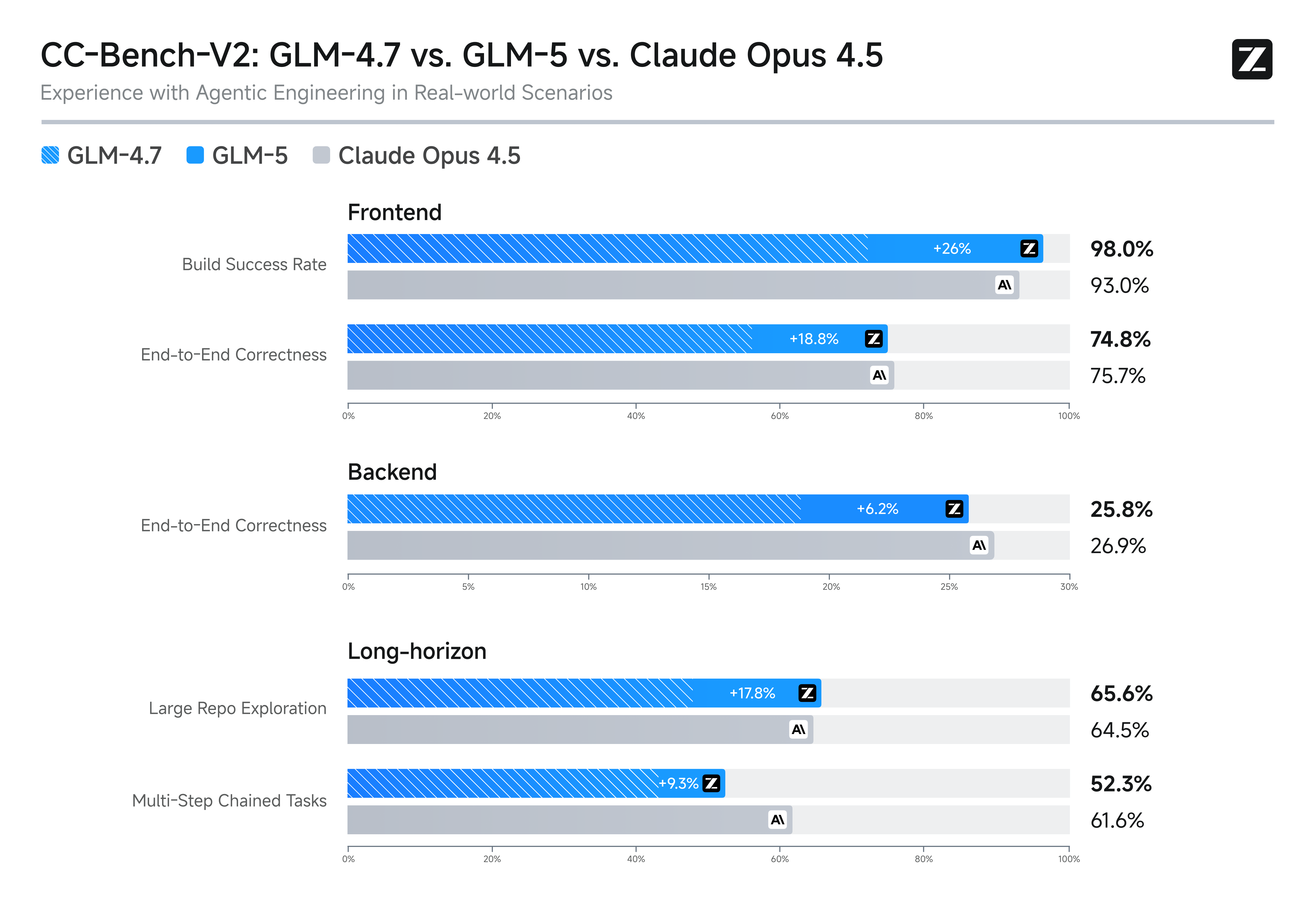
Slime非同期強化学習および論理進化
GLM-5は、革新的な「Slime」非同期強化学習インフラストラクチャを活用し、ポストトレーニングの効率性と論理的厳密性に革命をもたらします。この画期的な進歩により、コード生成の品質とアルゴリズム的推論が大幅に向上し、これまでのベンチマークを凌駕して、トップクラスのオープンソースモデルとしての地位を確立しました。これは、フルスタック開発および高度な構造的問題解決のための究極のソリューションです。
GLM LLM Models でできること
このモデルファミリーで構築できる実用的なユースケースとワークフローを発見 — コンテンツ作成や自動化から本番グレードのアプリケーションまで。
GLM-5による包括的なリポジトリインテリジェンス
GLM-5 APIは、開発者がコードベース全体を取り込み、深いロジック分析と構造的リファクタリングを行うことを可能にします。依存関係グラフのマッピングや複雑な非同期データフローの追跡により、エッジケースの競合状態や隠れた技術的負債を特定します。チームの迅速なオンボーディング、自動化されたPRレビュー、そしてスケーラブルで高性能なマイクロサービスアーキテクチャの維持に最適です。
GLM-5を使用した即時フルスタックプロトタイピング
感覚主導型(Vibe-driven)の開発において、GLM-5 は抽象的なビジュアルモックや断片的なメモを、デプロイ可能な React または Next.js コンポーネントに変換します。ボイラープレートの生成、Tailwind CSS のスタイリング、状態管理といった負担の大きい作業を処理しつつ、ページ間の一貫性を確保します。ソロファウンダーや UX 実験者、そして機能的な MVP を電光石火の速さでリリースしたい方に最適です。
GLM-5による自律型ワークフロー・オーケストレーション
GLM-5は、多段階の推論とリアルタイムのツール統合を必要とする長期的な調査タスクの管理に優れています。マルチソースの市場データを独自に統合し、コンプライアンスに準拠した法的要約を作成し、コンテキストを失うことなく複雑なクロスプラットフォームのスケジューリングを自動化できます。このユースケースは、プロジェクトマネージャー、法律の専門家、および体系的な運用のために信頼性の高いデジタルエージェントを必要とするすべての人に適しています。
モデル比較
異なるプロバイダーのモデルを比較 — パフォーマンス、料金、独自の強みを確認して最適な選択を。
| Model | Context | Max Output | Input | Positioning |
|---|---|---|---|---|
| GLM-5 | 202.75K | 202.75K | Text | Flagship Foundation Model |
| GLM-4.7 | 202.75K | 202.75K | Text | Flagship Foundation Model |
| GLM-4.6 | 202.75K | 202.75K | Text | Efficient MoE Model |
| DeepSeek V3.2 | 163.84K | 163.84K | Text | Flagship General |
| MiniMax-M2.5 | 204.8K | 196.6K | Text | SOTA Agentic Coding |
Atlas Cloud で GLM LLM Models を使う方法
数分で始められます — 以下の簡単なステップに従って、Atlas Cloud プラットフォームでモデルを統合・デプロイしましょう。
Atlas Cloud アカウントを作成
atlascloud.ai でサインアップし、認証を完了します。新規ユーザーには無料クレジットが付与され、プラットフォームの探索やモデルのテストに使用できます。
Atlas CloudでGLM LLM Modelsを使用する理由
高度なGLM LLM ModelsモデルとAtlas CloudのGPU加速プラットフォームを組み合わせることで、比類のないパフォーマンス、スケーラビリティ、開発者エクスペリエンスを提供。
パフォーマンスと柔軟性
低レイテンシ:
リアルタイム推論のためのGPU最適化推論。
統合API:
1つの統合でGLM LLM Models、GPT、Gemini、DeepSeekを実行。
透明な料金:
サーバーレスオプション付きの予測可能なtoken単位の課金。
エンタープライズとスケール
開発者エクスペリエンス:
SDK、分析、ファインチューニングツール、テンプレート。
信頼性:
99.99%の稼働率、RBAC、コンプライアンス対応ロギング。
セキュリティとコンプライアンス:
SOC 2 Type II、HIPAA準拠、米国内のデータ主権。
GLM LLM Models に関するよくある質問
28.5Tトークンの学習データと輝かしいベンチマーク結果を持つGLM-5は、「オープンソースの最高峰」として広く認識されています。能力と論理性において世界トップクラスの商用モデルに匹敵、あるいは凌駕し、世界の開発者エコシステムに強力で高性能な基盤を提供します。
HLEは、AIが専門家レベルの人間の知識と推論能力を備えているかをテストするために設計された高難易度のベンチマークです。GLM-5が最高スコアを達成したことは、最先端科学と複雑な論理に対するその習熟度が、主要なクローズドソースモデルのレベルに到達、あるいはそれを凌駕したことを意味します。
BrowseCompは、「エージェンティック(Agentic)」能力に関する決定的なリーダーボードであり、実世界のWeb環境における複雑なタスクの計画と実行に焦点を当てています。最高スコアは、ブラウザを自律的に操作し、ページ間の情報を統合するGLM-5の能力を表しており、これが最高峰のWeb Agentエンジンであることを示しています。
このアーキテクチャは、7,440億パラメータという巨大な「知識ベース」を提供しながら、推論時にはわずか約400億パラメータのみをアクティブにします。開発者にとって、これは世界クラスの知識密度と推論の深さを意味し、Llama-3 405Bのようなデンスモデルを凌駕しつつ、より低いレイテンシとコストを実現します。
総パラメータ数はモデルの「知識容量」を表し、744Bという規模により、世界中の事実や専門的な論理を膨大に蓄積することが可能です。アクティブパラメータは、推論ごとに使用される「計算能力」を表します。MoEアーキテクチャのおかげで、GLM-5はわずか40Bの計算量で744Bレベルの知能を実現し、巨大な知識ベースと高速かつコスト効率の高いパフォーマンスを両立させています。
事前学習データの量は、モデルの「視野の広さ」を決定します。28.5Tトークンは世界最大級のデータセットの一つであり(Llama-3の約2倍)、希少言語、専門的な学術論文、そして膨大な高品質コードを網羅しています。これにより、GLM-5は複雑なロングテールクエリ、異文化間のニュアンス、低レベルのシステムプログラミングに取り組む際、優れた精度と汎化能力を発揮します。
さらにファミリーを探索
Happy Horse 1.0
HappyHorse-1.0 is a unified multimodal AI video generation model that climbed to the top of the Artificial Analysis Video Arena blind-test leaderboard for both text-to-video and image-to-video generation. CNBC Alibaba Group confirmed ownership of HappyHorse, developed under its Alibaba Token Hub (ATH) business unit, where it leads benchmarks outperforming ByteDance's Seedance 2.0 and others. Caixin Global Led by Zhang Di — the former VP of Kuaishou who architected Kling AI — the 15-billion parameter model generates 1080p video with synchronized audio in a single pass using a unified transformer architecture that bypasses the multi-stage pipelines used by every major competitor.

Seedance 2.0 Models
Seedance 2.0(by Bytedance) is a multimodal video generation model that redefines "controllable creation," moving beyond the limitations of text or start/end frames. It supports quad-modal inputs—text, image, video, and audio—and introduces an industry-leading "Universal Reference" system. By precisely replicating the composition, camera movement, and character actions from reference assets, Seedance 2.0 solves critical issues with character consistency and physical coherence, empowering creators to act as true "directors" with deep control over their output.
GPT Image 2 Models
GPT Image 2 is a state-of-the-art multimodal foundation model engineered for exceptional text-to-image generation with unprecedented photorealism and creative versatility. Developed by OpenAI as the evolution of the DALL-E lineage, it transforms detailed natural language descriptions into hyper-realistic imagery at up to 4K resolution. With proprietary "Neural Rendering Engine" technology for precise visual control, GPT Image 2 delivers studio-quality results with accurate anatomy, lighting, and composition—making it the premier AI tool for professional creators, enterprises, and developers demanding production-ready visual assets.
Wan2.7 Models
Launching this March, Wan2.7 is the latest powerhouse in the Qwen ecosystem, delivering a massive upgrade in visual fidelity, audio synchronization, and motion consistency over version 2.6. This all-in-one AI video generator supports advanced features like first-and-last frame control, 3x3 grid synthesis, and instruction-based video editing. Outperforming competitors like Jimeng, Wan2.7 offers superior flexibility with support for real-person image inputs, up to five video references, and 1080P high-definition outputs spanning 2 to 15 seconds, making it the premier choice for professional digital storytelling and high-end content marketing.
Veo3.1 Models
Google DeepMind’s Veo 3.1 represents a paradigm shift in AI video generation, empowering creators with director-level narrative control and cinematic-grade audio quality that seamlessly integrates with its enhanced visual realism. By bridging the gap between imaginative concepts and photorealistic execution, this advanced model offers a transformative solution for a wide range of application scenarios, from professional filmmaking and high-end advertising to immersive digital content creation.
ERNIE Image Models
ERNIE-Image is an open-weight text-to-image model developed by the ERNIE-Image Team at Baidu, built on a single-stream Diffusion Transformer (DiT) with 8B parameters and paired with a lightweight Prompt Enhancer that rewrites short prompts into richer, more structured descriptions before passing them to the diffusion backbone. NYU Shanghai RITS Released on April 15, 2026 under the Apache 2.0 license, it transforms natural language descriptions into detailed imagery with particular strength in text rendering and structured layout generation. ERNIE-Image is designed not only for strong visual quality, but for controllability in practical generation scenarios where accurate content realization matters as much as aesthetics — making it well-suited for commercial posters, comics, multi-panel layouts, and other content creation tasks that require both visual quality and precise control.
GPT Image Models
The GPT Image Family is OpenAI's latest suite of multimodal image generation and editing models, built on the powerful GPT architecture. This family includes three tiers — GPT Image-1, GPT Image-1.5, and GPT Image-1 Mini — each available in both Text-to-Image and Image-to-Image variants. Combining GPT's world-class language understanding with DALL·E-class visual synthesis, these models deliver exceptional prompt adherence, photorealistic rendering, and creative versatility across illustration, photography, design, and visualization tasks. The series offers flexible pricing and quality tiers to match any workflow — from rapid prototyping and high-volume content production to professional-grade final deliverables. Whether you need ultra-fast iterations at minimal cost or maximum quality for brand campaigns, the GPT Image Family has a solution tailored to your needs.
Nano Banana2 Models
Nano Banana 2 (by Google), is a generative image model that perfectly balances lightning-fast rendering with exceptional visual quality. With an improved price-performance ratio, it achieves breakthrough micro-detail depiction, accurate native text rendering, and complex physical structure reconstruction. It serves as a highly efficient, commercial-grade visual production tool for developers, marketing teams, and content creators.
Seedream5.0 Models
Seedream 5.0, developed by ByteDance’s Jimeng AI, is a high-performance AI image generation model that integrates real-time search with intelligent reasoning. Purpose-built for time-sensitive content and complex visual logic, it excels at professional infographics, architectural design, and UI assistance. By blending live web insights with creative precision, Seedream 5.0 empowers commercial branding and marketing with a seamless, logic-driven workflow that turns sophisticated data into stunning, high-fidelity visuals.
Kling3.0 Models
Kuaishou’s flagship video generation suite, Kling 3.0, features two powerhouse models—Kling 3.0 (Upgraded from Kling 2.6) and Kling 3.0 Omni (Kling O3, Upgraded from Kling O1)—both offering high-fidelity native audio integration. While Kling 3.0 excels in intelligent cinematic storytelling, multilingual lip-syncing, and precision text rendering, Kling O3 sets a new standard for professional-grade subject consistency by supporting custom subjects and voice clones derived from video or image inputs. Together, these models provide a comprehensive solution tailored for cinematic narratives, global marketing campaigns, social media content, and digital skit production.
GLM LLM Models
GLM is a cutting-edge LLM series by Z.ai (Zhipu AI) featuring GLM-5, GLM-4.7, and GLM-4.6. Engineered for complex systems and long-horizon agentic tasks, GLM-5 outperforms top-tier closed-source models in elite benchmarks like Humanity’s Last Exam and BrowseComp. While GLM-4.7 specializes in reasoning, coding, and real-world intelligent agents, the entire GLM suite is fast, smart, and reliable, making it the ultimate tool for building websites, analyzing data, and delivering instant, high-quality answers for any professional workflow.
Open AI Model Families
Explore OpenAI’s language and video models on Atlas Cloud: ChatGPT for advanced reasoning and interaction, and Sora-2 for physics-aware video generation.
Happy Horse 1.0
HappyHorse-1.0 is a unified multimodal AI video generation model that climbed to the top of the Artificial Analysis Video Arena blind-test leaderboard for both text-to-video and image-to-video generation. CNBC Alibaba Group confirmed ownership of HappyHorse, developed under its Alibaba Token Hub (ATH) business unit, where it leads benchmarks outperforming ByteDance's Seedance 2.0 and others. Caixin Global Led by Zhang Di — the former VP of Kuaishou who architected Kling AI — the 15-billion parameter model generates 1080p video with synchronized audio in a single pass using a unified transformer architecture that bypasses the multi-stage pipelines used by every major competitor.
Seedance 2.0 Models
Seedance 2.0(by Bytedance) is a multimodal video generation model that redefines "controllable creation," moving beyond the limitations of text or start/end frames. It supports quad-modal inputs—text, image, video, and audio—and introduces an industry-leading "Universal Reference" system. By precisely replicating the composition, camera movement, and character actions from reference assets, Seedance 2.0 solves critical issues with character consistency and physical coherence, empowering creators to act as true "directors" with deep control over their output.
GPT Image 2 Models
GPT Image 2 is a state-of-the-art multimodal foundation model engineered for exceptional text-to-image generation with unprecedented photorealism and creative versatility. Developed by OpenAI as the evolution of the DALL-E lineage, it transforms detailed natural language descriptions into hyper-realistic imagery at up to 4K resolution. With proprietary "Neural Rendering Engine" technology for precise visual control, GPT Image 2 delivers studio-quality results with accurate anatomy, lighting, and composition—making it the premier AI tool for professional creators, enterprises, and developers demanding production-ready visual assets.
Wan2.7 Models
Launching this March, Wan2.7 is the latest powerhouse in the Qwen ecosystem, delivering a massive upgrade in visual fidelity, audio synchronization, and motion consistency over version 2.6. This all-in-one AI video generator supports advanced features like first-and-last frame control, 3x3 grid synthesis, and instruction-based video editing. Outperforming competitors like Jimeng, Wan2.7 offers superior flexibility with support for real-person image inputs, up to five video references, and 1080P high-definition outputs spanning 2 to 15 seconds, making it the premier choice for professional digital storytelling and high-end content marketing.
Veo3.1 Models
Google DeepMind’s Veo 3.1 represents a paradigm shift in AI video generation, empowering creators with director-level narrative control and cinematic-grade audio quality that seamlessly integrates with its enhanced visual realism. By bridging the gap between imaginative concepts and photorealistic execution, this advanced model offers a transformative solution for a wide range of application scenarios, from professional filmmaking and high-end advertising to immersive digital content creation.
ERNIE Image Models
ERNIE-Image is an open-weight text-to-image model developed by the ERNIE-Image Team at Baidu, built on a single-stream Diffusion Transformer (DiT) with 8B parameters and paired with a lightweight Prompt Enhancer that rewrites short prompts into richer, more structured descriptions before passing them to the diffusion backbone. NYU Shanghai RITS Released on April 15, 2026 under the Apache 2.0 license, it transforms natural language descriptions into detailed imagery with particular strength in text rendering and structured layout generation. ERNIE-Image is designed not only for strong visual quality, but for controllability in practical generation scenarios where accurate content realization matters as much as aesthetics — making it well-suited for commercial posters, comics, multi-panel layouts, and other content creation tasks that require both visual quality and precise control.
GPT Image Models
The GPT Image Family is OpenAI's latest suite of multimodal image generation and editing models, built on the powerful GPT architecture. This family includes three tiers — GPT Image-1, GPT Image-1.5, and GPT Image-1 Mini — each available in both Text-to-Image and Image-to-Image variants. Combining GPT's world-class language understanding with DALL·E-class visual synthesis, these models deliver exceptional prompt adherence, photorealistic rendering, and creative versatility across illustration, photography, design, and visualization tasks. The series offers flexible pricing and quality tiers to match any workflow — from rapid prototyping and high-volume content production to professional-grade final deliverables. Whether you need ultra-fast iterations at minimal cost or maximum quality for brand campaigns, the GPT Image Family has a solution tailored to your needs.
Nano Banana2 Models
Nano Banana 2 (by Google), is a generative image model that perfectly balances lightning-fast rendering with exceptional visual quality. With an improved price-performance ratio, it achieves breakthrough micro-detail depiction, accurate native text rendering, and complex physical structure reconstruction. It serves as a highly efficient, commercial-grade visual production tool for developers, marketing teams, and content creators.
Seedream5.0 Models
Seedream 5.0, developed by ByteDance’s Jimeng AI, is a high-performance AI image generation model that integrates real-time search with intelligent reasoning. Purpose-built for time-sensitive content and complex visual logic, it excels at professional infographics, architectural design, and UI assistance. By blending live web insights with creative precision, Seedream 5.0 empowers commercial branding and marketing with a seamless, logic-driven workflow that turns sophisticated data into stunning, high-fidelity visuals.
Kling3.0 Models
Kuaishou’s flagship video generation suite, Kling 3.0, features two powerhouse models—Kling 3.0 (Upgraded from Kling 2.6) and Kling 3.0 Omni (Kling O3, Upgraded from Kling O1)—both offering high-fidelity native audio integration. While Kling 3.0 excels in intelligent cinematic storytelling, multilingual lip-syncing, and precision text rendering, Kling O3 sets a new standard for professional-grade subject consistency by supporting custom subjects and voice clones derived from video or image inputs. Together, these models provide a comprehensive solution tailored for cinematic narratives, global marketing campaigns, social media content, and digital skit production.
GLM LLM Models
GLM is a cutting-edge LLM series by Z.ai (Zhipu AI) featuring GLM-5, GLM-4.7, and GLM-4.6. Engineered for complex systems and long-horizon agentic tasks, GLM-5 outperforms top-tier closed-source models in elite benchmarks like Humanity’s Last Exam and BrowseComp. While GLM-4.7 specializes in reasoning, coding, and real-world intelligent agents, the entire GLM suite is fast, smart, and reliable, making it the ultimate tool for building websites, analyzing data, and delivering instant, high-quality answers for any professional workflow.
Open AI Model Families
Explore OpenAI’s language and video models on Atlas Cloud: ChatGPT for advanced reasoning and interaction, and Sora-2 for physics-aware video generation.



