You spend hours rendering a scene, only to watch your main character grow a completely different jacket or morph into a stranger in the next cut. This identity drifting forces creators into tedious, budget-wasting cycles of manual video stitching.
To break this endless loop, AI generation needed a structural shift—which is exactly what ByteDance’s latest model delivers.
- Locking Continuity Natively: The Seedance 2.5 AI Video Generator solves this production bottleneck by shifting to an upfront, conclusion-first framework. Instead of guessing frame-to-frame details, this advanced video model utilizes a massive 50-slot architecture for multimodal reference inputs to lock in facial identity, wardrobe, and expressions natively.
- Inside the 50-Slot Architecture: Instead of just using one prompt or picture, creators can now upload multiple angles, audio files, and style clips all at the same time. The engine processes everything during a single 30-second video creation run. It spits out the final video in native 4K resolution. The best part is that your characters don't change from the start to the last frame.
First Look & Preview: The Dreamina Seedance 2.5 update is coming soon, with underlying API services powered by BytePlus. Stay tuned as we preview how this upcoming model architecture tackles character identity drift natively.
Beyond Text Prompts: What Is the 50 Multimodal Reference System in Seedance 2.5?
Text prompts frequently fail when you need an actor to turn 180 degrees without losing their facial structure or clothing pattern. A simple text description cannot accurately track complex spatial movements or specific wardrobe details across frames.
To bridge this gap, the Dreamina Seedance 2.5 update introduces an advanced system that processes up to 50 distinct inputs simultaneously, transforming production planning directly into polished, studio-quality videos.
Architectural Scaling: Seedance 2.0 vs 2.5
The core upgrade in version 2.5 is a massive leap in underlying processing capacity. The platform shifts hardware workflows to ingest massive tracking matrices simultaneously.
| Capability Feature | Seedance 2.0 | Seedance 2.5 |
| Concurrent Reference Slots | 12 slots maximum | 50 slots maximum |
| Asset Processing Modes | text, image, video, and audio | Multimodal (Images, video, audio, style guides, scripts) |
| Character Tracking Anchor Points | Standard facial landmarks | Deep spatial mapping matrix |
By boosting capacity from 12 slots to 50 concurrent reference inputs, creators gain unmatched creative control over production consistency.
What Counts as a Multimodal Input?
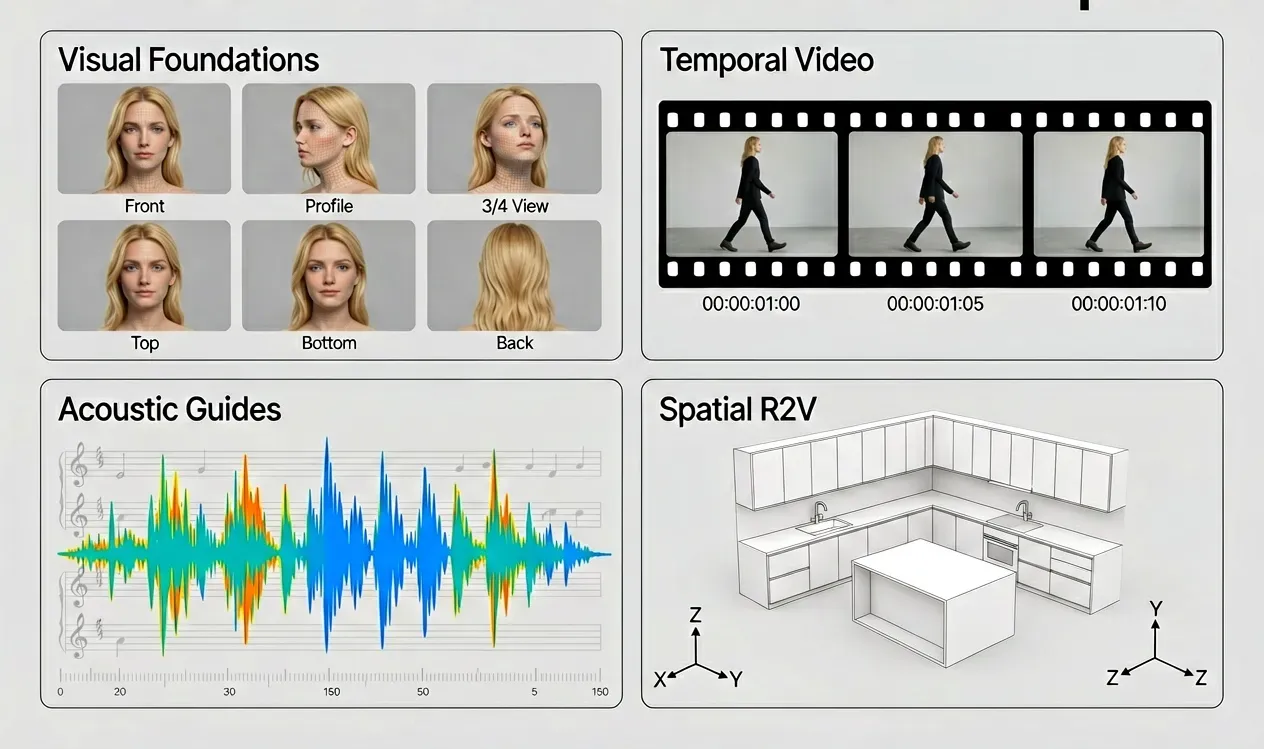
A complete Seedance 2.5 tutorial requires looking beyond standard image-to-video tools. The 50-slot architecture handles diverse asset formats at the exact same time, splitting its tracking across four primary creative categories:
- Visual Foundations: Upload multiple angles of your subject—including detailed reference photos and intricate style guides—for precise character identification.
- Temporal Video References: Feed short video clips to dictate custom physical gaits, micro-expressions, or specific character movements.
- Acoustic & Narrative Guides: Connect audio tracks, background music, and text scripts to help the model understand the complete creative direction and pacing.
- Spatial R2V References: Utilize green screen films or white model (geometric blockout) visual references to outline exact camera trajectories, environmental depth boundaries, and multi-character interaction paths.
How Seedance 2.5 Natively Locks Character Faces and Wardrobe
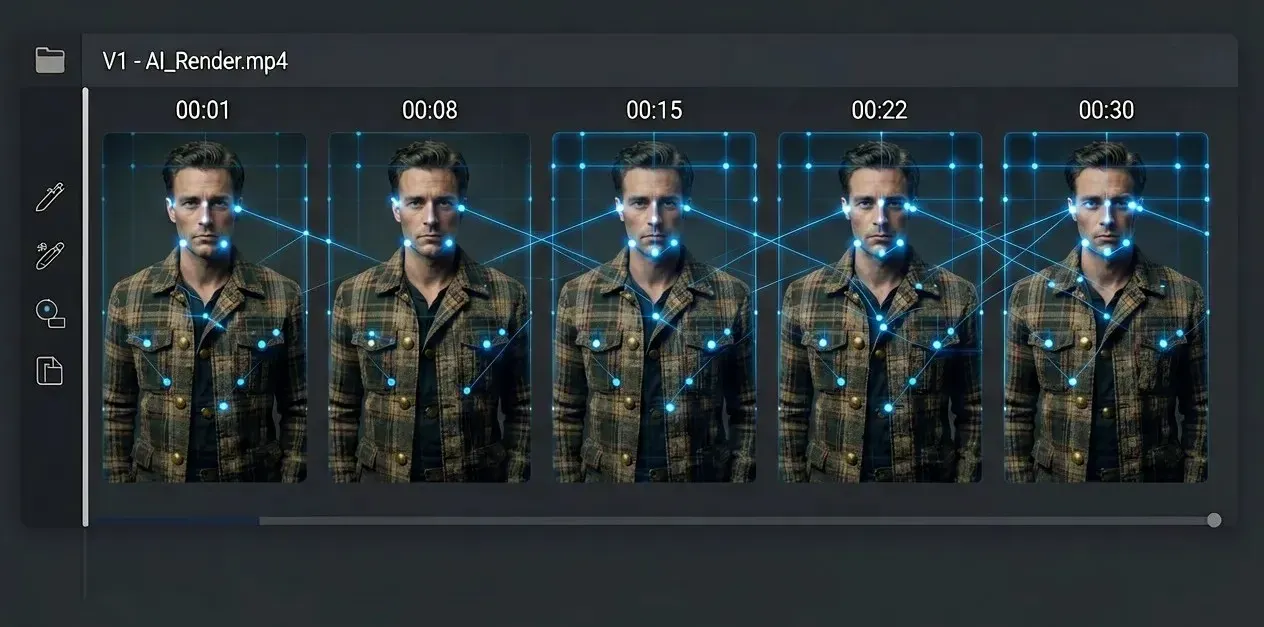
Most video generators lose track of fine details past the five second mark, causing eye colors to change and jacket buttons to disappear mid scene. This severe temporal degradation forces creators to cut away constantly to hide the glitches.
The Mechanics of Native 30-Second Frame Stabilization
Many users wonder how the Dreamina Seedance 2.5 update maintains rock-solid character consistency over a continuous timeline without stitching. Older, sequential architectures evaluate frames step-by-step, allowing minor generation errors to compound until the character's face warps entirely.
The Seedance 2.5 platform bypasses this sequential decay by processing the entire 30-second timeline inside a single native generation pass. Backed by its 50-slot architecture, the reference engine embeds and anchors every single frame back to your uploaded dataset simultaneously, ensuring the final render remains anchored to your original vision.
Cross-Referencing Identity and Attire via Attention Mapping
Instead of post-generation tracking, the engine utilizes deep cross-attention layers to align scene continuity across dynamic motion paths:
- Multi-Angle Facial Alignment: By cross-referencing provided expression sheets and side profiles, the model maps facial structures from the start. This ensures shadows fall naturally across the nose and jawline even during sudden 180-degree turns.
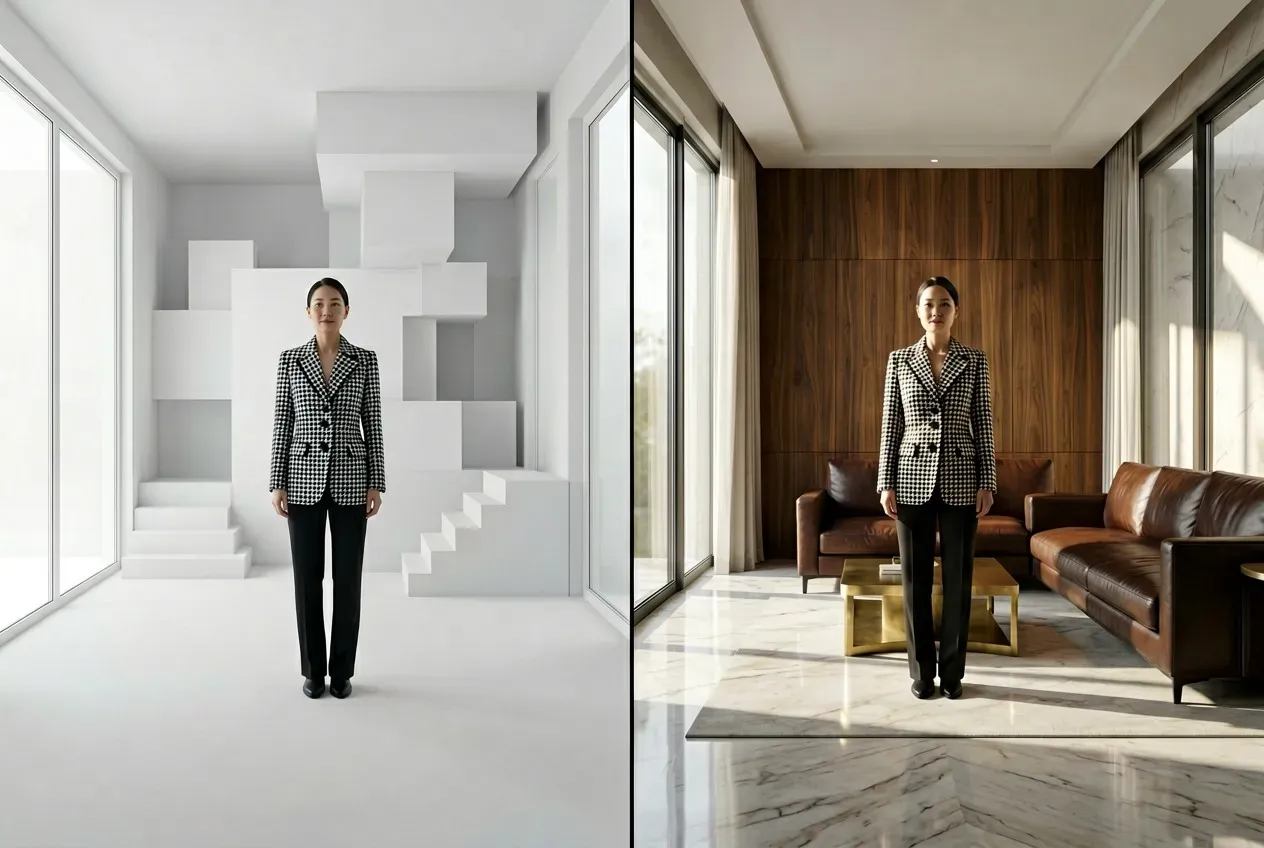
- Textile and Wardrobe Fidelity: Uploading specific fabric pattern swatches or reference photos protects the integrity of clothing. The system retains the scale, general weave pattern, and style of garments, keeping attire identical from wide establishing shots to extreme close-ups.
This integrated multi-reference method results in a stable, production-ready performance. Instead of wasting time stitching mismatched three-second clips together, you receive a continuous half-minute scene where your actor retains identical features, hair placement, and clothing styles throughout the entire shot.
Multi-Character Scene Production: Managing Dense Casts Without Identity Bleed
When prompting a crowded room in older AI video models, character faces often blend together, randomly transferring one actor's jacket color or facial features onto another nearby character. This frustrating "identity bleed-over" has long made staging complex ensemble casts or group interactions virtually impossible.
The ByteDance Seedance 2.5 framework addresses this breakdown by allowing creators to divide its 50 input slots among distinct subjects. By combining dedicated visual profiles with advanced R2V (Reference-to-Video) reference control, the engine successfully processes multiple independent character references simultaneously within a single prompt window.
| Production Factor | Standard Ensemble Workflows | Seedance 2.5 Multi-Person Capacity |
| Max Tracked Actors | 2 to 3 before identity bleed | 10+ independent subjects (Test verification) |
| Reference Allocation | Global prompt text (Unpredictable) | Dedicated visual profiles per actor via 50 slots |
| Spatial Separation | Random face/wardrobe swapping | R2V Spatial attention masking (Green screen/white model guides) |
By assigning unique visual data sheets and spatial boundaries to separate cast members, creators can execute complex multi-character scene production without losing individual detail.
Commercial and Narrative Scale
This tracking capability fundamentally alters high-end narrative creation and commercial video workflows. Instead of generating characters individually and running into expensive, time-consuming compositing in post-production, Dreamina Seedance 2.5 tracks specific wardrobe and facial guides for every actor on screen in a single pass.
For multi-person scenes, this structural separation keeps backgrounds stable, prevents hairstyles from switching between actors, and ensures that each performer remains true to form—even during fast-paced dialogue sequences, complex tracking shots, or crowded group actions.
From R2V Reference Control to Spatial Layout Guidance
Type a prompt like "camera sweeps around a kitchen island" into most standard video AI engines, and the final video will often warp the physics of the room. The counter tops bend, furniture scales unpredictably, and objects clip right through solid walls because the system lacks true spatial awareness.
Mapping Layout and Motion via R2V White-Model References
The Dreamina Seedance 2.5 update bypasses this guesswork through its advanced R2V (Reference-to-Video) reference control. Instead of predicting spatial layouts from text alone, creators can upload pre-rendered white model videos or green screen films into the 50-slot multi-reference architecture.
The system maps physical dimensions, depth tracking data, and structural boundaries from these visual guides before generating the final cinematic pixels:
- Volume Constraints: The engine locks the physical width, height, and perspective ratios of assets based on the structure of the white-model reference.
- Depth Anchor Points: Foreground and background layers remain strictly separated during fast tracking movements, ensuring zero dimensional warping.
- Occlusion Handling: Hidden surfaces reveal themselves logically and seamlessly as camera perspectives shift.
By feeding these structured R2V references into the model, you establish a rigid spatial layout that anchors environmental depth and realistic lighting accurately in place.
Controlling Motion Paths with Precision
This structural foundation integrates with R2V motion guidance to govern how cameras and characters maneuver through the frame. The platform cross-references your movement files against spatial reference videos to calculate complex, multi-axis camera paths.
| Spatial Control Feature | Basic Text Prompts | Seedance 2.5 Multi-Reference Mapping |
| Camera Path Accuracy | Drifts, skews, or warps perspective | Follows exact trajectories mapped by R2V references |
| Object Proportions | Sizes morph during camera turns | Fixed physical boundaries and scale remain constant |
| Physics Consistency | Characters pass through solid walls | Visual assets respect structural boundaries logically |
This precise spatial control makes the platform a highly functional option for enterprise product previsualization and industrial scene planning. Designers can preview how a physical product sits inside an environment, knowing that camera angles and internal geometry will match real-world reference specifications exactly.
Real-Time Generation and Region-Level Editing: Fixing Minor Flaws
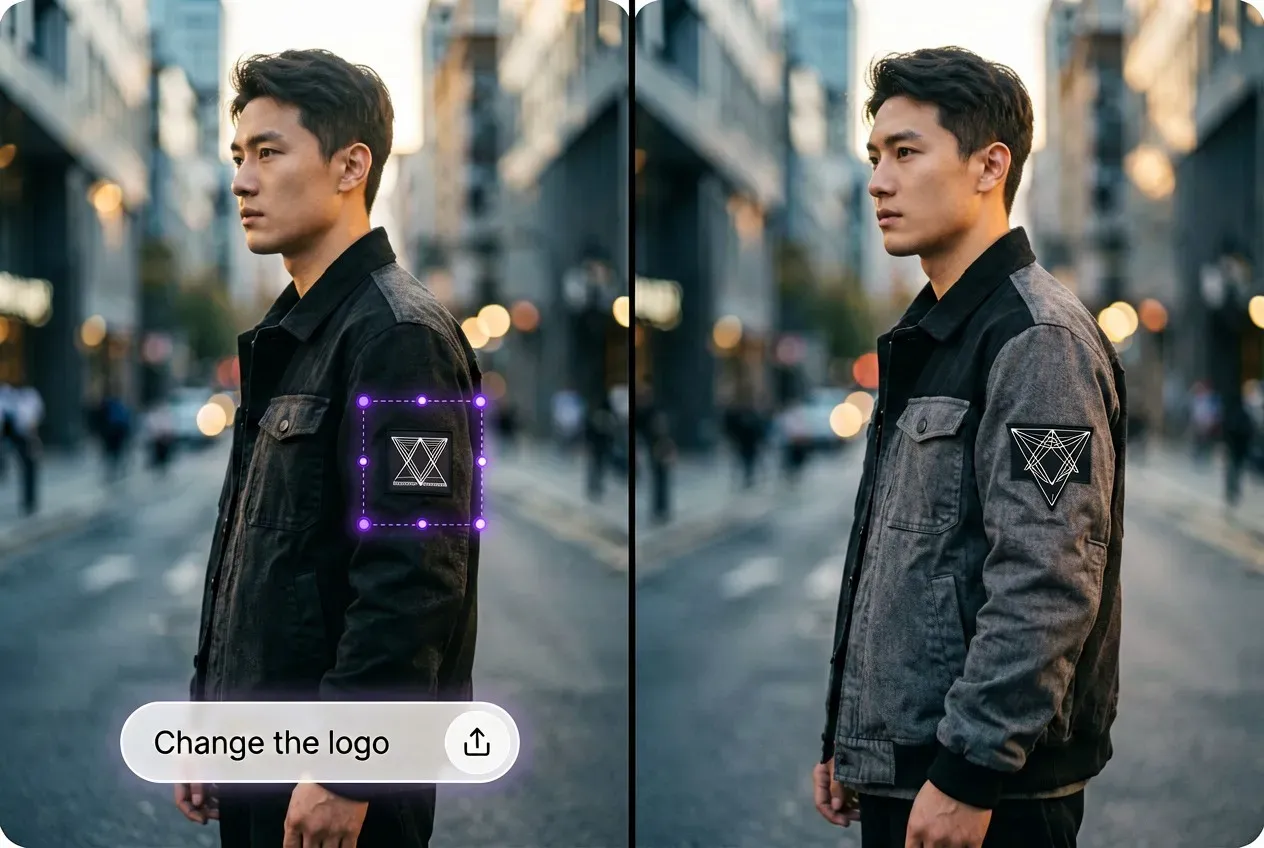
Discovering a minor defect like an incorrect logo on a character's shirt at the 25th second of a perfect 4K render typically means throwing away the entire clip. Re-rendering a long clip from scratch wastes computing resources and risks altering the visual layout you spent hours tweaking.
Targeted Correction Layers in Dreamina
Creators using the Dreamina Seedance 2.5 update do not have to recreate entire scenes when isolated errors appear. The native AI video editor includes a localized paintbrush tool designed to repair specific coordinates without modifying the surrounding environment.
Using these targeted regional changes, editors can brush over specific areas to execute isolated modifications:
- Object Replacement: Swap out incorrect props, brand logos, or background elements instantly.
- Feature Refinement: Modify specific clothing details, facial expressions, or minor hair imperfections across the timeline.
- Continuity Protection: Adjust local details while the underlying engine locks the original lighting, composition, and motion tracks safely in place.
Speed and Prompt Adherence Performance
This precise localized approach operates at highly optimized speeds. Because the engine focuses processing power on the masked timeline matrix rather than recalculating every single global pixel, adjustments render in a fraction of the standard generation time.
| Performance Metric | Traditional Re-Rendering | Seedance 2.5 Regional Editing |
| Render Scope | Entire video frame sequence | Masked areas with contextual blending |
| Processing Speed | High render times per pass | Highly accelerated, localized rendering |
| Composition Drift | High risk of background changes | Zero drift outside the masked zone |
| Prompt Adherence | Relies on global text re-interpretation | Matches precise local brush coordinates |
This focused approach provides exceptional prompt adherence accuracy. Unlike broad, destructive modifications found in legacy video tools, this surgical editing process brings AI generation much closer to professional, non-destructive post-production workflows.
Native Audio Sync & Clean Output: The Missing Piece of Character Identity
Watching a beautifully rendered cinematic character speak with audio that lags even two frames behind their lip movements instantly ruins the illusion of reality. Creators often spend tedious hours manually slicing audio waveforms in external post-production timelines, trying to force synthesized facial expressions to align with sound tracks.
Single-Pass Multimodal Audio Integration
The Dreamina Seedance 2.5 update eliminates this multi-stage separation by introducing unified, native audio integration. Instead of treating sound as an afterthought layered over finished pixels, the platform accepts voice tracks, background music, and scripts directly within the initial multimodal reference loop.
When you provide an audio file as part of your reference dataset, the engine aligns visual pacing and kinetic flow right from frame one. This synchronized processing ensures that character gestures, camera transitions, and major motion paths react organically to acoustic frequencies—delivering a highly coordinated, production-ready timeline.
Multi-Dimensional Lip-Sync and Clean Baseline Output
The integrated audio pipeline manages complex tracking and structural cleanup tasks simultaneously:
- Multilingual Lip-Alignment: The system aligns mouth movements and facial pacing across 11+ major global languages, including English, Chinese, Spanish, Japanese, and Korean, enabling seamless localized creation for international distribution.
- Audio-Aware Motion Tracks: Character movements and visual storytelling react fluidly to audio cues. High-energy beats drive swifter physical pacing, while soft voiceovers maintain calm, steady character gestures.
- Elimination of Artifacts and Unwanted BGM: Unlike older models that generate erratic AI noise, Seedance 2.5 features an improved baseline that removes random subtitles and unwanted background clutter, delivering pristine, clean-based videos optimized for professional post-production.
| Audio Tracking Element | External Software Syncing | Seedance 2.5 Integrated Syncing |
| Lip Alignment Accuracy | Manual frame shifting required | Automated cross-modal timeline matching |
| Language Versatility | Limited by manual keyframing | Native support for 11+ global languages |
| Visual Baseline Purity | High risk of hallucinated AI audio artifacts | Zero unwanted BGM or ghost subtitles |
| Post-Production Time | Hours spent splicing and cleaning timelines | Single-pass, clean-rendered sequence ready |
By locking down the auditory and visual layers in tandem while purifying the background output, the system ensures your content is structurally complete and immediately ready for final mastering.
Conclusion: The New Standard for Commercial AI Video Workflows
Prototyping a commercial campaign with a tool that alters your product's shape or swaps an actor's face every few seconds is incredibly frustrating. For a long time, marketing teams and creators had to treat AI tools like a slot machine. They wasted hours doing unpredictable re-rolls just to get one decent clip they could actually use.
Scaling to Enterprise Grade Production
The Dreamina Seedance 2.5 system changes the game completely. It turns this tech from an unpredictable toy into a dependable, professional business tool. It mixes a 50-slot multi-format setup with a direct 30-second timeline feature. Because of this, solo creators, online stores, and marketing agencies get total control over how they make their videos.
| Workflow Attribute | Traditional AI Prototyping | Seedance 2.5 Production Standard |
| Output Target | Rough conceptual drafts | Studio-quality videos and high-end ads |
| Asset Consistency | High identity and texture drift | Rigid tracking via 50 multimodal reference slots |
| System Accessibility | Disconnected standard web UI | Native deployment within ByteDance's ecosystem |
| Primary Creative Space | Isolated generation tools | Integrated Dreamina platform workflow |
Absolute Creative Command
This architectural stability alters the cost and speed of commercial AI video production. Instead of guessing how a model will interpret a vague text prompt, production teams can now build programmatic, repeatable workflows.
By putting real product photos, character details, room layouts, and sound guides right into the video tool, you can make tons of sharp video ads. Your main brand looks stay steady, correct, and totally real every single time.





