Skriv vozo.ai/face-swap i en webbläsare och du hamnar någonstans oväntat: startsidan, som vill översätta och dubba dina videor på över 160 språk. Ingen widget för ansiktsbyte, inga uppladdningsfält, ingenting. Själva verktyget finns fortfarande. Det flyttades in i Vozo-webbappen, under en flik som heter Labs, bakom en inloggning, en samtyckesdialog och en tillåtelse på två gratisomgångar.
Den här flytten förklarar det mesta av förvirringen kring detta verktyg 2026. Den gamla målsidan var fortfarande aktiv i en Internet Archive-ögonblicksbild från oktober 2025; idag leder samma adress direkt till startsidan. Prissidan nämner aldrig funktionen. Det enda stället som anger kostnaden är en dokumentationstabell tre klick bort. Den här genomgången följer den väg som fungerar, samlar siffrorna som Vozo spritt ut över sina dokument, ändringslogg och klientkod, och ställer ett debiteringsalternativ per körning bredvid för de jobb som en prenumerationspool passar illa.
Viktiga slutsatser
- Vozos ansiktsbyte är ett videoverktyg i webbappens Labs-sektion. Det ersätter ansiktet i en uppladdad klipp med ett ansikte från ett foto; det bearbetar inte stillbilder.
- Gratiskonton får 2 körningar. Efter det kräver verktyget en betald plan, och varje byte drar från samma poängpool som dubbning, läppsynk och resten av utbudet.
- Uppladdaren begränsar klipp till 3 minuter, 1 GB och 1080p, och varje ansikte den upptäcker i bilden byts ut. Inget av detta finns på dokumentsidan; det dyker upp i appens verktygstips och klientmanus.
- Färdiga byten lagras i 30 dagar, och Vozo säljer inget API för ansiktsbyte på någon nivå, så schemalagda eller bulkjobb har ingen plats att ta vägen.
- Atlas Cloud täcker samma område på två sätt: en debiteringsbaserad face-swap-video-slutpunkt för korta klipp, och ett gratis AI-ansiktsbyte-verktyg för stillbilder vars FAQ utlovar ingen användningsgräns och ingen vattenstämpel.
Var Vozo Face Swap faktiskt finns
Den fungerande vägen är kort när du väl vet att den finns. Logga in på app.vozo.ai, öppna instrumentpanelen och klicka på Labs i navigeringen. I slutet av juli 2026 finns där två kort: Vozo Skills, en agentintegration i betaversion, och Face Swap, som beskrivs som "Replace faces in your videos seamlessly while retaining natural expressions and movements."
Klicka på kortet och en dialogruta med titeln Content Editing Consent visas innan verktyget gör det. Texten är kort nog att läsa i sin helhet: "By using this feature, you confirm that you have legal rights to edit this content and will not use AI tools for illegal, non-consensual, or harmful purposes. Violation may result in account termination." Att godkänna sparas i din webbläsare, så dialogen visas en gång. Appens klientkod blockerar också verktyget på telefoner för gratisanvändare, med en notis som säger att funktionen kräver en stationär dator.
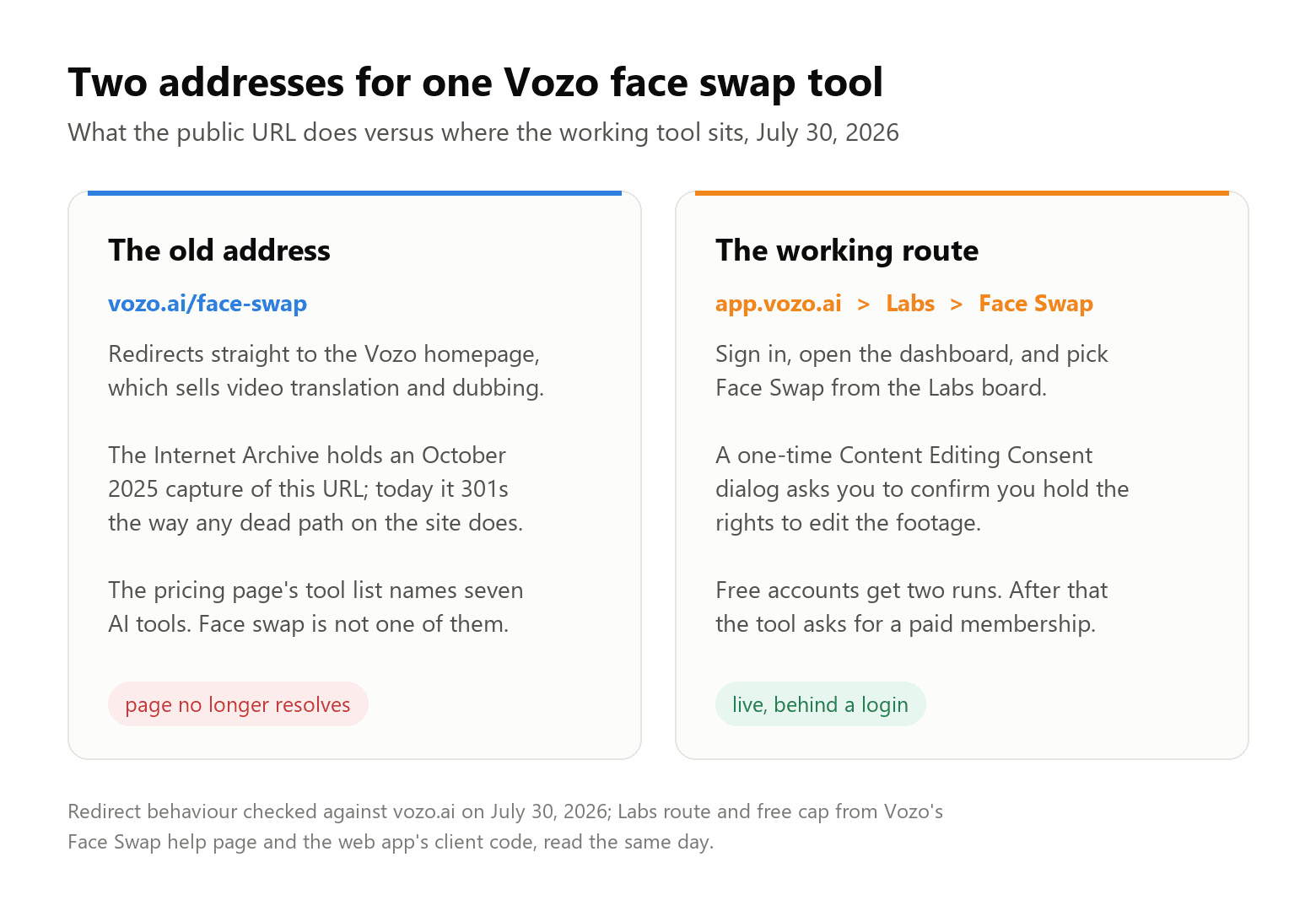
Omdirigeringsbeteende, Labs-layout och dialogtext observerad på vozo.ai och i dess klientkod, 30 juli 2026.
Labs-etiketten är värd att ta bokstavligt. Vozos hjälpsida för funktionen arkiverar den under "Lab features", etiketten företaget använder för experiment utanför sin kärnupsättning av översättningar. Den statusen syns i hur lite resten av webbplatsen erkänner verktyget: prissidan listar sju AI-verktyg vid namn och face swap är inte bland dem, färdplanen nämner det inte, och ändringsloggen har berört det exakt en gång sedan mitten av 2025, för att förkorta hur länge resultat lagras. Verktyget fungerar. Det är också tydligt inte den produkt Vozo bygger sin verksamhet kring.
Hur man byter ansikte i en video i Vozo, steg för steg
Själva verktyget är tre numrerade steg staplade på en sida.
- Ladda upp originalvideon. Det här är bildmaterialet vars ansikte kommer att bytas ut. Uppladdaren accepterar mp4, mov, webm, avi och wmv-filer upp till 1 GB, upp till 1080p och upp till 3 minuter långa.
- Ladda upp målansiktsfotot. Ett foto i png, jpeg, jpg eller webp, upp till 100 MB, större än 200×200 pixlar. Det här är identiteten som hamnar i bildmaterialet.
- Tryck på Swap Face. Appen visar poängkostnaden innan körningen startar. Under rusningstid kan jobbet hamna i en kö först, vilket dokumenten varnar för. Om du avbryter ett köat uppgift återkommer poängen.
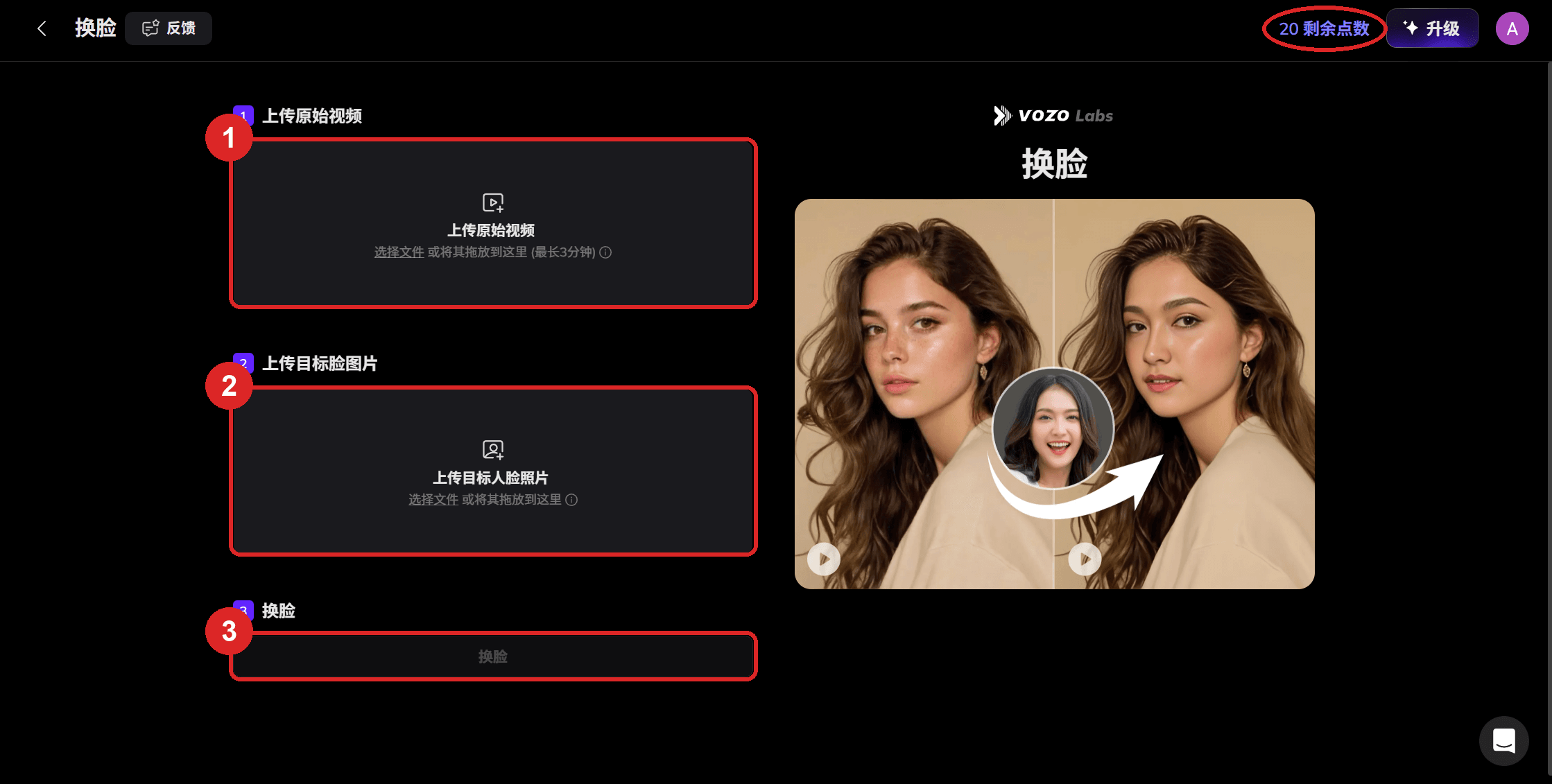
Dessa begränsningar förtjänar en andra titt, eftersom dokumentationssidan inte anger någon av dem. Varje gräns ovan kommer från verktygstipsen på uppladdningsknapparna och från limits-objektet i appens klientmanus, som sätter videolängd till 0 till 180 sekunder och upplösning till 1920×1080. Om ditt klipp är 3 minuter och 5 sekunder långt vägrar uppladdaren det, och inget på hjälpsidan kommer att ha varnat dig.
Beteendet med flera ansikten är den andra planeringsfaktorn. Vozos dokument säger det rakt ut: "For videos with multiple faces, all detected faces will be replaced." Det finns ingen ansiktsväljare. En tvåpersoners intervju blir två kopior av samma person. Arbetsmetoden Vozo föreslår är att välja bildmaterial med ett ansikte i bild, vilket är ärligt råd och också en verklig begränsning för vad det här verktyget kan göra.
Resultaten hamnar i en Generated Videos-remsa under formuläret, spelbara på plats, med en nedladdningsmeny per klipp. De ligger kvar i 30 dagar.
Ett debiteringsbaserat Vozo Face Swap-alternativ för korta klipp
Labs-verktyget kräver en prenumeration före din tredje byte. Huruvida den affären är vettig beror mest på formen på ditt bildmaterial, och det finns två andra vägar värda att känna till innan du bestämmer dig för någotdera. Atlas Cloud har båda i sin AI-verktygssamling: debiteringsbaserade slutpunkter som fakturerar per körning snarare än per plan, och ett gratis ansiktsbytesverktyg som inte fakturerar någonting alls.
Debiteringsmekaniken matchar Vozos: ett källansiktsfoto, en målvideo, en knapp. Face swap video-slutpunkten tar MP4- eller MOV-klipp på två till tio sekunder och producerar utdata i 720P eller 1080P, med rörelse, tajming, kamerarörelse och bakgrund bevarade medan ansiktet ändras. Prissättningen är per sekund ovanpå en liten bas per körning, vilket plattformens miniräknare returnerar som $0,09 plus $0,20 per sekund i 720P och $0,09 plus $0,24 per sekund i 1080P. Ett femsekundersklipp landar därför på $1,09, ett tio sekunder på $2,09, utan rabatt aktiv den 13 augusti 2026. En syskonslutpunkt gör samma jobb på stillbilder från $0,09 per bild, och gratisverktyget nedan täcker stillbilder utan kostnad.
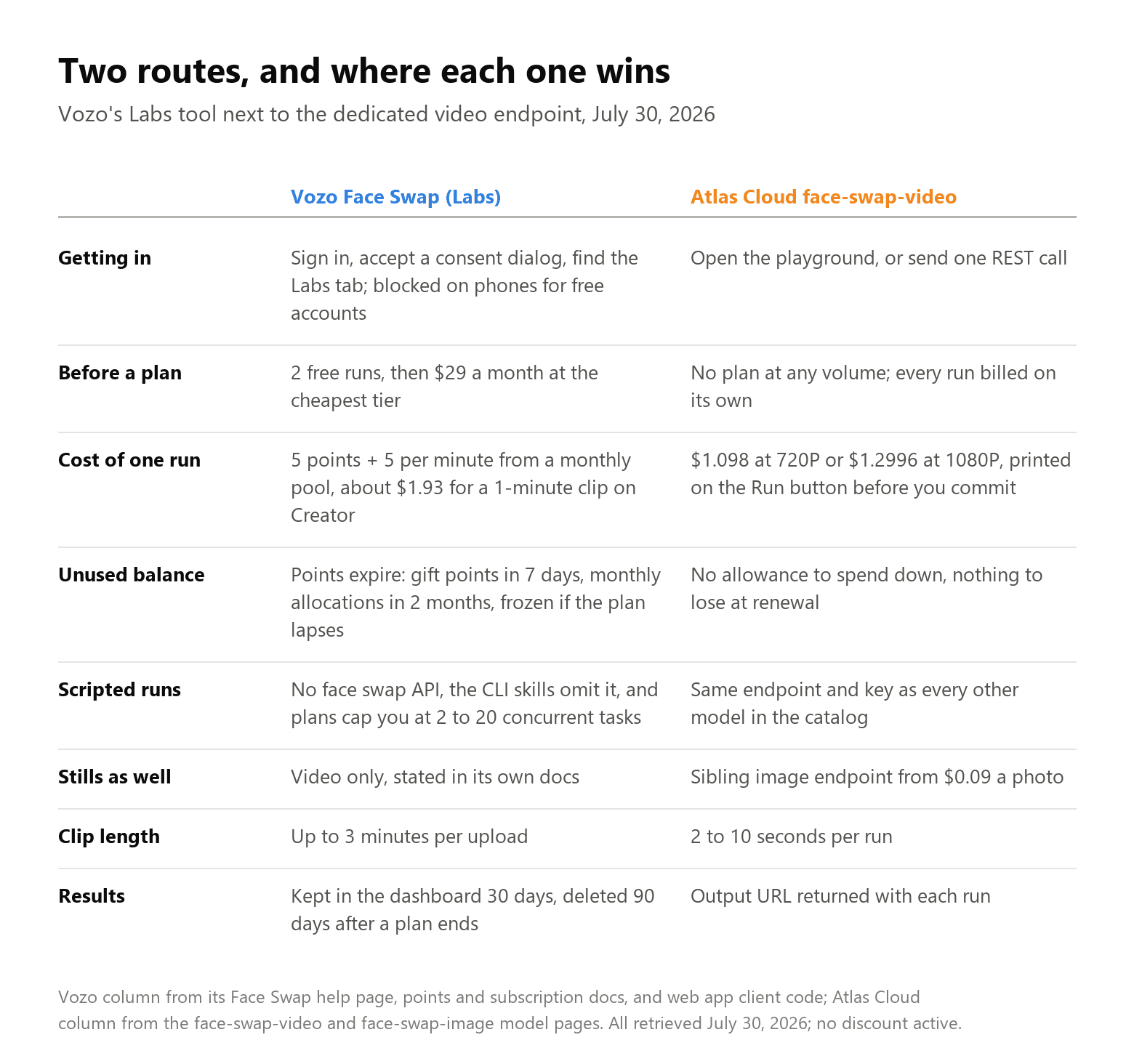
Vozo-kolumnen från dess hjälpsida, poäng- och prenumerationsdokument samt klientkod; Atlas Cloud-kolumnen från face-swap-video- och face-swap-image-modellsidorna. Alla hämtade 30 juli 2026.
En rad går avgjort till Vozo, och det är raden att kontrollera först: klipplängd. Vozo tar uppladdningar upp till 3 minuter, den debiteringsbaserade slutpunkten tar 2 till 10 sekunder, så en pratande huvud-video är endast möjligt för Vozo att göra i ett enda svep. Nästan allt annat på bordet går åt andra hållet. En meme, en annonsvariant eller ett socialt klipp passar båda vägarna, och då är frågan vad du köper: en månatlig pool med ett utgångsdatum och en samtidighetsgräns, eller ett pris per körning som står på knappen, inte medför något saldo och svarar på ett REST-anrop när jobbet slutar vara en engångsföreteelse.
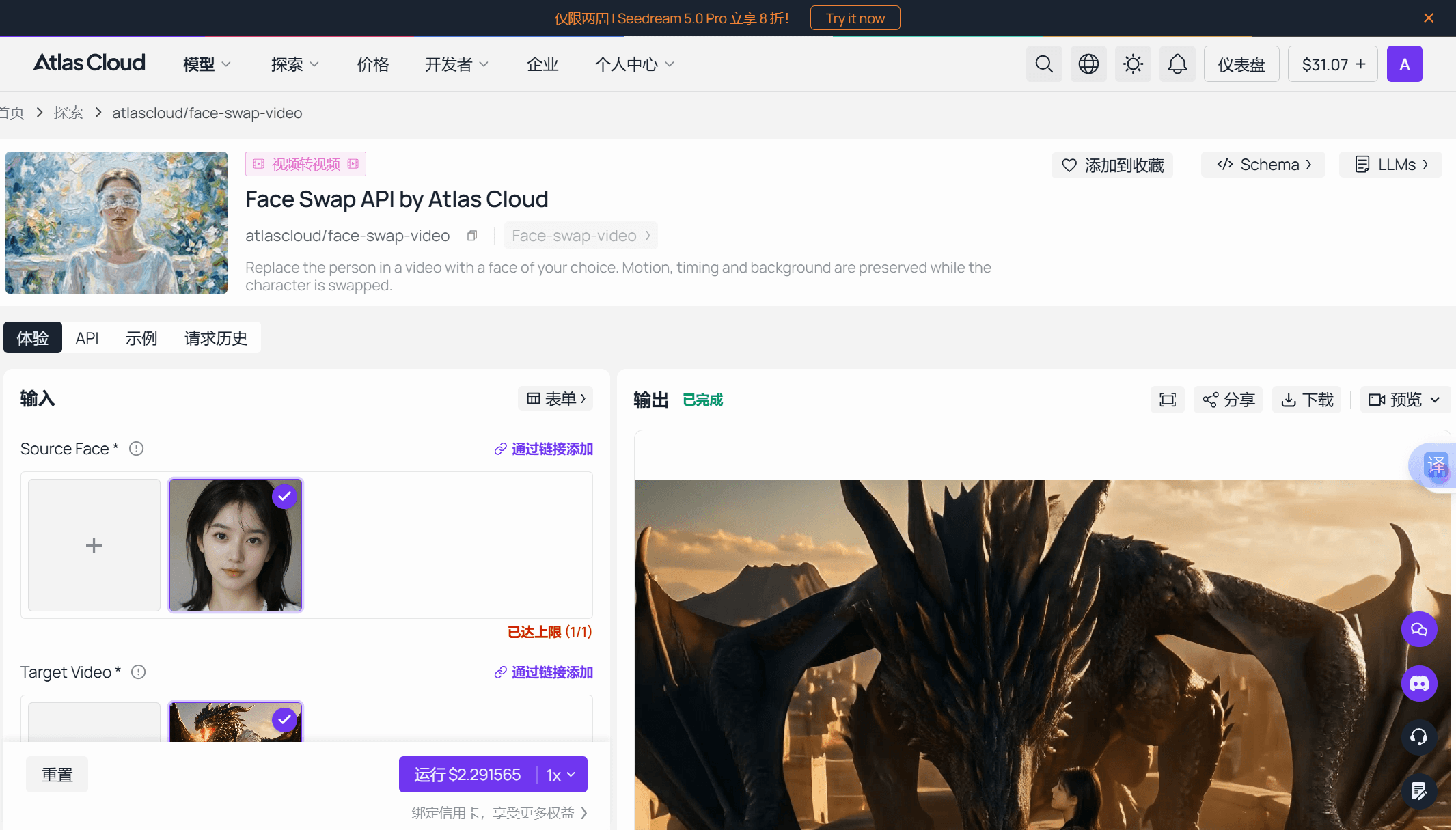
Metod 1: Kör ett videoansiktsbyte i Atlas Cloud Playground
Ingen plan eller kod krävs, bara ett konto med kredit. Formuläret har tre fält: Source Face för ett tydligt, framåtvänd foto av identiteten som ska in, Target Video för klippet som ändras, och en Output Resolution-växling mellan 720P och 1080P. Priset på Kör-knappen uppdateras när du byter upplösning, så kostnaden är synlig innan något debiteras. Utdata kommer som ett spelbart resultat du kan ladda ner direkt.
Metod 2: Automatisera videoansiktsbyten via Atlas Cloud API
Samma slutpunkt tar skriptad trafik, vilket är den bit Vozo inte säljer på någon nivå. Tre steg.
Steg 1: Skapa en API-nyckel i Atlas Cloud-konsolens instrumentpanel och kopiera den.
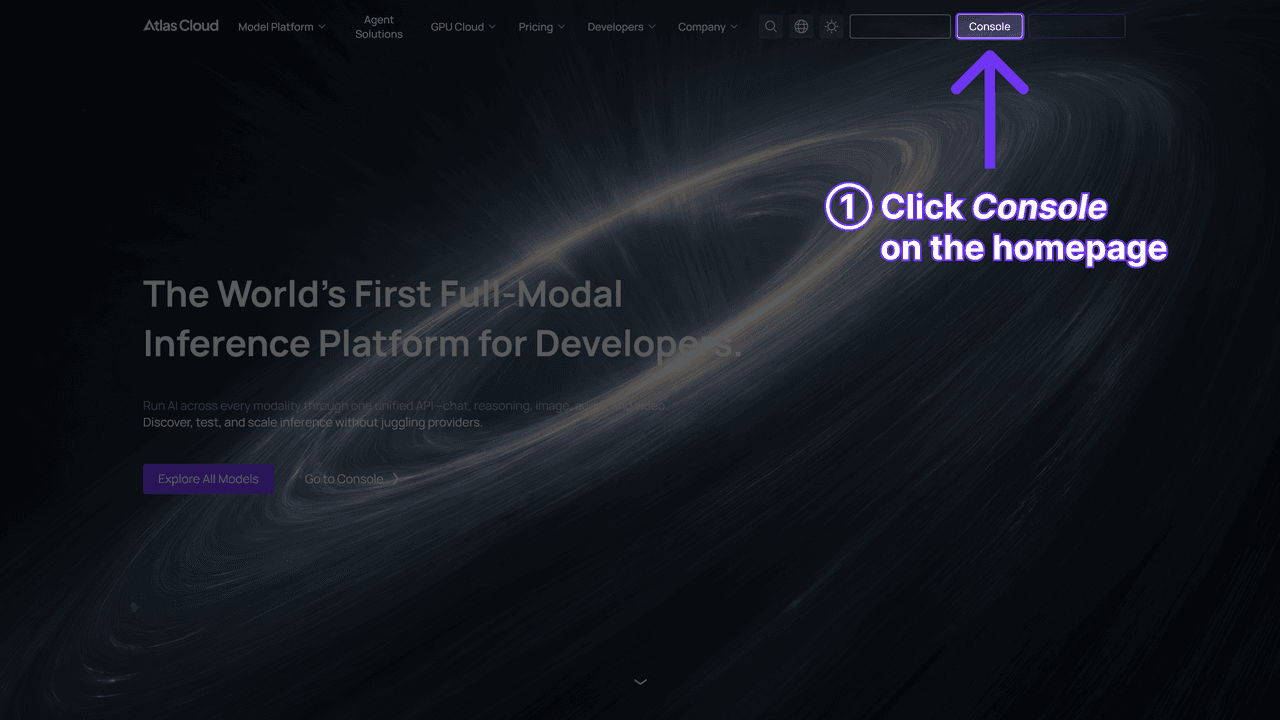
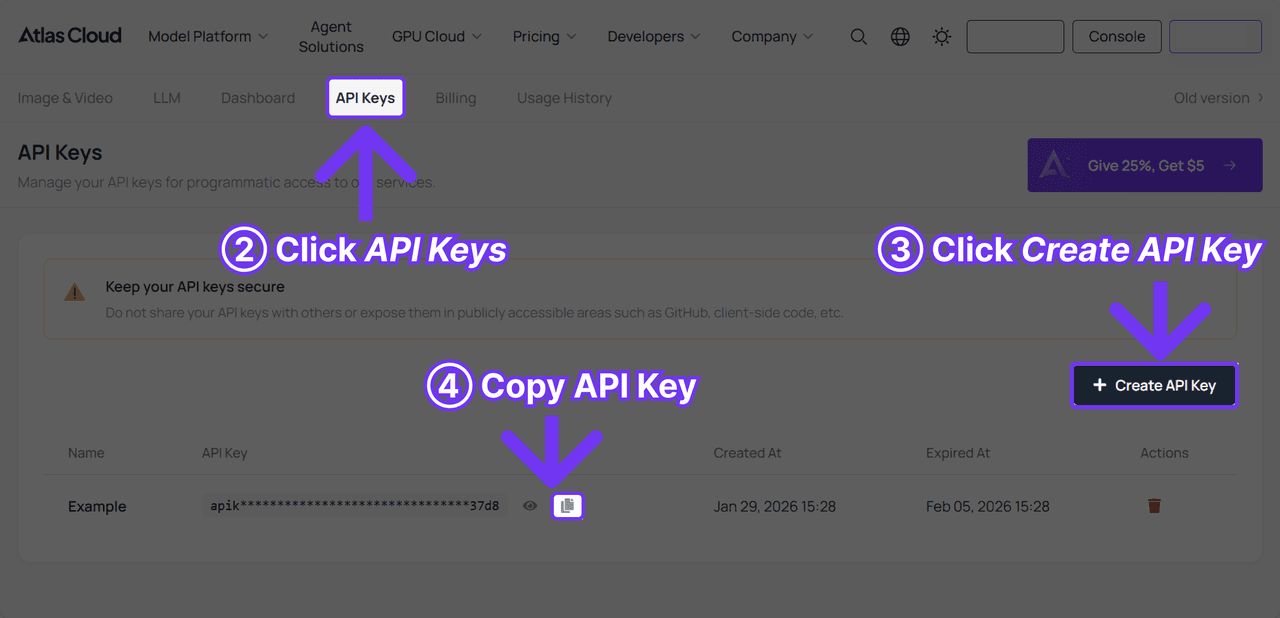
Steg 2: Läs API-dokumentationen för autentisering och den delade videoslutpunkten.
Steg 3: Skicka förfrågan. Ansiktsbyte åker på plattformens standard generateVideo-slutpunkt, med modellsträngen som dirigerar:
Bash1curl -X POST https://api.atlascloud.ai/api/v1/model/generateVideo \ 2 -H "Authorization: Bearer $ATLASCLOUD_API_KEY" \ 3 -H "Content-Type: application/json" \ 4 -d '{ 5 "model": "atlascloud/face-swap-video", 6 "image": "https://your-cdn.com/source-face.jpg", 7 "video": "https://your-cdn.com/target-clip.mp4", 8 "resolution": "720P" 9 }'
Genereringen är asynkron. Svaret returnerar ett predictions-ID som du pollar tills jobbet är klart:
Bash1curl https://api.atlascloud.ai/api/v1/model/prediction/<prediction_id> \ 2 -H "Authorization: Bearer $ATLASCLOUD_API_KEY"
Det färdiga klippet kommer tillbaka som en URL i outputs-arrayen. Eftersom varje modell på plattformen delar denna slutpunktsmönster och nyckel, återanvänder byte av modellsträngen till bildslutpunkten, eller till någon videogenerator i katalogen, samma kod. I praktiken förvandlar det femtio produktklipp med femtio ansikten till ett kort manus snarare än en eftermiddag med manuella uppladdningar.
Prova parningen gratis på en stillbild först
Båda metoderna ovan fakturerar per körning, och en videokörning är ett dyrt sätt att upptäcka att ett källfoto inte passar bra på personen i ditt bildmaterial. Atlas Clouds gratis AI-ansiktsbyte avgör den frågan utan kostnad. Inmatningspanelen är märkt "Free · No charge", och sidans FAQ svarar på gratisfrågan med ett tydligt ja: ingen användningsgräns, ingen vattenstämpel på den färdiga bilden. Den kartlägger 468 punkter över båda ansiktena, returnerar ett resultat på cirka åtta sekunder och lämnar tillbaka en PNG i målbildens storlek upp till 1280 pixlar på den längsta sidan, med Blend- och Feather-reglage för att finjustera hur det nya ansiktet möter hårlinjen och käken.
För en Vozo-formad uppgift är den fria versionen av experimentet en enskild ram. Exportera en stillbild från klippet du tänkte ladda upp, ladda den som målbild, ladda ditt tänkta ansikte som källa och titta på resultatet innan några poäng eller dollar rör sig. En parning som misslyckas på en stillbild kommer inte att rädda sig själv över 30 bilder per sekund, och att förkasta den kostar ingenting. Detta spelar större roll på Vozo än någon annanstans, eftersom gratistilldelningen där är två körningar totalt: bränn båda på källfoton som aldrig skulle fungera och nästa försök kostar $29.
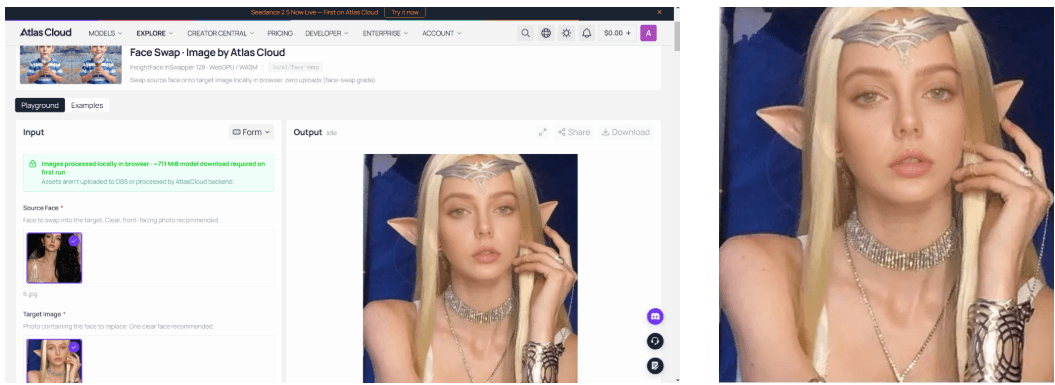
De ärliga gränserna: det hanterar ett foto i taget utan mappuppladdning, det toppar på 1280 pixlar där den debiteringsbaserade bildslutpunkten går till 2048, och det första besöket drar ner en stor modell innan det första bytet körs. Inget av det spelar någon roll för en ramtest, vilket är jobbet det gör här. Själva klippet går fortfarande genom face-swap-video.
Vad ett Vozo Face Swap kostar i poäng
Vozo prissätter bytet i en mening på sin poänganvändningssida: 5 poäng bas plus 5 poäng per minut av uppladdad video, med ett enda räkneexempel: 10 poäng för en 1-minutersvideo. Avrundningsregeln finns i appen istället. Kostnadsverktygstipset bredvid Swap Face-knappen lägger till ett andra exempel, 8 poäng för ett 30-sekundersklipp, "rounded up", och klientmanuset bakom det beräknar avgiften i 12-sekundersblock, en poäng var. En 61-sekundersvideo kostar därför 11 poäng, inte de 15 en helminutsavläsning skulle antyda.
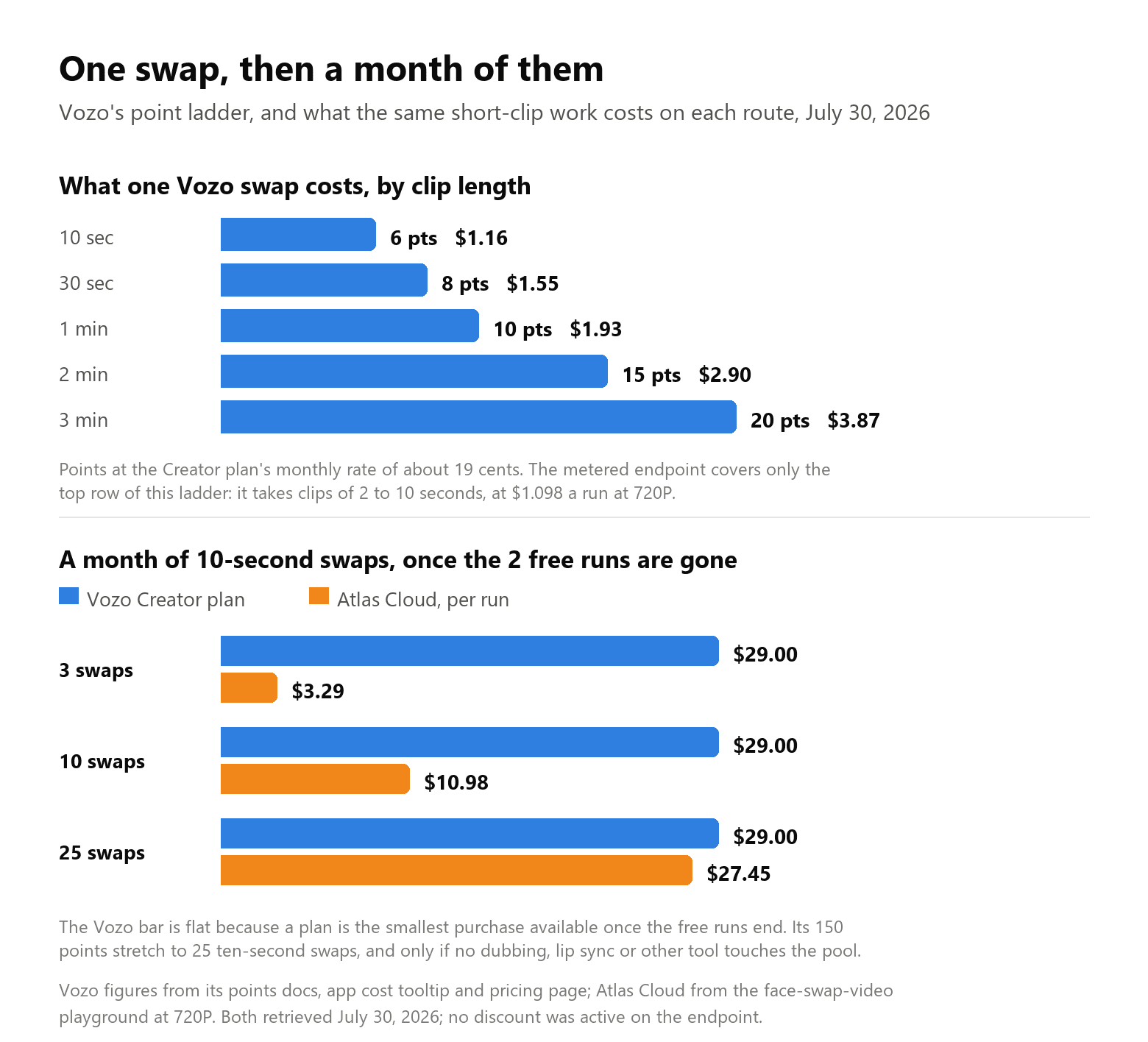
Vozo-siffror från dess poängdokument, appens kostnadsverktygstips och dess prissida; Atlas Cloud från face-swap-video-lekplatsen vid 720P. Båda 30 juli 2026. Dollarsiffror för Vozo härledda vid $29 per 150 poäng.
Den nedre panelen är den del som avgör de flesta budgetar. Vozos billigaste plan är en fast $29 oavsett om du kör tre byten eller tjugofem, så kostnaden per byte faller bara till något konkurrenskraftigt om du spenderar hela tilldelningen på ansikten. Kör tre korta klipp på en månad och varje har i praktiken kostat dig $9,67. Den debiteringsbaserade slutpunkten tar $3,29 för samma tre. De två linjerna konvergerar nära toppen av Creators kapacitet, vid vilken punkt Vozo är den bättre taxan, och endast om inget annat rörde poolen.
Poäng säljs endast inom planer, så dollarkostnaden beror på vilken som finansierar poolen. Prissidan säljer Creator för $29 per månad för 150 poäng, Studio för $99 för 600, Studio XL för $249 för 1 500 och Studio XXL för $649 för 4 000, med årlig fakturering som sänker månadssiffran till $22, $75, $188 respektive $500 och utfärdar årets poäng som en enda tilldelning, giltig i tolv månader istället för de rullande två. På Creators månatliga taxa kostar en poäng cirka 19 cent, vilket gör ett 1-minutersbyte till ungefär $1,93 och fyller månaden med högst 15 av dem, förutsatt att inget annat rör poolen. Dubbning, läppsynk och varje annat poängdebiterat verktyg drar från samma 150.
Gratisnivån är mindre än den ser ut. Nya konton får 20 gåvopoäng, giltiga i 7 dagar, och verktyget för ansiktsbyte tillämpar separat sin egen gräns på 2 körningar per gratiskonto. De två gränserna möts snyggt, eftersom ett par 1-minutersbyten kostar exakt 20 poäng. Efter det tar uppgraderingsdialogen över. Klientsträngarna skisserar också ett face-swap-specifikt erbjudande, ett 50-poängspaket riktat till nya användare och giltigt i 30 dagar; behandla det som något appen kan visa dig snarare än ett publicerat pris, eftersom ingen offentlig sida listar det.
Ytterligare en varning följer med från plånbokskorten: borttagning av vattenstämpel listas som en betald plan-funktion. Dokumenten för ansiktsbyte nämner aldrig om Labs-utdata är märkta på gratissnivån, så budgetera för möjligheten att dina två gratiskörningar är vattenmärkta.
Vozo Face Swap-regler som ligger utanför verktyget
Inget på bytesidan nämner bevarande, men tre separata tidsgränser gäller för dina resultat, var och en dokumenterad någon annanstans på webbplatsen.
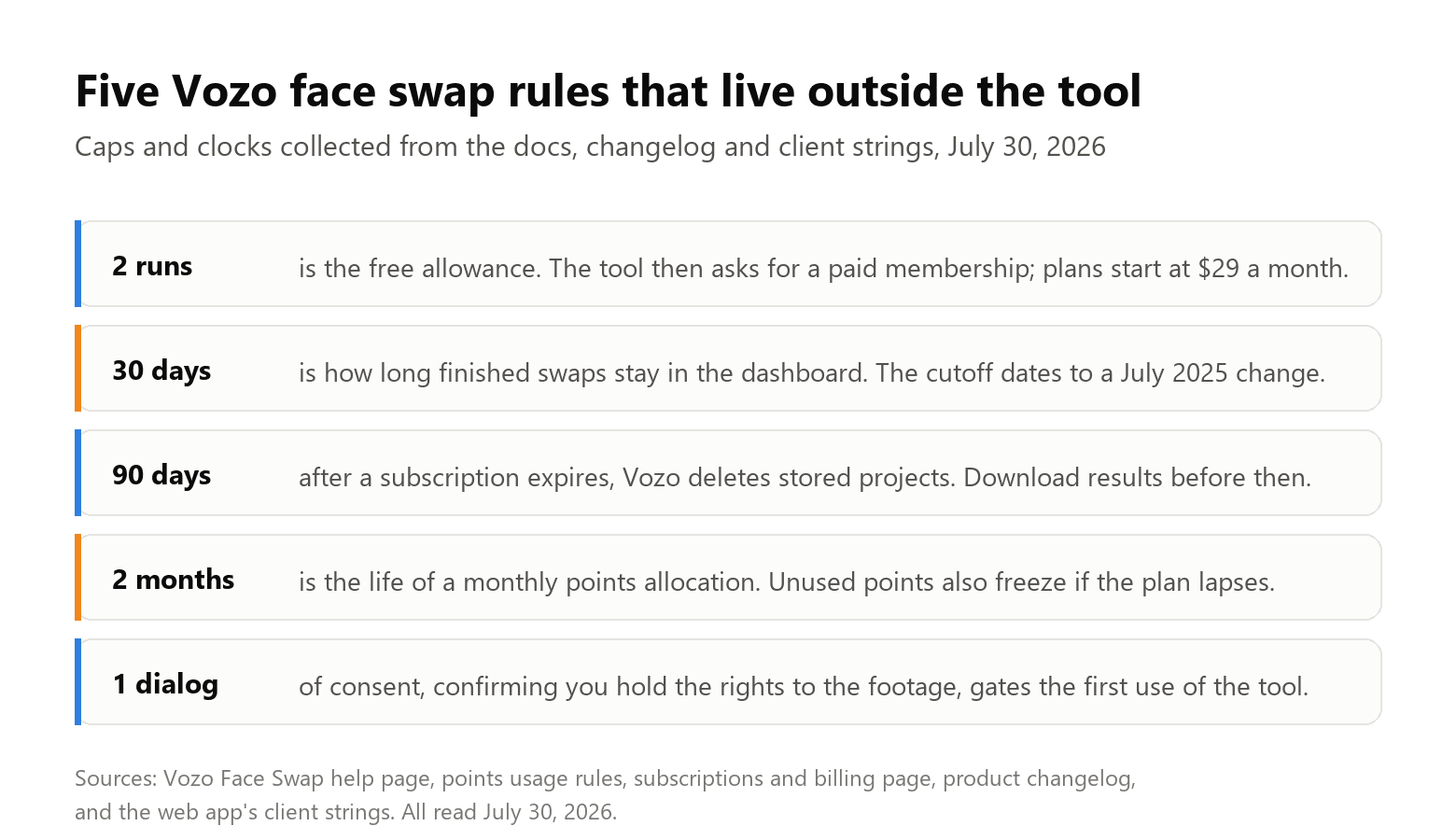
Sammanställd från Vozos hjälpsida, poängregler, prenumerationssida, ändringslogg och klientsträngar, 30 juli 2026.
30-dagars lagringsfönstret är det som fångar folk, eftersom det brukade vara längre. Vozos ändringsloggpost för 24 juli 2025 anger det i en rad: "Face Swap videos are now stored for 30 days only." Verktygets eget gränssnitt upprepar det ovanför resultatremsan. Ladda ner färdiga byten så snart de renderas, eftersom instrumentpanelens kopia är den enda som finns.
De andra två gränserna tillhör prenumerationsmaskineriet. Vozos faktureringssida säger att lagrade projekt raderas 90 dagar efter att en prenumeration löper ut, och att oanvända poäng fryser i samma ögonblick som en plan löper ut, användbara igen endast om du förnyar prenumerationen. Månatliga poängtilldelningar löper ut två månader efter att de anländer. Inget av detta är ovanligt för en prenumerationsprodukt. Det visas bara aldrig bredvid bytesknappen, så det är värt att skriva in i ditt eget produktionsschema.
Automation har inga regler att lista eftersom den inte har någon väg. API-sviten Vozo säljer täcker översättning, dubbning, visuell översättning, läppsynk och talande foton; ansiktsbyte saknas. Vozo Skills-integrationen som tillkännagavs i juli 2026 ansluter AI-agenter till dubbning, undertexter, visuell översättning och läppsynk, och hoppar över ansiktsbyte också. Om ett arbetsflöde behöver ansiktsbyten enligt schema eller i volym, kan detta verktyg inte kopplas in i det, vilket är den tydligaste enskilda gränsen mellan Vozo och den debiteringsbaserade slutpunkten ovan.
Vanliga frågor
Är Vozo AI video face swap gratis?
Två gånger. Gratiskonton kan köra verktyget för ansiktsbyte 2 gånger, finansierat av de 20 gåvopoäng som följer med registreringen och löper ut efter 7 dagar. Från den tredje bytet och framåt behöver du en betald plan, och de börjar på $29 per månad, eller $22 per månad fakturerat årligen.
Kan Vozo face swap byta ansikte på ett foto istället för en video?
Nej. Dokumenten anger att funktionen "currently supports videos only", och den andra uppladdningsplatsen tar ett foto endast som ansiktskälla. För stillbilder finns en dedikerad bildslutpunkt på Atlas Cloud som byter ansikte på ett foto från $0,09 per bild, med lekplatsen som citerar $0,096 per körning.
Har Vozo ett face swap-API?
Nej. Vozos publicerade API täcker translate and dub, visual translate, lip sync och talking photo, och dess CLI-färdigheter täcker en liknande lista. Face swap förekommer i ingetdera. Skriptade ansiktsbyten kräver en annan leverantör; Atlas Cloud face-swap-video-slutpunkt svarar på ett standard REST-anrop vid samma slutpunktsmönster som dess andra videomodeller.
Hur länge sparar Vozo ansiktsbytta videor?
30 dagar, en gräns som sattes i juli 2025 och upprepas i verktygets gränssnitt. Separat, om din prenumeration upphör, raderar Vozo lagrade projekt 90 dagar senare. Ladda ner allt du vill behålla så snart det renderas.
Varför ersätter ett Vozo face swap alla ansikten i bilden?
Eftersom verktyget saknar ansiktsväljare. Vozos dokument varnar för att alla upptäckta ansikten byts ut och rekommenderar att du laddar upp videor med ett enda ansikte i bild. För gruppbildmaterial innebär det att beskära eller välja annat källmaterial före bytet, inte efter.
Vilka videoformat accepterar Vozo face swap?
Uppladdaren tar mp4, mov, webm, avi och wmv, upp till 1 GB per fil, upp till 1080p och upp till 3 minuter. Ansiktsfotot kan vara png, jpeg, jpg eller webp upp till 100 MB, större än 200×200 pixlar. Dessa gränser visas i appens uppladdningsverktygstips snarare än i dokumentationen.
Slutsats
Vozos ansiktsbyte är ett fungerande verktyg som dess egen tillverkare fortfarande klassar som experiment. Byteskvaliteten är upp till dig att bedöma inom de två gratiskörningarna, men logistiken är redan känd: endast video, ett ansikte per bildruta fungerar bäst, max tre minuter, resultat borta om 30 dagar, och en prenumeration står mellan dig och den tredje bytet. För någon som redan betalar för Vozos dubbning eller läppsynk är marginalkostnaden för ett byte några poäng från en pool de redan äger, och 3-minuterstaket täcker bekvämt pratande huvudarbete som ingen kortklippsslutpunkt tar i ett svep.
Beräkningen vänder när ansiktsbyte är hela jobbet. En plan köpt för en enda Labs-funktion innebär att betala $29 per månad för ett verktyg som prissidan inte annonserar, utan API att växa in i. Korta klipp, skriptad volym eller enstaka byten passar bättre med ett pris per körning: mätaren läses innan du förbinder dig, kodvägen finns, och inget löper ut i slutet av månaden.





