Hoán đổi khuôn mặt lần đầu tiên trở thành xu hướng chính thống trên Snapchat vào năm 2016, ít nhất là theo cách truyền thông công nghệ kể lại vào thời điểm đó, và ống kính đó vẫn còn trong ứng dụng cho đến ngày nay. Những gì đã thay đổi là mọi thứ xung quanh nó. Ống kính không còn là thứ bạn có thể chắc chắn tìm thấy trong băng chuyền của mình, tính năng Cameos mà các hướng dẫn cũ dựa vào đã bị ngừng, và một bậc ống kính trả phí hiện tồn tại song song với bậc miễn phí.
Hướng dẫn này đề cập đến lộ trình hiện tại, đã được xác thực để đến Ống kính Hoán đổi Khuôn mặt Chính thức, Snapcode mở khóa ngay lập tức, và phải làm gì khi ống kính trong ứng dụng không thể xử lý công việc, chẳng hạn như hoán đổi khuôn mặt vào một bức ảnh bạn đã có hoặc vào cảnh quay đã ghi.
Những điểm chính
- Ống kính Hoán đổi Khuôn mặt chính thức đang hoạt động trong thư viện ống kính công khai của Snapchat dưới tài khoản người tạo của chính Snapchat, được gắn thẻ "camera roll", "face swap" và "fun".
- Các cách đáng tin cậy để truy cập là tìm kiếm trong Lens Explorer, quét Snapcode hoặc liên kết trang ống kính. Theo Snapchat Support, chạm vào một ô ống kính sẽ thêm nó vào băng chuyền của bạn trong 24 giờ.
- Cameos trong Trò chuyện đã biến mất. Trang trợ giúp của Snapchat hiện ghi: "Cameos trong Trò chuyện không còn khả dụng nữa." Các hướng dẫn được xây dựng xung quanh Cameos không còn hiệu quả.
- Ống kính được xây dựng xung quanh máy ảnh trực tiếp; không có tính năng Snapchat nào được ghi nhận để hoán đổi khuôn mặt trong các clip đã lưu hoặc hàng loạt ảnh.
- Bên ngoài ứng dụng, công cụ AI hoán đổi khuôn mặt miễn phí của Atlas Cloud xử lý các hoán đổi ảnh đơn lẻ miễn phí, không giới hạn sử dụng và không có hình mờ, trong khi hai điểm cuối có tính phí xử lý video, hàng loạt và API.
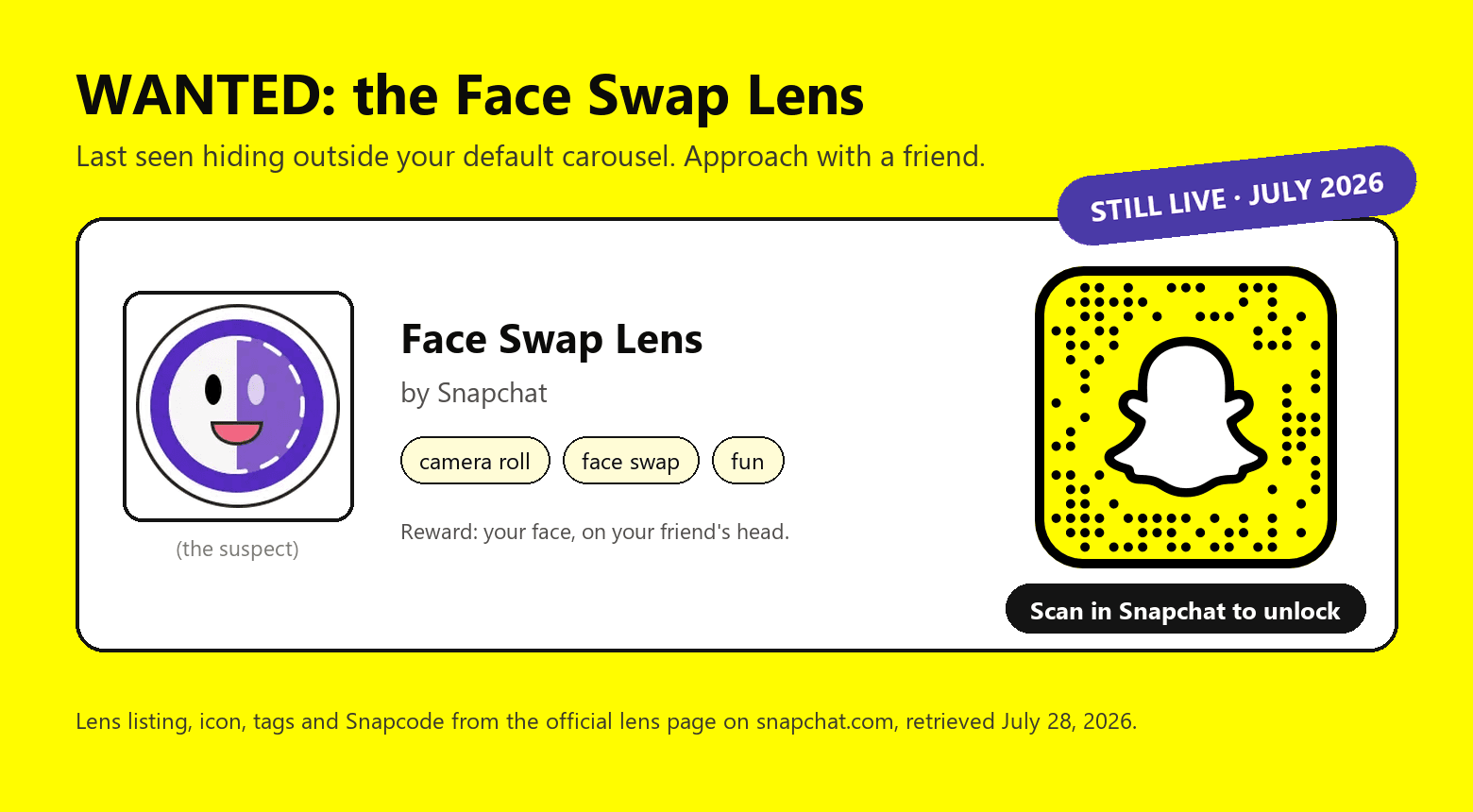
Tên ống kính, biểu tượng, thẻ và Snapcode từ trang ống kính chính thức trên snapchat.com , được truy xuất ngày 28 tháng 7 năm 2026.
Snapchat thực sự cung cấp những gì vào năm 2026
Hoán đổi khuôn mặt trên Snapchat có từ đầu năm 2016, khi báo chí công nghệ ghi nhận một ống kính hai người trao đổi khuôn mặt trực tiếp trong máy ảnh, tiếp theo vài tuần sau đó là một biến thể lấy khuôn mặt từ thư viện ảnh của bạn (The Next Web, tháng 2 năm 2016; TechCrunch, tháng 4 năm 2016). Chúng tôi không tìm thấy thông báo chính thức nào từ Snap về việc ra mắt hoặc loại bỏ, và các ống kính luân phiên liên tục; các bài báo từ cùng năm đó đã mô tả ống kính hoán đổi biến mất và quay trở lại mà không có lời giải thích.
Trạng thái hiện tại rất dễ xác minh. Ống kính Hoán đổi Khuôn mặt Chính thức có một trang thư viện công khai được ghi nhận Snapchat là người tạo, và các thẻ được liệt kê bao gồm "camera roll", gợi ý rằng ý tưởng thư viện ảnh vẫn tồn tại trong phiên bản hiện tại. Trang thư viện không ghi lại cơ chế hoạt động, vì vậy hãy coi thẻ như một gợi ý hơn là một lời hứa.
Ngoài ống kính chính thức, bất kỳ ai cũng có thể xây dựng hiệu ứng hoán đổi. Tài liệu Lens Studio của Snap có một thành phần Hoán đổi Khuôn mặt chuyên dụng dành cho người tạo, với chế độ Tĩnh một lần và chế độ Thời gian thực liên tục, và yêu cầu một khuôn mặt có thể phát hiện ở cả phía nguồn và phía đích. Đó là lý do tại sao cùng một tìm kiếm hiển thị ống kính chính thức cũng trả về các ống kính tương tự từ những người tạo cá nhân.
Không có bước chính thức nào để tìm hoặc sử dụng ống kính liên quan đến thanh toán. Tiền chỉ xuất hiện với Snapchat+ và bậc Lens+ của nó, được đề cập trong FAQ, và với các tuyến API bên ngoài ứng dụng.
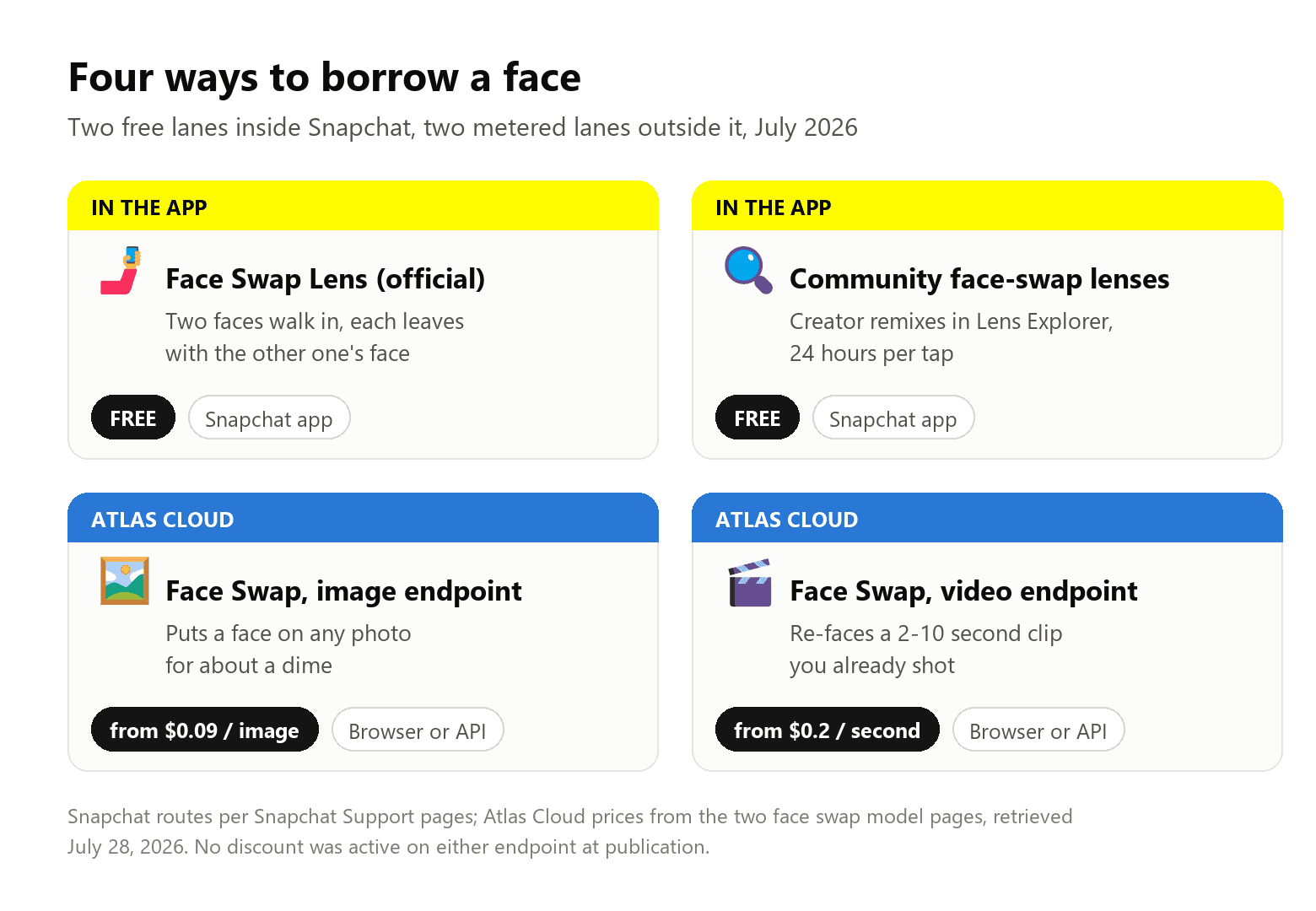
Chi tiết Snapchat theo các trang Snapchat Support; giá Atlas Cloud từ hai trang mô hình, cả hai được truy xuất ngày 28 tháng 7 năm 2026.
Tìm và sử dụng Ống kính Hoán đổi Khuôn mặt, từng bước
Các bước dưới đây kết hợp các hướng dẫn đã được xuất bản của Snapchat cho máy ảnh, Lens Explorer và Snapcode.
- Bắt đầu trên Màn hình Máy ảnh. Băng chuyền Lens là hàng Lens bên cạnh nút chụp. Hướng dẫn cơ bản của Snapchat là vuốt dọc băng chuyền và chạm vào một Lens; Ống kính Hoán đổi Khuôn mặt chỉ không được đảm bảo có trong hàng mặc định đó, đó là lý do hai bước tiếp theo giải quyết.
- Tìm kiếm trong Lens Explorer. Trang hỗ trợ của Snapchat cho biết "chạm vào biểu tượng kính lúp khi băng chuyền đang hoạt động". Nhập "face swap" vào thanh tìm kiếm và tìm biểu tượng nửa khuôn mặt màu tím với Snapchat là người tạo. Mong đợi các biến thể do người tạo xây dựng từ các nhà sáng tạo cá nhân xung quanh nó; thư viện có rất nhiều.
- Hoặc bỏ qua tìm kiếm hoàn toàn. Quét Snapcode từ hình ảnh ở đầu hướng dẫn này bên trong máy ảnh Snapchat, hoặc mở liên kết thư viện ống kính trên điện thoại của bạn và chạm vào Mở trong Snapchat. Snapchat Support lưu ý rằng Snapcode có hình tròn ở trung tâm là loại ống kính.
- Chạm vào ống kính và xếp khuôn mặt vào khung. Hiệu ứng cổ điển hoạt động giữa hai khuôn mặt trong khung hình, hành vi được ghi nhận từ các bài báo ra mắt năm 2016 và phù hợp với yêu cầu hai khuôn mặt trong thành phần tạo của Snap. Đảm bảo cả hai khuôn mặt đều hiển thị đầy đủ và hoán đổi sẽ áp dụng trong bản xem trước.
- Chụp. Chạm vào nút chụp để chụp ảnh, giữ để quay video, sau đó gửi hoặc lưu như bất kỳ Snap nào.
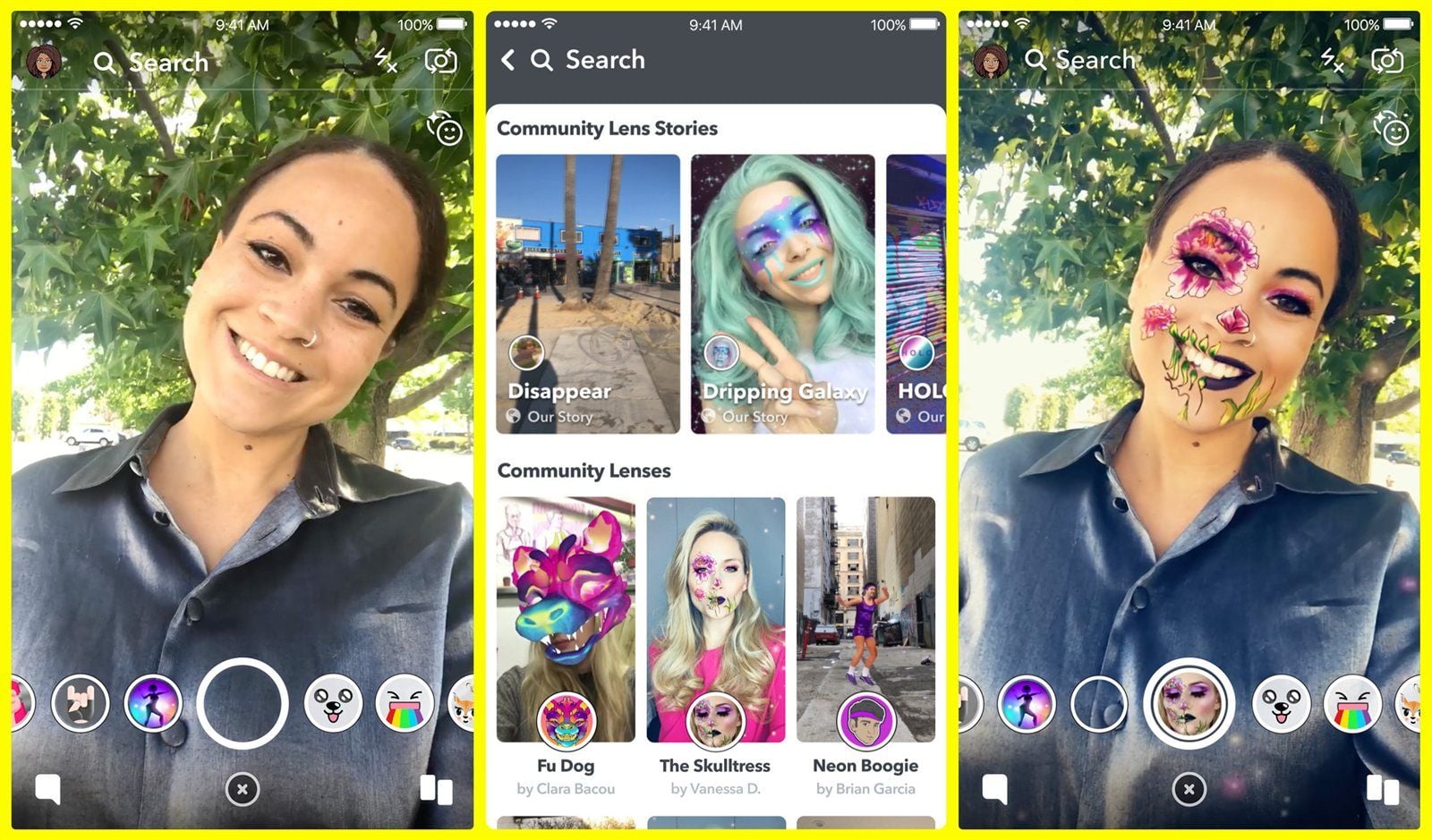
Lens Explorer như được hiển thị trong thông báo ra mắt của Snap, ngày 10 tháng 7 năm 2018. Bố cục đã phát triển kể từ đó, nhưng điểm vào vẫn giống nhau: một biểu tượng xuất hiện khi băng chuyền đang hoạt động.
Hai chi tiết thời gian từ cùng một trang hỗ trợ. Chạm vào một ô Lens sẽ thêm nó vào băng chuyền của bạn trong 24 giờ, và các mở khóa Snapcode hoạt động "trong một thời gian giới hạn". Dù thế nào thì ống kính cuối cùng cũng biến mất. Nếu bạn thấy mình sẽ quay lại sử dụng nó, lời khuyên của chính trang đó áp dụng: "Chạm vào trái tim để thêm nó vào Mục yêu thích."
Khi Ống kính Không thể Làm Công việc: Hoán đổi Tính phí trên Atlas Cloud
Tuyến ống kính có một ranh giới: nó hoạt động trong máy ảnh trực tiếp, và bất cứ thẻ camera roll có nghĩa là gì trong phiên bản hiện tại, không có gì trong ứng dụng được ghi nhận để hoán đổi khuôn mặt trên một loạt năm mươi ảnh hoặc một clip bạn đã ghi tuần trước. Đó là lĩnh vực mà Atlas Cloud bao phủ từ bộ sưu tập công cụ AI của mình: một trình duyệt hoán đổi khuôn mặt miễn phí cho ảnh đơn lẻ, cộng với hai điểm cuối chuyên dụng, một cho ảnh tĩnh và một cho cảnh quay, dành cho các công việc cần khối lượng lớn, video hoặc mã.
Phương pháp 1: Chạy Hoán đổi trong Playground
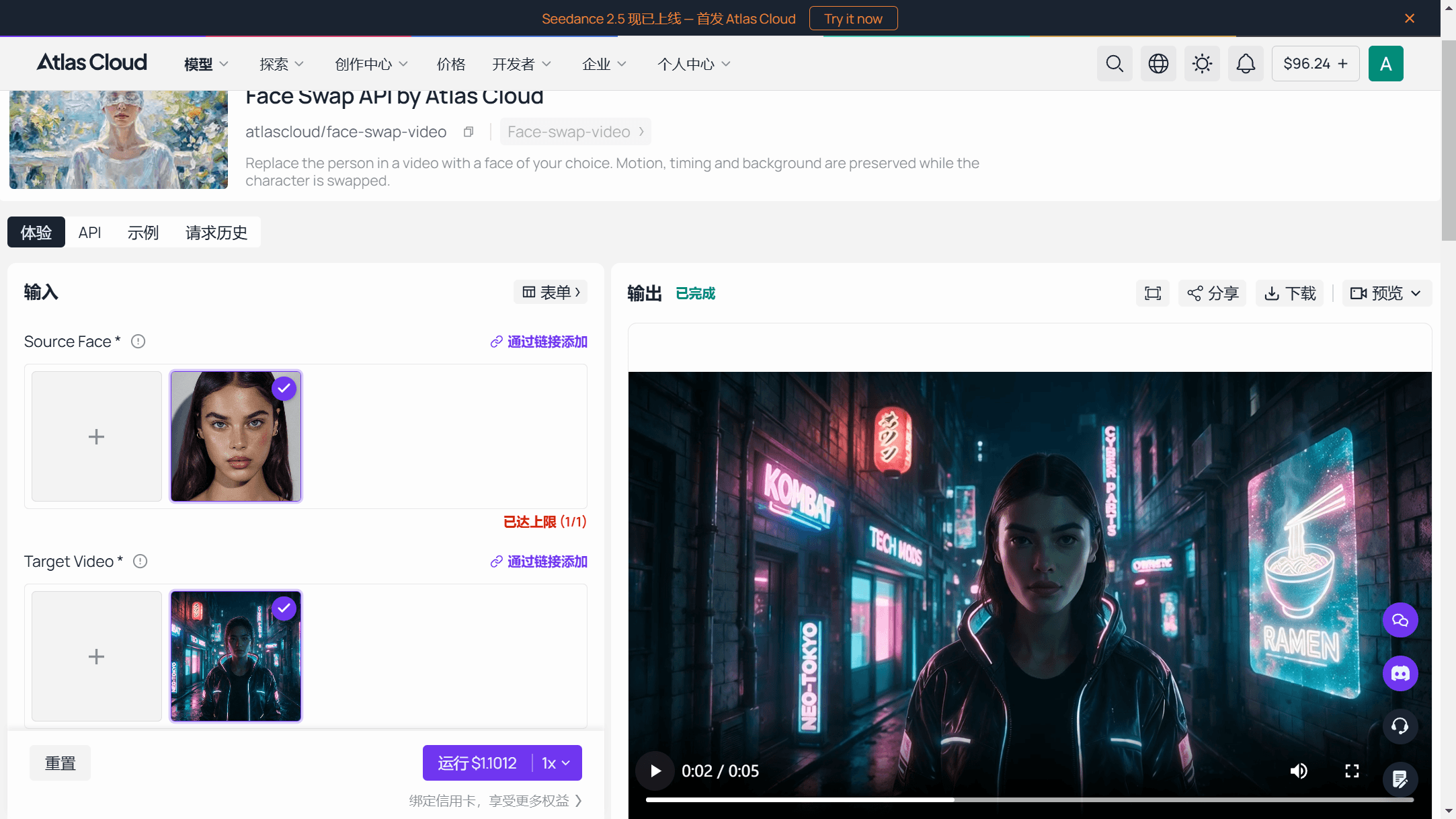
Không cần mã. Cả hai trang mô hình đều đặt toàn bộ công việc trên một biểu mẫu, với giá của lần chạy được in trên nút Chạy trước khi bạn cam kết và kết quả xuất hiện trong bảng đầu ra để tải xuống.
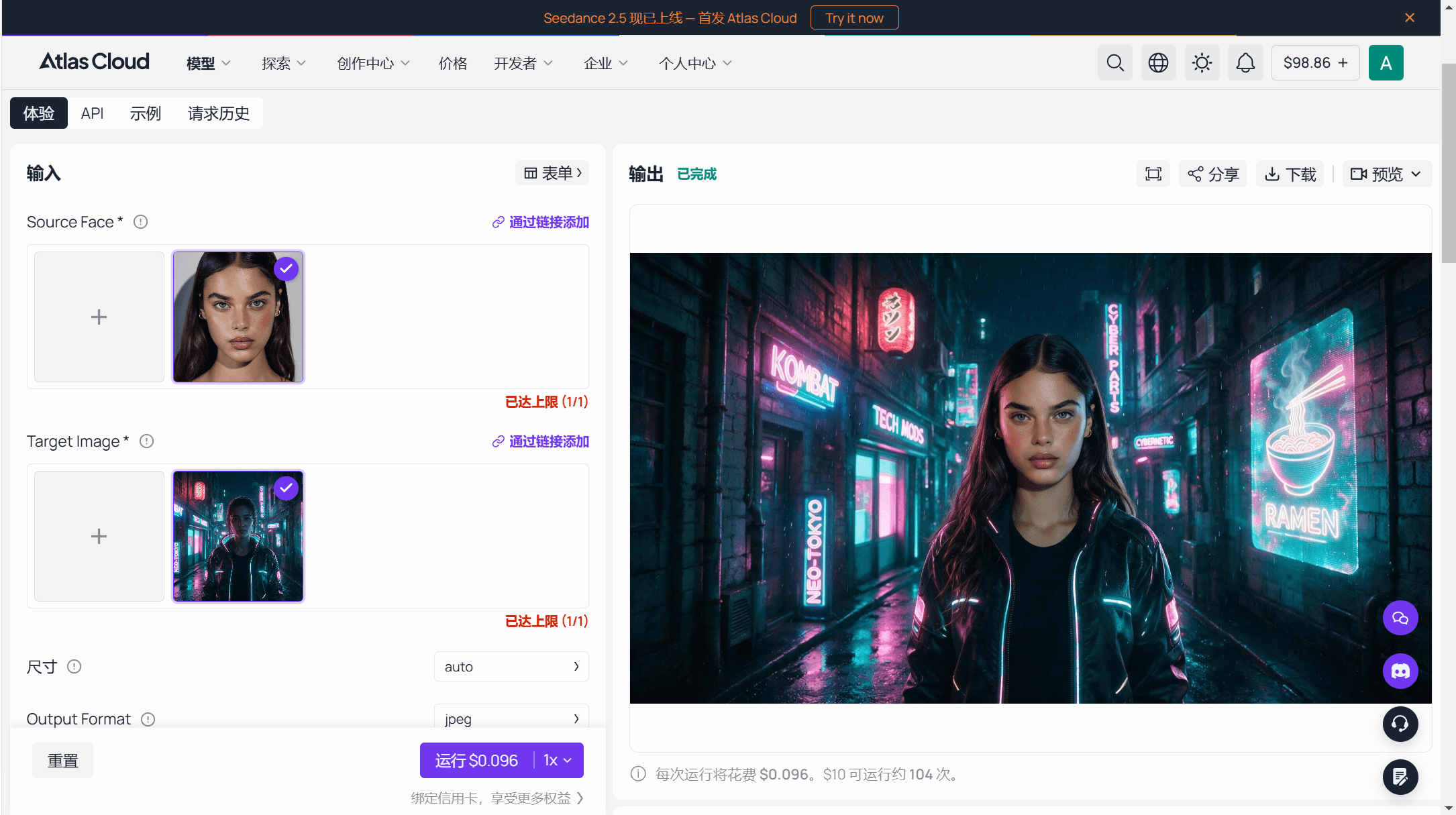
Điểm cuối ảnh Hoán đổi Khuôn mặt nhận một ảnh nguồn rõ ràng, mặt trước cộng với một ảnh đích và chuyển danh tính trong khi tư thế, quần áo, nền và ánh sáng vẫn giữ nguyên. Danh mục liệt kê từ $0.09 mỗi ảnh, và playground báo giá $0.096 mỗi lần chạy ở kích thước tự động mặc định, điều này làm cho nạp tiền $10 tương đương khoảng 104 lần hoán đổi. Trong biểu mẫu, có hai ô: Khuôn mặt Nguồn và Ảnh Đích; để kích thước ở chế độ tự động trừ khi bạn cần độ phân giải cụ thể.
Điểm cuối video Hoán đổi Khuôn mặt xử lý những gì không có tính năng Snapchat hiện tại nào được ghi nhận là có thể chạm vào: cảnh quay bạn đã ghi trước đó. Tải lên một khuôn mặt nguồn và một clip MP4 hoặc MOV dài 2 đến 10 giây, chọn đầu ra 720P hoặc 1080P, và mô hình thay thế người đó trong khi chuyển động, thời gian, chuyển động máy ảnh và nền vẫn được giữ nguyên. Danh mục liệt kê từ $0.2 mỗi giây; trong playground, một lần chạy ở cài đặt 1080P mặc định được báo giá là $1.2996 khi chúng tôi kiểm tra, vì vậy $10 bao phủ khoảng 7 lần chạy ở bậc đó.
Phương pháp 2: Tự động hóa thông qua API
Bước 1: Lấy khóa API của bạn. Tạo một khóa trong bảng điều khiển Atlas Cloud console và sao chép nó.

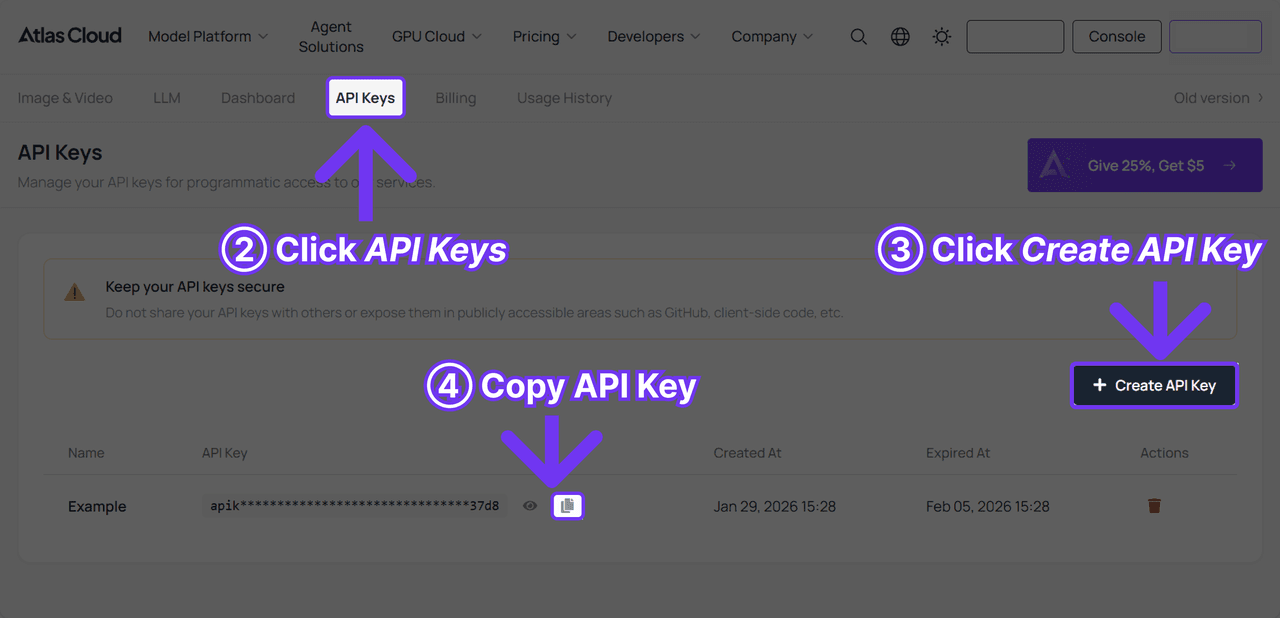
Bước 2: Xem tài liệu API để biết các điểm cuối, tham số và định dạng xác thực.
Bước 3: Gửi yêu cầu. Cuộc gọi video trông như thế này:
Bash1curl -X POST https://api.atlascloud.ai/api/v1/model/generateVideo \ 2 -H "Authorization: Bearer $ATLASCLOUD_API_KEY" \ 3 -H "Content-Type: application/json" \ 4 -d '{ 5 "model": "atlascloud/face-swap-video", 6 "image": "https://your-cdn.com/source-face.jpg", 7 "video": "https://your-cdn.com/target-clip.mp4", 8 "resolution": "720P" 9 }'
Ở đây image là khuôn mặt nguồn và video là clip có người sẽ được thay thế. Việc tạo là không đồng bộ: phản hồi trả về một ID dự đoán mà bạn thăm dò cho đến khi trạng thái chuyển sang hoàn thành:
Bash1curl https://api.atlascloud.ai/api/v1/model/prediction/<prediction_id> \ 2 -H "Authorization: Bearer $ATLASCLOUD_API_KEY"
Clip hoàn thành đến dưới dạng một URL trong đầu ra. Điểm cuối ảnh hoạt động theo cùng một cách thông qua generateImage, với điểm đặc biệt là trường image viết thường của nó là khuôn mặt nguồn và Image viết hoa là ảnh đích.
Phương pháp 3: Hoán đổi Khuôn mặt Miễn phí Không có Bộ đếm Thời gian Băng chuyền
Tuyến thứ ba không tốn gì. Công cụ AI hoán đổi khuôn mặt miễn phí của Atlas Cloud nằm trong cùng bộ sưu tập công cụ AI với "Miễn phí · Không tính phí" được in phía trên các ô tải lên, và FAQ riêng của nó trả lời câu hỏi về giá một cách rõ ràng: có, không có giới hạn sử dụng và không có hình mờ trên ảnh đã hoàn thành.
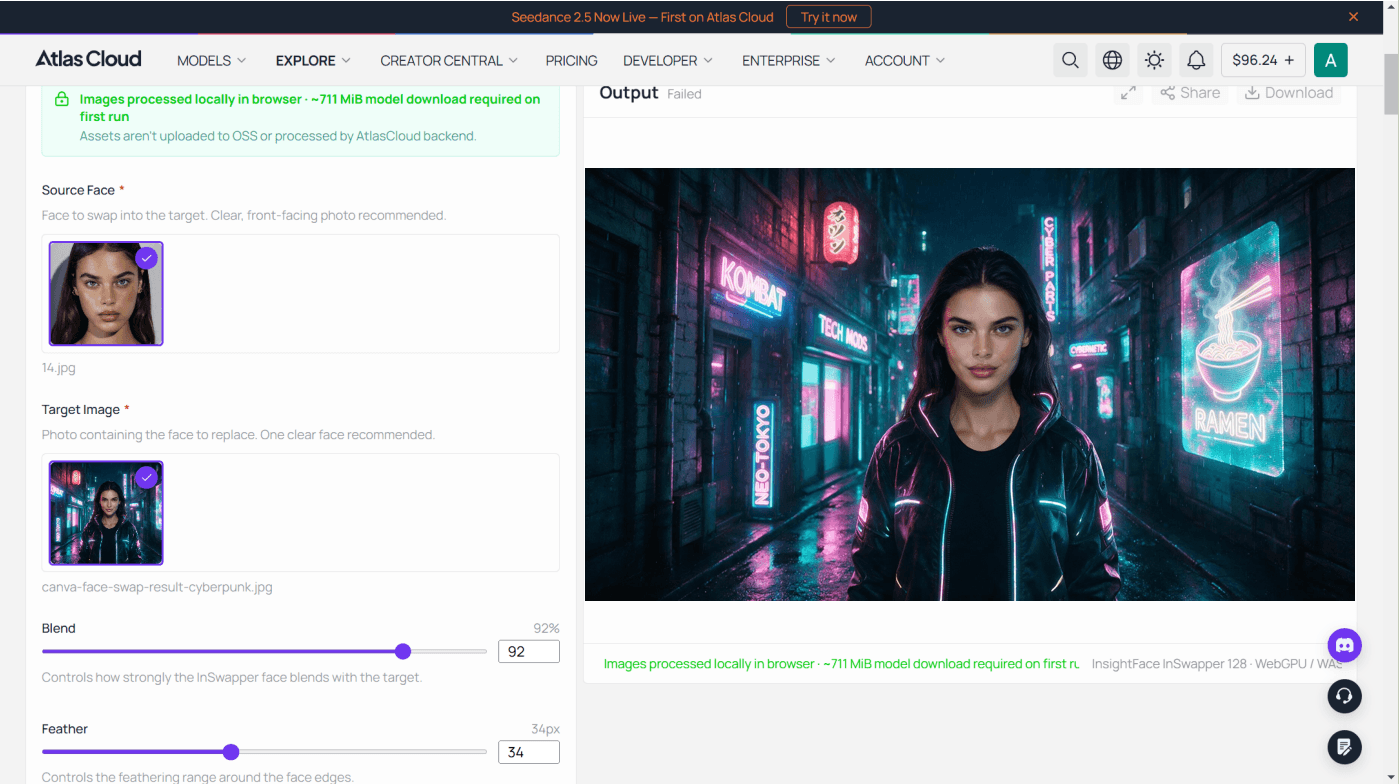
Dòng chảy tương tự như điểm cuối ảnh: tải khuôn mặt nguồn, tải ảnh đích, chạy hoán đổi. Công cụ ánh xạ 468 điểm trên cả hai khuôn mặt, một lần hoán đổi mất khoảng 8 giây, và các thanh trượt Blend và Feather điều chỉnh mức độ khuôn mặt mới hòa nhập và độ mềm của các cạnh khi hòa trộn. Kết quả tải xuống dưới dạng PNG ở kích thước ảnh đích, tối đa 1280 pixel ở cạnh dài nhất. Hai lưu ý thực tế: lần truy cập đầu tiên tải một mô hình khoảng 711 MiB, và nó xử lý một cặp ảnh tại một thời điểm, vì vậy hàng loạt và video vẫn thuộc về các điểm cuối có tính phí.
Đối với chủ đề của bài viết này, thử nghiệm tự nhiên là hoán đổi hai người bạn cổ điển mà không cần máy ảnh. Lấy ảnh tự sướng của bạn và ảnh tự sướng của một người bạn từ thư viện ảnh, tải ảnh của bạn làm khuôn mặt nguồn và ảnh của họ làm đích, và PNG trả về chính là sự trao đổi mà ống kính thực hiện, sẵn sàng để thả vào cuộc trò chuyện của bạn. Nó cũng bao gồm, miễn phí, chính xác trường hợp mà thẻ camera roll của trang ống kính chỉ gợi ý: hoán đổi với những bức ảnh đã tồn tại.
Mẹo Chuyên nghiệp cho Hoán đổi Sạch hơn
Ống kính yêu cầu hầu như không có gì ngoài hai khuôn mặt có thể nhìn thấy. Các điểm cuối đòi hỏi đầu vào có chủ ý hơn, và một vài thói quen có thể tạo ra sự khác biệt giữa một kết quả thuyết phục và một lần chạy lãng phí.
- Đưa vào một khuôn mặt nguồn hướng về phía trước, và khớp góc của nó với ảnh đích. Cả hai trang mô hình đều yêu cầu một bức ảnh rõ ràng, hướng về phía trước của khuôn mặt được hoán đổi vào. Khi chúng tôi phá vỡ quy tắc đó trong bài kiểm tra hướng dẫn Canva của mình với một hồ sơ chiếu sáng bằng nến, đầu ra trở lại sạch sẽ nhưng không thể nhận ra: mô hình thấy một nửa khuôn mặt và phát minh ra phần còn lại. Bất cứ điều gì nó không thể thấy, bạn sẽ không nhận lại được.
- Cắt xén chỉ còn một khuôn mặt. Không có trang điểm cuối nào ghi lại cách xử lý một bức ảnh có nhiều khuôn mặt, vì vậy hãy loại bỏ người xung quanh khỏi ảnh nguồn trước khi tải lên thay vì đánh cược vào việc chọn.
- Sử dụng lại một ảnh nguồn trên một loạt. Cùng một tệp nguồn với cùng cài đặt giữ cho danh tính được chuyển giao nhất quán trên toàn bộ bộ, điều này quan trọng đối với các định dạng lặp lại như một loạt meme hoặc một dòng sản phẩm.
- Cắt clip trước khi tải lên. Điểm cuối video nhận từ 2 đến 10 giây và tính phí theo độ dài đầu ra, vì vậy cắt một clip xuống những giây bạn thực sự cần là chỉnh sửa rẻ nhất mà bạn sẽ thực hiện.
- Lưu các điểm cuối chuyên dụng cho công việc nhận dạng. Các trình chỉnh sửa ảnh tổng quát trên cùng một nền tảng nhận các hướng dẫn bằng ngôn ngữ tự nhiên và diễn giải lại cảnh; các điểm cuối hoán đổi khuôn mặt tồn tại để di chuyển một khuôn mặt cụ thể và không thay đổi gì khác. Nếu kết quả cần trông giống một người cụ thể, công cụ chuyên dụng là làn đường phù hợp.

Nguồn vi phạm quy tắc và kết quả của nó từ bài kiểm tra hướng dẫn Canva của chúng tôi, được chạy trên cùng một điểm cuối face-swap-image của Atlas Cloud, tháng 7 năm 2026. Cả hai đầu vào đều do AI tạo ra; không có hình ảnh của người thật nào được sử dụng.
Cameos Đã Biến mất, và Các Hướng dẫn Cũ Chưa Nhận ra
Nhiều hướng dẫn cũ vẫn hướng dẫn bạn qua Cameos, tính năng ghép ảnh tự sướng của bạn vào các clip ngắn lặp lại trong trò chuyện. Lời khuyên đó đã chết. Trang trợ giúp của chính Snapchat cho tính năng này hiện chỉ bao gồm một dòng: "Cameos trong Trò chuyện không còn khả dụng nữa. Chúng tôi sẽ nâng cấp các trải nghiệm khác được hỗ trợ bởi My Selfie, vì vậy hãy theo dõi!".
Cameos đã có một thời kỳ thực sự. Phòng tin tức của Snap đã giới thiệu tính năng này vào ngày 9 tháng 12 năm 2019 với "hơn 150 Cameos để lựa chọn" và một luồng bắt đầu từ một nút trong thanh nhãn dán Trò chuyện: chụp ảnh tự sướng, chọn một cảnh, gửi. Đó là thứ gần nhất mà Snapchat có để hoán đổi khuôn mặt vào video được tạo sẵn.
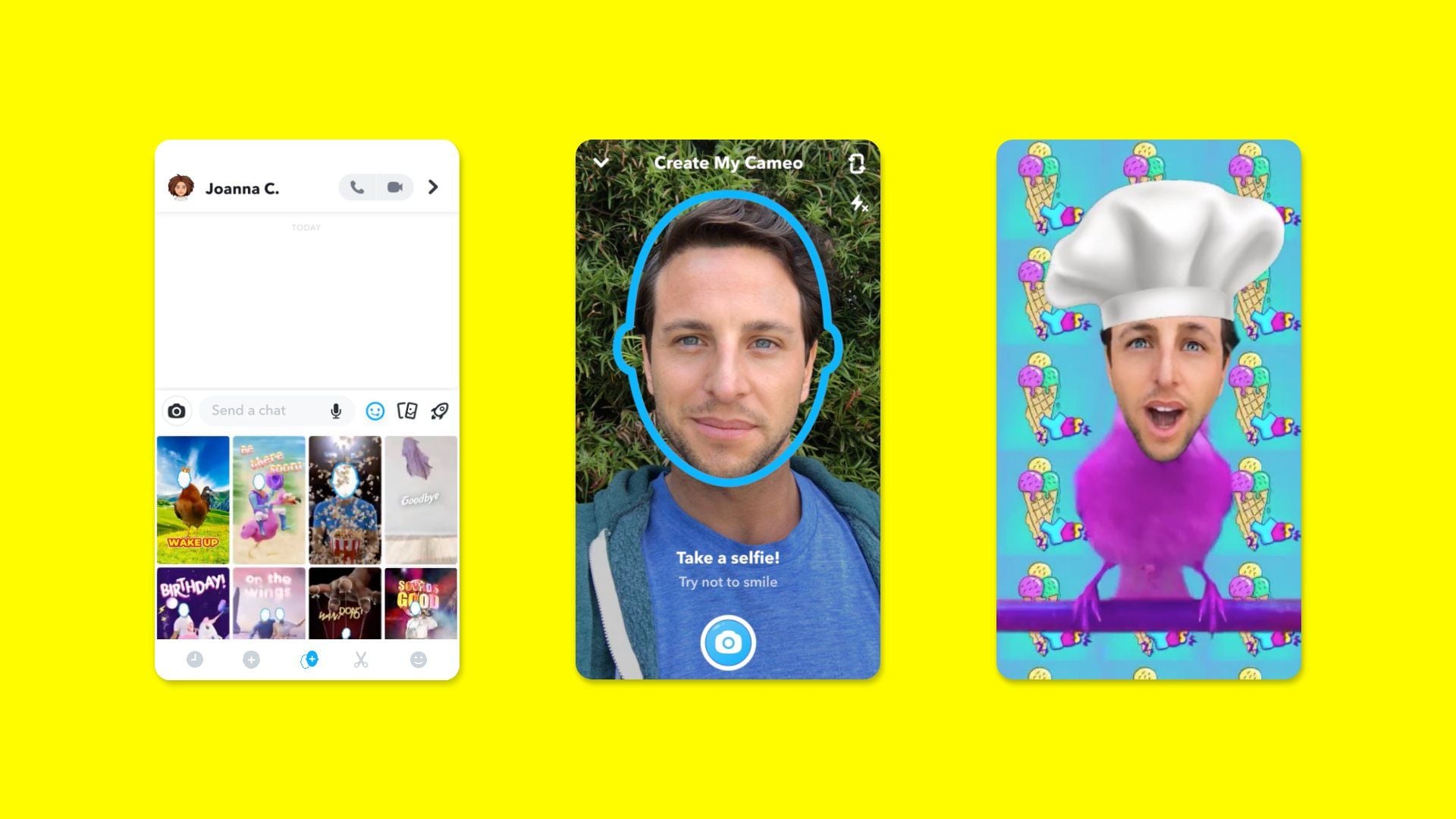
Tài sản báo chí từ bài đăng "Introducing Cameos" của Snap, ngày 9 tháng 12 năm 2019. Tính năng này đã bị ngừng.
Người kế nhiệm mà Snap chỉ đến là My Selfie, mà Snapchat mô tả là "một cửa hàng một điểm dừng cho các ảnh tự sướng của bạn sẽ được sử dụng để hỗ trợ AI tạo sinh, và các trải nghiệm khác trên Snapchat, bao gồm quảng cáo." Nó nằm dưới Cài đặt, sau đó là Tài khoản của tôi, sau đó là My Selfie. Hai điều khiển ở đó đáng để kiểm tra ngay cả khi bạn không bao giờ sử dụng tính năng này: "Ai có thể Tạo với My Selfie" có thể được giới hạn ở Chỉ mình tôi, và "Xem My Selfie trong Quảng cáo" có thể được tắt.
Vì vậy, câu trả lời trung thực năm 2026 cho "làm thế nào để Cameo khuôn mặt của tôi vào một video" là Snapchat không còn cung cấp nó trong trò chuyện nữa. Trong ứng dụng, ống kính là những gì còn lại. Đối với cảnh quay đã lưu, một điểm cuối video như điểm cuối ở trên là sự thay thế đang hoạt động.
Quy tắc Đồng ý ở Cả Hai Phía của Hoán đổi
Hướng dẫn Cộng đồng của Snapchat vạch ra các ranh giới áp dụng trực tiếp cho việc hoán đổi khuôn mặt. Mạo danh bị cấm hoàn toàn: "Chúng tôi cấm giả vờ là người (hoặc thứ) mà bạn không phải, hoặc cố gắng lừa dối mọi người về danh tính của bạn." Và góc AI được đề cập rõ ràng, với Snap dành quyền "thực hiện hành động thực thi thích hợp đối với các tài khoản sử dụng AI để vi phạm Hướng dẫn Cộng đồng của chúng tôi hoặc lạm dụng các sản phẩm AI của chúng tôi."
| Ranh giới | Nơi nó được viết |
|---|---|
| Không giả vờ là người bạn không phải | Hướng dẫn Cộng đồng, phần mạo danh |
| Không "thao túng nội dung vì mục đích sai lệch hoặc lừa dối (dù thông qua AI tạo sinh hay thông qua chỉnh sửa lừa dối)" | Hướng dẫn Cộng đồng, phần thông tin sai lệch |
| Không "chia sẻ hình ảnh gây tổn thương (bao gồm hình ảnh bị thao túng hoặc do AI tạo ra)" | Hướng dẫn Cộng đồng, phần quấy rối |
| Sự đồng ý từ những người được mô tả trong hoán đổi | Các trang mô hình hoán đổi khuôn mặt Atlas Cloud |
Các trang hoán đổi khuôn mặt của Atlas Cloud nằm trên cùng một dòng, lưu ý rằng hoán đổi khuôn mặt liên quan đến người thật: chỉ tải lên phương tiện bạn có quyền sử dụng, nhận được sự đồng ý từ những người được mô tả và giữ đầu ra tránh xa bất cứ điều gì gây hiểu lầm hoặc có hại. Luật pháp khác nhau tùy theo quốc gia và không có điều này là lời khuyên pháp lý, nhưng các quy tắc đã xuất bản của cả hai nhà cung cấp đều chỉ cùng một hướng, vì vậy hãy hoán đổi khuôn mặt với những người biết và đồng ý.
Câu hỏi Thường gặp
Snapchat có còn bộ lọc hoán đổi khuôn mặt vào năm 2026 không?
Có. Ống kính Hoán đổi Khuôn mặt Chính thức có một trang thư viện trực tiếp trên snapchat.com được ghi nhận Snapchat là người tạo. Không có gì đảm bảo nó nằm trong băng chuyền mặc định của bạn, vì vậy hãy tìm kiếm "face swap" trong Lens Explorer, quét Snapcode ống kính, hoặc mở liên kết thư viện và chạm vào Mở trong Snapchat.
Tại sao tôi không thể tìm thấy Cameos trên Snapchat nữa?
Snapchat đã ngừng tính năng này. Trang hỗ trợ nêu rõ "Cameos trong Trò chuyện không còn khả dụng nữa" và chỉ đến My Selfie làm cơ sở cho các trải nghiệm được hỗ trợ bởi ảnh tự sướng trong tương lai. Bất kỳ hướng dẫn nào mô tả nút Cameos trong thanh nhãn dán trò chuyện đều có trước sự thay đổi này.
Hoán đổi khuôn mặt trên Snapchat có miễn phí không?
Luồng chính thức để tìm và sử dụng ống kính không có bước thanh toán. Snapchat cũng bán Snapchat+, mà các trang trợ giúp của nó mô tả là các tính năng cao cấp và thử nghiệm mà không công bố một con số cố định: "Giá hiển thị trên thiết bị của bạn là giá bạn sẽ phải trả nếu đăng ký." Báo chí Mỹ đã đưa tin $3.99 mỗi tháng kể từ khi ra mắt năm 2022. Một gói Lens+ kết hợp bộ tính năng Snapchat+ với các Lens độc quyền do AI tạo sinh ở trên. Không có gì trong các trang của Snapchat nói rằng Ống kính Hoán đổi Khuôn mặt cổ điển nằm sau một trong hai gói đăng ký.
Tôi có thể hoán đổi với một bức ảnh từ thư viện ảnh trên Snapchat không?
Báo chí đã ghi nhận một biến thể hoán đổi khuôn mặt thư viện ảnh từ tháng 4 năm 2016, và ống kính chính thức ngày nay mang thẻ "camera roll" trên trang thư viện của nó, nhưng Snapchat không ghi lại hành vi hiện tại ở bất cứ đâu mà chúng tôi có thể xác minh. Hãy thử nghiệm nó trong ứng dụng. Nếu bạn cần một hoán đổi ảnh đáng tin cậy, điểm cuối ảnh của Atlas Cloud nhận bất kỳ hai bức ảnh đã tải lên với giá $0.096 mỗi lần chạy kích thước tự động.
Làm thế nào để tôi hoán đổi khuôn mặt một video tôi đã ghi?
Không phải thông qua ống kính, vì ống kính áp dụng trực tiếp trong máy ảnh. Tải clip lên điểm cuối video của Atlas Cloud, điểm cuối này thay thế khuôn mặt trên một clip MP4 hoặc MOV dài 2 đến 10 giây từ $0.2 mỗi giây đầu ra. Hướng dẫn hoán đổi khuôn mặt PixVerse của chúng tôi đề cập đến một tuyến dựa trên chỉnh sửa khác với quy trình chọn mặt nạ riêng của nó.
Tôi có thể sử dụng hoán đổi khuôn mặt Snapchat trên máy tính không?
Không có tuyến nào được ghi nhận. Snapchat for Web xử lý cuộc gọi, trò chuyện và chụp ảnh trong Chrome, Edge và Safari, nhưng chúng tôi không tìm thấy tuyên bố chính thức nào rằng Lens, chứ chưa nói đến cái cụ thể này, chạy ở đó. Ứng dụng máy tính để bàn Snap Camera cũ đã bị đóng cửa vào tháng 1 năm 2023, theo báo cáo báo chí. Trên máy tính, playground trình duyệt được đề cập ở trên là tùy chọn hoạt động ngày hôm nay.
Kết luận
Snapchat vẫn là cách nhanh nhất miễn phí để hoán đổi khuôn mặt với người bên cạnh bạn: tìm kiếm hoặc quét, chạm vào ống kính, hướng máy ảnh vào hai khuôn mặt. Điều nó âm thầm ngừng là một công cụ hoán đổi khuôn mặt đa năng. Cameos đã ngừng, ống kính luân phiên vào và ra, và không có tính năng nào được ghi nhận chạy hoán đổi trên một clip bạn đã ghi trước đó.
Biết mỗi làn đường kết thúc ở đâu sẽ tiết kiệm được sự thất vọng. Lấy ống kính thông qua Snapcode cho những khoảnh khắc trực tiếp, và khi công việc liên quan đến thư viện ảnh, một clip đã ghi hoặc bất kỳ loại khối lượng nào, một điểm cuối có tính phí sẽ tiếp nhận với giá khoảng một dime mỗi ảnh hoặc $0.2 mỗi giây video, không có bộ đếm thời gian băng chuyền kèm theo.





