

Một chủ cửa hàng ở Mumbai mở Instagram và thấy Shah Rukh Khan gọi tên chính cửa hàng của cô. Cô chưa bao giờ trả tiền cho một diễn viên nào. Cadbury thì có, kiểu như vậy, chỉ là không có diễn viên thật: một thuật toán đã ghép khuôn mặt và giọng nói của siêu sao này vào một khuôn mẫu được dựng riêng cho chính cửa hàng của cô. Đó là hình ảnh của quảng cáo do AI tạo ra khi một thương hiệu thực sự nghiêm túc với định dạng này. Các nhà tiếp thị gọi đây là loại hình quảng cáo do AI tạo ra; các agency dán nhãn từng sản phẩm cụ thể là các mẫu quảng cáo do AI tạo ra. Dù gọi thế nào, xu hướng này sẽ không biến mất. Bài viết này sẽ điểm qua các chiến dịch đã tạo dựng uy tín cho định dạng này, liệu người xem có thực sự tin vào những gì họ đang xem hay không, các quy định về ghi nhận nguồn gốc AI hiện đang áp dụng, và một công cụ bạn có thể dùng để tự tạo poster quảng cáo trong vài phút.
Những điểm chính
- Quảng cáo do AI tạo ra hiện bao trùm từ chiến dịch Shah Rukh Khan của Cadbury đếncông cụ tạo quảng cáo AI miễn phí chỉ cần một câu brief.
- Các nhà quản lý đánh giá quá cao mức độ yêu thích quảng cáo do AI tạo ra của người tiêu dùng với khoảng cách 37 điểm, theo một nghiên cứu của IAB năm 2026.
- TikTok và Meta đều yêu cầu ghi nhãn đối với nội dung quảng cáo AI chân thực, dù hai quy định này có cách kích hoạt khác nhau.
- Một ảnh sản phẩm và một dòng brief có thể trở thành poster quảng cáo 9:16 hoàn chỉnh trong vài phút.
- Quảng cáo Story trên Instagram do AI tạo ra vẫn phải tuân thủ vùng an toàn và thông số độ phân giải cố định của Meta.
Thế nào là Quảng cáo do AI tạo ra trong năm 2026?
Không phải quảng cáo nào có dấu ấn máy tính cũng đạt tiêu chuẩn này. Một quảng cáo do AI tạo ra là quảng cáo mà mô hình sinh (generative model) thực hiện phần sáng tạo thực sự: vẽ hình ảnh từ mô tả (prompt), biến ảnh thành video hoặc nhân bản giọng nói, thay vì con người chụp ảnh rồi sau đó mới chỉnh sửa.
Hai định dạng đang thống trị hiện nay: poster hoặc banner tĩnh, và video mô phỏng lời chứng thực của khách hàng, thường được gọi là quảng cáo AI UGC. Atlas Cloud có một bài viết riêng về quảng cáo AI UGC nếu định dạng đó là thứ bạn đang tìm kiếm.
| Định dạng | Đầu vào | Đầu ra |
|---|---|---|
| Poster hoặc banner tĩnh do AI | Một ảnh sản phẩm cộng với một dòng mô tả | Một hình ảnh hoàn chỉnh, sẵn sàng trong vài phút |
| Video AI UGC | Một ảnh sản phẩm (và đôi khi là ảnh người mẫu) cộng với kịch bản hoặc câu hấp dẫn | Một video ngắn được thiết kế giống lời chứng thực của khách hàng |
Vài năm trước, "sinh tạo" thường ám chỉ một thuật toán xáo trộn các tài nguyên được dựng sẵn thay vì một mô hình viết ra từng điểm ảnh từ con số không. Chiến dịch bao bì Nutella được đề cập bên dưới là một ví dụ điển hình cho ý nghĩa cũ đó. Ngày nay, nó gần như luôn có nghĩa là một mô hình khuếch tán (diffusion) hoặc transformer đảm nhận việc vẽ từ đầu đến cuối.
Tự tạo Poster Quảng cáo AI của Bạn với Atlas Cloud
Atlas Cloud vận hành một trình tạo poster quảng cáo miễn phí được xây dựng riêng cho nhu cầu này. Đây là những gì công cụ đã làm với một bản phác thảo giày thể thao vẽ tay và một câu brief, không cần chụp ảnh.
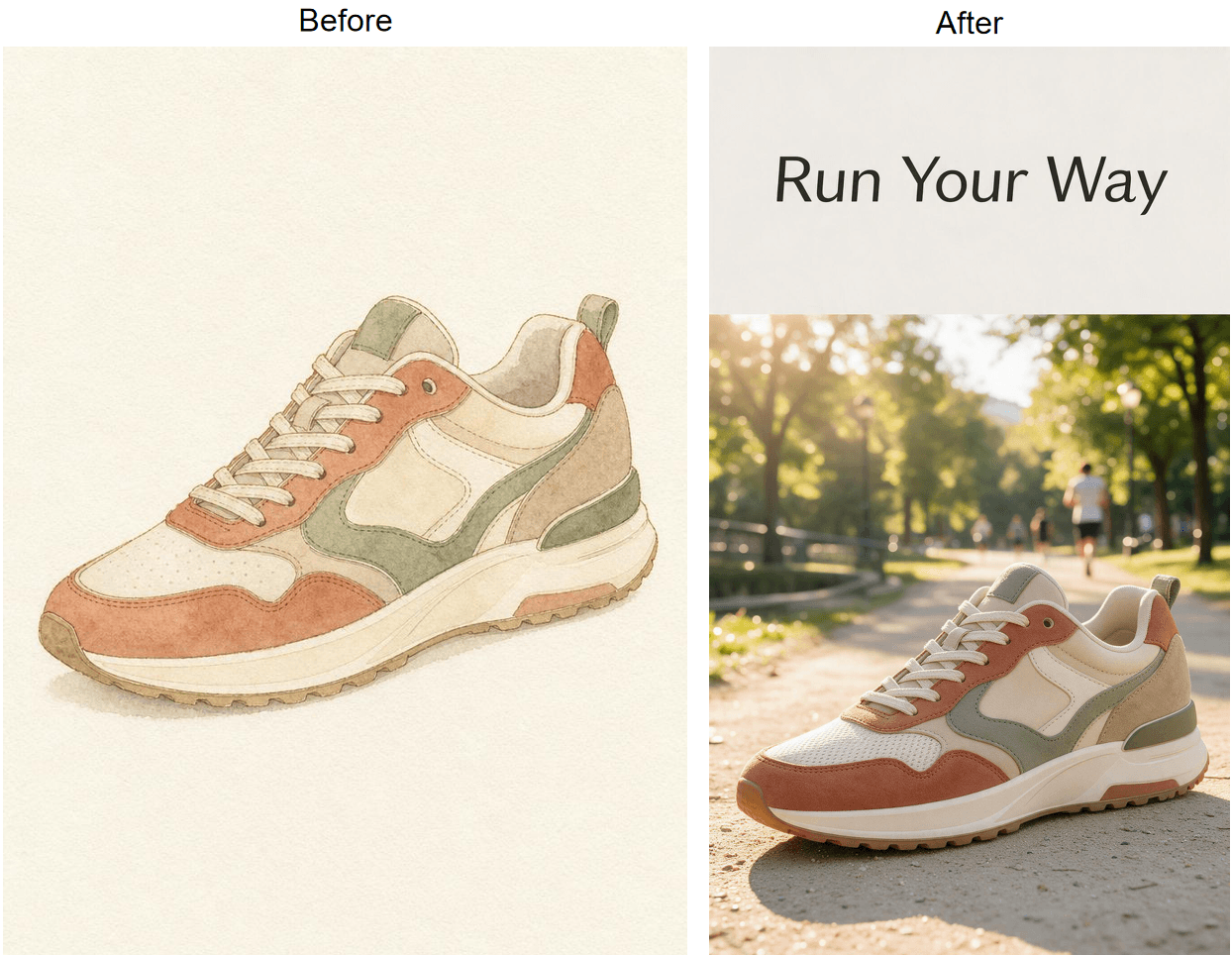
Nguồn: Do tác giả tạo bằng trình tạo quảng cáo của Atlas Cloud.
Cách 1: Tạo Poster Ngay Trên Trình Duyệt
Đăng nhập vào Atlas Cloud, mở playground tạo quảng cáo và tải lên một ảnh sản phẩm có dung lượng tối đa 10MB. Thêm một dòng brief: đối tượng hướng đến, cảm giác mong muốn và bất kỳ tiêu đề chính xác nào đặt trong dấu ngoặc kép. Chạy thử, công cụ sẽ trả về một poster 1152×2048 không có hình mờ trong vòng chưa đầy hai phút. Poster đầu tiên của bạn miễn phí sau khi đăng nhập; mọi lần chạy sau đó sẽ trừ vào số dư trả trước của bạn.
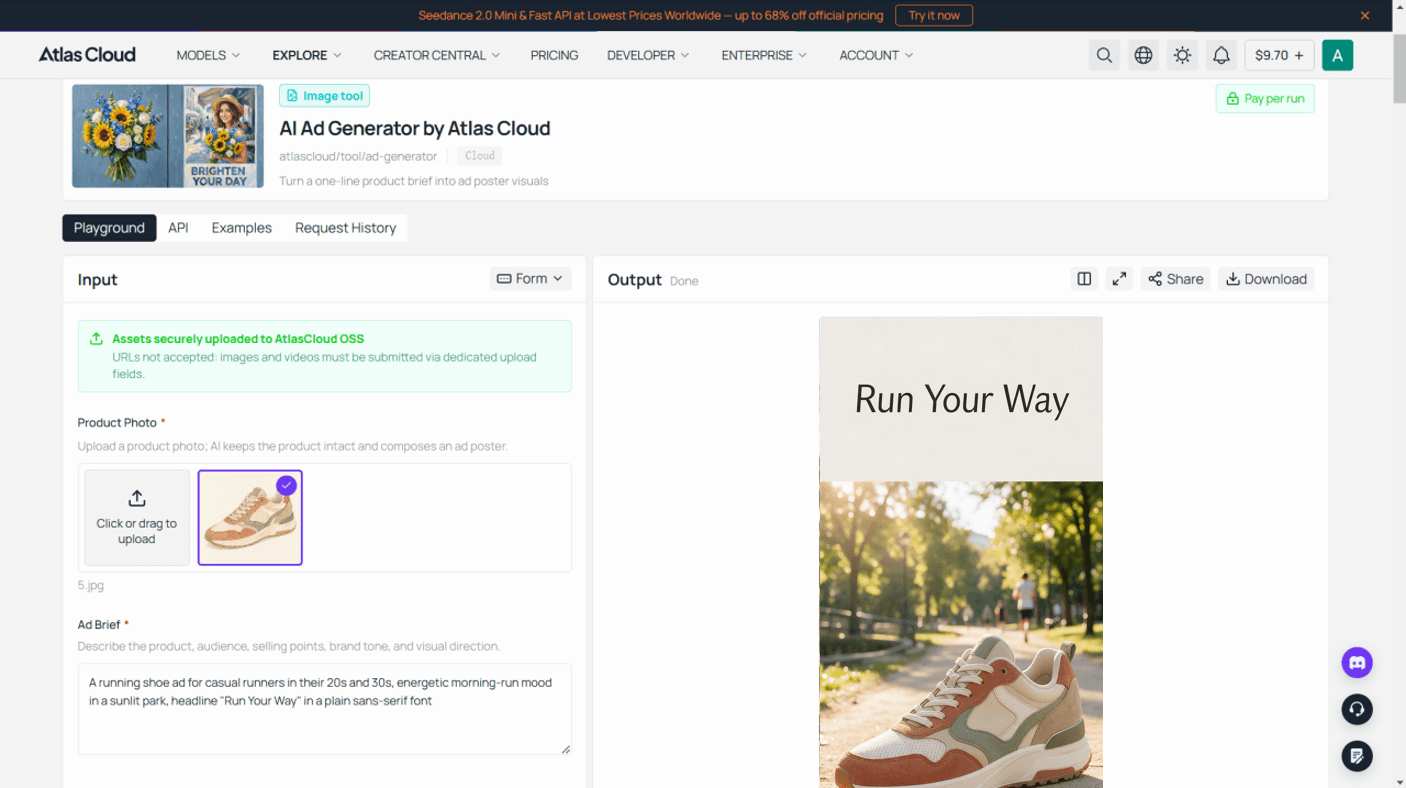
Muốn xem hướng dẫn chi tiết hơn, bao gồm cả mẹo viết brief? Hãy xem hướng dẫn tạo poster bằng AI của Atlas Cloud để biết từng bước.
Cách 2: Tạo Poster Quảng cáo qua API Atlas Cloud
Bạn muốn tích hợp công cụ này vào luồng sản phẩm của riêng mình? Đường dẫn API cũng hoạt động được, mặc dù nó chỉ nhận brief dạng văn bản, không hỗ trợ tải lên hình ảnh.
Bước 1: Tạo và sao chép khóa API. Đăng nhập vào bảng điều khiển Atlas Cloud, mở trang API Keys và tạo một khóa mới. Sao chép khóa này vào nơi an toàn; khóa sẽ không được hiển thị đầy đủ lần nữa.
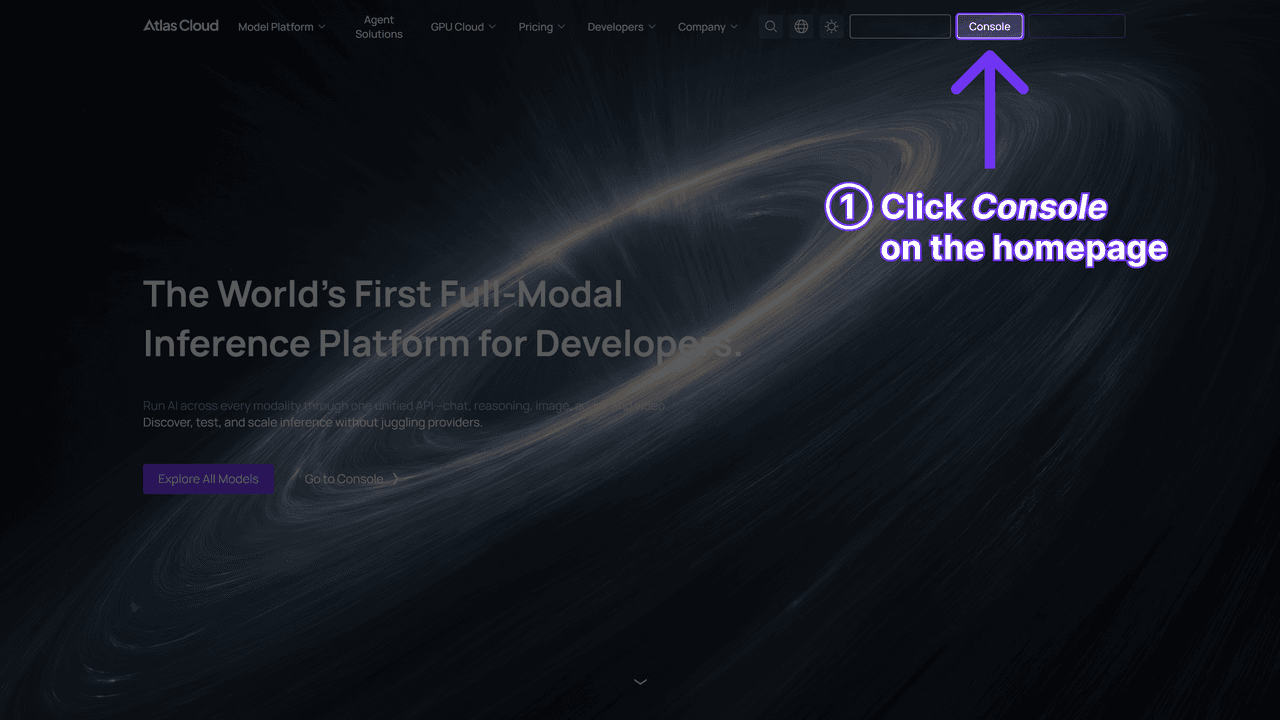
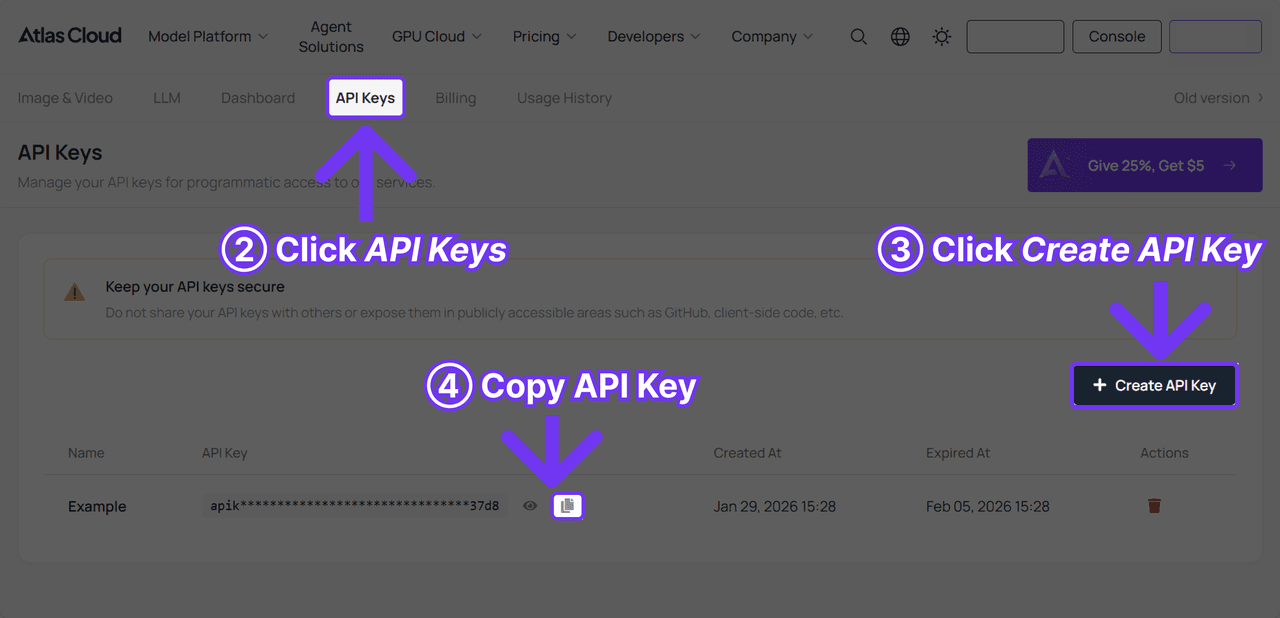
Bước 2: Kiểm tra định dạng yêu cầu. Thông số chi tiết nằm trong tài liệu Atlas Cloud. Mô hình tạo quảng cáo nhận một brief dạng văn bản bao gồm sản phẩm, đối tượng, lợi ích và tâm trạng; không có trường hình ảnh trên đường dẫn này.
Bước 3: Gửi yêu cầu và kiểm tra kết quả.
plaintext1curl -X POST https://api.atlascloud.ai/api/v1/model/generateImage \ 2 -H "Authorization: Bearer YOUR_API_KEY" \ 3 -H "Content-Type: application/json" \ 4 -d '{ 5 "model": "atlascloud/tool/ad-generator", 6 "prompt": "A skincare serum ad for women 25-40, calming spa mood, headline "Glow Naturally" in a clean serif font" 7 }'
plaintext1curl https://api.atlascloud.ai/api/v1/model/prediction/PREDICTION_ID \ 2 -H "Authorization: Bearer YOUR_API_KEY"
Kiểm tra endpoint thứ hai sau mỗi vài giây cho đến khi trạng thái chuyển sang hoàn tất và một URL hình ảnh xuất hiện trong phản hồi.
Một điều đáng biết: đây là cùng một kiểu endpoint mà Atlas Cloud sử dụng cho toàn bộ danh mục của mình. Thay đổi chuỗi mô hình là bạn đang gọi đến một mô hình khác với cùng khóa, cùng xác thực, cùng vòng lặp kiểm tra.
Atlas Cloud cũng cung cấp ba công cụ được xây dựng riêng cho quảng cáo dạng video: trình tạo Ad Skit, công cụ UGC Product Ad và Reference to Ad để sao chép nhịp điệu của một quảng cáo khác vào sản phẩm của bạn. Cả ba đều nằm trên trang công cụ AI cùng với trình tạo poster.
Ví dụ Quảng cáo do AI tạo ra Thực tế từ Cadbury, Nutella, Heinz và Nike
Hỏi bất kỳ ai về các ví dụ quảng cáo AI, bốn cái tên này thường được nhắc đến. Mỗi thương hiệu sử dụng một kỹ thuật khác nhau, không phải cùng một mẹo lặp lại bốn lần.
Chiến dịch nổi tiếng nhất của Cadbury đã cá nhân hóa một quảng cáo Shah Rukh Khan duy nhất cho hàng nghìn cửa hàng nhỏ cùng lúc. Khuôn mặt và giọng nói của ngôi sao Bollywood vĩ đại nhất đã được tái tạo bằng máy học, và quảng cáo chèn tên cửa hàng gần nhất với người xem, trên hơn 2.000 cửa hàng tạp hóa, bán lẻ và quần áo. Các chủ cửa hàng có được lời chứng thực của siêu sao mà không phải trả tiền.
Phiên bản của Nutella có trước các mô hình AI ngày nay nhưng vẫn được trích dẫn trong gần như mọi bài tổng hợp về quảng cáo AI. Năm 2017, Ferrero và Ogilvy & Mather Italia sử dụng một thuật toán rút từ thư viện các họa tiết và màu sắc để thiết kế bảy triệu nhãn lọ độc nhất vô nhị, không có hai nhãn nào giống nhau. Lô sản phẩm này cháy hàng trên các siêu thị Italy trong khoảng một tháng. Ngày nay, "sinh tạo" gần như luôn có nghĩa là một mô hình khuếch tán hoặc transformer thực hiện việc vẽ; thuật toán của Nutella gần với việc ngẫu nhiên hóa thông minh từ một tập hợp các phần cố định hơn.
Heinz đi theo hướng ngược lại: đầu ra AI thuần túy, không chỉnh sửa. Người hâm mộ gửi các mô tả DALL-E 2 như "Ketchup Tarot Card", và thương hiệu sử dụng kết quả nguyên trạng làm biển quảng cáo, ấn phẩm in và bài đăng mạng xã hội thật. Những hình ảnh này trông giống sốt cà chua Heinz đủ thường xuyên đến mức chúng trở thành chủ đề bàn luận về việc các mô hình AI tiếp thu các liên tưởng thương hiệu từ dữ liệu huấn luyện.
Nghiên cứu điển hình cho chiến dịch Never Done Evolving của Nike là chiến dịch có tính kỹ thuật cao nhất trong bốn chiến dịch. Máy học đã mô hình hóa phong cách chơi của Serena Williams tại hai thời điểm trong sự nghiệp, bản thân năm 1999 chống lại bản thân năm 2017, sau đó mô phỏng khoảng 5.000 trận đấu giữa họ bằng cảnh quay motion-capture và kỹ thuật vid2player từ Stanford. Dự án giành giải Grand Prix về Digital Craft tại Cannes Lions năm 2023.
Cả bốn chiến dịch vẫn được nhắc đến như những quảng cáo do AI tạo ra hay nhất: ngân sách thực, sự chấp nhận rủi ro sáng tạo thực, không phải một cú đổi logo nhanh chóng. Bảng dưới đây xếp các ví dụ quảng cáo do AI tạo ra này theo năm và kỹ thuật.
| Thương hiệu | Năm | Kỹ thuật | Con số nổi bật |
|---|---|---|---|
| Cadbury | 2021 | Nhân bản khuôn mặt và giọng nói bằng máy học | Hơn 2.000 cửa hàng được cá nhân hóa |
| Nutella | 2017 | Bao bì tạo bằng thuật toán | 7 triệu lọ độc nhất |
| Heinz | 2022 | Hình ảnh DALL-E 2 không chỉnh sửa | Được dùng làm biển quảng cáo và ấn phẩm in thật |
| Nike | 2022 | Mô phỏng trận tennis bằng ML (AKQA) | ~5.000 trận đấu mô phỏng |
Mọi người có thực sự tin vào quảng cáo do AI tạo ra không?
Không nhiều như những người làm ra các quảng cáo này vẫn nghĩ. Nghiên cứu "AI Ad Gap" năm 2026 của IAB khảo sát cả người tiêu dùng và giám đốc quảng cáo, và hai nhóm này không đồng tình ở nhiều điểm. Các giám đốc ước tính rằng 82% người tiêu dùng có cảm nhận tích cực về nội dung quảng cáo do AI tạo ra. Con số thực tế từ người tiêu dùng chỉ là 45%, khoảng cách 37 điểm đã nới rộng kể từ năm 2024.
Mức độ tiếp xúc vẫn tiếp tục tăng bất kể mọi người cảm thấy thế nào. 71% người trả lời thuộc Gen Z và thế hệ millennials cho biết họ đã từng thấy quảng cáo do AI tạo ra, tăng từ 54% vào năm 2024. Ở phía thương hiệu, 83% giám đốc quảng cáo nói rằng đội ngũ của họ đã sử dụng AI ở đâu đó trong quy trình sáng tạo.
Nghiên cứu hàn lâm ủng hộ bức tranh pha trộn này. Một thử nghiệm thực địa thực hiện qua MIT Initiative on the Digital Economy đã kiểm tra quảng cáo video AI được cá nhân hóa so với hình ảnh được cá nhân hóa và video thông thường trên hơn 21.000 người dùng WhatsApp; video được cá nhân hóa bằng AI thắng về tỷ lệ nhấp chuột. Một nghiên cứu khác từ Columbia Business School, Harvard Business School và Đại học Kỹ thuật Munich đã xem xét 16 tỷ lần hiển thị quảng cáo trên 7.000 nhà quảng cáo. Quảng cáo hiển thị do AI tạo ra vượt trội quảng cáo do con người tạo ra về số lần nhấp chuột, nhưng chỉ khi chúng trông không giống AI. Khoảng 59% hình ảnh AI trong bộ dữ liệu đó bị hiểu nhầm là do con người tạo ra; những hình ảnh sử dụng màu sắc sống động, bão hòa là dễ bị phát hiện là nhân tạo nhất.
Việc ghi nhận nguồn gốc AI dường như cũng không phải là yếu tố phá vỡ cam kết mua hàng như các nhà tiếp thị lo sợ. 73% người tiêu dùng trong khảo sát của IAB cho biết nhãn ghi quảng cáo do AI tạo ra sẽ làm tăng ý định mua hàng của họ hoặc khiến ý định đó không đổi.
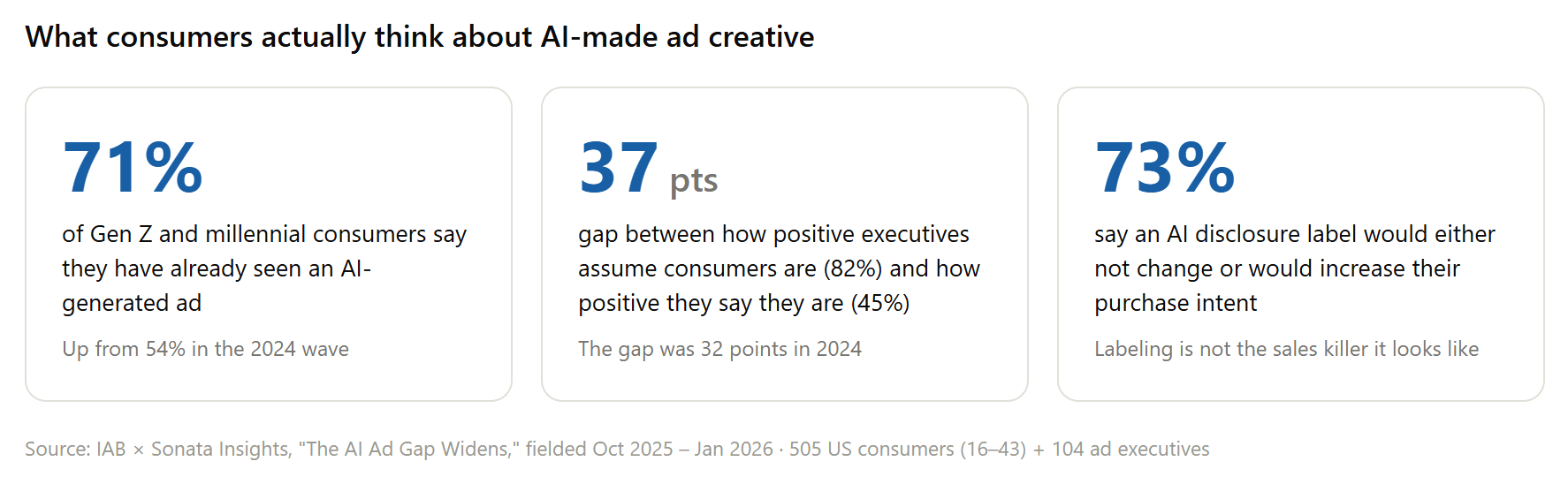
Nguồn: IAB × Sonata Insights, "The AI Ad Gap Widens"
Các nền tảng yêu cầu ghi nhận quảng cáo AI như thế nào trong năm 2026
TikTok là nền tảng đầu tiên. Chính sách tháng 9 năm 2023 của họ yêu cầu ghi nhãn mọi nội dung do AI tạo ra có hình ảnh, âm thanh hoặc video chân thực, sử dụng nhãn AI tích hợp của nền tảng hoặc nhãn dán và chú thích thủ công. Thông báo này bao quát nội dung nói chung và không nêu rõ điều gì xảy ra với các bài đăng bỏ qua nhãn này.
Cách tiếp cận của Meta được chia thành hai phần thường bị nhầm lẫn. Nền tảng này tự động quét các nội dung quảng cáo GenAI được tạo bằng công cụ bên thứ ba và thêm thẻ "AI info" trong menu ba chấm của quảng cáo. Nếu một người chân thực đến từ chính các công cụ AI của Meta, nhãn đó nằm ngay cạnh dòng chữ "Sponsored". Việc tự khai báo bắt buộc, loại mà nhà quảng cáo phải tích vào ô, chỉ áp dụng cho quảng cáo về xã hội, bầu cử và chính trị. Một quảng cáo sản phẩm thông thường không yêu cầu việc này, mặc dù Meta vẫn có thể tự động gắn nhãn.
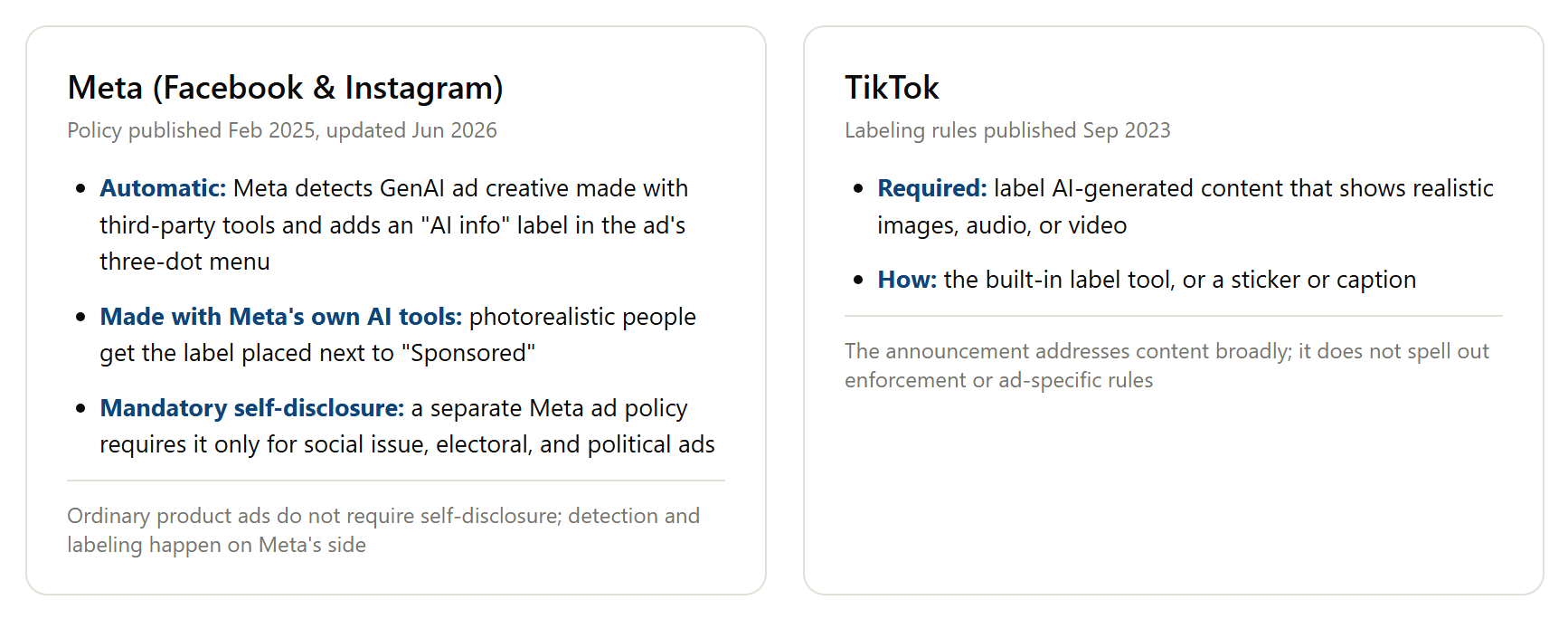
Nguồn: TikTok Newsroom và chính sách minh bạch Gen AI của Meta
Poster do AI tạo ra và Quảng cáo Banner Ngoài Video
Video được trao giải thưởng, nhưng một poster AI tạo ra lại gánh phần lớn khối lượng công việc hằng ngày. Sản xuất poster rẻ hơn một buổi quay video hoàn chỉnh, nhanh hơn để thử nghiệm ở năm biến thể và dễ dàng thay thế hơn khi chiến dịch hoạt động kém hiệu quả.
Quảng cáo banner do AI tạo ra cũng tuân theo logic tương tự: một ảnh sản phẩm sạch đẹp, vài ý tưởng poster AI cho tiêu đề và tâm trạng, là bạn đã có một bộ vị trí đặt quảng cáo thay vì chỉ một hình ảnh chính.
Một thiết kế poster AI thường hoạt động tốt nhất khi ảnh đầu vào đã sạch và có ánh sáng tốt, không phải khi mô hình phải tự phát minh ra sản phẩm từ con số không. Ví dụ của chính Atlas Cloud bên dưới cho thấy một thiết kế được tạo ra được đặt vào năm bối cảnh banner khác nhau: công viên, quán cà phê, đường núi, phòng gym và đường phố. Cùng một thiết kế, năm vị trí quảng cáo, không cần quay lại.
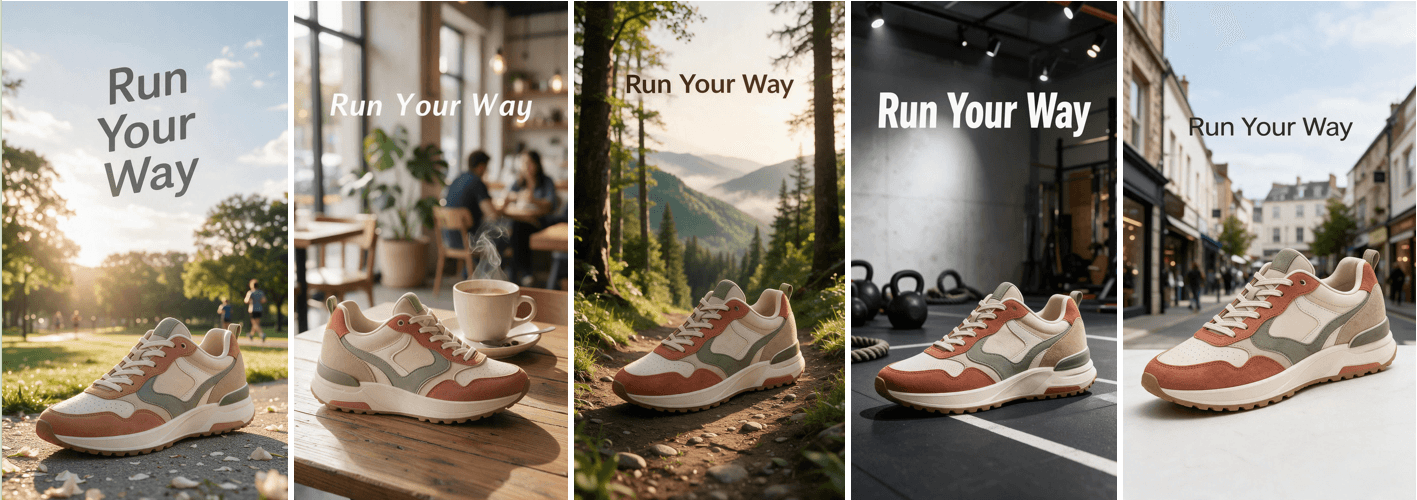
Nguồn: Trang ví dụ về trình tạo quảng cáo của Atlas Cloud.
Nếu bạn đã chạy quảng cáo UGC dạng video và muốn biết nền tảng nào đưa sản phẩm từ ảnh chụp thành clip hoàn chỉnh nhanh nhất, bài so sánh tốc độ này sẽ xếp hạng mười nền tảng theo tốc độ xử lý.
Tạo Quảng cáo Instagram Story bằng AI
Lướt qua các ví dụ quảng cáo Instagram Story từ bất kỳ nhà bán lẻ lớn nào, bạn sẽ thấy rất nhiều trong số đó bắt đầu từ một ảnh sản phẩm duy nhất, không phải một buổi quay video. Một poster được tạo ra vẫn phải tuân thủ các quy tắc bố cục của Meta khi được đăng tải.
Phần mà nhiều người bỏ lỡ là vùng an toàn. Khoảng 14% phía trên, 35% phía dưới và 6% mỗi bên bị che bởi giao diện Instagram: tên hồ sơ, chú thích, lời nhắc vuốt lên. Đặt tiêu đề hoặc logo trong không gian đó, chúng sẽ biến mất sau giao diện trên điện thoại thật.
| Thông số | Yêu cầu |
|---|---|
| Tỷ lệ khung hình | 9:16 |
| Độ phân giải khuyến nghị | 1440 × 2560 px |
| Dung lượng tệp | Dưới 30MB |
| Chiều rộng tối thiểu | 500px |
| Vùng an toàn | 14% trên, 35% dưới, 6% mỗi bên |
Nguồn: Meta Ads Guide, thông số hình ảnh Instagram Story
Nếu một công cụ đặt sản phẩm ở giữa và giữ văn bản tránh xa các mép theo mặc định, thì công cụ đó được thiết kế dựa trên chính ràng buộc này, không chỉ đơn thuần là thận trọng.
Các câu hỏi thường gặp
Điều gì chính xác được coi là quảng cáo do AI tạo ra?
Bất kỳ quảng cáo nào mà mô hình sinh tạo ra hình ảnh, video hoặc giọng nói thực tế, không chỉ là một bộ lọc áp dụng lên ảnh do con người chụp. Điều này bao gồm mọi thứ từ công cụ tạo poster từ văn bản đến video được tổng hợp hoàn toàn với giọng đọc được nhân bản.
Các thương hiệu có phải ghi nhận khi quảng cáo được tạo bằng AI không?
Tùy thuộc vào nền tảng và loại quảng cáo. TikTok yêu cầu ghi nhãn đối với nội dung AI chân thực. Meta tự động phát hiện và gắn nhãn nhiều nội dung quảng cáo GenAI, nhưng ô khai báo bắt buộc chỉ áp dụng cho quảng cáo về xã hội, bầu cử và chính trị, không áp dụng cho quảng cáo sản phẩm thông thường.
Có công cụ miễn phí nào để tạo quảng cáo do AI không?
Có, nhưng có giới hạn. Trình tạo quảng cáo của Atlas Cloud cấp cho mỗi tài khoản một poster miễn phí sau khi đăng nhập, sau đó chuyển sang định giá theo mức sử dụng. Đó là cách các công cụ quảng cáo AI miễn phí thường hoạt động: miễn phí để dùng thử, không miễn phí vĩnh viễn.
Tôi có thể đăng ký bản quyền cho quảng cáo do công cụ AI của tôi tạo ra không?
Không tự động. Văn phòng Bản quyền Hoa Kỳ đã tuyên bố rằng bảo hộ không mở rộng đến đầu ra từ "chỉ đơn thuần cung cấp các mô tả". Bạn cần có một yếu tố do con người sáng tạo có thể nhận thấy trong tác phẩm cuối cùng, hoặc sự sắp xếp và chỉnh sửa sáng tạo được thực hiện trên đầu ra AI.
Chi phí tạo một poster quảng cáo AI là bao nhiêu?
Trên trình tạo quảng cáo của Atlas Cloud, poster đầu tiên miễn phí sau khi bạn đăng nhập. Sau đó là $0,045 cho mỗi hình ảnh, tính vào số dư trả trước, hiện không có chiết khấu nào được áp dụng.
Người tiêu dùng có thực sự tin vào quảng cáo do AI tạo ra không?
Không nhiều như các nhà quảng cáo nghĩ. Dữ liệu năm 2026 của IAB đặt mức đồng thuận của người tiêu dùng ở 45% so với ước tính 82% của giám đốc điều hành. Sự tin tưởng được cải thiện khi nguồn gốc AI không lộ rõ và giảm xuống khi hình ảnh trông càng "giống AI".
Kết luận
Cadbury, Nutella, Heinz và Nike đều tạo được tiếng vang bằng những màn trình diễn một lần. Điều đã thay đổi kể từ đó là màn trình diễn này trở thành một lựa chọn thường trực trong kế hoạch truyền thông. Các giám đốc đã xác nhận hầu hết quy trình sáng tạo của họ có chạm đến AI ở đâu đó, người tiêu dùng đã quen với việc nhìn thấy đầu ra, và các nền tảng đã xây dựng hệ thống ghi nhãn thay vì cấm đoán hoàn toàn.
Điều đó không có nghĩa là mọi quảng cáo do AI tạo ra đều hiệu quả, hay các quy định ghi nhận đã theo kịp những gì công cụ có thể làm bây giờ. Nhưng khoảng cách giữa một màn trình diễn thông minh một lần và đầu ra của một ngày thứ ba bình thường đang ngày càng thu hẹp, và một ảnh sản phẩm duy nhất với một câu brief là đủ để bạn tự mình thử nghiệm quảng cáo do AI tạo ra ngay hôm nay.





