In the early days of generative AI for business, success depended on a "one-shot" prompt—a human sitting at a chat interface, tweaking words until the image looked right. This manual approach has become a critical bottleneck. In 2026, firms chasing digital growth cannot rely on manual tasks. Scalability is key for global ads and quick product builds. Manual work just won't keep up anymore.
The industry is shifting from chat-based tools to automated pipelines powered by APIs. This transition is essential for maximizing the ROI of AI. Integrate AI via APIs reduce operational friction by up to 30%-50%.
How Image APIs Improve Business Efficiency:
- Batch Processing: Generate thousands of localized assets in seconds.
- Dynamic Integration: Connect AI image generation for marketing directly to your CMS or CRM.
- Brand Consistency: Lock in style parameters through code, eliminating "creative drift."
A Landscape of 2026 AI Image Models
Choosing the right API today is about more than just "good pictures." The real goal is matching your specific business needs with the right technical architecture. Whether you are targeting local cultural styles in Asia or crafting high-end cinematic visuals, today’s market provides specialized tools for every niche.
The table below offers a strategic look at the top models currently powering automated creative workflows:
| API Model | Provider | Key Application Scenarios | Pricing (Est. 2026) | Key Features |
| GPT Image 2 | OpenAI | Dynamic web assets, DALL-E ecosystem integration. | $0.008 / Image | Unmatched prompt adherence and native reasoning integration. |
| Wan 2.7 Image | Alibaba | E-commerce product rendering, global marketing. | $0.026-0.064 / Image | Extreme optimization for Asian market aesthetics and product detail. |
| ERNIE Image | Baidu | Highly localized content for the Chinese market. | free now | Superior handling of Chinese cultural nuances and calligraphy. |
| Nanao Banana 2/Pro | Google DeepMind | Social media viral content, stylized "indie" aesthetics. | $0.048-0.14 / Image | Unique "vibe-centric" filters and high-speed generation for creators. |
| Seedream v5.0 | ByteDance’s Jimeng A | High-end cinematic concept art and film pre-viz. | $0.032 / Image | Industry-leading lighting engine and 8K native resolution support. |
| Qwen Image 2.0 | Alibaba Cloud | Technical documentation, automated UI/UX mockups. | $0.028-0.06 / Image | Exceptional multi-modal consistency and technical diagramming. |
| Z-Image | Alibaba TONGYIMAI | Real-time interactive apps, lightweight mobile integration. | $0.01 / Image | Ultra-low latency; designed for high-concurrency "instant" apps. |
Note: the prices of the models mentioned above are all based on Atlas Cloud.
The "Hyper-Personalization" Mandate
Generative AI for business has moved past basic creativity. It now powers deeply personal user journeys. Connecting image APIs to your CRM lets your site show custom visuals to every user instantly.
Dynamic Visuals: Beyond Generic Content
Static hero images are obsolete. Travel agencies now use APIs to create custom banners based on what guests like. A user searching for "Nordic cabins" with a "clean look" will see a custom image in that exact style. This specific relevance is why AI pays off so well. Personalized visuals always get more clicks than boring stock photos.
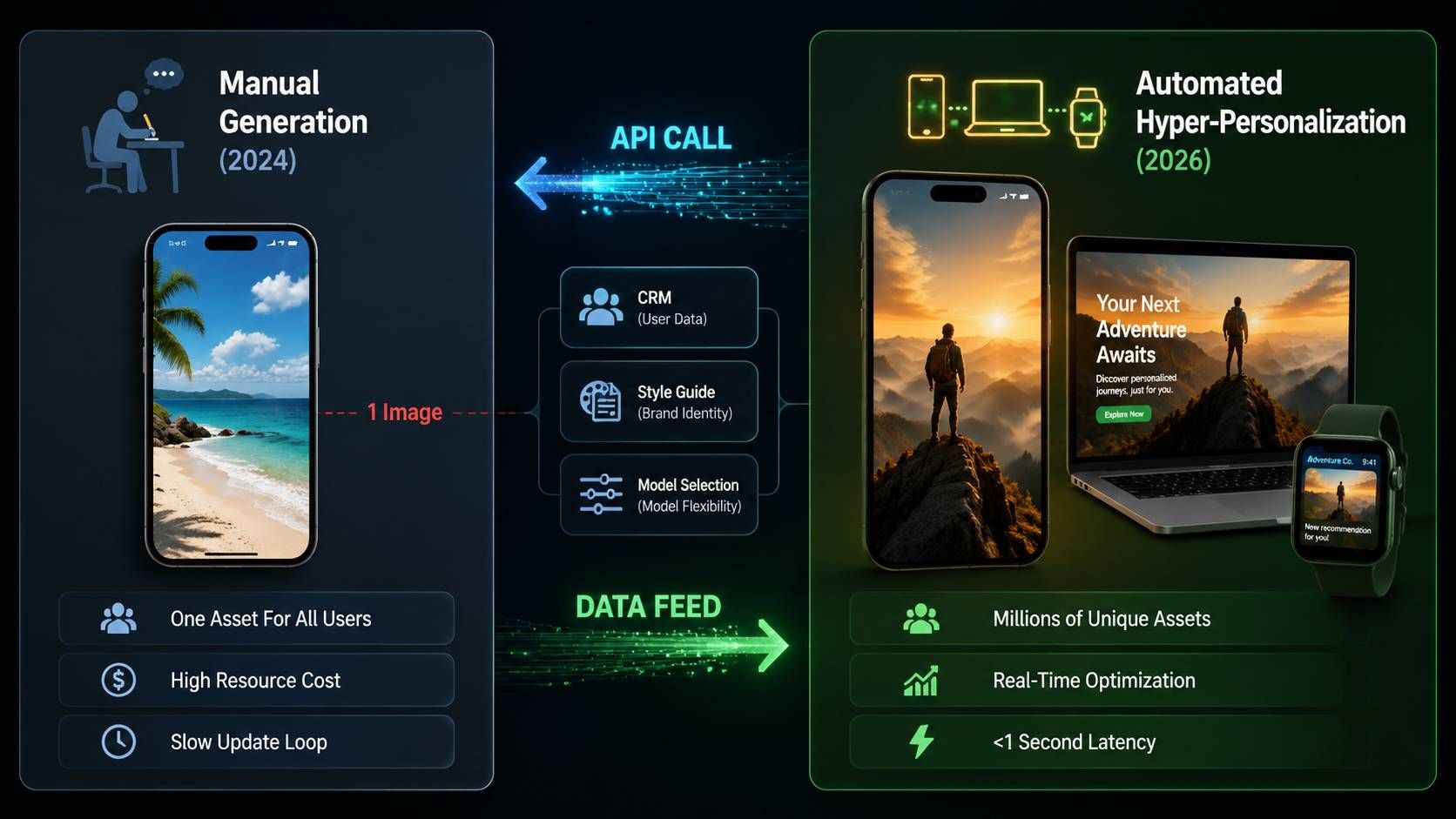
The distinction between static image generation and short-form animation (video) APIs has all but vanished. Leading image generation models have naturally evolved into powerful video/animation tools.
The architecture for generating animations via API is now standard across major providers. It typically follows one of three paths:
- Text to Video: This tool turns your written ideas into short clips. You get files like MP4 or GIFs.
- Image to Video: Give the API a photo and tell it how to move. It can make waterfalls flow or characters walk.
- Smooth Motion Loops: This feature creates tiny, endless movements. It is perfect for adding life to app backgrounds.
Visual Case Study: Enterprise AI Video API Demo: Minimalist Architecture Synthesis
From a generic B-roll to a brand-specific experience. By applying a 'Minimalist European Design' prompt via API, the original tropical asset was programmatically reconstructed into a hyper-personalized luxury villa scene—complete with dynamic ray-traced shadows and spatial audio—all rendered in under 5 seconds.
Note: This visual experience was generated using an AI-Native API pipeline. By processing a simple user search intent ("minimalist European architecture") and cross-referencing it with a base environment context, the API programmatically synthesized the entire scene—from the raw concrete architectural textures to the ray-traced shadows and spatial audio—delivering a hyper-personalized, high-conversion asset in real-time.
A/B Testing at Scale
Traditional creative testing was once limited by the speed of manual design. Today, AI image generation for marketing allows for massive A/B testing at scale by utilizing high-performance API inference platforms. Using platforms like fal.ai or Atlas Cloud lets companies tap into many top models at once. This single setup helps teams create hundreds of unique ad versions instantly. It makes high-speed marketing easy and keeps everything in one place.
- Color Palettes: Real-time adjustments based on trending regional aesthetics.
- Composition: Shifting focal points to suit different device orientations.
- Localized Context: Changing background elements to match the viewer’s local weather or geography.
This demonstration was generated purely via Text-to-Video API without any baseline image. The consistency of motion across the 16 variations proves the superior architectural reasoning and temporal stability of the modern model.
Performance Comparison: Manual vs. API-Driven Personalization
| Metric | Manual Design Testing | API-Driven Hyper-Personalization |
| Variations Generated | 3–5 versions | 100+ versions |
| Turnaround Time | 2–3 business days | Real-time / Sub-second |
| Conversion Uplift | Baseline | Up to 15–20% higher |
Automating the design process lets brands keep every image sharp and effective. This boosts sales without adding more work for the creative staff. It keeps things running fast while the team stays focused on big ideas.
Solving the "Consistency Crisis" with Brand-Tuned APIs
When global teams work apart, branding gets messy and inconsistent. This lack of a shared style hurts the look of a company. Old ways of checking work are just too slow to catch up with fast AI tools.
To bridge this gap, businesses must transition from passive guidelines to active, programmatic constraints. This is where the underlying technology of model customization becomes the ultimate safeguard.
LoRA & Fine-Tuning: Your Digital Brand DNA
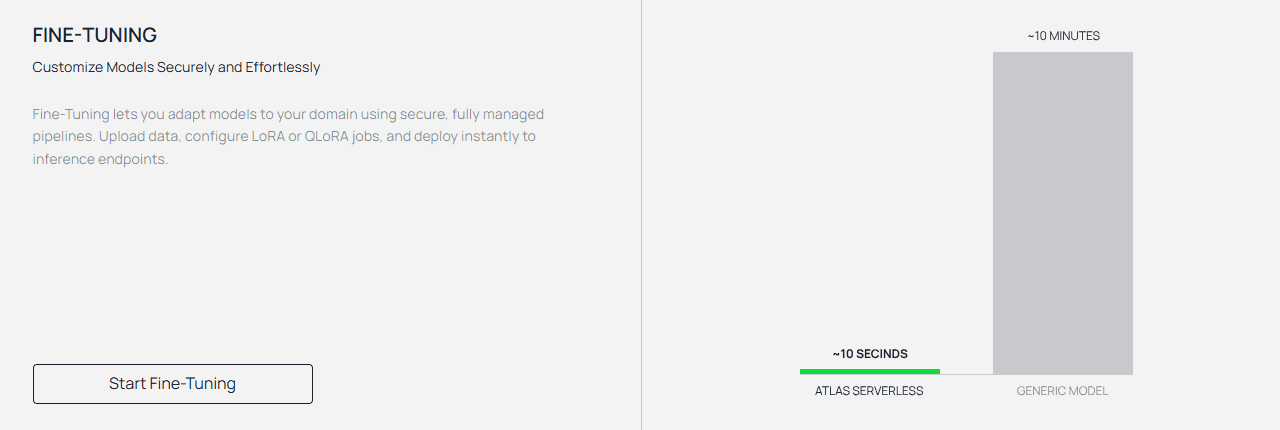
Leading APIs have solved the problem of "generic AI" through the integration of LoRA (Low-Rank Adaptation) and custom fine-tuning. Instead of hoping a model understands your brand's specific "minimalist" aesthetic, generative AI for business allows you to "plug in" your own style weights. This ensures that every generated asset—from color hex codes to character consistency—perfectly aligns with your corporate style guide.
Practical Scenario: Implementing Brand-Aware Workflows
Think about a fast-growing SaaS firm handling AI image generation for global marketing. Without one shared API, different designers often make clashing visuals. This lack of focus weakens the brand's overall look and value.
The Solution: A Unified API Orchestration Layer
Using a central API platform lets a company share one custom brand model with every team.
- Smart Control: The lead designer updates just one file on the server. Right away, every new ad made anywhere in the world matches the fresh brand look.
- Better Workflow: Staff stop struggling with complex prompts to find the right style. They just name the subject, and the API does all the hard visual work.
Programmable Brand Governance: Moving from Manual to Code-Enforced Styles
Instead of relying on designers to cross-reference static PDF style guides, brand DNA is directly encoded into the API request via the lora_model parameter. This ensures every frame generated across global departments strictly adheres to pre-defined visual standards.
The following example demonstrates a Brand-Aware image generation request:
plaintext1import requests 2 3response = requests.post( 4 "https://api.atlascloud.ai/api/v1/model/generateImage", 5 headers={ 6 "Authorization": "Bearer your-api-key", 7 "Content-Type": "application/json" 8 }, 9 json={ 10 "model": "openai/gpt-image-2/text-to-image", 11 "prompt": "A serene Japanese garden with cherry blossoms, watercolor style" 12 } 13) 14 15result = response.json() 16prediction_id = result["data"]["id"] 17print(f"Prediction ID: {prediction_id}")
Comparative Impact: Manual Oversight vs. API Governance
| Feature | Manual Brand Review | API-Driven Brand Governance |
| Stylistic Accuracy | Variable (Human dependent) | Persistent (Code-enforced) |
| Scaling Velocity | Linear (Limited by staff) | Exponential (Limited by API tier) |
| Deployment | Static PDFs / Style Guides | Dynamic Brand-Tuned Endpoints |
Centralized governance is the key factor in moving projects from "experimental" to "production-ready," directly impacting the long-term ROI of AI.
Technical ROI: Choosing Your Infrastructure Foundation
Many fall into the "Subscription Stacking" trap. Maintaining ten separate AI platform seats for a design team is often 3x more expensive than integrating a single, unified API. This fragmented approach creates data silos and redundant costs, whereas generative AI for business reaches its peak efficiency when unified under a single infrastructure.
ROI of AI is determined not just by the model you choose, but by how you host it. Modern platforms like Atlas Cloud provide two primary paths for businesses to balance cost and performance.
| Metric | Serverless (On-Demand) | Bare Metal (Dedicated) |
| Scaling | Auto-scales (0 to 800+ GPUs) | Static / Cluster-based |
| Setup Time | Instant (Pre-built templates) | Rapid (Customized config) |
| Performance | Shared resource (Optimized) | Raw power (Dedicated H100/H200) |
| Ideal ROI Case | Low-to-medium bursty traffic | Constant, high-volume workloads |
Serverless GPU: The "Pay-Per-Request" Scalability
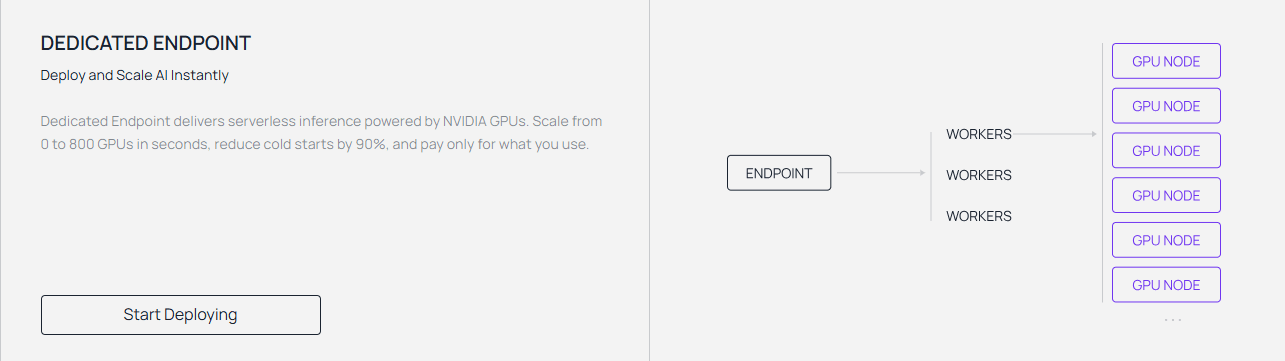
For businesses starting their digital transformation 2026, Serverless is the most cost-effective entry point. It eliminates the need for expensive hardware management and allows for instantaneous scaling.
- Best For: Marketing ads with changing traffic, A/B tests, and new startups.
- Key Advantage: Platforms like Atlas Cloud Serverless let you jump to 800 GPUs fast. This cuts wait times by 90% so users get their custom images right away.
- Pricing: You only pay for what you actually use, billing is done per request.
Bare Metal GPU: The Enterprise Powerhouse
When a business reaches a massive scale or requires hyper-specific model training, transitioning to dedicated hardware is essential.
- Best For: Large-scale model training, high-concurrency production environments, and full-scale animated video generation.
- Key Advantage:Atlas Cloud Bare Metal provides direct access to NVIDIA H100, H200, and B200 GPUs without the performance "tax" of virtualization. This allows for raw power in rendering complex AI videos.
- Pricing: Predictable hourly or monthly leasing, e.g., H100 starting at ~$1.95/GPU/hr, which can save up to 60% compared to traditional public clouds at high volumes.
Atlas Cloud Bare Metal GPU Specs:
| Model | Location | QTY | Pricing ($/Gpu/Hour) | Network |
| H100 | EU | 200 | $1.95 | IB |
| Singapore | 32 | $2.10 | IB | |
| US | 16 | $2.10 | IB | |
| H200 | US | 128 | $2.35 | RoCe |
| Japan | 8 | $2.40 | IB | |
| EU | 16 | $2.40 | IB | |
| Singapore | 8 | $2.40 | IB | |
| US | 8 | $2.40 | IB | |
| GB200 | Malaysia | 8 | $4.50 | IB |
| A100 | US | 64 | $1.35 | / |
Conclusion: From "AI-Assisted" to "AI-Native"
The true leaders in digital transformation 2026 have moved beyond being "AI-assisted" to becoming truly "AI-native." In this new landscape, businesses that fail to integrate generative AI for business via scalable APIs will be outpaced by competitors who can refresh an entire digital storefront or global ad campaign in mere minutes.
Companies leveraging high-performance infrastructure, such as Atlas Cloud’s Bare Metal for model training or their Serverless endpoints for instant AI image generation for marketing, are setting a pace that manual teams simply cannot match.
2026 Competitive Roadmap
| Status | Operation Model | Market Position |
| Traditional | Manual Design | High cost; slow to market |
| AI-Assisted | Human + Chat Tools | Moderate efficiency; inconsistent |
| AI-Native | API-Integrated Pipeline | Lowest cost; instantaneous scale |
Don't just prompt—program. Start your API integration today.
FAQ
What is the primary ROI of switching to API-driven A/B testing?
The transition from manual design to programmatic generation reduces creative production costs while increasing testing velocity.
| Metric | Manual Design | API-Driven (Atlas Cloud) |
| Production Time | 2–5 Hours per asset | < 5 Seconds per asset |
| Testing Capacity | 3–5 variations | 100+ variations |
| Conversion Uplift | Baseline | 15% – 25% Improvement |
Why is LoRA preferred over standard prompting for brand consistency?
Standard prompting often suffers from "Creative Drift," where the AI ignores specific style guides. LoRA acts as Digital Brand DNA, mathematically weighting the model to prioritize your specific textures, colors, and lighting. This ensures a 99% style match across global marketing campaigns without manual oversight.
Does using AI-generated video negatively affect Core Web Vitals?
Only if improperly implemented. Using high-performance formats like WebM or WebP instead of traditional MP4/GIF reduces file sizes by approximately 30%–50% without losing visual fidelity, maintaining a high "Largest Contentful Paint" (LCP) score for Google ranking.





