
GLM API for Autonomous Task Execution
GLM adalah seri LLM unggulan Z.ai dari Zhipu AI, dan GLM API mencakup semuanya, mulai dari GLM-5 yang bersifat agentic hingga GLM-4.6 357B MoE yang efisien. Model-model ini unggul dalam eksekusi tugas otonom, orkestrasi agen yang kompleks, dan pemrograman kelas produksi. Di Atlas Cloud, satu endpoint terpadu memberi Anda akses Day-0 ke seluruh keluarga GLM dengan harga berbasis penggunaan dan uptime produksi yang andal. Mulai membangun hari ini.
GLM dikembangkan oleh Z.ai. Atlas Cloud (dioperasikan oleh Atlas Cloud AI LLC) menyediakan akses ke model ini dan tidak memilikinya. Semua merek dagang adalah milik pemiliknya masing-masing.
Jelajahi Model Terkemuka
Atlas Cloud menyediakan model kreatif terdepan dan terbaru di industri untuk Anda.

Perbandingan Model GLM API: Dari GLM-4.6 hingga GLM-5.2
Cocokkan setiap endpoint dengan beban kerja dan anggaran Anda.
| Modalitas | Deskripsi |
|---|---|
| GLM-5.2 | Dirancang khusus sebagai model berorientasi agent, GLM-5.2 mengubah prompt bahasa alami dan konteks tool-call menjadi penalaran terstruktur, function calls, dan eksekusi tugas otonom. Model ini dioptimalkan untuk masalah kompleks ketika model harus merencanakan, bertindak, dan melakukan iterasi sendiri. Gunakan saat membangun autonomous agents dan workflow jangka panjang yang memakai tool, dengan harga $1.4 per million input tokens dan $4.4 per million output tokens. |
| GLM-5.1 | Berikan GLM-5.1 tugas coding atau masalah multi-langkah, dan model ini menghasilkan output pemrograman yang kuat sekaligus eksekusi langkah demi langkah yang stabil. Sebagai flagship terbaru Z.AI, model ini juga menghadirkan percakapan yang lebih alami dan estetika front-end yang lebih matang. Cocok untuk tim yang membangun aplikasi web kompleks dan pipeline agent, dengan input seharga $1.4 dan output seharga $4.4 per million tokens. |
| GLM-5v Turbo | GLM-5v Turbo mengubah prompt teks menjadi completion cepat sambil mempertahankan peningkatan kemampuan pemrograman dan eksekusi multi-langkah yang stabil dari model flagship. Varian turbo ini memprioritaskan latensi lebih rendah untuk produk interaktif dengan throughput tinggi tanpa mengorbankan kualitas percakapan. Pilih model ini saat responsivitas menjadi prioritas utama, dengan harga $1.2 per million input tokens dan $4 per million output tokens. |
| GLM-5 Turbo | Teks masuk dan completion keluar dengan cepat melalui GLM-5 Turbo, flagship yang dioptimalkan untuk latensi, dibuat untuk pemrograman yang lebih kuat dan penalaran multi-langkah yang andal. Model ini menjaga respons tetap alami dan generasi front-end tetap rapi, sekaligus mempercepat throughput untuk penggunaan real-time. Sangat cocok untuk antarmuka chat dan loop agent cepat, dengan biaya $1.2 per million input tokens dan $4 per million output tokens. |
| GLM-5 | GLM-5 menerima instruksi teks dan menghasilkan kode, rantai penalaran, serta balasan percakapan sebagai rilis flagship inti dari Z.AI. Peningkatan utamanya berfokus pada kemampuan pemrograman yang lebih kuat dan eksekusi multi-langkah yang lebih stabil di berbagai tugas agent kompleks. Pilihan seimbang untuk pengembangan full-stack dan penalaran sehari-hari, ditawarkan dengan $1 input dan $3.2 output per million tokens. |
| GLM-4.7 | Minta GLM-4.7 untuk coding atau orkestrasi agent, dan model ini merespons dengan eksekusi multi-langkah yang dapat diandalkan serta dialog yang alami. Model kelas flagship ini memadukan kemampuan pemrograman yang ditingkatkan dengan output front-end yang rapi pada harga yang lebih terjangkau. Cocok untuk workload produksi yang sensitif biaya, dengan biaya $0.6 per million input tokens dan $2.2 per million output tokens. |
| GLM-4.6 | Model Mixture-of-Experts efisien dengan 357B-parameter dari Zhipu AI, GLM-4.6 memetakan prompt teks menjadi completion berkualitas tinggi dengan throughput yang kuat. Desain MoE-nya hanya mengaktifkan expert yang dibutuhkan setiap request, sehingga inference tetap efisien untuk tugas analisis dan konten. Deploy model ini untuk analisis data, penyusunan slide, dan konten web dengan $0.6 input dan $2.2 output per million tokens. |
Apa yang Menopang GLM API
Mulai dari inti sparse Mixture-of-Experts dan konteks 200K-token hingga native tool calling dan mode berpikir yang dapat diubah, GLM API menghadirkan stack reasoning dan coding unggulan Z.ai di balik satu endpoint yang kompatibel dengan OpenAI.
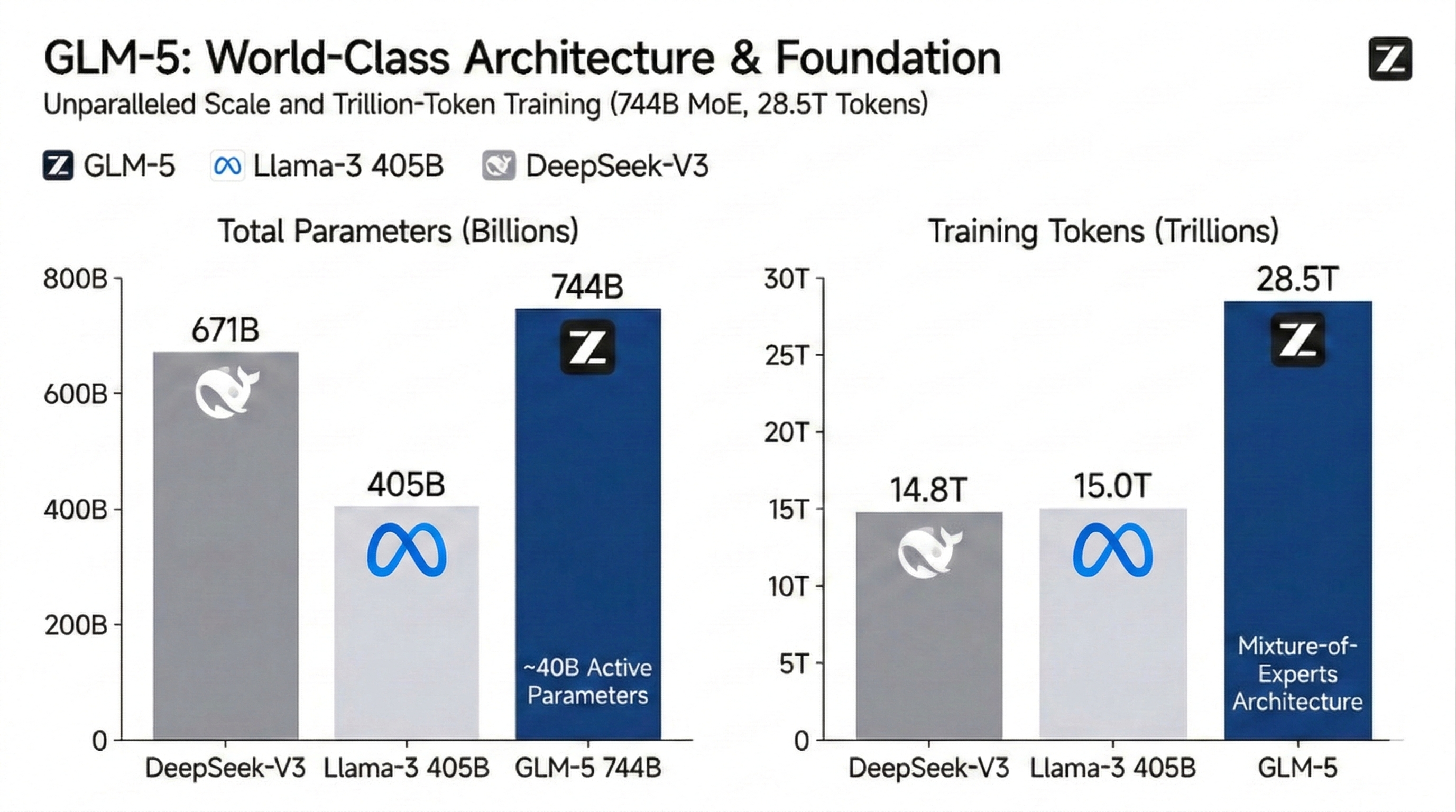
Sparse Mixture-of-Experts dalam Skala Besar
Inti sparse Mixture-of-Experts hanya mengaktifkan sekitar 40 miliar parameter per kueri, dengan memanfaatkan kumpulan expert yang jauh lebih besar. Hasilnya adalah pengetahuan mendalam dan recall yang presisi tanpa biaya dense model pada setiap panggilan.
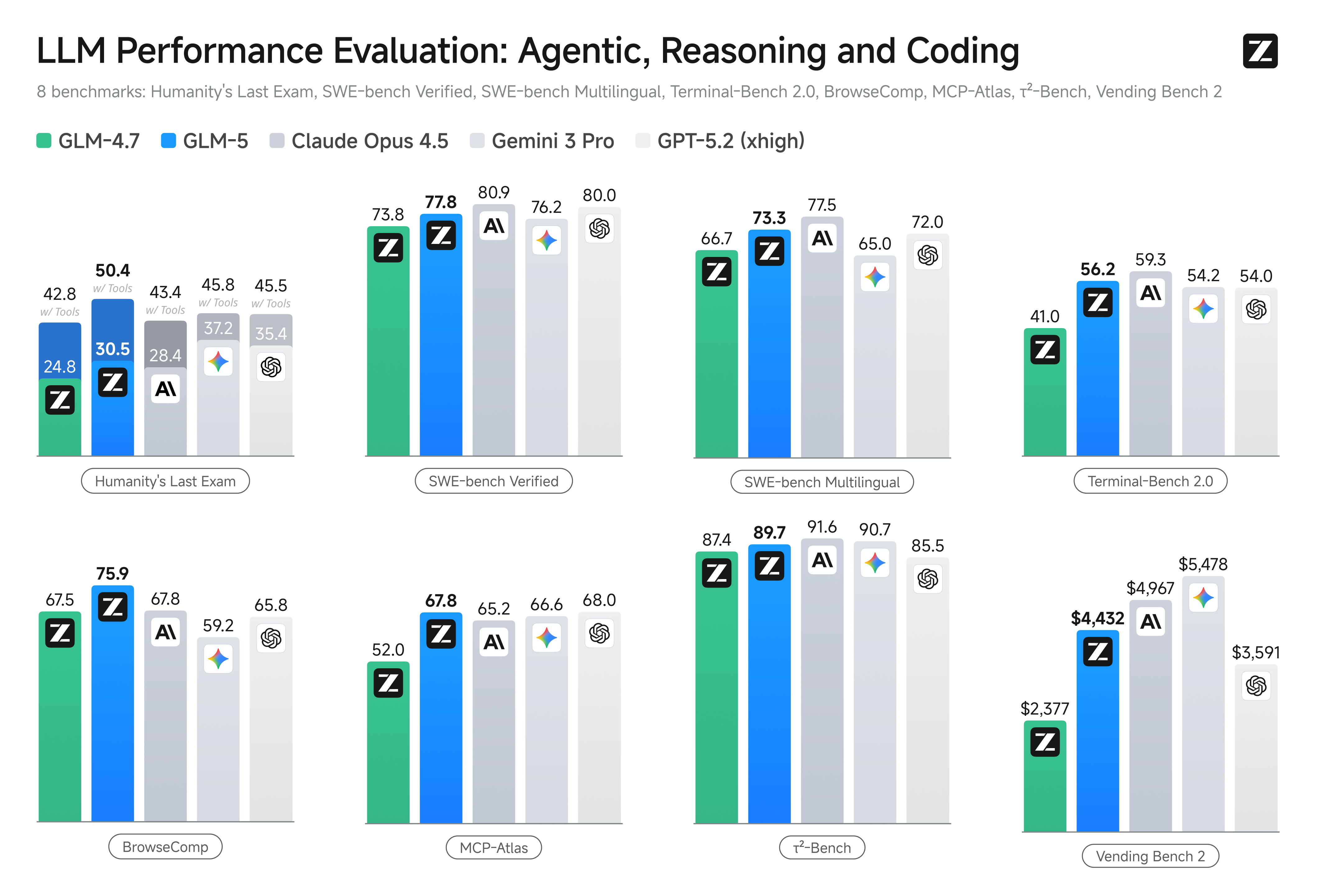
Eksekusi Agentic yang Terintegrasi di GLM API
Logika perencanaan sudah terintegrasi di GLM API sehingga agent dapat menjalankan tugas jangka panjang dan multi-langkah tanpa melenceng dari tujuan. Stabilitas ini cocok untuk pengembangan perangkat lunak otomatis, pipeline riset, dan alur kerja yang tetap koheren melalui banyak langkah.
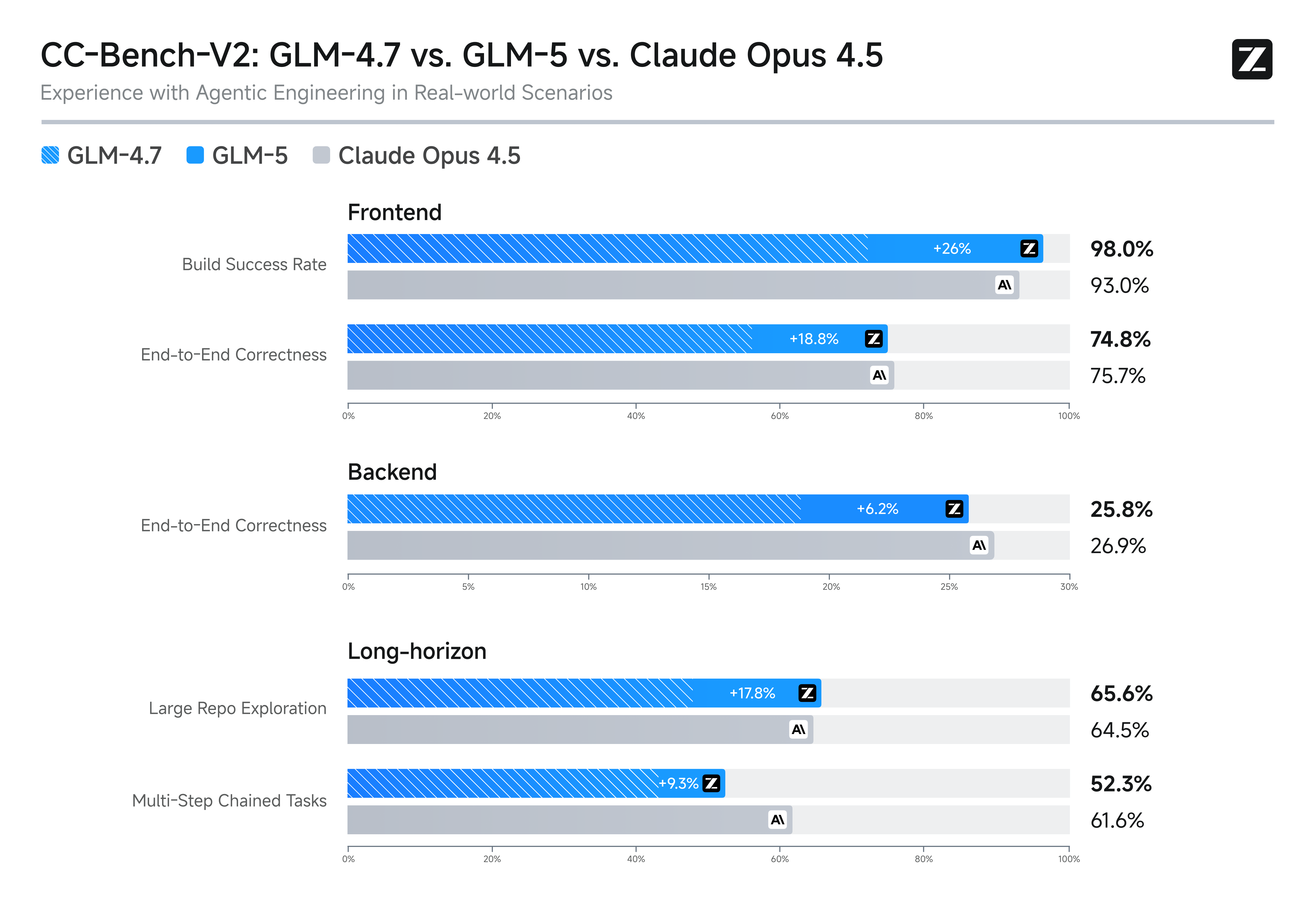
Coding dan Reasoning yang Disetel dengan Reinforcement Learning
Post-training berbasis reinforcement learning mempertajam pembuatan kode dan reasoning algoritmik model jauh melampaui rilis GLM sebelumnya. Developer mendapatkan output full-stack yang lebih andal dan kemampuan pemecahan masalah struktural yang lebih kuat, terutama saat kesalahan logika kecil cenderung saling menumpuk.

Context Window 200K dengan Sparse Attention
Setiap model menangani konteks 200K token atau lebih, dengan output hingga 128K token, dan sparse attention menjaga skala tersebut tetap terjangkau. Seluruh repositori, kontrak panjang, dan ringkasan riset dapat tetap terlihat sekaligus.
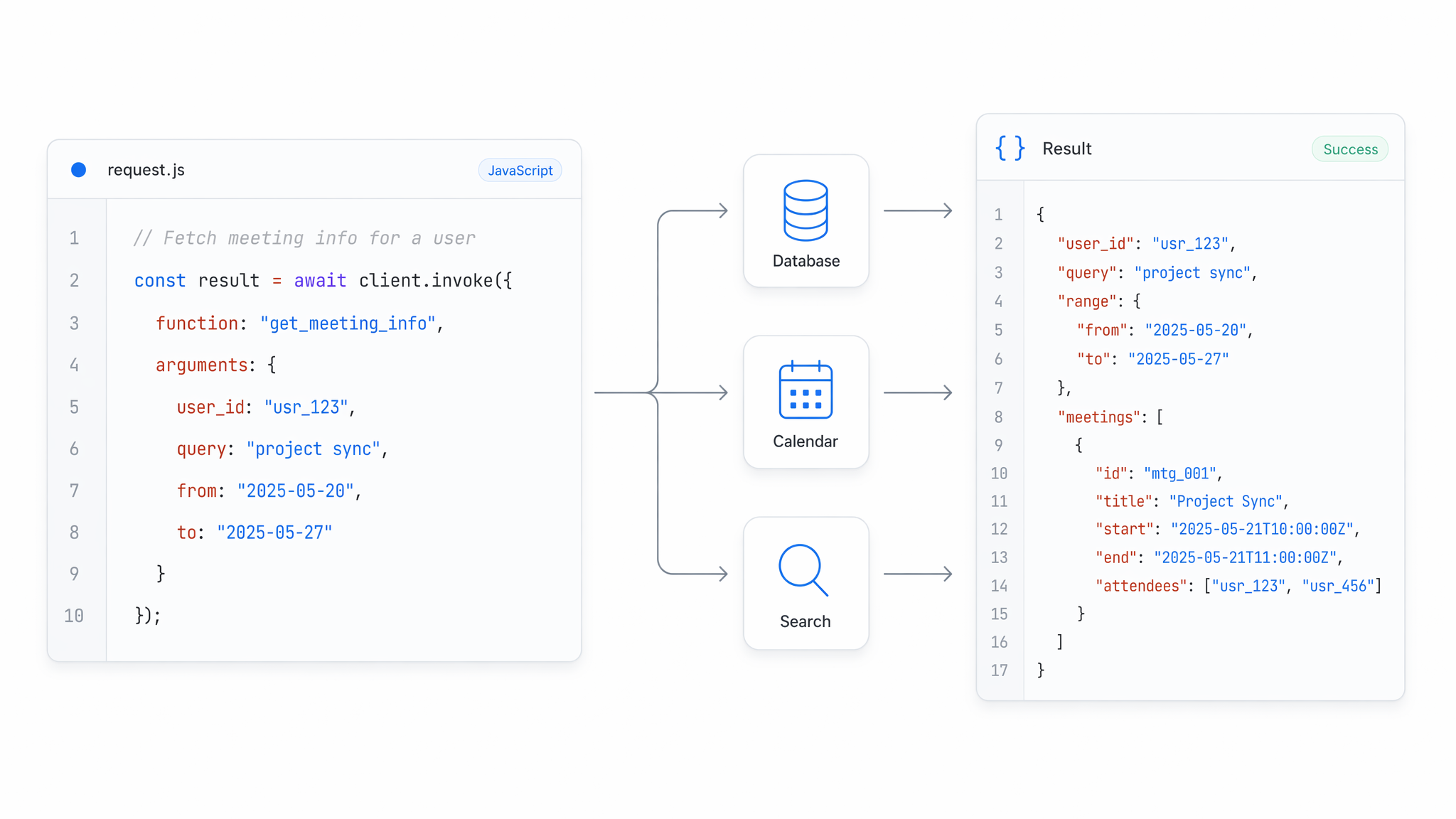
Native Tool Calling Melalui GLM API
Hubungkan tool dan layanan eksternal ke GLM API melalui native function calling dan output JSON terstruktur. Model memutuskan kapan harus memanggil tool, memformat argumen sesuai skema Anda, dan mengembalikan hasil yang dapat dibaca mesin.
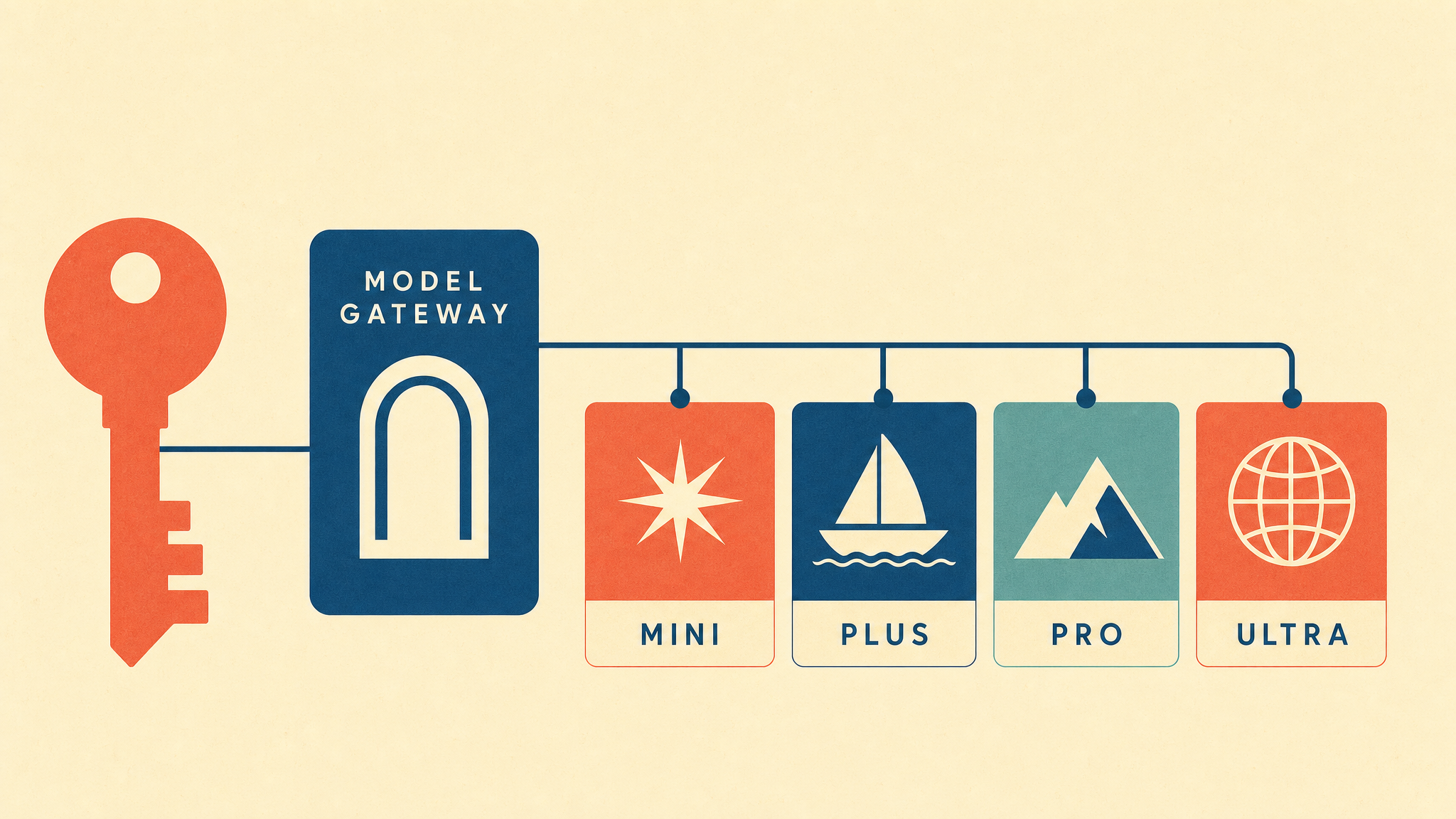
Seluruh Jajaran GLM API dalam Satu Key
Satu key yang kompatibel dengan OpenAI menjangkau seluruh jajaran GLM API, dari flagship GLM-5.2 hingga tier Turbo dan GLM-4.6 yang hemat biaya. Buat prototipe di tier yang lebih ringan, lalu naikkan ke produksi dengan satu baris kode dan harga pay-as-you-go.
GLM API Head to Head: Satu Brief, Tiga Model Dibandingkan
Kirim satu permintaan build melalui GLM API dan lihat GLM 5.2, DeepSeek V4 Pro, serta GLM 5 mengubah instruksi yang sama menjadi halaman interaktif yang berfungsi, sehingga Anda bisa menilai kualitas front-end, logika layout, dan polesan interaksi secara sekilas.
Buat dokumen HTML lengkap, satu file, dan mandiri (semua CSS dan JavaScript inline, sama sekali tanpa dependensi eksternal, tanpa CDN, tanpa URL gambar, tanpa font eksternal) yang merender "Aurora Tuning Console" interaktif — pengalaman WebGL layar penuh berupa langit kutub tengah malam, dengan aurora dihitung secara real time di dalam GLSL fragment shader, tidak pernah dipalsukan dengan sprite, tekstur, atau tumpukan partikel. Kebutuhan rendering inti: render satu quad layar penuh dan lakukan seluruh pekerjaan visual di fragment shader. Aurora borealis harus dihasilkan secara prosedural dari layered fractal value/simplex noise (fbm, 4–6 octaves) yang mengalir dan melengkung seiring waktu melalui uniform clock, menghasilkan tirai cahaya vertikal tinggi yang bernapas, beriak, membentuk simpul, dan menghilang. Modelkan aurora sebagai self-emissive volumetric glow: akumulasikan kecerahan sepanjang falloff vertikal, tambahkan bloom lembut di dasar tiap tirai, dan sebarkan noise debu bintang yang samar melayang di langit atas yang gelap. Susun frame sebagai pandangan minimalis menengadah dengan horizon rendah — kira-kira 80% langit, dengan siluet gelap punggungan gunung dan danau setenang cermin di bagian bawah yang memantulkan aurora dan bintang dalam salinan bercermin vertikal yang beriak lembut. Palet dasar adalah indigo hampir hitam (malam biru-violet pekat); aurora adalah satu-satunya elemen bersaturasi tinggi — tertahan, bercahaya, translusen, tidak pernah mencolok berlebihan. Interaksi (semua real-time, mulus, dan jelas responsif): - Drag mouse melintasi langit "menarik" tirai cahaya seperti kain — masukkan posisi/kecepatan pointer ke uniform shader agar aurora membengkok, meregang, dan mengalir ke arah kursor, lalu kembali perlahan dengan inersia lembut saat dilepas. - Scroll roda mouse mengganti "musim," dengan interpolasi kontinu pita warna aurora melalui emerald green → magenta → indigo (dan kembali), ditampilkan sebagai pergeseran gradien halus, bukan lompatan diskret. - Double-click menyalakan bintang baru di titik tersebut di langit: bintang berdenyut (kecerahan sinusoidal) dan memancarkan pantulan yang sesuai di danau. Dukung banyak bintang sekaligus. - Pertahankan animasi idle yang halus agar tirai cahaya pertama tampak perlahan terbangun dan mengembang saat dimuat — suasana hening, sakral, dingin, dan diam. UI & polesan: overlay kontrol kecil, elegan, semi-transparan di salah satu sudut yang menampilkan musim/warna saat ini dan petunjuk satu baris yang samar untuk kontrol (drag / scroll / double-click), ditata dengan estetika modern bersih bernuansa dingin dengan transisi fade lembut. Buat sepenuhnya responsif: ubah ukuran canvas WebGL dan perbarui uniform resolusi saat window resize agar memenuhi viewport apa pun dan tetap tajam di layar high-DPI. Targetkan 60fps stabil menggunakan requestAnimationFrame. Sertakan pesan fallback yang anggun jika WebGL tidak tersedia. Prioritaskan kualitas matematis aliran noise, volumetric glow, dan kelancaran interaksi — di sinilah model yang mumpuni seharusnya tampak jelas mengungguli model yang lebih lemah.
Generated with GLM 5.2 on Atlas Cloud
Generated with Grok 4.5 on Atlas Cloud
Generated with GLM 5 on Atlas Cloud
Bangun dokumen HTML lengkap, satu file, dan mandiri (semua CSS dan JavaScript inline dalam satu file, benar-benar nol dependensi eksternal — tanpa CDN, tanpa skrip eksternal, tanpa web font, tanpa URL gambar, tanpa aset SVG yang diambil lewat jaringan; hasilkan setiap suara dengan Web Audio API native dan gambar setiap visual dengan CSS serta Canvas/DOM) yang bisa langsung dibuka di browser modern apa pun dan menjalankan drum machine cyberpunk step-sequencer yang dapat dimainkan, dalam bahasa visual neon synthwave 1980-an. Instrumen inti: render step matrix bercahaya berukuran 16 kolom × 6 track yang tersusun horizontal di layar, satu baris per voice — Kick, Snare, Closed Hi-Hat, Open Hi-Hat, Clap, dan Synth Bass. Masing-masing dari 96 cell adalah pad yang dapat diklik; klik mengaktifkan/menonaktifkannya, cell aktif menyala dengan glow magenta-ke-cyan yang jenuh, cell nonaktif tampak sebagai persegi panjang redup dan cekung di atas latar indigo hampir hitam. Pengguna memprogram beat dengan menyalakan cell kolom demi kolom. Dukung click-and-drag painting melintasi cell untuk mengubah banyak cell sekaligus. Audio: sintesis semua drum voice secara live dengan Web Audio API — kick sebagai sine dengan pitch sweep dan amplitude decay cepat, snare dan clap sebagai burst white-noise terfilter dengan envelope, closed dan open hi-hat sebagai noise high-pass dengan decay pendek vs. panjang, dan synth bass sebagai saw/square detuned melalui resonant low-pass filter yang memainkan root note yang dapat dipilih. Jadwalkan step dengan clock look-ahead yang akurat (bukan timing setInterval naif) agar loop tetap sangat stabil pada tempo tinggi. Loop pattern 16-step secara kontinu saat dimainkan. Transport dan kontrol, ditempatkan dalam control bar simetris yang dipin di sepanjang bawah: tombol Play/Stop besar, dial atau rotary knob BPM (dapat di-drag, rentang ~60–200 BPM, default 120) dengan readout numerik live, fader master volume, tombol mute per track, tombol Clear, dan tombol Randomize yang menghasilkan beat yang masuk akal. Playhead bergerak — bilah cahaya vertikal — menyapu grid selaras sempurna dengan audio, dan setiap cell aktif yang tersentuhnya mekar dengan pulsa ripple radial yang memudar. Sertakan tampilan oscilloscope/waveform live yang memvisualisasikan amplitude output master secara real time, bereaksi terhadap suara. Gaya visual: latar gradien indigo-ke-violet pekat hingga terasa hampir hitam, garis grid dan aksen UI dalam electric magenta dan cyan, seluruh luminositas berasal dari self-glow elemen dan bloom hit-flash (box-shadow glow, highlight yang terasa aditif) untuk membangkitkan suasana klub underground larut malam yang berdenyut mengikuti loop. Posisikan grid penuh di tengah layar, jaga layout tetap simetris dengan control bar yang memadatkan bagian dasar, dan buat responsif agar grid menskalakan diri dengan mulus ke viewport yang lebih kecil. Tambahkan scanline animasi halus atau chromatic shimmer untuk atmosfer tanpa mengganggu keterbacaan. Kebutuhan interaksi: semuanya merespons seketika — mengklik pad, menyeret knob BPM dan fader volume, mengaktifkan mute, menekan spasi untuk Play/Stop, serta menekan tombol angka untuk melompat ke root note bass. State (cell mana yang aktif, BPM, volume, mute, status playing) harus dikelola dengan rapi agar UI dan audio tidak pernah keluar sinkron. Interaksi pertama dengan halaman juga harus membuka/melanjutkan AudioContext. Prioritaskan sinkronisasi audio-visual yang ketat, animasi playhead dan ripple 60fps yang mulus, serta hasil musikal yang benar-benar memuaskan sejak awal.
Generated with GLM 5.2 on Atlas Cloud
Generated with Grok 4.5 on Atlas Cloud
Generated with GLM 5 on Atlas Cloud
Tempat Developer Memanfaatkan GLM API
Dari agen coding otonom dan riset jangka panjang hingga produk percakapan dan analisis data bervolume tinggi, GLM API memberi developer satu endpoint yang kompatibel dengan OpenAI untuk membangun software andal berbasis agen.

Agen Coding Otonom dengan GLM API
Dibangun untuk eksekusi tugas otonom, model GLM merencanakan, menulis, dan menyempurnakan kode di berbagai alur kerja multi-langkah tanpa kehilangan konteks proyek. Tim pengembangan mengandalkannya untuk menjalankan bot peninjau PR, asisten refactoring, dan pipeline build.

Riset Jangka Panjang dan Orkestrasi Alur Kerja
Penalaran multi-langkah yang stabil memungkinkan model ini mengurai pertanyaan riset yang luas, memanggil alat eksternal, dan mempertahankan konteks di sepanjang rangkaian panjang tindakan yang saling bergantung. Ini cocok untuk analis dan tim produk yang mengotomatiskan sintesis dari banyak sumber serta operasi lintas platform.

Membangun Antarmuka Front-End yang Rapi
Model GLM mengubah mockup kasar dan deskripsi sederhana menjadi kode antarmuka yang bersih dan responsif dengan sentuhan visual yang matang. Founder solo dan developer yang peka desain dapat merilis prototipe fungsional dan UI produksi jauh lebih cepat.

Produk Percakapan di GLM API
Ingin asisten yang terasa manusiawi? GLM API menghadirkan pengalaman percakapan alami yang didukung penalaran stabil, menjalankan chatbot, copilot dukungan, dan asisten dalam aplikasi yang tetap koheren di sepanjang dialog panjang yang bercabang.

Backend Pemanggilan Tool dan Eksekusi Fungsi
Karena model ini dibangun untuk penggunaan tool, mereka memilih fungsi, memformat argumen, dan merangkai panggilan API di dalam sistem agentic. Engineer menggunakannya untuk menghubungkan GLM ke lapisan orkestrasi, pipeline RAG, dan stack multi-agent.

Skalakan Analisis Data dengan GLM API
Manfaatkan GLM API untuk melakukan penalaran atas dokumen besar, spreadsheet, dan laporan, serta mengekstrak insight terstruktur melalui desain Mixture-of-Experts yang efisien. Ideal untuk tim keuangan, legal, dan operasional yang membutuhkan analisis bervolume tinggi dan dapat diandalkan.
GLM API vs LLM Pesaing: Matriks Spesifikasi dan Harga
Bandingkan setiap model GLM API dengan LLM teks terkemuka di Atlas Cloud berdasarkan panjang konteks, batas output, dan harga bayar sesuai pemakaian yang transparan.
| Model | Jendela Konteks | Output Maksimum | Input ($/1M token) | Output ($/1M token) |
|---|---|---|---|---|
| GLM 5.2 | 1M | 128K | $1.40 | $4.40 |
| GLM 5.1 | 203K | 203K | $1.40 | $4.40 |
| GLM 5 | 203K | 203K | $1.00 | $3.20 |
| GLM 4.7 | 203K | 203K | $0.60 | $2.20 |
| DeepSeek V4 Pro | 1M | 384K | $1.74 | $3.45 |
| Kimi K2.7 Code | 256K | 256K | $0.95 | $4.00 |
| MiniMax M3 | 512K | 512K | $0.60 / $1.20 >512K | $2.40 / $4.80 >512K |
Cara Menggunakan GLM di Atlas Cloud
Mulai dalam hitungan menit — ikuti langkah-langkah sederhana berikut untuk mengintegrasikan dan men-deploy model melalui platform Atlas Cloud.
Buat Akun Atlas Cloud
Daftar di atlascloud.ai dan selesaikan verifikasi. Pengguna baru mendapatkan kredit gratis untuk menjelajahi platform dan menguji model.
Mengapa Menggunakan GLM di Atlas Cloud
Gabungkan model GLM canggih dengan platform akselerasi GPU Atlas Cloud untuk performa, skalabilitas, dan pengalaman pengembangan yang tak tertandingi.
Performa & Fleksibilitas
Latensi Rendah:
Inferensi yang dioptimalkan GPU untuk respons real-time.
API Terpadu:
Satu integrasi untuk GLM, GPT, Gemini, dan DeepSeek.
Harga Transparan:
Billing per token, mendukung mode Serverless.
Enterprise & Skala
Pengalaman Developer:
SDK, analitik data, alat fine-tuning, dan template tersedia lengkap.
Keandalan:
Ketersediaan 99.99%, kontrol izin RBAC, logging kepatuhan.
Keamanan & Kepatuhan:
Sertifikasi SOC 2 Type II, kepatuhan HIPAA, kedaulatan data AS.
GLM API: Jawaban atas Pertanyaan Umum Developer
GLM API memberi developer akses ke rangkaian model bahasa besar open-weight GLM dari Z.ai (Zhipu AI), termasuk GLM-5.2, GLM-5, GLM-4.7, dan GLM-4.6. Model-model ini dirancang untuk coding, penalaran multi-langkah, dan tugas agen otonom. Di Atlas Cloud, Anda dapat mengakses seluruh keluarga model melalui satu endpoint yang kompatibel dengan OpenAI dengan harga pay-as-you-go.
Atlas Cloud menyediakan lini GLM saat ini, termasuk GLM-5.2, GLM-5.1, GLM-5, GLM-5 Turbo, GLM-5v Turbo, GLM-4.7, dan GLM-4.6. Versi flagship ditujukan untuk pekerjaan agentic dan coding yang kompleks, sementara varian Turbo memprioritaskan respons yang lebih cepat dengan latensi lebih rendah. Beralih di antara model-model tersebut cukup dengan mengubah identifier model dalam request Anda.
Daftar ke Atlas Cloud, buat satu API key, lalu arahkan client Anda yang sudah kompatibel dengan OpenAI ke endpoint kami. Karena GLM API mengikuti format request OpenAI, sebagian besar integrasi hanya memerlukan perubahan base URL dan nama model untuk mulai mengirim request. Akses bersifat pay-as-you-go dengan harga per-call yang transparan dan tanpa subscription.
Harga bersifat pay-as-you-go dan ditagihkan per token, tanpa subscription. GLM-4.7 dan GLM-4.6 mulai dari $0.60 per satu juta input tokens dan $2.20 per satu juta output tokens, GLM-5 seharga $1.00 untuk input dan $3.20 untuk output, serta GLM-5.2 seharga $1.40 untuk input dan $4.40 untuk output. Cached input ditagihkan dengan tarif lebih rendah, sehingga mengurangi biaya pada konteks yang digunakan berulang.
Model GLM di Atlas Cloud menawarkan context window besar sekitar 200K tokens, dengan output maksimum mencapai sekitar 131K tokens pada versi flagship. Kapasitas ini cukup untuk memuat seluruh repository, dokumen panjang, atau riwayat agen yang ekstensif dalam satu request. Varian dengan konteks lebih panjang tersedia dalam keluarga GLM, jadi periksa setiap halaman model untuk mengetahui batas pastinya.
Ya. Model GLM mendukung tool dan function calling serta output JSON terstruktur, sehingga dapat langsung masuk ke pipeline agentic dan sistem produksi yang membutuhkan respons machine-readable. Dengan format yang kompatibel dengan OpenAI, GLM API mudah diintegrasikan ke workflow penggunaan tool yang sudah ada.
Model-model ini dibuat untuk programming, penalaran jangka panjang, dan eksekusi agen otonom. Penggunaan umum mencakup analisis kode seluruh repository, prototyping full-stack, serta riset multi-langkah atau otomasi workflow. Seri flagship GLM-5 menangani pekerjaan agentic yang paling menuntut, sementara GLM-4.6 menawarkan keseimbangan yang kuat antara kecepatan dan kapabilitas untuk tugas sehari-hari.
Model flagship GLM diposisikan sebagai alternatif open-weight yang kompetitif terhadap model closed-source terkemuka dalam benchmark coding dan agentic. Daya tarik praktis utamanya adalah biaya, karena harga per-token hanya sebagian kecil dari model proprietary yang sebanding sementara performa programming tetap kuat. Bagi tim yang menimbang anggaran dan kualitas, GLM menawarkan kapabilitas frontier-level dengan tarif lebih rendah.
Ya. Atlas Cloud menyajikan model GLM melalui endpoint yang kompatibel dengan OpenAI, sehingga framework atau SDK apa pun yang menerima custom base URL dan nama model dapat memanggilnya dengan perubahan minimal. Ini memungkinkan Anda memasukkan GLM ke agen tool-calling, coding assistant, dan pipeline orkestrasi multi-langkah yang sudah Anda jalankan. Mulai bangun hari ini.
Ya. Seri GLM dirilis oleh Z.ai (Zhipu AI) sebagai model open-weight dengan lisensi permisif, sehingga banyak dianggap sebagai salah satu opsi open-source terdepan. Di Atlas Cloud, Anda mendapatkan akses terkelola yang siap produksi ke model-model ini tanpa perlu meng-hosting atau memelihara infrastruktur sendiri.
Jelajahi Lebih Banyak Seri
Seedance 2.5
Seedance 2.5 API kini tersedia di Atlas Cloud! Ini memberi pengembang model video terbaru dari ByteDance. Model ini menghasilkan video native hingga 30 detik dalam satu proses dari teks, satu gambar, atau hingga 50 referensi multimodal, dengan audio yang disinkronkan dan teks multibahasa di dalam bingkai. Di Atlas Cloud, Anda dapat mengaksesnya melalui satu kunci, dengan konsistensi subjek dan fisika yang ditingkatkan untuk menjaga koherensi pengambilan gambar panjang.

Wan 3.0
API Wan 3.0 adalah generasi berikutnya dari keluarga video Wan milik Alibaba, yang dibangun untuk mendorong pembuatan format panjang, kontrol multi-referensi, dan kualitas audiovisual ke tingkat yang baru. Atlas Cloud telah meng-host Wan 2.7, 2.6, dan 2.5, dan Wan 3.0 berjalan pada kunci terpadu yang sama tanpa penyiapan terpisah. Mulailah membangun hari ini. Gulir ke bawah ke etalase untuk melihat apa yang dapat diciptakan oleh Wan 3.0.
MiniMax H3
MiniMax H3 adalah keluarga model video MiniMax untuk generasi berbasis teks, gambar, dan referensi. Buat klip berdurasi 5 hingga 15 detik, pandu gerakan dengan frame terakhir opsional, pertahankan subjek dari gambar referensi, atau pilih H3 Developer jika audio yang dihasilkan sesuai dengan alur kerja Anda. Atlas Cloud menghadirkan H3, H3 Fast, H3 Max, dan H3 Developer dalam satu alur kerja API, dengan harga standar mulai dari $0.038 per detik. Mulai membangun hari ini.
Seedream 5.0 Pro
API Seedream 5.0 Pro memberi pengembang model pengeditan gambar yang dapat dikontrol dari ByteDance di Atlas Cloud. Ini menempatkan editan secara presisi dengan jangkar dan koordinat, memisahkan gambar menjadi lapisan yang dapat diedit, menggabungkan banyak referensi, dan mencocokkan warna dan bahan secara persis, dengan teks multibahasa pada 2K dan 3K. Di Atlas Cloud, Anda dapat mengaksesnya melalui satu kunci!
Seedance 2.0
API Seedance 2.0 memberi Anda akses produksi ke model video multimodal milik ByteDance — input quad-modal (teks, gambar, video, audio) dan sistem "Universal Reference" terkemuka di industri yang mengunci komposisi, pergerakan kamera, dan aksi karakter di berbagai bidikan. Integrasikan kontrol tingkat sutradara dengan satu panggilan API, tarif tetap $0,09/dtk, kunci instan, dan tanpa daftar tunggu — didukung oleh waktu aktif dan kepatuhan tingkat perusahaan. Seedance 2.0 Native 4K kini telah hadir!
GPT Image 2.5
Keluarga gpt-image-2.5 dari OpenAI memberi pengembang pilihan Flare dan Sunburst untuk alur kerja gambar produksi. Render pada resolusi arbitrer hingga 3840x2160 dan pilih dari lima tingkat kualitas, termasuk xhigh dan max, untuk memenuhi persyaratan output tertentu. Atlas Cloud menyediakan inferensi REST siap pakai tanpa cold start dan harga standar mulai dari $0.004 per generasi. Mulai membangun hari ini.
GPT Image 2
API GPT Image 2 memberi pengembang akses ke model gambar terbaru OpenAI, penerus GPT Image 1.5. Model ini menghasilkan dan mengedit gambar dengan rendering teks yang akurat di seluruh skrip Latin dan CJK, ditambah komposisi yang kuat untuk poster, mockup, dan infografis. Di Atlas Cloud, Anda dapat mengaksesnya melalui satu API terpadu bersama 300+ model, dengan kredit gratis, waktu operasi 99,99%, dan tanpa memerlukan verifikasi organisasi OpenAI.
Gemini Omni Flash
API Gemini Omni menghadirkan keluarga Gemini Omni Flash multimodal native dari Google DeepMind, termasuk Gemini Omni 1.1 Flash, bagi para developer. Buat video sinematik dengan audio native yang tersinkronisasi, animasikan gambar diam dengan kontrol presisi atas frame awal dan akhir, atau revisi rekaman yang ada melalui pengeditan berbasis teks yang mempertahankan konten yang tidak diubah. Atlas Cloud menyediakan satu kunci yang kompatibel dengan OpenAI, akses terpadu, dan harga transparan bayar sesuai pemakaian. Mulai membangun hari ini.
Grok Imagine
Grok Imagine API mencakup model gambar, video, dan suara xAI, dari Image 2.0 hingga Video 1.5 dan xAI TTS v1. Render gambar 1K atau 2K di seluruh 14 rasio aspek, dorong adegan hingga 15 detik gerakan 1080p, arahkan shot dengan hingga 7 gambar referensi, atau narasikan dalam 20 bahasa. Atlas Cloud menjalankan setiap mode di satu endpoint, harganya bayar sesuai penggunaan mulai dari $0.02 per gambar dan $0.05 per detik. Mulai membangun hari ini.
Model kreatif paling kuat dari Google semuanya tersedia di Atlas Cloud. Veo 3.1 menghadirkan pembuatan video sinematik, Nano Banana 2 memberdayakan pembuatan gambar dengan fidelitas tinggi, dan Gemini membawa kecerdasan multimodal ke setiap alur kerja. Akses rangkaian lengkap model Google melalui satu API key dengan ketersediaan Day-0 dan harga bayar sesuai pemakaian (pay-as-you-go).
Seedance 2.0 Mini
Seedance 2.0 Mini menghadirkan pembuatan video multimodal dari ByteDance ke alur kerja di mana kecepatan dan biaya adalah hal yang paling utama. Model ini memberikan kemampuan inti dari Seedance 2.0 dengan penggunaan sumber daya yang lebih ringan — pembuatan yang lebih cepat, biaya per video yang lebih rendah, dan integrasi API yang sama dengan yang sudah Anda gunakan. Untuk tim yang menjalankan pipeline bervolume tinggi atau pembuatan prototipe dalam skala besar, Mini adalah pilihan default yang praktis.
ByteDance
Dari pembuatan video sinematik hingga penciptaan gambar dengan fidelitas tinggi, model paling kuat dari ByteDance kini tersedia di Atlas Cloud. Jalankan Seedance dan Seedream dalam skala besar dengan harga inferensi terendah dan tanpa biaya overhead infrastruktur.
Artikel pilihan
Panduan, tutorial, dan pembaruan produk untuk membantu Anda memaksimalkan Atlas Cloud.





