Vibe coding is genuinely useful. You describe what you want, the model builds it, you guide the process. For solo developers and small teams, it collapses the gap between idea and working code. The problem is the billing structure that comes with it.
Unlike a traditional API call, which you pay for once and move on, an agentic vibe coding session generates dozens to hundreds of sequential API requests. Each one carries a larger payload than the last. By the time you've finished a meaningful feature, you've paid for the same context information dozens of times over, often without realizing it.
This post covers the five specific patterns that cause vibe coding cost overruns, with real math showing how fast the costs compound, and practical fixes for each. The goal is to help you keep the workflow and drop the bill.
Why Vibe Coding Cost Overruns Hit Harder Than You Expect
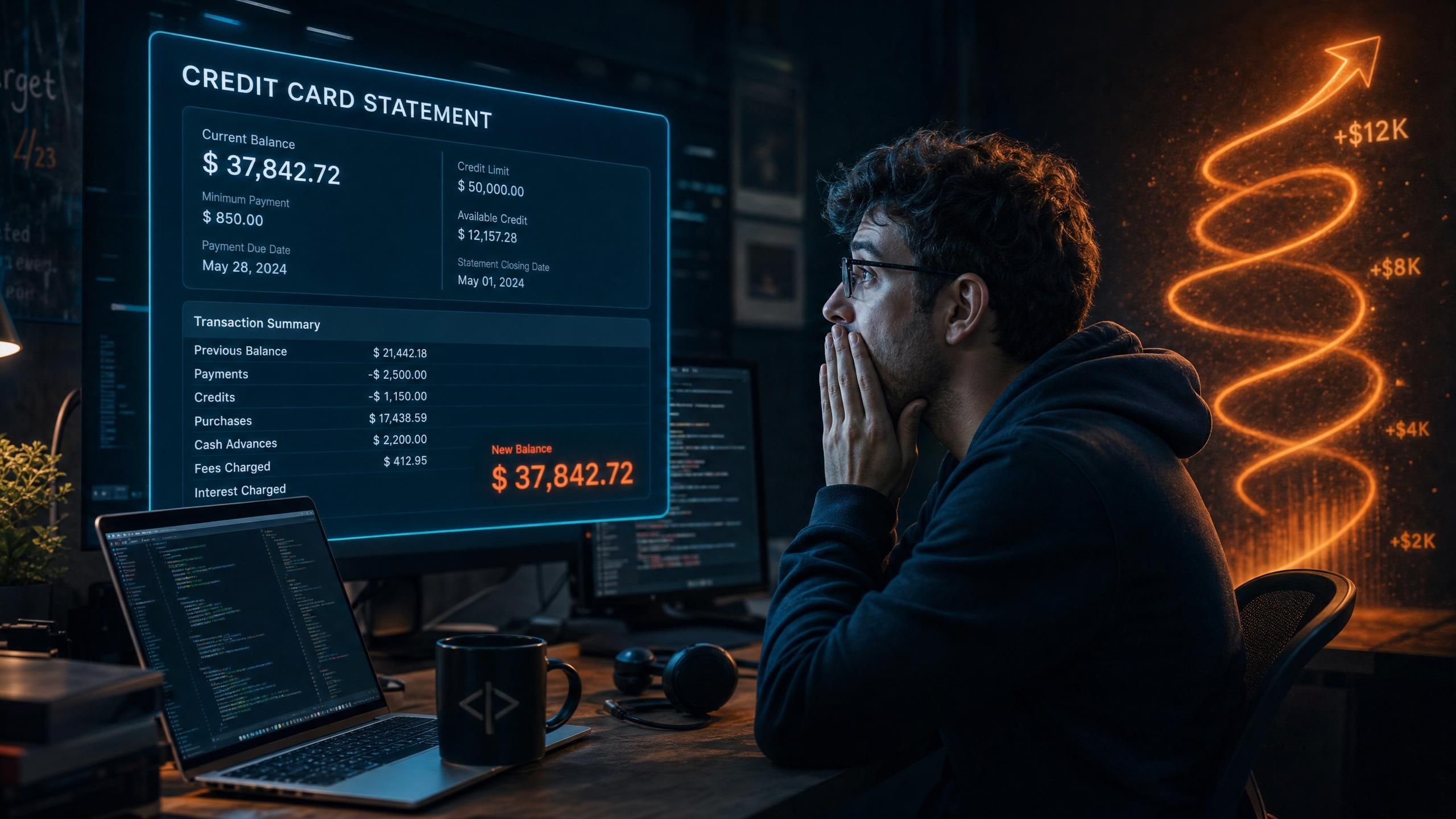
Traditional API usage is roughly predictable: you pay per call, calls are mostly independent, and your bill scales linearly with request volume. Vibe coding breaks all three assumptions.
In an agentic session, requests are not independent. Each call carries the full conversation history as input context. A session that starts with 1,000 tokens of context at step one might have 50,000 tokens of context at step 30, because every tool call result, every error message, every generated code block gets appended to the conversation. You're not paying for 30 independent requests at 1K tokens each. You're paying for a geometric series where each request is larger than the last.
The second problem is that vibe coding specifically encourages imprecise instructions. "Make this more responsive" is a vibe coding instruction. "Adjust the CSS breakpoint at 768px to also handle 1024px tablet layouts and verify it doesn't break the sidebar" is not. The first instruction will almost certainly require multiple back-and-forth exchanges to land on something acceptable. Each exchange in that series carries the full (and growing) context.
Developers in communities like r/LocalLLaMA and r/ClaudeAI have documented this pattern extensively: the first week with a new coding agent tool feels cheap, the second week surprises them, and the third week produces the bill that prompts a serious look at what's actually happening.
The 5 Patterns Behind a Vibe Coding Cost Overrun
Pattern 1: Unbounded Context Accumulation
This is the silent cost driver that affects every agentic session. Using DeepSeek V4 Pro as a reference (input rate: 2.87 credits per thousand tokens, output rate: 5.75), here is what a 30-step session actually costs, assuming context grows by roughly 2K tokens per step as code, errors, and responses accumulate:
| Step | Approx. Context | Input Cost (credits) |
|---|---|---|
| 1 | 2,000 tokens | 5,740 |
| 5 | 10,000 tokens | 28,700 |
| 10 | 20,000 tokens | 57,400 |
| 20 | 40,000 tokens | 114,800 |
| 30 | 60,000 tokens | 172,200 |
By step 30, each individual API call costs 30 times more than step 1, even though you're asking similar questions. You've paid for the same early-session context 30 times. No single call looks alarming, but the cumulative total for input tokens alone across 30 steps exceeds 2.7 million credits for this pattern.
Pattern 2: The Retry Cascade from Vague Prompts
A vague prompt like "fix this so it works" does not fail cleanly. It generates a response, you report back that it's still broken, the model tries again, and again. Each retry carries the full context including all previous failed attempts. A single vague instruction that triggers 8 retry loops at 30K context tokens each costs 8 × 30K × 2.87 = 688,800 credits on input alone, while a precise two-sentence instruction that solves the same problem in one shot costs 30K × 2.87 = 86,100.
The difference is an 8x multiplier from instruction quality, not model choice. This is where most developers lose the most money without realizing it.
Pattern 3: Model-Task Mismatch
Not every step in a vibe coding session needs the same model. Planning an architecture, designing a complex algorithm, or debugging a subtle race condition genuinely benefits from a flagship reasoning model. Writing a docstring, renaming a variable, or adding a log statement does not.
Using DeepSeek V4 Pro (input rate: 2.87) for tasks that DeepSeek V4 Flash (input rate: 0.23) handles equally well means paying 12.5 times more per input token for no quality benefit. In a typical long session, 30-50% of the steps fall into this "simple task" category. Routing those to a flash-tier model cuts a significant fraction of total session cost without touching output quality on the tasks that matter.
Pattern 4: Missing Prompt Caching
Most vibe coding setups use a system prompt: instructions about project context, coding conventions, file structure, or agent behavior. That prompt gets sent on every request in the session.
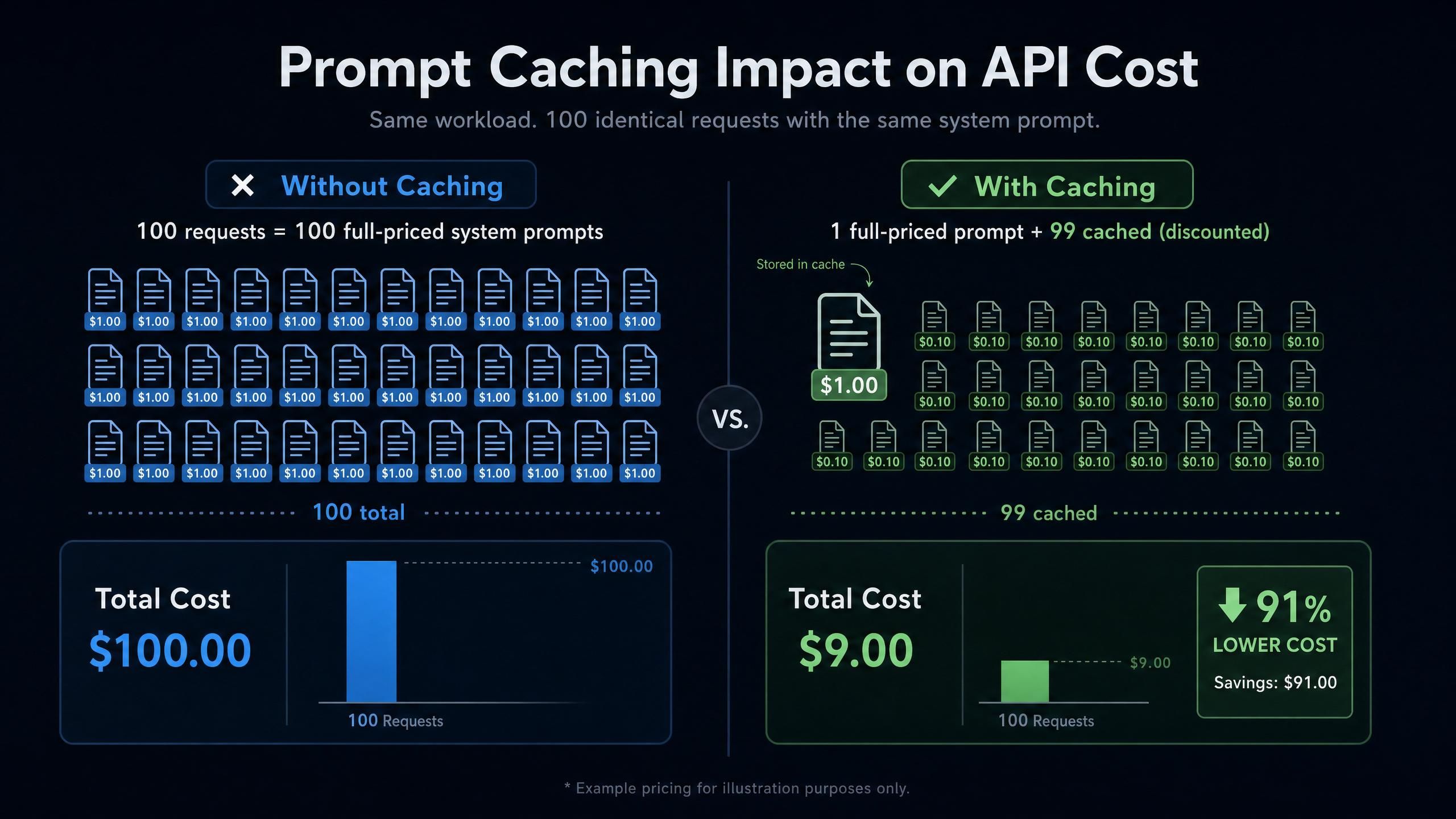
Here's what the math looks like for a 10,000-token system prompt across 100 requests, using DeepSeek V4 Pro rates (input rate: 2.87, cache write rate: 0.231):
Without caching:
100 requests × 10,000 tokens × 2.87 = 2,870,000 credits
With caching (first write + 99 cache reads):
First request: 10,000 × 2.87 = 28,700 credits (cache write)
Requests 2-100: 10,000 × 0.231 = 2,310 credits each × 99 = 228,690 credits
Total: 28,700 + 228,690 = 257,390 credits
That's a 91% reduction on the system prompt cost, just from enabling prompt caching. Most developers working with vibe coding setups have this optimization available and haven't enabled it.
Pattern 5: Invisible Tool Call Overhead
Coding tools like Claude Code and Codex don't make one API call per user instruction. They make several. A single user request typically triggers a planning call, one or more execution calls, observation calls to read file contents or check results, and a final synthesis call. Depending on the tool and the task complexity, one user-visible interaction can represent 5 to 15 API calls underneath.
Each of those calls carries the full conversation context at the time it runs. A coding session that looks like 20 user interactions might actually be 100 to 200 API calls, all at the growing context size. This overhead isn't configurable in most tools, but it's worth understanding because it means your "effective step count" is 5-8x higher than the number of messages you see in the chat window.
Fixing a Vibe Coding Cost Overrun: The High-Leverage Moves
How Context Compaction Prevents Vibe Coding Cost Overruns
The most direct fix for context accumulation is periodic session compaction. Before starting a new subtask within a session, explicitly ask the model to summarize what's been done and what the current state is, then start a new context window anchored to that summary instead of the full history.
Claude Code includes a /compact command that does this automatically. For tools without a built-in compact function, a manual prompt like "Summarize the current state of this project in under 500 words so I can start a fresh context" works. You lose fine-grained history but preserve the relevant state, and the cost difference between a 500-token anchor and a 50K-token full history is substantial.
A practical rule: compact at natural task boundaries. When you finish one feature and start another, compact. When you hit a significant error and want to restart, compact. Treat context as an active cost you manage rather than a passive accumulation you ignore.
Route Tasks to the Right Model Tier
Not every step in a vibe coding session deserves the same model. A tiered routing approach looks like this:
| Task Type | Appropriate Tier | Example Models |
|---|---|---|
| Architecture planning, complex debugging, algorithm design | Flagship / Pro | DeepSeek V4 Pro, GLM 5.1, Kimi K2.6 |
| Standard code generation, refactoring, tests | Mid-tier | GLM 5, MiniMax M2.7, Kimi K2.5 |
| Docstrings, comments, naming, simple completions | Flash / Mini | DeepSeek V4 Flash, MiniMax M2.5 |
The key insight is that "mid-tier" doesn't mean worse for most vibe coding tasks. For a 2,000-line refactor or a standard REST endpoint, GLM 5 at input rate 1.82 handles the job as well as GLM 5.1 at 2.54 for most prompts, at 72% of the cost. DeepSeek V4 Flash at 0.23 is appropriate for a much larger fraction of real vibe coding steps than most developers initially assume.
Switching between models without changing anything else in your setup requires a gateway that handles all of them under one API key, which is the only real friction point. When that friction is removed, you can route on a per-session or even per-task basis.
Enable Prompt Caching for Repeated System Prompts
If you're running Claude Code, Codex, or any coding tool with a consistent system prompt, prompt caching should be one of the first things you configure. The mechanics differ slightly per provider, but the effect is the same: the first time a long context block is sent, it's written to cache at a higher rate; subsequent requests that include the same block pay only the cache read rate.
For a typical 10K-token project system prompt on a session with 50 requests, the difference between cached and uncached is measured in hundreds of thousands of credits. This is not a marginal optimization.
Vibe Coding Cost Overrun and Daily Budget Caps
One fix that doesn't get talked about enough is the daily budget cap as a forcing function.
When a session has no natural stopping point, it tends to keep going. You try one more approach, the model suggests one more improvement, you accept it and find something else to improve. This is the good kind of creative momentum that makes vibe coding appealing. It's also how a casual afternoon session becomes a very expensive one.
A daily credit allowance that resets at midnight changes the psychology. When you know you have a fixed budget for the day, you make more deliberate choices about which tasks to address in the current session and which to defer. The budget constraint often improves prompt quality because vague instructions that burn through credits become a concrete cost.
This is one of the structural advantages of a daily-refresh subscription plan over uncapped pay-as-you-go for consistent vibe coders: the daily limit creates accountability. It doesn't prevent you from continuing work; you can still hold a pay-as-you-go overflow pack for days when you need to push past the daily cap. But it surfaces the cost in a way that uncapped billing doesn't.
A Cost-Optimized Vibe Coding Stack in Practice
Combining the strategies above looks something like this in a real setup.
For the model layer, you want access to multiple model tiers under a single API key and base URL. Switching models then becomes a configuration variable rather than a provider change. Atlas Cloud Coding Plan supports DeepSeek V4 Pro, DeepSeek V4 Flash, GLM 5.1, Kimi K2.6, MiniMax M2.5, and several other models through one endpoint at 45-55% below official API rates. For a vibe coder running multi-model routing, a single subscription handles all model tiers.
For Claude Code, the config in ~/.claude/settings.json assigns different tiers to different model roles:
plaintext1{ 2 "env": { 3 "ANTHROPIC_AUTH_TOKEN": "your-atlas-api-key", 4 "ANTHROPIC_BASE_URL": "https://api.atlascloud.ai", 5 "ANTHROPIC_MODEL": "deepseek-ai/deepseek-v4-pro", 6 "ANTHROPIC_DEFAULT_SONNET_MODEL": "deepseek-ai/deepseek-v4-pro", 7 "ANTHROPIC_DEFAULT_HAIKU_MODEL": "deepseek-ai/deepseek-v4-flash", 8 "CLAUDE_CODE_DISABLE_EXPERIMENTAL_BETAS": "1" 9 } 10}
Here, the Haiku slot maps to DeepSeek V4 Flash for lightweight tasks, and the Sonnet/default slot maps to V4 Pro for complex work. Claude Code uses Haiku for background tasks automatically. You get model routing without writing any routing logic.
For Codex, ~/.codex/config.toml:
plaintext1model_provider = "atlas_coding_plan" 2model = "deepseek-ai/deepseek-v4-pro" 3 4[model_providers.atlas_coding_plan] 5name = "atlascloud" 6base_url = "https://api.atlascloud.ai/v1" 7wire_api = "chat" 8requires_openai_auth = true
~/.codex/auth.json:
plaintext1{ 2 "OPENAI_API_KEY": "your-atlas-api-key" 3}
For OpenClaw, run openclaw onboard, choose QuickStart then Custom Provider, enter https://api.atlascloud.ai/v1 as the base URL, and paste your key.
The Claude Code base URL doesn't take /v1; every other tool does. Getting this wrong is a common setup mistake.
Combine this multi-tier setup with daily credit limits and periodic context compaction, and the cost structure of a vibe coding workflow changes substantially. The sessions stay the same; the bill doesn't.
Vibe Coding Cost Overrun: Common Questions
How much can I realistically save by routing tasks to cheaper models?
It depends on your task mix, but for a typical vibe coding session, 30-50% of steps are simple enough for a flash-tier model. If DeepSeek V4 Flash costs 0.23 credits per thousand input tokens and V4 Pro costs 2.87, routing half your steps saves roughly 60% of input cost on those steps. Combined with the context compaction to limit total context size, total session cost reductions of 50-70% are realistic without changing output quality on the tasks that matter.
Does prompt caching work with all models and tools?
Not universally. Prompt caching support depends on both the model provider and the gateway. For models that support it, the cache_write and cache_read rates in the pricing table are different from standard input rates (significantly lower for reads). Check your provider's documentation for which models support caching and whether it needs to be explicitly enabled in your request headers.
My daily session often hits the context limit mid-task. What's the cleanest way to handle that?
Compact before you hit the limit, not after. Once the model starts losing coherence because the context is too long, you're already past the efficient zone. At natural task boundaries (feature complete, debugging session done, PR ready for review), run a compaction step. Keep a short "state summary" template you paste at the start of each new context window so the model knows the project structure without re-reading it all.
Are there tasks where you should always use the best available model?
Yes. Complex architectural decisions, debugging multi-system interactions, generating code from ambiguous or incomplete specs, and any task where the first draft heavily shapes the downstream work are worth the flagship model cost. The ROI on using V4 Flash for these tasks is poor because the retry cost from a weak first attempt exceeds the input savings. Use the best model when the quality of the first generation is worth paying for.
What's the total realistic monthly saving from combining these strategies?
For a developer running 4-6 hours of active vibe coding per day, the combination of context compaction (reduces average context per call by 40-60%), model routing (routes 30-50% of steps to flash-tier), and prompt caching (reduces system prompt cost by 80-90%) can reduce total LLM spend by 60-80% compared to an unoptimized default setup using a flagship model for everything. That's not a promotional claim; it's the math of the specific inefficiencies described in this post applied consistently.
The Bottom Line on Vibe Coding Cost Overruns
The vibe coding workflow is worth optimizing, not abandoning. The cost overrun problem is structural and solvable, and the solutions are mostly configuration choices rather than fundamental changes to how you work.
Context compaction, model routing, and prompt caching are the three practices that move the needle most. The first is free in any tool that supports a compact or reset function. The second requires a gateway that gives you multiple model tiers under one key. The third requires checking whether your current setup supports it and turning it on.
The combination of these approaches, alongside daily budget visibility, brings vibe coding costs to a level that's sustainable for solo developers and small teams without giving up the workflow.
Token rates and pricing based on Atlas Cloud Coding Plan documentation as of May 2026. Credit calculations use the published input/output multiplier rates and are for illustrative purposes; actual session costs vary based on model, context size, and task mix.





