

We used to think bigger AI always meant better art. But the release of highly optimized models like Qwen Image 2.0 (just 7B parameters) is challenging giants like Flux.2. While Flux dominates cinematic realism, Qwen absolutely nails complex text rendering. Let’s look at how these models compare, and why smart developers are using both instead of choosing just one.
Qwen Image 2.0 vs. Flux.2 (Comparison Table)
| Feature | Qwen Image 2.0 | Flux.2 (Pro/Dev) |
| Creator | Alibaba | Black Forest Labs |
| Parameters | 7B (Lightweight & fast) | 12B+ (Heavyweight) |
| Image Editing | ✅ Built-in (native editing) | ⚠️ Limited / separate tools |
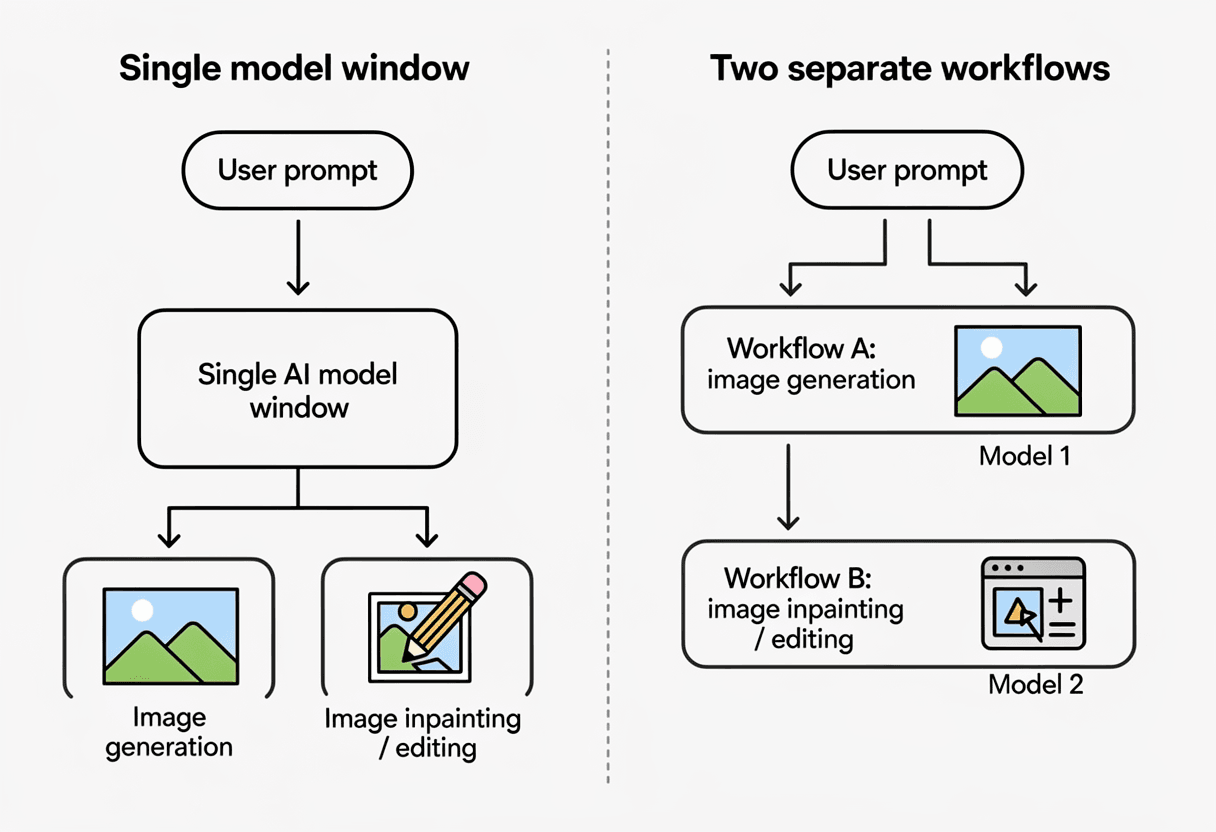
| Gen + Editing | ✅ Unified model | ⚠️ Mostly separate workflows |
| Best For | Text-heavy visuals, infographics, prompt accuracy, editing workflows | Photorealism, cinematic visuals, creative styling |
| Official Price (API) | ~$0.035 per image | ~$0.03 - $0.06 per image |
| Open Source | ❌ Not clearly open | ✅ Partially open (Dev / Schnell variants available) |
| Output Format | Native 2K (2048x2048) | Native 2K+ |
| Reference Images | ✅ Multi-image compositing supported | ✅ Strong multi-reference support |
| Text Rendering | ⭐ Industry-leading****Chinese + English, complex layoutsFlawless (handles 1000-token prompts) | ⚠️ Basic to moderateGood for single words, fails on paragraphsstruggles with long/complex text |
| Speed | Fast for size (efficient 7B model) | some variants very fast, others heavier |
| Image Quality | High + strong prompt adherence + layout accuracy | Visually stunning, highly artistic, very high photorealism + lighting + texture fidelity |
Why Qwen Image 2.0 Beats the Industry Giants
Unmatched Output Quality and Precision
-
Superior Text Rendering
Qwen provides highly reliable text generation and is less prone to layout issues.
-
Infographics
Want a flowchart? It actually draws readable, structured diagrams. This level of spatial reasoning is unprecedented for a model of this size.
-
Stronger Semantic Consistency
It follows complex prompts perfectly. If you ask for a "blue dog on a red rug," it won't accidentally give you a red dog.
-
High-Quality Filtered Training Data
Alibaba aggressively filtered their training images. Cleaner data simply means way sharper output.
Breakthroughs in Architecture and Efficiency
-
7B Efficiency and Speed
This is a true low-parameter high-performance AI. It generates crisp images at lightning speed.
-
Qwen3-VL Encoder – LLM-Level Understanding
It reads your prompt like a smart chatbot, not a basic image generator. It actually gets your context.
-
Lighter Model Architecture
Less bloat means you don't need a massive $30,000 enterprise server to run it.
-
Optimization for Real-World Applications
Developers love it. It's built specifically for apps that need fast, reliable AI image generation at scale.
A Unified Workflow for Creators
-
Unified Generation and Editing Workflow
You don't have to switch tools anymore. Generate an image, then easily edit a small part of it using the exact same model.
-
Handles 1000-Token Prompts
I sometimes write incredibly detailed, multi-paragraph prompts, Qwen remembers every single detail.
How to Choose: Qwen Image 2.0 or Flux.2?
Pitting Qwen Image 2.0 vs Flux.2 isn't about finding one magical tool that does every single thing perfectly. It's about picking the right model for your specific job.
It completely depends on what you are actually building.
Best use cases for Qwen Image 2.0
If your project involves any kind of text or structure, you need Qwen.
Looking at the latest Qwen Image 2.0 benchmarks, it excels here. Use it for heavy text, infographics, UI mockups, and anytime you need blazing-fast AI image generation at scale.
Best use cases for Flux.2
When I need a hyper-realistic portrait that looks like it was shot on a $5,000 DSLR camera, I still fire up Flux.2.
It has this incredible, rich cinematic quality. If you are throwing complex, highly creative ai art prompts at a model just to get a stunning piece of digital art, Flux.2 absolutely shines. It's built for artists who want raw, beautiful aesthetics rather than strict structural layout accuracy. You can see this clearly if you browse major AI art communities like Civitai, where artists push Flux.2 to its creative limits.
Summary Table: Use Case, Winning Model, Reason
| Use Case | Winning Model | Reason for Winning |
|---|---|---|
| Posters / Ads with text | Qwen Image 2.0 | Extremely accurate text rendering, layout consistency, handles long strings |
| Social media creatives | Qwen Image 2.0 | Better composition + typography + prompt adherence |
| UI mockups / product screens | Qwen Image 2.0 | Structured layouts + readable UI text |
| Infographics / diagrams | Qwen Image 2.0 | Spatial reasoning + multi-element organization |
| Meme generation | Qwen Image 2.0 | Reliable text placement + humor alignment |
| Editing existing images | Qwen Image 2.0 | Native edit + generate pipeline (inpainting/outpainting works better) |
| Iterative workflows (prompt → tweak → refine) | Qwen Image 2.0 | Unified editing loop = faster iteration |
| Photorealistic portraits | Flux.2 | Superior skin texture, lighting realism, depth |
| Cinematic / film-style scenes | Flux.2 | Better color grading, dynamic lighting, composition |
| Product photography | Flux.2 | More realistic materials, reflections, shadows |
| Fashion / editorial shots | Flux.2 | Strong aesthetic coherence + style control |
| Concept art / fantasy scenes | Flux.2 | More creative freedom + artistic richness |
| Anime / stylized art | Flux.2 | Better stylistic consistency (varies by checkpoint) |
| Multi-image composition | Flux.2 (slight edge) | More flexible blending of references |
| Local deployment / offline use | Flux.2 | Open variants + runs locally |
| Speed (lightweight setups) | **Flux.2 (Schnell/Klein)**Flux.2 (Fast/Small) | Optimized fast variants available |
| Prompt accuracy (complex instructions) | Qwen Image 2.0 | Strong instruction following |
| Multi-language text (EN + CN esp.) | Qwen Image 2.0 | Industry-leading multilingual rendering |
| Clean geometry / layout-heavy scenes | Qwen Image 2.0 | Better spatial consistency |
| “Looks real at first glance” images | Flux.2 | Photorealism wins |
Qwen Image 2.0 vs. Flux.2 true test showcase
Prompt:
A high-fidelity, native 2K resolution UI mockup of a futuristic AI financial analytics dashboard displayed on a sleek, edge-to-edge tablet. The tablet rests on a modern wooden desk. The background is a photorealistic, shallow depth-of-field view of a sunlit corporate office, with natural light reflecting softly off the tablet's glass screen without obscuring the interface.
The UI design is a sophisticated dark mode with neon cyan and amber accents. Layout and text requirements must be followed exactly:
Left Sidebar: A glassmorphic navigation panel containing the following exact text in a clean sans-serif font, stacked vertically: "Overview", "Market Trends", "Risk Analysis", "Export Data", and "Settings".
Top Header: A bold title aligned to the left that reads exactly: "全球资产表现 Q3 2026". Below it, smaller secondary text reads exactly: "Data synced 2 minutes ago. All neural pathways nominal."
Top Header: A bold title aligned to the left that reads exactly: "Global Asset Performance Q3 2026". Below it, smaller secondary text reads exactly: "Data synced 2 minutes ago. All neural pathways nominal."
Center Infographic: A highly detailed, 3D isometric bar chart comparing three asset classes. The X-axis is clearly labeled "Equities", "Bonds", and "Crypto". The Y-axis has visible tick marks labeled "0K", "50K", and "100K". Floating directly above the tallest bar (Crypto) is a glowing UI tooltip containing the exact text: "+124.2% YTD Growth".
Right Panel (Heavy Text Area): A distinct, structured text box containing a multi-line market summary. The text must be perfectly legible, maintain line breaks, and read exactly:
"MARKET SUMMARY REPORT
Volatility index has dropped by 4.2 points.
Tech sector shows strong resilience.
Projected Q4 growth remains stable at 8.7%.
Recommendation: Hold current positions."
Bottom Footer: Minimalist, perfectly centered text reading exactly: "Confidential & Proprietary | Powered by Qwen Engine V2.0"
The overall image must seamlessly blend the crisp, perfectly spelled vector-style UI graphics with the photorealistic environmental lighting.
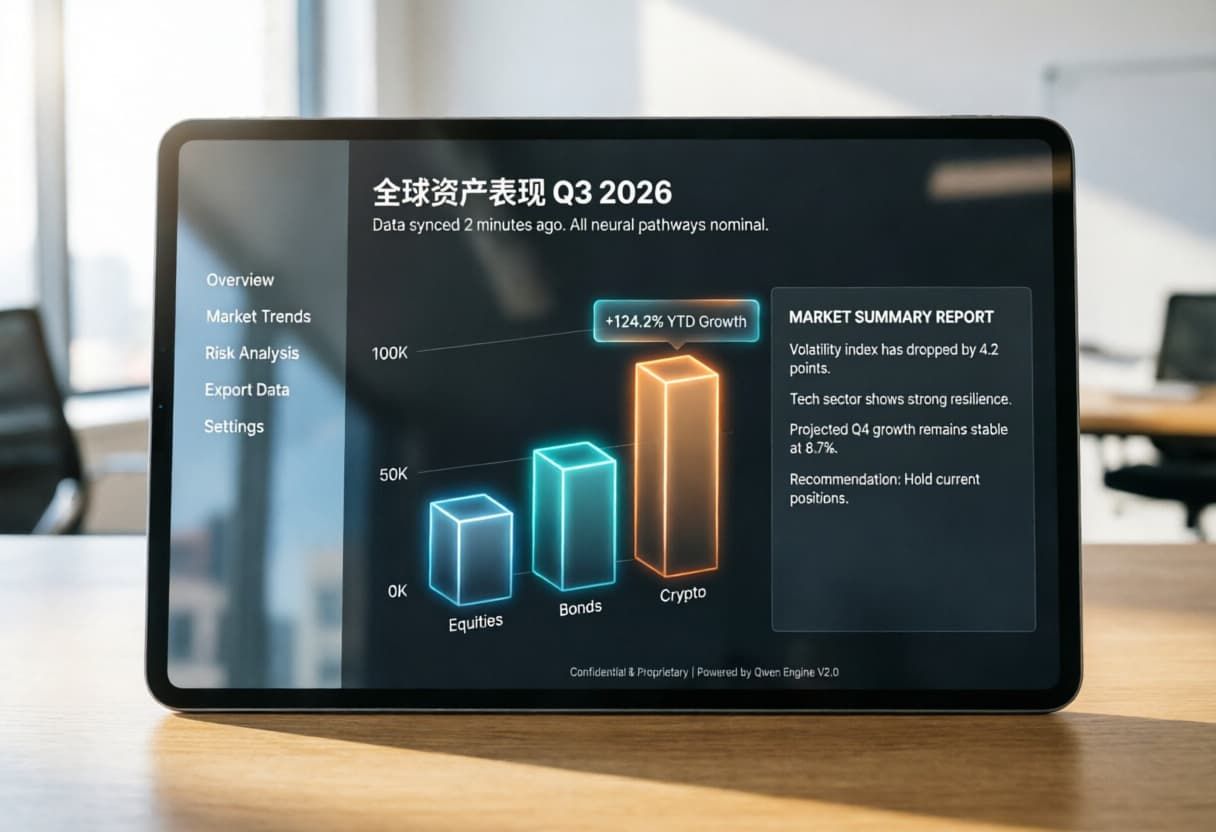
Generated by Qwen Image 2.0
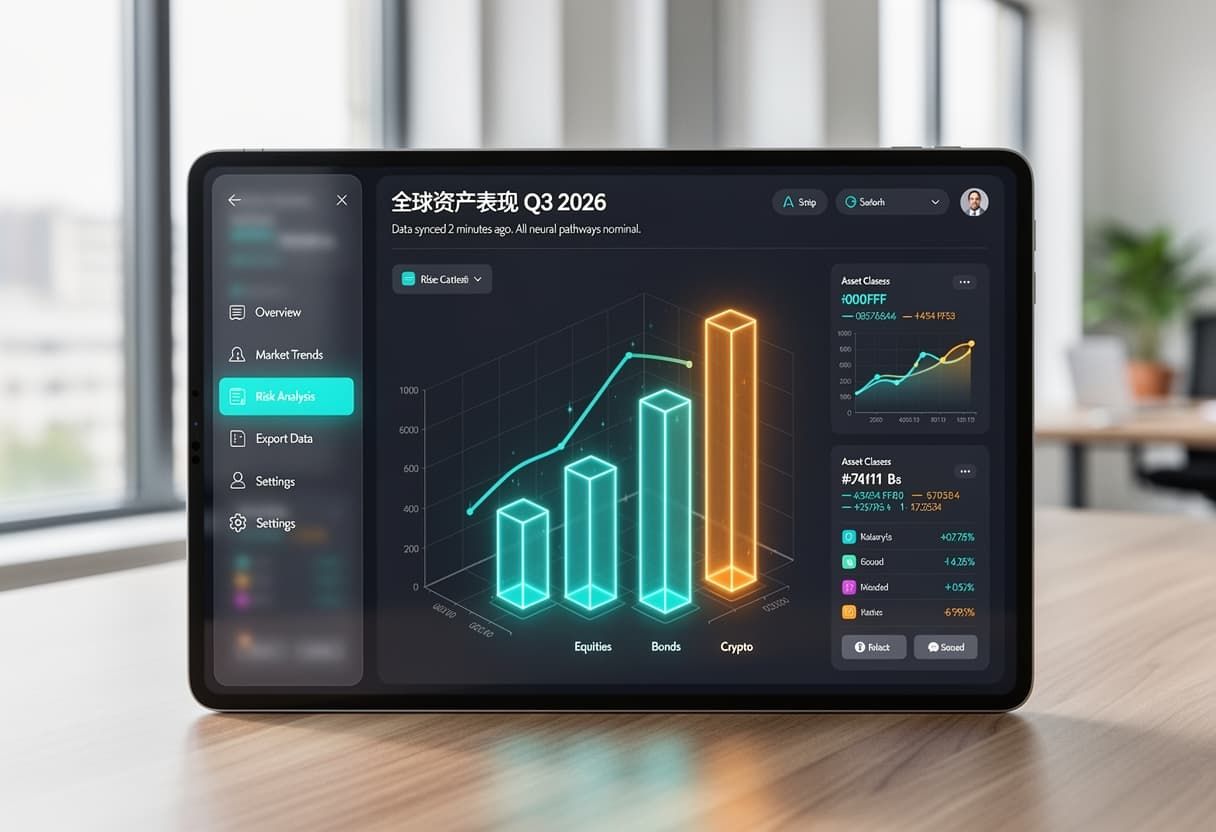
Generated by Flux.2
Evaluation report
Generated by Qwen Image 2.0: Excellent fidelity to the prompt, text accuracy, and UI integration with photorealistic environment. This is closer to a production-ready visual.
Generated by Flux.2: Good attempt at futuristic aesthetic, strong neon, but fails on exact text alignment and Y-axis scale. Suitable for conceptual mockups.
Business Perspective: Why API Aggregation Is the Winning Strategy
I see developers constantly stressing over which model to commit to. But honestly, hardcoding your application to a single AI provider creates an architectural bottleneck.
Lower Cost + Faster Speed = Higher Profit Margins
When you handle massive AI image generation for thousands of users daily, speed and server costs are literally the difference between a profitable app and a dead startup. You can read more about how heavy AI compute costs are killing apps on sites like TechCrunch. Staying lean is mandatory.
Why Choose Just One? Scale Across Multiple Models
Stop treating the Qwen Image 2.0 vs Flux.2 debate like a war. You don't actually have to pick a side.
Smart businesses use API aggregation platform like Atlas Cloud. It sits directly between your app and the AI models, acting like a smart traffic cop.
If your user gives you a complex AI prompt asking for a highly readable flyer made with Qwen Image 2.0, and one second later another user asks for a highly realistic cinematic photo made with Flux 2, you can simply switch the Atlas Cloud API call from Image 2.0 to Flux 2, make a quick instruction adjustment, and seamlessly complete both tasks — no more headaches over complicated model API connections.
Atlas Cloud Text-to-Image API Usage Code example
plaintext1import requests 2 3response = requests.post( 4 "https://api.atlascloud.ai/api/v1/model/generateImage", 5 headers={ 6 "Authorization": "Bearer your-api-key", 7 "Content-Type": "application/json" 8 }, 9 json={ 10 "model": "Qwen-Image-2.0", 11 "prompt": "A serene Japanese garden with cherry blossoms, watercolor style" 12 } 13) 14 15result = response.json() 16prediction_id = result["data"]["id"] 17print(f"Prediction ID: {prediction_id}")
Qwen Image 2.0 7B model price is cheap, but somehow just as effective. Qwen is incredibly well suited for scaled API calls. However, combining it with other giants via an aggregator API is the ultimate growth strategy.
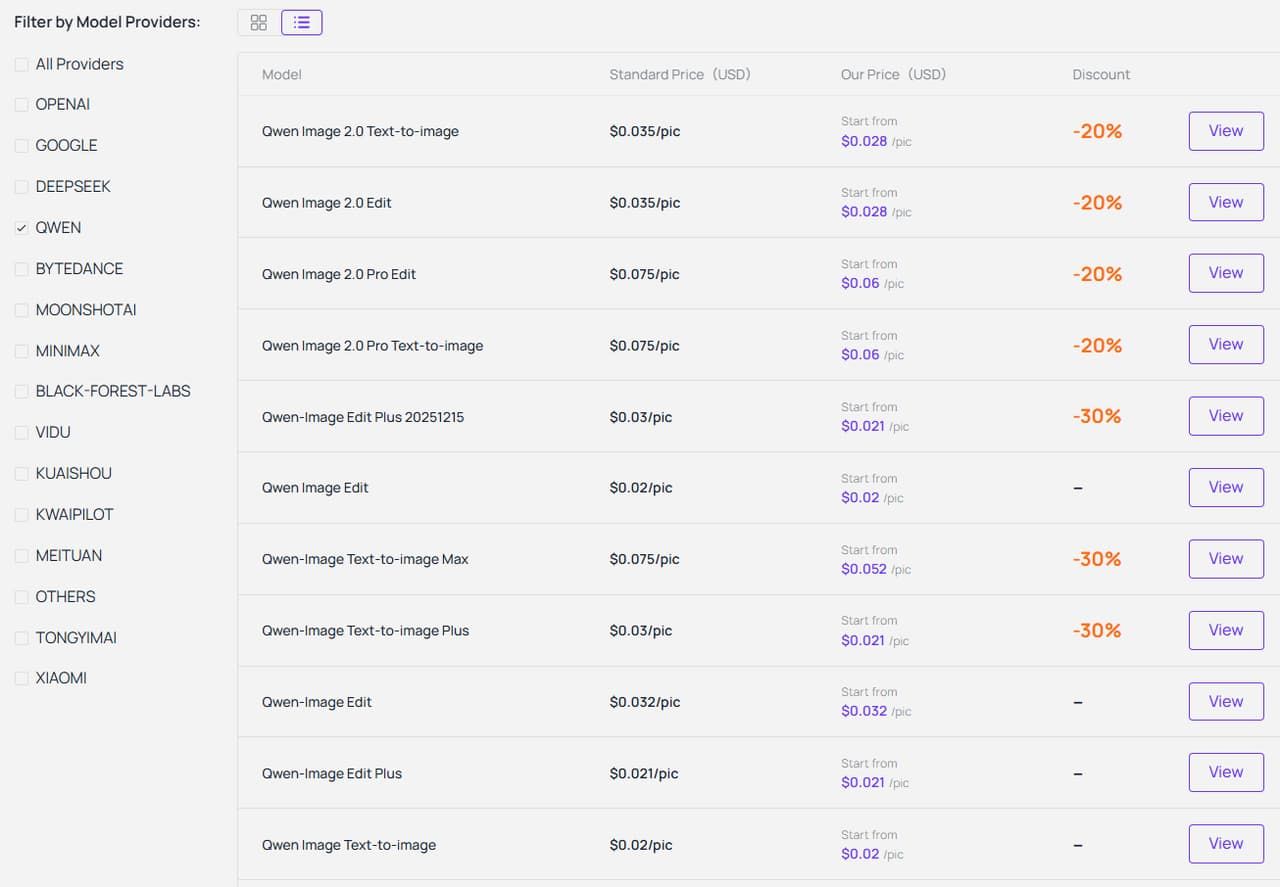
Atlas Cloud prices are usage‑based with no required subscription — you pay per call to the API.
*Note: The prices shown here are the prices at the time the article was written. The actual price is subject to the price at the time of transaction.
💰 Monthly Cost Simulator
| Images / Month | Official Price ($0.035) | Atlas Cloud Price ($0.028) | Savings (%) |
|---|---|---|---|
| 1,000 images | $35.00 | $28.00 | ~20% |
| 10,000 images | $350.00 | $280.00 | ~20% |
| 100,000 images | $3,500.00 | $2,800.00 | ~20% |
Conclusion – Strategic Takeaways
Efficiency + Synergy > Scale
The era of "bigger is better" is over. We are in a new phase now. Cost-effective models like Qwen Image 2.0 deliver the absolute best ROI for developers. A multi-model strategy via Atlas Cloud aggregator API, you get Qwen's brain for text and layouts, plus Flux.2's cinematic flair, without the headache of managing multiple servers, It is clearly the future of this industry.
Stop managing multiple API keys. Sign up for Atlas Cloud today and get instant access to Qwen, FLUX, and dozens of other top-tier models with a single line of code.
Qwen Image 2.0 and Flux.2 FAQ
Is Qwen Image 2 open source?
No, Qwen Image 2.0 (Qwen-Image-2.0) is not open source. Its announcement page tag changed from "Open-Source" to "Release," confirming it's closed-source and currently available only via API. You can access it through the Atlas Cloud API for convenient, scalable image generation and editing.
How much does Qwen Image 2.0 cost?
If you use an official cloud API, expect to pay roughly $0.035 per image. Because it is a true low-parameter high-performance AI, it is significantly cheaper to run than its massive competitors. Use Atlas Cloud aggregator API can help you keep these costs as low as possible, expect to pay only about $0.028 per image.
Who makes Flux AI?
Flux.2 is created by Black Forest Labs. They are a highly respected German AI startup. They focus heavily on stunning, hyper-realistic cinematic visuals.
How much RAM is needed for Flux.2?
The massive, uncompressed Flux.2 Max model demands a crazy 90GB of VRAM. Most normal consumer PCs simply cannot handle that. However, if you use quantization (which basically compresses the model) or run their smaller 4B version, you can scrape by with just 8GB to 12GB of VRAM. Honestly, to avoid hardware headaches entirely, it is much easier to just run Flux.2 through a cloud API.





