Seedream 5.0 Pro vs Midjourney V8.1: Where Each One Actually Wins
Here's a strange fact about the internet's two loudest image-model fanbases: they don't talk to each other. ByteDance shipped Seedream 5.0 Pro on July 8, 2026. Midjourney made V8.1 its default model on June 10, 2026. Two flagship releases, one month apart, and each one picking a different rival to fight.
This article does. It pulls verified pricing from both companies, the community threads where each model's real reputation lives, and the spec sheets behind V8.1 and 5.0 Pro. Where Midjourney wins, that gets said plainly. Where it doesn't, same rule.
Key Takeaways
- Midjourney is subscription only: $10 to $120 per month across four tiers, per Midjourney's official plan documentation (2026). Seedream 5.0 Pro bills per image, from $0.054 on Atlas Cloud.
- Community consensus splits cleanly: Midjourney keeps the aesthetics crown, Seedream 5.0 Pro takes realism, prompt precision, and editing control.
- Character consistency is Seedream's cleanest win: its Edit mode holds identity across up to 10 reference images, while Midjourney V8.1 is still rebuilding the V7 consistency tools it launched without.
- Midjourney still publishes no official API. Both models run behind one key on Atlas Cloud, where a four-image Midjourney V8.1 run costs $0.086.
Seedream 5.0 Pro and Midjourney Are Arguing With Different Rivals
Each one picked a different fight. We read every comment in the four biggest Seedream 5.0 launch threads in early July 2026: 190 comments across r/singularity, r/OpenAI, r/ArtificialInteligence, and r/GenAI4all. Exactly two mentioned Midjourney. The rest argued about Google's Nano Banana line.
The silence runs both ways. We also counted the recommendation threads on the Midjourney side, including a 27-comment r/SaaS thread hunting for Midjourney API alternatives. Across 48 comments in three "best Midjourney alternative" discussions, Seedream came up zero times.
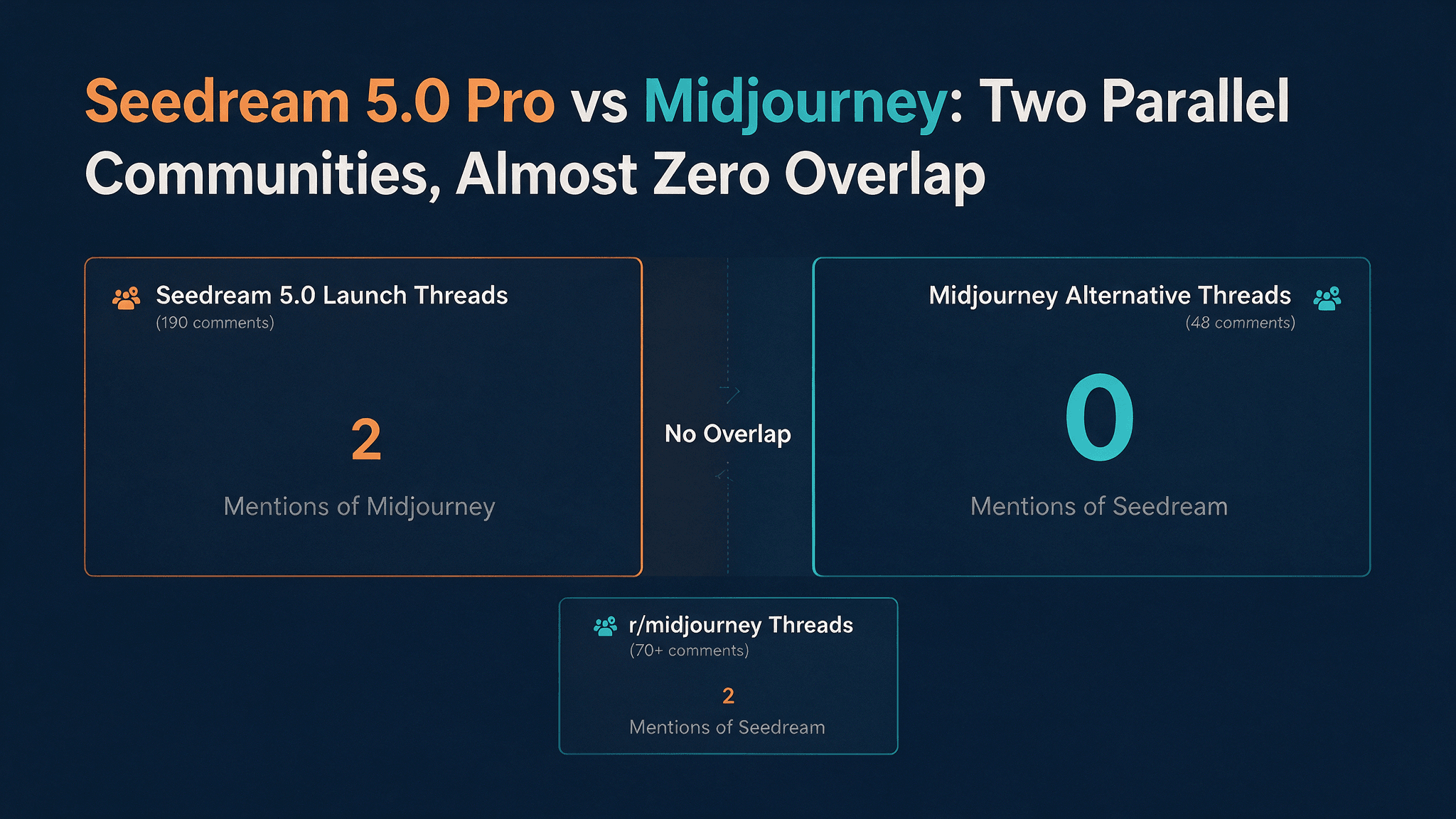
The one thread where they actually collide sits under a Seedream 5.0 breakdown on r/OpenAI. One camp argued Midjourney only wins on stylized work now, and that it still needs workarounds for character consistency. The other camp pushed back: nobody brings up Midjourney anymore, yet its aesthetics still beat everyone. Both takes are right. That's the whole comparison, and the rest of this article is the evidence.
How Do Seedream 5.0 Pro and Midjourney V8.1 Compare on Specs and Pricing?
They're built for different buyers. Midjourney sells a $10 to $120 monthly subscription, per the official Midjourney plan comparison, and every generation returns a four-image grid. Seedream 5.0 Pro bills per single image, from $0.054, with no subscription attached.
| Seedream 5.0 Pro | Midjourney V8.1 | |
|---|---|---|
| Developer | ByteDance | Midjourney |
| Became available | July 8, 2026 | Default model since June 10, 2026 |
| Output per run | 1 image, 1.5K and 2K tiers | 4 images, native 2K HD |
| Reference images | Up to 10 with identity preservation | Style reference; image prompts restored in V8.1 |
| In-image text | 15 native languages | Improved via quoted strings, English-centric |
| Layered output | Yes, day-one layer separation | Not published |
| Pricing model | Pay per image | Subscription, $10 to $120/month |
| Price on Atlas Cloud | $0.054 per image, 1.5K or 2K tier | $0.086 per four-image run |
| Official API | Yes, API-first | None published |
Do the per-picture math and Midjourney's grid looks cheap: $0.086 for four images works out to about $0.021 each. But those four are variations of one prompt, not four controlled results. Seedream's $0.054 buys one image that followed instructions the first time. Which unit of value matters depends entirely on whether you're exploring or shipping.
Both models in this comparison run on Atlas Cloud, the multimodal inference platform where we watch this matchup play out in real workloads daily. The ByteDance model family page carries the full Seedream line alongside the Seedance video models, and the Seedream 5.0 Pro playground lets you rerun every claim in this article against your own prompts before writing a line of integration code. Midjourney V8.1 is there too, under a listing name this article unpacks below.
Midjourney's Aesthetic Edge vs Seedream 5.0 Pro's Realism
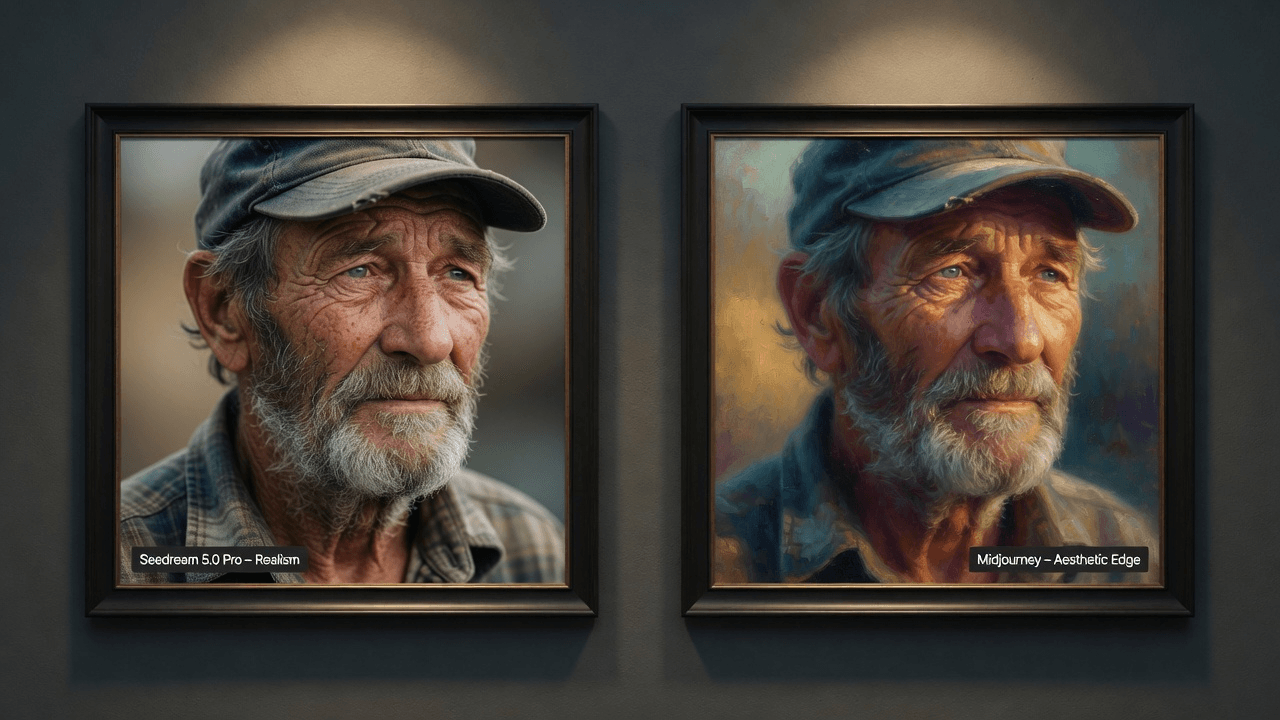
Midjourney still owns the look. Its defining method is a human-preference aesthetic tuning loop layered with per-user personalization, and even the pro-Seedream side of that r/OpenAI thread conceded stylized work to Midjourney. If your deliverable is mood, atmosphere, or a signature visual identity, Midjourney remains the reference point.
Seedream 5.0 Pro wins the opposite brief. ByteDance's model card leads with photorealistic detail, stronger prompt adherence, and refined typography across 15 in-image text languages. The community reads it the same way: realism and instruction-following went to the newer models, and Midjourney's weaker prompt understanding is acknowledged even by its defenders.
There's a structural reason the gap won't close by itself. Midjourney tunes toward what humans rate as beautiful, prioritizing visual appeal over literal fidelity to the prompt. That's a deliberate design choice, not a bug. It's also why Midjourney publishes no quantitative benchmarks or arena scores for V8.1, so every aesthetic claim stays qualitative.
Independent film tests make the split concrete. Filmmaker Christopher Gwinn ran Seedream 5.0 Pro through his standard Giallo chase-scene test on launch day, probing characters in motion, cinematic lighting, and filmic simulation. His follow-up verdict was blunt: too artificial for vintage cinematic work, with unmotivated lighting, hallucinated details, and mangled hands. Period looks and film-grain storytelling stay Midjourney territory for now.
One caveat cuts against Seedream here. V8.1's from-scratch GPU rewrite made Midjourney roughly four to five times faster by its own account, with native 2K output and no upscaling pass. Early testers feel that gap from the other side: one launch-week X test of Seedream 5.0 Pro called it painfully slow and, against expectations, found its moderation stricter than Google's Nano Banana models. For rapid visual exploration, speed is a quality of its own. Fifty beautiful wrong answers can be worth more than five correct ones when you don't yet know what you want.
Can Midjourney Match Seedream 5.0 Pro on Character Consistency?
Not right now, and this is the sharpest edge in the whole comparison. Midjourney V8.1 shipped without Omni Reference and Character Reference, the V7 tools users relied on to keep a face stable across generations. They're listed among the capabilities still being restored. Seedream 5.0 Pro Edit accepts up to 10 reference images while preserving identity, lighting, and color.
Reddit documented this pain before either model launched. A 290-upvote r/midjourney thread asked how to regenerate the same character with any regularity, with the poster resorting to ever-longer prompt descriptions. One commenter's answer pointed across the fence: "Seedream 4.0 is far better at it." That was the previous Seedream generation, before 5.0 Pro raised the reference count to 10.
The envy is explicit. Another r/midjourney thread is literally titled as a wish that Midjourney could do what Nano Banana Pro and Seedream already do, with consistency named as the missing piece.
| Consistency toolkit | Seedream 5.0 Pro | Midjourney V8.1 |
|---|---|---|
| Reference images per job | Up to 10 | Image prompts and style reference |
| Character reference feature | Identity preservation built into Edit | Not yet restored from V7 |
| Post-generation editing | Instruction-based edit, no full reroll | Re-run or vary the grid |
| Layer separation | Yes, editable layers at generation | Not published |
Editing compounds the gap. Instead of rerolling a near-miss, Seedream 5.0 Pro takes follow-up instructions against the existing image, a workflow covered in depth in the Seedream 5.0 Pro interactive editing guide. Midjourney's loop still centers on regenerating and picking the best of four.
What About API Access for Midjourney and Seedream 5.0 Pro?
Seedream 5.0 Pro launched as an API product first, and the design shows it. Every request returns exactly one image, no four-way grid to sort through, which keeps cost per usable asset predictable for a pipeline instead of a browsing session. A built-in prompt-optimization mode rewrites terse input into a fully specified generation instruction before it hits the model, and the endpoint takes any aspect ratio from 1:16 to 16:1, returning JPEG or PNG as a hosted URL or Base64 string. That's enough for a production system to consume without touching the output first.
The pricing tracks the same logic. From $0.054 per image, the same API contract covers a fast 1.5K tier sized for high-volume drafts and a premium 2K tier sized for finished deliverables, so a pipeline can escalate resolution mid-project instead of re-integrating a different model. At the base tier, $10 runs roughly 185 generations on Atlas Cloud, no monthly reset and no expiration date on unused credit.
Midjourney's side of this is thinner. It has never published an official public API, one reason V8.1 barely appears in third-party evaluation arenas, and demand is loud enough that entire threads exist just to route around it, which is exactly what that 27-comment r/SaaS discussion was doing. An indirect route does exist: Atlas Cloud lists Midjourney V8.1 as Youchuan V8.1 at $0.086 per four-image run, marketed as a "Midjourney China Lab" though that branding isn't independently confirmed by Midjourney itself.
How to Start Generating with Seedream 5.0 Pro on Atlas Cloud
Two ways in, neither gated behind a Discord invite or a monthly commitment. The fastest is the browser playground referenced earlier in this article, where you can test prompts, reference images, and resolution tiers with no code.
For anything you plan to automate, the API path is three steps. First, create an account at Atlas Cloud's console and generate a key from the dashboard.
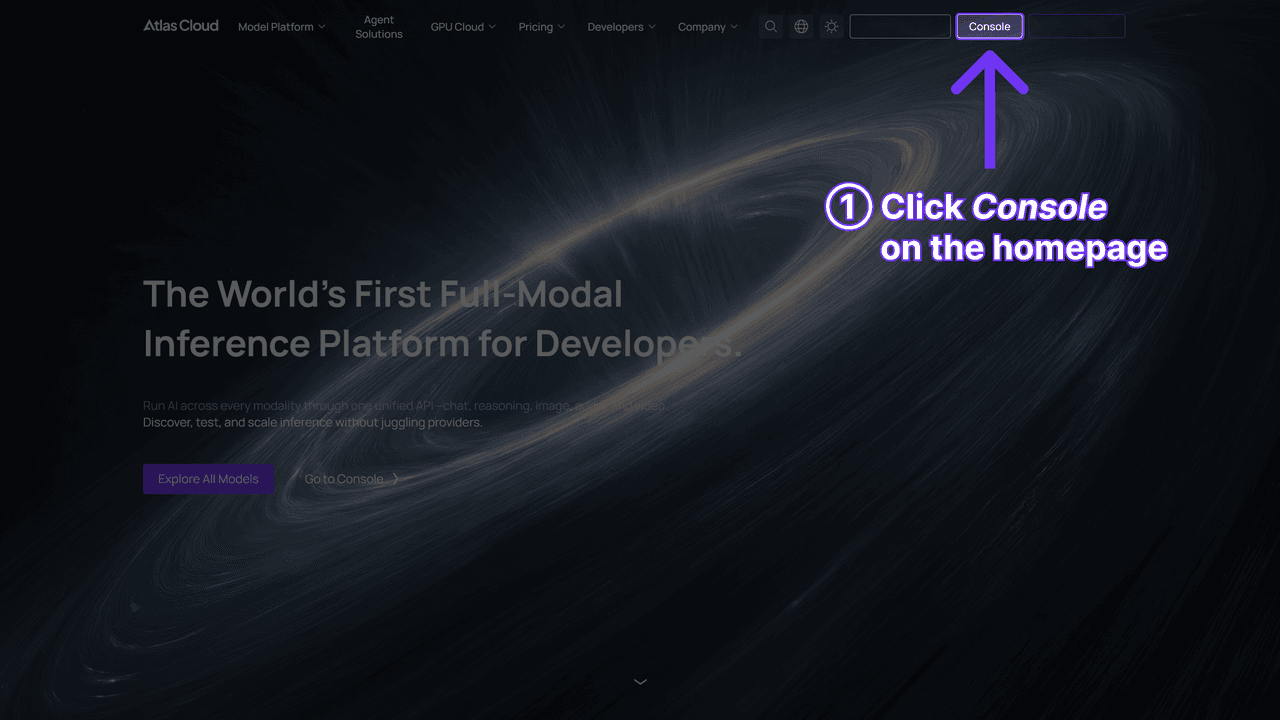
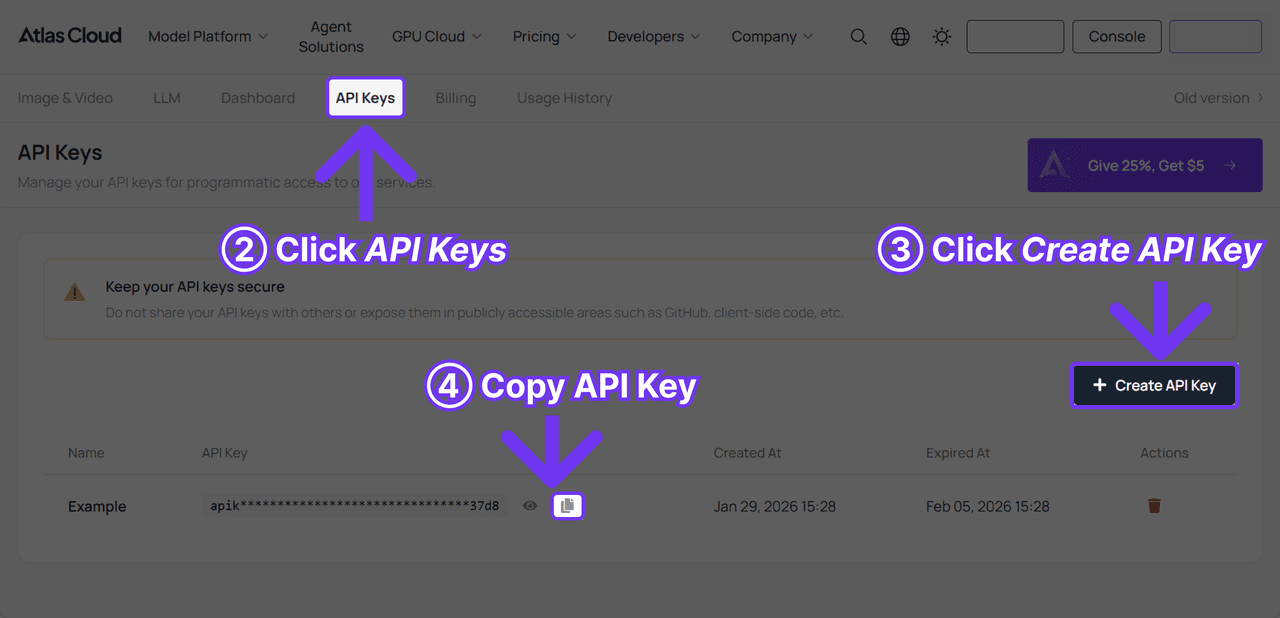
Second, check the Atlas Cloud API documentation for the Seedream 5.0 Pro endpoint's request parameters, authentication header, and response format. Third, send a request with your prompt, resolution tier, and any reference images attached.
The part worth knowing before you build: that same key calls every model in Atlas Cloud's catalog. Testing a different model later is a one-line change to the model name in the request body, not a new integration to write.
The Real Answer: Run Midjourney and Seedream 5.0 Pro Together
The most experienced users already do. In a 46-comment "Future of Midjourney?" thread, a book-cover designer who has used Midjourney daily since v3 described lowered expectations and a tool being outpaced, yet still recommended Seedream as a companion to Midjourney rather than a replacement. That's the honest verdict of someone paying for both.
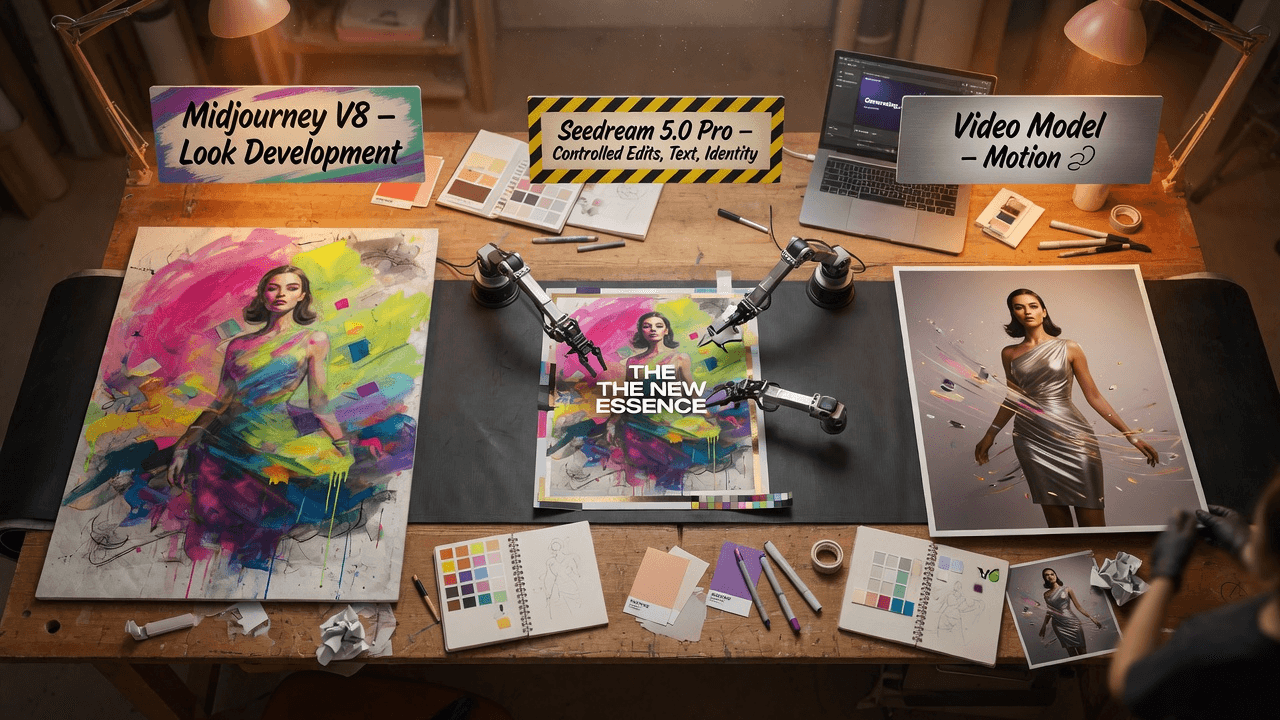
Production pipelines back this up. When a filmmaker rebuilt the effects of a 1975 Doctor Who story, the credits ran Midjourney, ComfyUI, Seedream, and Kling in one workflow: Midjourney for the look, Seedream for controlled edits, a video model for motion. Picking a side never came up. The pipeline was the point.
The same relay keeps appearing on X. AI artist Heather Cooper captioned her "City of Dreams" clip with the pipeline itself: Midjourney to Seedream 5 to Seedance 2.0. Look first, then control, then motion. Three models, one credit line, no contradiction.
A sensible split by stage:
| Pipeline stage | Better tool | Why |
|---|---|---|
| Look development, moodboards | Midjourney V8.1 | Aesthetic tuning, personalization, fast 2K grids |
| Locked characters across scenes | Seedream 5.0 Pro | 10 references, identity preservation |
| Text-heavy layouts, multilingual assets | Seedream 5.0 Pro | 15 native in-image text languages |
| Final-frame fixes | Seedream 5.0 Pro | Instruction-based editing, editable layers |
| Animating stills | Either, via Video V1 or Seedance | Both reachable over one API |
Where does Google sit in all this? Both fanbases measure themselves against Nano Banana, and that three-way fight is mapped in the Seedream 5.0 Pro vs Nano Banana 2 comparison published earlier on this blog.
Frequently Asked Questions
Is Seedream 5.0 Pro better than Midjourney?
For controlled production work, yes: it follows prompts more literally, holds character identity across up to 10 reference images, and edits instead of rerolling. For aesthetic exploration and signature style, Midjourney V8.1 still leads, a split even the r/OpenAI head-to-head thread agreed on in 2026.
Is Seedream 5.0 Pro cheaper than Midjourney?
They bill differently. Midjourney requires a subscription of $10 to $120 per month per its official plan docs. Seedream 5.0 Pro has no subscription: from $0.054 per image on Atlas Cloud, spanning its 1.5K and premium 2K output tiers. Light or bursty users generally come out ahead on pay-per-image.
Why is Midjourney listed as Youchuan V8.1 on Atlas Cloud?
It's marketed as a Chinese platform for Midjourney, self-branded the Midjourney China Lab and operated by Xiaochuan Creative, running V8.1-based technology. That branding is not independently confirmed by Midjourney, whose own site and documentation make no mention of Youchuan, so treat the "official" label as unverified rather than confirmed fact.
Conclusion
Seedream 5.0 Pro vs Midjourney was never really a duel. It's two models optimized for different halves of the same job: Midjourney for finding the image you want, Seedream 5.0 Pro for producing it exactly, repeatedly, and programmatically. The pricing structures say the same thing the spec sheets do. One sells inspiration by the month, the other sells output by the image. Each community argues with a different rival because each already knows what its own tool is for. If your work spans both halves, the practical move isn't choosing. It's routing each stage to the model that wins it, and both are one API call away





