OpenAI LLM Models
OpenAI’s premier GPT model family leads the industry, highlighted by the GPT OSS 120B which achieves near-parity with OpenAI o4-mini on core reasoning benchmarks while running efficiently on a single 80GB GPU. Perfectly optimized for vibecoding and complex logic operations, this model balances top-tier intelligence with hardware accessibility for modern developers and AI-driven web development.
Modèles bientôt disponibles
Nous mettons la touche finale à cette collection — en attendant, explorez les collections similaires ci-dessous.
Explorer Plus de Familles
Happy Horse 1.0
HappyHorse-1.0 is a unified multimodal AI video generation model that climbed to the top of the Artificial Analysis Video Arena blind-test leaderboard for both text-to-video and image-to-video generation. CNBC Alibaba Group confirmed ownership of HappyHorse, developed under its Alibaba Token Hub (ATH) business unit, where it leads benchmarks outperforming ByteDance's Seedance 2.0 and others. Caixin Global Led by Zhang Di — the former VP of Kuaishou who architected Kling AI — the 15-billion parameter model generates 1080p video with synchronized audio in a single pass using a unified transformer architecture that bypasses the multi-stage pipelines used by every major competitor.

Seedance 2.0 Models
Seedance 2.0(by Bytedance) is a multimodal video generation model that redefines "controllable creation," moving beyond the limitations of text or start/end frames. It supports quad-modal inputs—text, image, video, and audio—and introduces an industry-leading "Universal Reference" system. By precisely replicating the composition, camera movement, and character actions from reference assets, Seedance 2.0 solves critical issues with character consistency and physical coherence, empowering creators to act as true "directors" with deep control over their output.
GPT Image 2 Models
GPT Image 2 is a state-of-the-art multimodal foundation model engineered for exceptional text-to-image generation with unprecedented photorealism and creative versatility. Developed by OpenAI as the evolution of the DALL-E lineage, it transforms detailed natural language descriptions into hyper-realistic imagery at up to 4K resolution. With proprietary "Neural Rendering Engine" technology for precise visual control, GPT Image 2 delivers studio-quality results with accurate anatomy, lighting, and composition—making it the premier AI tool for professional creators, enterprises, and developers demanding production-ready visual assets.
Wan2.7 Models
Launching this March, Wan2.7 is the latest powerhouse in the Qwen ecosystem, delivering a massive upgrade in visual fidelity, audio synchronization, and motion consistency over version 2.6. This all-in-one AI video generator supports advanced features like first-and-last frame control, 3x3 grid synthesis, and instruction-based video editing. Outperforming competitors like Jimeng, Wan2.7 offers superior flexibility with support for real-person image inputs, up to five video references, and 1080P high-definition outputs spanning 2 to 15 seconds, making it the premier choice for professional digital storytelling and high-end content marketing.
Veo3.1 Models
Google DeepMind’s Veo 3.1 represents a paradigm shift in AI video generation, empowering creators with director-level narrative control and cinematic-grade audio quality that seamlessly integrates with its enhanced visual realism. By bridging the gap between imaginative concepts and photorealistic execution, this advanced model offers a transformative solution for a wide range of application scenarios, from professional filmmaking and high-end advertising to immersive digital content creation.
ERNIE Image Models
ERNIE-Image is an open-weight text-to-image model developed by the ERNIE-Image Team at Baidu, built on a single-stream Diffusion Transformer (DiT) with 8B parameters and paired with a lightweight Prompt Enhancer that rewrites short prompts into richer, more structured descriptions before passing them to the diffusion backbone. NYU Shanghai RITS Released on April 15, 2026 under the Apache 2.0 license, it transforms natural language descriptions into detailed imagery with particular strength in text rendering and structured layout generation. ERNIE-Image is designed not only for strong visual quality, but for controllability in practical generation scenarios where accurate content realization matters as much as aesthetics — making it well-suited for commercial posters, comics, multi-panel layouts, and other content creation tasks that require both visual quality and precise control.
GPT Image Models
The GPT Image Family is OpenAI's latest suite of multimodal image generation and editing models, built on the powerful GPT architecture. This family includes three tiers — GPT Image-1, GPT Image-1.5, and GPT Image-1 Mini — each available in both Text-to-Image and Image-to-Image variants. Combining GPT's world-class language understanding with DALL·E-class visual synthesis, these models deliver exceptional prompt adherence, photorealistic rendering, and creative versatility across illustration, photography, design, and visualization tasks. The series offers flexible pricing and quality tiers to match any workflow — from rapid prototyping and high-volume content production to professional-grade final deliverables. Whether you need ultra-fast iterations at minimal cost or maximum quality for brand campaigns, the GPT Image Family has a solution tailored to your needs.
Nano Banana2 Models
Nano Banana 2 (by Google), is a generative image model that perfectly balances lightning-fast rendering with exceptional visual quality. With an improved price-performance ratio, it achieves breakthrough micro-detail depiction, accurate native text rendering, and complex physical structure reconstruction. It serves as a highly efficient, commercial-grade visual production tool for developers, marketing teams, and content creators.
Seedream5.0 Models
Seedream 5.0, developed by ByteDance’s Jimeng AI, is a high-performance AI image generation model that integrates real-time search with intelligent reasoning. Purpose-built for time-sensitive content and complex visual logic, it excels at professional infographics, architectural design, and UI assistance. By blending live web insights with creative precision, Seedream 5.0 empowers commercial branding and marketing with a seamless, logic-driven workflow that turns sophisticated data into stunning, high-fidelity visuals.
Kling3.0 Models
Kuaishou’s flagship video generation suite, Kling 3.0, features two powerhouse models—Kling 3.0 (Upgraded from Kling 2.6) and Kling 3.0 Omni (Kling O3, Upgraded from Kling O1)—both offering high-fidelity native audio integration. While Kling 3.0 excels in intelligent cinematic storytelling, multilingual lip-syncing, and precision text rendering, Kling O3 sets a new standard for professional-grade subject consistency by supporting custom subjects and voice clones derived from video or image inputs. Together, these models provide a comprehensive solution tailored for cinematic narratives, global marketing campaigns, social media content, and digital skit production.
GLM LLM Models
GLM is a cutting-edge LLM series by Z.ai (Zhipu AI) featuring GLM-5, GLM-4.7, and GLM-4.6. Engineered for complex systems and long-horizon agentic tasks, GLM-5 outperforms top-tier closed-source models in elite benchmarks like Humanity’s Last Exam and BrowseComp. While GLM-4.7 specializes in reasoning, coding, and real-world intelligent agents, the entire GLM suite is fast, smart, and reliable, making it the ultimate tool for building websites, analyzing data, and delivering instant, high-quality answers for any professional workflow.
Open AI Model Families
Explore OpenAI’s language and video models on Atlas Cloud: ChatGPT for advanced reasoning and interaction, and Sora-2 for physics-aware video generation.
Happy Horse 1.0
HappyHorse-1.0 is a unified multimodal AI video generation model that climbed to the top of the Artificial Analysis Video Arena blind-test leaderboard for both text-to-video and image-to-video generation. CNBC Alibaba Group confirmed ownership of HappyHorse, developed under its Alibaba Token Hub (ATH) business unit, where it leads benchmarks outperforming ByteDance's Seedance 2.0 and others. Caixin Global Led by Zhang Di — the former VP of Kuaishou who architected Kling AI — the 15-billion parameter model generates 1080p video with synchronized audio in a single pass using a unified transformer architecture that bypasses the multi-stage pipelines used by every major competitor.
Seedance 2.0 Models
Seedance 2.0(by Bytedance) is a multimodal video generation model that redefines "controllable creation," moving beyond the limitations of text or start/end frames. It supports quad-modal inputs—text, image, video, and audio—and introduces an industry-leading "Universal Reference" system. By precisely replicating the composition, camera movement, and character actions from reference assets, Seedance 2.0 solves critical issues with character consistency and physical coherence, empowering creators to act as true "directors" with deep control over their output.
GPT Image 2 Models
GPT Image 2 is a state-of-the-art multimodal foundation model engineered for exceptional text-to-image generation with unprecedented photorealism and creative versatility. Developed by OpenAI as the evolution of the DALL-E lineage, it transforms detailed natural language descriptions into hyper-realistic imagery at up to 4K resolution. With proprietary "Neural Rendering Engine" technology for precise visual control, GPT Image 2 delivers studio-quality results with accurate anatomy, lighting, and composition—making it the premier AI tool for professional creators, enterprises, and developers demanding production-ready visual assets.
Wan2.7 Models
Launching this March, Wan2.7 is the latest powerhouse in the Qwen ecosystem, delivering a massive upgrade in visual fidelity, audio synchronization, and motion consistency over version 2.6. This all-in-one AI video generator supports advanced features like first-and-last frame control, 3x3 grid synthesis, and instruction-based video editing. Outperforming competitors like Jimeng, Wan2.7 offers superior flexibility with support for real-person image inputs, up to five video references, and 1080P high-definition outputs spanning 2 to 15 seconds, making it the premier choice for professional digital storytelling and high-end content marketing.
Veo3.1 Models
Google DeepMind’s Veo 3.1 represents a paradigm shift in AI video generation, empowering creators with director-level narrative control and cinematic-grade audio quality that seamlessly integrates with its enhanced visual realism. By bridging the gap between imaginative concepts and photorealistic execution, this advanced model offers a transformative solution for a wide range of application scenarios, from professional filmmaking and high-end advertising to immersive digital content creation.
ERNIE Image Models
ERNIE-Image is an open-weight text-to-image model developed by the ERNIE-Image Team at Baidu, built on a single-stream Diffusion Transformer (DiT) with 8B parameters and paired with a lightweight Prompt Enhancer that rewrites short prompts into richer, more structured descriptions before passing them to the diffusion backbone. NYU Shanghai RITS Released on April 15, 2026 under the Apache 2.0 license, it transforms natural language descriptions into detailed imagery with particular strength in text rendering and structured layout generation. ERNIE-Image is designed not only for strong visual quality, but for controllability in practical generation scenarios where accurate content realization matters as much as aesthetics — making it well-suited for commercial posters, comics, multi-panel layouts, and other content creation tasks that require both visual quality and precise control.
GPT Image Models
The GPT Image Family is OpenAI's latest suite of multimodal image generation and editing models, built on the powerful GPT architecture. This family includes three tiers — GPT Image-1, GPT Image-1.5, and GPT Image-1 Mini — each available in both Text-to-Image and Image-to-Image variants. Combining GPT's world-class language understanding with DALL·E-class visual synthesis, these models deliver exceptional prompt adherence, photorealistic rendering, and creative versatility across illustration, photography, design, and visualization tasks. The series offers flexible pricing and quality tiers to match any workflow — from rapid prototyping and high-volume content production to professional-grade final deliverables. Whether you need ultra-fast iterations at minimal cost or maximum quality for brand campaigns, the GPT Image Family has a solution tailored to your needs.
Nano Banana2 Models
Nano Banana 2 (by Google), is a generative image model that perfectly balances lightning-fast rendering with exceptional visual quality. With an improved price-performance ratio, it achieves breakthrough micro-detail depiction, accurate native text rendering, and complex physical structure reconstruction. It serves as a highly efficient, commercial-grade visual production tool for developers, marketing teams, and content creators.
Seedream5.0 Models
Seedream 5.0, developed by ByteDance’s Jimeng AI, is a high-performance AI image generation model that integrates real-time search with intelligent reasoning. Purpose-built for time-sensitive content and complex visual logic, it excels at professional infographics, architectural design, and UI assistance. By blending live web insights with creative precision, Seedream 5.0 empowers commercial branding and marketing with a seamless, logic-driven workflow that turns sophisticated data into stunning, high-fidelity visuals.
Kling3.0 Models
Kuaishou’s flagship video generation suite, Kling 3.0, features two powerhouse models—Kling 3.0 (Upgraded from Kling 2.6) and Kling 3.0 Omni (Kling O3, Upgraded from Kling O1)—both offering high-fidelity native audio integration. While Kling 3.0 excels in intelligent cinematic storytelling, multilingual lip-syncing, and precision text rendering, Kling O3 sets a new standard for professional-grade subject consistency by supporting custom subjects and voice clones derived from video or image inputs. Together, these models provide a comprehensive solution tailored for cinematic narratives, global marketing campaigns, social media content, and digital skit production.
GLM LLM Models
GLM is a cutting-edge LLM series by Z.ai (Zhipu AI) featuring GLM-5, GLM-4.7, and GLM-4.6. Engineered for complex systems and long-horizon agentic tasks, GLM-5 outperforms top-tier closed-source models in elite benchmarks like Humanity’s Last Exam and BrowseComp. While GLM-4.7 specializes in reasoning, coding, and real-world intelligent agents, the entire GLM suite is fast, smart, and reliable, making it the ultimate tool for building websites, analyzing data, and delivering instant, high-quality answers for any professional workflow.
Open AI Model Families
Explore OpenAI’s language and video models on Atlas Cloud: ChatGPT for advanced reasoning and interaction, and Sora-2 for physics-aware video generation.
Ce Qui Distingue OpenAI LLM Models
Atlas Cloud vous fournit les derniers modèles créatifs de pointe du secteur.

Frontier Research
Cutting-edge models that set global benchmarks in reasoning, multimodality, and AI safety.

Cost-Efficient Performance
Optimized families like GPT-4.1 mini and GPT-5 nano balance accuracy, speed, and cost.

Developer Ecosystem
APIs powering millions of daily requests across diverse platforms and industries.

Flexible Model Sizes
Choice of flagship, mini, and nano models for every workload and budget.

Enterprise Reliability
SLAs, monitoring, and compliance-ready logging trusted by Fortune 500 companies.

Open Model Options
Access to open-source models (gpt-oss-20b, gpt-oss-120b) for transparency and customization.
Vitesse de pointe
Coût le plus bas
| Modèle | Description |
|---|---|
| GPT OSS 120B | GPT OSS 120B est un LLM haute performance centré sur le raisonnement, intégrant une architecture optimisée avec de robustes capacités de traitement de contexte de 131.07K ; atteignant une quasi-parité avec OpenAI o4-mini sur un seul GPU de 80 Go, il sert de moteur pour le développement itératif rapide, y compris le vibecoding et l'exécution de flux de travail complexes pilotés par la logique. |
Nouvelles fonctionnalités de OpenAI LLM Models + Showcase
La combinaison de modèles avancés avec la plateforme accélérée par GPU d'Atlas Cloud offre une vitesse, une évolutivité et un contrôle créatif inégalés pour la génération d'images et de vidéos.
Respect précis des instructions via GPT OSS 120B
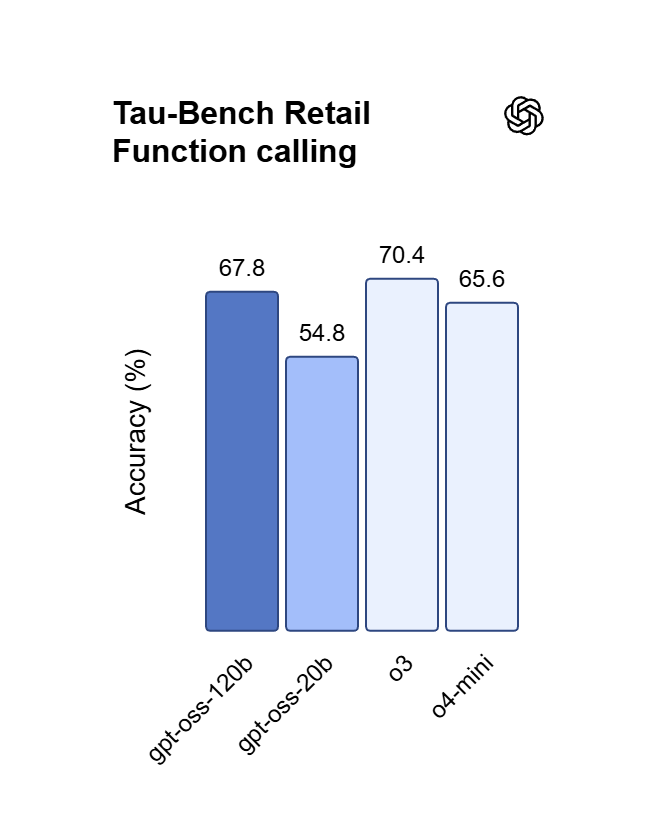
GPT OSS 120B fait preuve d'une maniabilité exceptionnelle, adhérant strictement aux prompts système complexes pour garantir une fiabilité de sortie absolue. En tirant parti de son architecture d'alignement affinée (fine-tuned), les utilisateurs peuvent imposer des formats spécifiques, des contraintes et des nuances stylistiques sans aucune dérive de caractères. C'est le choix définitif pour les agents autonomes, l'extraction de données structurées et les environnements de production critiques.
Souveraineté commerciale sous licence Apache 2.0
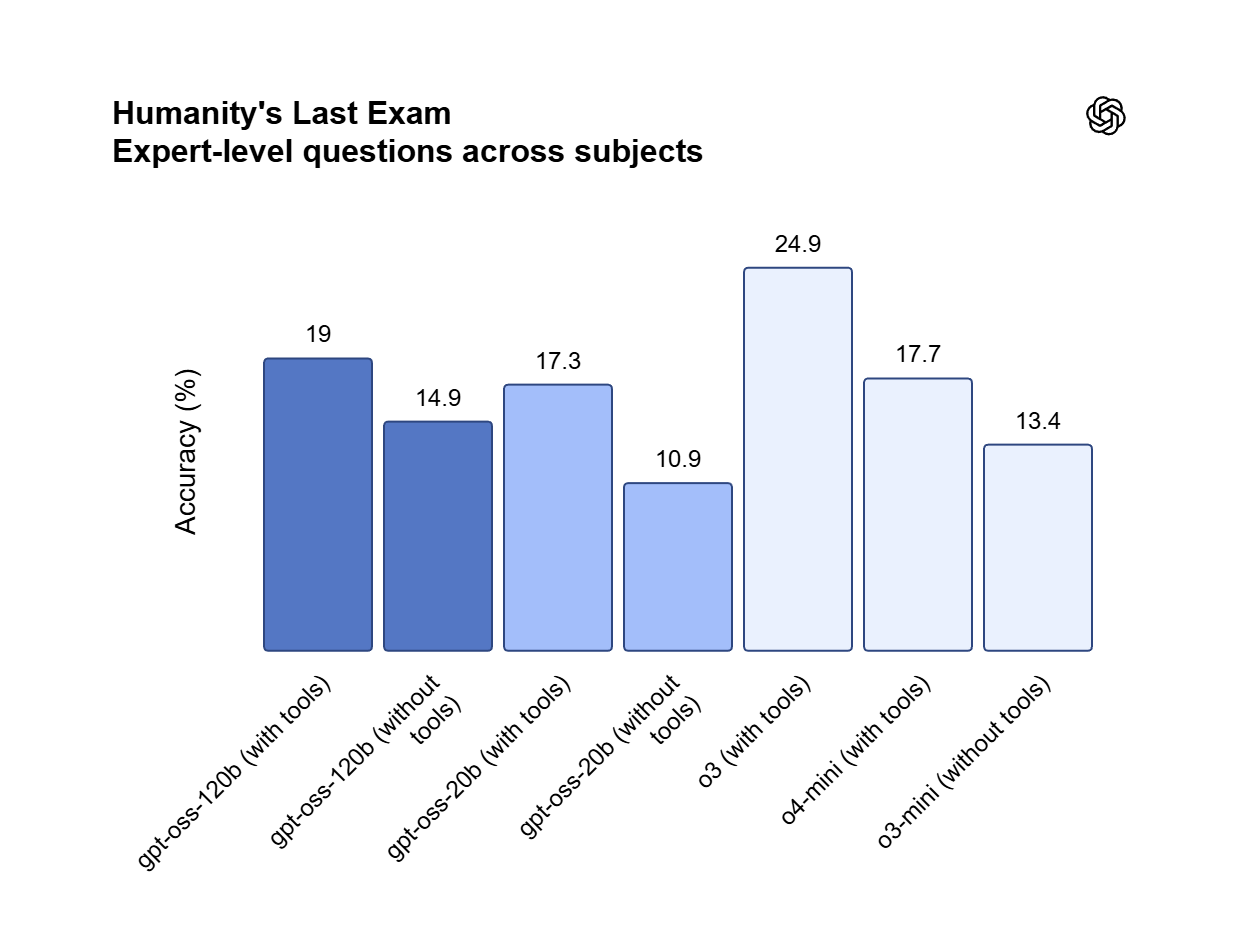
GPT OSS 120B est distribué sous la licence Apache 2.0, permettant une utilisation commerciale illimitée et un affinage (fine-tuning) privé sans frais par token. Contrairement aux API à source fermée, il permet un hébergement local sur un seul GPU de 80 Go pour conserver les données propriétaires sensibles entièrement sur site (on-premises). Ce cadre offre la liberté juridique et technique pour construire, modifier et faire évoluer des piles logicielles pilotées par l'IA.
Logique haute efficacité et Vibecoding avec GPT OSS 120B
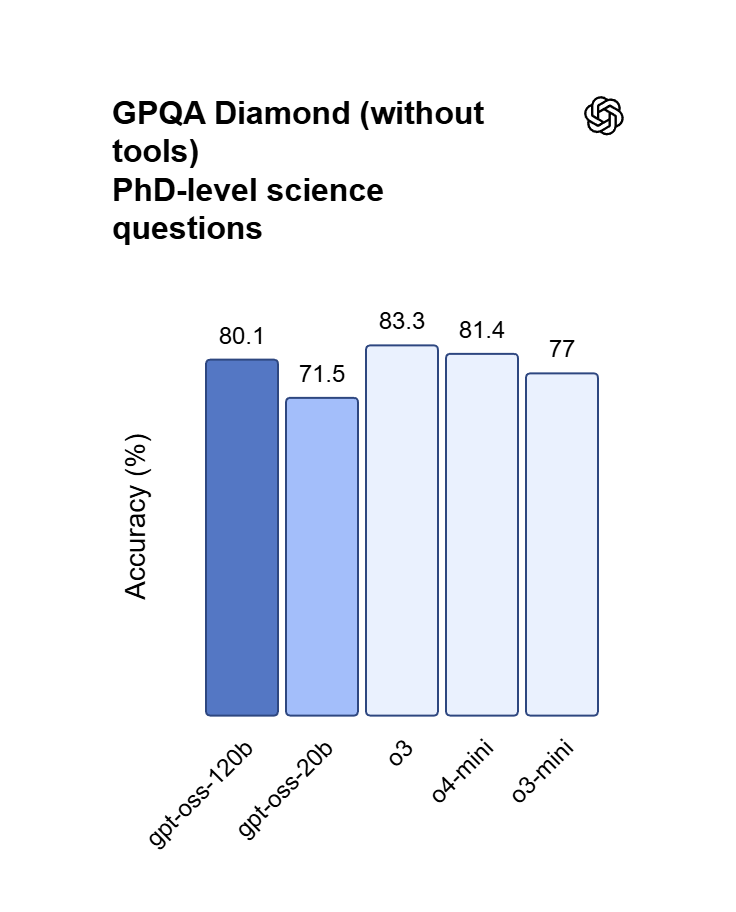
Atteignant une quasi-parité avec OpenAI o4-mini, ce modèle de 120B de paramètres excelle dans la synthèse de code complexe et les preuves mathématiques. Les développeurs peuvent exploiter son moteur de raisonnement pour le « vibe coding », traduisant les idées en langage naturel directement en applications web fonctionnelles grâce à des invites itératives. Il s'agit d'une solution à grande vitesse pour déboguer la logique imbriquée et orchestrer des flux de travail sophistiqués de planification de tâches.
Ce Que Vous Pouvez Faire avec OpenAI LLM Models
Découvrez les cas d'usage pratiques et les workflows que vous pouvez créer avec cette famille de modèles — de la création de contenu et l'automatisation aux applications de niveau production.
Débogage de logique approfondie et prototypage avec le GPT OSS 120B
Le GPT OSS 120B permet aux ingénieurs de résoudre les défis de "vibecoding" en traduisant des idées architecturales de haut niveau en composants Python ou React prêts pour la production. Son moteur de raisonnement gère les dépendances imbriquées et les cas limites qui font souvent trébucher les mini-modèles, garantissant ainsi que la synthèse de code en plusieurs étapes reste fonctionnelle. Prenant en charge les preuves algorithmiques et la planification de tâches complexes, c'est l'outil idéal pour créer des MVP techniques, des scripts QA automatisés et des applications web à forte intensité de données.
Outillage propriétaire hors ligne utilisant le GPT OSS 120B
Sous la licence Apache 2.0, les équipes peuvent héberger GPT OSS 120B sur un seul GPU de 80 Go pour traiter des données internes sensibles sans risque de fuite vers le cloud. Cette configuration permet un ajustement (fine-tuning) local permanent sur des bases de code internes de niche ou des dossiers médicaux sans coûts d'API récurrents par token. Idéal pour les outils internes de haute sécurité et l'assistance IA hors ligne, le modèle offre une souveraineté totale sur les poids, prenant en charge les systèmes RAG privés et les piles logicielles propriétaires personnalisées.
Extraction de données à schéma parfait avec le GPT OSS 120B
Le GPT OSS 120B permet aux développeurs de convertir des documents désordonnés et non structurés en JSON ou Markdown strictement formatés, sans « dérive des instructions ». En ancrant la fenêtre contextuelle de 131.07K avec des règles système rigides, le modèle garantit que les champs ne sont jamais hallucinés ou ignorés lors du traitement de longs formulaires. Idéal pour l'automatisation CRM et le balisage de contenu automatisé, il maintient des garde-fous logiques à travers des ensembles de données massifs, prenant en charge des intégrations API fiables et le remplissage de bases de données.
Comparaison des Modèles
Découvrez comment les modèles de différents fournisseurs se comparent — performance, tarification et atouts uniques pour une décision éclairée.
| Modèle | Contexte | Sortie maximale | Entrée | Positionnement |
|---|---|---|---|---|
| GPT OSS 120B | 131.07K | 131.07K | Texte | LLM de raisonnement à haute efficacité |
| GLM-5 | 202.75K | 202.75K | Texte | Modèle de fondation phare |
| DeepSeek V3.2 | 163.84K | 163.84K | Texte | Général phare |
| MiniMax-M2.5 | 204.8K | 196.6K | Texte | Programmation agentique SOTA |
How to Use OpenAI LLM Models on Atlas Cloud
Get started in minutes — follow these simple steps to integrate and deploy models through Atlas Cloud’s platform.
Create an Atlas Cloud Account
Sign up at atlascloud.ai and complete verification. New users receive free credits to explore the platform and test models.
Pourquoi Utiliser OpenAI LLM Models sur Atlas Cloud
Combiner les modèles OpenAI LLM Models avancés avec la plateforme accélérée par GPU d'Atlas Cloud offre des performances, une évolutivité et une expérience développeur inégalées.
Performance et Flexibilité
Faible Latence :
Inférence optimisée par GPU pour un raisonnement en temps réel.
API Unifiée :
Exécutez OpenAI LLM Models, GPT, Gemini et DeepSeek avec une seule intégration.
Tarification Transparente :
Facturation prévisible par token avec options serverless.
Entreprise et Échelle
Expérience Développeur :
SDK, analytiques, outils de fine-tuning et modèles.
Fiabilité :
99,99% de disponibilité, RBAC et journalisation conforme.
Sécurité et Conformité :
SOC 2 Type II, alignement HIPAA, souveraineté des données aux États-Unis.
Questions Fréquentes sur OpenAI LLM Models
Il atteint une quasi-parité avec OpenAI o4-mini sur les benchmarks de raisonnement fondamental et de mathématiques. Alors que o4-mini est une API fermée, OSS 120B offre une profondeur logique comparable avec l'avantage supplémentaire d'un accès complet aux poids du modèle.
Le modèle est optimisé pour un seul GPU de 80 Go, évitant ainsi la complexité du multi-nœud. Cependant, pour une évolutivité instantanée et une maintenance nulle, nous recommandons d'y accéder via l'API sur Atlas Cloud.
Oui. Il est publié sous la licence Apache 2.0, qui permet une utilisation commerciale, une modification et une distribution illimitées sans frais de licence par token ni verrouillage propriétaire (vendor lock-in).
La fenêtre contextuelle de 131.07K est conçue pour une précision de récupération de type « aiguille dans une botte de foin ». Elle peut ingérer des répertoires de projets entiers ou des manuels techniques de plus de 100 pages tout en maintenant une cohérence logique sur l'ensemble de l'entrée.
Extrêmement. Son moteur de raisonnement est affiné pour la synthèse de code itérative. Il gère les composants React imbriqués et les backends Python complexes de manière plus fiable que les modèles standard de la classe 70B, ce qui le rend idéal pour les flux de travail allant du langage naturel à l'application.



