On June 17, 2026, Kling AI shipped a new model called Kling 3.0 Turbo and upgraded its Omni editing model. The original Kling 3.0 had already launched on February 5, 2026. So now you face a real choice. Do you want the faster, cheaper model with audio built in, or the original model with the deepest feature set? This guide breaks down Kling 3.0 Turbo vs Kling 3.0 so you can pick the right one.
Key Takeaways
- Kling 3.0 Turbo is a new model built for speed and cost, with audio included from ¥0.8 per second at 720P (Kling AI, June 2026).
- The original Kling 3.0 launched February 5, 2026 with native audio, 4K output, a multi-shot storyboard, and Motion Brush (Kuaishou, 2026).
- Pick Kling 3.0 Turbo for high-volume, audio-synced clips. Pick the original Kling 3.0 when you need maximum quality and full creative control.
Kling 3.0 Turbo vs Kling 3.0: The Short Answer
Kling 3.0 Turbo is the better pick for Turbo, low-cost generation with synced audio, starting at ¥0.8 per second for 720P with sound (Kling AI, June 2026). The original Kling 3.0 stays the stronger choice when you need 4K output, the storyboard tool, or the highest visual fidelity. One optimizes throughput and price. The other optimizes capability and control.
Our take: The split is not about "new vs old." Kling 3.0 Turbo and the original Kling 3.0 solve different jobs. Turbo is a production workhorse for volume. The original is a creative suite for polish.
What Is Kling 3.0 Turbo?
Kling 3.0 Turbo is a speed and cost optimized video model that Kling AI released on June 17, 2026 at 18:00 CST. It bundles audio into every clip and focuses on quick turnaround. According to Kling's launch details, its four core strengths are faster generation, precise audio video sync, strong output quality, and better price performance.
The lip sync upgrade is the headline. Talking head and dialogue clips look noticeably more natural, which matters for ads, social shorts, and avatar content. Because audio ships with the output, you skip a separate voice or sync step. That keeps both your pipeline and your per clip cost simpler.
According to Kling's June 2026 release, Kling 3.0 Turbo pairs faster generation with audio included pricing, a combination aimed squarely at teams producing video at volume. For most short form, dialogue driven content, this is the model that keeps unit economics predictable.
Kling 3.0 Turbo vs Kling 3.0: Feature and Spec Comparison
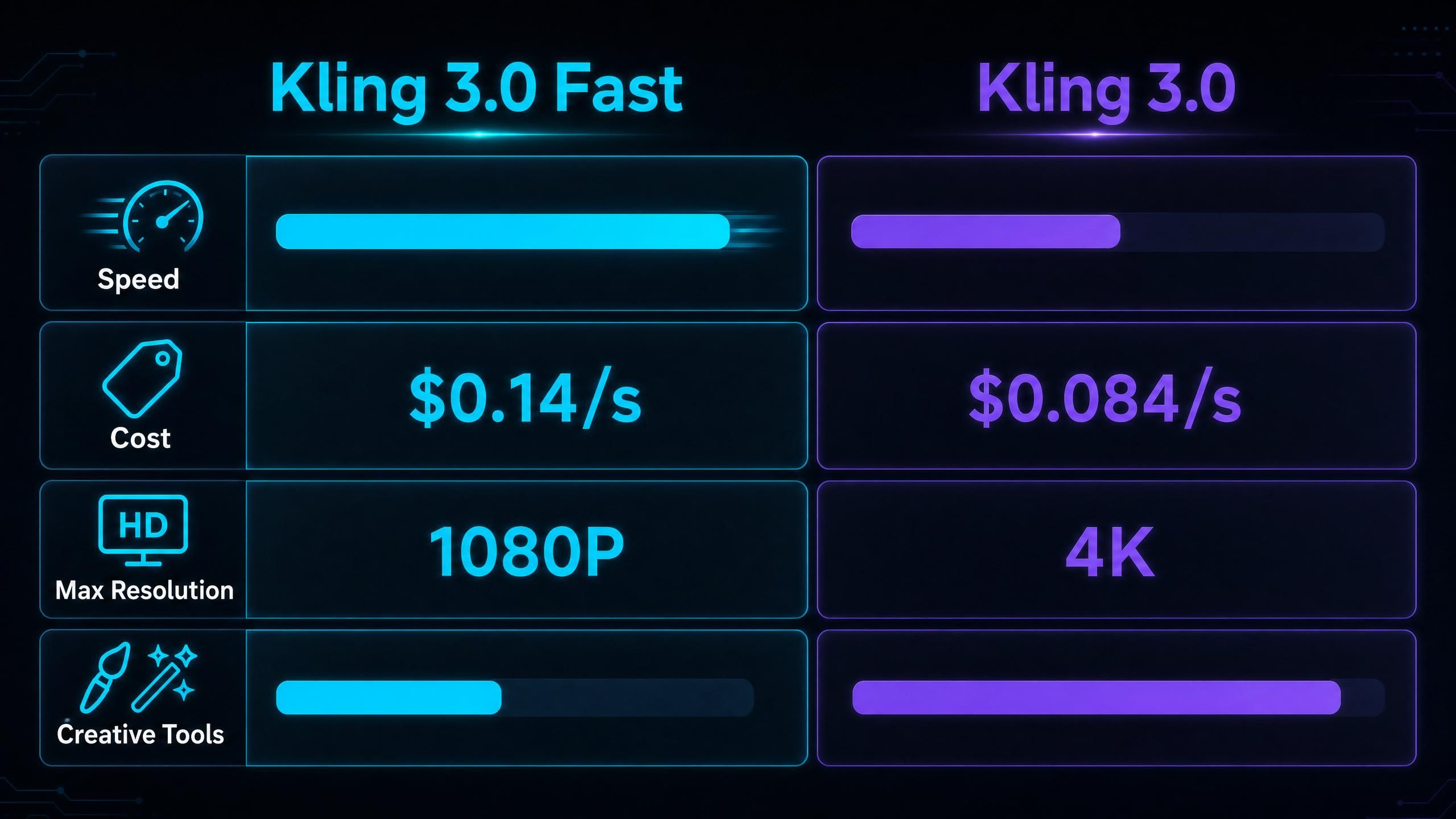
The clearest way to see the difference is side by side. The table below uses Kling's published specs for each model. Remember that the original Kling 3.0 already shipped 4K and 15 second generation back in February, so the contrast is about focus, not version number.
| Capability | Kling 3.0 Turbo | Original Kling 3.0 |
|---|---|---|
| Released | June 17, 2026 | February 5, 2026 |
| Primary focus | Speed and cost | Full feature set |
| Audio | Included | Native multi language audio |
| Lip sync | Notably improved | Supported |
| Max resolution | 1080P | 4K |
| Storyboard tool | Not a focus | Yes |
| Motion Brush | Not a focus | Yes |
| Max duration | Not published | Up to 15 seconds |
| Best for | High volume audio clips | Quality and creative control |
Kling 3.0 Turbo vs Kling 3.0: Pricing Compared
The Kling 3.0 Turbo price is ¥0.8 per second at 720P and ¥1 per second at 1080P, with audio included in both tiers (Kling AI, June 2026). That works out to roughly $0.11 and $0.14 per second at current exchange rates. Audio in the base rate is the part that changes your math, because you don't pay separately for sound.
How does that compare to the original Kling 3.0 on a real platform? On Atlas Cloud, the original family already runs through the API today. Kling v3.0 Std Image-to-Video is priced at $0.084 per second, and Kling v3.0 Pro Text-to-Video is $0.112 per second, as listed on the Kling models on Atlas Cloud pricing page.
The takeaway on cost is subtle. A lower headline rate without audio is not always cheaper once you add a separate voice or sync step. Kling 3.0 Turbo folds audio into one number, which makes budgeting for dialogue heavy projects far more predictable.
Kling 3.0 Turbo vs Kling 3.0: Lip Sync Compared
Both models can sync speech to mouth movement, but Kling 3.0 Turbo sharpens it. The original Kling 3.0 introduced native audio with lip sync at its February 2026 launch (Kuaishou, 2026), and the Kling 3.0 Turbo lip sync upgrade is this generation's most visible improvement. Mouth shapes track audio more tightly, which removes the uncanny drift that breaks immersion in talking head clips. For dialogue, narration, and avatar content, this is the difference between usable and not.
Why does this matter so much for short form video? Because viewers forgive almost anything except a mouth that doesn't match the words. If lip sync is central to your work, our Kling AI lip sync guide walks through how to get clean results in practice.
Kling 3.0 Turbo vs Pro: Speed or Top Quality?
The Kling 3.0 Turbo vs Pro decision comes down to one trade off: throughput or maximum polish. Choose Kling 3.0 Turbo when you generate many clips, need audio in one step, and care about cost per second. Choose a Pro tier of the original Kling 3.0 when you need 4K, the storyboard tool, or the highest fidelity for a hero asset.
A simple rule works for most teams. Draft and iterate with Kling 3.0 Turbo, because speed and cost let you try more ideas. Then finish your most important shots on the original Kling 3.0, where the deeper toolset earns its higher rate.
Accessing Both Models Through One API
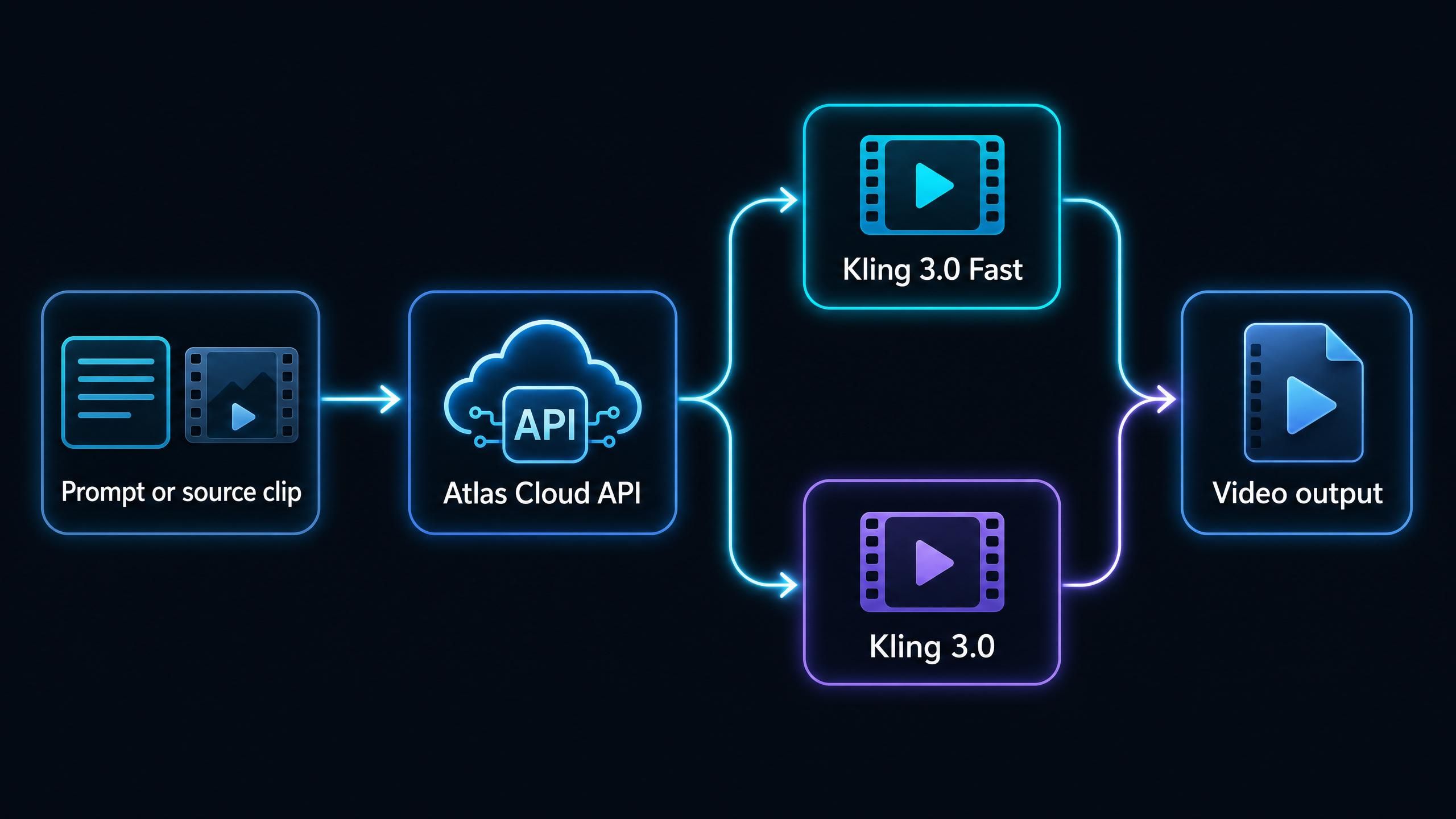
You can run the original Kling 3.0 family through the Atlas Cloud model API today, alongside 300+ other video, image, audio, and LLM models under one account. The Kling 3.0 Turbo API access is rolling out on Atlas Cloud, so the same single integration will let you switch between Turbo and the original model without rebuilding your pipeline.
Atlas Cloud handles the infrastructure, so you call a model, poll for the result, and get a URL back. That unified approach means you can A/B test Kling 3.0 Turbo against the original Kling 3.0 on your own content, then route each job to whichever model fits its budget and quality bar.
A Quick Recap of the Original Model
On February 5, 2026, Kuaishou launched Kling 3.0 and the Kling 3.0 Omni editing model. The official Kuaishou announcement describes native multi language audio with lip sync, a multi shot storyboard tool, 4K output, improved character consistency, the Motion Brush feature, and generation up to 15 seconds.
That feature set is what makes the original Kling 3.0 a full creative suite. The storyboard tool lets you direct shot size, perspective, and camera movement across multiple shots. Motion Brush lets you paint motion paths onto a frame. For a deeper walkthrough, our Kling 3.0 review covers each capability in detail.
Frequently Asked Questions
When did Kling 3.0 Turbo launch?
Kling 3.0 Turbo launched on June 17, 2026 at 18:00 CST, alongside an upgrade to Kling 3.0 Omni. The original Kling 3.0 and the Omni editing model first launched on February 5, 2026, per Kuaishou's official announcement.
Is Kling 3.0 Turbo cheaper than Kling 3.0?
Kling 3.0 Turbo carries a list price of ¥0.8 per second at 720P and ¥1 per second at 1080P, with audio included (Kling AI, June 2026). It is built for cost efficiency, but the original Kling 3.0 can win on value when you need 4K or its full creative toolset.
What is the difference between Kling 3.0 Turbo and Omni?
Kling 3.0 Turbo generates new clips quickly with audio included. Kling 3.0 Omni edits existing footage and, after its June 2026 upgrade, supports 3 to 15 second clips and 4K input and output with stronger source consistency. One creates, the other refines.
Does Kling 3.0 Turbo support 4K?
Kling 3.0 Turbo tops out at 1080P, according to Kling's June 2026 pricing. For 4K, use the original Kling 3.0, which has supported 4K output since its February 2026 launch, or the upgraded Omni editing pipeline.
Can I use Kling 3.0 Turbo through an API?
The original Kling 3.0 family runs through the Atlas Cloud model API today, and Kling 3.0 Turbo API access is rolling out on the same platform. A single integration lets you switch between models as your quality and budget needs change.
Conclusion
The choice between Kling 3.0 Turbo vs Kling 3.0 is not about which model is newer. It's about the job in front of you. Kling 3.0 Turbo wins on speed, cost, and audio synced output, which makes it ideal for high volume short form video. The original Kling 3.0 wins on 4K, creative tooling, and top end quality.
The smartest setup uses both: prototype Turbo, finish polished. Since the Atlas Cloud model API gives you both models behind one integration, you can route each job to the model that fits. Test them on your own content, watch your cost per second, and let the results decide.





