The biggest advantage in social media advertising today isn't a bigger budget — it's a better Video Foundation Model (VFM). Audiences scroll faster. Attention windows are tighter. A 15-second hook that worked last quarter already feels stale. Marketers don't just need tools that generate video — they need models that preserve AI Video Consistency and brand identity across every ad variant they push out. That's where Automated Ad Creative 2026 tools are being stress-tested in the real world.
Meet the Three Contenders
| Model | Nickname | Core Strength |
| Kling 3.0 | The Realist | Photorealistic motion and natural physics simulation |
| Vidu Q3 | The Reference King | Precise character and style reference adherence |
| Seedance 2.0 | The Director | Cinematic shot control and scene choreography |
The Kling 3.0 vs Vidu Q3 debate alone has split creative teams in half — and Seedance's Native Audio AI Video integration is quietly changing how ad scripts translate to screen. Let's break down which model actually wins for social media ad production.
Kling 3.0: The Powerhouse for Hyper-Realistic Product Demos
Kling 3.0 is the best option if you need film that appears to have been shot by a professional cinematographer. Its main strength lies in true physical realism. It masters how light hits glass, how water moves, and how surfaces react in a studio setting. This level of detail makes it stand out from every other model on the market. All of this is rendered with a precision that separates it clearly from the pack.
What It Was Built For
Kling 3.0 performs best in use cases that demand visual credibility:
| Use Case | Why Kling Wins |
| E-commerce product demos | Accurate material rendering (glass, metal, fabric) |
| Luxury & cosmetics ads | Cinematic lighting and texture depth |
| Fashion reels | Realistic cloth physics and motion blur |
| Lifestyle scene swaps | OmniEdit allows product replacement without full re-render |
Key Features for Ad Creative
Identity-Locking
Kling 3.0 maintains AI Video Consistency across multi-shot sequences — keeping a product's shape, label placement, and color grading locked between cuts. This is critical for brand compliance in Automated Ad Creative 2026 workflows where hundreds of ad variants are generated at scale.
OmniEdit (Generative Fill)
Swap out a product in an existing lifestyle scene without rebuilding the whole clip. This saves significant generation time when A/B testing different SKUs against the same background.
15-Second Multi-Shot Sequencing
A single structured prompt can generate a complete short-form storyboard — opening wide, mid-shot reveal, and macro close-up — in one pass.
Real-World Assessment: Ultra-Realism and Fluid Dynamics Showcase Kling 3.0
Reference Image:
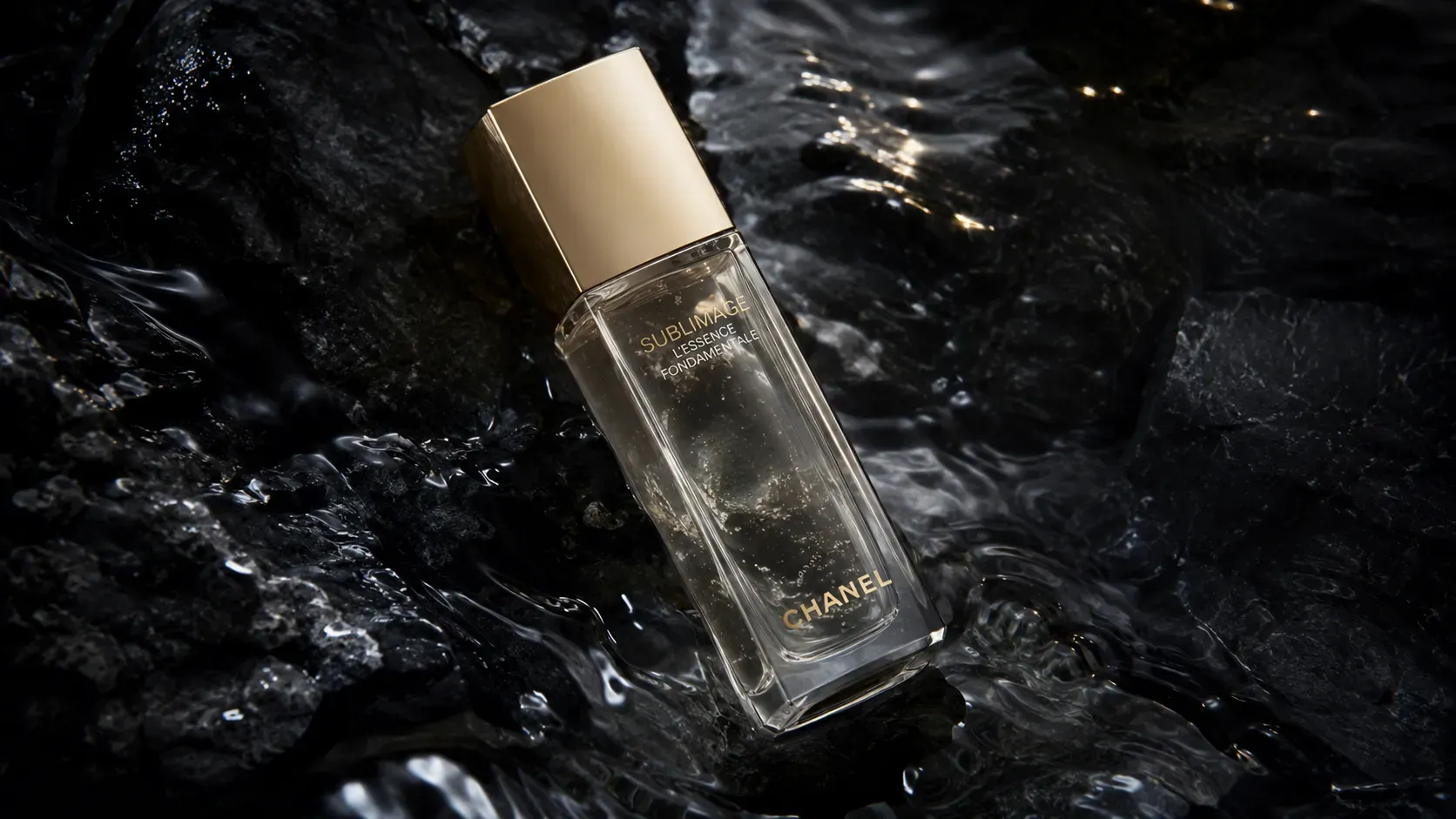
- Best For: Luxury goods and high-end beauty commercials.
- Creative Concept: Leveraging Kling’s powerful physics engine to demonstrate hyper-realistic interactions between fluids and solid objects.
- Prompt: A premium glass beauty bottle with a simple gold lid sits on a black stone base. The container is halfway underwater in a clean, still pool. This is professional product photography with gentle movie-style light. It features sharp 8k detail, a close-up view, rich dark tones, and a sophisticated feel.
What works:
- Water and fluid physics are handled exceptionally well — ripple propagation, surface tension, and wave interaction with the rocks all read as genuinely physical.
- Lighting and glass rendering are commercial-grade. The refraction through the Chanel bottle, the gold-toned reflections, and the cinematic low-key contrast are indistinguishable from a professional studio setup at a glance.
- Camera motion is smooth and intentional — a slow downward drift that mimics a real product cinematographer's pull.
- Shot progression moves convincingly from wide environment → dropper approach → macro liquid pour — a natural editorial arc.
Where it falls short:
- Text rendering breaks in the macro close-up. At the 2.5-second mark, a tight shot of the bottle label renders "FONDAMENTALE" as "FONDANINTALE" — a character-level hallucination. For a luxury brand ad, this is a hard stop. The copy would need to be composited in post or the frame recut before delivery.
The Ad Edge
Use Kling 3.0 when the environment, fluid, and product materiality need to hold up at full screen. For high-fidelity cosmetics, spirits, or fragrance ads, the output quality competes directly with traditional studio production. Just build a text-correction step into your pipeline — it's still the model's most consistent weak point.
Vidu Q3: The Champion of "Reference-to-Video" & Native Audio
If Kling 3.0 wins on environment realism, Vidu Q3 wins on people. Its core advantage is keeping a specific character — face, outfit, expression cadence, and all — locked across every scene in the sequence. For ad creative built around an influencer, brand mascot, or recurring spokesperson, that capability is the whole game.
What It Was Built For
Vidu Q3 is optimized for use cases where character or object fidelity is the non-negotiable:
| Use Case | Why Vidu Wins |
| Influencer / brand ambassador ads | Face and outfit stay identical across scene cuts |
| Wearables & accessories demos | Product worn by character holds detail across motion |
| Sound-on social content | Native Audio co-generation syncs VO and SFX to action |
| Multi-environment storytelling | Single character moves across different locations coherently |
Key Features for Ad Creative
Native Audio AI Video Co-generation
Most models treat audio as an afterthought — you export video, then layer sound in post. Vidu Q3 generates voiceover, sound effects, and ambient music simultaneously with the video, meaning timing is baked in by design rather than manually aligned. This is a real workflow advantage for Automated Ad Creative 2026 pipelines running at volume.
Reference-to-Video Consistency
Feed Vidu a reference image of your character or product and it holds that identity throughout — a direct answer to the AI Video Consistency problem that makes most generated ad creative unusable at scale.
Real-World Assessment: Character Consistency Showcase (Vidu Q3)
Reference Image:
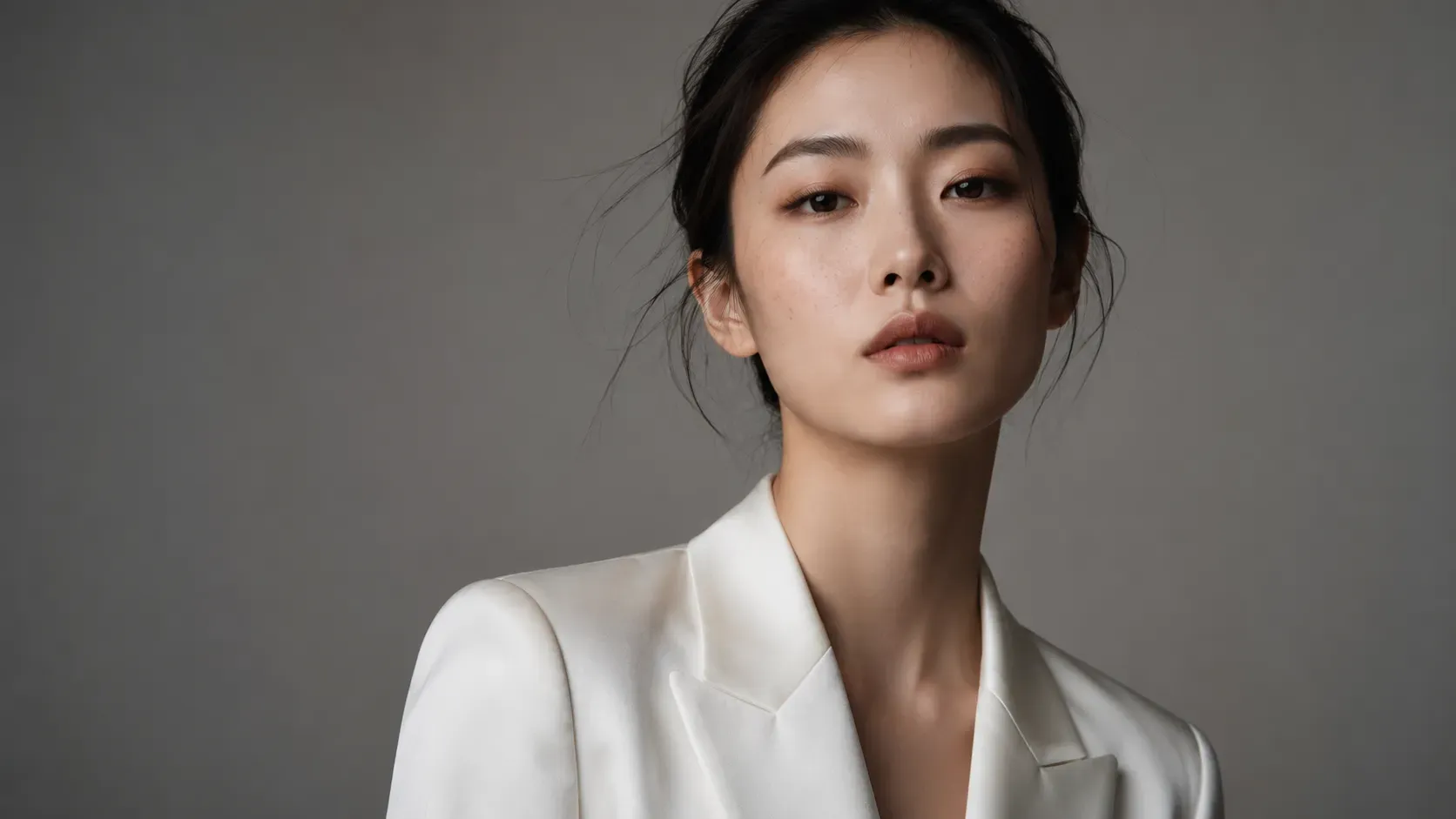
- Best For: Company reps, digital stars, and ads that tell a story.
- Creative Concept: Work on keeping faces and clothes looking the same, even when the lighting changes or gets tricky.
- Prompt:
- [Subject] The same woman from the reference image.
- [Action] She walks through a busy futuristic airport, checks her watch, and smiles at someone off-camera.
- [Consistency] Keep her face shape, the feel of her white silk jacket, and her hair exactly the same the whole time.
- [Lighting] The glow changes from warm lobby lamps to cool daylight as she moves past a big glass window.
- [Format] 4K, 60fps, high fidelity, cinematic character focus.
What works:
- Character consistency is the clear standout. Across six sampled frames moving through a futuristic airport terminal—shifting from a neon-lit, holographic check-in area to a sunlit transit walkway—the character's face, white blazer, updo hairstyle, and gold sleeve buttons remain identical. This is exactly the Kling 3.0 vs Vidu Q3 split in practice: Kling renders environments better; Vidu locks characters tighter.
- Multi-scene coherence is handled without visible seams. The cut from an indoor crowd setting to a sunlit exterior location holds the character without drift.
- Audio track is present and stereo — consistent with Vidu Q3's native audio co-generation architecture.
Where it falls short:
- Web Version vs. Raw Quality: The saved video has lower quality and some blur because it was made on the free plan. These issues come from the site's export limits, not the Vidu Q3 model. Even at 720p, the backdrop is a little jumbled. People walking by and the sci-fi cars outside the window lose sharp shapes and look smeared.
- Subtle Motion Glitches (Micro-artifacts): Look closely at the transition as the character turns her head toward the window around the 0:03 mark. While her core facial features remain locked, there is a slight, temporary warping in the geometry of her bun/updo hairstyle and the shoulder line of her blazer. It’s an "AI micro-twitch" where the model briefly struggles to compute the fabric folds during sudden spatial rotation.
The Ad Edge
Reach for Vidu Q3 when your ad's core asset is a person rather than a product in isolation. Character-driven storytelling, brand ambassador campaigns, and any "Sound-On" social format benefit most from what it does differently.
Seedance 2.0: The Precision Tool for "Directorial" Control
Most AI video models give you a prompt box and a result. Seedance 2.0 gives you something closer to a shot list. Its core differentiator is timeline-based prompting — the ability to specify what happens at distinct time windows within a single generation — which maps directly to how professional ad creative is actually scripted.
What It Was Built For
Seedance targets creators who already think in shots, not just vibes:
| Use Case | Why Seedance Wins |
| Automotive & lifestyle ads | Cinematic camera choreography with precise beat pacing |
| TikTok / Reels hooks | Timeline prompting locks the first 2s for maximum grab |
| Motion replication | Upload a viral video; replicate its camera language on your product |
| Multi-reference briefs | Accepts up to 9 image + 3 video references in one generation |
Key Features for Ad Creative
Timeline Prompting
Rather than describing a scene, you describe a schedule — what the camera does at 0–2s, what transitions at 2–4s, and where the shot resolves at 4–6s. For social ads where the hook window is ruthlessly short, this kind of intentional beat-control is genuinely useful in any Automated Ad Creative 2026 workflow.
Multimodal Directing
Feed Seedance a reference image for composition, a second one for lighting mood, and a video clip for camera movement — all simultaneously. The model synthesizes the inputs rather than prioritizing just one.
Motion Replication
Upload a reference video and instruct Seedance to replicate its camera grammar onto your product scene. It's the closest any current model gets to saying "shoot it like that video."
Real-World Assessment: Dynamic Camera Control Showcase (Seedance 2.0)
Reference Image:
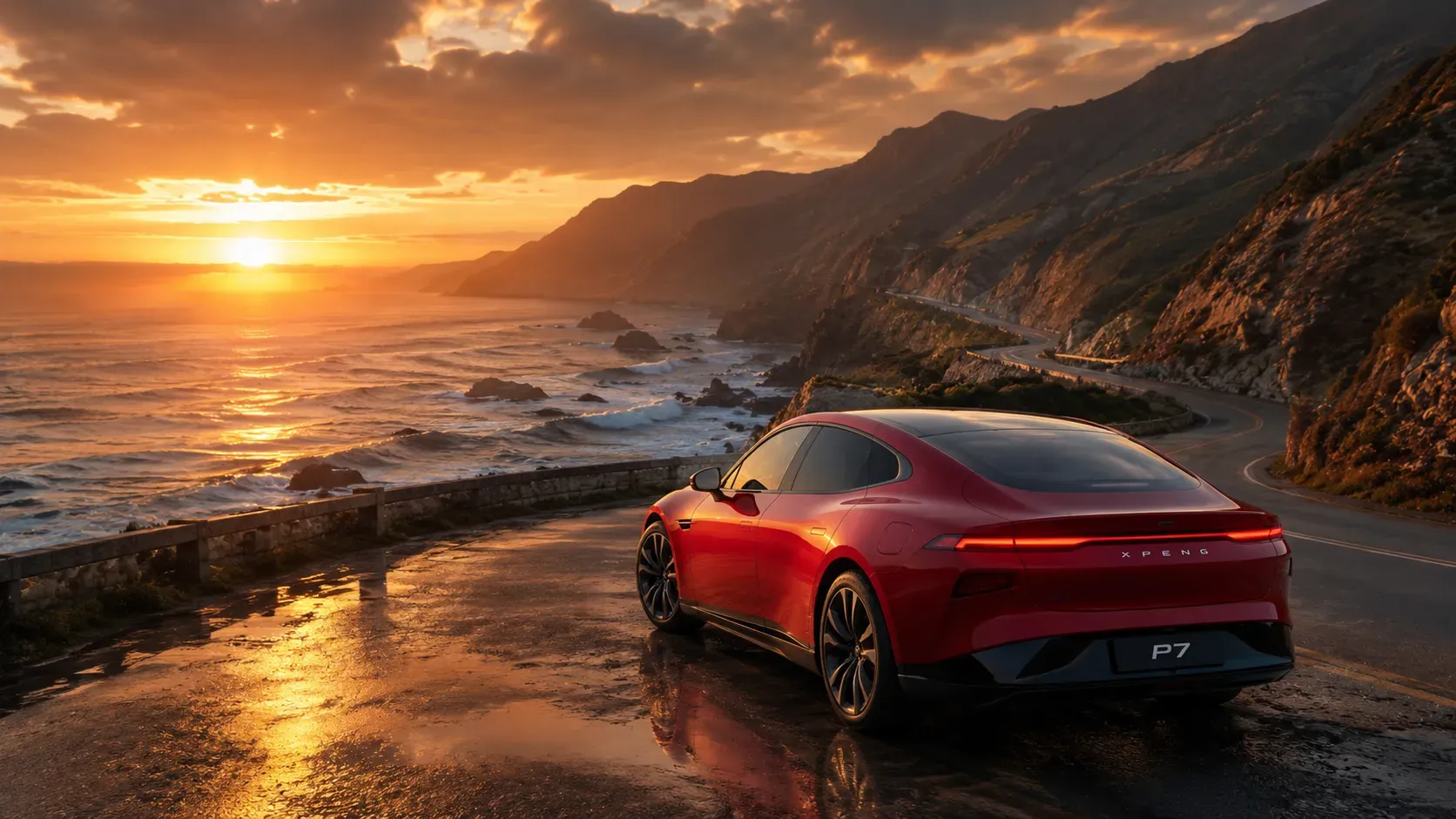
Best For: Athletic brands, automotive commercials, and sweeping, cinematic transitions.
Creative Concept: Simulating professional drone choreography to showcase Seedance’s precise mastery over complex spatial tracking and dynamic sequence stitching.
Prompt:
[Subject] The red sports car starts to accelerate rapidly along the cliff road.
[Camera Movement] An advanced FPV drone shot. The camera starts with a tight close-up on the car's wheel, then quickly zips backward and upwards into an elegant wide orbit around the moving car, finally diving down to follow the car just inches above the ground.
[Environment] Dynamic motion blur on the road surface and realistic sea spray from the waves below.
[Control] Smooth transitions between fast and slow camera speeds (speed ramping), 4K, cinematic action movie style.
What works:
- Camera choreography is the standout strength. The clip opens on a cinematic elevated static shot of the XPENG P7 parked on a wet coastal road at golden hour, then transitions to a low road-level tracking shot as the car begins moving, and finally pulls back into a rear-pursuit angle as speed builds. Three distinct camera beats in 8 seconds — this is directorial pacing, not accidental motion.
- Lighting consistency holds across the full clip. The sunset position, color temperature, and intensity remain stable from frame 1 to frame 6 with no flickering or drift — a genuine technical strength.
- Product badge legibility is solid at driving speed. Unlike Kling's macro-shot text failure, "XPENG" and "P7" remain readable throughout the motion sequence at typical social ad viewing distances.
- Ocean wave dynamics evolve naturally. No frozen or looping patterns — the waves crash differently in each frame, which adds environmental credibility.
Where it falls short:
- The badge text softens at close inspection. While readable, the XPENG lettering is not crisply defined when paused at full screen. Macro close-up shots of the badging would likely expose the same text-rendering limitation seen in other models.
- The clip is a single continuous drive shot rather than a multi-beat timeline sequence. The camera work is impressive, but the structured "hook → product → CTA" beat layout that timeline prompting is designed to deliver isn't demonstrated in this particular output.
The Ad Edge
Use Seedance when your ad has a script before it has a prompt — when you know the shot order, the pacing, and the visual references. It rewards creative directors who already know what they want and need a model that will actually follow the brief.
Head-to-Head Comparison: Kling 3.0 vs Vidu Q3 vs Seedance 2.0
The table below is scored against the three sample videos analyzed in this article — not against marketing claims. Each rating reflects what was directly observed in the output footage.
Scoring: ⭐ = Poor · ⭐⭐ = Weak · ⭐⭐⭐ = Solid · ⭐⭐⭐⭐ = Strong · ⭐⭐⭐⭐⭐ = Excellent | | | | | | ---------------------------- | ----------------------------------------------------- | ---------------------------------------------------- | -------------------------------------------------------------------- | | Feature | Kling 3.0 | Vidu Q3 | Seedance 2.0 | | Primary Vibe | Hyper-Realistic / Cinematic | Reference-Accurate / Character-Led | Directorial / Motion-Choreographed | | Motion / Physics Realism | ⭐⭐⭐⭐⭐ | ⭐⭐⭐ | ⭐⭐⭐⭐ | | Text & Logo Fidelity | ⭐⭐ | ⭐⭐⭐ | ⭐⭐⭐ | | Subject Consistency | ⭐⭐⭐ | ⭐⭐⭐⭐⭐ | ⭐⭐⭐⭐ | | Lighting Consistency | ⭐⭐⭐⭐⭐ | ⭐⭐⭐⭐ | ⭐⭐⭐⭐ | | Camera Control | ⭐⭐⭐ | ⭐⭐⭐ | ⭐⭐⭐⭐⭐ | | Native Audio Integration | ⭐⭐⭐⭐ | ⭐⭐⭐⭐⭐ | ⭐⭐ | | Best Ad Type | Product Demos & Luxury | Character Ads & Sound-On Social | Story-Driven, Automotive & Prompts | | Critical Weakness | Text warping; poor frame-to-frame subject persistence | Lower bitrate exports; far-field background smudging | Latent shift during timeline switches; strict brand asset censorship | | Overall Production Score | ⭐⭐⭐⭐ | ⭐⭐⭐⭐⭐ | ⭐⭐⭐⭐ |
Key Takeaways from the Data
All three models land at four stars overall — but for completely different reasons and with completely different failure modes.
- Kling 3.0 produces the highest fidelity output but stumbles the moment text enters a close-up frame.
- Vidu Q3 is the clear leader on AI Video Consistency for characters, but its 720p / 2.8 Mbps ceiling limits distribution options.
- Seedance 2.0 offers the most intentional camera grammar but shares Vidu's resolution constraint and hasn't been stress-tested on macro product shots.
There is no single winner. The right model depends entirely on what your ad needs to hold up under scrutiny.
What Users Are Actually Asking
Before the verdict, three questions keep surfacing in practitioner communities — and each one points directly to a different model.
❓ "Which AI video model has the best lip-sync for localized ads?"
Kling 3.0 or Vidu Q3 — depending on your priority.
Both models offer built-in audio with lip-sync, but they work in different ways. Kling is the ideal choice if you want a realistic face because it focuses appearance. Vidu Q3 creates the sound and movement at the same time. This results in much better timing. This is a big help when you need to translate ads into different languages and make sure the voices match the mouth movements perfectly.
| Localization Need | Recommended Model |
| Visually premium spokesperson | Kling 3.0 |
| Multi-language audio-visual sync | Vidu Q3 |
❓ "Can I use my own brand assets for consistency?"
Yes — and Vidu Q3 is purpose-built for this.
Vidu's Reference-to-Video feature accepts a source image of your brand asset — a product, mascot, custom packaging, or bespoke prop — and holds it consistent across the generated clip. This is the most direct answer to the AI Video Consistency problem in Automated Ad Creative 2026 pipelines, where the same asset must appear identically across dozens of variants.
❓ "Which tool is fastest for A/B testing ad hooks?"
Seedance 2.0, by design.
Timeline prompting lets you isolate and swap just the 0–2s hook window without regenerating the entire clip. Run three hook variants against the same 2–8s product sequence, test them in parallel, and cut the loser before your budget cycles. No other model in this comparison offers that level of structural modularity at the prompt level.
Final Verdict: The "Choose Your Fighter" Guide
The Kling 3.0 vs Vidu Q3 debate misses the point — these aren't competing for the same job. After analyzing three real-world outputs, the right question isn't which model is best, but which model fits your brief.
✅ Choose Kling 3.0 If…
Your ad lives or dies on how the product looks. Liquid, glass, fabric, wet surfaces — Kling renders physical materials at a level that holds up on a 4K screen. It's the go-to for luxury cosmetics, premium e-commerce, and any spot where the environment needs to feel like a studio build.
One caveat: Budget a compositing pass for any close-up text. The macro frame is still its blind spot.
| Best For | Avoid When |
| Luxury product demos | Tight logo close-ups required |
| High-fidelity fashion reels | Budget doesn't allow post-comp |
| E-commerce lifestyle scenes | 720p output is acceptable |
✅ Choose Vidu Q3 If…
Your ad is character-first. Whether that's a brand ambassador, a recurring mascot, or a spokesperson who needs to appear across five different scene locations without their face or outfit shifting — Vidu locks identity better than the other two. Its Native Audio AI Video co-generation also cuts a full post-production step for Sound-On social formats.
One caveat: Confirm your delivery spec accepts 720p. For mobile-first placements it's fine; for connected TV it isn't.
✅ Choose Seedance 2.0 If…
You arrive with a shot list, not just a prompt. Timeline prompting rewards marketers who think like directors — who know the hook lives in seconds 0–2, the product reveal hits at 3–4, and the CTA lands on a specific beat. For pacing-driven Automated Ad Creative 2026 workflows, that level of control has no equivalent in the other two models.
In 2026, the real creative edge isn't picking the "best" model — it's knowing which tool to reach for before you open the prompt box.





