
一罐冷萃咖啡、一份打印出来且有一个条款被红圈标注的制作合同,以及一张该广告镜头帧的纸质联系印样,放在胡桃木书桌上
本文讨论的三样东西:产品、文书,以及你想开票收费的画面。使用 openai/gpt-image-2/text-to-image 生成。
你在周四下午发出剪辑成片。广告不错,五秒,原生配音,字幕不抖。客户的法务审核员回了三行:这个模型的许可排除了美国,我们是美国实体,所以不能用。
于是你去读许可。他们没看错。第 I.5 条明明白白写着美国。
然后你读了第二份文件,也就是约束你实际调用的那个 endpoint 的文件,发现他们错了。不是部分错误,而是根本搞错了适用于你的文件。
两份文件,同一家公司,都仍有效。它们彼此并不矛盾。它们给出相反答案,是因为它们约束的是两件不同的事。网上几乎所有“我们能不能商业使用 H3”的讨论,都是人们隔着这条鸿沟争论,却没有意识到鸿沟存在。
下面把这条鸿沟填平。
关键结论
- 托管 API 路径全球可用,没有收入上限,也不要求 UI 署名。 MiniMax 自己就是这么说的:“API: Globally available with built-in safeguards.”
- 自托管权重路径根据 §I.5 排除了 EU、UK、South Korea 和 US,而 §V.4 还把这种排除延伸到了_输出_,不只是下载本身。
- 年收入超过 2000 万美元,就需要事先获得书面授权(§IV.1)。这条线只约束权重路径。
- 两条路径在赔偿责任上分道扬镳,而且方向和大多数人预想的相反。 权重许可不给你任何兜底:§VI.4 把输出和责任都交给你,§VI.3 让你为 MiniMax 承担赔偿义务。MiniMax 自己的 API 条款则相反,承诺为你抗辩,但仅限专利和版权索赔,且只有在你满足五个条件时才适用,并不涵盖商标或肖像。
- 被排除地区的团队可以申请,MiniMax 自己的开发者关系负责人说该表单实际上近似自助式:“apply will auto get access.”
本文是对公开文件的通俗解读,不构成法律意见。下文每个条款编号都指向你可以自行打开的 MiniMax H3 Community License Agreement(2026 年 8 月)。快照日期:2026 年 8 月 5 日。如果许可文本发生变化,我们会更新本页并说明变更内容。
当你交付时,一份已清关的 MiniMax H3 商业使用许可长什么样
一个虚构品牌,HALDVIK COLD BREW。一张基础画面,一条带原生英语配音的五秒广告,通过托管 API 交付。这个视频片段中没有任何内容触发 Community License 下的任何义务,因为 Community License 从未进入这个流程。
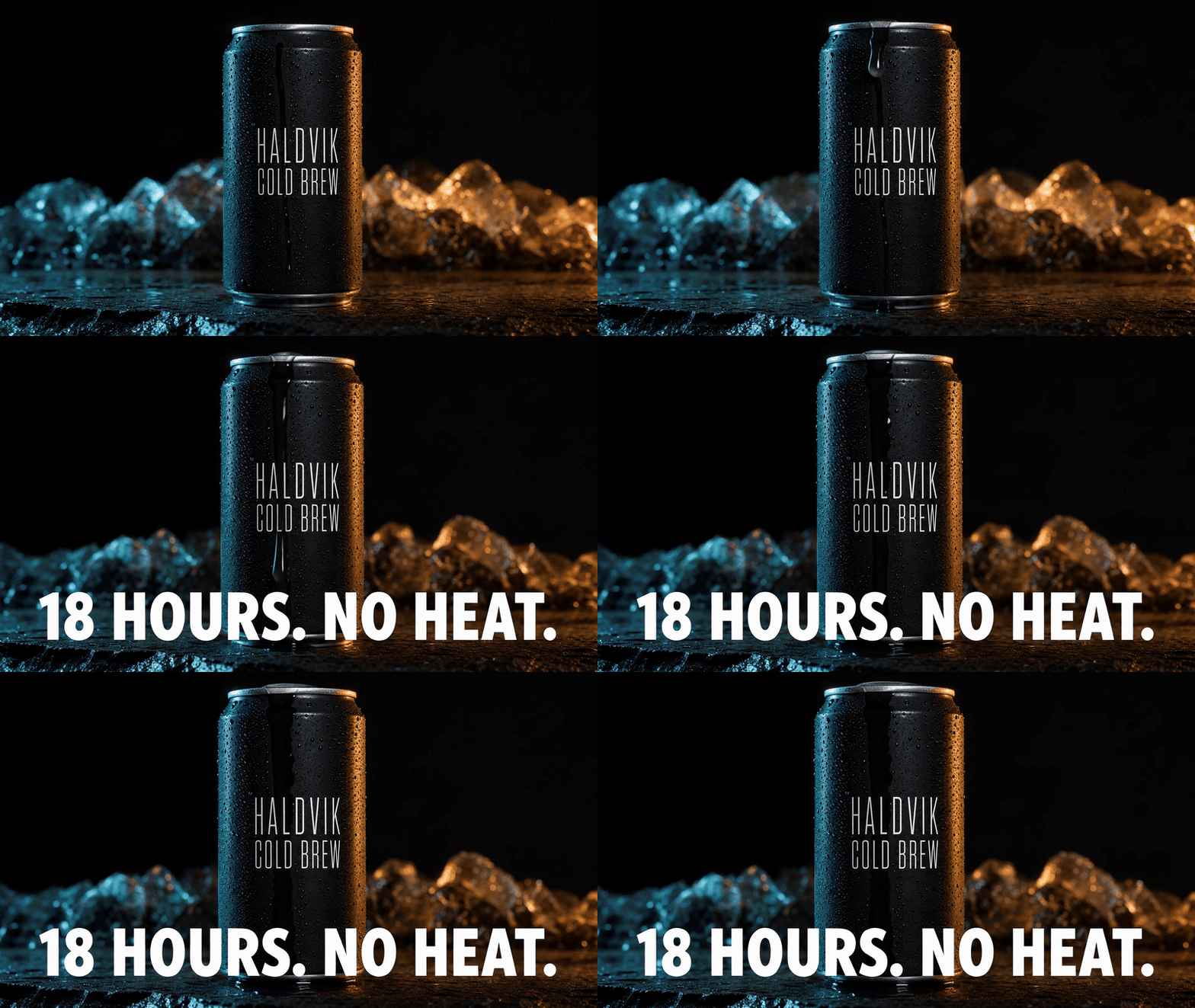
交付的 HALDVIK COLD BREW 广告:五秒、2K、原生英语配音,与画面在同一次生成中产生
这里以静音 GIF 展示交付广告。我们交付的文件包含 32kHz 立体声音频,与画面在同一次生成中产生。使用 minimax/h3/image-to-video 生成。
现在看同一画面在另一条路径下的样子。左边是我们通过 API 交付的版本。右边是同一画面,但带上了自托管部署会引入的锁定署名: “MiniMax H3” 名称加上 AI 生成标识。
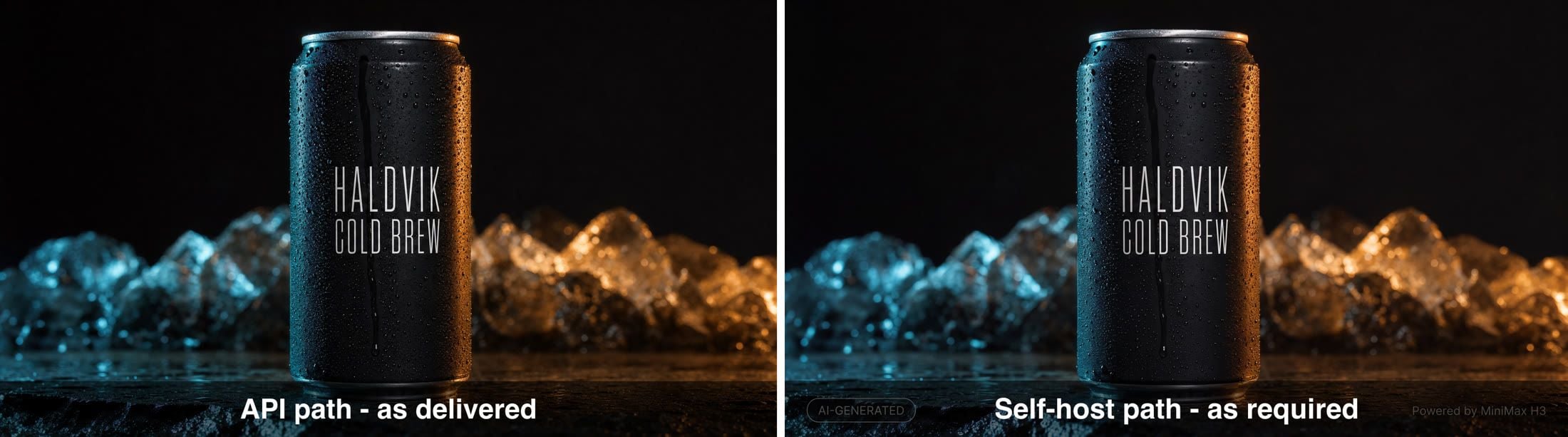
并排对比:左侧是通过 API 交付的干净画面,右侧是带有 MiniMax H3 名称和 AI-GENERATED 徽标的同一画面
同一个模型,同一帧画面,两套不同义务。差异不在质量,而在你接受了哪份文件。
为什么 MiniMax H3 商业使用许可会扼杀价格本身根本不会扼杀的交易
H3 不是一个需要你说服客户去试用的玩具。在 Artificial Analysis 的“带音频视频编辑” Elo 榜单上,它以 1,130 分位居第一,领先第二名 93 分,并且是该榜单前七名中唯一的开放权重模型(快照:2026 年 8 月 4 日,基于投票且滚动更新)。
这就是摆在桌面上的工作水准。十五秒电影感动态字体,字形在整个运动过程中都保持刀锋般锐利,而这恰恰是大多数视频模型崩掉的地方:
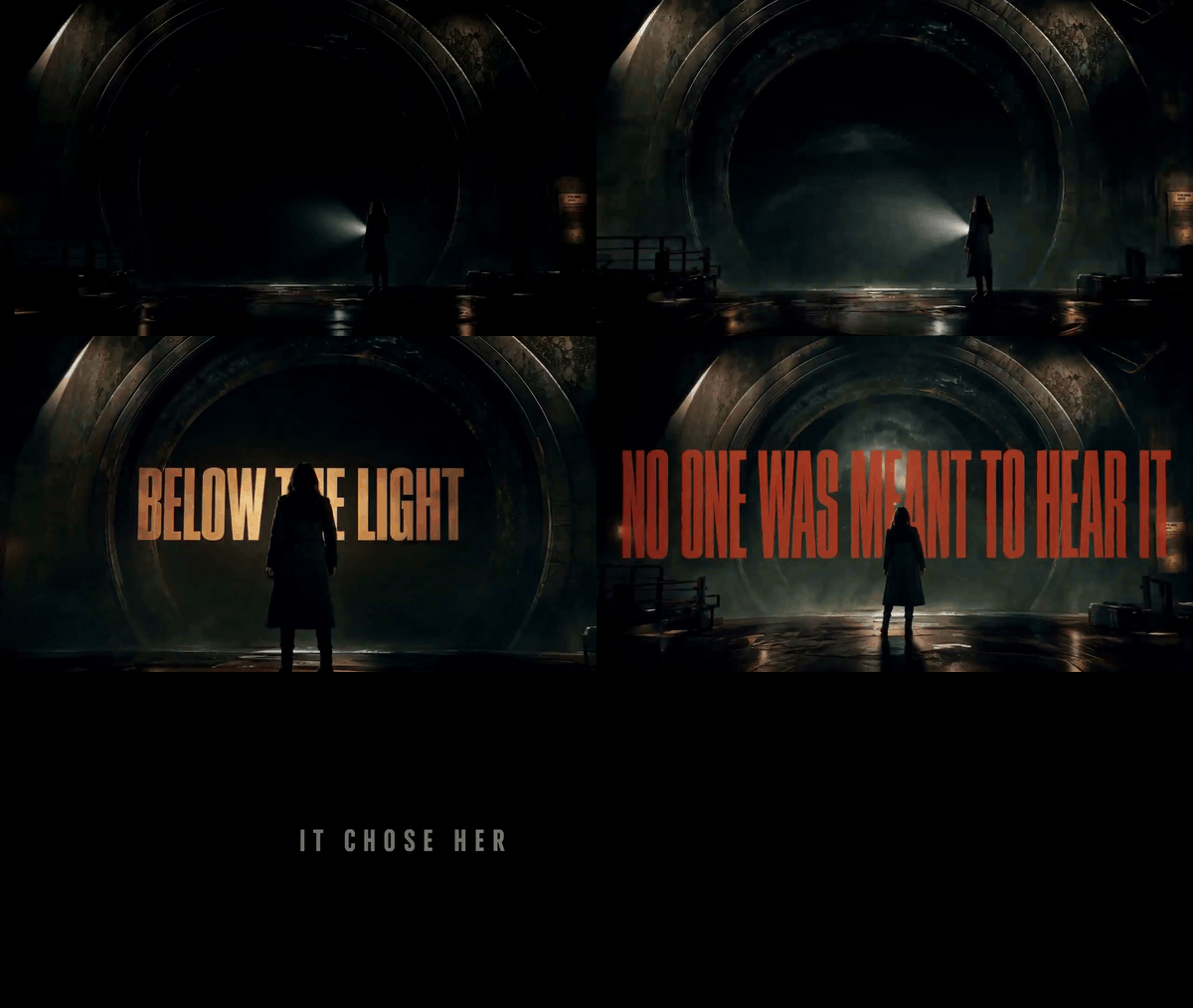
十五秒电影感片头卡片制作:动态字体在整个镜头运动过程中保持锐利稳定
H3 片头卡片制作,这里以静音 GIF 展示。注意推进过程中的字形:没有爬动、没有抖动、没有重新渲染的边缘。MiniMax H3 官方演示片段,reference-to-video。
价格优势很容易理解。清关才是那堵墙。团队通常会通过四种方式撞上它:
1. 用错误的文件衡量 API 使用。 Community License 约束的是发布在 Hugging Face 上的“视频生成模型,连同其软件和算法,包括训练后的模型权重”(§I.6)。如果你从未下载过 checkpoint,你就从未接受过它。你的审核员读了那份著名文件。但那不是你的文件。
2. 把“开放权重”理解成“可以部署到任何地方”。 §I.5 排除了 EU、UK、Republic of Korea 和 US。大多数报道到这里就停了。§V.4 没有停:你不得在 Applicable Territory 之外“使用、复制、修改、分发或展示 MiniMax H3 Works 或其任何 Outputs 或结果”。在法兰克福的 GPU 上启动 H3,渲染结果就是未经授权的。即便你在新加坡合法渲染,再把广告投放到柏林,这条广告也同样未经授权。Exhibit A 将其作为第一项禁止用途再次重申。
3. 以为两条路径承担相同责任。 并不是,而且多数人的理解刚好相反。在权重许可下,根本没有后盾。§VI.4:“MiniMax 不主张你生成的 Outputs 的权利。你和你的用户对其完全负责。”§VI.3 则反向运行,要求你针对因你的使用而产生的第三方索赔,为 MiniMax 抗辩并赔偿。§VII.2 更是直接否认所有权和不侵权保证。
MiniMax 自己的 API 条款则相反。其知识产权部分承诺,如果第三方主张你对平台的使用“侵犯或盗用了第三方专利或版权”,MiniMax 将为你抗辩,并支付由此产生的判决或和解金额,但以协议中的责任上限为限。在放松之前先读细则。它只在你及时通知、把抗辩的单独控制权交给 MiniMax、提供协助、持续支付费用,并且保持在约定范围内时适用。它排除因你自己的数据、将服务与 MiniMax 未提供的内容结合使用、以及在停止通知后继续使用而产生的索赔。而且它点名的是专利和版权,这意味着商标和肖像索赔不在其中。该条还声明这是 MiniMax 的全部责任和你的唯一救济。
为什么这件事很具体。下面是 H3 为产品落地页做动画。简报把一个知名运动服饰网站作为_风格_参考,并提供了一张鞋子照片。它从未要求生成 logo:
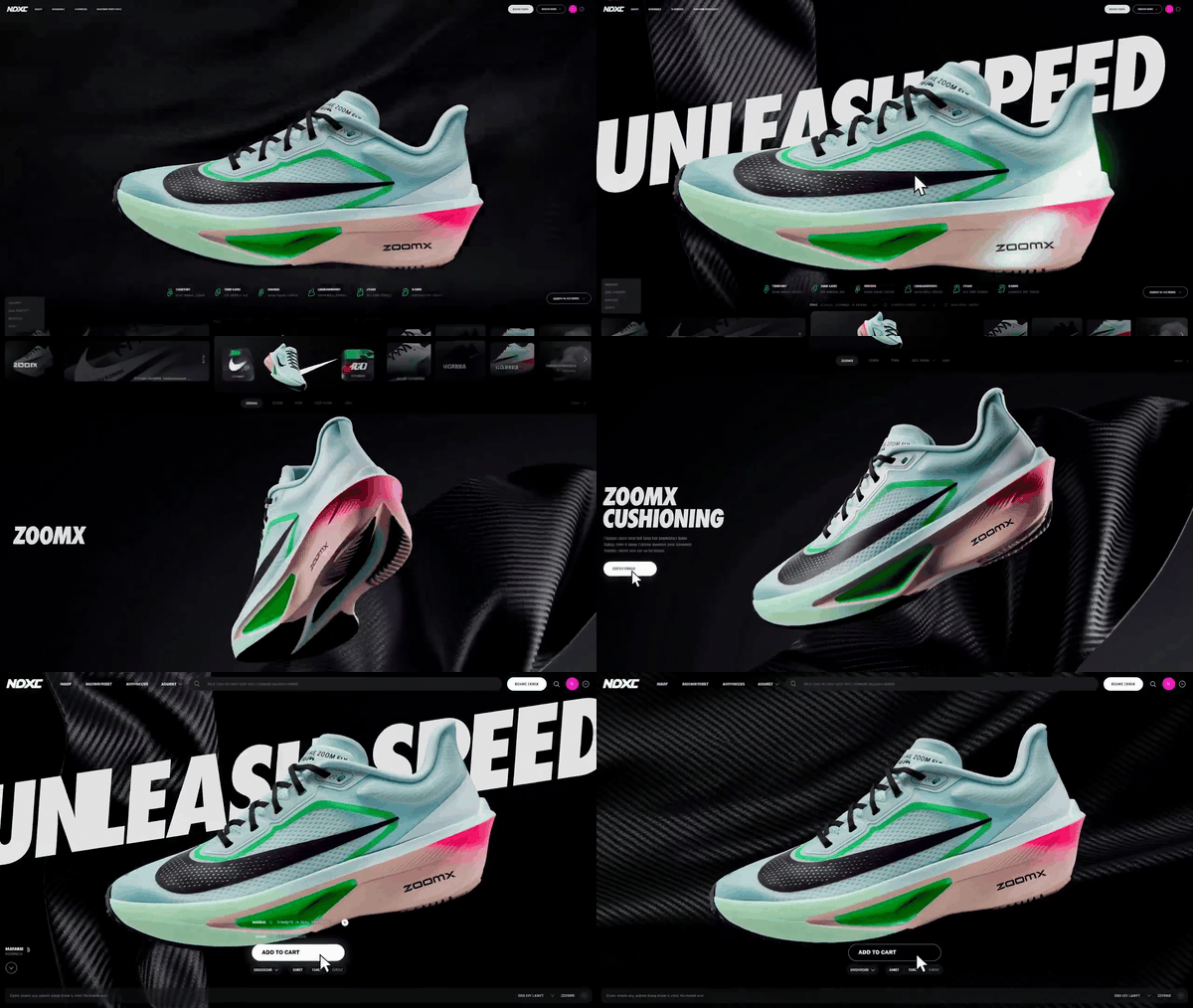
一个模型生成的落地页,其中真实第三方运动服饰商标和产品线字标被清晰、可读地渲染出来
不要交付这个。只是要求参考某个品牌的版式气质,模型却画出了该品牌:swoosh 和产品线字标清晰到可读。这里作为模型行为证据展示,而不是作为可复制内容。MiniMax H3 官方演示片段,reference-to-video。
swoosh 是商标,所以这恰恰是 API 赔偿承诺不覆盖的画面。Exhibit A 第 2 条禁止侵犯第三方知识产权的使用,而在权重路径下,§VI.4 把全部后果都放到你身上。背景也不是假设:Disney、Universal 和 Warner Bros. Discovery 于 2025 年 9 月 16 日在加州中区就 Hailuo 起诉 MiniMax(Variety,2025 年 9 月)。Stanley Blumenfeld 法官于 2026 年 5 月 26 日驳回 MiniMax 的驳回动议,使案件进入证据开示阶段。MiniMax 自己的开发者关系负责人把地域排除直接归因于此:“This regional carve-out stems from our ongoing generative video copyright litigation with major Hollywood studios.” 那个案子是 MiniMax 的问题。上面这帧画面是你的问题。
4. 从未打开你实际接受的条款。 托管 API 运行在 MiniMax 的 Open Platform Terms 之下,其知识产权部分说你保留所有权,然后继续写道:“We may use the input and generated content to provide, maintain, develop, and improve our Services”(MiniMax Open Platform Terms of Service,2026 年 3 月 30 日生效)。如果你是代理公司,把客户尚未发布的产品素材推入这个 endpoint,这句话就是一个保密问题,而且它位于没人引用的那份文件里。
三种交付路径,三种不同的 MiniMax H3 商业使用许可答案
同一个模型,三种使用方式,三本不同规则手册。选择描述你实际生成方式的那一行。
| 义务 | 路径 1:托管 API | 路径 2:自托管权重 | 路径 3:消费者应用 |
|---|---|---|---|
| 地域限制 | 无。“Globally available with built-in safeguards” | EU、UK、South Korea、US 被排除(§I.5),输出也被排除(§V.4) | 单独的消费者条款,请自行阅读 |
| 2000 万美元收入上限 | 不适用 | 需要事先获得书面授权(§IV.1) | 不适用 |
| 强制 UI 署名 | API 条款中没有 | 在你的产品 UI 上显著展示“MiniMax H3”(§IV.2) | 不适用 |
| 下游传导 | 取决于你的提供商条款 | 让每个用户受 §V + Exhibit A 保护条款约束(§V.2) | 不适用 |
| 反滥用机制 | 由提供商运营 | 你来构建、测试、审查,并提供举报渠道和重复违规者封禁(§V.5) | 由运营方运行 |
| 谁支付 IP 索赔 | 取决于你签署的条款。MiniMax 自己的条款有条件地抗辩专利和版权,不包括商标 | 你。§VI.4、§VI.3、§VII.2 AS IS,没有兜底 | 运营方的消费者条款 |
路径 1,托管 API。 Community License 不延伸到这里。延伸到这里的是你签署的任何提供商条款。逐字阅读那份文件,包括其数据使用语言,因为那才是约束你的文件。MiniMax 自己的 API 提供可选择的 US 服务区域,这就是 API 对美国客户开放的低调证明:条款专门写明“if you select the United States as the service region”,则排除 ITAR 内容和 HIPAA 数据。
把整条链路都放在一个提供商上,可以缩小这块风险面。在 Atlas Cloud 上,本教程使用的三个模型位于同一个 key 和同一个余额之后,按秒和按图像计费,中途无需切换供应商:
| 本次构建中的任务 | 模型 | 价格,2026 年 8 月 |
|---|---|---|
| 基础画面 | openai/gpt-image-2/text-to-image | 0.009 美元起,按质量和尺寸分 token 档计费 |
| 署名锁定版 | google/nano-banana-2/edit | 标价每张图 0.08 美元,2k 为 0.12 美元 |
| 广告成片 | minimax/h3/image-to-video | 每秒 0.14 美元,无折扣 |
| 纯文本和参考图变体 | minimax/h3/text-to-video, minimax/h3/reference-to-video | 每秒 0.14 美元 |
| 价格参考点 | bytedance/seedance-2.0/image-to-video | 每秒 0.112 美元 |
路径 2,自托管权重。 现在 Community License 就是你的文件,而且是全部。硬件和下载部分见我们的 MiniMax H3 开源权重指南;这里逐条讲文书部分:
| 条款 | 它说了什么 | 你需要付出的成本 |
|---|---|---|
| §I.5 | Excluded Territories:EU、UK、Republic of Korea、US | 四个最大广告市场中的若干市场无法本地部署 |
| §III.1 | 向每一个接收 Works 或使用你相关产品的第三方提供本 Agreement | 你的交付流程中要增加合同附件步骤 |
| §III.3 | _鼓励_而非要求:“Powered by MiniMax H3”、AI 生成标识、一篇技术博客文章 | 可选善意行为,且 §VI.2 仅为此授予商标许可 |
| §IV.1 | 年收入超过 2000 万美元,需取得事先书面授权 | 发送邮件至 [email protected],主题为“MiniMax H3 licensing - authorization request” |
| §IV.2 | 在商业产品或服务 UI 上显著展示“MiniMax H3” | 在你自己的界面中保留永久署名 |
| §V.2 | 让每个下游用户受 §V 和 Exhibit A 保护条款约束 | 你必须先重写服务条款,才能转售 |
| §V.4 | 不得在 Applicable Territory 之外使用或展示 Works 或 Outputs | 你的渲染结果继承地理围栏 |
| §V.5 | 构建、测试并定期审查反滥用防护措施,并提供举报渠道和重复违规者停权机制 | 真正的信任与安全人员投入 |
| §VI.3 / §VI.4 / §VII.2 | 你拥有输出,你承担责任,你赔偿 MiniMax,一切均为 AS IS | 两条路径上都没有保险 |
| §IX | 香港法律和法院;许可方为 Nanonoble Pte. Ltd. | 纠纷会落到哪里 |
还有两个值得知道的脚注:编码器是 Apache 2.0 下的 Qwen3-VL-32B,且 §V.3 禁止你使用 H3 或其输出改进任何其他 AI 模型。内容过滤是另一个话题,见我们的 H3 内容限制指南。
路径 3,消费者应用。 Hailuo 的订阅条款是它自己的文件。不要从消费者条款推导 API 权利,反向也一样。
第 1 步:拍出基础画面
交付物从一张静帧开始。GPT Image 2 能处理包装文字清晰可读的产品摄影,这很重要,因为标签文字之后还要经受动画处理。
打开 GPT Image 2 playground,将质量设为 high,尺寸设为 2048x1152 (16:9),然后粘贴以下内容:
text1Photorealistic commercial product still, 16:9. A matte-black 250 ml cold-brew coffee can 2labeled "HALDVIK COLD BREW" in a thin white condensed sans, standing on wet dark slate. 3Heavy condensation beads across the can, one bead running down the front of the label. 4Behind it, out-of-focus crushed ice and a single warm amber rim light from the right; 5deep teal fill from the left; seamless black background. 85mm macro look, f/2.8, shallow 6depth of field, crisp specular highlight along the can's left edge. No people, no other 7logos, no text other than the label. 8
虚构品牌名是刻意设计的。自造标签不会撞上任何人的商标,从一开始就移除了整个 Exhibit A 第 2 条问题。
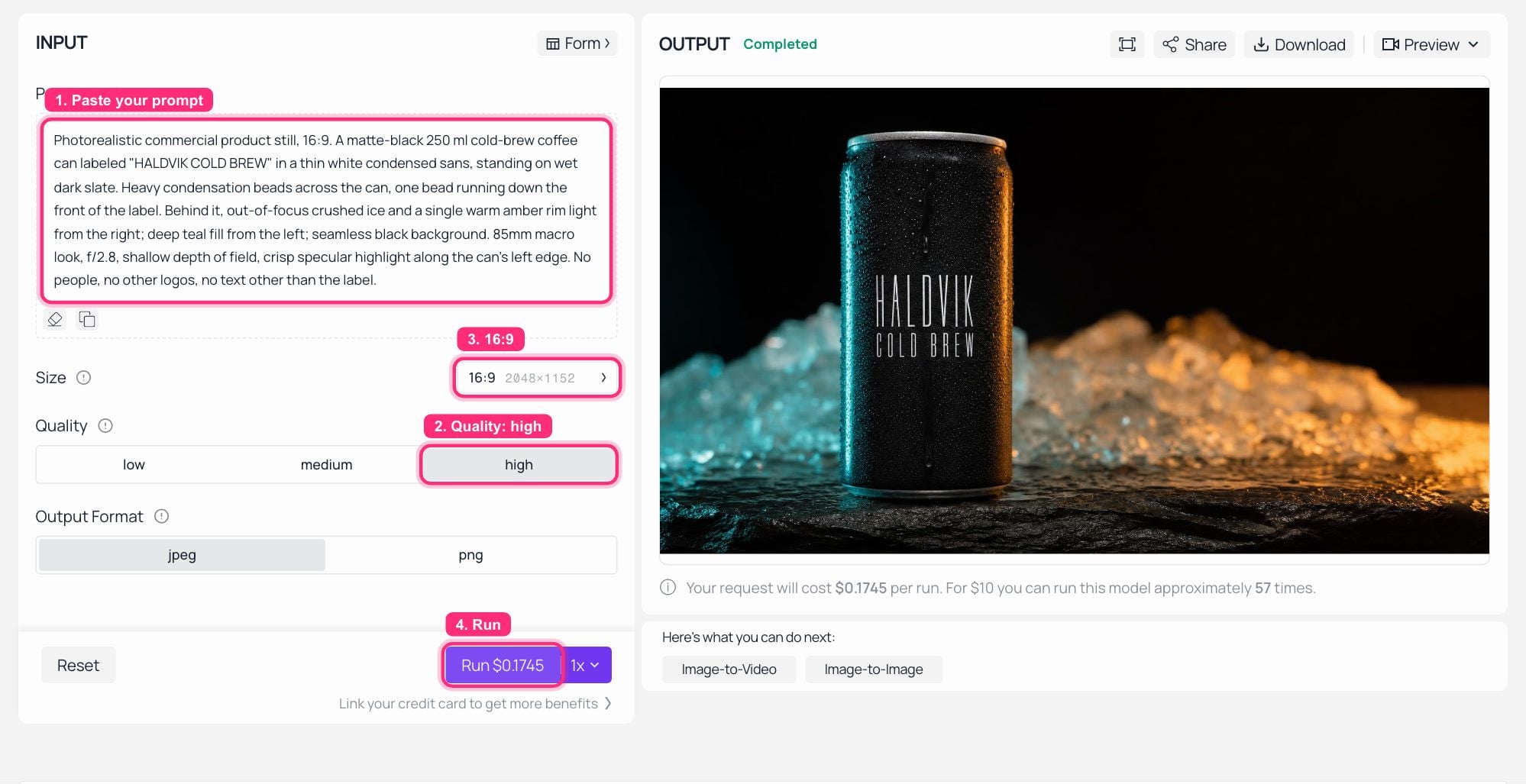
Atlas Cloud 上的 GPT Image 2 playground:质量 high,2048x1152,输出面板中是完成的 HALDVIK 罐装饮品
第 1 步完成:质量 high,2048x1152,基础画面已渲染。计费 0.1745 美元,不是模型卡上的 0.009 美元底价。
第 2 步:构建 MiniMax H3 商业使用许可要求的署名
只有当你选择路径 2 时才需要这张画面,但构建它只需要一次编辑调用,而且能把义务从理论变成具体。Nano Banana 2 的 edit endpoint 能添加叠加层,而不重新打光或重置下方照片的场景,这正是这里的全部要求。
打开 Nano Banana 2 edit playground,将第 1 步结果作为参考图加载,分辨率设为 2k,宽高比设为 16:9,然后粘贴:
text1Keep the photograph exactly as it is: same can, same condensation, same lighting, same 2shadows, same background. Add two small overlays only. (1) Bottom-right corner: one line 3of small light-gray text reading "Powered by MiniMax H3". (2) Bottom-left corner: a thin 4rounded-rectangle outline badge containing the words "AI-GENERATED". Both overlays in the 5same light gray, about 60% opacity, matching the existing film grain of the frame. 6Do not relight, retouch, recolor, crop or restage anything else. 7
两个叠加层都要小,都用浅灰色,并且不要压到产品上。哪一个实际被要求、哪一个不是,下面的 FAQ 会回答。
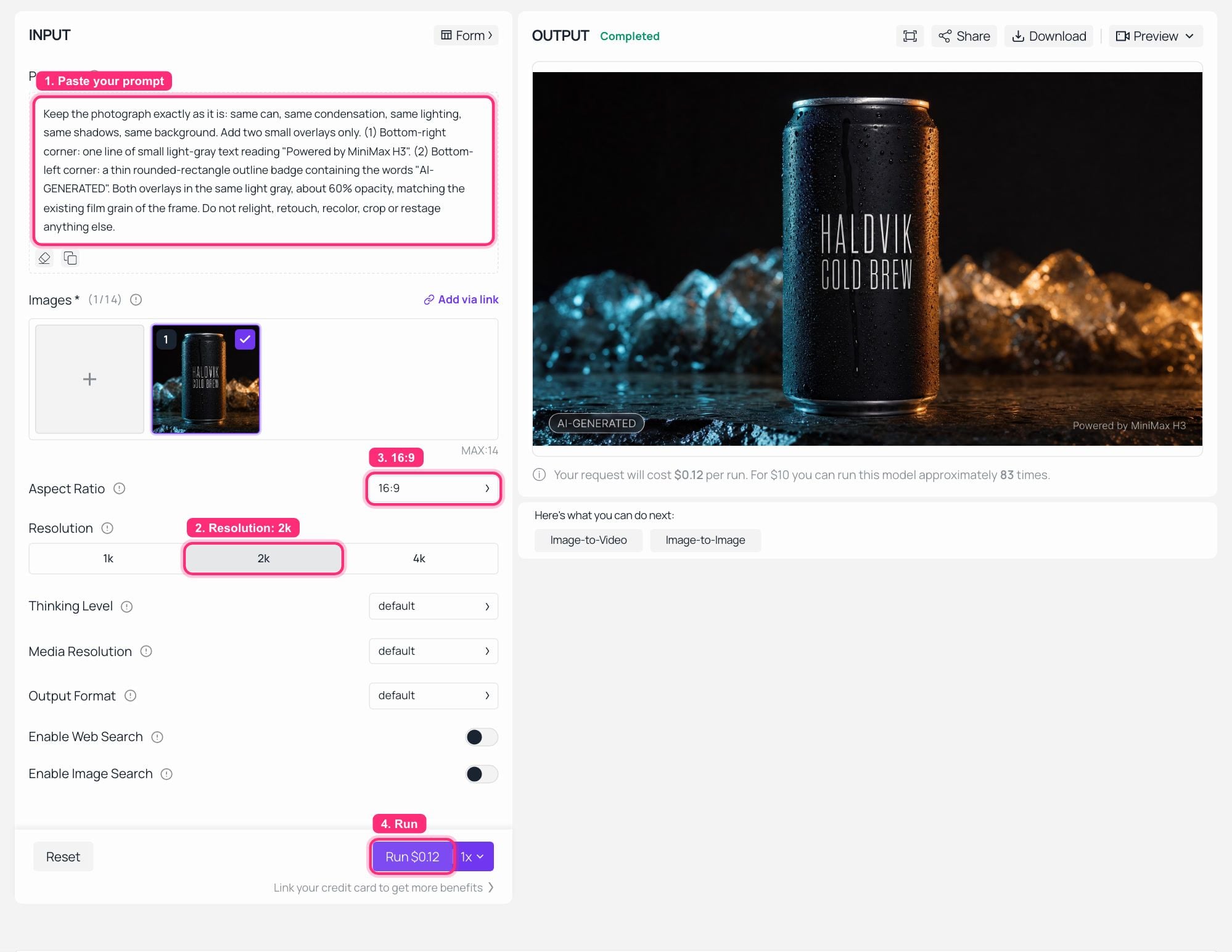
Atlas Cloud 上的 Nano Banana 2 Edit:基础画面作为参考图加载,输出面板中是带署名版本
第 2 步完成:2k,16:9,添加了两个叠加层,下方照片未被改动。计费 0.12 美元。
第 3 步:把画面变成交付广告
输入的是第 1 步的干净画面,而不是带署名的版本。画面和 32kHz 立体声音频在同一次生成中输出,所以配音不是第二个任务。
打开 H3 image-to-video playground,加载干净画面,将 resolution 2K,把 duration 拖到你要交付的长度,然后粘贴:
text1Slow four-second push-in on the can as a fresh bead of condensation runs down the label. 2The crushed ice behind it shifts once. At second three, clean white kinetic type wipes in 3from the left across the lower third: "18 HOURS. NO HEAT." The type stays razor-sharp and 4perfectly still once it lands. Audio: a calm female voiceover in English, warm and 5unhurried, saying "Eighteen hours, cold. Never heated." over soft low room tone, with one 6crisp ice clink on the final beat. No music bed. 7
点击之前有三个细节值得知道。duration 滑块起始值是 8,所以提交前请看 Run 按钮:按每秒 0.14 美元计算,一个 8 秒 2K take 会在按钮上实时显示为 1.12 美元,而我们 5 秒交付版的费用是 0.70 美元。通过 API 调用时,resolution 和 duration 都是必填字段,所以不要以为可以安全省略任何一个。并且这个 endpoint 的宽高比字段只有 adaptive,也就是说你上传的画面决定形状。给它一张 16:9 静帧,就会得到 16:9 视频。
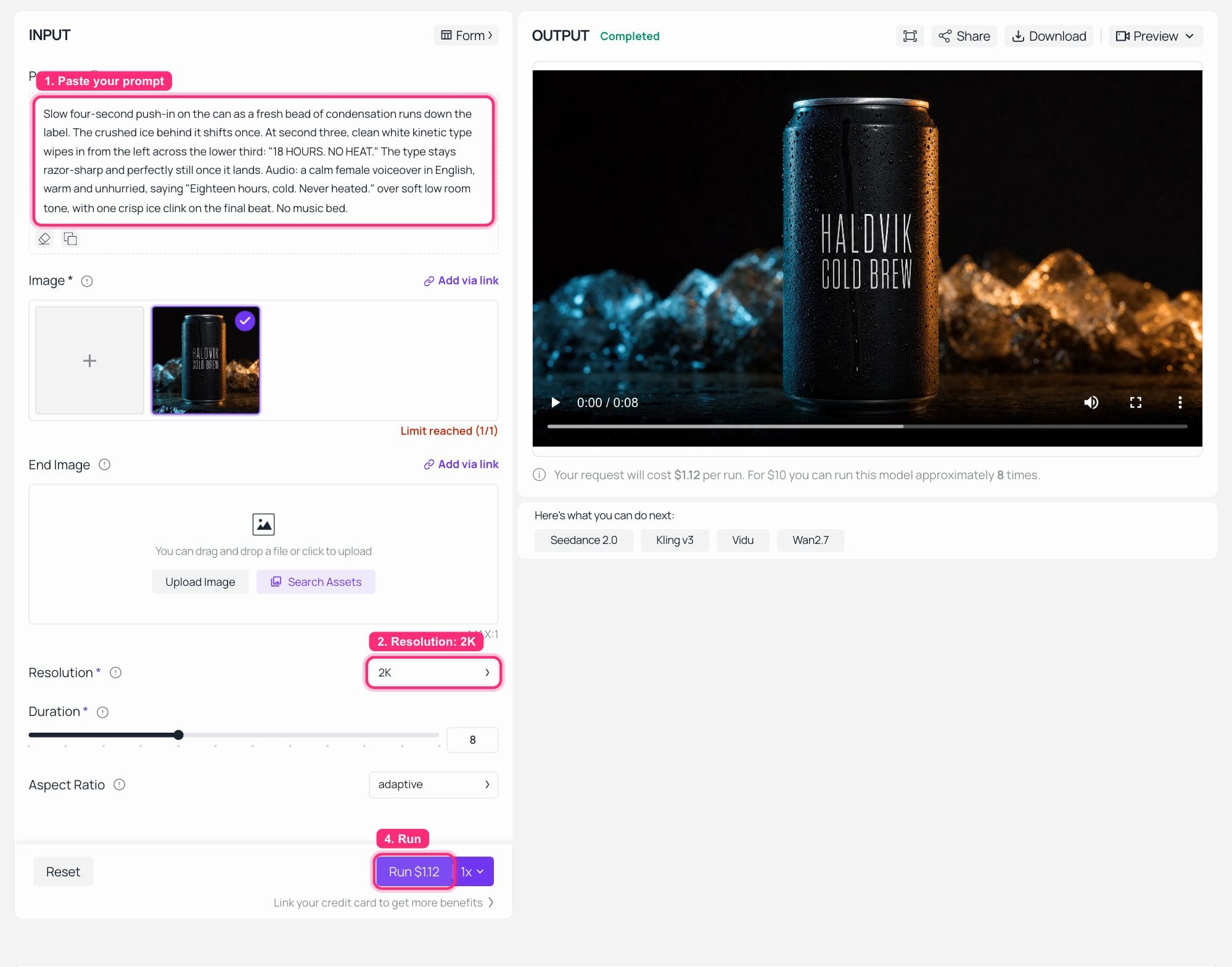
Atlas Cloud 上的 H3 image-to-video:基础画面已加载,resolution 2K,aspect ratio adaptive,输出面板中播放完成的广告
第 3 步完成:resolution 2K,aspect ratio adaptive,广告带音频渲染完成。Run 按钮正在把默认 8 秒 take 计价为 1.12 美元;我们交付的版本是 5 秒,费用 0.70 美元。
在 MiniMax H3 商业使用许可下,一个合规广告要花多少钱,附收据
三次调用,一个交付物,本次构建的真实费用:
| 项目 | 模型 | 数量 | 费用 |
|---|---|---|---|
| 基础画面 | openai/gpt-image-2/text-to-image, high, 2048x1152 | 1 image | $0.1745 |
| 署名锁定版 | google/nano-banana-2/edit, 2k, 16:9 | 1 image | $0.12 |
| 交付广告 | minimax/h3/image-to-video, 2K | 5 seconds | $0.70 |
| 总计 | $0.9945 |
这三个数字里有两个不是标价底价,这正是重点。GPT Image 2 标注 0.009 美元起,但在高质量和 2048x1152 下计费 0.1745 美元。Nano Banana 2 Edit 标价 0.08 美元,但 2k 下计费 0.12 美元。H3 倒是诚实:每秒 0.14 美元,固定价格,没有分辨率附加费。看 Run 按钮,不要只看模型卡。
供参考,如果你在比价,Atlas Cloud 上 Seedance 2.0 image-to-video 是每秒 0.112 美元,而 MiniMax 自己的直连价目表略低于 Atlas Cloud 的每秒价格。所有计费机制,包括分档计算,都在我们的 H3 API 定价拆解 中。
然后保存审核员真正需要的部分。再轮询一次 prediction,因为 price 字段会在视频 URL 出现之后才填充,然后为每次交付写一行:
csv1timestamp,model,duration_s,resolution,billed_usd,terms_path 22026-08-05T11:42:18Z,minimax/h3/image-to-video,5,2K,0.70,hosted-api-provider-terms 3
这一行就是完整的清关论点:哪个模型在什么日期、通过哪套条款生成了该资产。本地化不会改变它。同一画面使用 H3 的原生多语言配音做成西班牙语或日语版本,又是 0.70 美元,并且是同一条条款路径。根据 §V.4,这些本地化文件的自托管等价版本根本无法在 EU 或 US 合法投放,而这种不对称正是本文最实用的一句话。
本指南不是什么。 它是截至 2026 年 8 月 5 日对公开文件的解读,不是法律意见,也不建立律师—客户关系。许可文本才具有权威性;凡是我们进行解释而非引用的地方,我们都明确说明了,而关于 §IV.2 是否覆盖交付影片而不仅是产品界面的问题正是这样一处。两份文件都可能变化,许可本身也说地域范围处于持续审查之中。它一旦变化,本页也会随之变化。
MiniMax H3 商业使用许可:常见问题
MiniMax H3 商业使用许可允许我在美国或欧盟销售作品吗?
通过托管 API,可以。MiniMax 自己的许可 Q&A 把两者分得很清楚:“API: Globally available with built-in safeguards and responsible-use controls. Open weights: Temporarily limited in certain regions.” 使用本地权重,则不可以:§I.5 排除了 EU、UK、South Korea 和 US,§V.4 又把这种限制延伸到输出,所以即便文件是在合法地点渲染的,根据该许可也仍然不能在这些市场展示。被排除地区的团队可以改为申请正式许可。
MiniMax H3 商业使用许可要求我在客户视频中标注 MiniMax 吗?
按我们的解读,不是在视频里。§IV.2 要求在“uses MiniMax H3”的“commercial product or service”的“user interface”上显著展示“MiniMax H3”,我们理解为你的应用或网站,而不是单条交付影片。“Powered by MiniMax H3” 这一行和 AI 生成标识是 §III.3 中鼓励的项目,不是要求,且 §VI.2 授予商标许可也仅为了让你可以这么做。这是我们对 §IV.2 适用范围的解释,不是原文引用。
MiniMax H3 商业使用许可中的 2000 万美元红线在哪里?
只有权重路径在意。§IV.1 要求,当你的商业产品和服务年收入超过 2000 万美元时,必须通过发送邮件至 [email protected],主题行写明“MiniMax H3 licensing - authorization request”,取得“a separate, prior written authorization from MiniMax”。如果你通过托管 API 生成,Community License 不是你的文件,这个门槛不适用于你。
根据 MiniMax H3 商业使用许可,侵权责任由谁承担?
在 Community License 下,完全由你承担。§VI.4:“MiniMax claims no rights over the Outputs you generate. You and your users are entirely responsible for the Outputs and any subsequent use thereof.” §VI.3 还要求你针对第三方索赔为 MiniMax 抗辩并赔偿,§VII.2 则规定一切按 AS IS 提供,不提供所有权或不侵权保证。通过 MiniMax 自己的 API,答案不同:其平台条款承诺针对你使用服务所产生的专利和版权索赔进行抗辩,但受五个条件和若干例外限制,而且商标和肖像不在这一承诺中。无论哪种方式,正在进行的影视公司诉讼都不是你可以借用的抗辩理由;同样无论哪种方式,交付前先过滤自己的输出才是低成本做法。
我可以微调 H3 并根据 MiniMax H3 商业使用许可把它作为服务出售吗?
可以,§VI.1 赋予你对 Model Derivatives 的所有权,§I.11 也确认输出本身不是 Model Derivatives。不过义务也随之而来:§V.2 强制你让每个下游用户受 §V 和 Exhibit A 保护条款约束,§V.5 要求具备真正的反滥用防护、举报渠道和重复违规者停权机制,§IV.2 要求你的产品 UI 中出现“MiniMax H3”,地域限制仍适用于你和你的用户。安全与条款工作,而不是 GPU 账单,才是自托管 H3 服务的真正成本。
如果 MiniMax H3 商业使用许可从未适用于我,我拥有这些视频吗?
根据 MiniMax 的 Open Platform Terms,就所有权而言,是的:你“retain your ownership rights in Client input and generated content”。同一条款又补充说,MiniMax 可以使用这些输入和生成内容来“provide, maintain, develop, and improve our Services”,如果你把尚未发布的客户素材推进去,这句话值得读两遍。如果你通过其他任何提供商生成,具有约束力的文件就是该提供商的条款,所以请逐字阅读他们的条款,而不是假设它们与 MiniMax 的条款一致。
被排除地区的团队如何获得 MiniMax H3 商业使用许可?
提交 MiniMax 在其许可 Q&A 中链接的申请表即可。MiniMax 的开发者关系负责人已在该模型的 Hugging Face 讨论区公开回答了两个实际问题(MiniMax H3 许可讨论,2026 年 8 月):访问实际上是自动的,用他们的话说就是“apply will auto get access”,而没有公司的独立开发者可以在必填的公司字段中填写“Personal/None”。该表单目前托管在第三方域名上,他们说很快会迁移到 MiniMax 域名。§II 将审批建立在“robust controls and guardrails”之上,而 Q&A 把当前限制称为“not yet”,不是“not ever”。





