你今晚需要的是一個可用的鏡頭,而不是關於版本號的傳聞。Kling 4 受控鏡頭運動 是合理的搜尋,但如今可靠的作法是:在實際可用的模型中執導一個短鏡頭,然後判斷它的視角是否真的在空間中移動。
Kling V4 在撰寫本文時,並不是已驗證、可執行的鏡頭控制功能。目前的 Kling 3.0 工作流程仍能在你先鎖定畫面、給鏡頭一個明確任務,並在撰寫提示句前先確定路徑時,產出受控的產品鏡頭。本指南使用一張來源影像與三種可重複的鏡頭路徑:環繞、橫向移動與升降揭示。
Kling 4 受控鏡頭運動:2026 年的誠實解答
Kling V4 還不該成為實用鏡頭運動教學的主題。Atlas Cloud 上的 Kling V4 頁面 顯示即將推出,且其頁面並未公布可執行的模型 ID、參數、價格或已確認的 V4 專屬控制項。把一個預期中的版本當成製作工具,只會產生糟糕的簡報與更糟的期待。
若要做現在就能跑的鏡頭測試,請使用 Kling v3.0 Pro Image-to-Video 搭配一張構圖完成的來源影格。Kling 目前的 3.0 指南記載了 Image-to-Video、起始與結束影格、原生音訊、多鏡頭支援,以及 3 至 15 秒的彈性輸出。它也表示關閉 Multi-Shot 會產生單一鏡頭,這正是這個練習的正確起始條件(Kling VIDEO 3.0 Model User Guide,2026 年 2 月)。
重點摘要
- 在要求鏡頭移動之前,先鎖定構圖。
- 給一段 8 秒片段一個主要的鏡頭意圖。
- 將主體動作、空間錨點、鏡頭與節奏寫成各自獨立的句子。
- 先跑小測試,檢查視差,再製作交付版本。
有用的問題是,模型能否遵循一項鏡頭指令,而不改變場景的幾何結構。成功的結果會具備可見的視差、穩定的地平線,以及始終可辨識地錨定的主體。單純的數位放大並不算過關。
Kling 4 受控鏡頭運動與 Motion Control 的差異
鏡頭方向、Motion Control、Motion Brush 與起始/結束影格是相關但職責不同的工具。它們很容易混淆,因為每一個都可能影響螢幕上什麼在移動。
| 機制 | 主要職責 | 適用情境 | 注意事項 |
|---|---|---|---|
| 提示詞鏡頭方向 | 引導觀眾穿越場景的路徑 | 單一環繞、橫向移動或升降上升 | 太多方向詞會產生互相競爭的路徑 |
| Camera Movement 控制 | 套用可選的視角移動與位移 | 快速測試基本的水平、垂直、變焦、平移、俯仰或滾動移動 | 它是鏡頭工具,不是主體動畫工具 |
| Motion Control | 將參考表演者的動作轉移到角色上 | 具有明確動作的人、動物或虛擬化身 | 它本身不會鎖定整個背景或鏡頭路徑 |
| Motion Brush | 為選取的影像區域指定移動或靜止 | 小幅局部動作,例如袖子、葉子或手 | 固定物件上的動作路徑可能被解讀為鏡頭運動 |
| 起始與結束影格 | 設定開頭與結尾構圖 | 具備一致視角的匹配轉場 | 鏡頭感或主體比例不一致可能破壞插值 |
官方 Camera Movement 指南 描述了六種基本控制與四種組合 Master Shots。這些預設是有用的詞彙,也能快速測試某個方向。自訂提示詞的價值在於加入物理脈絡:鏡頭從哪裡開始、經過什麼,以及最後應該看到什麼。
Motion Control 屬於另一種簡報。它主要使用參考動作來驅動角色。Motion Brush 屬於局部動畫簡報。如果創意需求是「鞋子留在窗台上,而鏡頭從左移到右」,請從 Image-to-Video 與精確的鏡頭路徑開始。不要用加入人體動作參考來解決鏡頭問題。
同樣的區別也有助於規劃。Text-to-Video 要求模型同時發明場景與運鏡。Image-to-Video 則在移動開始前給它固定的產品、地標與景深佈局。對於規劃好的產品動態,那個額外的錨點通常是更容易控制的第一項測試。
Kling 4 受控鏡頭運動提示公式
使用四個標示的提示區塊。這些標籤不是神奇語法。它們讓創意簡報更容易檢查,也讓人在失敗的一次執行後,明顯看出該更改哪個變數。
plaintext1Subject and action: 2Scene and spatial anchors: 3Camera path: 4Constraints and pacing:
Subject and action 指名一個主體與一項可觀察的小變化。「一隻手將鞋帶拉緊一次」比「動態產品互動」更強而有力。它給了你一個可檢查的動作,而不要求模型發明第二個事件。
Scene and spatial anchors 標出建立景深的物件。窗台、窗框、層架邊緣、遠方山脊與地平線,能讓橫向或向前移動變得清楚可讀。它們也給了你一項測試:如果前景與背景沒有以不同方式位移,結果可能是變焦,而不是實體移動。
Camera path 需要起點、一條路線、一個方向、克制的幅度與結束構圖。「從左前方開始,順時針環繞 25 度,稍微靠近,以中近景結束」是可稽核的。「電影感鏡頭運動」則不是。
Constraints and pacing 可防止短片變成未經規劃的剪輯。要求一個連續鏡頭、水平的地平線與平順的加速曲線。使用「no cut」和「no sudden acceleration」等否定語句作為小小的護欄。它們無法取代正面的鏡頭描述。
環繞、橫移與升降鏡頭的提示詞
| 運鏡 | 通過的結果應顯示什麼 | 最佳空間條件 | 常見假陽性 |
|---|---|---|---|
| 推近 | 前景、產品與背景的相對位置改變 | 主體前方與後方有清晰景深 | 沒有視差的數位變焦 |
| 環繞 | 主體可見的一側改變,但主體維持在原位 | 主體兩側邊緣都有留白空間 | 主體旋轉,但鏡頭其餘部分固定 |
| 橫向移動 | 背景相對於主體橫向滑動 | 強烈的側邊錨點,例如窗台邊緣或窗框 | 讓每個景深平面保持對齊的平移 |
| 升降揭示 | 鏡頭高度改變,遮擋清除 | 能先遮住再揭示主體的前景物件 | 沒有改變視角的向上裁切或變焦 |
在影片測試之前,先做出一張具備清晰空間層次與安靜故事性的寬敞來源影格。本教學使用 GPT Image 2 Text-to-Image,設定為高品質與 16:9。生成一張影像,並在全部三個 Kling 測試中重複使用那個確切影格,只更改鏡頭路徑。
來源影格:雨淋濕的車站月台上的旅人與黑貓
plaintext1A cinematic 16:9 still in a quiet European railway station at blue hour just after rain. An adult woman traveler in a deep teal wool coat sits on the right half of a long dark-green wooden platform bench. A sleek black cat sits alert beside her on the bench, looking toward the tracks. A closed amber leather suitcase rests on the wet stone floor in the near foreground, clear of both subjects. Behind them, an empty rain-darkened platform leads toward a stationary vintage deep-red passenger train in the middle distance. Repeating iron columns and warm station lamps recede toward a softly lit glass-and-iron roof. Reflections shimmer on the stone, fine rain is visible beyond the platform canopy, and the far end of the station fades into cool blue mist. Keep the full bench, woman, cat, suitcase, train, and strong receding platform lines in frame with generous room on both sides. Natural face and hands, realistic black-cat anatomy and fur, believable damp stone and wool, elegant restrained film lighting, quiet intimate mood, no text, no logo, no watermark, no extra people, no extra animals, no cropped limbs, train remains stationary.
如果貓的臉或爪子變形、旅人或長椅被裁切、行李箱擋住主體,或月台沒有可見景深,就捨棄該來源影像。將選定的影像儲存為 04-traveler-black-cat-station-source.jpg;下方每個鏡頭都使用那個確切來源影像。
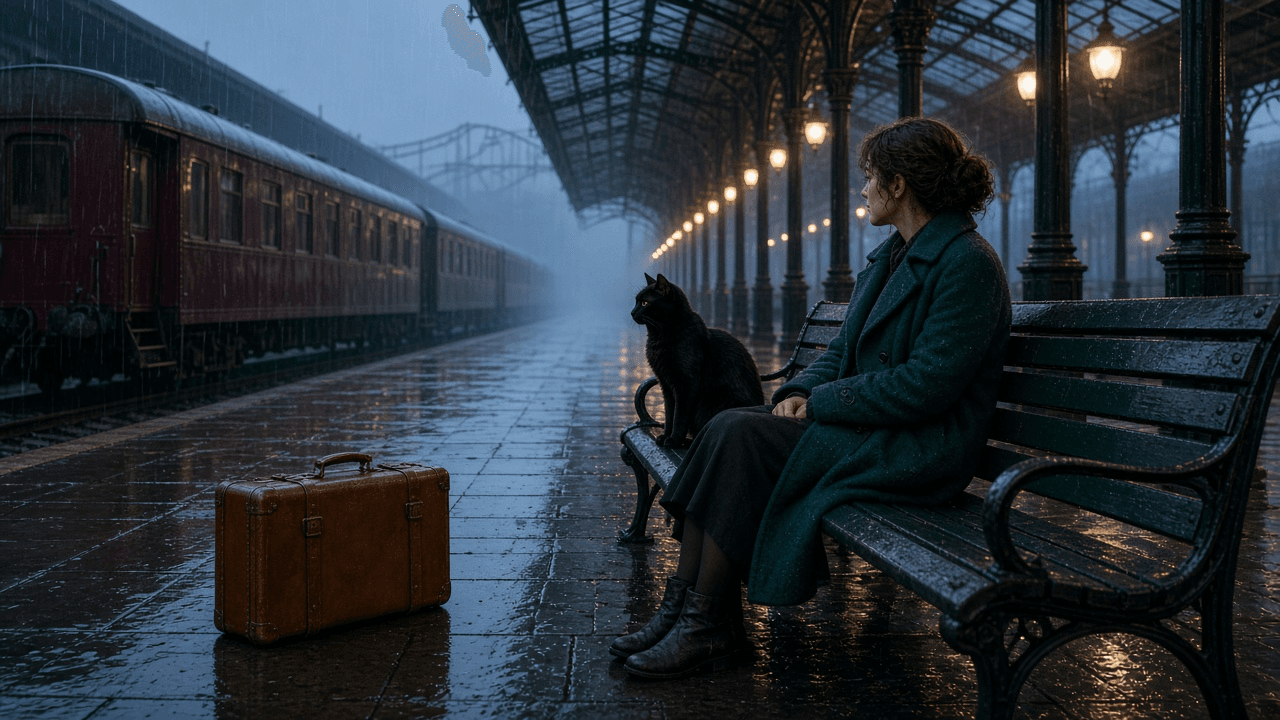 雨中的火車站來源影格,有旅人、黑貓、琥珀色行李箱與靜止的紅色列車
共用的 Image-to-Video 輸入:旅人與貓坐在長椅上,行李箱、鐵柱與靜止的列車創造出清晰的前、中、遠景平面。
Kling 4 受控鏡頭運動:3 個可重複的敘事鏡頭
每次測試都使用相同的來源影格、16:9、1080p、8 秒、最高可用品質,並關閉音訊。每次執行都重新上傳來源影像,並保持 multi-shot 關閉。保持旅人、貓、列車、光線與場景固定,只更改 Camera path 區塊。
每段影片請開啟 Kling v3.0 Pro Image-to-Video,上傳來源影格,選擇最高可用品質,設定 16:9 與 1080p,設定 8 秒,關閉音訊,並保持 multi-shot 關閉。提交前確認表單中的實際設定。簡報中顯示但未在表單中實際送出的設定,不算測試結果。
環繞旅人與貓的 25 度軌道
鏡頭目標。 多揭示一點長椅與列車側面,同時讓旅人與貓一起成為注意中心。車站柱子與列車應相對於主體位移,以顯示真正的視差。
plaintext1Subject and action: the traveler remains seated on the same green bench. She rests one hand on the closed amber suitcase handle. The black cat sits beside her and turns its head once toward a warm station lamp, then settles. 2 3Scene and spatial anchors: preserve the wet stone floor and suitcase in the near foreground, the bench, traveler, and cat in the middle ground, and the stationary deep-red train, repeating iron columns, and glass roof in the far background. Keep the blue-hour rain and warm station lamps unchanged. 4 5Camera path: start at a front-left medium-wide view of the traveler and cat. Orbit clockwise exactly 25 degrees around the bench at a steady distance and seated eye-level height. End at a stable three-quarter view that reveals slightly more of the train along the platform. The camera physically moves through the foreground, middle ground, and background to show parallax. The train remains stationary. 6 7Constraints and pacing: one continuous shot, level horizon, smooth constant speed, stable face and cat anatomy, no cut, no sudden acceleration, no extra person, no extra animal, no moving train, no text, no logo.
驗收測試。 柱子與列車應在旅人與貓身後位移,同時他們可見的一側略微改變。如果主體只是變大,保持來源與動作不變,僅將 Camera path 改寫為實體環繞。
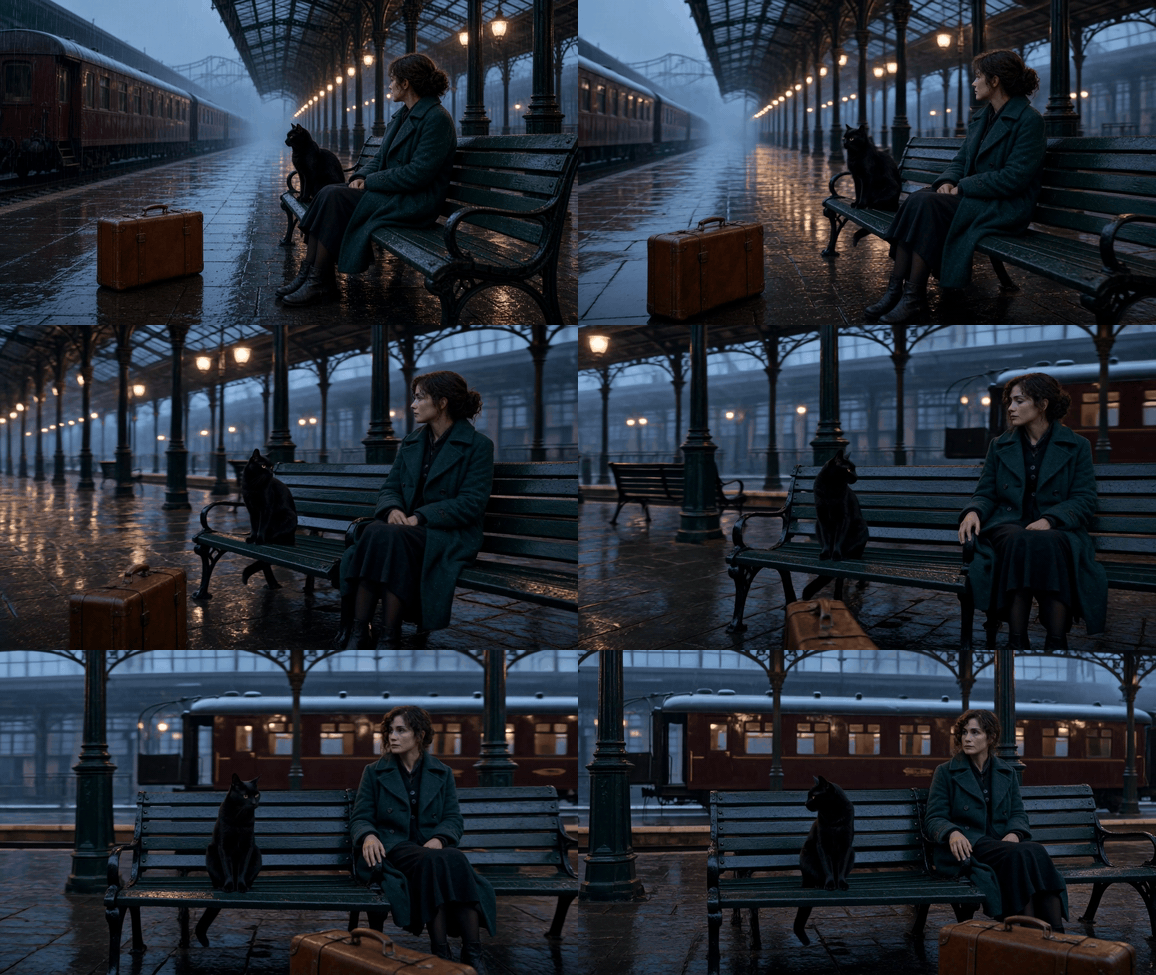
Kling V3.0 Pro 在雨中的車站月台上環繞旅人與黑貓
環繞結果:視角繞著長椅移動,而車站柱子與列車在坐著的兩人身後位移。GIF 保留了雨中車站的氛圍,並讓視角變化清晰可見。
沿著潮濕月台的橫向移動
鏡頭目標。 以固定高度橫向移動,揭示車站向後退去的柱子與列車車窗,同時讓坐著的兩人錨定在長椅上。
plaintext1Subject and action: the traveler stays seated on the green bench. The black cat leans forward once to look toward the tracks, then returns to a calm seated pose. The traveler remains still. 2 3Scene and spatial anchors: preserve the amber suitcase in the near foreground, the bench and subjects in the middle ground, and the stationary deep-red train, repeating iron columns, and glass roof in the far background. Keep the rain reflections and blue-hour light unchanged. 4 5Camera path: begin to the left of the bench at the traveler's seated eye level. Track physically from left to right in one straight horizontal path, passing the foreground suitcase and bench while keeping the traveler and cat near the center of frame. Maintain the same height, lens feel, and distance. End with a different set of train windows and iron columns visible behind them. The train remains stationary. 6 7Constraints and pacing: one continuous shot, level horizon, no orbit, no crane, no zoom, no cut, stable face and cat anatomy, no extra person, no extra animal, no moving train, no text, no logo.
驗收測試。 行李箱與最近的柱子橫向移動的速度,應比遠方的列車與屋頂結構更快。如果所有層都一起移動,結果就是平移,而不是橫向移動。
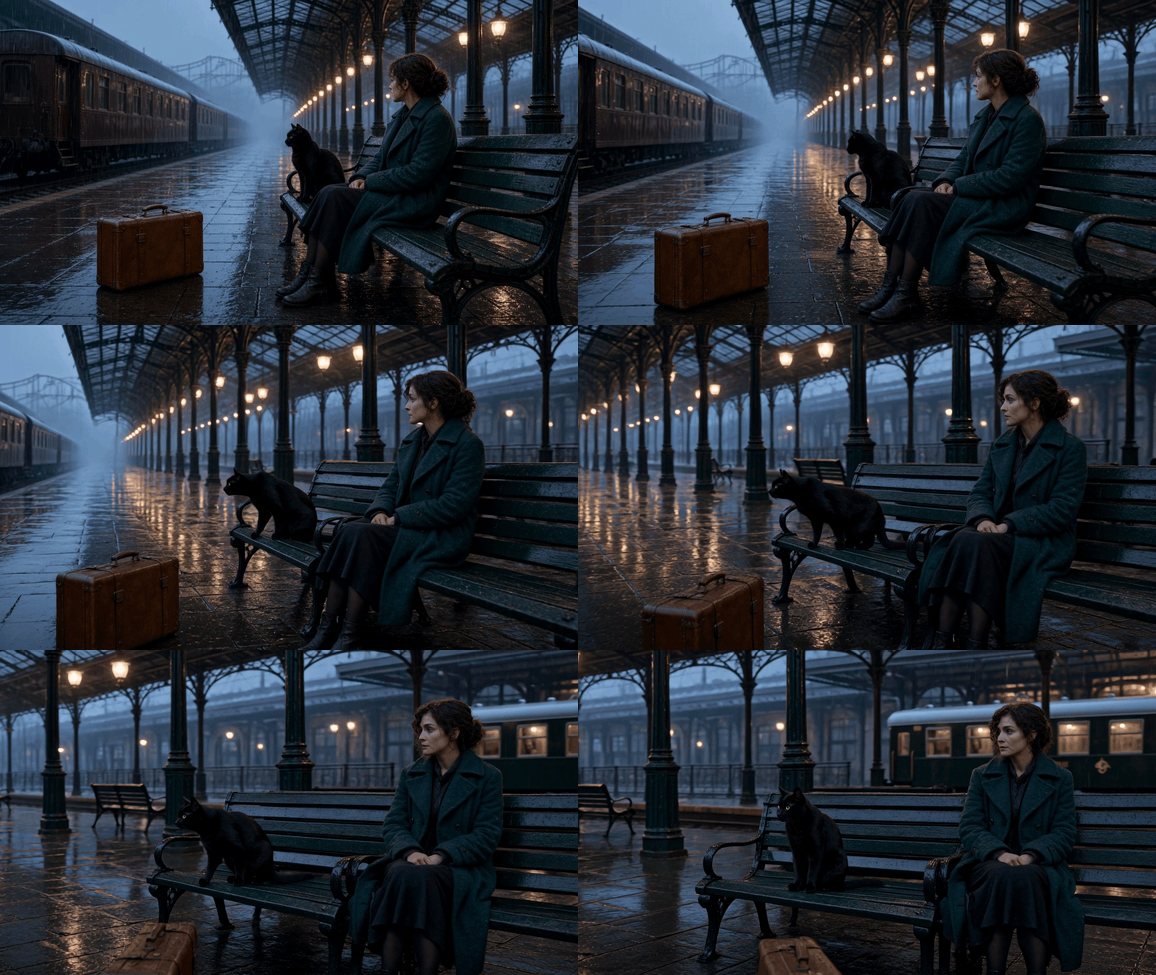
Kling V3.0 Pro 在潮濕月台上橫向移動經過旅人與黑貓
橫向移動結果:鏡頭以穩定高度沿著月台移動,貓則向軌道傾身。將行李箱與附近柱子跟遠方列車相比,以判斷跨越景深的相對移動。
從行李箱到車站屋頂的升降揭示
鏡頭目標。 從行李箱後方低角度開始,然後上升以揭示旅人、貓、列車與鐵製屋頂。新的視角應來自鏡頭高度,而不是數位放大。
plaintext1Subject and action: the traveler stays seated on the same green bench. The black cat looks once toward the traveler, then sits calmly beside her. Keep both subjects in the same positions. 2 3Scene and spatial anchors: preserve the amber suitcase and wet stone floor in the near foreground, the bench and subjects in the middle ground, and the stationary deep-red train, iron columns, and glass roof in the far background. Keep the rain-darkened blue-hour atmosphere and warm lamps unchanged. 4 5Camera path: start low behind the amber suitcase, with the suitcase edge and wet floor filling the lower foreground and partially hiding the traveler and cat. Rise smoothly in one restrained vertical crane movement until the full seated pair, the stationary train, and the glass-and-iron roof are visible. End at a stable wide view from slightly above seated eye level. The camera only rises; it does not pan, orbit, or zoom. The train remains stationary. 6 7Constraints and pacing: one continuous crane reveal, level horizon, stable face and cat anatomy, no cut, no sudden acceleration, no extra person, no extra animal, no moving train, no text, no logo.
驗收測試。 旅人與貓應因為視角越過行李箱而被揭示。如果他們只是變大,將重試簡化為低角度開始、一次垂直上升與穩定的寬景結束影格。
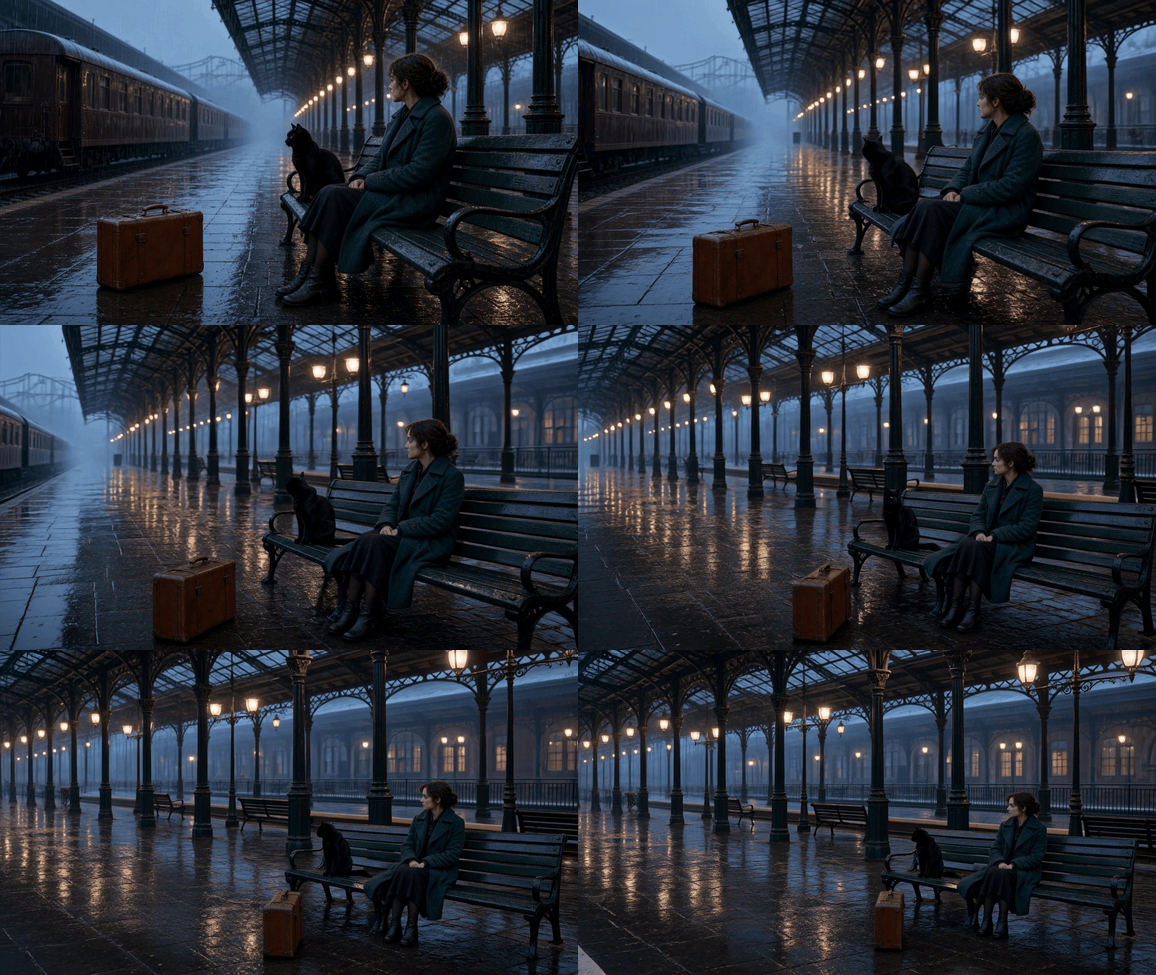
Kling V3.0 Pro 在行李箱上方升降揭示,以顯示旅人、貓與車站屋頂
升降結果:上升的視角揭示更多車站屋頂與月台。地板、長椅與屋頂可見度的變化,提供了錨點讓你檢查鏡頭是升高,而不只是放大場景。
當 Kling 4 受控鏡頭運動失敗時
大多數糟糕的結果都具有診斷價值。下一次執行只更改一個變數,然後將新輸出與同一項驗收測試比較。這種紀律會產出一份有用的紀錄,說明模型遵循了什麼,而不是一堆互不相關的實驗。
| 症狀 | 可能原因 | 下次只更改這個 |
|---|---|---|
| 推近變成變焦 | 沒有景深錨點或路徑太抽象 | 指名前景、中景、背景,以及穿過它們的實體移動 |
| 鏡頭往錯的方向移動 | 衝突的方向詞 | 保留一個方向,並寫出單純的「從 X 到 Y」路徑 |
| 產品或臉部變形 | 主體動作與鏡頭運動都太有野心 | 將動作縮減為一個小姿勢,並維持 Image-to-Video |
| 畫面震動 | 環繞、平移、變焦與升降指令互相打架 | 只保留一種運鏡,並縮短動作鏈 |
| 鎖定鏡頭仍然漂移 | 簡報描述的是構圖,不是支撐 | 使用「locked-off tripod shot」,並將主體動作限制在小區域 |
| 起始/結束轉場撕裂 | 結束影格的鏡頭感、高度、光線或比例不同 | 在要求插值前,重建結束影格以符合起始影格 |
一則關於 Kling 向前運動提示詞的社群報告也警告,冗長的負面清單與不一致的起始/結束提示,可能會妨礙乾淨的結果。請將其視為個別製作觀察,而不是模型基準(r/KLING 討論,2026 年)。
有些失敗仍超出提示詞能控制的範圍。複雜遮擋後的身分一致性、離開畫面又重返的產品、多個獨立動作,以及冗長的連續敘事,仍然可能造成不穩定。將那類簡報拆成短鏡頭,每個鏡頭只有一個視覺意圖,然後再剪接在一起。
執行後使用來源與輸出的並排比較,判斷旅人與貓的角度變化,以及行李箱、柱子、列車與屋頂層的位移。將動態片段保留在文章中作為主要證據,因為單張靜態影像無法自行確立路徑。
今日在 Atlas Cloud 上的 Kling 4 受控鏡頭運動
將實際運作中的模型頁面當作操作邊界。當你需要穩定、寬敞的來源構圖時,從 GPT Image 2 開始。當你需要一個簡短、經過檢查的鏡頭路徑時,改用 Kling v3.0 Pro Image-to-Video。將 Kling V4 留在觀察清單中,直到它的實際頁面公布可用的模型 ID 與已驗證的控制項。
這個流程適合產品團隊,因為它會產出來源素材、三個可相互比較的鏡頭測試,以及清楚的重試紀錄。它也能讓行銷簡報保持誠實。你可以與剪輯師分享確切的來源影格與提示區塊,而不是聲稱某個未來版本交付了這個鏡頭。
不要用公開的起始價格計算每支交付影片的固定成本。解析度、時長、品質與即時折扣都可能變動。每次製作批次前,請在相關的 Atlas Cloud 執行頁面查看目前報價與設定,然後將核准的來源影格與成功的提示詞保留為可重複使用的創意素材。
如果你已經有合適的影像,就從 Image-to-Video 步驟開始。如果沒有,先建立來源影格。如今要可靠得到 Kling 4 受控鏡頭運動 結果的最短路徑,是一項受控的 Kling 3.0 測試,而不是推測性的 V4 工作流程。
Kling 4 受控鏡頭運動常見問題
Kling 4 已經可以用於受控鏡頭運動了嗎?
在本指南中,並非已驗證的實際工作流程。Atlas Cloud 將 Kling V4 列為即將推出,且未公布已確認的 V4 參數。製作測試請使用目前的 Kling 3.0 模型,等 V4 頁面上線後再查看。
Camera Movement 與 Motion Control 有什麼不同?
Camera Movement 引導觀眾的路徑與取景。Motion Control 主要將參考動作轉移到角色上。規劃好的環繞或橫移請使用前者。當表演者或虛擬化身需要跟隨參考動作時,請使用後者。
如何避免推近鏡頭變成變焦?
描述實際景深:一個近處物件、主體與遙遠背景。說明鏡頭會實體前進穿過那些層次,然後檢查視差。如果結果仍然是變焦,請先只更改鏡頭路徑的句子,再考慮更改影像。
鏡頭控制應該用 Image-to-Video 還是 Text-to-Video?
當構圖、產品幾何與空間錨點很重要時,請使用 Image-to-Video。Text-to-Video 適合探索,但它要求模型同時發明場景與鏡頭路徑。
如何在 Kling 中讓鏡頭完全靜止?
要求「locked-off tripod shot」,保持地平線水平,禁止剪接,並給主體一個小幅局部動作。靜止鏡頭仍可能漂移,因此請以固定的背景錨點判斷執行結果,而不是只看文字。
目前在 Atlas Cloud 上,最適合受控產品鏡頭的 Kling 模型是什麼?
對於這裡展示的單一來源、單一運鏡工作流程,Kling v3.0 Pro Image-to-Video 是目前實用的選擇。比較路徑時,保持模型、來源影格、解析度、時長與音訊設定固定。這能給你的團隊可重複的證據。





