Most AI video tools work like a slot machine. You type a prompt, you pull the handle, and you take whatever comes out. One pull might give you something beautiful. String a whole film together that way and you get something else: a reel of clips that never quite match, a style that drifts from scene to scene, a story that does not hold. Li Lian, the veteran director who founded Versatile Media, names the problem exactly. "Many AI tools just hand you a tool. You type something, it outputs content. Largely, the AI is controlling you."
MOKE (墨客) was built to flip that relationship. It is a node-based, end-to-end generative-video workflow that puts a filmmaker back in the director's chair, turning a scattershot of lucky generations into a pipeline a creator can actually steer from script to final cut.
What a creator can do with it
Versatile Media runs roughly 30 short dramas a month through MOKE. A creator who has never touched the platform can be productive after one to three days of onboarding, and turn out a finished two-minute video for about ¥250. The same workflow has produced AIGC ad campaigns for national brands including Laoxiangji and Haidilao. That is a working production line, not a demo.
MOKE runs on an infinite canvas. On the left sit the function and node panels; the workspace is where the film comes together. A creator drops a node to generate a script, uses another to break that script into segments, then drives keyframes and shots downstream, each step feeding the next inside one connected workflow. Once a pipeline works, it can be duplicated and shared, so a look that took real effort to dial in becomes a template the whole team can reuse. Footage can be upscaled to high resolution inside the same flow.
The pipeline structure matters because a finished film is not one AI problem, it is many: the script and shot list, the storyboards and keyframes, the moving shots, the sets and camera moves through space, the score and sound design. Prompt-and-pray tools treat each generation as a standalone gamble. MOKE treats them as stages of one production, so decisions made early hold all the way through.
Taste is the job now
Removing the gamble does not remove the creator, it promotes them. When the tool stops controlling you, judgment becomes the scarce ingredient. Li puts it plainly:
"Your taste only becomes more important. Say I generate 100 different six-second clips. Which one is best? In the end, taste is what decides."
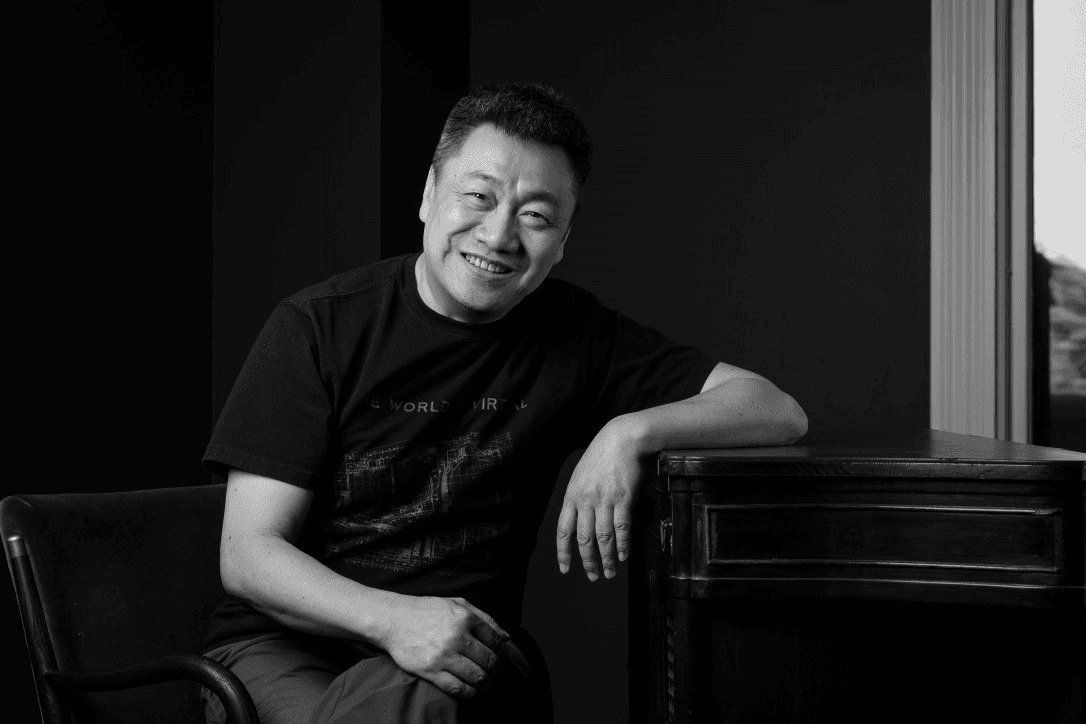
Li Lian (李鍊), founder of Versatile Media and director behind MOKE.
Breadth is what gives taste something to work with. MOKE consolidates its high-volume model calls onto Atlas Cloud's single inference API, so the team is not locked to one model per job. Because Atlas offers many models within each kind of work, not one, MOKE's creators can match the model to the shot and pick the take that is actually best. A single-tool pipeline gives a director nothing to choose between. A pipeline with real breadth behind it turns taste into finished work.
Li is candid that the tools still have gaps, which is why control across the whole pipeline matters. "AI's biggest obstacle right now is that it cannot do very precise control on the depth axis. Movement in depth is still a weak point, and it probably still needs assistive techniques like zoom, pan, and dolly." But on the fundamentals he is unequivocal: "When it comes to light and shadow, many models are already very good. They can describe light very precisely." MOKE is built to lean on what the models do well and to give the creator handles where they do not.
Ownership creators can prove
For a working creator, a film is not finished when it renders, it is finished when it is protected. MOKE builds copyright into the workflow. A creator can take work made on the platform and file for attestation directly: a trusted timestamp, blockchain-backed proof, and a certificate, with a path to a DCI digital-copyright identifier and a registered work certificate from the China Copyright Protection Center. The tool that helps you make the film also helps you prove it is yours.
Made for one filmmaker, or two
The larger shift MOKE is chasing is who gets to make a film at all. "In the past, the complexity of the craft meant not everyone was qualified or able to create," Li says. He spent decades inside the traditional model and knew its ceiling from the inside. "When I was directing, half my time was spent waiting for other people to be ready. It is a collective project. If one person has a problem, everything slows down."
MOKE collapses that. "In terms of creation itself, this gives a lot of people the opportunity. Even one or two people can now complete a story," Li says. Control is moving out of many departments and into the creator's own hands. "Stylization will get stronger. In the past, style was formed by many departments. Now it will lean more and more toward the individual." What he has always wanted is the thing MOKE is built to deliver: creation free of obstacles, where technique and the means of execution never stand between a creator and the idea.
The shift is economic as much as creative. For most of the industry's history the hard limit on who got to make something was not talent, it was money. A production cost too much for anyone to gamble on an unproven name, so the work, and the funding, went to the bankable few. When a two-minute film costs ¥250 instead of a fortune, that math breaks. A creator no longer has to already be proven to be worth a shot. More people with a real idea and no résumé get to make the thing and let the work speak for itself.
None of which means the tool does the thinking. Li is blunt about that too:
"Everyone who is good at using AI is good because they already know how to photograph, shoot, draw, and write. AI is like a mirror. If you are foolish, it is foolish too."
MOKE is a tool for people with something to say. It just removes almost everything that used to stand between them and saying it.
Powered by Atlas Cloud
A pipeline that spans this many kinds of generation could easily become a mess of vendors: a different API for each stage, a different key, a different bill, a different set of rate limits and failure modes, and a constant tax of moving files between tools that were never meant to talk to each other. MOKE avoids that by running its high-volume model calls through Atlas Cloud's single inference API. One key, one endpoint, one bill, and access to a deep catalog of models across video, image, language, and audio through the same connection. When a better model ships, it is available without re-integrating anything. That single backbone is part of what lets one or two people make a film at all.
About Versatile Media
Versatile Media (浙江博采传媒), founded in 1993 and headquartered in Hangzhou with offices in Beijing and Vancouver, works across film and television content, virtual production, and advertising. The studio holds 15 invention patents and operates a roughly 100,000-square-meter AI virtual-production base in Deqing, Zhejiang, home to an AI-and-virtual-filmmaking innovation lab run in partnership with the China Film Science & Technology Research Institute. MOKE is the studio's node-based generative-video platform.
Li sees where this goes. "In the future, some films will become auteur films. One person can make a film and share it with friends. It might no longer go into theaters, and instead get distributed through private channels." Versatile Media is building the workflow for exactly that future, on Atlas Cloud.
About Atlas Cloud
Atlas Cloud is a unified full-modal AI inference platform: 400+ models across video, image, language, and audio, through one API key, one endpoint, and one billing account, OpenAI-compatible for language models.





