
Kimi API for Vision-to-Code Generation
Kimi API is Moonshot AI's open-weight K2 line, from the natively multimodal K2.5 to the coding-specialized K2.7 Code. Because vision is built into the model, you can turn screenshots, UI mockups, and short videos into working frontend code, coordinate up to 100 parallel sub-agents, and reason across a 256K token context. Atlas Cloud serves the whole family through one unified endpoint with transparent pay-as-you-go pricing. Start building today.
Kimi is developed by Moonshot AI. Atlas Cloud (operated by Atlas Cloud AI LLC) provides access to it and does not own it. All trademarks belong to their respective owners.
Explore the Leading Kimi
Atlas Cloud provides you with the latest industry-leading creative models.

Match Your Workload to the Right Kimi API Model
Compare each Kimi endpoint's focus and standard per-million-token pricing at a glance.
| Modality | Description |
|---|---|
| Kimi K2.7 Code API (Text to Text) | Purpose-built for engineering work, this endpoint turns natural language prompts and existing source files into working code, fixes, and developer automation. It targets programming, debugging, and AI developer workflows where dependable code generation is the priority, billed at a standard $0.95 per million input tokens and $4 per million output tokens. |
| Kimi K2.6 API (Text to Text) | Feed it text prompts and Kimi K2.6 returns reasoned answers, code, and structured output across everyday productivity tasks. Enhanced for reasoning and coding alike, it suits teams that want a single general-purpose model for analysis, drafting, and software development, with cached input priced at $0.16 per million tokens for repeated context. |
| Kimi K2.5 API (Text to Text) | When a job spans long documents or multi-step pipelines, Kimi K2.5 ingests extended text inputs and returns coherent, context-aware responses. Built for long-context understanding and intelligent workflows, it runs on transparent pay-as-you-go pricing at $0.60 per million input tokens and $3 per million output tokens, keeping large-scale analysis cost-efficient. |
The Kimi API, From 256K Context to 300-Agent Swarms
The Kimi API brings Moonshot AI's trillion-parameter K2 models to one endpoint, pairing a 262,144-token context window with native image and video input, self-directed agent swarms, and specialized models tuned for coding, debugging, and long-horizon reasoning.
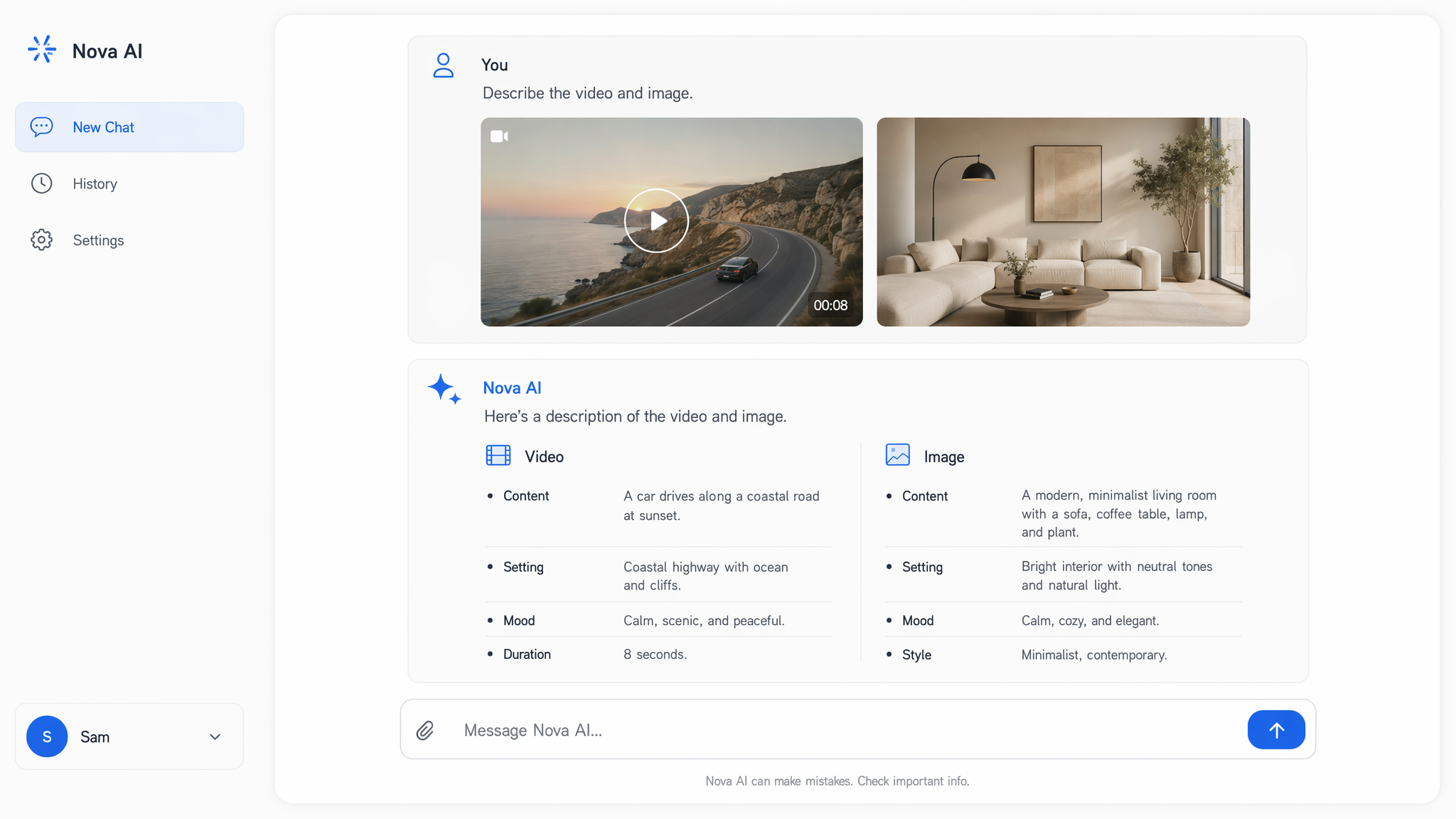
Native Image and Video Understanding
K2.6 processes text, images, and video inside one native multimodal architecture, accepting formats from PNG and WebP to MP4, MOV, and WebM without external plugins. Its MoonViT vision encoder reads screen recordings, design files, and diagrams directly. Where earlier K2.5 handled text and images, K2.6 extends the same stack to full video understanding, so visual context becomes just another input.
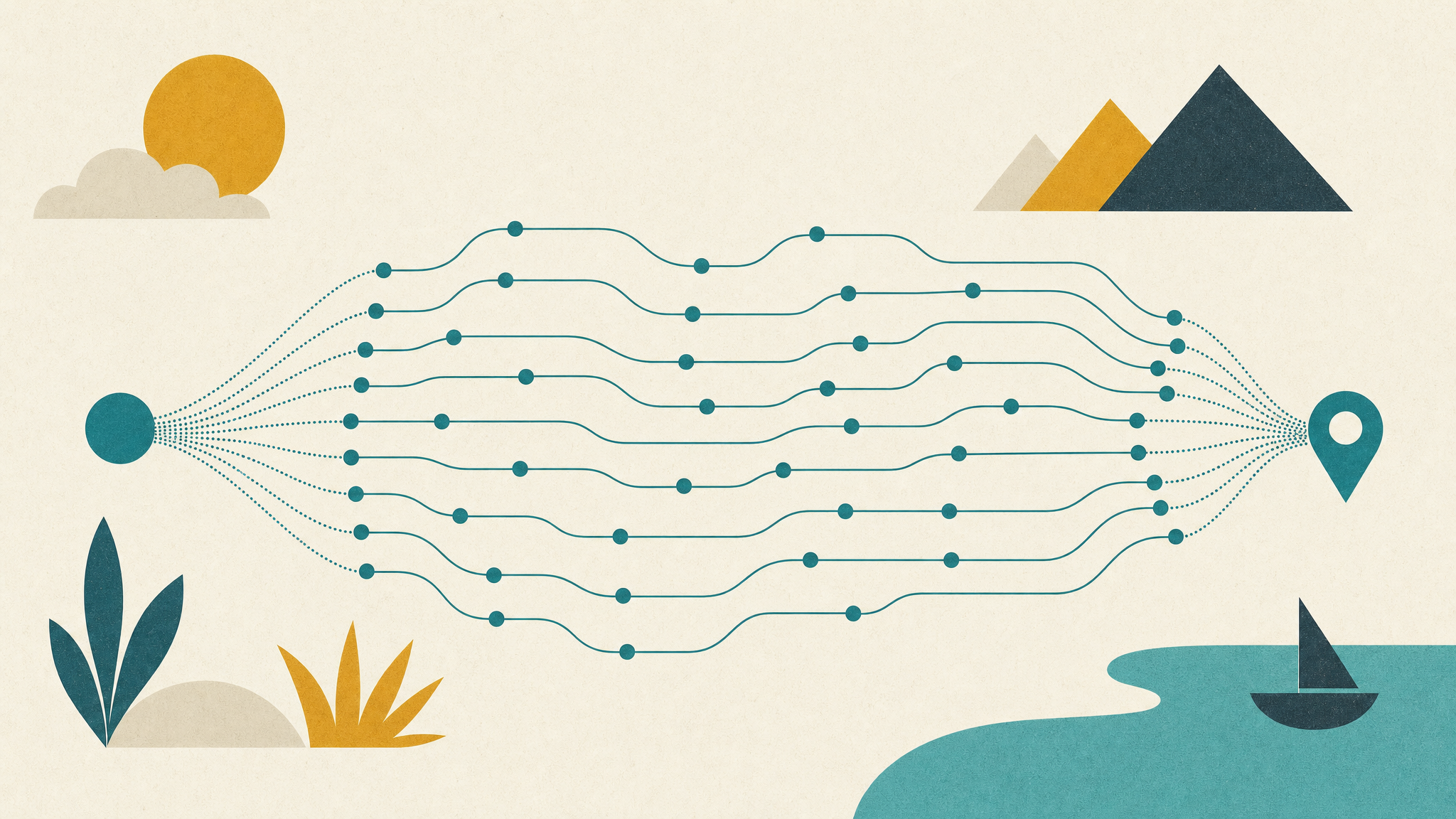
Self-Directed Agent Swarms via the Kimi API
The Kimi API exposes a self-directed agent swarm that scales to 300 sub-agents working across roughly 4,000 coordinated steps. Rather than reasoning on a single thread, K2.6 decomposes one large objective into parallel branches and orchestrates them to completion. Each sub-agent carries its own slice of the task, then reports back into the shared plan. This design suits long-horizon automation where a project spans many dependent stages.
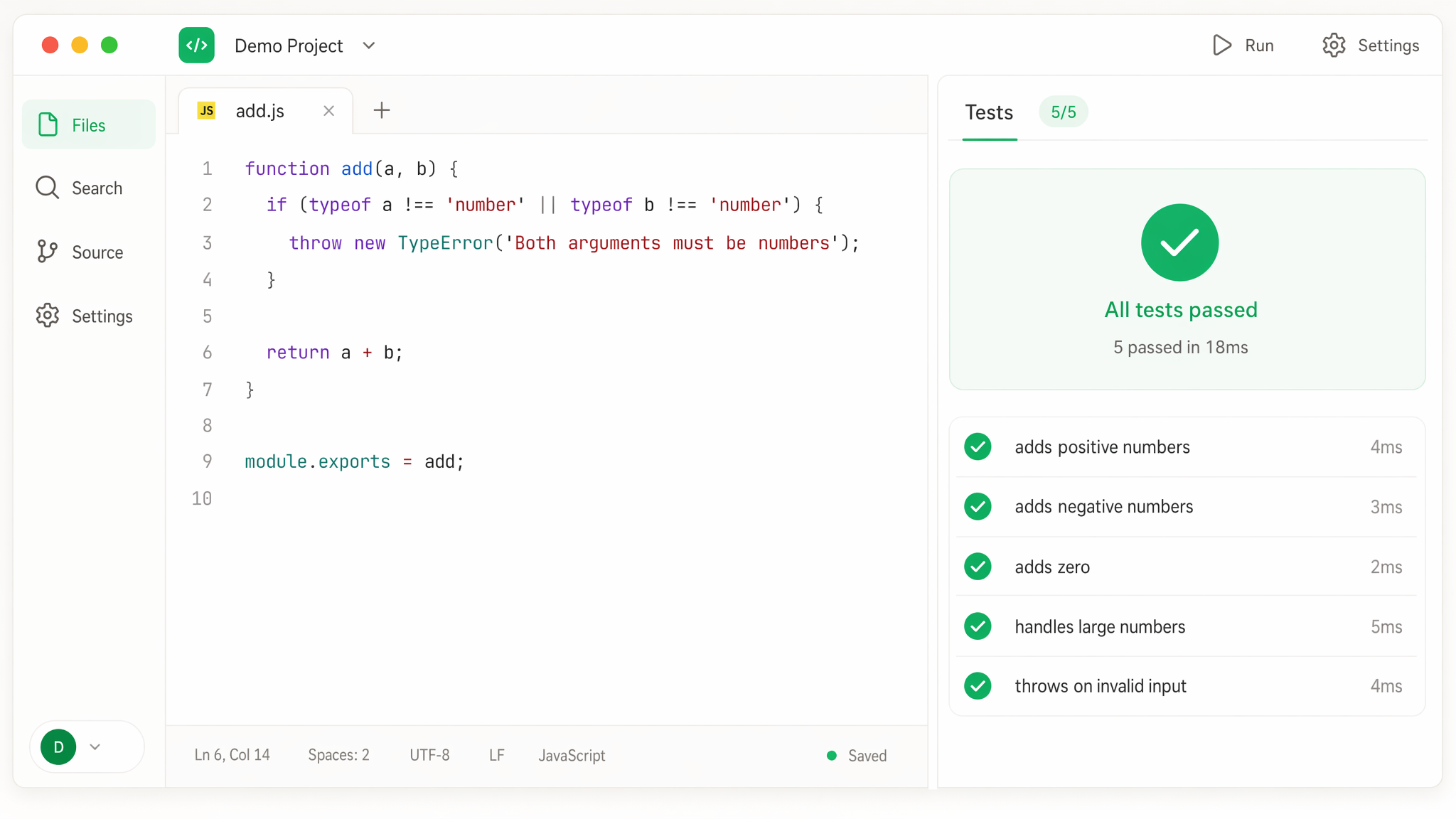
Coding and Debugging Built In
Coding sits at the center of the family, with Kimi K2.7 Code purpose-built for programming, debugging, and developer agent workflows. On the SWE-Bench Pro coding benchmark, K2.6 reaches 58.6, edging past several frontier models on real repository fixes. Point either model at a failing test suite and it traces the fault, proposes a patch, and iterates until the build turns green.
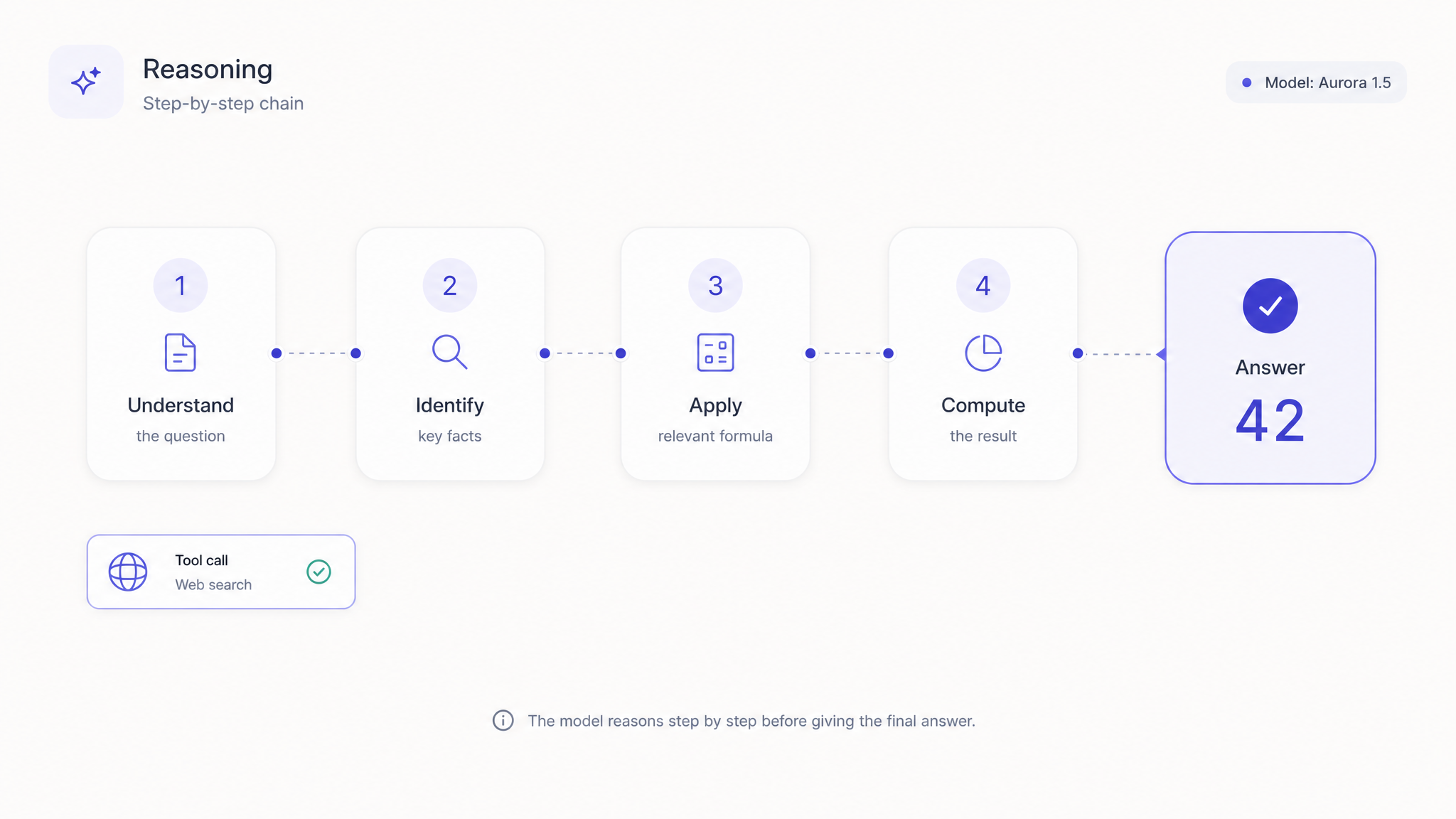
Agentic Reasoning Through One Kimi API Key
Need transparent reasoning? Enable the configurable thinking mode and the model surfaces its step-by-step chain before committing to an answer, alongside native tool and function calling. On Atlas Cloud the entire Kimi API runs behind one OpenAI-compatible key, with pay-as-you-go per-call pricing and Day-0 access to every new release. Swap your base URL and existing code keeps working.
Kimi API Face-Off: One Prompt, Three Models
Send a single identical brief to the Kimi API and two rival models, then compare the interactive HTML page each one builds from the exact same instructions.
Build a complete single-file HTML page for a playable Snake arcade game, with all CSS and JavaScript inlined and zero external dependencies, CDNs, images, or fonts. Render the board on a canvas with a modern neon-on-dark color scheme, smooth movement, and a soft glow trail behind the snake. Support arrow-key and WASD control plus swipe gestures on touch devices, show a live score and a persistent high score, and speed the game up gradually as the score climbs. Trigger a small particle burst whenever food is eaten, display an animated game-over overlay with a restart button, and keep the layout responsive so the board stays centered and legible on both desktop and mobile.
Generated with Kimi K2.7 Code on Atlas Cloud
Generated with GPT 5.5 on Atlas Cloud
Generated with Kimi K2.6 on Atlas Cloud
Create a single, fully self-contained HTML file (all CSS and JavaScript inlined, absolutely no external dependencies, CDNs, images, or web fonts) that renders an interactive "living digital terrarium" — a sealed glass jar sitting at the center of the screen containing a self-sustaining miniature rainforest that grows in real time. Open it in any modern browser and it must run immediately at 60fps with no build step. Core scene and layout: center the composition symmetrically, treating the glass jar as the hero stage on a deep, vignetted dark background (radial gradient from a soft moss-lit center fading to near-black edges) so all focus lands on the jar. Render everything on a full-window HTML5 Canvas layered under real glassmorphism DOM/CSS chrome: the jar wall must show genuine glass qualities — curved refraction highlights, a bright specular rim-light streak, faint frosted blur, and scattered condensation droplets with tiny lensing — achieved with layered radial/linear gradients, backdrop-filter blur, semi-transparent white strokes, and soft box-shadows. Inside the jar sits dark humid loam at the bottom and a faint volumetric mist that drifts slowly. The three technical layers that must stack and coexist (this is where weak vs strong models separate — a weak model will produce a static picture, a strong one makes the whole jar alive): 1. Recursive L-system growth: vines, fern fronds, and mosses are generated by an L-system / recursive branching algorithm and animate their unfolding over time — stems lengthen, branches subdivide, fronds uncurl, leaves scale in with easing. Growth is organic and slightly randomized per branch (angle jitter, thickness taper, length decay) so no two plants look identical on reload. 2. Particle system: amber firefly-like light motes (dozens) drift and bob through the mist with soft additive glow and gentle parallax, plus rising condensation/pollen specks; particles subtly react to newly grown plants. 3. Day–night lighting cycle: a continuous ambient light loop sweeps the top-down key light from cool white dawn → warm golden dusk → deep indigo night and back, recoloring the whole scene, the glass highlights, the mist, and the plant tones accordingly. Plants exhibit phototropism — stems bend and lean their tips toward the current light direction as it moves. Primary interaction: clicking anywhere on the jar wall/interior drops a single seed into the loam at the click x-position, and that seed plays a full, visible life cycle in sequence — the seed falls and settles, germinates a sprout, the sprout branches recursively via the L-system, then blooms a small glowing flower at maturity — each stage eased and clearly readable, with a soft ripple/dust puff on landing. Multiple clicks spawn multiple plants that coexist and keep growing, gradually filling the terrarium into a denser thicket. Include a couple of subtle inline controls in glassmorphic pill buttons (e.g. "Reset terrarium" and a "Day/Night: auto ⇄ drag" toggle where the user can scrub the time-of-day, plus optional pause). Provide a faint hint line ("tap the glass to plant a seed") that fades after the first interaction. Palette and mood: forest ink-green and mossy yellow-green foliage, amber/honey glow for the light motes and blooms, cool teal-glass tints on the jar, warm gold and cool indigo washes across the day-night sweep. The overall feeling is quiet, breathing, meditative — slow gentle motion, no harsh transitions. Technical requirements: use requestAnimationFrame with delta-time so animation is frame-rate independent; make the canvas responsive to window resize with correct devicePixelRatio scaling and keep the jar centered; cap particle/branch counts sensibly so it stays smooth; keep all randomness seeded per-plant so growth looks natural. Everything — geometry, glow, glass, mist, lighting, particles, and the recursive plants — must be drawn or computed in code, with zero external assets. Deliver only the complete HTML document, ready to save as one .html file and open.
Generated with Kimi K2.7 Code on Atlas Cloud
Generated with GPT 5.5 on Atlas Cloud
Generated with Kimi K2.6 on Atlas Cloud
Put the Kimi API to Work Across Your Stack
Whether you are shipping code across huge repositories, converting designs into interfaces, or orchestrating agent swarms, the Kimi API brings long-context reasoning and native tool use to real production workloads.

Repository-Scale Coding with the Kimi API
Kimi K2.7 Code reads entire repositories inside a 262K-token window, refactoring, debugging, and extending codebases in one pass. Teams rely on it to modernize legacy systems and ship multi-file features without losing project context.

Turn Designs into Front-End Code
Feed Kimi K2.5 a screenshot, mockup, or short demo video and it returns working front-end code from the visual input. Designers and product teams turn static concepts into interactive pages and prototypes in minutes.

Analyze Long Documents and Data
When reports or contracts run to hundreds of pages, Kimi models process them within a 256K-token context to surface trends and conflicts. Analysts extract structured answers with citations instead of reading every page manually.

Orchestrate Agent Swarms via the Kimi API
Agent swarms let Kimi K2.5 split one goal into up to 100 parallel sub-agents, cutting execution time up to 4.5x. Teams automate batch analysis and long-form builds a single model cannot finish.

Power Tool-Using Autonomous Agents
Trained for agentic tool use, Kimi models call external functions, APIs, and search to complete tasks without step-by-step prompting. Developers build assistants that book, query, and act across real systems on a user's behalf.

Migrate to the Kimi API in Minutes
Because the Kimi API is OpenAI-compatible, you swap the base URL and one key to route traffic to Moonshot models. Startups adopt Kimi without rewriting application logic and pay transparent per-call pricing.
Kimi API vs Rival LLM APIs: Context, Modality, and Cost
Weigh the Kimi API against other flagship language model APIs on Atlas Cloud and see where it leads on context length, input flexibility, and per-token price.
| Model | Context Window | Input Types | Input Price ($/1M tokens) | Output Price ($/1M tokens) |
|---|---|---|---|---|
| Kimi K2.7 Code | 256K tokens | Text, Image | $0.95 | $4.00 |
| Kimi K2.6 | 256K tokens | Text, Image, Video | $0.95 | $4.00 |
| Kimi K2.5 | 256K tokens | Text, Image, Video | $0.60 | $3.00 |
| DeepSeek V4 Pro | 1M tokens | Text | $1.74 | $3.45 |
| GLM 5.2 | 1M tokens | Text | $1.40 | $4.40 |
| Grok 4.5 | 500K tokens | Text | $2.00 | $6.00 |
| Doubao Seed 2.1 Pro | 256K tokens | Text | $0.90 | $4.50 |
How to Use Kimi on Atlas Cloud
Get started in minutes — follow these simple steps to integrate and deploy models through Atlas Cloud's platform.
Create an Atlas Cloud Account
Sign up at atlascloud.ai and complete verification. New users receive free credits to explore the platform and test models.
Why Use Kimi on Atlas Cloud
Combining the advanced Kimi models with Atlas Cloud's GPU-accelerated platform provides unmatched performance, scalability, and developer experience.
Performance & flexibility
Low Latency:
GPU-optimized inference for real-time reasoning.
Unified API:
Run Kimi, GPT, Gemini, and DeepSeek with one integration.
Transparent Pricing:
Predictable per-token billing with serverless options.
Enterprise & Scale
Developer Experience:
SDKs, analytics, fine-tuning tools, and templates.
Reliability:
99.99% uptime, RBAC, and compliance-ready logging.
Security & Compliance:
SOC 2 Type II, HIPAA alignment, data sovereignty in US.
Kimi API Questions, Answered
The Kimi API gives developers programmatic access to Moonshot AI's Kimi family of large language models for reasoning, coding, and long-context understanding. On Atlas Cloud you reach it through one OpenAI-compatible endpoint, so a single key covers every Kimi version with pay-as-you-go, per-call pricing.
Atlas Cloud hosts several versions, including Kimi K2.5 for long-context and agentic workflows, Kimi K2.6 as Moonshot's most intelligent general model, and Kimi K2.7 Code for programming and debugging. Because they share the same request format, moving between them only means changing one model string.
These models excel at complex coding, multi-file repository analysis, document-heavy reasoning, and agentic tool calling. Teams reach for Kimi when a job needs both a large working memory and strong step-by-step logic, such as refactoring an entire codebase or auditing lengthy reports.
Billing is pay-as-you-go with no subscription and no minimums. Kimi K2.5 is priced at $0.60 per million input tokens and $3.00 per million output tokens, while Kimi K2.6 and Kimi K2.7 Code run at $0.95 per million input tokens and $4.00 per million output tokens. Context caching lowers the cost of repeated or shared prompts.
Since Atlas Cloud exposes Kimi through an OpenAI-compatible API, you can point your current OpenAI SDK at the Atlas endpoint and swap in a Kimi model name. No rewrite of your application logic is needed, which makes it a genuine drop-in for chat, coding, and agent pipelines.
Kimi K2.5, K2.6, and K2.7 Code each support a 262,144 token context window, roughly 256K tokens. That capacity lets you feed entire codebases, long technical manuals, or hundreds of pages of reports into a single request without manual chunking.
Recent Kimi versions are natively multimodal rather than text-only. Kimi K2.6 accepts text, image, and video input, and Kimi K2.5 reasons over combined visual and text tokens, so you can pass screenshots, design files, or recordings and have the model interpret them alongside your prompt.
Developers most often choose it for cost and context. Community reports point to significant savings versus leading proprietary models at comparable coding quality, and the 256K window handles whole-repository and full-document tasks that shorter-context models cannot. Start building today.
Explore More Families
Seedance 2.5
Seedance 2.5 API is now available on Atlas Cloud! It gives developers ByteDance's newest video model. It generates up to 30 seconds of native video in a single pass from text, a single image, or as many as 50 multimodal references, with synchronized audio and in-frame multilingual text. On Atlas Cloud you reach it through one key, with subject consistency and improved physics keeping long shots coherent. (Update: Seedance 2.5 1080P API Is Available NOW!)

Wan 3.0
Wan 3.0 API is the next generation of Alibaba's Wan video family, built to push long-form generation, multi-reference control, and audiovisual quality to new heights. Atlas Cloud already hosts Wan 2.7, 2.6, and 2.5, and Wan 3.0 runs on the same unified key with no separate setup. Start building today. Scroll down to the showcase to see what Wan 3.0 can create.
MiniMax H3
MiniMax H3 is MiniMax's video model family for text, image, and reference driven generation. Create 5 to 15 second clips, guide motion with an optional last frame, preserve subjects from reference images, or select H3 Developer when generated audio fits the workflow. Atlas Cloud brings H3, H3 Fast, H3 Max, and H3 Developer into one API workflow, with standard pricing starting at $0.038 per second. Start building today.
Seedream 5.0 Pro
Seedream 5.0 Pro API gives developers ByteDance's controllable image editing model on Atlas Cloud. It places edits precisely with anchors and coordinates, separates images into editable layers, fuses multiple references, and matches exact colors and materials, with multilingual text at 2K and 3K. On Atlas Cloud you reach it through one key!
Seedance 2.0
The Seedance 2.0 API gives you production access to ByteDance's multimodal video model — quad-modal inputs (text, image, video, audio) and an industry-leading "Universal Reference" system that locks composition, camera movement, and character actions across shots. Integrate director-level control with one API call, a flat $0.09/s, instant key, and no waitlist — backed by enterprise-grade uptime and compliance. Seedance 2.0 Native 4K is now live!
GPT Image 2.5
The gpt-image-2.5 family from OpenAI gives developers a choice of Flare and Sunburst for production image workflows. Render at arbitrary resolutions up to 3840x2160 and select from five quality tiers, including xhigh and max, to match specific output requirements. Atlas Cloud provides ready-to-use REST inference with no cold starts and standard pricing from $0.004 per generation. Start building today.
GPT Image 2
The GPT Image 2 API gives developers access to OpenAI's latest image model, the successor to GPT Image 1.5. It generates and edits images with accurate text rendering across Latin and CJK scripts, plus strong composition for posters, mockups, and infographics. On Atlas Cloud you reach it through one unified API alongside 300+ models, with free credits, 99.99% uptime, and no OpenAI organization verification required.
Gemini Omni Flash
The gemini omni API brings Google DeepMind's natively multimodal Gemini Omni Flash family, including Gemini Omni 1.1 Flash, to developers. Create cinematic video with synchronized native audio, animate still images with precise start and end frame control, or revise existing footage through text guided edits that preserve untouched content. Atlas Cloud provides one OpenAI-compatible key, unified access, and transparent pay-as-you-go pricing. Start building today.
Grok Imagine
The Grok Imagine API covers xAI's image, video, and speech models, from Image 2.0 to Video 1.5 and xAI TTS v1. Render 1K or 2K stills across 14 aspect ratios, push a scene to 15 seconds of 1080p motion, steer shots with up to 7 reference images, or narrate them in 20 languages. Atlas Cloud runs every mode on one endpoint, priced pay-as-you-go from $0.02 per image and $0.05 per second. Start building today.
Google's most powerful creative models are all available on Atlas Cloud. Veo 3.1 delivers cinematic video generation, Nano Banana 2 powers high-fidelity image creation, and Gemini brings multimodal intelligence to every workflow. Access the full Google model suite through one API key with Day-0 availability and pay-as-you-go pricing.
Seedance 2.0 Mini
The Seedance 2.0 Mini API is the lightest, lowest-cost tier of ByteDance's Seedance video line, built for teams where throughput and unit cost matter more than maximum polish. Use it for batch generation, rapid prototyping, and draft passes, all through one OpenAI-compatible key on Atlas Cloud.
ByteDance
From cinematic video generation to high-fidelity image creation, ByteDance's most powerful models are live on Atlas Cloud. Run Seedance and Seedream at scale with the lowest inference pricing and zero infrastructure overhead.
Recommended Articles
Guides, tutorials, and product updates to help you get the most out of Atlas Cloud.





