
Flat mid-century poster illustration of a coffee pot pouring into a glass that fills only to a line marked 768, the free MiniMax H3 ceiling
The free tier pours. It just stops at a line somebody else drew. Generated with openai/gpt-image-2/text-to-image.
You are not searching this because you are unwilling to pay.
You are searching it because you have watched a free allowance shrink before. Because a daily login bonus quietly stopped landing one month and there was no email about it. Because "free" on this product has always been a number somebody could edit while you were mid-project. So a new model drops and your first reflex is not "is it good", it is "how long does this one last".
That reflex is correct. The question is just aimed slightly wrong. The useful version is not how much of MiniMax H3 is free. It is whether the free part can produce anything you could actually hand to a client.
Short answer: yes, MiniMax H3 is free to try, through four separate doors. And every one of those doors stops at 768p, which is the one thing that makes H3's output unusable for the work people want H3 for. Here is the 10 second clip that proves it, followed by the exact bill.
Key takeaways
- Yes, there are four free routes: the Hailuo free web tier, a reported new-user trial in the MiniMax Hub desktop app, the open weights on Hugging Face, and signup credits on third-party hosts.
- All four cap at 768p. H3-Base generates at 768p; 2K comes from a separate module, H3-Regenerate-2K, which MiniMax has explicitly not open sourced yet.
- MiniMax's own prepaid discount packages do not cover H3 either. The pricing docs say it in one line: video packages support the Hailuo series, "MiniMax H3 is not supported yet."
- Free weights are not the same as free permission. The license excludes the EU, the UK, South Korea and the USA, and the restriction covers the outputs too.
- The deliverable version of the clip below cost $1.57, all in, watermark free, commercial rights included. That is the real alternative to a free plan.
The MiniMax H3 Clip No Free Account Can Export
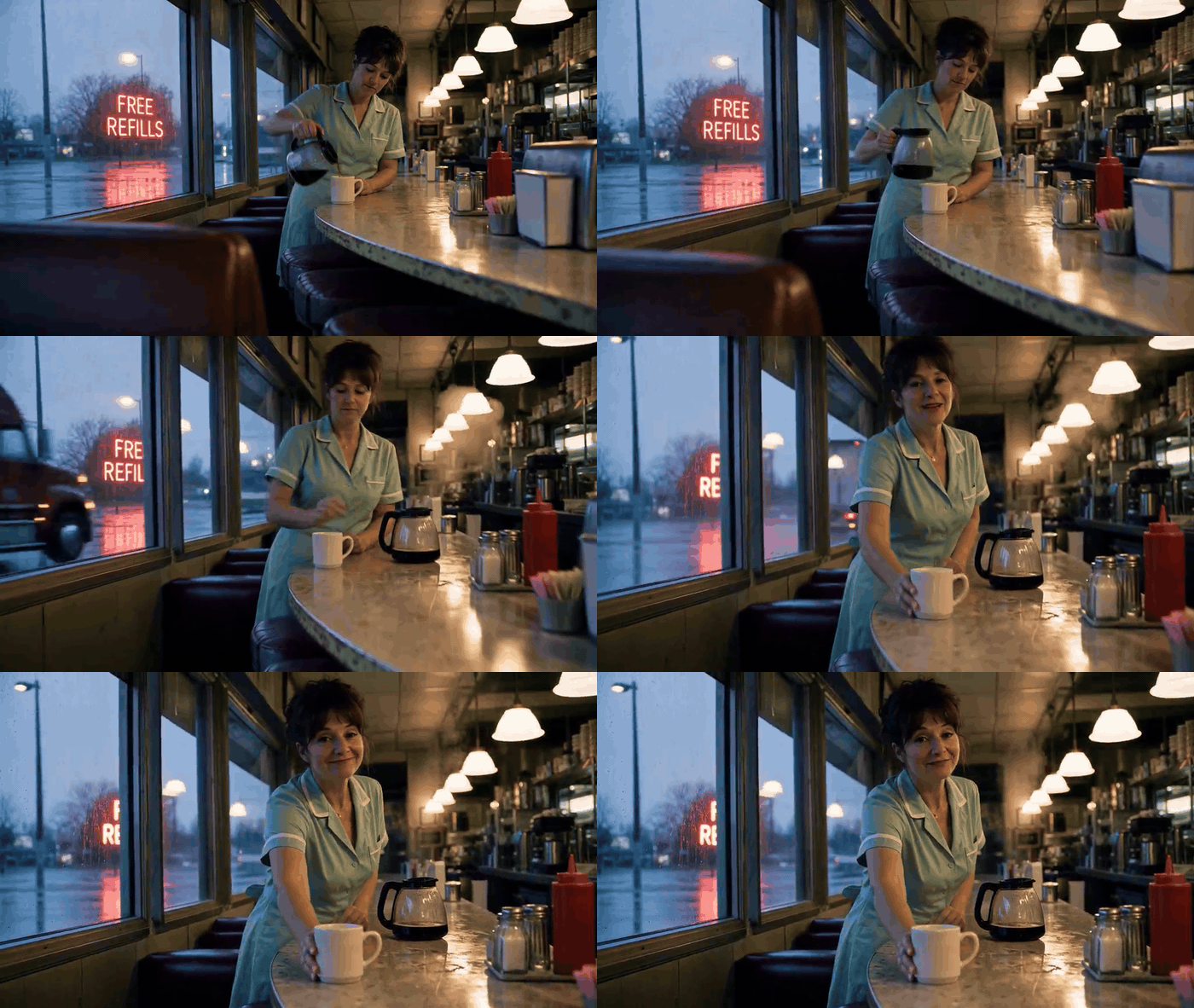
Shown here as a silent GIF. Delivered file: 2560x1440, 10.13 seconds, 24fps, AAC stereo at 32kHz generated in the same pass as the picture, no watermark. Generated with minimax/h3/image-to-video on Atlas Cloud.
Look at what is in that file, then look at the free tier's spec sheet.
2560 by 1440. Ten seconds. A spoken line that lands on the lip movement. Room tone, a truck going past, ceramic on formica. No watermark burned into the corner. Full commercial rights. Every one of those five things sits on the paid side of the line. The neon sign in the window says FREE REFILLS, which is roughly the deal on offer: the pouring is free, the good stuff never was.
Is MiniMax H3 Free? Four Doors, and Why All Four Dead-End at 768p
There are four genuinely free ways in, and they answer four different questions.
Door 1: the Hailuo free web tier. No credit card. Enough trial credits for a handful of test clips, a watermark on every download, 768p output, short clips, the slowest queue, and no commercial rights. This is the "do I like the model" door.
Door 2: the MiniMax Hub desktop app. A launch-week post from the account TechPractice on X reported three free generations for new users at full spec, up to 15 seconds, native 2K, with audio. Treat this as one unconfirmed source. It is a one-off welcome grant, not a recurring allowance, and I could not find it documented anywhere official. If it is still live it is the only free door that touches 2K, and it closes after three tries.
Door 3: the open weights. Genuinely free to download, genuinely the flagship, and genuinely capped. More on this below.
Door 4: signup credits on third-party hosts. Plenty of sites advertise a "free MiniMax H3 trial". Almost always this is that site's own welcome balance rather than anything MiniMax grants, and it is usually time-limited. Read what expires before you build a workflow on it.
The free versus paid boundary, line by line.
| Hailuo free web tier | Hub trial (reported) | Open weights, local | Per-second API | |
|---|---|---|---|---|
| What you get | Trial credits, small | 3 generations, once | Unlimited, your GPU | Unlimited, metered |
| Watermark | Yes, on every download | Reported: no | No | No |
| Max resolution | 768p | Reported: 2K | 768p, hard ceiling | 2K |
| Max duration | Short clips only | Reported: 15s | 15s | 15s |
| Native audio | Yes | Yes | Yes | Yes |
| Queue | Lowest priority | Normal | Your hardware, your wait | Normal |
| Commercial use | No | Unclear | Yes, with territory limits | Yes |
| Failed run billed | N/A | N/A | Your electricity | Submit-time rejections are free |
Why the 768p ceiling is structural, not a paywall trick.
This is the part almost no other page on this keyword gets right. The full H3 system is three modules, not one. H3-Context-IR refines your multimodal inputs. H3-Base does the actual generation, and it "produc[es] results at 768p resolution". H3-Regenerate-2K then feeds that 768p result plus the original context back through H3 to regenerate it at 2K.
MiniMax released the middle one. The model card is blunt about the third: "Due to the complexity of the system, this module is not yet open-sourced. We will release it once it is ready." They ship an API instead, so you can validate results against the official ones (MiniMax H3 model card, August 2026).
So the "download the weights and get 2K for free" plan does not have a gap in it. It has a missing component. Locally the native canvas is a 768 pixel short edge, and ComfyUI's own day-zero write-up puts the smallest usable weight set at 42.5 GB after an int8 and pruning pass, down from 123.6 GB, which is what lets it run on a card like an RTX 3060 with VRAM offloading (ComfyUI blog, August 2026). Impressive engineering. Still 768p.

Car brand advertising generated by MiniMax H3, a dark supercar with clean wordmark typography holding steady
MiniMax's own H3 launch material, clip one of three: automotive brand advertising. Note the wordmark, sharp and stable while the camera moves.
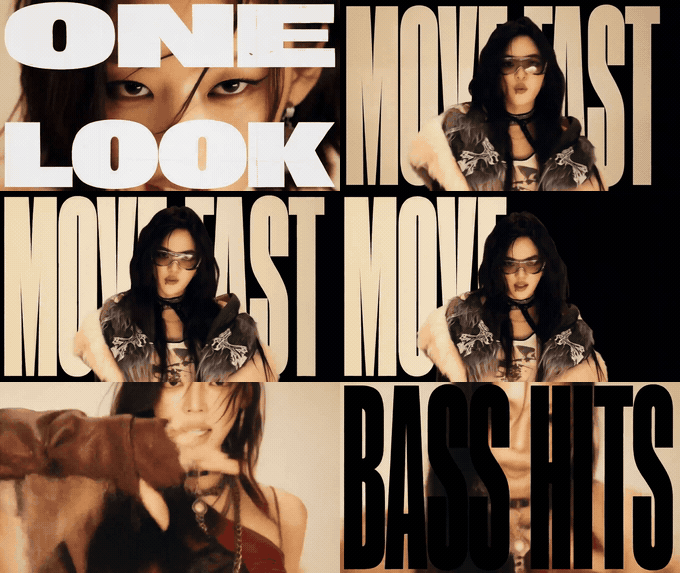
Kinetic typography generated by MiniMax H3, huge display letters holding their shape over a moving face
MiniMax's own H3 launch material, clip two: kinetic typography over live action. Text that survives motion is the capability creators keep singling out about H3.

Editorial graphic design generated by MiniMax H3, a jazz record layout with Latin and Japanese type
MiniMax's own H3 launch material, clip three: animated editorial layout with Latin and Japanese type in the same frame. All three of these came out of the full 2K pipeline, not the free one.
And the bulk-discount route does not cover H3 either.
Here is the line that surprised me most. MiniMax sells prepaid video packages, from $1,000 up to $6,000, that buy bulk video points at a 5 to 20 percent discount. Underneath the table, one sentence: "Video packages support the Hailuo series of video models. MiniMax H3 is not supported yet." (MiniMax Open Platform, August 2026).
So H3 is not in the free tier's good half, and it is not in the bulk-discount half either. It bills pure pay-as-you-go, at list price, per second. Which means the honest framing of this whole topic is not free versus paid. It is free-and-crippled versus metered-and-complete.
The free-quota timeline, and why nobody trusts the current number.
The distrust around this keyword is earned. Below is what the community has recorded about the Hailuo free allowance over time. Read the last column carefully, because it is the actual story.
| When | What changed | What it meant for free users | Announced? |
|---|---|---|---|
| Early era | New-user grant around 1,000 credits | Enough to learn the model properly | No changelog entry found |
| Later | New-user grant cut to roughly 500 | Learning budget halved | No changelog entry found |
| Later still | New-user grant reported as low as 125 | Two or three clips, then a paywall | No changelog entry found |
| Somewhere in there | Daily login bonus of 100 credits stopped landing for many users | The only recurring free income disappeared | No changelog entry found |
| Also reported | An unlimited trial window shortened from three days to one | Evaluation time cut by two thirds | No changelog entry found |
These are community-reported figures, not official ones, and third-party pages today still advertise both a 500 credit signup grant and a 100 credit daily bonus. That contradiction is the point. When five separate reductions arrive with zero changelog entries, the current number stops being information. It becomes a guess with a timestamp on it. That is why "is MiniMax H3 free" is the question people ask instead of "how much does MiniMax H3 cost".
What Replaces a Free MiniMax H3 Plan: Two Models, One Browser Tab
The clip at the top of this article was made in one browser tab, with two models, no install, no 42.5 GB download and no monthly commitment. The chain is short on purpose.
First an image model locks the frame, including the words on the neon sign. Then H3 animates that frame and writes the audio. The split matters for one boring financial reason: fixing a typo costs about $0.17 at the image step and $1.40 at the video step. Get the letters right while they are cheap.
| Model | Its job here | Price on Atlas Cloud |
|---|---|---|
| openai/gpt-image-2/text-to-image | Lock the first frame and the sign text | List $0.009/image, but a high-quality 16:9 render bills about $0.17 |
| minimax/h3/image-to-video | 2K render with native stereo audio | $0.14 per second, no discount |
| minimax/h3/text-to-video | Same model, no first frame | $0.14 per second |
| minimax/h3/reference-to-video | Carry a subject across shots | $0.14 per second |
| bytedance/seedance-2.0/image-to-video | Price reference, the other top-ranked model | $0.112 per second |
| google/veo3.1/image-to-video | Price reference, premium tier | $0.20 per second |
| google/veo3.1-lite/image-to-video | Price reference, budget tier | $0.05 per second |
Prices read off the model pages on 4 August 2026. The three H3 endpoints carry no discount this month.
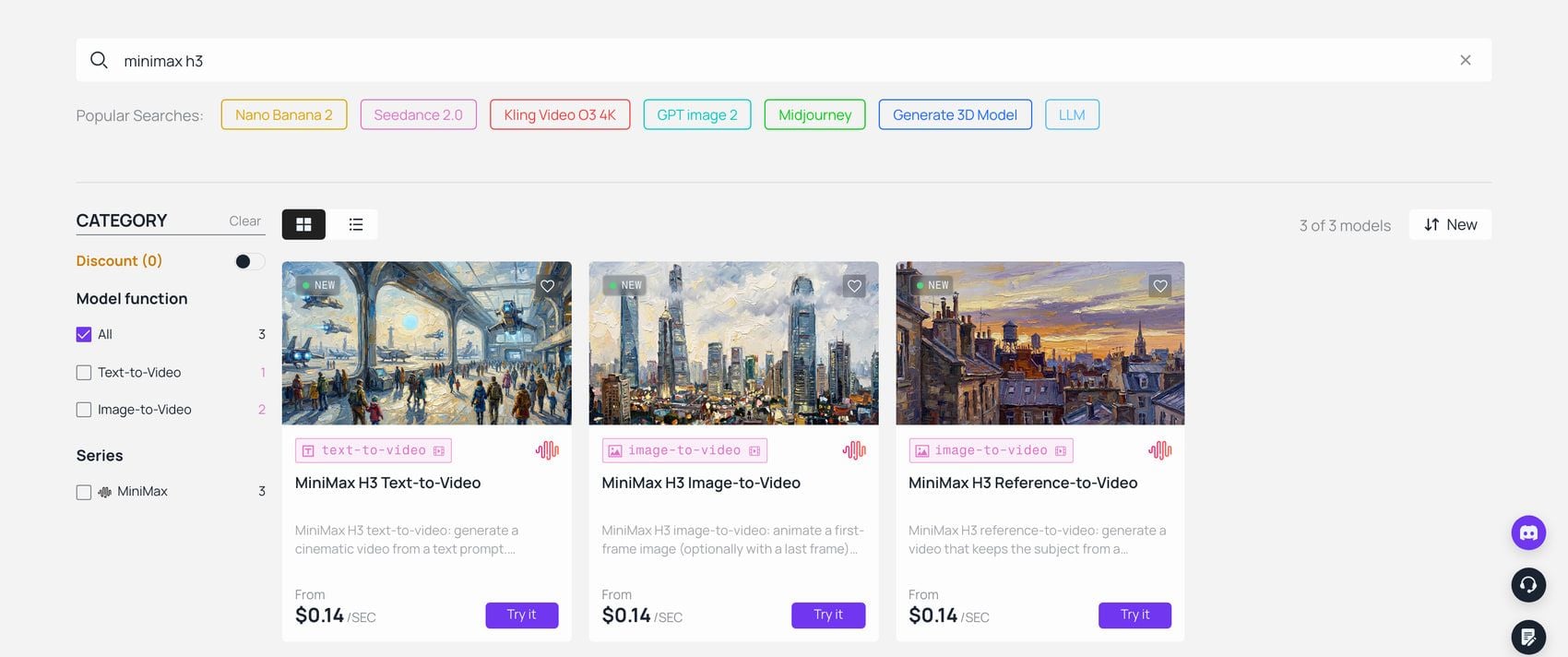
Atlas Cloud model directory showing the three MiniMax H3 endpoints each priced from $0.14 per second
The three H3 endpoints on the Atlas Cloud model directory, all reading From $0.14 /SEC. Aggregator pages are useful for exactly this: Seedance 2.0 and Veo 3.1 are one tab away, so switching models is a five minute test instead of a procurement decision.
Step 1: Lock the Neon Sign Before the Meter Starts
Words inside a generated video are the single most expensive thing to fix, so we do not let a video model invent them. The image model writes FREE REFILLS onto the glass, and H3 only has to keep it steady.
Paste this into GPT Image 2 text-to-image exactly as it is:
text1Wide 16:9 photograph of the interior of a small American roadside diner just before dawn, shot from a low booth-level angle down the length of the counter. A waitress in a faded mint-green uniform stands mid-frame behind the counter, one hand tipping a scratched glass coffee pot over a heavy white ceramic mug, a thin ribbon of steam rising. Behind her, the plate-glass window carries a red neon sign whose letters read exactly FREE REFILLS in two clean lines, all capitals, correctly spelled, glowing bright red and reflecting in the wet parking lot outside. Cold blue pre-dawn light comes through the window from the left, warm tungsten light from a row of pendant lamps rakes across the counter from the right. Real texture everywhere: chipped formica, ketchup bottle, sugar caddy, crumb-dusted counter, condensation on the window, fine 35mm film grain. Shallow depth of field, out-of-focus stools crossing the foreground. Documentary 35mm look, natural colours, no other text anywhere in the frame, no logos, no people besides the waitress. 2
Settings: quality high, size 16:9 at 2048x1152. Do not economise here. The listed $0.009 is a token-tier floor, not what a high-quality wide render costs. Ours quoted $0.1745, and that is still eight times cheaper than re-rolling the video.
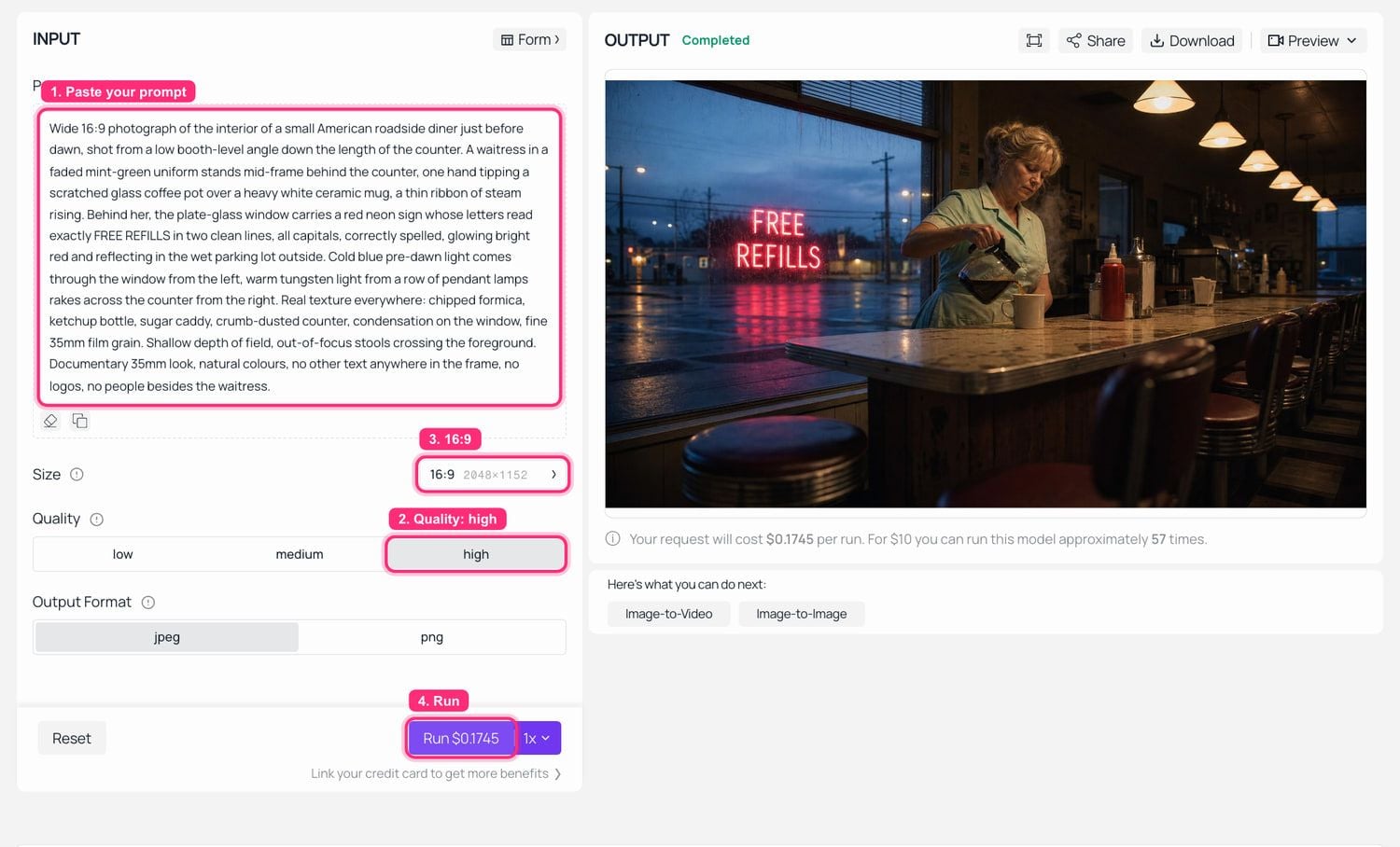
GPT Image 2 playground on Atlas Cloud with the diner prompt filled in and the rendered first frame in the output panel
GPT Image 2 on Atlas Cloud: quality high, 16:9 at 2048x1152, the finished diner frame in OUTPUT. The Run button shows what a high-tier image render actually costs.

Generated first frame: pre-dawn American diner interior, waitress pouring coffee, red FREE REFILLS neon in the window
The locked first frame. Read the sign letter by letter before you spend a cent on video. Generated with openai/gpt-image-2/text-to-image.
Step 2: Render 10 Seconds at 2K With Native Audio
Upload that frame to H3 image-to-video and describe motion and sound in one prompt. H3 writes the audio in the same pass, so the dialogue line goes in the prompt, not into a separate TTS step.
text1The waitress finishes the pour, sets the pot down on the warmer with a soft clunk, slides the mug across the counter toward camera and lifts her chin with a tired half-smile. Steam curls up through the warm lamp light. Outside the window a truck's headlights sweep past left to right, throwing a moving band of light across the counter, and the red neon sign flickers once and holds steady. Camera: slow push-in from the low booth angle toward the mug, then a gentle tilt up to the neon sign in the window as she says her line. The neon letters must stay perfectly sharp, stable and correctly spelled through the entire shot, no warping, no flicker in the letterforms. Audio: coffee pouring, ceramic on formica, a low refrigerator hum, distant highway traffic, one truck passing, and the waitress saying clearly in English "Refills are free, honey. The good stuff never is." Warm tungsten against cold pre-dawn blue, handheld documentary realism, 16:9. 2
Settings: resolution: 2K, duration: 10, ratio: "16:9". Three things that will cost you money if you skip them:
- The parameter is
ratio, notaspect_ratio. Send the wrong key and the request fails with "ratio is required". - Set
durationexplicitly. The form defaults the slider to 8, but a request that omitsdurationentirely came back at 5.17 seconds for us. Sixty percent of a clip's price is not a good thing to leave to a default. adaptiveis rejected on the text-only and reference paths. Name a real aspect ratio.
One honest note on what came back. The pour, the mug slide, the spoken line and the light sweep all landed. The camera did not do the tilt up to the sign that the prompt asked for; it pushed in and let the window drift out of frame instead. H3 treats camera instructions as strong suggestions, so budget a take or two for framing rather than assuming the first render obeys.
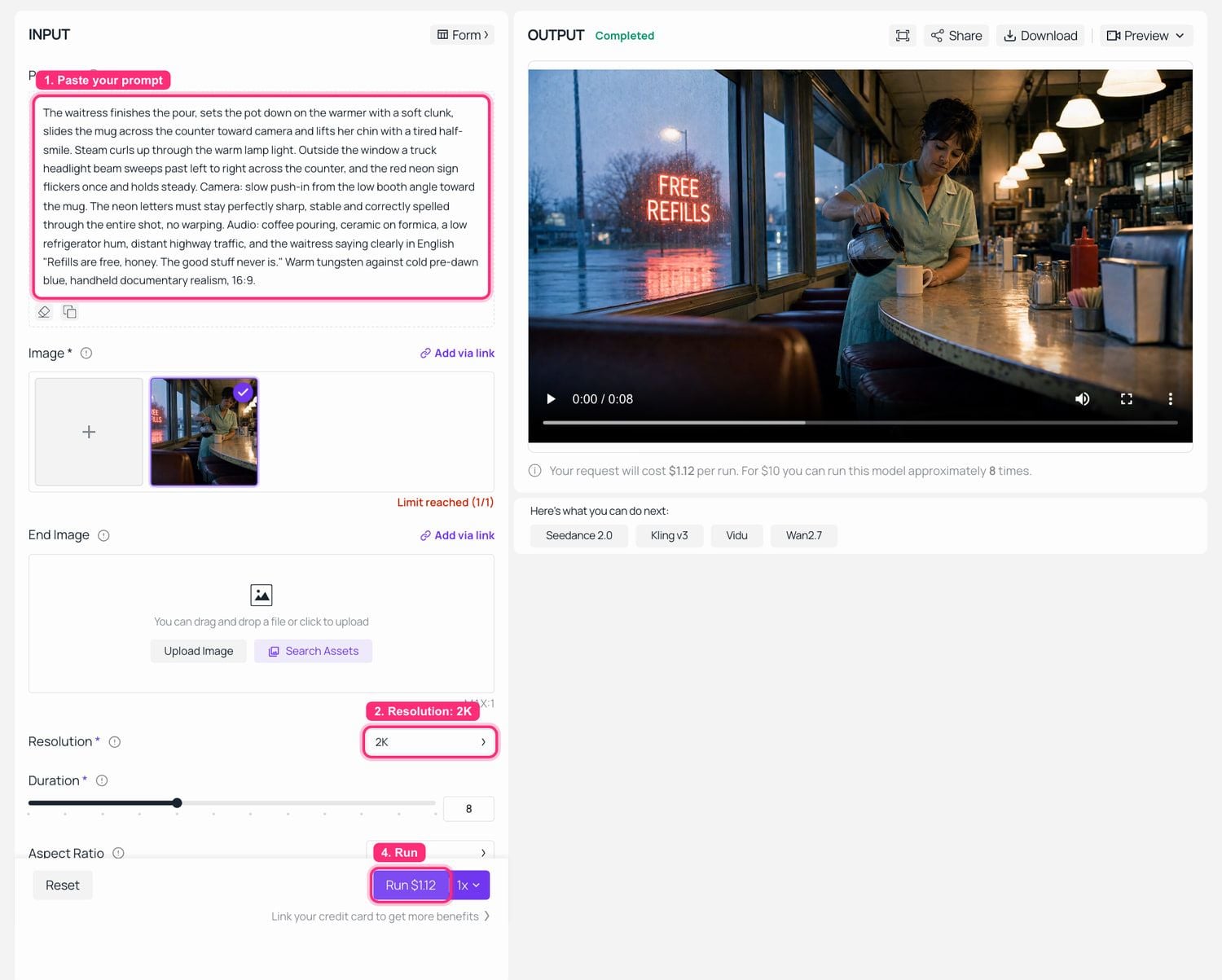
MiniMax H3 image-to-video playground on Atlas Cloud with the first frame loaded, resolution 2K, and the finished clip playing in the output panel
MiniMax H3 Image-to-Video on Atlas Cloud: first frame uploaded, resolution 2K, finished clip in OUTPUT. The Run button quotes $1.12 at the form's default 8 seconds, which is exactly 8 x $0.14. That is your proof that billing is per second, so a 10 second version is $1.40.
Step 3: Render the Free MiniMax H3 Ceiling at 768p and Compare
Same first frame, same prompt, one setting changed. This is the whole argument of this article rendered as a control.
Settings: resolution: 768P, duration: 5, ratio: "16:9". The file that came back measured 1344x768, which is exactly the native canvas the open weights are limited to.
One honest warning before you try to save money this way. Atlas exposes 2K in its schema, and while a 768P request does go through and does return a genuine 768 pixel short edge file, it bills at the 2K rate. There is no cheap tier on an aggregator. The real 768p discount lives on MiniMax direct, at $0.08 per second against $0.13 for 2K (MiniMax pay-as-you-go pricing, August 2026).
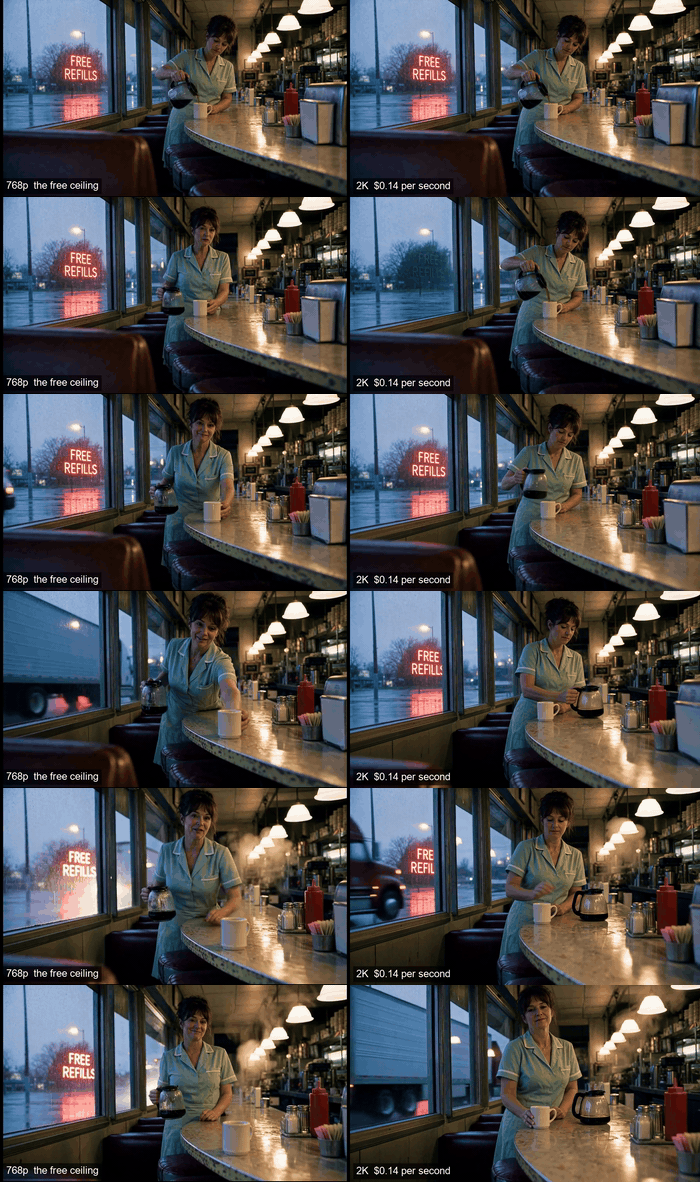
The first five seconds of each render, scaled to the same height. Left is the 768p file, right is the 2K file. Same first frame, same prompt, two separate runs, so the two takes stage the action differently: a whole truck rolls through the 768p window, while the 2K take only sweeps a headlight beam across the counter. That divergence is itself worth knowing before you plan a shoot around one render.
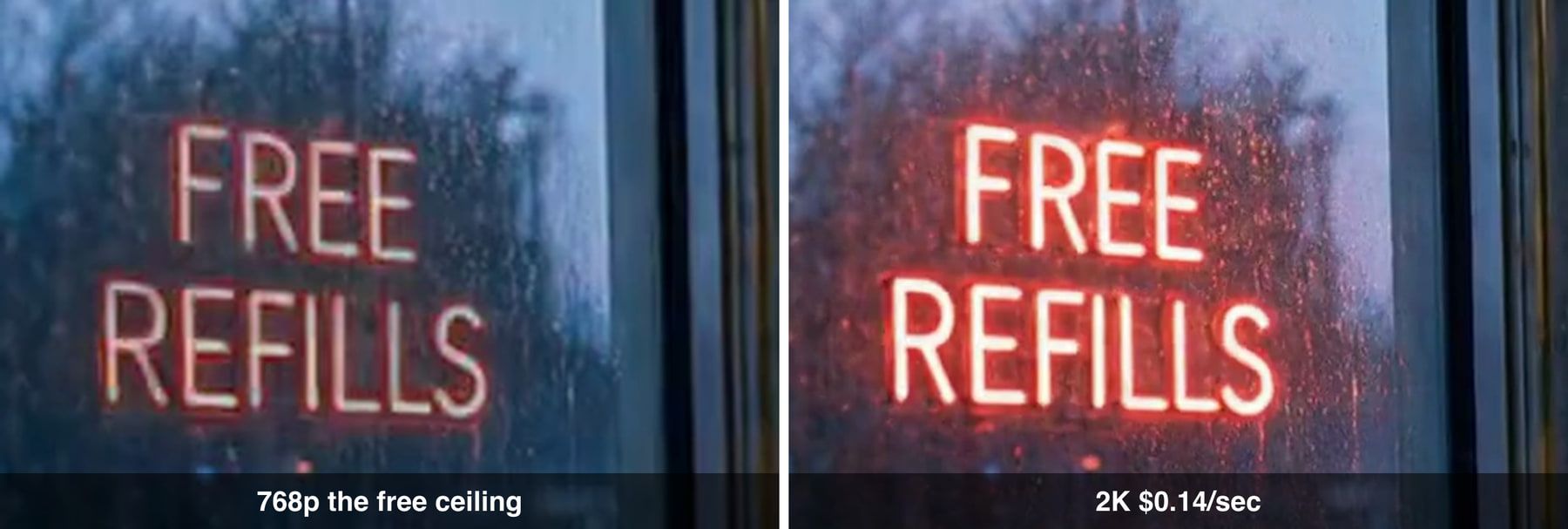
Zoomed comparison of the FREE REFILLS neon sign rendered at 768p and at 2K, the lower resolution losing the neon glow and hardening the letter edges
The same moment from both renders, cropped to the sign and blown up to identical size. Left 768p, right 2K.
Both spell FREE REFILLS correctly, so credit where it is due. Look at what is actually lost. On the right the tubes read as lit glass: there is bloom around each stroke, warm falloff into the wet window, individual rain droplets catching the red. On the left the glow is gone. The letters flatten into pale outlines with ragged edges, the droplets turn to mush, and the sign stops looking like neon and starts looking like a sticker.
That is the honest shape of the free ceiling. It does not fail loudly. It quietly removes the light quality, the surface texture and the fine detail that made the shot worth making, and it hands you something you would not put in front of a client. Which is exactly what a demo is for, and exactly what it is not.
What MiniMax H3 Costs Once It Stops Being Free
Here is the actual receipt for the clip at the top of this page.
| Line item | Model | Quantity | Cost |
|---|---|---|---|
| First frame, quality high, 2048x1152 | gpt-image-2 | 1 image | $0.1745 |
| Delivered clip, 2560x1440, native stereo audio | minimax/h3/image-to-video | 10 seconds | $1.40 |
| Deliverable total, watermark free, commercial | $1.57 | ||
| Optional 768p control render, 1344x768 | minimax/h3/image-to-video | 5 seconds | $0.70 |

Macro still life of stacked quarters beside a mechanical stopwatch on a brushed steel counter, per-second video billing
Per-second billing has one virtue a subscription does not: nothing expires, and nobody can retroactively halve it. Generated with bytedance/seedream-v5.0-pro/text-to-image.
Compare that against the subscription path. A consumer Hailuo plan around $15 a month removes watermarks and unlocks commercial rights, and if you ship a dozen short clips monthly the per-clip maths is fine. Two catches. Credits do not roll over, so a quiet month is money burned. And the terms of that allowance have been edited repeatedly without notice, which is the reason you are reading this page.
Three things that genuinely reduce a per-second bill:
- Send
durationexplicitly on every call. Never let a default decide the length of an invoice. - Submit-time rejections are free. A malformed request costs nothing, so validate aggressively.
- A well-formed request with broken contents is not free. Point a reference image URL at a dead link and the job can still return
completed, still render something, and still bill in full. Nothing in the response tells you the reference never loaded. Check your URLs resolve before you submit, and re-poll the finished job for its real billed price, because the price field populates on a delay.
One more path worth knowing: on MiniMax direct you can draft at 768P for $0.08 per second and upgrade only the keepers with the H3-Regenerate-2K endpoint at $0.05 per second. That adds up to exactly $0.13, the direct 2K rate. Drafting cheap saves nothing on clips you keep. It saves $0.05 per second on clips you throw away.
On the free weights, and four countries. If Door 3 is your plan, read the license before you download 42.5 GB. Effective 2 August 2026, it limits the grant to an "Applicable Territory" defined as worldwide excluding the European Union, the United Kingdom, the Republic of Korea and the United States of America. Section V.4 extends that restriction to the outputs, not just the weights. Above $20 million in yearly revenue you need separate written authorisation, and any interface that generates with H3 must display the name "MiniMax H3" (MiniMax H3 license, August 2026). MiniMax's wording is "in the meantime", not "never": the license invites people in excluded territories to apply, and the repository ships a licensing FAQ. The Qwen3-VL-32B text encoder stays Apache 2.0. Still, the largest English-speaking share of this article's readers is outside the granted territory, which makes the most free door the one they can use least.
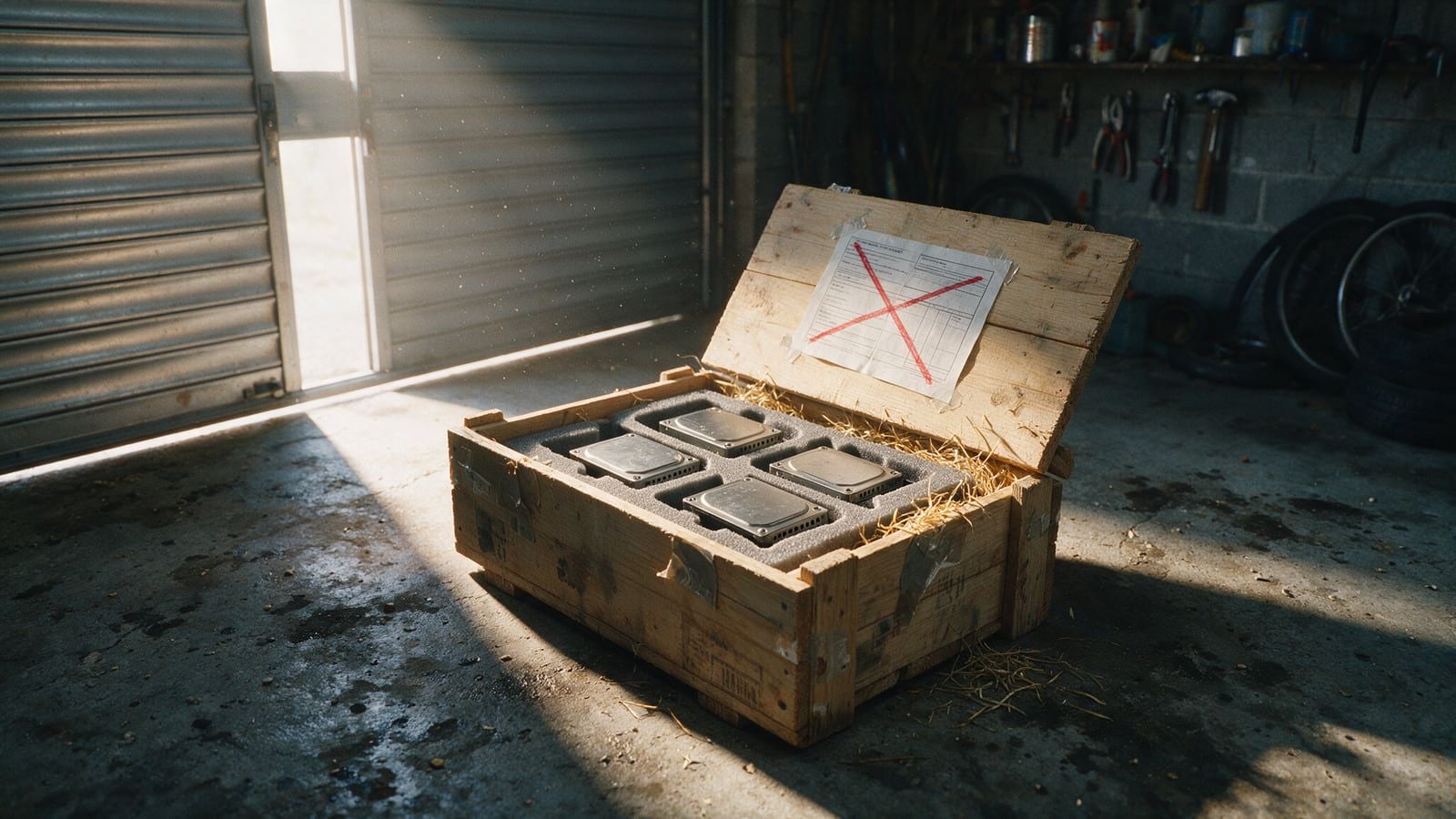
Half-open shipping crate in a garage holding bare enterprise hard drives, a customs form crossed out in red marker
Free to download is not the same as cleared for use where you live. Generated with bytedance/seedream-v5.0-pro/text-to-image.
Is MiniMax H3 Free: Frequently Asked Questions
Is MiniMax H3 free to try without a credit card?
Yes. The Hailuo free web tier needs no card and gives you a small pool of trial credits. Expect a watermark on every download, 768p output, short clips and the slowest queue. A launch-week report also describes three full-spec free generations in the MiniMax Hub desktop app for new users, but that is one unconfirmed source and it is a one-time grant, not a recurring allowance.
Do MiniMax's prepaid video packages cover MiniMax H3?
No. MiniMax's own pricing documentation states that video packages support the Hailuo series of video models and that H3 "is not supported yet". The discounted bulk-credit route, priced from $1,000 to $6,000, does not apply to H3 at all. H3 bills pay-as-you-go, per second, at list price.
Can I get 2K MiniMax H3 video free by running the open weights locally?
No, and not because of a licence trick. H3 ships as three modules and MiniMax released the middle one. H3-Base generates at 768p. The H3-Regenerate-2K module that lifts 768p to 2K is explicitly not open sourced yet, and the model card points you at an API instead. Locally the native canvas is a 768 pixel short edge.
Is MiniMax H3 free for commercial use?
Not on the free web tier, which withholds commercial rights and watermarks the output. The open weights do allow commercial use inside the Applicable Territory below $20 million yearly revenue, but that territory excludes the EU, the UK, South Korea and the USA, the restriction covers outputs as well as weights, and your interface must display "MiniMax H3". Paid API output carries no watermark.
Does the free tier watermark every MiniMax H3 clip?
Yes, and it is not removable afterwards. Watermark removal is a paid-tier feature on the consumer product. API output is never watermarked, at either resolution, which is why a $1.57 one-off is often a better trade than a subscription you will forget to cancel.
What is the cheapest way to make one usable MiniMax H3 clip?
Lock composition and any on-screen text in an image model first, at roughly $0.17, then buy only the video seconds you need at $0.14. Send duration explicitly, use ratio rather than aspect_ratio, and verify every reference URL resolves, because a well-formed request with dead contents still bills in full. One ten second deliverable lands near $1.57.
Prices and free-tier terms verified on 4 August 2026 against the MiniMax Open Platform documentation, the Hugging Face model card and licence, and the Atlas Cloud model pages. Leaderboard positions and free allowances both move; the free allowance on this product has historically moved in one direction only.





