Latest update: Wan 3.0 is now live as of August 24, 2026.
Most early Wan 3.0 takes are single cherry-picked clips. This is the other kind of review: 49 image-to-video cases across 10 capability dimensions, every case run at a fixed seed, 720p, and then rerun on Seedance 2.0 and Wan 2.7 with the same first frame, the same prompt and the same seed. Every claim below has a clip behind it, and the important ones are embedded so you can disagree with me frame by frame.
The one-paragraph verdict: Wan 3.0 is a broad, visible step past Wan 2.7, and against Seedance 2.0 it lands in the same tier with a clean split of personalities. Wan 3.0 wins on faithfulness and stability, meaning first-frame fidelity, identity consistency through motion, physics, and an exclusive 30-second duration. Seedance 2.0 wins on imagination, meaning multi-subject scenes, surreal instructions and stylized content. And one bug shows up often enough to headline the risk section: Wan 3.0 keeps cutting to a new camera angle nobody asked for.
Key takeaways
- Faithful vs bold is the real split. Given a prompt that contradicts the input image, Wan 3.0 protects the picture and soft-pedals the instruction; Seedance 2.0 executes the instruction and rebuilds the picture around it. Pick by which failure you can afford.
- Physics is Wan 3.0's strongest suit: a shattering glass and a billiard break both beat Wan 2.7 and Seedance 2.0 on the same seed, with cleaner fracture patterns and collision transfer.
- Identity holds. Across all nine 30-second runs, no character swapped face, outfit or set. Consistency through motion also beat Seedance 2.0 in direct comparison.
- The blocking defect is uncommanded camera cuts: hard, unrequested shot changes, sometimes with ghosting, reproduced in standard runs and repeatedly inside 30-second clips.
- 30 seconds in one generation is currently exclusive in this matchup. Seedance 2.0 and Wan 2.7 both stop at 15.
How This Wan 3.0 Review Was Built: Same Seed, Same Frame, Same Prompt
Comparisons between video models usually fail before they start, because each model gets a different starting image, a rewritten prompt, or a lucky second attempt. This bench removes all three variables. Each of the 49 cases fixes one first frame, one prompt and one seed, and that exact triplet runs on all three models. Nobody gets a retry. What changed between clips is the model, and nothing else.
The 10 dimensions cover subject motion, camera moves, physics, multi-subject interaction, environment change, static holds, on-screen text and UI, stylized content, image-prompt conflicts, and long 30-second generations. Results were scored by human review of every clip, not by a metric.
Here is the flavor of it. One glass of water falls off a table. Same frame, same seed 3001, three models:

Three-way comparison of the falling glass test: Wan 2.7 left, Wan 3.0 centre, Seedance 2.0 right, same first frame, prompt and seed
Prompt: a glass falls from the table edge, water spills, the glass shatters on the floor. Left to right: Wan 2.7, Wan 3.0, Seedance 2.0. Watch the fall arc and the fracture: Wan 3.0's break reads as glass, not as a texture swap.
That clip carries the whole review in miniature. Wan 2.7 is clearly a generation behind. Wan 3.0 and Seedance 2.0 are trading blows at the same level, and which one is "better" depends entirely on which dimension your shot lives in.
Where Wan 3.0 Wins the Review: Identity, Physics, and a Camera-Locked Subject
Identity through motion. In the newspaper test (seed 1004), an elderly man lowers his paper, looks up, smiles and waves. Simple, except continuous human motion is exactly where video models quietly swap faces. Wan 3.0 keeps the man's face, clothing and the room's details locked through the whole gesture chain. Seedance 2.0, on the identical input, lets the subject drift.
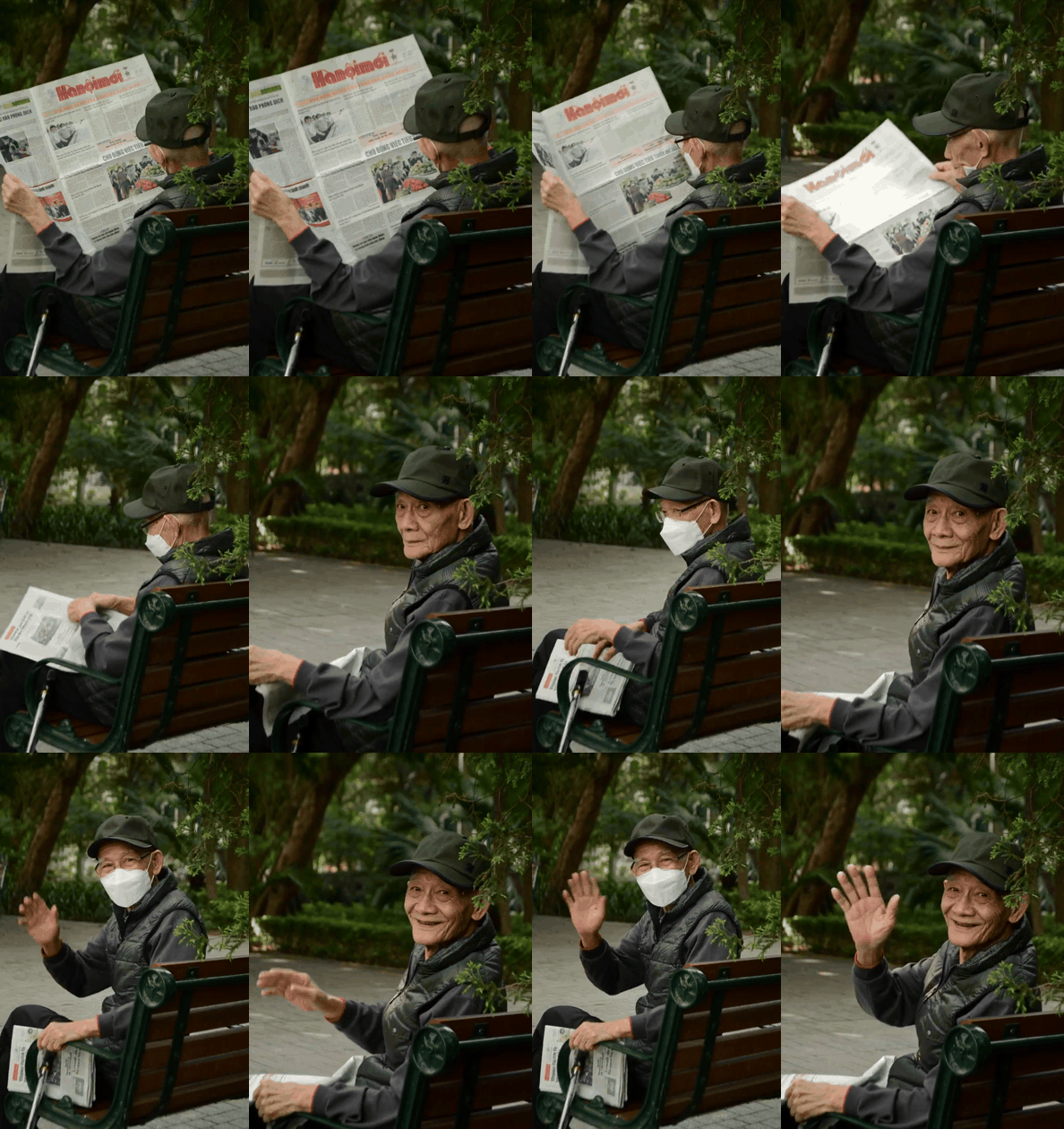
Side-by-side of the newspaper wave test, Wan 3.0 left holding identity, Seedance 2.0 right drifting
Seed 1004, 5 seconds: the man lowers the paper, smiles, waves. Left Wan 3.0, right Seedance 2.0. Check the face before and after the wave.
Motion logic against the previous generation. The ballet test (seed 1005) asks for one elegant in-place spin with the skirt following. Wan 3.0 completes the turn as one continuous, physically coherent movement and the dancer is the same person on both sides of it. Wan 2.7's attempt makes the upgrade obvious.
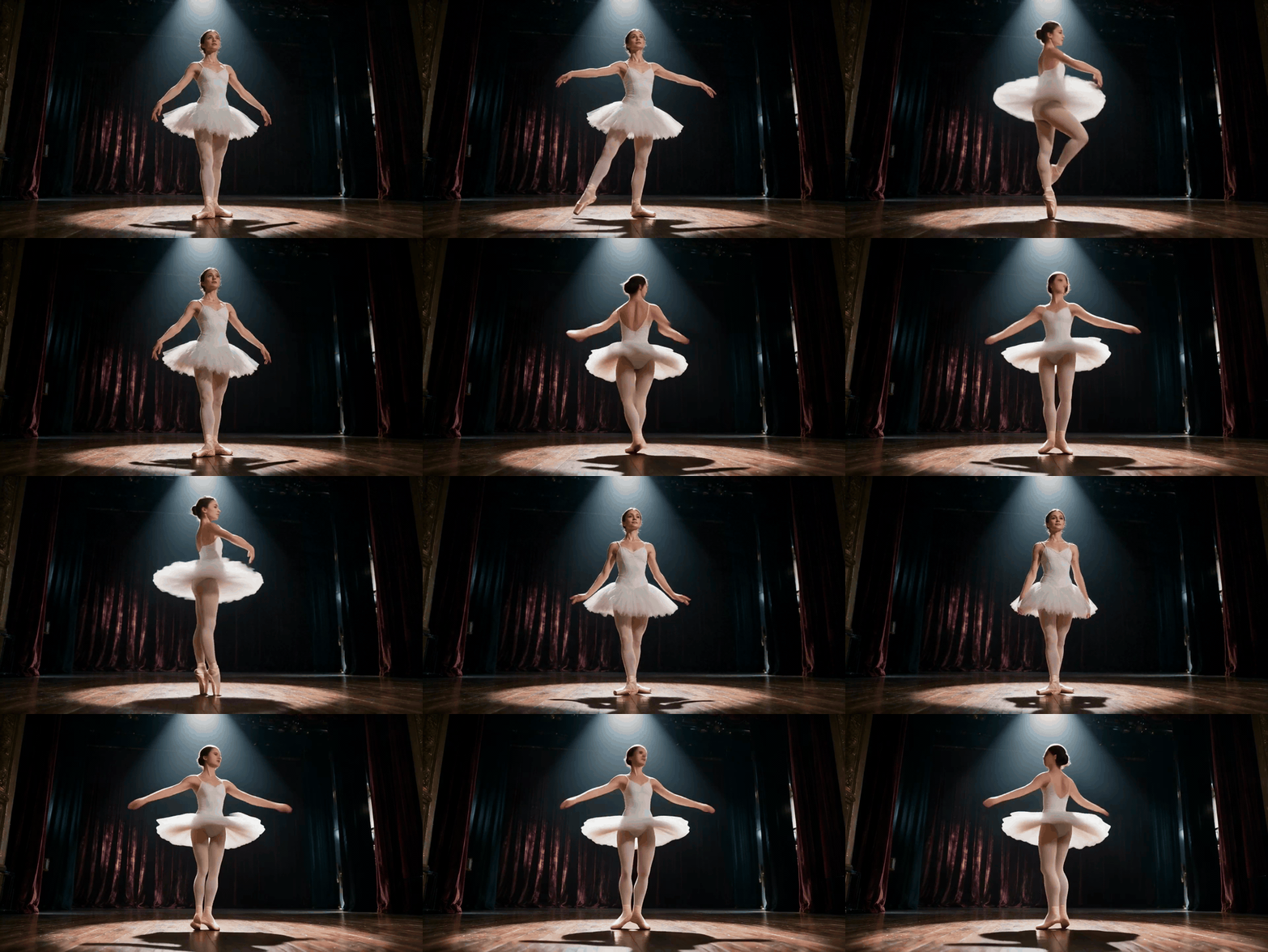
Ballet spin comparison stacked vertically, Wan 3.0 above completing a clean turn, Wan 2.7 below losing the motion
Seed 1005, 5 seconds: one spin, skirt trailing. Top Wan 3.0, bottom Wan 2.7. This is what "motion logic" means in practice.
Changing the environment without touching the subject. The aurora test (seed 5004) asks the sky to dance from green to purple over a snow mountain. The trap is that most models let the mountain wobble along with the sky. Wan 3.0 holds the mountain still while the aurora animates; Seedance 2.0's mountain visibly shifts. If your work is product plates, real estate or any locked-subject scene work, this is the dimension to care about.

Aurora over a snow mountain, Wan 3.0 left with the mountain locked, Seedance 2.0 right with subject drift
Seed 5004, 6 seconds: aurora shifts green to purple, mountain must not move. Left Wan 3.0, right Seedance 2.0.
Physics you have already seen in the three-way glass drop. The billiard-break case (seed 3003) repeats the pattern: the white ball strikes, colored balls scatter with believable momentum transfer and keep rolling into each other, and both competitors trail it on the same inputs.
Where Wan 3.0 Loses: Uncommanded Cuts and Timid Surrealism
An honest Wan 3.0 review has to spend real time here, because both weaknesses are structural, not cosmetic.
The camera cuts on its own. Ask for one continuous camera move and Wan 3.0 has a habit of inserting a hard, unrequested shot change instead. The tower test (seed 2004) requests a slow tilt from base to top, then a pull-back to a full view. At about 3.5 seconds the model simply cuts to a different setup, with a visible color-grade jump across the cut.

Wan 3.0 tower test showing an uncommanded hard cut at around 3.5 seconds instead of a continuous tilt
Seed 2004, 8 seconds, prompt asks for one continuous tilt-and-reveal. Watch 3.5s: that cut was never requested.
To be fair, camera control is the whole field's weak spot right now: Seedance 2.0 failed a full orbit on this bench too, and Wan 2.7 offers no advantage. What makes it worse on Wan 3.0 is that the same cut behavior re-fires inside 30-second runs, which is exactly where a single unbroken shot matters most. More on that below.
Surreal instructions get negotiated down. The conflict dimension feeds the model a prompt that contradicts the input image, which is the backbone of every surreal ad concept. Input: a normal living room. Prompt: heavy rain starts falling indoors, soaking the furniture.
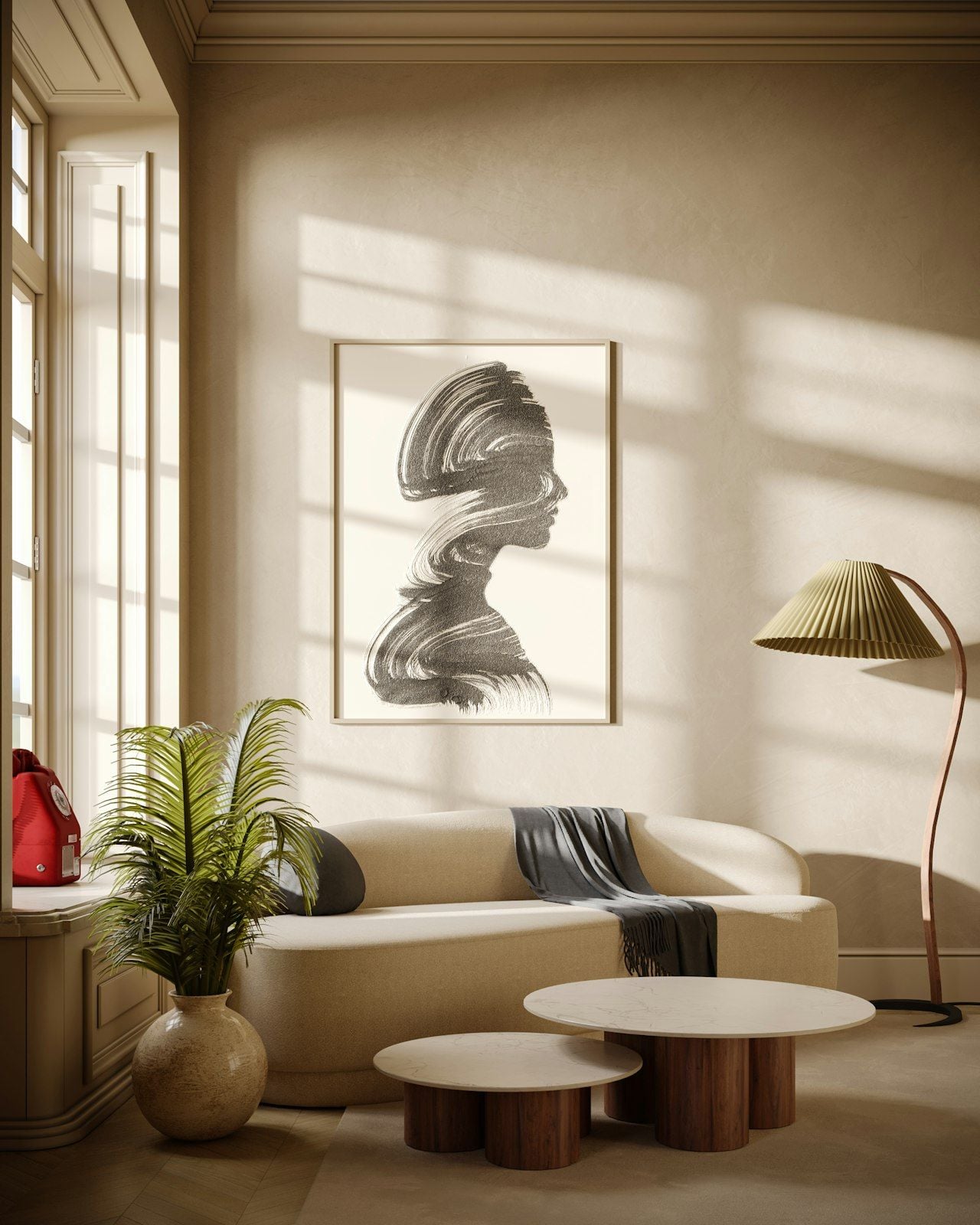
Input frame for the indoor rain conflict test: an ordinary living room interior
The input frame both models received. The prompt asks for indoor rain on this scene, seed 10001.
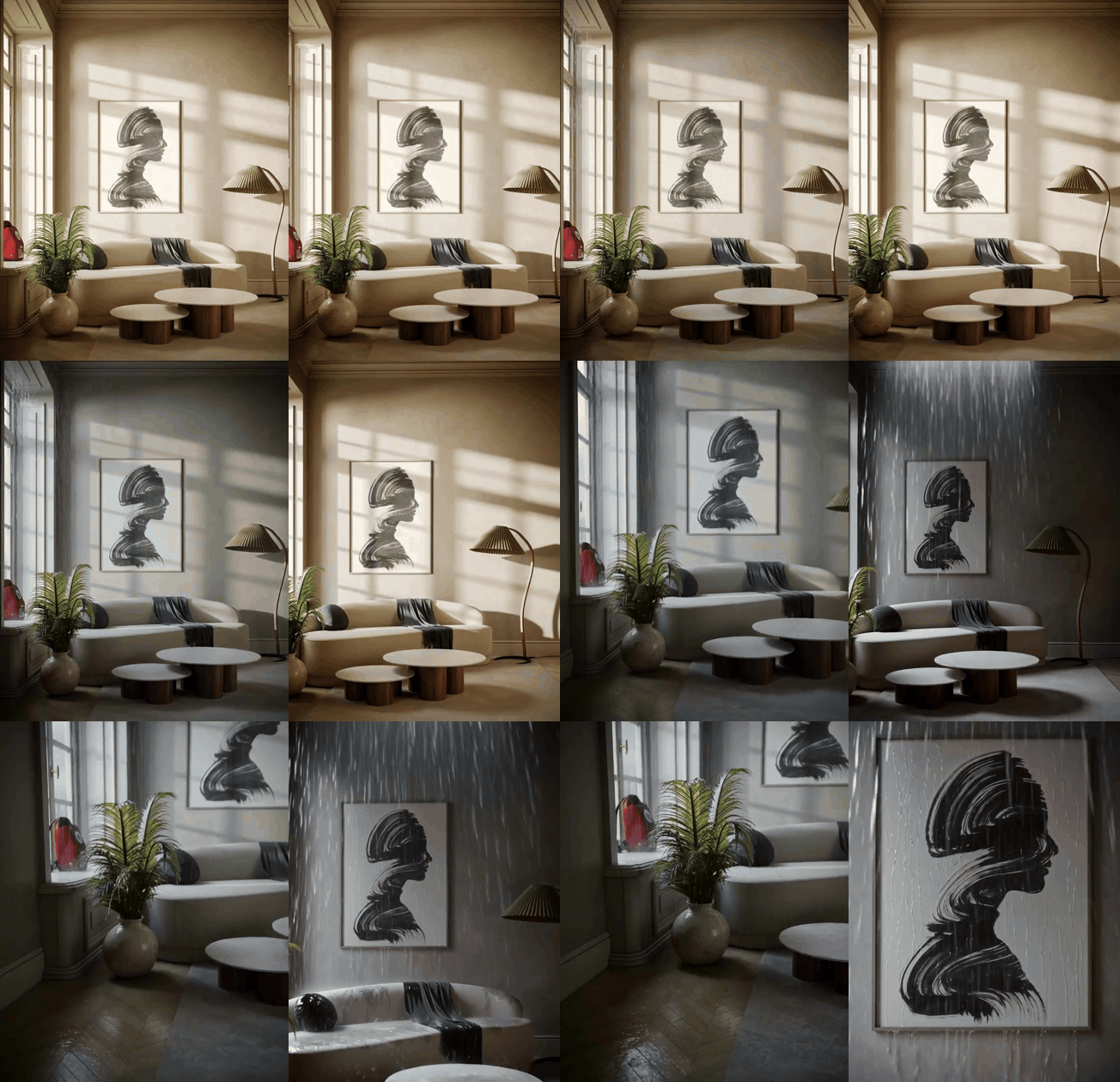
Indoor rain conflict test, Wan 3.0 left barely changing the room, Seedance 2.0 right committing to full indoor rainfall
Left Wan 3.0: lighting shifts and a local spray near the plant, no rain. Right Seedance 2.0: actual indoor rain, coherently integrated. This was the widest gap on the whole bench.
Wan 3.0 answers with a lighting change and a token splash near the houseplant. Seedance 2.0 commits: real rain, indoors, and the room stays coherent while getting soaked. A second conflict case, a whale gliding over a conference room (seed 10003), fails differently but for the same reason, with Wan 3.0 tinting the whole office blue instead of integrating the whale. The pattern is consistent: when image and prompt disagree, Wan 3.0 sides with the image. For faithful product work that instinct is a feature. For imagination-driven briefs it is the reason to use something else.
The Wan 3.0 30-Second Exclusive, and the Cut That Undercuts It
Thirty seconds in a single generation is Wan 3.0's headline capability, and in this matchup nothing else reaches it: Seedance 2.0 and Wan 2.7 both cap at 15. The bench gave it six dedicated cases plus duration ladders, and the core risk of long generations, identity collapse, did not happen. Across nine 30-second clips, nobody turned into a different person and no set quietly became a different room.
Instruction-following across a long timeline also held. The football case (seed 11006) scripts four sequential beats: one child backs up to open distance, the two pass three times, one shoots long, the other cheers. All four land, in order:
Seed 11006, 30 seconds, one generation: back up, three passes, long shot, celebration. Multi-stage staging in a single prompt, executed in sequence.
Then the same defect from the camera section walks back in. The signboard case (seed 11004) asks for one extremely slow push-in and pull-back with the sign's text staying legible. At around 4 to 5 seconds the clip dissolves through a ghosted double-exposure into a different composition:
Seed 11004, 30 seconds: the prompt asks for one continuous push-pull on the sign. Watch 4 to 5 seconds: an uncommanded dissolve, with brief ghosting, into a new framing.
A third long case, a 30-second talking portrait (seed 11002), repeats it at around 15 to 17 seconds with a dissolve plus a posture and framing change. The model behaves as if it is directing a multi-shot short film when the brief was a single take. The longer the clip, the more chances it takes. Until that is tamed, treat 30-second output as a sequence you may need to trim rather than one guaranteed unbroken shot, and keep the exclusive in perspective: it is real, it holds identity, and it currently ships with a built-in editor you did not hire.
Wan 3.0 vs Seedance 2.0: Which Model for Which Job
The full 10-dimension scorecard, condensed. "Even" means neither side had a reproducible edge on this bench.
| Dimension | vs Wan 2.7 | vs Seedance 2.0 |
|---|---|---|
| Subject motion | Better motion logic | Wan 3.0 holds identity better |
| Camera moves | Even, both weak | Even, both weak, Wan 3.0 adds uncommanded cuts |
| Physics | Big step up | Wan 3.0 ahead, more faithful to the first frame |
| Multi-subject interaction | Even | Seedance 2.0 clearly ahead |
| Environment change | Ahead | Ahead, subject stays locked |
| Static hold | Ahead | Scene props slightly behind, live-action people ahead |
| Text and UI | Ahead | Split, UI interaction poor on both |
| Stylized content | Ahead | Seedance 2.0 clearly ahead on style semantics |
| Image-prompt conflict | Even | Seedance 2.0 far ahead, widest gap on the bench |
| 30-second generation | Exclusive | Exclusive, Seedance 2.0 stops at 15s |
Wan 3.0 is now live on Atlas Cloud, so you can run the same fixed-frame, fixed-seed tests directly against the live model.
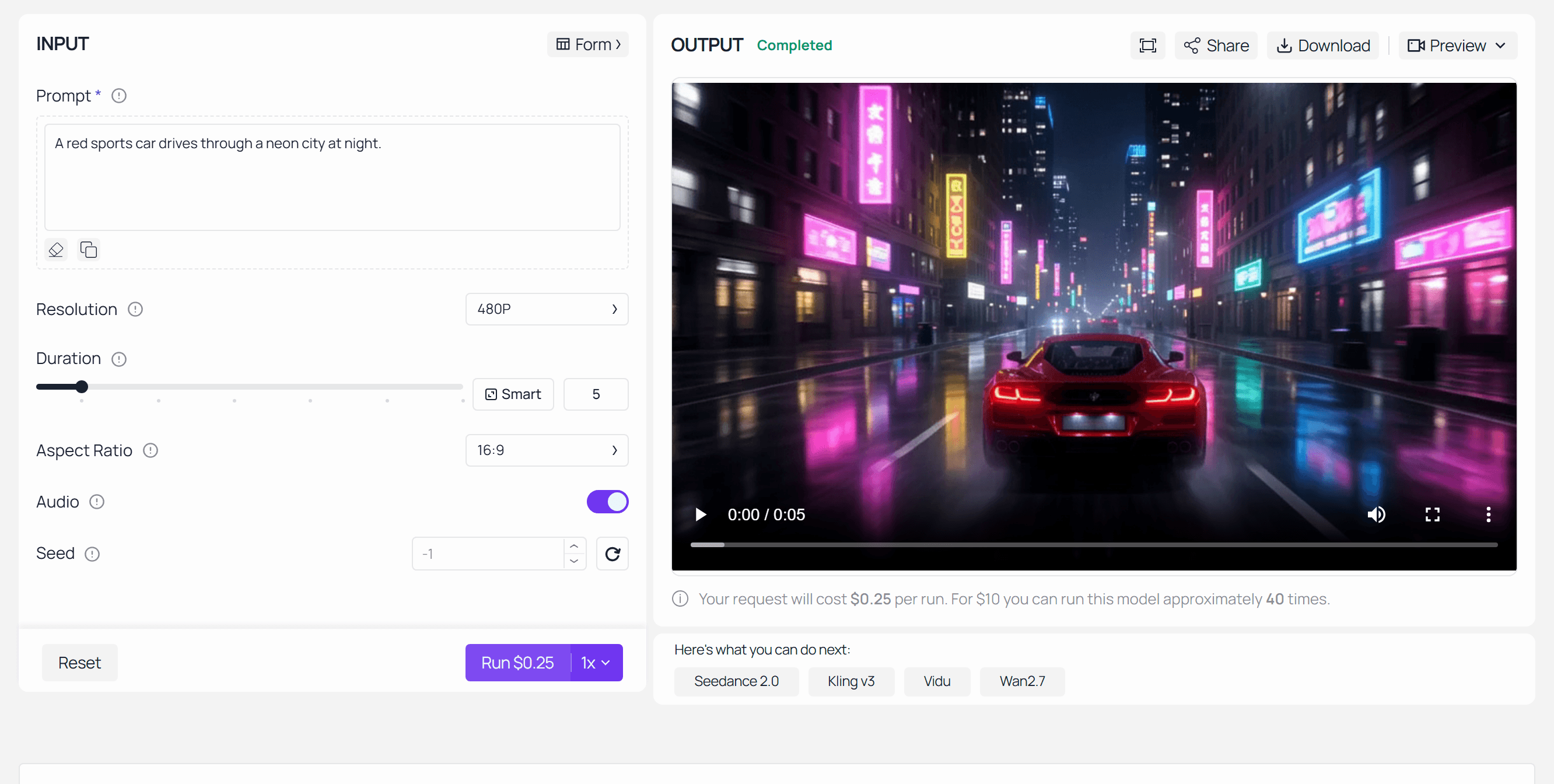
Wan 3.0 API is now live on Atlas Cloud
Wan 3.0 live model family page on Atlas Cloud, captured after the August 24, 2026 launch
Selection logic in two lines. Strict image-to-video faithfulness, locked subjects, physical events, real-person material, or anything longer than 15 seconds: Wan 3.0. Multi-character scenes, surreal or conflict-driven creative, stylized formats: Seedance 2.0.
You can pressure-test half of this table today without waiting for anything. Seedance 2.0 image-to-video and Wan 2.7 image-to-video are both live on Atlas Cloud on one key, and the per-run cost shows on the button before you commit. Fix your own seed, reuse one first frame, and run the glass-drop or indoor-rain prompt from this article verbatim. When Wan 3.0 lands, and this family has a history of arriving on Atlas at Day 0, your bench transfers unchanged and your prompts are already calibrated. If you want the prompt side of that preparation, the Wan 3.0 prompt guide breaks down the official handbook's structure case by case.
Frequently Asked Questions
Is Wan 3.0 better than Seedance 2.0?
Neither dominates; they split by temperament on the same-seed bench. Wan 3.0 wins faithfulness: identity through motion, physics, environment-vs-subject separation, first-frame fidelity, plus exclusive 30-second output. Seedance 2.0 wins imagination: multi-subject interaction, surreal instruction-following and stylized content, with the conflict dimension being its widest win. Choose per shot, not per brand.
What is the biggest problem in this Wan 3.0 review?
Uncommanded camera cuts. Prompts asking for one continuous move repeatedly got a hard, unrequested shot change, sometimes with ghosting: at 3.5s in an 8-second tilt (seed 2004), at 4 to 5s and 15 to 17s inside 30-second runs (seeds 11004, 11002). It reproduces easily and directly limits single-take usability.
Does Wan 3.0 really generate 30-second videos?
Yes, in one generation, and identity held in all nine 30-second bench runs, with a four-beat scripted sequence (seed 11006) executed in order. The caveat is the same cut defect: long runs tend to include at least one uncommanded dissolve or shot change, so plan to trim rather than expect one guaranteed unbroken take.
How was this Wan 3.0 review tested?
49 image-to-video cases across 10 dimensions, every case at 720p with a fixed seed, and the identical first frame, prompt and seed rerun on Seedance 2.0 and Wan 2.7. All results were human-reviewed, clip by clip, with no retries for any model. The embedded clips are the actual bench outputs, seeds included, so the comparisons can be checked directly.
Can I reproduce this bench before Wan 3.0 is released?
The method transfers today: fix a seed, lock one first frame and prompt, and run the same triplet on the live models. Seedance 2.0 and the whole Wan 2.7 family are on Atlas Cloud now, which also has a habit of Day-0 access when this model family updates, so the same bench should extend to Wan 3.0 the day it opens.
Conclusion
Wan 3.0 reads like a model built by people who prize the input image: what you give it, it protects, through motion, through physics, and through a full 30 seconds. That discipline is exactly what faithful commercial image-to-video work needs, and it is also why the model flinches at prompts that ask the image to become something it is not. Pair it with a bold-imagination model rather than replacing one, and watch one number when it ships publicly: whether the uncommanded cut rate comes down. That single fix decides whether the 30-second exclusive is a headline or a caveat.





