
 Atlas Cloud is now an authorized U.S. reseller of Dreamina Seedance 2.5 and Seedream 5.0 Pro.Atlas Cloud is now an authorized U.S. reseller of Dreamina Seedance 2.5 and Seedream 5.0 Pro.
The ChatGPT API on Atlas Cloud brings OpenAI's newest GPT 5.6 family into one integration, spanning Sol for deep frontier reasoning, Terra for grounded production workloads, and Luna for natural conversation and content generation. Route every model through a single OpenAI-compatible key, count on production-grade uptime, and pay transparent pay-as-you-go rates that start at $1 per million input tokens. Start building today.
ChatGPT is developed by OpenAI. Atlas Cloud (operated by Atlas Cloud AI LLC) provides access to it and does not own it. All trademarks belong to their respective owners.
Atlas Cloud provides you with the latest industry-leading creative models.
Five text generation endpoints spanning frontier reasoning to budget-friendly conversation, all served through one OpenAI-compatible key with transparent pay-as-you-go pricing.
| Modality | Description |
|---|---|
| GPT 5.6 Sol API (Text to Text) | Built for frontier AI workloads, GPT 5.6 Sol turns complex text prompts into deep, multi-step reasoning output for ambitious problem solving. Standard pricing is $5 per million input tokens and $30 per million output tokens, positioning it as the flagship pick when answer quality outweighs cost. |
| GPT 5.6 Terra API (Text to Text) | Need a dependable production default? GPT 5.6 Terra converts prompts into grounded, practical text for real-world workflows and analysis pipelines at $2.50 input and $15 output per million tokens. Teams deploy it in customer-facing applications where consistency matters more than experimental depth. |
| GPT 5.6 Luna API (Text to Text) | Route conversational and creative traffic to GPT 5.6 Luna, a text model tuned for natural dialogue, content generation, and personalized AI experiences. At $1 input and $6 output per million tokens, it is the most economical entry point in this ChatGPT API lineup, well suited to chat products and high-volume copy generation. |
| GPT 5.4 API (Text to Text) | GPT 5.4 processes text instructions into reliable code, long-form content, and structured problem-solving output with strong accuracy. An advanced multimodal model by design, it lands at mid-tier pricing of $2.50 input and $15 output per million tokens, a practical fit for coding assistants and content platforms. |
| GPT 5.5 API (Text to Text) | When hard problems justify premium spend, GPT 5.5 delivers advanced reasoning, coding, and content generation from a single text endpoint. Priced at $5 input and $30 output per million tokens, it targets complex, reliability-critical workloads such as agent orchestration and technical analysis. |
Reach the full GPT 5.x lineup and the open-weight GPT OSS 120B through one ChatGPT API, tune reasoning effort from low to xhigh, mix text, images, and files in a single call, and invoke native tools with live web search on one OpenAI-compatible key.
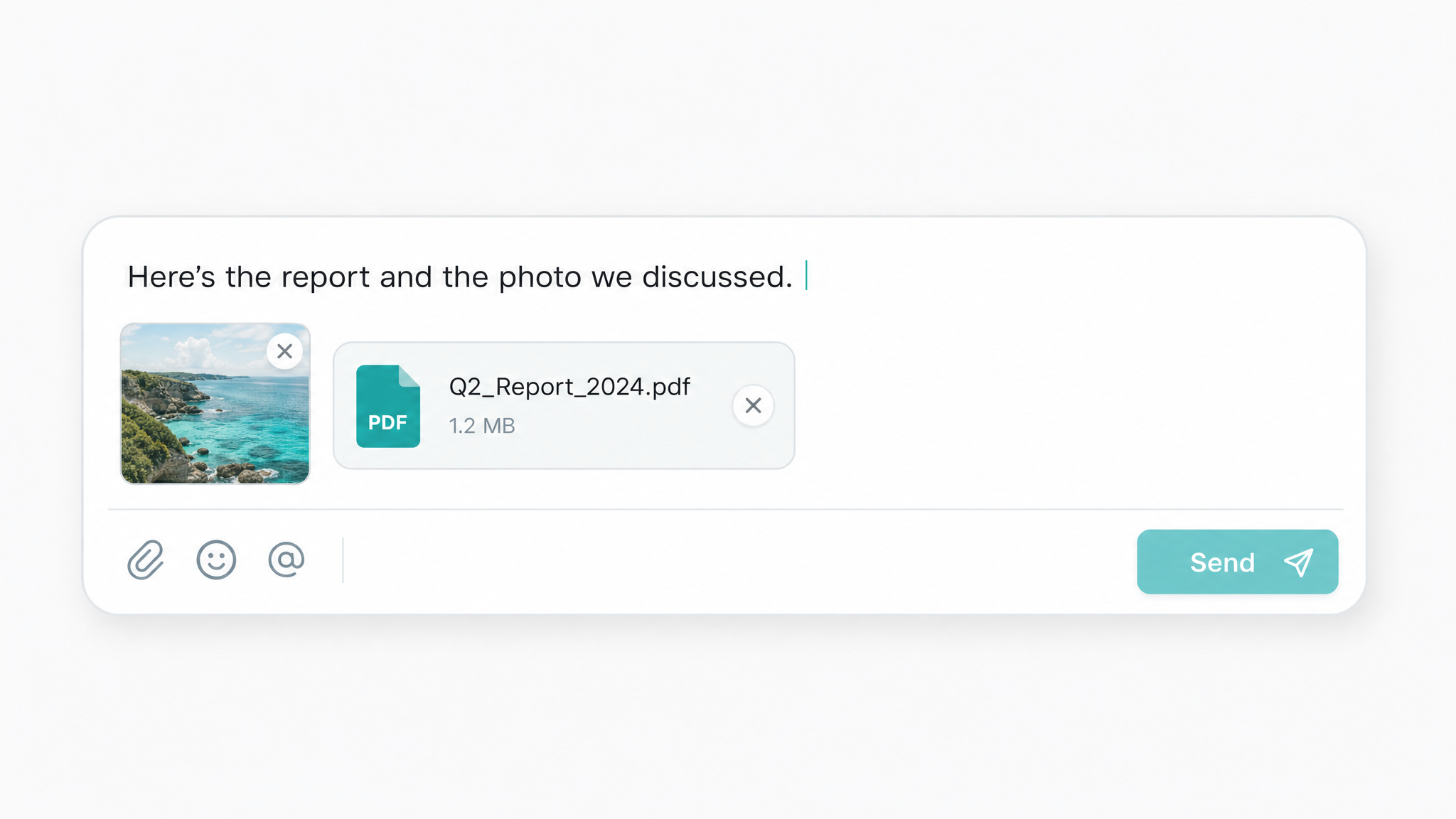
A single ChatGPT API request can combine plain text, image URLs, and document files in one message. This drops separate OCR or vision services, so you summarize scanned contracts or read screenshots in one pass.
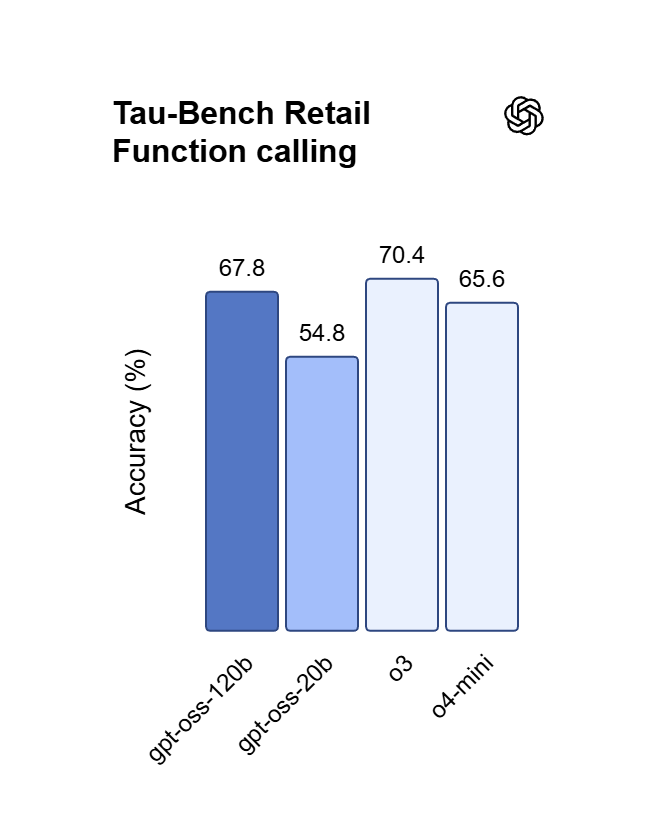
GPT OSS 120B adheres to layered system prompts, keeping formats, constraints, and tone stable across outputs without drift. That reliability suits autonomous agents, structured extraction, and production pipelines where output must obey the rules.
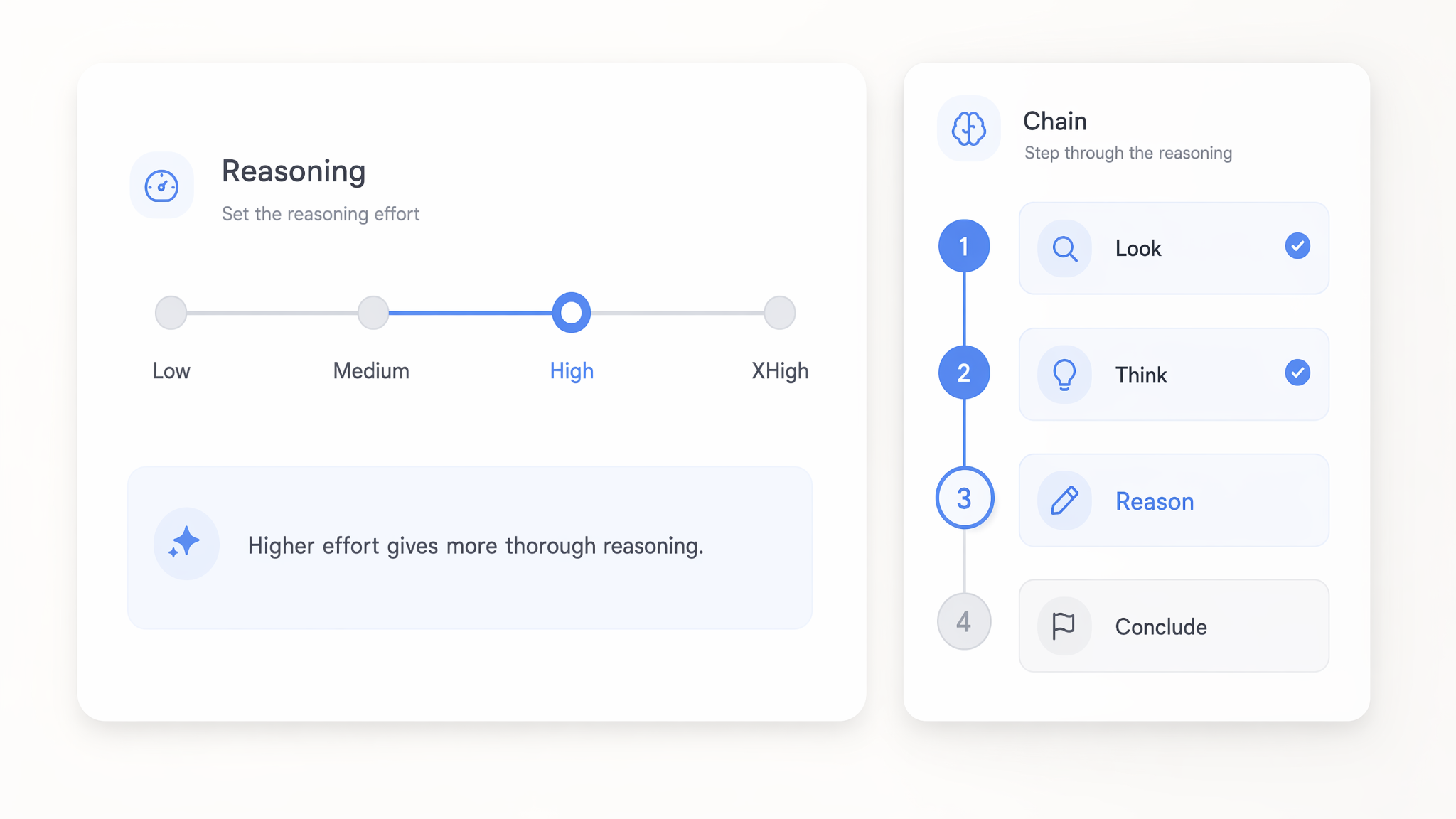
Set reasoning effort on GPT 5.x models anywhere from low up to xhigh to control how deeply they think before answering. Low settings answer simple calls fast and cheap, while xhigh spends more compute on hard multi-step logic.
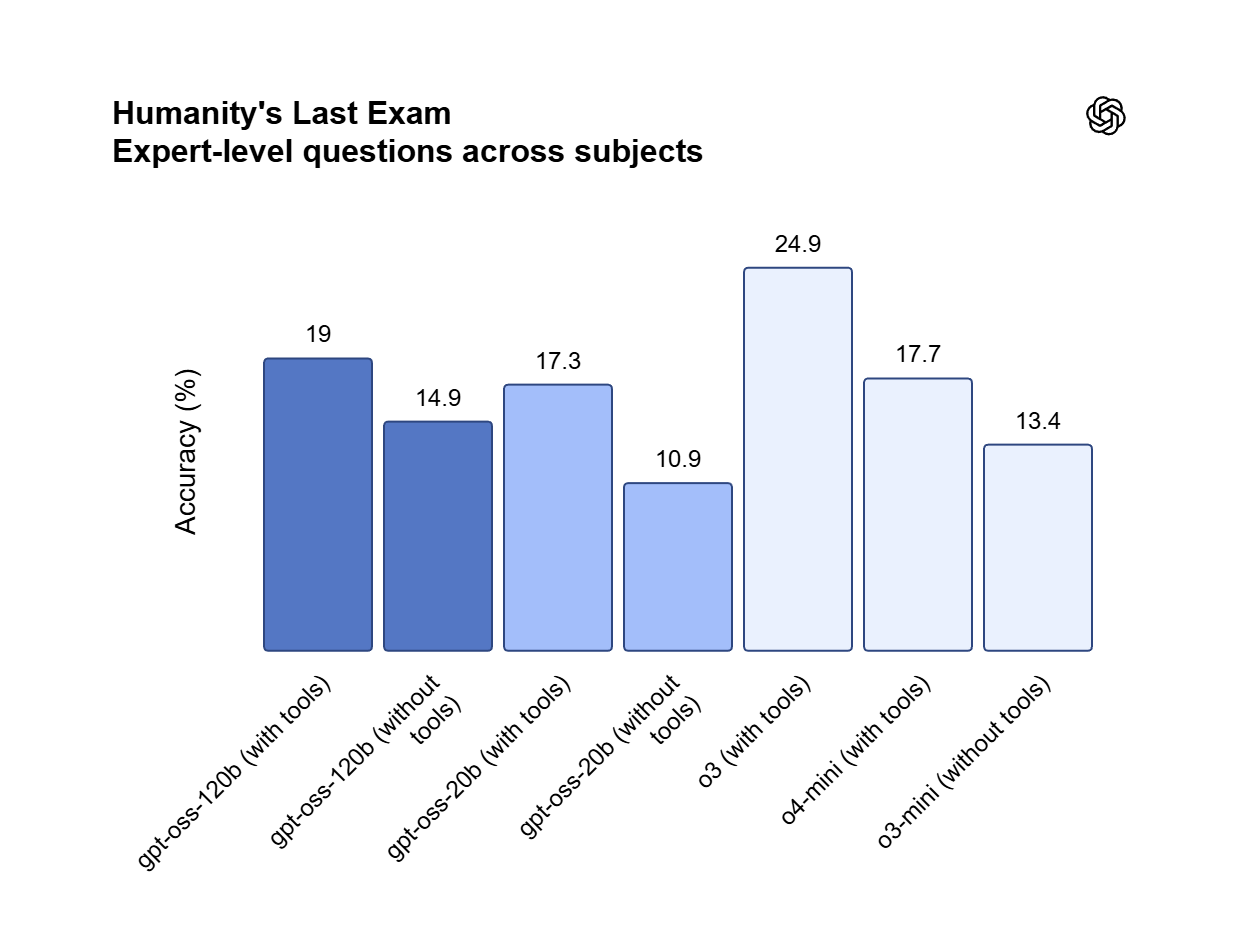
Distributed under the Apache 2.0 license, GPT OSS 120B allows commercial use and private fine-tuning on a single 80GB GPU. Host it on-premises to keep proprietary data in house and avoid per-token fees entirely.

One ChatGPT API serves the full GPT 5.x lineup, priced from Luna at $1 to Sol at $5 per million input tokens. Match each call to the tier its cost and intelligence demand, no endpoint changes.
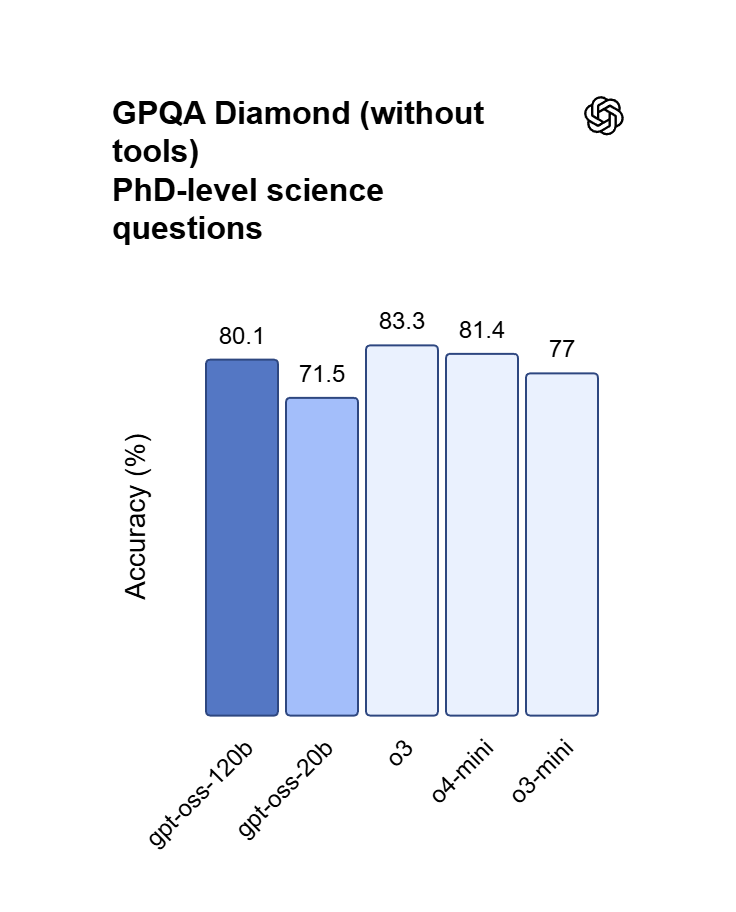
Near-parity with OpenAI o4-mini lets GPT OSS 120B handle multi-step code synthesis and mathematical proofs. Turn plain-language ideas into working web apps, debug nested logic, and orchestrate complex task-scheduling flows.

GPT 5.x models support function calling with automatic tool selection plus a built-in web search that fetches current results. Stream replies as server-sent events while prompt caching cuts GPT 5.6 Sol cached input to $0.5 per million tokens.
We fed the exact same build instruction to models through the ChatGPT API and two rival flagships, then rendered every raw HTML response untouched so you can judge reasoning depth, code quality, and design taste side by side.
Build a single self-contained HTML file (inline CSS and JavaScript only — absolutely no external libraries, CDNs, frameworks, fonts, or image URLs) that opens directly in any modern browser and runs a living, self-growing glass greenhouse ecosystem simulator rendered entirely as flat Canvas/SVG vector illustration. The full-viewport scene is a domed Victorian greenhouse: a curved glass cupola arcs across the top as the framing element, its panes drawn as translucent jade-green polygons with soft specular highlights and thin muntin outlines, and a strip of dark cultivation soil runs along the bottom. Art direction is clean vector illustration — leaves and stems drawn with crisp vein-line outlining plus semi-transparent layered fills, a palette grounded in misty sage green and mossy brown with amber sunlight and jade-glass accents; no photorealism, no gradients-as-textures, keep it graphic and hand-illustrated in feel. Core interaction: clicking anywhere on the soil plants a seed at that spot, and the plant grows in real time using an actual L-system — implement a recursive rewriting grammar (axiom plus production rules with branching brackets and randomized angle/length jitter per instance so no two plants are identical) and animate the derivation so branches extend, fork, and unfurl leaves progressively over a few seconds rather than popping in fully formed. Tropical ferns and climbing vines should phototropically bend and curl toward a draggable sun: render a glowing amber sun disc the user can grab and drag anywhere in the sky, and every growing tip must continuously reorient its growth direction toward the sun's current position so dragging the sun visibly steers how the whole garden leans and climbs. Seedlings unfurl with an easing animation, and condensation droplets form on the glass and slowly slide down on a loop. Drive everything with a day-night cycle tied to the sun's position: the ambient light and sky wash slide smoothly along a warm-gold to cool-blue gradient, the sun's location sets the direction and length of soft plant shadows cast on the floor and the drifting light-spots across the glass, and at dusk fireflies fade in as small pulsing points of light drifting among the foliage. Composition radiates plant growth from the base upward toward the center, contained by the dome's arc. Use requestAnimationFrame for a continuous, quietly breathing animation loop; keep performance smooth with many plants on screen at once. Include subtle unobtrusive controls (e.g. a slider or auto-advancing toggle for time of day, and a reset/clear button) styled to match the illustrated aesthetic, plus a one-line hint telling the user to click the soil to plant and drag the sun to guide the growth. Make it responsive to any window size, and make the emotional tone calm, still, and alive — first morning light slanting in while tender shoots open together. This is a generative simulation, not a game or dashboard: prioritize the genuine recursive growth algorithm, the animation loop, and the light/shadow/phototropism physics.
Generated with GPT 5.6 Sol on Atlas Cloud
Generated with Grok 4.5 on Atlas Cloud
Generated with GPT 5.5 on Atlas Cloud
Build a complete single-file HTML page containing an interactive global startup funding dashboard with fictional but internally consistent data for 8 industry sectors across 5 years. All CSS and JavaScript must be inline with zero external dependencies, no chart libraries, no CDNs, no images. Render three hand-coded visualizations on canvas or SVG: an animated bar chart that re-sorts with easing when the user picks a year from a slider, a line chart with hover tooltips showing exact values and a vertical tracking guide, and a donut chart whose segments expand on hover with a spring animation. Include a dark modern UI with a violet-to-teal accent palette, animated number counters in four KPI stat cards, a sector filter row of toggle chips that instantly updates all charts, and a light/dark theme switch with smooth color transitions. The layout must be responsive, collapsing to a single column below 768px, and every interaction must respond in real time without page reloads.
Generated with GPT 5.6 Sol on Atlas Cloud
Generated with Grok 4.5 on Atlas Cloud
Generated with GPT 5.4 on Atlas Cloud
From agentic coding and structured extraction to grounded support chat and high-volume content, the ChatGPT API on Atlas Cloud routes each job to the right GPT 5.6 tier through one OpenAI-compatible key.

Route complex refactors and multi-file code synthesis to GPT 5.6 Sol, the family's deep-reasoning tier built for frontier engineering workloads. Teams building coding copilots, automated review bots, and test generators get production-grade logic.

GPT 5.6 Luna, the family's creative tier, drafts blog posts, product descriptions, and localized copy with natural tone and personalized output. Content teams and ecommerce platforms produce high-volume copy without sacrificing brand voice.

Need a chatbot that stays on script? GPT 5.6 Terra delivers dependable, grounded responses built for production conversation, so support teams and SaaS products can automate tickets and deflect repetitive queries reliably.

Feed entire policy manuals or research archives into a long-context model and get grounded answers with source fidelity. Legal, medical, and internal-search teams gain a reliable engine for retrieval-augmented question answering.

Messy invoices, emails, and PDFs convert into clean JSON that downstream systems can trust. Reliable instruction following keeps schemas intact, serving data pipelines, CRM automation, and analytics workflows that cannot tolerate drift.

When budget and latency matter, switch between Sol, Terra, and Luna through one OpenAI-compatible key. Startups and indie developers prototype fast on pay-as-you-go pricing, then scale the same integration to production.
See how models from different providers stack up — compare performance, pricing, and unique strengths to make an informed decision.
| Model | Context | Max Output | Input | Positioning |
|---|---|---|---|---|
| GPT OSS 120B | 131.07K | 131.07K | Text | High-Efficiency Reasoning LLM |
| GLM-5 | 202.75K | 202.75K | Text | Flagship Foundation Model |
| DeepSeek V3.2 | 163.84K | 163.84K | Text | Flagship General |
| MiniMax-M2.5 | 204.8K | 196.6K | Text | SOTA Agentic Coding |
Get started in minutes — follow these simple steps to integrate and deploy models through Atlas Cloud's platform.
Sign up at atlascloud.ai and complete verification. New users receive free credits to explore the platform and test models.
Combining the advanced ChatGPT models with Atlas Cloud's GPU-accelerated platform provides unmatched performance, scalability, and developer experience.
Low Latency:
GPU-optimized inference for real-time reasoning.
Unified API:
Run ChatGPT, GPT, Gemini, and DeepSeek with one integration.
Transparent Pricing:
Predictable per-token billing with serverless options.
Developer Experience:
SDKs, analytics, fine-tuning tools, and templates.
Reliability:
99.99% uptime, RBAC, and compliance-ready logging.
Security & Compliance:
SOC 2 Type II, HIPAA alignment, data sovereignty in US.
The ChatGPT API lets developers send prompts to OpenAI's GPT models and receive completions programmatically instead of through the chat interface. On Atlas Cloud you reach the full GPT 5.6 lineup, together with GPT 5.4 and GPT 5.5, through one OpenAI-compatible endpoint. Every call is billed per token with transparent pay-as-you-go pricing, so you pay only for what you generate.
Five models span the range from deep reasoning to everyday chat. GPT 5.6 Sol targets ambitious problem-solving and frontier workloads, GPT 5.6 Terra handles dependable production workflows, and GPT 5.6 Luna is tuned for natural conversation and content generation. GPT 5.4 and GPT 5.5 add multimodal reasoning and coding for teams that want proven general-purpose performance.
Generate one API key, point your base URL at https://api.atlascloud.ai/v1, and set the model ID such as openai/gpt-5.6-terra. Because the ChatGPT API here is fully OpenAI-compatible, existing OpenAI SDK code runs after only a base URL and key change. There is no waitlist and no subscription, and new releases arrive with Day-0 access, so you can send your first request the same day.
Pricing scales with the model you choose. GPT 5.6 Luna is the most economical at $1 per million input tokens and $6 per million output tokens, GPT 5.6 Terra runs at $2.5 and $15, and GPT 5.6 Sol sits at $5 and $30. Prompt caching cuts the cost of repeated input, and billing stays pay-as-you-go so you are charged only for the tokens you use.
Yes. The endpoint follows the OpenAI Chat Completions format, so the official OpenAI SDKs, LangChain, and most OpenAI-compatible libraries work once you swap the base URL and key. This means an existing ChatGPT API integration can move over without rewriting your request logic.
Streaming and function calling both work unchanged from OpenAI's implementation, so you set stream to true for token-by-token output and pass a tools array to trigger function calls. Structured JSON responses follow the same OpenAI-compatible request format, which keeps agent orchestration and data-extraction pipelines predictable.
These models accept large prompts for long-document and full-repository workflows. Pricing is tiered at the 272,000-token mark, with a standard rate for prompts below it and a second rate for prompts that exceed 272,000 tokens. You can therefore feed extensive context in a single request and know exactly how the rate changes as the prompt grows.
Match the model to the job. Reach for GPT 5.6 Sol when you need frontier reasoning and ambitious problem-solving, choose GPT 5.6 Terra for grounded, production-grade analysis, and use GPT 5.6 Luna for conversational or creative work where cost matters most. GPT 5.4 and GPT 5.5 remain strong multimodal options for coding and general reasoning.
Atlas Cloud runs the ChatGPT API on managed infrastructure that scales with your traffic, so you avoid the GPU provisioning and node orchestration of self-hosting. New model versions land with Day-0 access, keeping you current without migration work. Should your needs grow, the same OpenAI-compatible key covers every model in the family, so scaling never means a new integration.
Seedance 2.5 API is now available on Atlas Cloud! It gives developers ByteDance's newest video model. It generates up to 30 seconds of native video in a single pass from text, a single image, or as many as 50 multimodal references, with synchronized audio and in-frame multilingual text. On Atlas Cloud you reach it through one key, with subject consistency and improved physics keeping long shots coherent. (Update: Seedance 2.5 1080P API Is Available NOW!)

Wan 3.0 API is the next generation of Alibaba's Wan video family, built to push long-form generation, multi-reference control, and audiovisual quality to new heights. Atlas Cloud already hosts Wan 2.7, 2.6, and 2.5, and Wan 3.0 runs on the same unified key with no separate setup. Start building today. Scroll down to the showcase to see what Wan 3.0 can create.
MiniMax H3 is MiniMax's multimodal video family for text, image, and reference guided creation. Across supported routes, it preserves subjects from reference media, offers flexible aspect ratios, and pairs generated sound with visuals through H3 Developer, with output profiles selected by endpoint. Atlas Cloud unifies the family behind one OpenAI-compatible key with transparent pay-as-you-go pricing from the standard rate of $0.038 per second. Start building today.
The gpt-image-2.5 family from OpenAI gives developers a choice of Flare and Sunburst for production image workflows. Render at arbitrary resolutions up to 3840x2160 and select from five quality tiers, including xhigh and max, to match specific output requirements. Atlas Cloud provides ready-to-use REST inference with no cold starts and standard pricing from $0.004 per generation. Start building today.
Seedream 5.0 Pro API gives developers ByteDance's controllable image editing model on Atlas Cloud. It places edits precisely with anchors and coordinates, separates images into editable layers, fuses multiple references, and matches exact colors and materials, with multilingual text at 2K and 3K. On Atlas Cloud you reach it through one key!
Seedance 2.0 is ByteDance’s production video model for precise shot creation. Turn prompts into video, animate a first-frame image with optional last-frame guidance, or shape results with reference media and optional web search. Atlas Cloud brings these workflows into one unified API with transparent pay-as-you-go pricing and one OpenAI-compatible key. Start building today.
The Kling 3.0 API brings Kuaishou's flagship video suite to Atlas Cloud through one OpenAI-compatible key. It spans two models, Kling 3.0 for AI Director storytelling, multilingual lip-sync, and precise on-screen text, and Kling 3.0 Omni (O3) for subject and voice cloning from a short video or image. Both generate native audio in the same pass, with output up to 4K. Build cinematic narratives, global marketing, multilingual ads, and serialized character content on reliable infrastructure.
Grok Imagine Video gives developers access to xAI’s video family for creating, animating, extending, and editing clips. Generate 1 to 15 second videos from prompts, guide people, objects, or styles with up to seven reference images, and work at 480p or 720p. Atlas Cloud brings these capabilities together through OpenAI-compatible endpoints with transparent pay-as-you-go pricing. Start building today.
Vidu Q4 is Vidu's latest flagship video model, designed for image-to-video and reference-to-video generation. It can animate a single still image and create automatic scene transitions, giving developers two input paths for different product workflows. Atlas Cloud provides dedicated API endpoints with published parameter schemas at the verified standard price of $0.04 per second. Start building today.
Gemini Omni 1.1 Flash is Google DeepMind’s natively multimodal video family for flexible production workflows. Edit existing footage through text instructions, maintain visual consistency with up to 10 reference images and 3 video clips, or extend a shot in chainable segments to 40 seconds. Access every workflow on Atlas Cloud with one OpenAI-compatible API key, pay-as-you-go pricing, and Day-0 availability. Start building today.
Nano Banana 2.1 is Google's image model family built on Gemini 3.6 Flash. It delivers Pro-level generation and editing at Flash-level speed, supports natural-language edits and merges across 1 to 14 input images, and maintains consistency for up to 4 characters and 10 objects. Through Atlas Cloud, developers can access the family with one OpenAI-compatible key, reliable uptime, and Day-0 availability. Start building today.
Build with the Nano Banana 2 API, powered by Google's Gemini 3.1 Flash Image model. It generates native 4K visuals up to 4096x2304 with accurate text rendering and consistent characters across up to 14 reference images for both generation and editing. On Atlas Cloud you reach it through one unified API alongside 300+ models, with pricing from $0.04 per image, 99.99% uptime, and free credits to start.
Guides, tutorials, and product updates to help you get the most out of Atlas Cloud.



