Conversational Video Editing with gemini omni API
The gemini omni API brings Google DeepMind's natively multimodal Gemini Omni Flash family, including Gemini Omni 1.1 Flash, to developers. Create cinematic video with synchronized native audio, animate still images with precise start and end frame control, or revise existing footage through text guided edits that preserve untouched content. Atlas Cloud provides one OpenAI-compatible key, unified access, and transparent pay-as-you-go pricing. Start building today.
Gemini Omni Flash is developed by Google. Atlas Cloud (operated by Atlas Cloud AI LLC) provides access to it and does not own it. All trademarks belong to their respective owners.
Explore the Leading Gemini Omni Flash
Atlas Cloud provides you with the latest industry-leading creative models.


Gemini Omni API Endpoint Guide for Video Workflows
Compare text, image, reference, editing, and extension routes across Gemini Omni Flash and Gemini Omni 1.1 Flash before choosing the right endpoint.
| Modality | Description |
|---|---|
| Gemini Omni Flash Reference-to-Video API (R2V) | Combine a text prompt with one to five reference images to generate cinematic video with native sound. Consistent subjects, scenes, and styles make this endpoint suitable for branded sequences and recurring characters. |
| Gemini Omni Flash Image-to-Video API (I2V) | Starting from a still image and text prompt, this endpoint creates a cinematic, sound-enabled video while preserving the source subject and composition. Use it to animate product photography, portraits, or visual concepts. |
| Gemini Omni Flash Video Edit API | Give an existing video a text instruction and optional reference images to apply scene-consistent changes with native audio. Untouched footage remains preserved, supporting focused post-production revisions and visual updates. |
| Gemini Omni Flash Text-to-Video API (T2V) | From a text prompt alone, the endpoint generates cinematic video with synchronized native audio and physics-grounded motion. Its controllable, high-speed generation suits concept visualization, story development, and rapid video prototyping. |
| Gemini Omni Flash Reference-to-Video Developer API | Use text prompts and reference images to transform existing video clips through style transfer, scene editing, or character insertion. This developer endpoint fits creative tools that need guided variations of supplied footage. |
| Gemini Omni Flash Image-to-Video Developer API | When visual identity matters, combine a text prompt with up to seven reference images to produce a subject-consistent video. The workflow supports recurring characters, catalog visuals, and cohesive campaign assets. |
| Gemini Omni Flash Text-to-Video Developer API | Choose a text prompt, resolution, aspect ratio, and duration to create a controllable cinematic video. Flexible output settings help developers prepare platform-specific content, test creative directions, and build automated generation workflows. |
| Gemini Omni 1.1 Flash Video Extend API | Continue an existing clip with a seamlessly matched extension lasting three to ten seconds and retaining native audio. Chain extensions to build one coherent shot up to forty seconds for longer scenes or continuous action. |
| Gemini Omni 1.1 Flash Video Edit API | Request additions, removals, replacements, or stylistic changes by giving the endpoint an existing video and a text instruction. It preserves unmentioned content and native audio, enabling precise revisions without rebuilding the whole scene. |
| Gemini Omni 1.1 Flash Reference-to-Video API (R2V) | Supply a text prompt with up to ten reference images and three reference video clips to generate cinematic video with native sound. Character, product, and art-direction consistency supports serialized content and coordinated campaigns. |
| Gemini Omni 1.1 Flash Image-to-Video API (I2V) | Animate a still image into a cinematic, natively sound-enabled clip guided by text. An optional last frame provides precise control over the shot ending, making the endpoint useful for planned transitions and product reveals. |
| Gemini Omni 1.1 Flash Text-to-Video API (T2V) | Turn one text prompt into a cinematic clip with synchronized native audio while controlling duration, aspect ratio, and resolution. Output from 360p drafts through 4K supports rapid previews and higher-resolution delivery from one endpoint. |
Build Video by Conversation with the Gemini Omni Flash API
Every Gemini Omni Flash API request can take any mix of text, image, video, and audio, generate synchronized sound, model real-world physics, and refine the result through conversation.
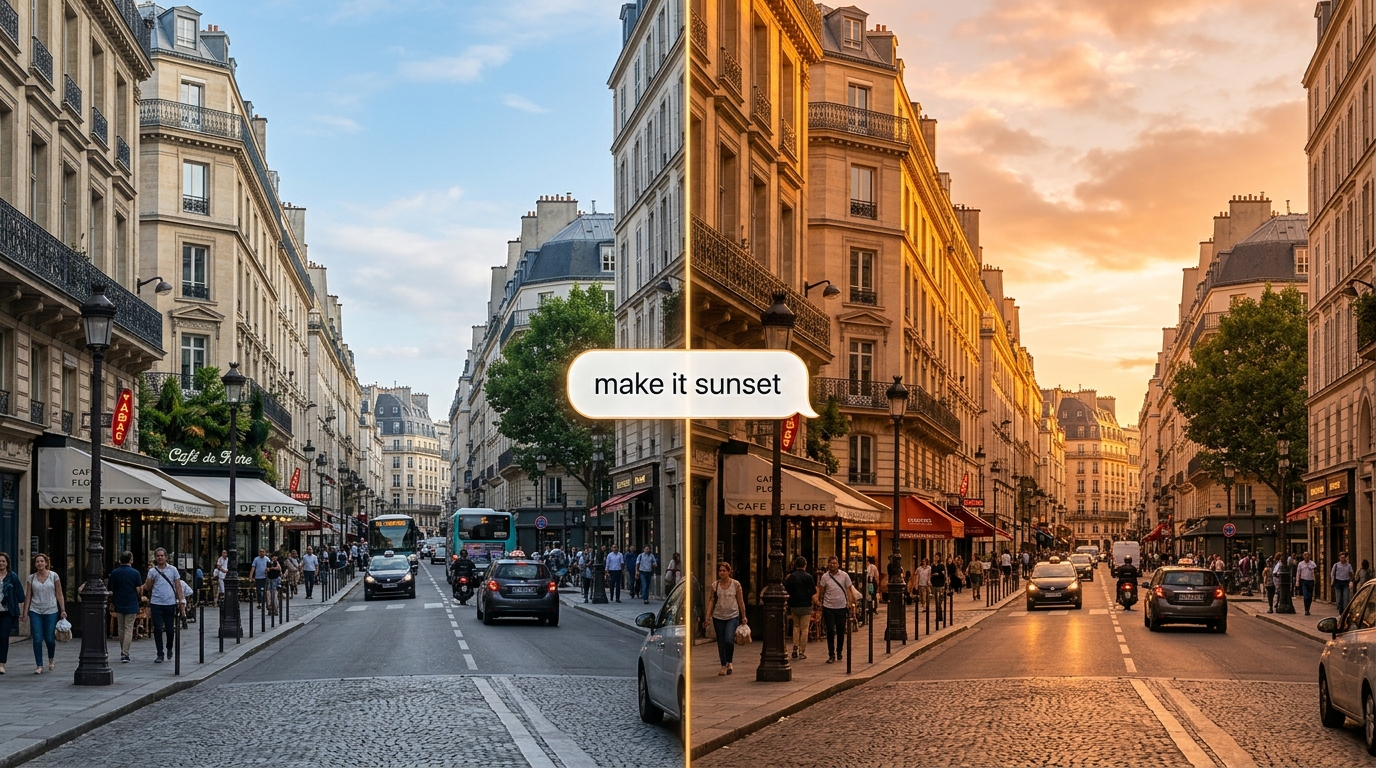
Conversational Editing
Refine a clip through natural language and the Gemini Omni Flash API applies the change while preserving the rest of the scene. Its stateful Interactions API remembers each turn, so edits build on one another.
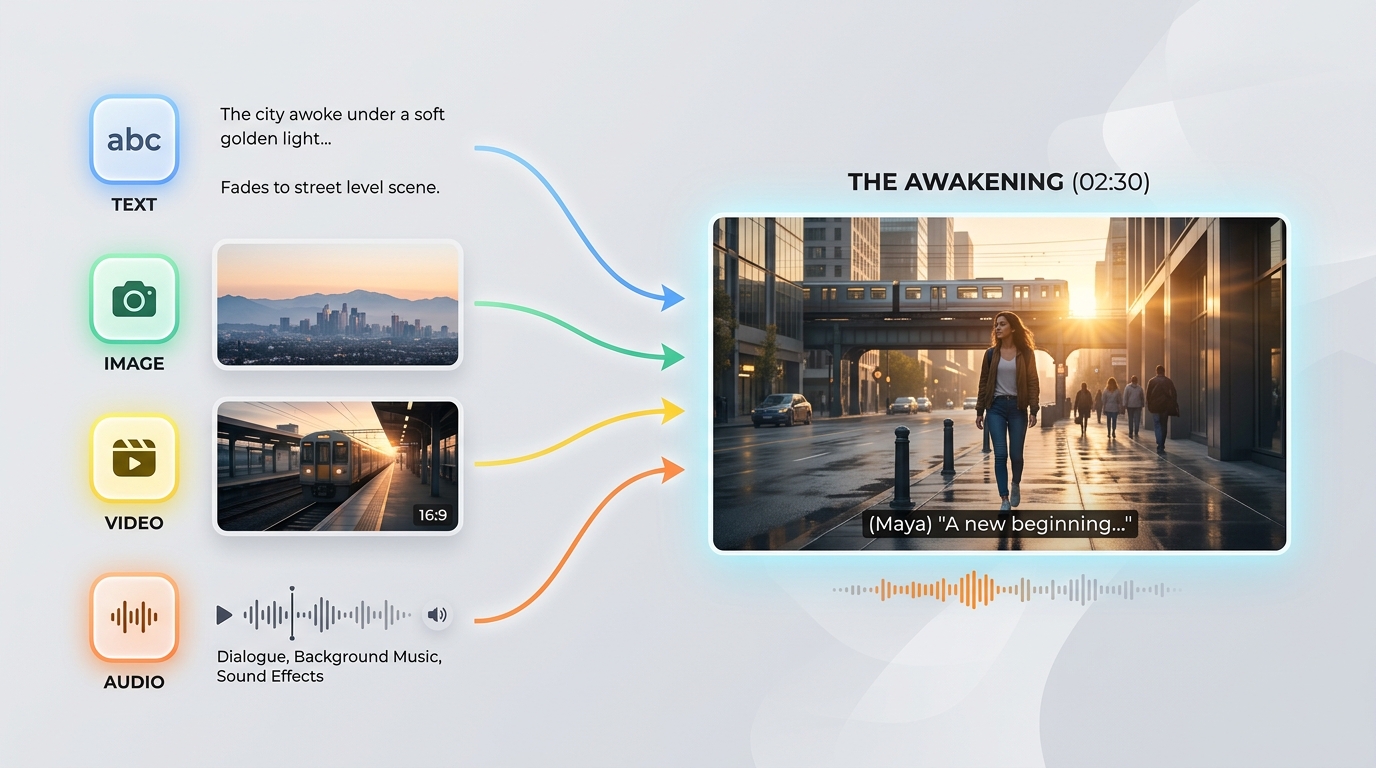
Native Multimodal Input
The Gemini Omni Flash API accepts any mix of text, image, video, and audio in a single prompt. This anything-from-anything input lets you drive a generation from whatever source material you already have.
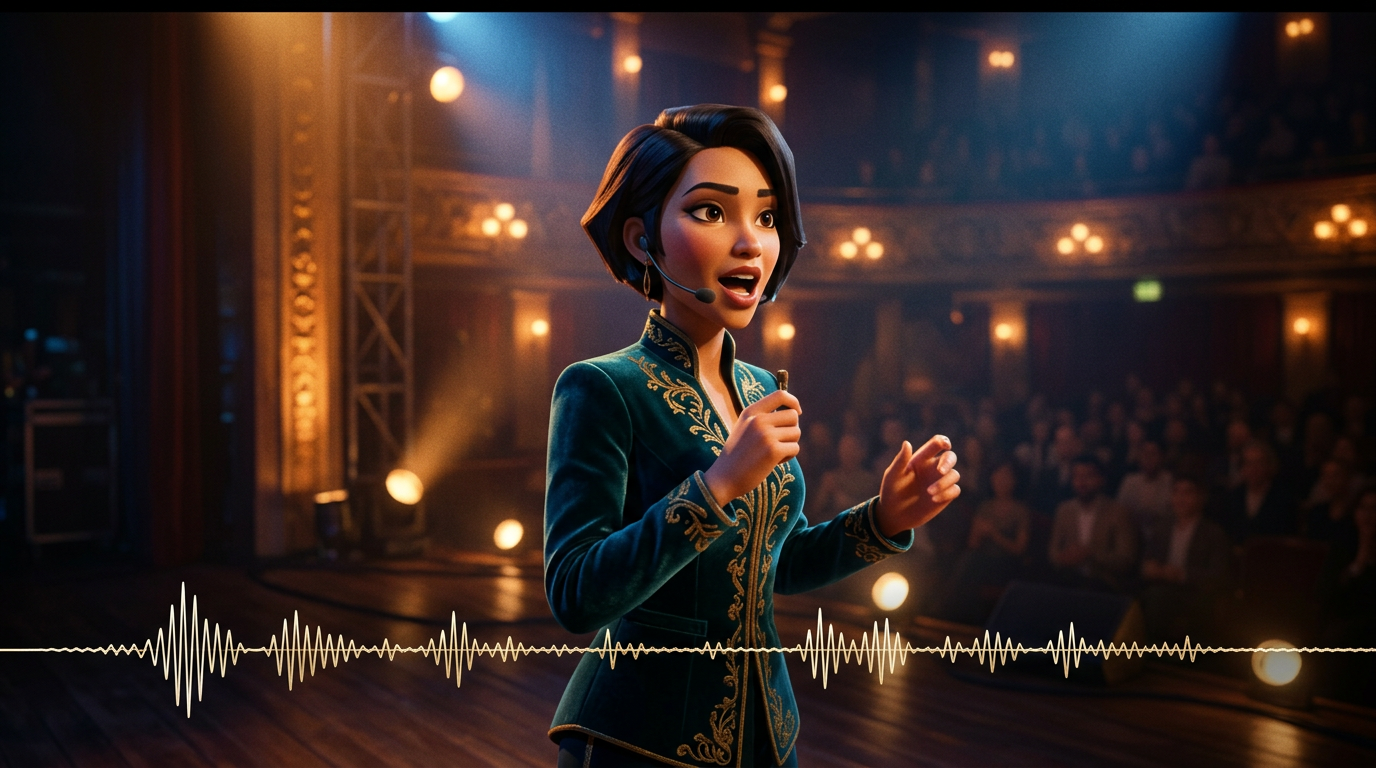
Synchronized Audio in One Pass
Sound is generated with the picture in one inference pass, so dialogue, effects, and ambience stay locked to the action. The Gemini Omni Flash API needs no separate audio step afterward.

World Modeling
Grounded in a model of real-world physics, the Gemini Omni Flash API renders believable reflections, gravity, lighting, and weather. Scenes hold together visually instead of drifting into artifacts, even in dynamic shots.
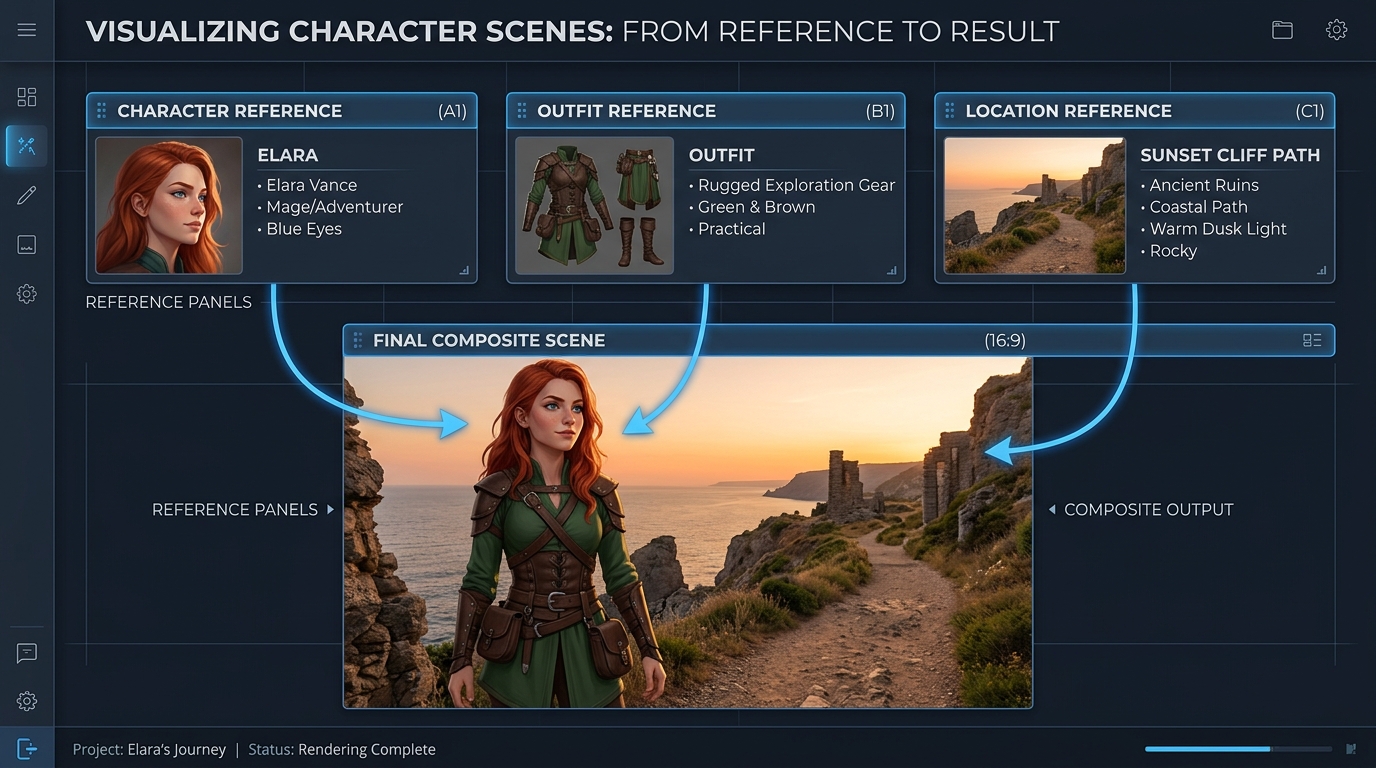
Multimodal Referencing
Guide a generation with up to seven reference images and three short video clips, and the Gemini Omni Flash API keeps subjects, style, and scene consistent. This holds identity steady across edits and shots.
Gemini Omni vs Other Models - One Prompt
The same prompt, generated by Gemini Omni and other leading video models: Multi-shot and high-end commercial film
Generate a 3-scene continuous video: Scene 1: The woman stands under neon lights in a rainy street in Tokyo. Reflections on wet ground, cinematic depth of field, handheld camera movement. Scene 2: The camera slowly transitions to a closer shot. She speaks softly in sync with the provided voice, her lip movements perfectly matched. Background traffic continues seamlessly. Scene 3: She enters a subway station. The environment remains consistent in lighting, weather, and mood. The camera follows her from behind, maintaining identity consistency. Constraints: - Maintain identical facial identity across all scenes - Preserve lighting continuity (rain, neon reflections) - Ensure physical realism (rain interaction, wet surfaces) - Ensure audio-visual synchronization with voice input - No scene reset between transitions; continuous world state Style: high-end cinematic realism, film grain, anamorphic lens, shallow depth of field, 4K film look
Gemini Omni
Wan 2.7
Kling v3.0
Generate a 4-scene continuous video: Scene 1: A small white robot sits motionless on a wooden desk in a dim apartment at midnight. Moonlight enters through the window. The robot’s eyes slowly light up, and a faint mechanical hum begins. Scene 2: The robot climbs down from the desk carefully. Its small metal feet make soft clicking sounds on the wooden floor. The camera follows at a low angle, keeping the robot’s size and shape consistent. Scene 3: The robot walks into the kitchen. Reflections from the refrigerator door and the tiled floor respond naturally to its movement. The same moonlight and quiet nighttime atmosphere continue from the previous scene. Scene 4: The robot stops near a window and looks outside at the city lights. The camera slowly pushes in from behind, preserving the robot’s identity, material, scale, lighting, and sound continuity. Requirements: - Maintain the exact same robot design across all scenes - Preserve one continuous apartment layout, with no scene reset - Keep lighting consistent from room to room - Match footsteps and mechanical humming to the robot’s motion - Use physically realistic reflections, shadows, and object interactions - Smooth transitions between scenes, as if one continuous world is being filmed Style: cinematic realism, quiet sci-fi atmosphere, soft moonlight, detailed materials, realistic camera movement, shallow depth of field, high-end commercial film look
Gemini Omni
Kling V3.0
Pixverse v6
From Product Shot to Final Cut with the Gemini Omni API
Spanning product campaigns, conversational revisions, controlled transitions, coherent extensions, consistent brand worlds, and embedded creative tools, the Gemini Omni API supports production from first frame to final cut.

Product Campaigns with the Gemini Omni API
Animate a product still into cinematic motion with synchronized native audio, optionally defining the final frame. Marketing teams can turn approved photography into launch teasers, social ads, and polished product reveals.

Conversational Post Production
Describe an addition, removal, replacement, or restyle, and the model updates existing footage while preserving everything the prompt leaves untouched. Editors can deliver alternate treatments and client revisions without rebuilding approved scenes.

First and Last Frame Transitions
Set a starting image and a supplied last frame, then let Gemini Omni 1.1 Flash create the motion between them. Designers gain controlled transitions, product reveals, and visual transformations for campaign assets.

Coherent Story Extensions with the Gemini Omni API
Continue an existing clip with a seamlessly matched three to ten second segment, chaining extensions into one coherent sequence. Filmmakers and storytellers can develop longer shots while retaining motion, sound, and visual continuity.

Character and Brand Continuity
Combine a prompt with up to ten reference images and three video clips to guide character, product, or art direction. Studios can preserve recognizable subjects and branded aesthetics across campaign shots and episodic content.

Creative Apps Powered by the Gemini Omni API
Embed text generation, image animation, creation from references, video editing, and clip extension behind one API integration. Creator platforms can offer a connected production workspace without assembling separate video and audio pipelines.
How Gemini Omni API Reference Models Compare
Compare Gemini Omni API reference video models, including Gemini Omni 1.1 Flash, with leading alternatives by supported inputs, reference capacity, audio generation, and standard pricing.
| Model | Accepted Inputs | Reference Capacity | Audio Generation | Standard Price |
|---|---|---|---|---|
| Gemini Omni 1.1 Flash Reference-to-Video | Text, images, video clips | Up to 10 images and 3 video clips | √ | $0.041/sec |
| Gemini Omni Flash Reference-to-Video | Text, images | 1 to 5 images | √ | $0.135/sec |
| Seedance 2.0 Reference-to-Video | Text, images, video, audio | Up to 9 images, 3 videos, and 3 audio clips | √ | $0.112/sec |
| Wan-2.7 Reference-to-video | Text, images, video, audio | Up to 5 images and videos combined, with optional subject voices | √ | $0.10/sec |
| Grok Imagine Video v1.5 Reference-to-Video | Text, images, preset voices | Up to 7 images and 3 preset voices | √ | $0.08/sec |
How to Use Gemini Omni Flash on Atlas Cloud
Get started in minutes — follow these simple steps to integrate and deploy models through Atlas Cloud's platform.
Create an Atlas Cloud Account
Sign up at atlascloud.ai and complete verification. New users receive free credits to explore the platform and test models.
Why Use Gemini Omni Flash on Atlas Cloud
Combining the advanced Gemini Omni Flash models with Atlas Cloud's GPU-accelerated platform provides unmatched performance, scalability, and developer experience.
Performance & flexibility
Low Latency:
GPU-optimized inference for real-time reasoning.
Unified API:
Run Gemini Omni Flash, GPT, Gemini, and DeepSeek with one integration.
Transparent Pricing:
Predictable per-token billing with serverless options.
Enterprise & Scale
Developer Experience:
SDKs, analytics, fine-tuning tools, and templates.
Reliability:
99.99% uptime, RBAC, and compliance-ready logging.
Security & Compliance:
SOC 2 Type II, HIPAA alignment, data sovereignty in US.
Gemini Omni API Questions for Video Builders
The Gemini Omni API gives developers access to Google DeepMind's natively multimodal video generation and editing family through Atlas Cloud. Depending on the selected endpoint, it can generate videos from text or images, use reference media, edit existing footage, and produce synchronized native audio.
Gemini Omni 1.1 Flash adds video extension, first and last frame interpolation, output resolutions from 360p through 4K, and expanded reference guidance. Its extension variant adds 3 to 10 seconds per request and can be chained to create a coherent video lasting up to 40 seconds.
Create an Atlas Cloud account, keep your API key on the server, and select the model endpoint that matches your workflow. Atlas Cloud provides one OpenAI-compatible key, while each endpoint's published schema defines the required prompt, media inputs, and generation settings.
Choose text to video when starting from a prompt, image to video when animating a still, or reference to video when identity and style guidance matter. Use video edit to modify existing footage and the Gemini Omni 1.1 Flash video extend endpoint to continue a scene.
Reference limits vary by endpoint and model version. Gemini Omni 1.1 Flash Reference to Video accepts up to 10 reference images and 3 reference video clips, while earlier endpoints support different limits, so check the selected endpoint schema before submitting media.
Gemini Omni 1.1 Flash supports outputs lasting 3 to 10 seconds at 24 FPS, with 360p, 720p, upscaled 1080p, and upscaled 4K resolution options. Supported aspect ratios are 16:9 and 9:16, although available controls can differ by Atlas Cloud endpoint.
Yes. The video edit variant follows text instructions to add, remove, replace, or restyle elements while preserving footage that the prompt does not mention. For iterative changes, use focused instructions and the interaction context supported by the selected workflow.
To continue a scene, provide an existing clip to the Gemini Omni 1.1 Flash video extend endpoint and request an additional 3 to 10 seconds. Extensions can be chained up to 40 seconds total, while the image to video variant can interpolate between supplied first and last frames.
Standard Atlas Cloud pricing for Gemini Omni 1.1 Flash is $0.041 per second for text to video, reference to video, video editing, and video extension, while image to video costs $0.043 per second. Earlier Gemini Omni Flash endpoints start at $0.112 per second with usage-based billing and no subscription required.
Every generated video includes an invisible SynthID watermark that can be detected programmatically. Safety filters apply to both prompts and generated output, while processing time varies with duration, resolution, and service load. Dedicated negative prompt, system instruction, temperature, top_p, and stop sequence controls are unsupported, so place exclusions in the main prompt.
Explore More Families
Seedance 2.5
Seedance 2.5 API is now available on Atlas Cloud! It gives developers ByteDance's newest video model. It generates up to 30 seconds of native video in a single pass from text, a single image, or as many as 50 multimodal references, with synchronized audio and in-frame multilingual text. On Atlas Cloud you reach it through one key, with subject consistency and improved physics keeping long shots coherent. (Update: Seedance 2.5 1080P API Is Available NOW!)

Wan 3.0
Wan 3.0 API is the next generation of Alibaba's Wan video family, built to push long-form generation, multi-reference control, and audiovisual quality to new heights. Atlas Cloud already hosts Wan 2.7, 2.6, and 2.5, and Wan 3.0 runs on the same unified key with no separate setup. Start building today. Scroll down to the showcase to see what Wan 3.0 can create.
MiniMax H3
MiniMax H3 is MiniMax's video model family for text, image, and reference driven generation. Create 5 to 15 second clips, guide motion with an optional last frame, preserve subjects from reference images, or select H3 Developer when generated audio fits the workflow. Atlas Cloud brings H3, H3 Fast, H3 Max, and H3 Developer into one API workflow, with standard pricing starting at $0.038 per second. Start building today.
Seedream 5.0 Pro
Seedream 5.0 Pro API gives developers ByteDance's controllable image editing model on Atlas Cloud. It places edits precisely with anchors and coordinates, separates images into editable layers, fuses multiple references, and matches exact colors and materials, with multilingual text at 2K and 3K. On Atlas Cloud you reach it through one key!
Seedance 2.0
The Seedance 2.0 API gives you production access to ByteDance's multimodal video model — quad-modal inputs (text, image, video, audio) and an industry-leading "Universal Reference" system that locks composition, camera movement, and character actions across shots. Integrate director-level control with one API call, a flat $0.09/s, instant key, and no waitlist — backed by enterprise-grade uptime and compliance. Seedance 2.0 Native 4K is now live!
GPT Image 2.5
The gpt-image-2.5 family from OpenAI gives developers a choice of Flare and Sunburst for production image workflows. Render at arbitrary resolutions up to 3840x2160 and select from five quality tiers, including xhigh and max, to match specific output requirements. Atlas Cloud provides ready-to-use REST inference with no cold starts and standard pricing from $0.004 per generation. Start building today.
GPT Image 2
The GPT Image 2 API gives developers access to OpenAI's latest image model, the successor to GPT Image 1.5. It generates and edits images with accurate text rendering across Latin and CJK scripts, plus strong composition for posters, mockups, and infographics. On Atlas Cloud you reach it through one unified API alongside 300+ models, with free credits, 99.99% uptime, and no OpenAI organization verification required.
Gemini Omni Flash
The gemini omni API brings Google DeepMind's natively multimodal Gemini Omni Flash family, including Gemini Omni 1.1 Flash, to developers. Create cinematic video with synchronized native audio, animate still images with precise start and end frame control, or revise existing footage through text guided edits that preserve untouched content. Atlas Cloud provides one OpenAI-compatible key, unified access, and transparent pay-as-you-go pricing. Start building today.
Grok Imagine
The Grok Imagine API covers xAI's image, video, and speech models, from Image 2.0 to Video 1.5 and xAI TTS v1. Render 1K or 2K stills across 14 aspect ratios, push a scene to 15 seconds of 1080p motion, steer shots with up to 7 reference images, or narrate them in 20 languages. Atlas Cloud runs every mode on one endpoint, priced pay-as-you-go from $0.02 per image and $0.05 per second. Start building today.
Google's most powerful creative models are all available on Atlas Cloud. Veo 3.1 delivers cinematic video generation, Nano Banana 2 powers high-fidelity image creation, and Gemini brings multimodal intelligence to every workflow. Access the full Google model suite through one API key with Day-0 availability and pay-as-you-go pricing.
Seedance 2.0 Mini
The Seedance 2.0 Mini API is the lightest, lowest-cost tier of ByteDance's Seedance video line, built for teams where throughput and unit cost matter more than maximum polish. Use it for batch generation, rapid prototyping, and draft passes, all through one OpenAI-compatible key on Atlas Cloud.
ByteDance
From cinematic video generation to high-fidelity image creation, ByteDance's most powerful models are live on Atlas Cloud. Run Seedance and Seedream at scale with the lowest inference pricing and zero infrastructure overhead.
Recommended Articles
Guides, tutorials, and product updates to help you get the most out of Atlas Cloud.





