A thread on r/StableDiffusion titled "Any good uncensored AI Prompt creative tools? Don't want filters..." drew 20+ comments from creators sharing the same frustration. A separate thread, "Every AI I try blocks half my prompts," collected 46 posts in October 2025. Both threads point to three concrete problems: prompts written correctly still get flagged, creators can't tell which models actually execute unrestricted requests, and nobody has a clear formula for structuring an effective uncensored ai image prompt.
This tutorial covers the 5-part prompt formula that fixes the structure problem, explains exactly what changed with Grok's content policy in early 2026, and shows how to pair a structured prompt with models that give developers real content control.
The 5-Part Uncensored AI Image Prompt Formula
Creators generate 80 million AI images per day globally in 2026, yet most prompts submitted are three words or fewer (AutoFaceless Blog, AI Image Generation Statistics 2026, 2026). The single biggest reason prompts get blocked or generate mediocre results is weak prompt structure, not the content itself.
A well-structured prompt gives the model complete visual information. Without that information, the model fills in gaps with its own defaults, which often triggers safety heuristics that a specific, detailed description would have bypassed cleanly.
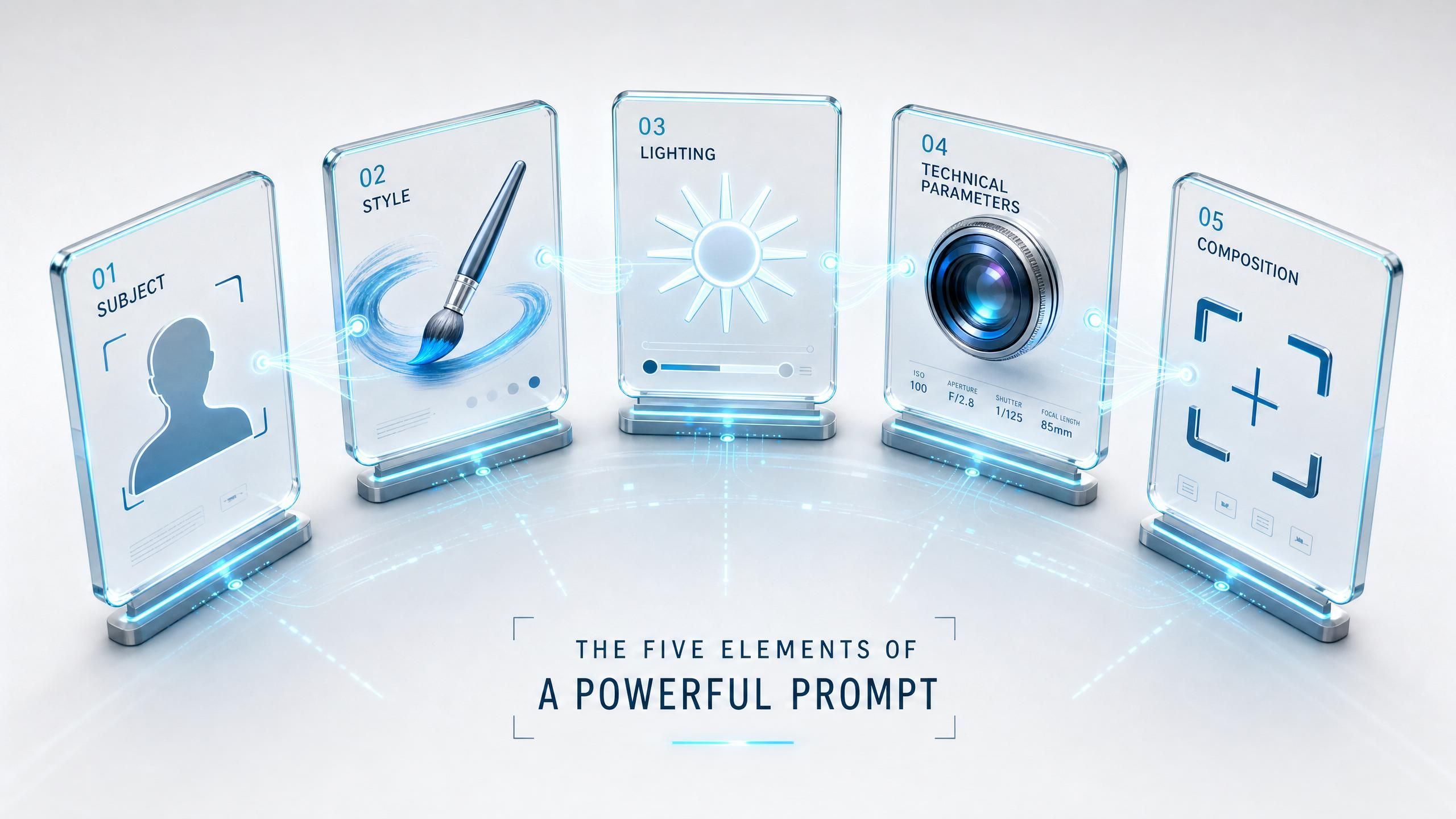
Research from letsenhance.io identifies five elements that separate high-performing prompts from rejected or mediocre ones:
Element 1: Subject
Use concrete nouns. Avoid vague descriptors like "beautiful" or "cool." Name the specific person, object, animal, or scene with enough context that a stranger could sketch it.
Element 2: Style and Medium
Specify the visual language: editorial photography, oil painting, pencil sketch, cel animation, product render. This anchors the model's interpretation and produces consistent output across generations.
Element 3: Lighting and Mood
Golden hour, overcast diffuse light, neon backlight, and candlelight produce fundamentally different images from the same subject. Name both the light source and the emotional register you want.
Element 4: Technical Parameters
Aspect ratio, lens type, resolution intent, film grain, and depth-of-field all belong in the prompt. These parameters shift the model toward photorealistic or stylized output at a technical level.
Element 5: Compositional Framing
Describe what should be prominent and what should recede. "Shallow depth of field with the background softened to bokeh" does far more work than "blurry background."
Here is the difference in practice:
Weak prompt: "beautiful woman, beach, sunset"
Strong prompt: "A sun-kissed woman standing at the ocean's edge at golden hour, loose linen dress catching the sea breeze, Canon 85mm portrait lens perspective, warm amber tones with soft lens flare, shallow depth of field, film grain texture, cinematic mood"
The strong version contains all five elements. It leaves the model almost no interpretive gaps to fill in with defaults. The uncensored AI image generator guide maps which platforms execute this level of detail without truncating output—prompt structure is half the equation; the platform receiving it is the other half.
The strongest uncensored prompts describe what IS present in precise sensory detail, rather than attempting to override the model's defaults. Specificity is the real unlock. Creators who focus on adding more descriptive precision consistently outperform creators who focus on finding the right "magic words" to bypass filters.
Are Grok AI Image Generation Uncensored Prompts Possible in 2026?

The AI image generation market reached $9.1 billion in 2025 and is projected to grow to $272.8 billion by 2035 at a 40.5% CAGR (Market.us, AI-Powered Image Generation Tool Market). Grok was the most talked-about uncensored image generator inside that growth story in late 2025, but creators searching for grok ai image generation uncensored prompts in 2026 will find the situation substantially different from what most tutorials describe.
Here is the timeline, sourced from apidog.com and official xAI communications:
Late 2025: Grok's Aurora model was relatively permissive. The free tier allowed image generation, and the model's content handling was more lenient than competing commercial platforms. This is the period most "uncensored Grok" tutorials reference.
January 9, 2026: Following public backlash over sexualized images of real people, xAI restricted image generation to paid subscribers only.
March 2026: xAI removed the free image generation tier entirely. SuperGrok at $30 per month became the minimum requirement for image generation access.
Current state: No 18+/spicy mode exists on Grok in 2026. Explicit content, real-person deepfakes, graphic violence, and images involving minors are all blocked. The content filter operates on semantic intent, not keyword matching.
That last point matters more than most guides acknowledge.
The semantic intent filter Grok uses cannot be circumvented by rephrasing, metaphor, or fictional framing. The model evaluates the likely output, not the literal words in the prompt. Workarounds based on euphemism or narrative framing are unreliable because the system is not doing a keyword lookup.
Paying for SuperGrok at $30 per month unlocks quality and generation frequency. It does not unlock content categories that the policy explicitly prohibits.
For creators who invested time building around Grok's 2025 capabilities, this matters practically. For a detailed breakdown of what xAI's policy allows and blocks by subscription tier, the Atlas Cloud guide to Grok's NSFW image generation policy covers each restriction with source citations.
For developers and creators who need true content control, the answer is not a better prompt technique. It is a different type of model. The best uncensored AI models guide ranks open-weight options across Ollama, OpenRouter, and hosted APIs with 2026 community data—a useful starting point before committing to a specific stack.
Citation capsule: Grok's Aurora image model was permissive in late 2025, but xAI restricted image generation to paid subscribers on January 9, 2026, after backlash over real-person sexualized content. As of March 2026, SuperGrok at $30/month is required for access. No explicit content mode exists. The semantic intent filter blocks workarounds based on rephrasing or fictional framing .
How to Use an Uncensored AI Prompt Generator
50 million creators worldwide use AI image generation tools as of 2026 (AI Video Bootcamp, Generative AI Media Statistics 2026). A significant portion rely on prompt generator tools to bridge the gap between a rough idea and a detailed, model-ready description.
An uncensored ai prompt generator helps creators structure and expand short ideas into detailed, formatted prompts. Tools like Perchance.org's "Unrestricted AI Image Prompt Generator" (22.56 million monthly visitors) and Miniapps.ai's "Uncensored Image Prompt Maker" (1.8 million monthly visitors) are built specifically for this workflow. Both platforms surface inside Reddit discussions, including the r/StableDiffusion thread from five months ago that drew 50+ comments focused on the Perchance brain function tool.
These tools are genuinely useful for structure. They scaffold the 5-part formula automatically and can expand "woman at the beach" into a 150-word compositional description in seconds.
The limitation is straightforward: prompt generators improve structure. They do not change the content policy of the model receiving the prompt. A perfectly structured 200-word prompt submitted to a platform with explicit content filters will still be blocked, because the filter reads intent, not format.
The real advantage appears when you pair a structured prompt with a model that has no platform-enforced content layer. Use the generator to build the prompt, then route it to an open-weight model via API. That combination is what the tools alone cannot deliver.
Creators who need a curated shortlist of those platforms—ranked by privacy policy, API accessibility, and output quality—will find the best uncensored NSFW AI image generators guide the most practical next step.
Atlas Cloud Uncensored Model Catalog: API Access Without Platform Filters
In 2026, 62% of marketers use generative AI for image creation (AutoFaceless Blog, AI Image Generation Statistics 2026, 2026). Many of those teams need content that commercial platforms will not generate: clinical imagery, artistic nudity, violence for game assets, or mature themes in fiction. The root issue is where content policy lives. Commercial platforms including Grok, Midjourney, and DALL-E apply content moderation at the platform layer, on top of the underlying model. Developers and creators cannot opt out of this layer. The platform decides what the model is allowed to generate, regardless of what the underlying weights could technically produce.
Atlas Cloud maintains a dedicated uncensored model catalog where platform-level content filters are explicitly removed. These models are not commercial APIs with policy layers sitting above the weights. They are purpose-built variants designed for creators and developers who need unrestricted generation without negotiating with a platform's moderation system.
Atlas Cloud provides API-native access to these models, with no minimum spend, no sales call, and self-serve signup at the Atlas Cloud console.
The following models are from the Atlas Cloud uncensored catalog, with platform content filters removed. Pricing verified 2026-05-28:
| Model | Type | Price | Description |
| Wan 2.2 Turbo Spicy Image-to-Video | Image-to-Video | $0.020/sec | Fastest uncensored I2V; segmented prompt generation with stable motion |
| Wan 2.2 Turbo Spicy Image-to-Video LoRA | Image-to-Video | $0.026/sec | Turbo-speed with custom LoRA support |
| Wan 2.2 Spicy Image-to-Video | Image-to-Video | $0.030/sec | Advanced large-scale uncensored generation |
| Wan 2.2 Spicy Image-to-Video LoRA | Image-to-Video | $0.040/sec | Custom styling consistent across clips |
| Wan 2.2 Spicy Video Extend | Video-to-Video | $0.032/sec | Extends existing clips under uncensored policy |
| Wan 2.6 Spicy Image-to-Video | Image-to-Video | $0.070/sec | Newer generation; expressive character motion |
| Seedance v1.5 Pro Spicy | Image-to-Video | $0.049/sec | Cinematic video with smooth motion from a still image |
| Seedream 5.0 Pro | Text-to-Image | from $0.054/pic | Newest uncensored model with region edits, layer separation, and multi-image fusion; 15-language in-image text |
Source: Atlas Cloud uncensored model catalog, retrieved 2026-05-28
All seven I2V models in the table above are covered in depth in the uncensored AI image-to-video generator guide, including source image preparation requirements and per-model quality comparisons. Teams working on mature creative content find that calling Atlas Cloud's uncensored models via API removes the rejection loop entirely. The prompt goes in, the generation comes out. There is no filter to negotiate, no support ticket to explain the use case, and no platform policy that resets after a quarterly update.
Step 1: Create Your Account
Create an account at the Atlas Cloud console. Generate an API key. No enterprise agreement, no waiting period.
Step 2: Call the Generation Endpoint
Submit your prompt to the REST endpoint using the model of your choice:
plaintext1import requests 2 3url = "https://api.atlascloud.ai/api/v1/model/generateImage" 4headers = { 5 "Authorization": "Bearer YOUR_ATLASCLOUD_API_KEY", 6 "Content-Type": "application/json" 7} 8data = { 9 "model": "black-forest-labs/flux-kontext-dev", 10 "input": { 11 "prompt": "A sun-kissed woman standing at the ocean's edge at golden hour, loose linen dress catching the sea breeze, Canon 85mm portrait lens perspective, warm amber tones with soft lens flare, shallow depth of field, film grain texture, cinematic mood" 12 } 13} 14 15response = requests.post(url, headers=headers, json=data) 16print(response.json())
Step 3: Switch Models Without Changing Code
Change the model parameter to test a different style. Submitting the same prompt to alibaba/wan-2.7/text-to-image or bytedance/seedream-v5-lite runs identically without any other code changes required.
Running the same structured prompt across three or four open-weight models takes under a minute and costs less than $0.15 total. That iteration speed is what separates professional prompt workflows from single-platform creative work. The prompt quality compounds because you can compare outputs and refine precisely.
The full API reference is available at the Atlas Cloud OpenAPI documentation. The complete image catalog, including all available models and their parameters, lives at the Atlas Cloud image model catalog. Per-image pricing for every model is listed at Atlas Cloud model pricing.
A little gift for you: Seedream 5.0 Pro just dropped its price — now more accessible than ever for creators and developers.
Try Seedream 5.0 Pro at the new lower price and see what's possible with the most capable image model in its class.
Frequently Asked Questions
What is the best uncensored AI image prompt generator in 2026?
Perchance.org and Miniapps.ai are the two highest-traffic tools built specifically for uncensored prompt generation, with 22.56 million and 1.8 million monthly visitors respectively. Both improve prompt structure. The real differentiator is the model receiving the prompt. Open-weight models accessed via Atlas Cloud combine structured prompting with developer-controlled content policy, which no generator tool alone can provide.
Why do my uncensored AI prompts keep getting blocked?
The issue is almost never prompt quality. It is the content policy of the platform. Commercial platforms filter by semantic intent, which means the filter evaluates what the image would likely show, not what words appear in the prompt. Rephrasing, euphemism, and fictional framing rarely work because the system is not doing a keyword lookup. The solution is routing to an open-weight model where the policy layer belongs to the developer, not the platform.
Can Grok Generate Uncensored AI Images in 2026?
No 18+/spicy mode exists on Grok as of 2026. SuperGrok at $30/month improves quality and rate limits but cannot override explicit content prohibitions. xAI tightened enforcement in January 2026 after backlash over real-person sexualized imagery, and removed free image generation in March 2026. Grok's semantic filter blocks explicit content regardless of how the prompt is phrased or framed.
How do I write an effective uncensored AI image prompt?
Use the 5-part formula: (1) specific subject with concrete nouns, (2) style and medium, (3) lighting and mood, (4) technical parameters including lens and aspect ratio, (5) compositional framing. Specificity produces better results than keyword lists. The ocean/golden hour/Canon 85mm/film grain example above demonstrates the full structure. This formula applies regardless of which model receives the prompt.