

If you’ve ever burned hours re-rendering because a face warped mid-shot, you know the pain: most pipeline failures come down to using the wrong engine. Right now, three models dominate serious production workflows: Wan 3.0, Seedance 2.5, and MiniMax H3
Executive Comparison Matrix
| Model | Key Strength | Duration | Max Resolution | Best For | Key Limitation |
| Wan 3.0 | Document-to-video & script context parsing | 30s single pass | 1080p Native (4K Upscale) | Continuous single-take scenes | Heavy local VRAM load |
| Seedance 2.5 | 50-input reference density & cinematic lighting | 30s native | 4K Upscale | Commercial ads & brand asset lock | Cloud API cost scaling |
| MiniMax H3 | Open-weight 2K rendering & dynamic physics | 15s native | 2K Native | Local production pipelines & high-res VFX | Shorter native clip length |
Quick Decision Flowchart
- Choose Wan 3.0 if your workflow relies on 30-second continuous single takes or direct multi-page script context parsing.
- Choose Seedance 2.5 for peak volumetric light/fog depth, zero facial drift across turns, and strict multi-asset brand lock.
- Choose MiniMax H3 if you need native 2K resolution, realistic dynamic cloth physics, or local open-weight deployment.
Knowing when Wan 3.0 vs Seedance 2.5 or Wan 3.0 vs MiniMax H3 fits your pipeline determines whether you rank among the best AI video models 2026 workflows rely on.
Empirical Benchmark Test: Running a Cinematic Sci-Fi Prompt Across All Three Models
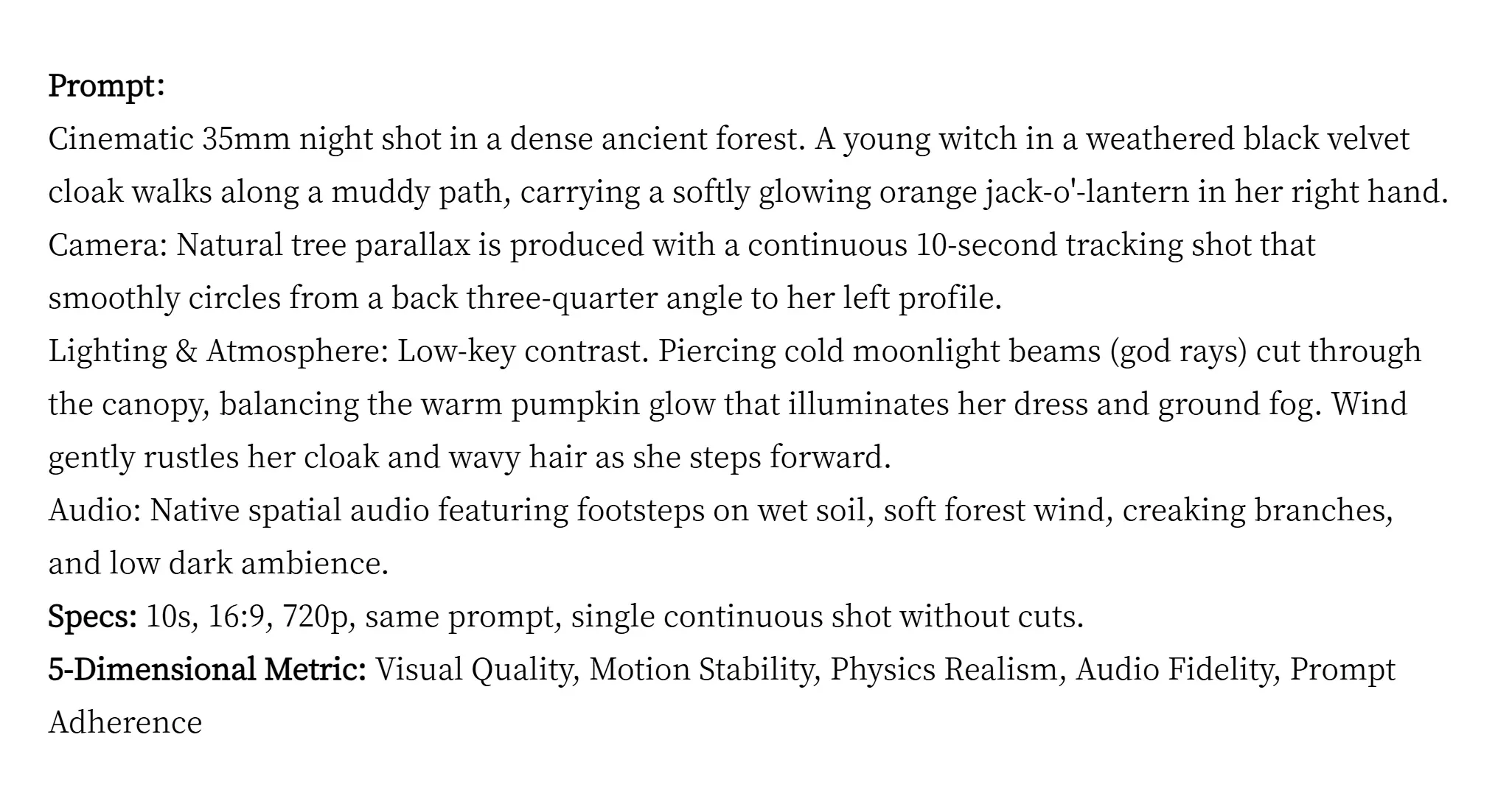
To establish a standardized AI video model benchmark, we executed a controlled Halloween prompt test across Wan 3.0, Seedance 2.5, and MiniMax H3.
Note: The video tests below all utilized the Seedance 2.5, MiniMax H3, and Wan 3.0 models on Atlas Cloud.
Phase 1: Text-to-Video (T2V) Generative Test — Prompt Adherence & Dynamic Physics
Text-to-Video generation represents the raw spatial and physical synthesis capability of an AI video engine. Without visual anchors or reference images, the model must create character geometry, lighting behavior, atmospheric fog, and continuous camera motion purely from text token interpretation.
First up: evaluating raw T2V synthesis across all three models using a complex 10-second scene with low-light shadows, god rays, and continuous camera tracking.
Why a 10-Second Baseline?
Choosing a 10-second window creates a level playing field across all three engines. While Wan 3.0 and Seedance 2.5 support 30-second single passes, MiniMax H3 caps single-generation output at 15 seconds. A 10-second duration allows every model to render the complex tracking and lighting sequence in a single, uninterrupted pass without introducing clip-stitching variables.
My test design:
Wan 3.0 Halloween Benchmark Analysis
- Low-Light Performance (7.5/10): Dual color temperatures render cleanly. The 2700K pumpkin glow lights the cloak and path accurately while shadows retain bark and soil detail without digital noise.
- Volumetric Light (6.5/10): Moonlight creates ambient canopy fill, but falls short on generating distinct, downward light beams (god rays) requested in the prompt.
- Fog & Depth (7.2/10): Ground mist disperses localized orange light close to the lantern without obstructing character trajectory as it naturally falls across z-depth levels.
- Material Rendering (7.5/10): High texture fidelity. Side-tracking reveals distinct patterns on velvet fabric, matte leather pouches, and metallic belt hardware.
- Motion Physics (7.2/10): Maintained temporal stability across the 10-second single take. Hair and cloak react smoothly to movement without limb warping or flickering artifacts.
- Camera & Parallax (7.8/10): Smooth 180-degree tracking orbit from rear to left profile with realistic foreground and background parallax separation.
- Audio Synchronization (7.2/10): Crisp footsteps on damp leaves match walking speed, balanced beneath ambient forest audio.
Overall Score: 7.3 / 10
- Key Strengths: Steady tracking camera, sharp material details, and stable 10s motion.
- Key Limitation: Missed sharp downward volumetric light rays through the forest canopy.
MiniMax H3 Halloween Benchmark Analysis
- Low-Light Performance (7.2/10): Strong shadow depth. Ground ferns and the muddy trail stay crisp under cool moonlight and the pumpkin’s warm glow.
- Volumetric Light (7.8/10): Excellent light shaft execution. Defined moonlight pierces through high tree trunks at second 4, creating strong atmospheric rim lighting.
- Fog & Depth (7.4/10): Heavy background mist creates multi-layered depth, separating foreground foliage from dense, dark forest backdrops.
- Material Rendering (7.3/10): Sharp surface detail across the leather boots, metallic belt ring, and heavy cloak fabric as the camera tracks past her hip.
- Motion Physics (6.2/10): Walking stride and cloak sway are fluid, but an object consistency error occurs when the pumpkin pops into her hand mid-shot.
- Camera & Parallax (7.5/10): Smooth side-profile tracking shot maintaining steady horizontal parallax between foreground ferns and distant pine trees.
Audio Synchronization (6.8/10): Eerie background ambience and wind, though footsteps on wet soil are overly muted.
Overall Score: 7.1 / 10
- Key Strengths: Superior volumetric moonlight shafts, strong rim lighting, and crisp material texture rendering.
- Key Limitation: Asset temporal pop-in pumpkin appears mid-generation at second 4 instead of being carried from frame 1.
Seedance 2.5 Halloween Benchmark Analysis
- Low-Light Performance (8.2/10): High contrast with deep shadow retention. Bright 2700K pumpkin glow accurately illuminates damp leaves, coat seams, and lower back details.
- Volumetric Light (9.2/10): Exceptional light ray execution. Distinct, piercing moonlight shafts (god rays) break through gnarled branches on the left around second 5.
- Fog & Depth (8.8/10): Great sense of space. Thick mist rolls along the trail, catching the moonlight and warm lantern light at different distances.
- Material Rendering (8.5/10): Sharp surface detail on the jacket seams, shiny metal buckles, loose hairs, and smooth pumpkin cutouts.
- Motion Physics (8.4/10): Stable walking gait and continuous asset persistence. The character holds the jack-o'-lantern stably from frame 1 without pop-in or warping.
- Camera & Parallax (8.3/10): Smooth back-tracking shot that slowly turns to her left side, keeping clear depth between the old oak trees.
- Audio Synchronization (8.2/10): Over soft background noise, the sound of her footsteps on wet mud nicely fits her walk.
Overall Score: 8.5 / 10
- Key Strengths: Top-tier volumetric moonbeams, deep fog layering, and exceptionally stable object rendering.
- Key Limitation: Character enters heavy shadow during the late-take camera turn, slightly reducing front facial visibility.
Text-to-Video (T2V) Benchmark Synthesis: What the Halloween Test Reveals
Comparing the three renders under identical control parameters highlights distinct engine priorities across lighting physics, material persistence, and motion stability:
| Evaluation Metric | Wan 3.0 | MiniMax H3 | Seedance 2.5 |
| Visual Quality | 7.5 | 7.2 | 8.2 |
| Volumetric Light | 6.5 | 7.8 | 9.2 |
| Fog & Depth | 7.2 | 7.4 | 8.8 |
| Material Fidelity | 7.5 | 7.3 | 8.5 |
| Motion Physics | 7.2 | 6.2 | 8.4 |
| Audio Sync | 7.2 | 6.8 | 8.2 |
| Overall Score | 7.3 / 10 | 7.1 / 10 | 8.5 / 10 |
| Key Trade-off | Superior 10s tracking stability, but flat volumetric light rays | Strong atmospheric light shafts, but suffers asset pop-in bugs | Industry-leading spatial depth & asset locks; higher API cost |
Core Takeaway: Resolution alone does not dictate production quality. While Seedance 2.5 dominates atmospheric rendering and frame-one asset persistence avoiding spatial warping entirely, Wan 3.0 provides unmatched continuous tracking stability for long single takes. MiniMax H3 shows impressive volumetric ray tracing but requires tighter prompt constraint handling to eliminate sudden object pop-in artifacts.
Phase 2: Image-to-Video (I2V) Consistency Test — Anchor Frame & Asset Lock
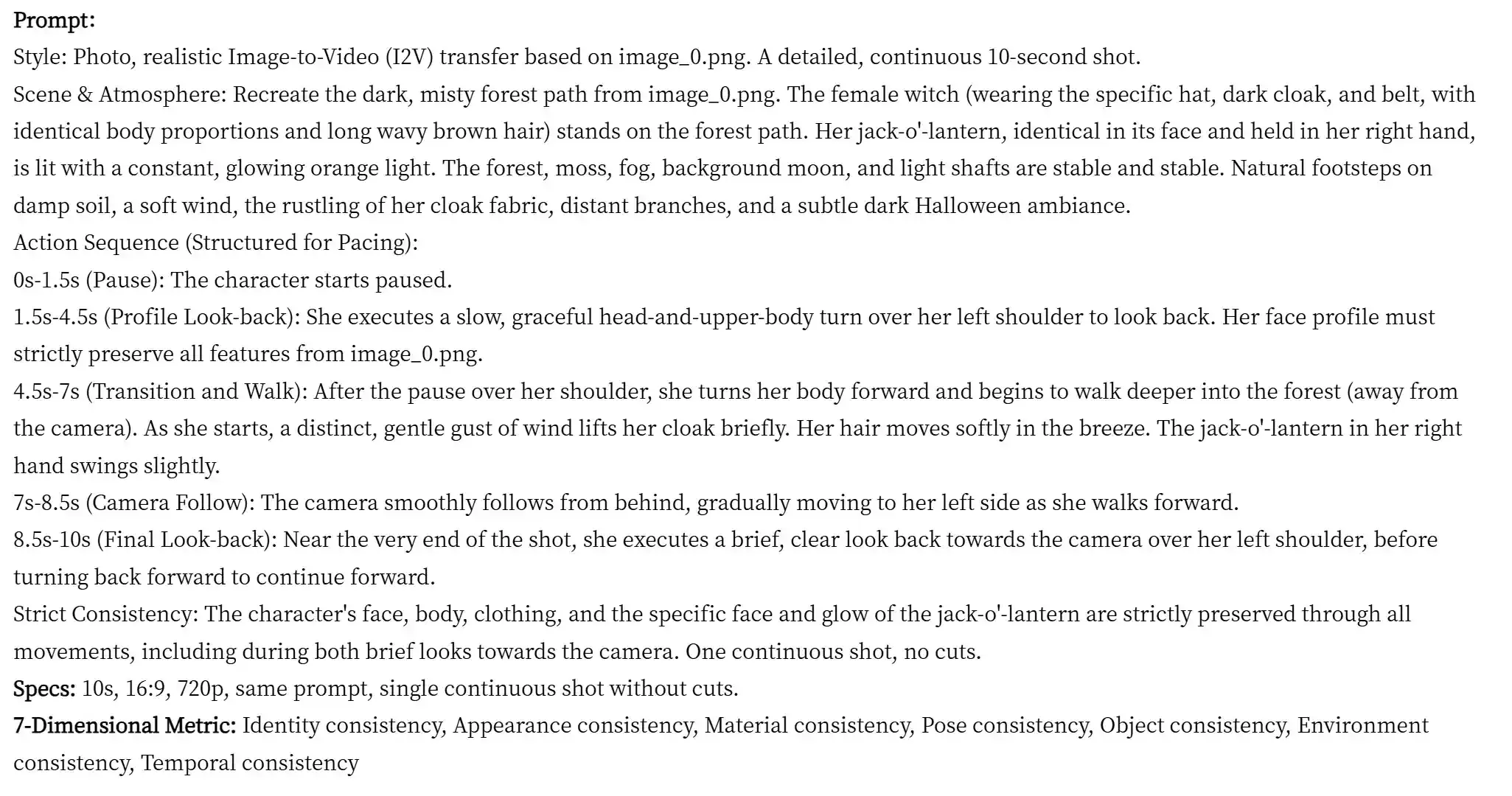
While Text-to-Video (T2V) evaluates an engine's raw prompt comprehension and unguided visual synthesis, real-world commercial pipelines rarely rely on text inputs alone. Production workflows typically start with approved concept art or pre-rendered keyframes, making Image-to-Video (I2V) performance the true test of production viability.
To evaluate how each engine handles image conditioning, I fed a standardized high-detail keyframe into all three models. The target: execute a complex 10-second motion sequence—including a 180-degree shoulder turn, dynamic walk cycle, wind-driven cloak physics, and a secondary camera glance—while locking down facial identity, clothing textures, and held props.
My test design:
Reference image:

Wan 3.0 Halloween I2V Benchmark Analysis
- Identity Consistency (7.8/10): High facial and hair feature preservation from reference image. Both the 3-second profile turn and 8-second camera look-back retain identical facial geometry, nose bridge structure, and wavy brown hair without mid-shot morphing.
- Appearance Consistency (7.6/10): Clean match on character shape, pointed witch hat, buckled belt, and long cloak throughout the full ten-second clip.
- Material Consistency (7.4/10): Deep cloak folds, flat leather surfaces, and hat edges stay realistic, moving naturally with her steps and lighting shifts.
- Pose Consistency (7.5/10): Anatomically stable transitions throughout the sequence. The progression from initial pause to forward walking and the final shoulder turn shows fluid joint articulation without limb distortion.
- Object Consistency (7.7/10): Exceptional persistence of the jack-o'-lantern. The carved face and internal orange light source remain steady in the right hand without flickering or asset pop-in.
- Environment Consistency (7.5/10): Forest path, mossy ground textures, and background atmospheric fog maintain continuous depth. Volumetric moonlight shafts stay anchored without shifting unpredictably.
- Temporal Consistency (7.6/10): Smooth continuous take throughout the whole ten-second clip. Solid frame stability prevents flickering, shape twisting, or visual errors when turning.
Overall Score: 7.6 / 10
- Key Strengths: Great character design stability through full turns and zero morphing on the glowing pumpkin she holds.
- Key Limitation: Slight motion dampening during the secondary wind gust, resulting in a subtler cloak lift than requested.
MiniMax H3 Halloween I2V Benchmark Analysis
- Identity Consistency (7.5/10): Solid preservation of facial structure and hair profile from reference image. The initial 2-second shoulder glance and the 8-second turn maintain core facial features and hat alignment without structural warping.
- Appearance Consistency (7.6/10): Accurate retention of character silhouette, witch hat dimensions, buckled waist belt, and dark cloak proportions throughout the 10-second forward walk.
- Material Consistency (7.8/10): Exceptional cloth physics dynamics. The wind gust around second 5 billows the heavy cloak fabric backward with realistic momentum without texture clipping or artificial stretching.
- Pose Consistency (7.4/10): Natural walking stride and fluid head articulation. Motion transfers smoothly from a static pause into a forward walk and subsequent shoulder turn.
- Object Consistency (7.6/10): High persistence of the held jack-o'-lantern. The carved facial design and internal orange glow remain anchored in her right hand through stride motion.
- Environment Consistency (7.7/10): Excellent spatial depth retention. Volumetric moonlight rays pierce through the canopy continuously, while atmospheric fog and mossy path details remain stable.
- Temporal Consistency (7.5/10): Smooth ten-second unbroken shot. Frame stability holds strong with no sudden jumps or character shape shifting.
Overall Score: 7.6 / 10
- Key Strengths: Superior volumetric light ray retention and outstanding, highly realistic cloak cloth physics during wind movement.
- Key Limitation: Facial exposure drops slightly during the late-take camera glance due to heavy environmental shadowing.
Seedance 2.5 Halloween I2V Benchmark Analysis
- Identity Consistency (8.4/10): Her face and long wavy hair stay locked to the reference photo. From the initial profile turn to the glance back at second 8, there's zero facial morphing or drift.
- Appearance Consistency (8.2/10): Great costume stability. The witch hat brim, leather belt hardware, and cloak length hold their exact proportions across the entire 10-second walk.
- Material Consistency (8.1/10): High-definition texture rendering across heavy cloak fabric, leather accessories, and hat felt. The surrounding fabric folds and ground moss are realistically illuminated by the pumpkin glow's natural light reflection.
- Pose Consistency (8.0/10): Exceptionally smooth, controlled movement transitions. The character executes the shoulder turn, forward walk, and secondary look-back with cinematic weight and realistic joint articulation.
- Object Consistency (8.2/10): Rock-solid jack-o'-lantern asset persistence. The carved face and interior warm orange illumination remain completely stable in the right hand throughout the walking stride without flickering or shape warping.
- Environment Consistency (8.5/10): Great environmental depth. Thick forest mist drifts naturally through the trees, scattering both moonlight and pumpkin light without shifting between frames.
- Temporal Consistency (8.3/10): Excellent stability across the ten-second shot. No frame flickering, shape twisting, or clip overlap during full turns.
Overall Score: 8.2 / 10
- Key Strengths: Zero facial distortion during turns, with seamless volumetric lighting through dense fog.
- Key Limitation: Walking stride pacing is slightly slow in the mid-shot transition before the final camera glance.
Image-to-Video (I2V) Benchmark Synthesis: What the Reference-Based Test Reveals
Executing the controlled I2V test using reference image across all three engines illustrates critical architectural differences in reference image adhesion, facial identity preservation, and motion physics:
| Evaluation Metric | Wan 3.0 | MiniMax H3 | Seedance 2.5 |
| Identity Consistency | 7.8 | 7.5 | 8.4 |
| Appearance Consistency | 7.6 | 7.6 | 8.2 |
| Material Consistency | 7.4 | 7.8 | 8.1 |
| Pose Consistency | 7.5 | 7.4 | 8 |
| Object Consistency | 7.7 | 7.6 | 8.2 |
| Environment Consistency | 7.5 | 7.7 | 8.5 |
| Temporal Consistency | 7.6 | 7.5 | 8.3 |
| Overall Score | 7.6 / 10 | 7.6 / 10 | 8.2 / 10 |
| Key Trade-off | Reliable facial identity & pumpkin persistence; conservative wind dynamics | Exceptional cloth wind physics & rays; facial shadow occlusion in late turns | Unrivaled multi-turn facial lock & fog depth; slightly slow walking stride pacing |
Core Takeaway: For image-conditioned runs, Seedance 2.5 keeps facial features sharp and environmental fog realistic throughout full 10-second camera sweeps. Wan 3.0 and MiniMax H3 match overall scores, but excel in different areas: Wan 3.0 locks down props without mid-shot morphing, while MiniMax H3 handles wind-driven fabric physics far better.
Deep-Dive Model Profiles: Architectural Strengths, Limitations, and Production Workflows
Solving video consistency requires fundamentally different architectural trade-offs—as seen in how Wan 3.0, Seedance 2.5, and MiniMax H3 build their pipelines.
Wan 3.0: Narrative Consistency and Extended Context Ingestion
Rather than limiting inputs to short text prompts, Wan 3.0 introduces native context parsing for PDFs, PowerPoint decks, Word files, and raw webpages alongside images and audio. Generates native 30-second continuous takes directly from multi-page scripts without manual clip stitching.
- Multi-Input Pass: Accepts up to 10 photos, 5 video clips, 5 audio tracks, and reference documents in one go.
- Core Capabilities: Signature Wan 3.0 features include instruction-based editing and precise digital interface rendering for software walkthroughs.
- Production Constraint: Heavy local hardware load when processing full document reference stacks.
Seedance 2.5: Multimodal Reference Density and Precision Control
When commercial campaigns require strict visual adherence to brand assets, Seedance 2.5 reference density prevents identity drift. Core Dual-Branch Diffusion architecture accepting 50 reference assets 30 images, 10 videos, 10 audio files for persistent character, prop, and lighting setup.
- Action Timing: Map shot triggers to exact time slots, e.g., 0–2.5s push, 2.5–5s dialogue.
- Pipeline Support: Direct Blender and Maya hookups with white-model and green-screen pass-throughs.
- Production Constraint: Cloud API costs scale rapidly when feeding maximum 50-asset reference sets.
MiniMax H3: High-Resolution 2K Output and Open-Weight Versatility
For studios requiring local deployment and zero data lock-in, MiniMax H3 open weights provide a 428-billion parameter architecture with 23 billion active parameters capable of running locally via ComfyUI, vLLM, and SGLang. The engine natively generates 32kHz stereo audio alongside video frames.
| Feature Metric | Hosted Cloud API | Local Open-Weight Execution |
| Maximum Output | 2K Native Resolution | 768p / 1080p Resolution |
| Native Duration | 5s to 15s per generation | Up to 15s per generation |
| Audio Engine | 32kHz Stereo (Speech, SFX, Music) | 32kHz Stereo (Speech, SFX, Music) |
This open model allows developers to construct a private AI video workflow without relying on third-party cloud infrastructure.
AI Video API Pricing Comparison & Hardware Overhead
Spending $200 on cloud API credits only to discard 70% of generated clips due to subtle motion bugs breaks production budgets fast. Evaluating AI video API pricing against local compute demands reveals drastically different operational costs across the top engines.
Cost-Per-Second Breakdown Across Resolutions
API rates vary significantly depending on output resolution and frame duration:
| Pricing | Wan 3.0 | Seedance 2.5 | MiniMax H3 |
| 480p Pricing | $0.04 / sec | $0.14 / sec | N/A |
| 720p / 768p Pricing | $0.08 / sec | $0.3 / sec | $0.08 / sec |
| 1080p / 2K Pricing | $0.16 / sec | $0.59 / sec | $0.13 / sec |
| Billing Structure | Billed per output second | Per second + input token floors | Billed per output second |
Note: The prices in the table are based on Atlas Cloud's pricing as of August 31.
Calculating the Seedance 2.5 cost per second requires accounting for input reference video length, which adds token charges on top of base generation rates. Conversely, Wan 3.0 & Minimax H3 benchmarks offering lower entry-level tier costs.
Deployment Architecture and Hardware Requirements
Choosing between a cloud API vs. an open-weights setup determines your long-term compute overhead:
- Wan 3.0: Cloud API exclusive. No local GPU VRAM required; processing is entirely offloaded to cloud infrastructure, removing local hardware constraints while operating on pay-per-second API pricing.
- Seedance 2.5: Cloud API exclusive. High reference-density processing handled via cloud endpoints, with cost scaling based on frame duration and input reference token floors.
- MiniMax H3: Full open-weight access. MiniMax H3 open-source weights analysis highlight that pruned INT8 with NVFP4 AWQ quantization reduces disk footprint to 42.5GB. Official MiniMax H3 VRAM requirements sit around 24GB for smooth execution, though 12GB GPUs run it via ComfyUI system RAM layer offloading at a native 768px canvas.
Inference Latency and Render Throughput
Production scheduling depends heavily on rendering latency per 5-second block:
- Wan 3.0 Cloud: 90 to 120 seconds per 5s block (1080p).
- Seedance 2.5 API: 45 to 60 seconds per 5s block (720p).
- MiniMax H3 Local (RTX 4090): 180 to 240 seconds per 5s block (720p native with offloading).
Note: Cloud API latency varies based on real-time server queue loads, while local execution speed depends on ComfyUI sampler steps and VRAM offloading bottlenecks.
Failure Modes and Recovery Strategies: Fixing Real-World Production Errors
Watching a character's face morph at second 22 of a 30-second continuous render costs time and burns compute credits. Resolving these recurring errors requires targeted prompt adjustments rather than random re-rolls.
-
Wan 3.0 Late-Take Drift (Sec 20+)
- Cause: Context decay over 30-second single takes.
- Recovery: Anchor primary character in Line 1 (
@Subject 1 = Image 1). Divide the timeline into clear chunks (0–8s, 8–20s, 20–30s) and restate core tags before the 20s mark.
-
Seedance 2.5 Asset Bleeding
- Cause: Layer conflicts when feeding up to 50 reference files.
- Recovery: Assign a strict role per uploaded file using explicit exclusion syntax (e.g.,
@Video 1 = motion path only; exclude identity and wardrobe).
-
MiniMax H3 Motion Jumps
- Cause: Over-packing 3+ distinct actions inside a 3-second window.
- Recovery: Expand action budgets to 5-second integer intervals and limit each stage to a single physical movement.
Final Verdict and Workflow Selection Framework for Video Creators
Committing to a single engine subscription without matching it to your target deliverable leads to constant workarounds and ballooning render bills. Arriving at a definitive Wan 3.0 vs Seedance 2.5 vs MiniMax H3 verdict requires evaluating your production architecture, team size, and asset pipeline constraints.
Matching Engine Architecture to Production Goals
- E-Commerce Advertising: Seedance 2.5 excels when locked visual references matter most. For product showcases requiring tight character continuity and precise timing edits, it keeps brand assets stable. For a direct 1v1 analysis on native duration mechanics, see our detailed guide on Wan 3.0 vs Seedance 2.5 native 30s clips.
- Narrative Filmmaking: Wan 3.0 stands out as the best AI video generator for creators producing long-take narrative shots directly from raw scripts. Before building an in-house pipeline, review our analysis of Wan 3.0 VRAM requirements to ensure GPU memory allocation matches production demands.
- Studio Scale & Enterprise Deployment: MiniMax H3 offers the lowest marginal cost for high-volume commercial AI video production. Running open weights locally via ComfyUI or vLLM eliminates per-second API fees while delivering native 2K output.





