
Doubao Seed API for Reasoning and Coding
Doubao Seed API 开放了 ByteDance 完整的 Seed 系列,从旗舰级 Seed 2.1 Pro,到专用的 Code Preview,以及高效的 Lite 和 Mini 层级。每个模型都支持深度推理、智能体式规划和仓库级编码,并提供流式传输和共享的 256K 上下文。Atlas Cloud 通过同一个 endpoint 提供全部模型服务,按量付费价格低至每百万 tokens 0.1 美元,并支持 Day-0 access。立即开始构建。
Seed 由 ByteDance 开发。Atlas Cloud(由 Atlas Cloud AI LLC 运营)仅提供接入服务,并不拥有该模型。所有商标均归其各自所有者所有。
探索领先模型
Atlas Cloud 为您提供最新的行业领先创意模型。









规格对比
Doubao Seed 系列:覆盖前沿推理到高吞吐推理的完整语言模型套件。
| 模型 | 层级 | 最适合 | 上下文 | 最大输出 |
|---|---|---|---|---|
| Doubao Seed 2.0 Pro | 旗舰版 | 复杂推理、智能体、最高难度任务 | 256K | 131K |
| Doubao Seed 2.0 Code Preview | 代码(预览版) | 代码生成、重构、仓库级工作 | 256K | 131K |
| Doubao Seed 2.0 Lite | 均衡型 | 需要以更低成本获得高质量的生产应用 | 256K | 131K |
| Doubao Seed 2.0 Mini | 高效型 | 高并发、延迟敏感、低成本推理 | 256K | 131K |
| Doubao Seed 1.8 | 上一代旗舰版 | 稳定可靠、经过验证的通用推理 | 256K | 131K |
| Doubao Seed 1.6 Flash | 上一代快速版 | 快速响应、实时 UX | 256K | 131K |
| Doubao Seed 1.6 | 上一代基础版 | 高性价比通用任务 | 256K | 65K |
深入了解 Doubao Seed API:推理、编码与成本优化档位
Doubao Seed API 将 ByteDance 完整的 Seed 系列整合到一个兼容 OpenAI 的密钥之下,覆盖旗舰级推理、专用编码模型,以及成本优化的 Lite 和 Mini 档位;它们都共享 256K-token 上下文窗口,并采用按量付费定价,价格低至每百万 tokens $0.1。
Doubao Seed API 的前沿推理能力
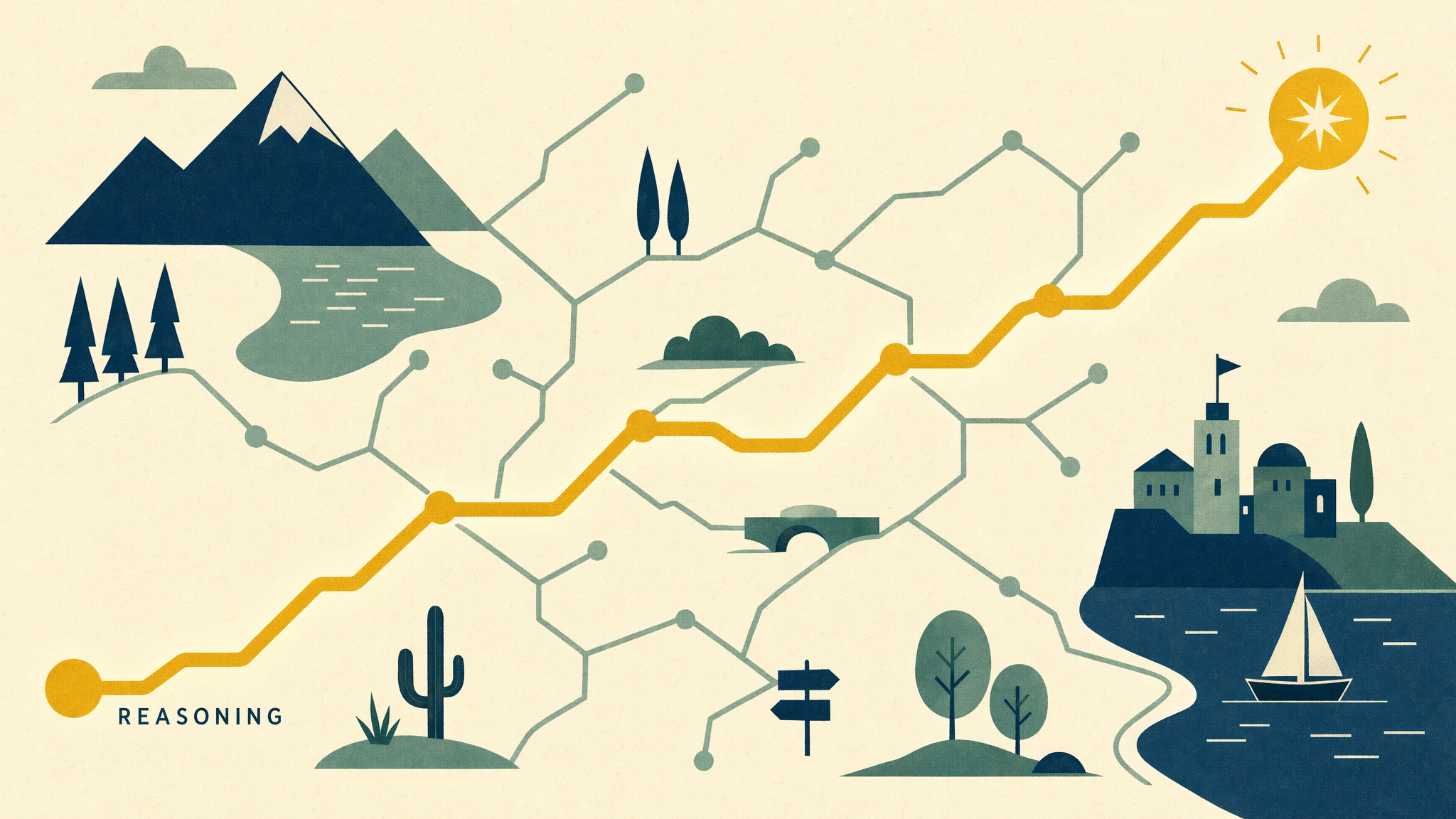
旗舰档位 Seed 2.1 Pro 以高端推理、编码和企业级问题解决能力作为整个系列的核心,支持 256K-token 上下文。它能在单次请求中维持长链路、多步骤的思考过程,让复杂的分析和规划任务无需因截断而中断。当最棘手工作负载的正确性比原始成本更重要时,就应选择它,输入价格为每百万 tokens $0.9。
面向软件工程的专用模型
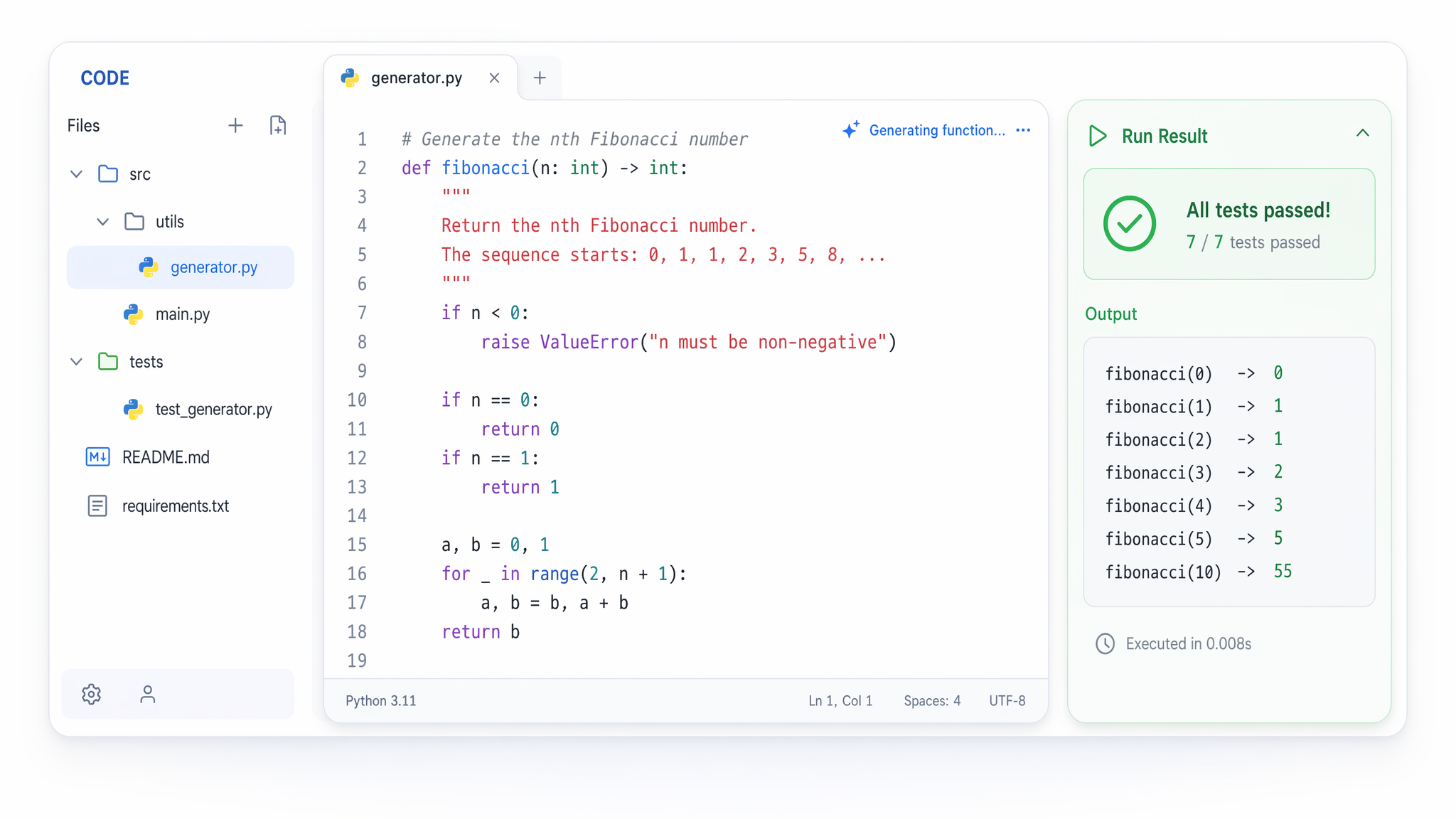
Seed 2.0 Code Preview 专为编码 Agent、仓库理解和日常软件工程进行了调优。同样的 256K 窗口让它能够在编写新函数、重构模块或解释陌生逻辑之前,通读整个代码库。它还可通过 Atlas Cloud Skills 和 MCP Server 接入 AI 编码助手,输入价格为每百万 tokens $0.5。

为每项任务匹配合适的 Seed 档位
需要生产级质量,但不想承担旗舰价格?Seed 2.0 Lite 以每百万输入 tokens $0.25 的价格提供接近旗舰的输出,而 Seed 2.0 Mini 则降至仅 $0.1,适合高吞吐量分类、路由和轻量级 Agent 步骤。由于整个系列共享同一接口,你可以将每个请求路由到仍能满足要求的最低成本档位。
Doubao Seed API 的 256K-token 上下文
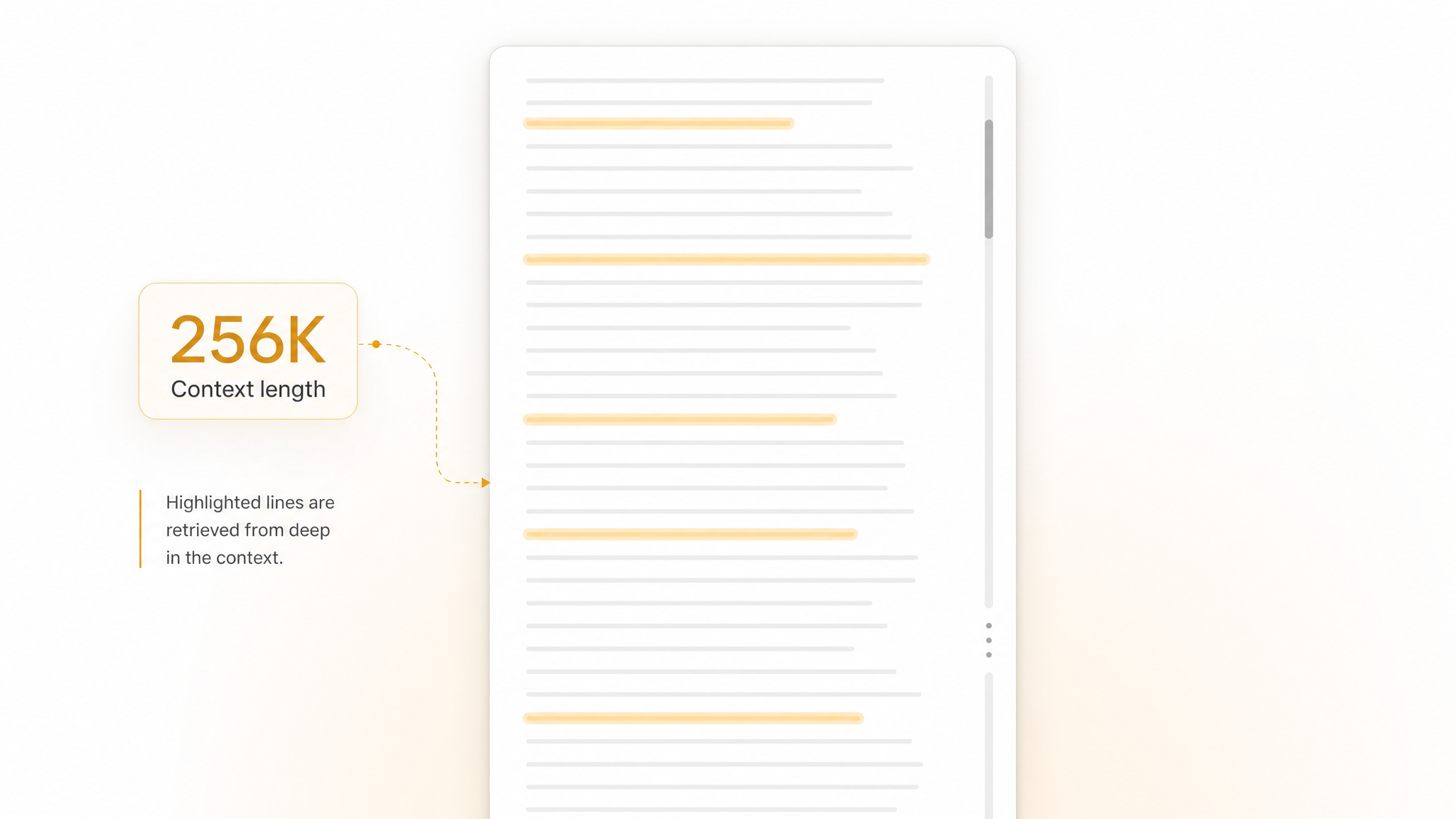
该系列中的每个模型都具备 256K-token 上下文窗口,单次调用即可容纳数百页文本。无论输入长文档、多文件仓库,还是冗长的对话历史,它都能保留完整上下文视野。响应会通过标准 server-sent events 逐 token 流式返回,因此即使处理大型任务,你的界面也能保持响应迅速。
透明的按量 token 定价
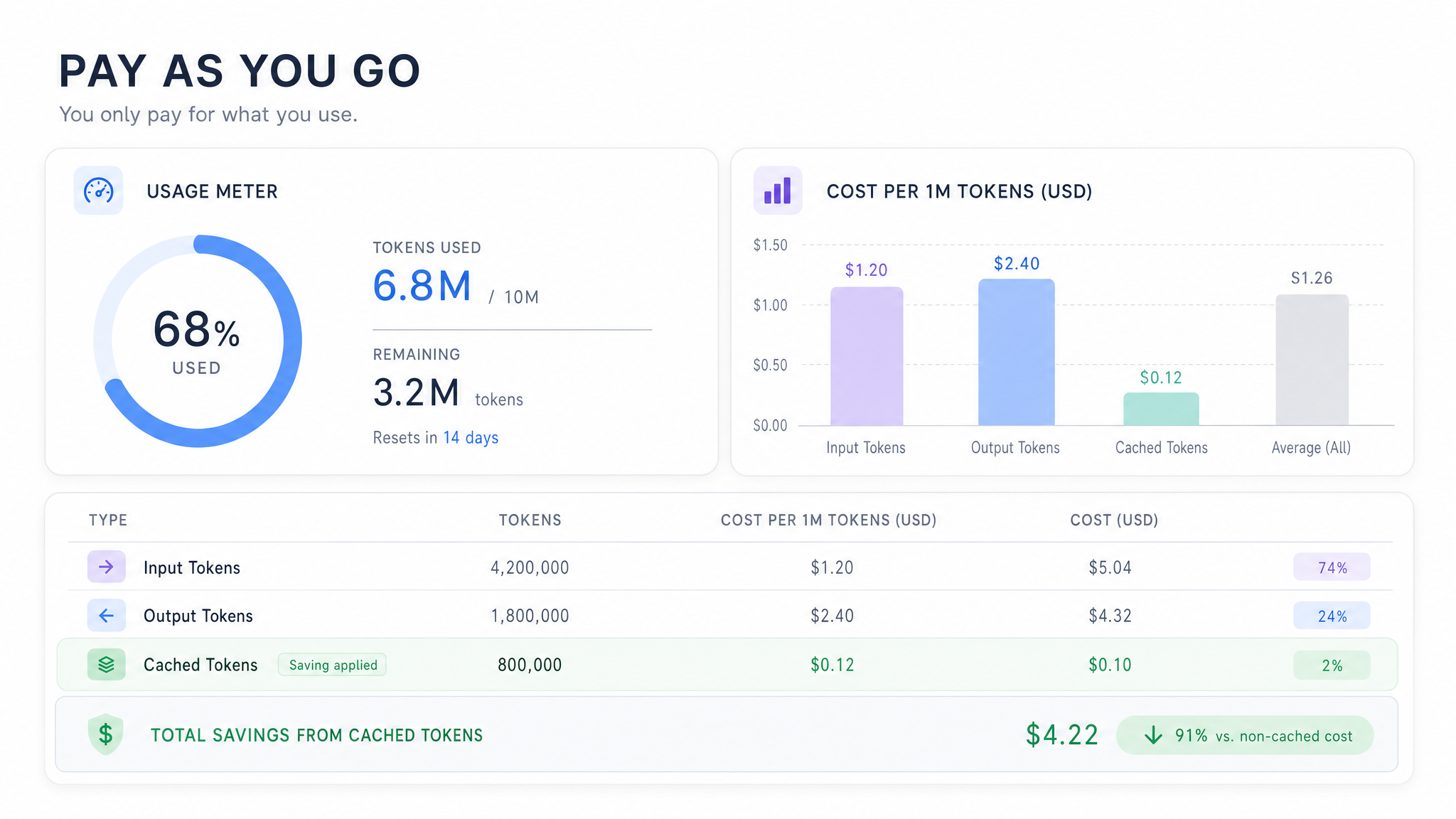
定价采用纯按量付费模式,按 token 计费,无需订阅。Prompt 缓存可显著降低重复上下文的成本,其中 Seed 2.0 Mini 的缓存输入价格仅为每百万 tokens $0.02。更长的 prompts 会进入明确公布的更高费率档位,因此当工作负载从原型扩展到生产时,你的支出仍可预测。

整个 Doubao Seed API 共用一个密钥
应该标准化使用一个档位,还是混合多个档位?一个兼容 OpenAI 的密钥即可访问所有 Doubao Seed 模型,从旗舰 2.1 Pro 到经济型 Mini,再到上一代 1.6 系列。现有 OpenAI SDK 代码只需替换 base-URL 和密钥即可使用,因此你可以在同一个应用中将高难度请求发送给 Pro,将低成本子步骤发送给 Mini。
One Prompt, Three Builds: Doubao Seed API Head-to-Head
Feed the identical prompt to three models on the Doubao Seed API and compare how each one turns a single instruction into a working, self-contained HTML page.
Build a complete single-file HTML page — one .html document with all CSS and JavaScript inlined, zero external dependencies, no CDN links, no web fonts, no image files or data URIs. Every visual must be drawn procedurally at runtime with the Canvas 2D API or inline SVG; there must be no bitmaps, photographs, or emoji anywhere. The page is a real-time generative canvas titled something like "Harvest Field — Aerial Geometry Studio," and the entire concept is a god's-eye, top-down view of a cultivated farmland that the user shapes with sliders while a single pixelated combine harvester crawls across it, wiping ordered stripes out of raw crop — the quiet, satisfying moment of order being cut from chaos. Composition and rendering: fill the whole viewport with a regular rectangular grid of rye-like field plots laid out in flat-vector shapes with a subtle isometric / faux-2.5D lift, so each plot reads as a low block, not a flat rectangle. Light the scene as a single directional dusk sun raking in from one corner (warm, low-angle); every plot and the harvester must cast a long soft shadow in the opposite direction to reinforce the geometric, blocky solidity of the field. The palette is a restrained, tasteful earth-tone family: mustard yellow, ochre, olive green, and a single accent of scorched tilled burnt-umber for freshly turned soil — no neon, no pure primaries, keep it high-end and muted. Overall style is flat vector meets isometric micro-relief, precise and architectural. The living behavior: within each plot, render fine drill-seeding rows (thin parallel lines) whose density is adjustable. One pixelated combine harvester — a small blocky sprite drawn from a few rectangles — is the ONLY moving element and the only thing that breaks the grid's symmetry. It advances slowly along either a spiral inward path or a serpentine boustrophedon (回字 / back-and-forth) route across the plots. As it moves it must "erase" the standing crop directly in its swath and leave behind real-time harvest stripes — alternating light and dark cut bands, like a mown lawn or a real combine's header trail — permanently painted onto the field until reset. The harvest is a continuous, self-running animation via requestAnimationFrame; watching it fill the field should feel calm and hypnotic. Interactivity — all controls are sliders (plus a couple of small toggles/buttons) in a clean, minimal side or bottom panel, and every one must respond live without a page reload: a slider for number of field plots (grid resolution, e.g. 3×3 up to 12×12), a slider for drill-seeding row density, a slider for crop hue (shifting the standing crop across the mustard-ochre-olive range), a slider for harvest progress or harvester speed, and a toggle to switch the harvester's path between spiral and boustrophedon. Provide a subtle Reset/Replant button that regenerates the field and restarts the pass. Changing plot count or density should regenerate the layout smoothly; dragging hue should retint in real time. Make it fully responsive so the grid and shadows recompute on window resize, keep the frame rate smooth, and ensure the code is clean and self-contained so it opens correctly by double-clicking the file. This is neither a game nor a dashboard — it is a generative art instrument. Push the procedural geometry, the path animation, and the parameter linkage as far as they go; the quality of the isometric shading, the long dusk shadows, and the crispness of the harvest stripes are what should make this render stand out.
Generated with Doubao Seed 2.1 Pro on Atlas Cloud
Generated with DeepSeek V4 Pro on Atlas Cloud
Generated with Doubao Seed 2.0 Pro on Atlas Cloud
Build a single self-contained HTML file (inline CSS and JavaScript only — absolutely no external libraries, CDNs, frameworks, fonts, or image URLs) that renders an interactive, physically-plausible mechanical pocket-watch movement teardown bench, drawn entirely with SVG and/or Canvas. The page must open and run correctly by double-clicking it in any modern browser, with everything computed and animated in real time. THE SCENE. A top-down view of an exploded brass watch movement laid out on a workshop bench. Render, as living vector art, a mainspring barrel, a stacked gear train (barrel wheel → center wheel → third wheel → fourth wheel → escape wheel), a pallet fork that rocks back and forth, a balance wheel with a spiraling hairspring, and hour/minute/second hands sweeping over a subtle chapter ring. Draw real gear teeth (involute-style flanks, not plain circles), correct meshing at the pitch circles, and visible arbors, jewels, bridges, and screws. The whole assembly is composed concentrically around the movement core; the control panel is tucked into a dark corner. THE MECHANICS (this is the point — make it truly simulate, not fake). Model the gear train with real gear ratios: each wheel's angular velocity equals its neighbor's times the negative ratio of their tooth counts, so meshing wheels visibly counter-rotate at proportional speeds and teeth interlock without overlapping or sliding. The escapement must actually tick: the escape wheel advances one tooth at a time in discrete steps, locked and released by the oscillating pallet fork, which is driven by the balance wheel swinging at a fixed beat. Each release ("tick") produces a crisp step in the escape wheel and an audible tick using the Web Audio API (synthesized, no audio files). The seconds hand advances in beat with the escapement; minute and hour hands derive from it through the gear ratios. Drive the animation with requestAnimationFrame and real elapsed time so timing stays accurate. THE INTERACTIONS (all must respond live). - A draggable winding crown/knob: drag it (mouse or touch) to wind the mainspring — a wind-up gauge fills and the spring coil visibly tightens. Release to let stored energy discharge, powering the train; the movement runs until the spring unwinds, then coasts to a stop. - A "rate" slider that scales the beat/running speed so you can watch it tick slowly or race. - An "explode" slider that continuously separates the stacked components along their axes from fully assembled to a fanned-out exploded diagram, with smooth interpolation, connector guide-lines between separated parts, and everything still rotating correctly at any explosion level. - Hover (or tap) any component to act like a jeweler's loupe: highlight that part, dim the rest, and float a labeled callout with the part's name and a one-line function description. - Buttons: Wind, Release, Reset. THE LOOK. Realistic watchmaking-workshop industrial aesthetic: warm aged brass, distressed steel-grey, deep ink-black background, crisp metallic highlights, finely etched gear teeth and beveled bridges. Simulate a single shaft of window light raking in from the upper-left across the bench so parts cast soft elongated shadows, and let specular highlights travel along the gear faces as they turn. Use gradients, filters, and subtle grain for depth. Clean, legible HUD-style controls and labels in the dark corner. REQUIREMENTS. Everything in one .html file; responsive layout that scales to the viewport; smooth 60fps animation; no placeholder graphics — the movement must be procedurally drawn and genuinely mechanically coupled so that a capable model produces a watch that really winds, meshes, and ticks, while a weak one collapses into static spinning circles. Add brief inline comments naming the gear ratios and the escapement logic.
Generated with Doubao Seed 2.1 Pro on Atlas Cloud
Generated with DeepSeek V4 Pro on Atlas Cloud
Generated with Doubao Seed 2.0 Pro on Atlas Cloud
基于 Doubao Seed API 构建生产级系统
从编码智能体、仓库级重构,到实时聊天和高吞吐流水线,Doubao Seed API 的各级能力都可通过一个兼容 OpenAI 的 key 接入,嵌入生产技术栈的每一层。

使用 Doubao Seed API 构建编码助手
Seed 2.0 Code Preview 针对编码智能体和代码仓库理解进行了优化,可在单次调用中读取 256K-token 上下文。可通过 Atlas Cloud Skills 将其接入 IDE copilot、PR reviewer 和重构 bot。

编排多步骤智能体
让 Seed 2.0 Pro 负责规划和工具编排,再将低成本的子步骤委派给 Mini,从而让每次运行的成本可预测。这种拆分适用于研究智能体、工作流自动化,以及需要串联大量调用的流水线。

运行高吞吐推理流水线
需要为分类、打标或结构化抽取发起成千上万次调用?Seed 2.0 Mini 面向边缘场景和成本敏感型自动化而构建,让大规模使用时的 token 成本更具优势。

深入分析长文档
当任务涉及长合同、研究论文或完整知识库时,Seed 2.0 Pro 可在其 256K-token 窗口内进行深度推理。团队可用它对大型文档进行分析、抽取和问答。

在 Doubao Seed API 上路由流量
一个兼容 OpenAI 的 key 即可访问 Doubao Seed API 的所有层级,从旗舰级 Pro 到高效 Mini。将复杂请求路由到最强模型,将高吞吐任务路由到成本最低的模型,以控制支出。

用 Doubao Seed API 支撑实时聊天
Seed 2.1 Turbo 和 Seed 1.6 Flash 专为超低延迟、高吞吐和流式响应而设计。即使在高请求量下,它们也能让聊天机器人、实时助手和交互式产品体验保持响应迅速。
Atlas Cloud 上 Doubao Seed API 与顶尖推理和编码模型对比
了解 Doubao Seed API 与 Atlas Cloud 上领先的推理和编码模型在上下文窗口、最大输出长度以及透明的按 token 计价方面的表现对比。
| 模型 | 提供方 | 上下文窗口 | 最大输出 | 价格(每 1M tokens 输入 / 输出) |
|---|---|---|---|---|
| Doubao Seed 2.1 Pro | ByteDance | 256K | 256K | $0.90 / $4.50 |
| Doubao Seed 2.0 Code Preview | ByteDance | 256K | 128K | $0.50 / $3.00(≤128K prompt),$1.00 / $6.00(>128K) |
| Doubao Seed 2.1 Turbo | ByteDance | 256K | 256K | $0.45 / $2.25 |
| DeepSeek V4 Pro | DeepSeek | 1M | 384K | $1.74 / $3.45 |
| Kimi K2.7 Code | Moonshot AI | 256K | 256K | $0.95 / $4.00 |
| GLM 5.2 | Zhipu AI | 1M | 128K | $1.40 / $4.40 |
| Qwen3.6 Plus | Alibaba Qwen | 1M | 64K | $0.50 / $3.00(≤256K prompt),$2.00 / $6.00(>256K) |
如何在 Atlas Cloud 上使用 Seed
几分钟即可上手 — 按照以下简单步骤,通过 Atlas Cloud 平台集成和部署模型。
创建 Atlas Cloud 账户
在 atlascloud.ai 注册并完成验证。新用户可获得免费额度,用于探索平台和测试模型。
为何在 Atlas Cloud 使用 Seed
将先进的 Seed 模型与 Atlas Cloud 的 GPU 加速平台相结合,提供无与伦比的性能、可扩展性和开发体验。
性能与灵活性
低延迟:
GPU 优化推理,实现实时响应。
统一 API:
一次集成,畅用 Seed、GPT、Gemini 和 DeepSeek。
透明定价:
按 Token 计费,支持 Serverless 模式。
企业与规模
开发者体验:
SDK、数据分析、微调工具和模板一应俱全。
可靠性:
99.99% 可用性、RBAC 权限控制、合规日志。
安全与合规:
SOC 2 Type II 认证、HIPAA 合规、美国数据主权。
Doubao Seed API:开发者常见问题
Doubao Seed API 是 Atlas Cloud 为 ByteDance Seed 系列大语言模型提供的统一端点,面向推理、编码和高并发智能体工作负载而构建。它覆盖旗舰级 Seed 2.1 Pro 和 Seed 2.0 Pro、专用于编码的 Seed 2.0 Code Preview、高性价比的 Lite 和 Mini 层级,以及经过验证的 Seed 1.8 和 1.6 代模型。使用一个兼容 OpenAI 的密钥即可访问所有模型,因此你可以通过单一接口为每项任务匹配合适的层级。
该系列覆盖从前沿推理到高吞吐推理的多种场景。Seed 2.1 Pro 和 Seed 2.0 Pro 适合处理最复杂的推理和智能体任务,Seed 2.1 Turbo 面向低延迟响应,Seed 2.0 Code Preview 专注于软件工程。对成本敏感的流量可使用 Seed 2.0 Lite 和 Mini,而较早的 Seed 1.8 和 1.6 checkpoint 仍可供重视稳定、可预测行为的团队使用。
在 Atlas Cloud 注册,生成一个 API key,然后将现有 OpenAI SDK 指向 Atlas Cloud base URL。计费采用按量付费模式,提供透明的按 token 定价,无需订阅;新的 Seed 版本上线即可 Day-0 访问。现在就开始构建吧。
是的。每个 Doubao 模型都使用标准的 chat-completions 格式,支持 temperature、top_p、frequency 和 presence penalties、最多四个 stop sequences,以及 SSE streaming。现有 OpenAI SDK 代码只需替换 base-URL 和 key 即可使用,无需重写请求逻辑。
该系列所有模型都提供 256K-token(262K)上下文窗口,适合处理大型文档和长对话。最大输出取决于层级:Seed 2.1 模型最高可达 262K tokens,Seed 2.0 层级为 131K,较早的 1.8 和 1.6 checkpoint 为 65K 或 32K。
Atlas Cloud 提供 Python、JavaScript、Swift、Kotlin、Java 和 Dart 的 SDK 访问。你还可以通过 Atlas Cloud Skills 和 MCP Server 将模型连接到 AI 编码助手,这对于基于 Seed 2.0 Code Preview 构建、具备代码仓库感知能力的智能体很实用。
定价采用按 token 付费,无需订阅。标准价格从 Seed 1.6 Flash 每百万 input tokens $0.075、Seed 2.0 Mini $0.1 起,最高到旗舰 Seed 2.1 Pro 的 input $0.9、output $4.5。由于所有层级都在同一个 key 后面,你可以将每个请求路由到满足质量要求的最低成本模型,从而优化开销。
当然可以。单个 Atlas Cloud key 可访问每一代 Seed,因此常见做法是将高难度请求路由到 Seed 2.1 Pro 或 Seed 2.0 Pro,并把高频子步骤交给 Mini 或 Lite。这样既能在关键环节保持质量,又能控制每次运行的成本。
ByteDance 将 Seed 2.1 和 2.0 模型定位为在推理和编码任务上对标美国前沿系统,独立评测也显示其在高难度数学和软件工程任务上具有竞争力。对开发者而言,实际吸引力在于 Doubao Seed API 以低且透明的按 token 费率提供这一等级的能力,价格显著低于大多数西方旗舰模型。
探索更多系列
Seedance 2.5
Seedance 2.5 API 现已在 Atlas Cloud 上线!它为开发者提供了 ByteDance 最新的视频模型。该模型可通过文本、单张图像或多达 50 个多模态参考,一次性生成长达 30 秒的原生视频,并包含同步音频和画面内的多语言文本。在 Atlas Cloud 上,您可以通过单个密钥访问它,其主体一致性和改进的物理特性能够保持长镜头的连贯性。

Wan 3.0
Wan 3.0 API 是阿里巴巴 Wan 视频系列的下一代产品,旨在将长视频生成、多参考控制和音视频质量推向新的高度。Atlas Cloud 已经托管了 Wan 2.7、2.6 和 2.5,而 Wan 3.0 使用相同的统一密钥运行,无需额外设置。立即开始构建吧。向下滚动至展示区,查看 Wan 3.0 的创作能力。
MiniMax H3
MiniMax H3 是 MiniMax 的视频模型系列,支持文本、图像和参考图驱动的生成。创建 5 至 15 秒的视频片段,使用可选的末帧引导运动,保留参考图像中的主体;如果生成音频符合工作流,也可以选择 H3 Developer。Atlas Cloud 将 H3、H3 Fast、H3 Max 和 H3 Developer 纳入统一的 API 工作流,标准价格从 $0.038/秒起。立即开始构建。
Seedream 5.0 Pro
Seedream 5.0 Pro API 为开发者在 Atlas Cloud 上提供了字节跳动的可控图像编辑模型。它通过锚点和坐标精确定位编辑,将图像分离为可编辑图层,融合多个参考,并精准匹配颜色和材质,支持 2K 和 3K 分辨率的多语言文本。在 Atlas Cloud 上,您只需一个密钥即可访问!
Seedance 2.0
Seedance 2.0 API 为您提供 ByteDance 多模态视频模型的生产级访问权限——支持四模态输入(文本、图像、视频、音频),以及行业领先的“Universal Reference”(通用参考)系统,可在不同镜头间锁定构图、运镜和角色动作。只需一次 API 调用即可集成导演级控制,固定费率为 $0.09/秒,即时获取密钥,无需排队——由企业级正常运行时间和合规性提供保障。Seedance 2.0 原生 4K 现已上线!
GPT Image 2.5
OpenAI 的 gpt-image-2.5 系列为开发者提供 Flare 和 Sunburst 两种选择,满足生产级图像工作流需求。支持最高 3840x2160 的任意分辨率渲染,并提供包括 xhigh 和 max 在内的五档质量等级,以匹配特定的输出要求。Atlas Cloud 提供开箱即用的 REST 推理服务,无冷启动,每次生成起价 $0.004,采用标准定价。立即开始构建。
GPT Image 2
GPT Image 2 API 为开发者提供了访问 OpenAI 最新图像模型的途径,它是 GPT Image 1.5 的继任者。该模型可生成和编辑图像,能够在拉丁和 CJK 文字上实现准确的文本渲染,并在海报、样机和信息图表方面具备强大的排版能力。在 Atlas Cloud 上,您可以通过一个统一的 API 与 300 多个模型一起访问它,并享受免费额度、99.99% 的正常运行时间,且无需 OpenAI 组织验证。
Gemini Omni Flash
gemini omni API 将 Google DeepMind 原生多模态的 Gemini Omni Flash 系列(包括 Gemini Omni 1.1 Flash)带给开发者。创建带同步原生音频的电影级视频,使用精确的起始帧和结束帧控制为静态图像制作动画,或通过文本引导式编辑修改现有视频,同时保留未编辑的内容。Atlas Cloud 提供一个 OpenAI 兼容密钥、统一访问能力以及透明的按量付费定价。立即开始构建。
Grok Imagine
Grok Imagine API 涵盖 xAI 的图像、视频和语音模型,包括 Image 2.0、Video 1.5 和 xAI TTS v1。支持生成跨 14 种宽高比的 1K 或 2K 静帧、生成最长 15 秒的 1080p 视频、通过最多 7 张参考图像引导镜头、或用 20 种语言进行配音。Atlas Cloud 在单一端点上运行所有功能,采用按量计费,起价为每张图像 $0.02、每秒 $0.05。立即开始使用。
Google最强大的创意模型现已在Atlas Cloud上全面可用。Veo 3.1提供电影级别的视频生成,Nano Banana 2支持高保真图像创建,而Gemini为每个工作流带来多模态智能。通过单一API key即可访问完整的Google模型套件,提供Day-0可用性和按需付费(pay-as-you-go)定价。
Seedance 2.0 Mini
Seedance 2.0 Mini 将 ByteDance 的多模态视频生成技术引入到对速度和成本要求极高的工作流中。它以更轻量的占用空间提供 Seedance 2.0 的核心能力——更快的生成速度、更低的单条视频成本,并且使用您现有的同款 API 集成。对于运行高吞吐量流水线或进行大规模原型设计的团队来说,Mini 是最实用的默认选择。
ByteDance
从电影级视频生成到高保真图像创建,ByteDance 最强大的模型现已在 Atlas Cloud 上线。以最低的推理定价和零基础设施开销,大规模运行 Seedance 和 Seedream。





