

A model cannot film heartbreak. It can film a hand that stops halfway to a door, a breath that catches, and a face that decides not to speak. That distinction is the practical starting point for kling 4 emotional scene generation.
A sad cinematic reunion. gives a video model a mood and almost no direction. A 3-beat scene tells it who changes, what the camera must witness, and when the change happens. That is the useful prompt skill to build now, even while full Kling 4 access remains uneven.
Atlas Cloud currently lists Kling V4 as Coming Soon. Creators can still test the shorter version of this acting logic with Kling V3.0 Turbo, then reuse the same performance score when the V4 endpoint is actually live. Atlas Cloud is useful here as one place to check the current model catalog and run the available Kling workflow.
Key takeaways
- Write an emotional change that a viewer can see, not an emotion label.
- Give each scene one main arc and 3 timed beats.
- Use keyframes for required visual states, not every small gesture.
- Test the performance structure in a short V3 Turbo clip before expanding the scene.
Kling 4 Emotional Scene Generation: What Is Available Today
The current public picture has three parts. Kling says full Kling 4 can generate up to 30 seconds with up to 10 flexible keyframes. Kling 4 Flash is a limited rollout with a shorter, up-to-20-second, 720p profile and does not prove the full multi-keyframe workflow. Atlas Cloud's Kling V4 listing remains Coming Soon, so it is not an endpoint to claim as a completed Atlas run.
| Workflow | Publicly described duration | Keyframe position | Access status for this article |
|---|---|---|---|
| Full Kling 4 | Up to 30 seconds | Up to 10 flexible keyframes | Coming soon according to Kling |
| Kling 4 Flash | Up to 20 seconds | No first/last-frame or multi-keyframe support listed | Limited rollout |
| Kling V3.0 Turbo on Atlas Cloud | Short test workflow | No V4 keyframe claim | Current model to use for the 10-second validation |
Kling 4 Emotional Scene Generation: Claims We Can Source
Kling's feature page describes full Kling 4 as a planned 30-second, multi-keyframe workflow, with keyframes placed along the timeline for important moments such as entrances, camera changes, and reveals. Its multiple-keyframe guide makes the practical division clear: a keyframe establishes the state the audience must see; the prompt explains the action and transition between states. (Kling 4 official feature page, October 2026; Kling 4 Multiple Keyframes guide, September 2026)
What Kling 4 Flash Does Not Prove
Flash is useful for faster drafts where an account has access, but it should not be presented as a substitute for the full keyframe workflow. In particular, its published limits do not establish that a creator can direct a 20-second emotional arc with the same start, intermediate, and end-state control described for full Kling 4.
Kling 4 Emotional Scene Generation Starts With Performance
Emotion words are too broad to direct a shot. Translate them into an observable performance, then assign the camera one job: reveal the change without competing with it.
| Prompt layer | What to write | Reunion example |
|---|---|---|
| Relationship + trigger | Who they are and what changes the moment | Old friends see each other after years apart |
| Observable performance | Eye, breath, hand, shoulder, or pace change | Her grip loosens, breath catches, shoulders settle |
| Blocking | Where bodies are and who moves first | Six steps apart; one person stays still, then steps forward |
| Camera | One viewing purpose per beat | Wide lateral track, then medium two-shot, then over-shoulder close |
| Sound / silence | What carries information in the scene | Station ambience, no dialogue, no score |
The 5-Part Kling 4 Emotional Scene Prompt Score
Set one primary emotional arc for a short scene. In the reunion below, the arc is guarded recognition turning into relief. That focus is easier to review than a prompt that asks for crying, running, an argument, rain, an embrace, dialogue, product placement, and a fast camera move at once.
Use this score before you write prose:
- Name the relationship and the trigger.
- Pick 1 or 2 physical changes that mark the turn.
- Put bodies in a stable starting arrangement.
- Give each beat a single camera purpose.
- Decide whether sound adds information or silence makes the acting clearer.
Turn "Sad" Into an Observable Performance
| Too vague | Reviewable direction |
|---|---|
A sad woman remembers the past. | She stops folding the letter, her thumb remains on the crease, she exhales once and looks toward the doorway without moving her feet. |
The second prompt is not better because it is longer. A creator can identify whether the hand, breath, gaze, and blocking appeared, then change one variable on the next pass.
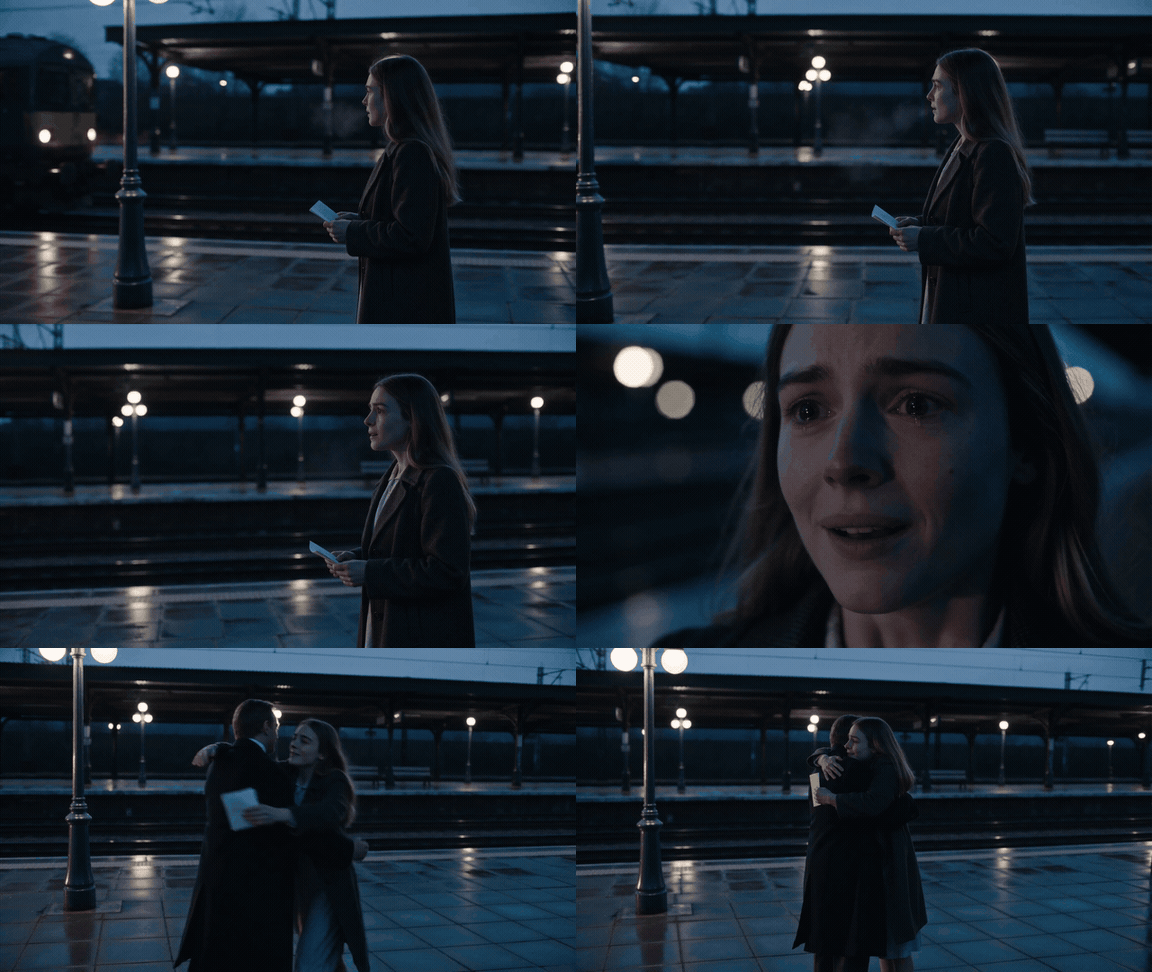
Example 001: A train-platform reunion moves from guarded recognition to an embrace
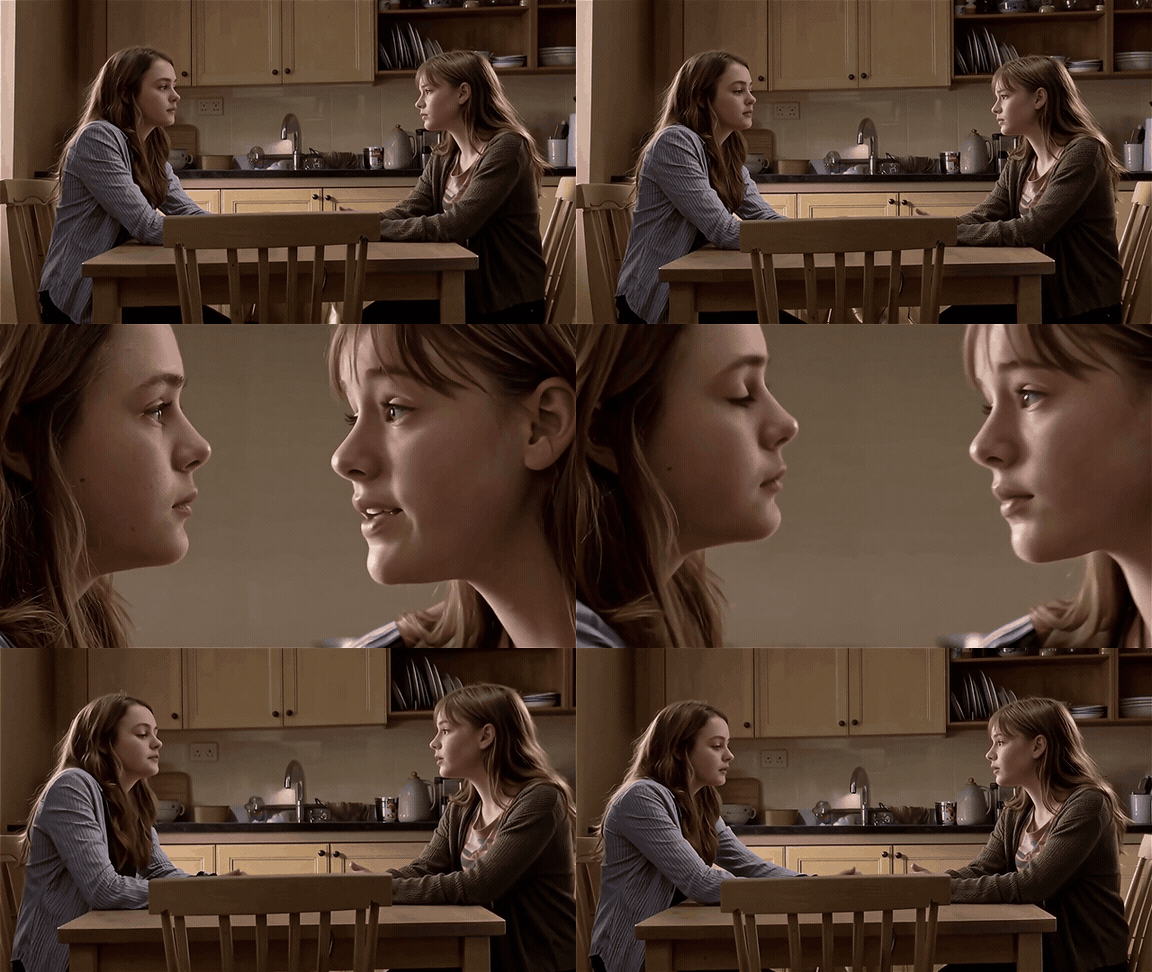
Example 002: Two sisters move from guarded expressions to reaching across a kitchen table

Example 003: A baker finds a child's drawing and responds with a quiet smile
Kling 4 Emotional Scene Generation: Copy the 3-Beat Reunion Prompt
Start with the 10-second version. It tests the performance order and camera logic at a manageable scope. Keep the longer Kling 4 version as a conditional upgrade plan, not a claim that it can be run on Atlas Cloud today.
Kling 4 Emotional Scene Generation: 10-Second Current Test
Use Kling V3.0 Turbo Text-to-Video for this current test. Set 16:9, 720p, 10 seconds, and audio off. Do not attach reference assets for the first pass. The goal is to see whether the sequence reads before adding another control layer.
plaintext1A 10-second cinematic reunion at a quiet train platform in late-afternoon light. Two adult friends notice each other from six steps apart. 0-3 seconds: a wide lateral tracking shot as the woman stops beside a bench, her breath catches and her hand loosens around a paper ticket. 3-7 seconds: a medium two-shot; the other person takes one careful step forward, she looks up, her eyes soften and her shoulders release. 7-10 seconds: an over-the-shoulder close shot as they smile with restrained relief and move toward an embrace. Natural walking, subtle hand movement, consistent clothing and platform layout. Warm practical station ambience, no dialogue, no subtitles, no logos.
Review the run in this order:
- Can a viewer see stop, recognition, release, and approach in sequence?
- Do the people, clothing, platform geometry, and screen direction remain stable?
- If it fails, change one variable only: performance first, camera second, environment third.
Kling 4 Emotional Scene Generation: Conditional 20-Second Upgrade
Use this only after the Atlas Cloud V4 endpoint, a live price, and a runnable playground are visible. The full Kling guidance supports a 20-second plan with 4 visual states. It does not require filling all 10 keyframe slots.
Suggested setup: 16:9, 1080p HDR, 20 seconds, 4 keyframes, ambient sound, and no dialogue. Consider 4K only when the final delivery needs it.
plaintext1A 20-second cinematic reunion at a quiet train platform after rain, warm late-afternoon light reflected in shallow puddles. Two adult friends who have not met for years recognize each other. 2 30-5 seconds: wide lateral tracking shot. She waits beside a bench holding a paper ticket. She sees him, pauses mid-breath, and her hand slowly loosens around the ticket. 45-10 seconds: medium two-shot. He stops several steps away. Neither speaks. Her eyes glisten, she gives one small disbelieving smile, and her shoulders drop as tension leaves her body. 510-16 seconds: slow arc into an over-the-shoulder shot. He takes two measured steps forward; she mirrors him. Keep their faces, coats, station architecture, and screen direction consistent. 616-20 seconds: close two-shot as they share a quiet embrace. The camera settles rather than pushing closer. Realistic weight shift, fabric movement, soft footsteps, distant train ambience, no dialogue, no subtitles, no text, no logos.
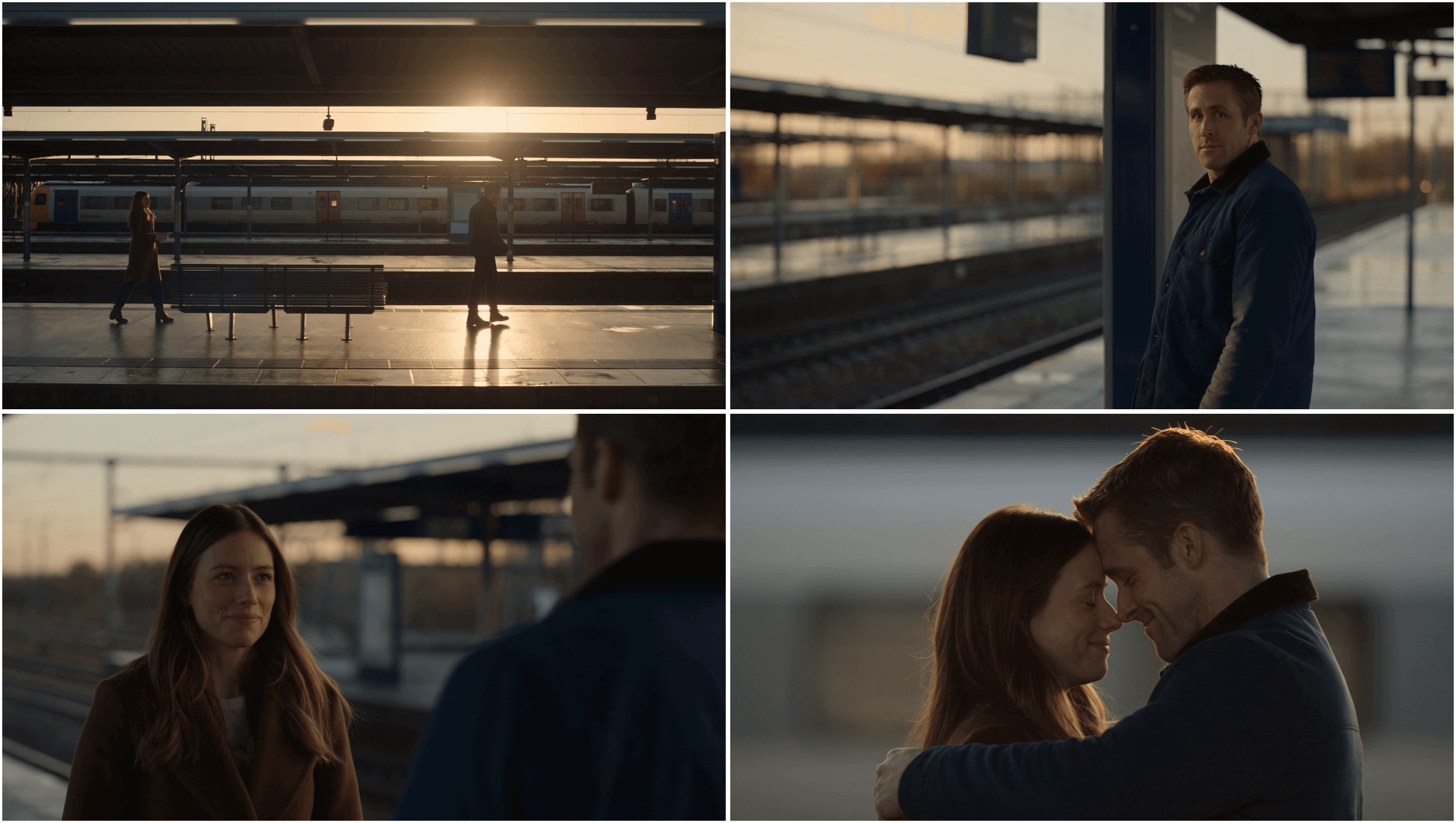
Selected output frames from the supplied 20-second clip: separation, recognition, relief, and embrace. These are video result frames, not keyframe inputs.
For the 4 planned states, use 0 seconds for the six-step separation, 5 seconds for the recognition pause, 10 seconds for the approach, and 18 seconds for the embrace composition. Keyframes lock those visual milestones. The prompt supplies the transition, timing, performance, camera, and sound.
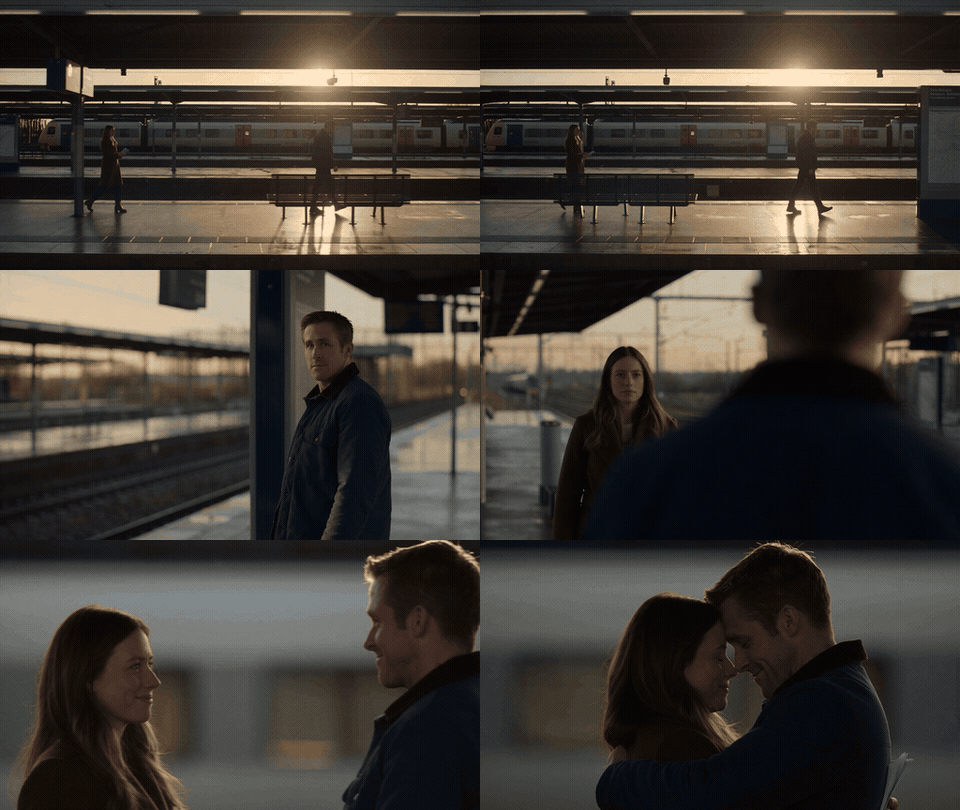
Full 20-second train-platform reunion from the supplied 004 video, converted to a looping GIF without sound
Kling 4 Emotional Scene Generation: References, Keyframes, and Audio
Each input should have one job. Conflicting inputs do not create more control.
| Input | Job in the reunion scene |
|---|---|
| Character reference | Identity, face, clothing |
| Scene reference | Platform layout, light, bench, and palette |
| Keyframe | Required visual state at one point in time |
| Prompt | Action, rhythm, camera, and sound between states |
Kling 4 Keyframes Show the Change
Keep the inputs aligned. A character reference in a dark wool coat and a keyframe that switches the same person to a formal gown gives the model two competing instructions. Define the stable traits once, then use a keyframe only where the scene must arrive at a specific state.
For a quiet reunion, no dialogue is a valid creative choice. Ambient platform sound can support place and timing, while the performance remains the information the viewer follows. Add dialogue only when the words change the scene's meaning.
Troubleshoot a Kling 4 Emotional Scene That Feels Flat
| Symptom | Likely cause | Change on the next run |
|---|---|---|
| Characters look posed | The prompt only names an emotion | Add one breath, gaze, or hand change |
| The turn happens too fast | No timed beats | Split the arc into 3 time ranges |
| Character or clothing drifts | Input roles conflict | Keep 1 character reference and 1 clothing description |
| Camera steals attention | Too many camera moves | Keep 1 primary movement per beat |
| Result feels like a music video | Music, effects, and actions overload the scene | Remove dialogue and score; test silent performance first |
One Fix per Kling 4 Rerun
Name versions by the variable you are testing: reunion-v1-performance, reunion-v2-camera, and reunion-v3-blocking. That record makes a good take easier to reproduce and a bad take easier to diagnose.
Kling 4 Emotional Scene Generation Access and Atlas Cloud Status
Atlas Cloud's V4 listing currently says Coming Soon, so there is no confirmed V4 model ID, runnable playground, or public V4 price to quote. Do not infer a price from other Kling releases. Check the Kling V4 status page before assigning a V4 production job.
| Model | Executable status | Verified page | Price status |
|---|---|---|---|
| Kling V3.0 Turbo Text-to-Video | Use for the 10-second prompt validation | Linked above | Configuration-sensitive; confirm the live quote before a production run |
| Kling V4 | Atlas Cloud Coming Soon | Linked above | Not published for an Atlas V4 endpoint |
Before publication or a paid run, recheck Atlas Cloud Models and the relevant detail page. A V4 launch changes the access, price, URL, and evidence requirements, so it deserves a fresh verification rather than a silent edit.
Kling 4 Emotional Scene Generation FAQ
Is It Available for Everyone Yet?
No. Kling's current public page describes full Kling 4 as coming soon, while Flash is a limited rollout. Atlas Cloud lists V4 as Coming Soon at the time of this article.
How Do I Prompt Natural Facial Emotions?
Describe a visible change: a held breath, a glance that breaks, a hand relaxing, or shoulders settling. Pair it with blocking and a camera distance that lets the audience see it.
Do I Need Keyframes for Every Emotional Scene?
No. Use a keyframe where the required visual state changes. A continuous reaction can work with a single camera plan and a timed prompt.
What Differs Between Flash and the Full Model?
Flash is the limited, faster profile described at up to 20 seconds and 720p. The published full-model plan includes up to 30 seconds and up to 10 flexible keyframes.
Can an Emotional Scene Work Without Dialogue?
Yes, an emotional arc can be carried by performance, camera distance, and environmental sound. The reunion test deliberately removes dialogue so the acting sequence is easier to judge.
Why Does the Scene Look Staged or Generic?
The prompt probably gives a label instead of a change. For kling 4 emotional scene generation, start with one relationship, one trigger, 1 or 2 visible performance shifts, and 3 timed beats.





