
Creating single hero shots is no longer the main challenge for AI video models. The real test is making multi-shot sequences where character appearance, real-world physics, and audio style stay consistent across cuts.
Key Takeaways
- For AI filmmakers who want a "finished movie" look in a multi-shot story, MiniMax H3 takes the top spot for scene consistency, multi-reference character tracking, and one-pass audio integration.
- Conversely, Kling 4.0 Flash wins on raw action performance transfer, micro-expression control, micro-expression rendering, and fast draft iteration. However, it requires more post-production stitching for multi-shot narrative continuity compared to MiniMax H3's unified context window.
Technical Specification Comparison
| Feature / Metric | MiniMax H3 | Kling 4.0 Flash |
| Model Architecture | Unified Omni-Modal Transformer | Specialized Task-Driven Diffusion Pipeline |
| Maximum Clip Duration | Up to 15 seconds (native integer steps) | 3 to 30 seconds (native) |
| Native Resolution | 2K (2560x1440) or 768p | 720p/1080p/4K |
| Multimodal Inputs | Up to 12 slots (Images, Video, Audio) | Up to 15 references (10 images, 5 videos, voice) |
| Audio Output | 1-pass native stereo sound, ambience, speech | Two-channel stereo |
| Motion Retargeting | Contextual prompt & video reference | White-model, depth-map, & motion control |
| Primary Strength | Scene-persistent character identity & audio | Fast generation speed & motion transfer |
| Base Pricing / Efficiency | ~$0.13/sec (2K), ~$0.05/sec (768p) | High-speed draft tier for Ultra subscribers |
The "Finished Film" Metric Framework for AI Video Generators
Evaluating AI video models on isolated 4-second hero shots is deceptive. A production-ready film demands sequence-level continuity: geometry, physics, and tone hold steady across cuts.” When evaluating Kling 4.0 Flash against MiniMax H3, the outputs are measured across four specific production criteria.
Character Identity Retention Across Angles
A production-grade clip preserves character geometry through every camera move. If dynamic motion causes the subject's face to 'drift' or flatten into a generic look, the shot fails.
Temporal Motion and Artifact Suppression
The clip must preserve spatial logic throughout its entire duration. Objects in the background should not melt or clone themselves. Hands must keep five fingers during complex gestures, and limbs should not clip through clothing during sudden physical actions.
Atmospheric Lighting and Color Palette Coherence
Cohesive color grading demands strict visual logic across cuts. A transition from Shot A’s dimly lit, high-contrast orange rim light into Shot B must retain matching exposure and shadow density. Reverting to generic, flat AI lighting instantly shatters spatial coherence.
Timeline Readiness for Non-Linear Editing
Clips must export at steady framerates with predictable pacing. If the video includes dialogue or ambient environmental noise, the audio track must align directly with the visual action, eliminating the need for manual re-timing or third-party audio replacement.
Character Consistency Test: Kling 4.0 Flash Elements vs. MiniMax H3 Omni Reference
Maintaining character consistency across sequential shots is the hardest challenge in generative video. When testing both models with identical character prompts, clear differences emerge in how each architecture processes visual references.
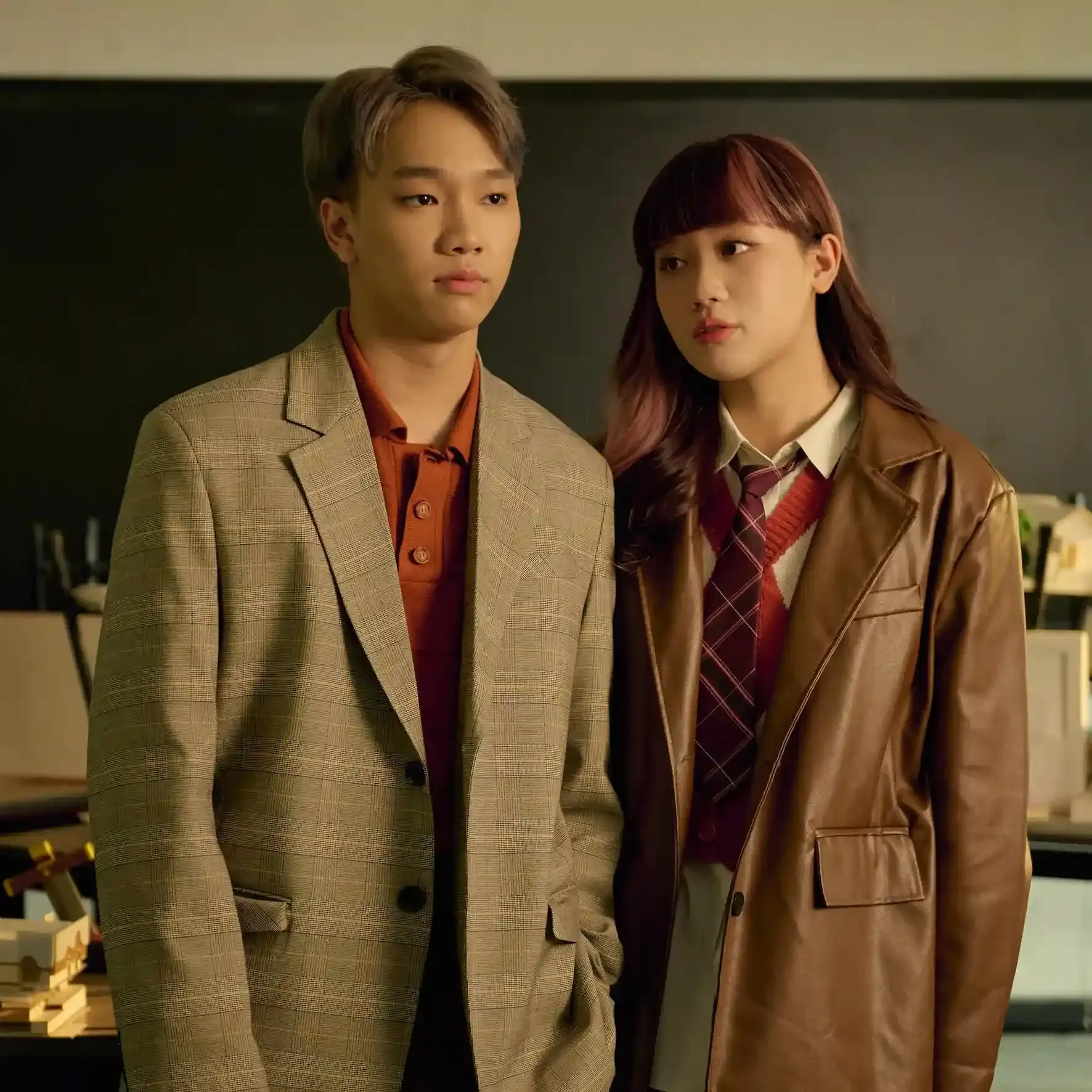
Test A — Two-Person Dialogue Consistency
Input Reference:
Prompt Sequence Requirements:
- 0–2s: Medium two-shot establishing scene.
- 2–5s: Cut to man's MCU; speaks: "Did you send the report?"
- 5–8s: Cut to woman's MCU; speaks: "Yes. I sent it this morning."
Core Evaluation Axes: Identity Retention, Speaker Attribution, Lip-Sync, and Shot Continuity.
MiniMax H3 Performance Analysis
- Shot Sequence Adherence: Fully executed all three requested shot transitions, successfully starting with the 2-shot establishing scene before moving into reverse-angle close-ups.
- Spatial & OTS Continuity: Preserved 180-degree spatial logic man on left, woman on right and integrated over-the-shoulder foreground elements during dialogue cuts.
- Identity & Detail Locking: Maintained facial structure, wardrobe textures plaid weave, tie pattern, and skin tones without cross-character blending.
- Lip-Sync & Speaker Isolation: Precise phonetic mouth movement aligned to audio stems; zero voice bleeding onto the silent character.
Kling 4.0 Flash Performance Analysis
- Shot Sequence Adherence: Bypassed the 0–2s establishing two-shot, cutting directly into single-subject framing.
- Spatial & OTS Continuity: Lacked foreground OTS spatial anchors between speaker turns, resulting in disconnected single shots.
- Identity & Micro-Expressions: High facial fidelity and micro-expression rendering in tight shots, but weaker multi-subject reference holding in wider framings.
- Lip-Sync: Strong audio-visual alignment on solo speech turns, but structural pacing suffered due to the skipped establishing shot.
Test B — Cross-Scene Character Consistency
Test Setup: Office → Outdoor Street → Office Return from a single reference image.
- Input Reference:
Prompt Sequence Requirements:
- 0–3s (Scene 1): Office interior; man holds brown folder in right hand, turns toward door.
- 3–7s (Scene 2): Cut to outdoor street tracking shot; walks with same folder.
- 7–10s (Scene 3): Cut back to office; approaches desk and places folder down.
Core Evaluation Axes: Facial Identity, Wardrobe Retention, Prop Continuity, Lighting Adaptation, and Scene Re-establishment.

MiniMax H3 Performance Analysis
- Facial & Wardrobe Lock: Maintained identical facial geometry, haircut, knit texture, and sneaker details across indoor/outdoor cuts.
- Prop Continuity: Brown folder remained locked in right hand across all transitions with zero morphing or hand swaps.
- Lighting Adaptation: Outdoor daylight cast realistic directional shadows without warping face structure or skin tones.
- Scene Re-establishment: Re-entered original office layout in Scene 3 with matching desk, window placement, and lighting.
Kling 4.0 Flash Performance Analysis
- Facial & Wardrobe Lock: Strong face and outfit fidelity between indoor and outdoor shots.
- Prop Continuity: Retained folder prop across cuts; minor hand-re-grip shift occurred when placing folder on desk in Scene 3.
- Lighting Adaptation: Handled natural sun glare and outdoor exposure effectively.
- Scene Re-establishment: Re-created office setting cleanly, though perspective angle shifted slightly compared to Scene 1.
Evaluation Summary
| Consistency Parameter | MiniMax H3 Performance | Kling 4.0 Flash Performance |
| Facial Persistence (Close-Up) | 9.0/10: Near-perfect facial geometry and micro-detail lock across cuts. | 9.0/10: Highly realistic skin texture and subtle micro-expressions. |
| Facial Persistence (Wide / Multi-Subject) | 8.0/10: Retains facial structure and identity in multi-subject shots. | 7.0/10: Noticeable feature smoothing and identity drift in wide/multi-subject framing. |
| Wardrobe Micro-Details | 8.5/10: Knit textures, tie patterns, and shoes remain locked across scenes. | 8.0/10: Overall styles match, but minor seam and button shifts occur across cuts. |
| Cross-Scene & Lighting Adaptation | 9.0/10: Seamless daylight transition; accurately reconstructs initial room layout. | 8.5/10: Good sun glare adaptation; slight camera angle shift upon returning to indoor scene. |
| Prop & Object Handling | 9.0/10: Folder locked in right hand with zero swapping, morphing, or floating. | 8.0/10: Retains folder throughout; minor hand re-grip when placing object on desk. |
| Shot Sequence Adherence | 9.5/10: Strictly follows prompt timing from establishing shot to reverse close-ups. | 7.0/10: Skipped initial 2-shot establishing clip, cutting straight to single shots. |
| Lip-Sync & Speaker Isolation | 9.0/10: Frame-accurate A/V alignment with zero voice bleeding onto silent actors. | 8.5/10: Precise lip-sync on solo speech turns; slight pacing impact from skipped shots. |
Motion Fidelity Under Action Stress: Dragon Takeoff and Flight Physics
Cinematic storytelling extends well beyond static dialogue. To deliver true narrative impact, an AI video generator must handle complex physical stress, whether it is intricate human motion or high-scale creature physics involving mass momentum, anatomical wing mechanics, and high-velocity particle interaction.
Test Setup: High-Stress Action Physics Test
Generation Mode: Text-to-Video.
Prompt Sequence Requirements:
- 0–3s: Perched on a rocky outcrop, expanding chest and roaring over a burning medieval city.
- 3–6s: Shifting weight forward, bending hind legs, and pushing off rock with downward wing sweeps.
- 6–11s: Powered flight, anatomically coherent wing strokes, controlled glide, and tail inertia.
- 11–15s: Continuous aerial tracking shot revealing the burning coastal city below.
Core Evaluation Axes: Takeoff Mechanics, Wing Articulation, Body Momentum, Environmental Interaction, and Camera/Spatial Continuity.
MiniMax H3 Performance Analysis
- Takeoff Mechanics & Gravity: Demonstrated authentic mass and weight distribution during launch. The push-off from the rock shows physical resistance and gravitational grounding rather than artificial sliding or floating.
- Wing Articulation & Anatomy: Wing membranes stretch under aerodynamic load with precise joint articulation. Scale patterns, wing structures, and tail inertia remained intact across the full 15-second single-shot generation.
- Environmental Interaction: Scattered rock debris and dust react naturally to the launch force. Smoke columns, water reflections, and burning city geometry remain locked during camera movement.
- Single-Shot Continuity: Successfully executed a continuous, unbroken 15-second tracking camera move, transitioning smoothly from a medium-wide perched shot to an expansive aerial reveal.
Kling 4.0 Flash Performance Analysis
- High-Impact Action & Energy: Delivered exceptional visual impact during complex action prompt tests, featuring high-velocity motion, intense fire-breathing, and rapid low-altitude flybys.
- Complex Particle Physics: Exceptional rendering of fluid and particle interactions—water spouts, splash effects, and explosive fire plumes react dynamically as the dragon sweeps past buildings and water.
- High-Motion Articulation: Fast-moving wings and rapid turns occasionally exhibit motion blur or subtle structural distortion during peak velocity.
- Editing & Shot Structure: Favored a rapid multi-shot editing style fast action cuts to convey high-octane spectacle, rather than a single continuous tracking shot.
Evaluation Summary
| Evaluation Axis | MiniMax H3 Performance MP4 | Kling 4.0 Flash Performance MP4 | Production Impact |
| Takeoff Mechanics & Gravity | 8.0/10: Grounded weight shift, clear leg push-off, and realistic lift. | 8.0/10: High launch speed, but lighter physical mass feedback. | Determines if giant creatures move with believable scale and inertia. |
| Wing & Structural Articulation | 9.0/10: Anatomically stable wing strokes and membrane tension across 15s. | 9.0/10: Dynamic motion; minor edge blur during fast wing sweeps. | Prevents limb morphing or structural tearing during heavy action. |
| Particle & Fluid Physics | 8.5/10: Coherent dust dispersion, smoke drift, and water reflection. | 9.5/10: Spectacular water splashes, fire plumes, and debris explosions. | Enhances realistic environmental reaction to high-speed movement. |
| Single-Shot Camera Continuity | 9.0/10: Unbroken 15-second tracking shot with perfect spatial logic. | 9.5/10: Multi-angle rapid cut sequence; lower long-take tracking hold. | Critical for rendering continuous cinematic hero tracking shots. |
Audio Integration: One-Pass Stereo Sound vs. Multi-Pass Voice Alignment
Audio quality separates amateur AI clips from finished films. A clip with dramatic visuals instantly loses credibility if the sound design feels detached or out of sync.
Test Setup: Historical Acoustic & Foley Stress Test
Input Reference: High-resolution 17th-century militia portrait featuring a large drum, iron weapons, leather doublets, and chiaroscuro hall lighting.
Prompt Sequence Requirements:
- 0–3s (Scene Awakening): Close-up on figures and drum; subtle movement with quiet indoor crowd ambience, fabric rustle, and leather creaking.
- 3–6s (Militia Gathers): Visible drum strike synchronized to a clear drum hit followed by natural historic hall reverberation and armor clinks.
- 6–10s (Group Reveal): Camera widens to show pikemen; sparse footsteps and quiet crowd murmurs.
- 10–15s (Full Tableau): Slow reveal of full composition; continuous ambient acoustics with restrained punctuation.
Core Evaluation Axes: Drum Strike Synchronization, Foley Detail Timing, Acoustic Continuity across Camera Moves, and Diegetic Restraint avoiding unnecessary cinematic soundtrack swells.
MiniMax H3 Performance Analysis
- Narrative Arc & Camera Language: Relies on a linear digital zoom-out from the source image, lacking multi-shot camera cuts and dramatic narrative momentum.
- Drum Strike & Impact Sync: Successfully aligns physical drumstick contact with acoustic hits.
- Acoustic Depth & Foley: Audio output is thin and muffled, consisting primarily of faint background rumble with minimal textural detail.
- Diegetic Restraint: Strictly adheres to negative prompts by avoiding added background orchestral music.
Kling 4.0 Flash Performance Analysis
- Narrative Arc & Camera Language: Delivers a dynamic camera sequence: Macro Close-up → Character Pan → Grand Tableau Reveal, establishing true feature-film narrative pacing.
- Foley & Sound Design: Features deep low-frequency drum impacts, crisp armor clinks, and rich environmental acoustics.
- Cinematic Score Integration: Integrates swelling period music to heighten dramatic tension, creating superior auditory immersion despite negative prompt constraints.
- Visual-Audio Coherence: Maintains tight coupling between physical gestures and audio transients across dynamic camera moves.
Evaluation Summary
| Evaluation Axis | MiniMax H3 Performance MP4 | Kling 4.0 Flash Performance MP4 | Production Impact |
| Narrative Arc & Pacing | 6.5/10: Simple digital zoom-out; flat narrative momentum. | 9.5/10: Dynamic Close-Up → Pan → Tableau sequence. | Essential for cinematic storytelling and trailer edits. |
| Foley Impact & Audio Depth | 6.0/10: Muffled audio lacking spatial depth and detail. | 9.2/10: Punchy drum transients, crisp armor Foley, and rich ambience. | Determines auditory immersion and commercial polish. |
| Camera Language | 6.5/10: Static single-shot framing. | 9.0/10: Expressive, multi-angle camera movement. | Drives visual engagement across sequence transitions. |
| Prompt Strictness (Music) | 9.5/10: Strictly avoids non-diegetic background score. | 7.0/10: Injects swelling score despite negative prompt. | Critical for strict diegetic documentary constraints. |
Production Economics and Cost Per Usable Shot Analysis
Film production always comes down to budget and turnaround speed. In AI filmmaking, the headline subscription cost matters far less than the cost per usable shot.
If a platform costs $10 a month but requires twenty rerolls to get one clean, usable clip, it is far more expensive in both time and money than a service that costs $1.50 per generation but hits the mark on the second attempt.
plaintext1 [ COST PER USABLE SHOT CALCULATION ] 2 3 (Generation Cost per Clip) x (Reroll Ratio to Achieve Clean Cut) 4 ────────────────────────────────────────────────────────────────── 5 = True Cost Per Usable Shot
MiniMax H3 Pricing Model and Render Rerolls
According to third-party API and platform pricing data, MiniMax H3 operates on a usage rate based on resolution and duration:
- 2K Resolution Rate: ~$0.13 per second of generated video. A full 15-second clip costs approximately $1.95.
- 768p Resolution Rate: ~$0.05 per second. A 15-second clip costs approximately $0.75.
- Average Reroll Ratio: 2.5 : 1 for dialogue and character shots.
Because MiniMax H3's multimodal context window locks character features effectively, creators report hitting a usable, broadcast-ready shot within two to three attempts.
Calculated Cost per Usable Shot (2K Master): ~$1.95 x 2.5 = $4.87 per usable 15-second shot.
Kling 4.0 Flash Speed, Subscription Tier, and Credit Burn
Kling 4.0 Flash is designed specifically for high-frequency iteration and fast draft creation. Integrated into the Kling AI subscription architecture, Flash gives Ultra subscribers rapid rendering speeds at a reduced credit cost per attempt.
- Generation Speed: Renders 5 to 10-second clips in under 30 seconds.
- Native Output Specs: 720p resolution in 8-bit SDR.
- Average Reroll Ratio: 4 : 1 for complex multi-character action shots; 2 : 1 for simple motion retargeting.
Kling 4.0 Flash allows a director to burn through twenty draft generations in minutes to refine camera angles and motion paths. Once the motion and framing are locked in Flash, creators can seamlessly bridge Kling 4.0 Flash and Full pipelines to minimize compute costs before final rendering.
Calculated Workflow Strategy: Flash acts as an affordable previz tool that prevents credit waste on the full 4K render pipeline.
Total Cost & Time Breakdown for an 8-Shot Short Film (2-Minute Scene)
| Production Metric | MiniMax H3 Pipeline | Kling 4.0 Flash to Full Pipeline |
| Total Clips Needed | 8 shots (15s each) | 16 shots (5–10s each) |
| Average Generation Time | 90–120 seconds per clip | 20–30 seconds per Flash draft |
| Estimated Rerolls Needed | ~20 total generations | ~45 Flash drafts + 16 Final renders |
| Total Previz & Render Time | ~40 minutes | ~25 minutes |
| Primary Output Quality | Native 2K with Stereo Audio | Up to 4K 10-bit HDR (via Full model) |
| Best Budget Allocation | Dialogue-heavy, character-driven shorts | Action-heavy, stunt-driven sequences |
Final: Choosing the Right AI Generator for Your Narrative Workflow
Determining whether MiniMax H3 or Kling 4.0 Flash creates a "more finished film" depends on the core requirements of your scene.
When to Choose MiniMax H3
MiniMax H3 is the winner for narrative scenes that rely on character continuity, dramatic dialogue, and environmental soundscapes.
- You are making a story with recurring characters: The 12-slot multimodal reference system locks faces, hair, and clothing across different camera angles better than prompt text alone.
- You want single-pass sound design: If you need synchronized footsteps, ambient room tones, and contextual speech generated automatically alongside your video, H3 saves hours in post-production.
- You need 2K master outputs out of the box: For creators who want to export clips directly to social platforms or NLE timelines without running secondary upscaling software, H3's native 2K output provides clean clarity.
When to Choose Kling 4.0 Flash
Kling 4.0 Flash is the tool for rapid concept iteration, precise performance mapping, and complex physical choreography.
- You rely on video-driven motion control: If you have real actor reference footage that you want to map directly onto an AI character using depth maps or white models, Kling Flash handles retargeting with high precision.
- You need strict lip-sync across specific accents: For commercial work or international dubbing that demands precise mouth positioning, Kling 4.0 dialogue lip-sync offers fine-grained alignment across specific regional accents.
- You are building an efficient pre-visualization pipeline: Using Kling 4.0 Flash to rapidly block out camera angles and motion paths before committing resources to full-resolution 4K HDR renders provides an effective workflow for indie studios.
The Recommended Hybrid AI Film Pipeline
Professional AI creators do not have to limit themselves to a single tool. The most efficient strategy for cutting a finished narrative short combines the core strengths of both generators:
- Step 1 (Previz): Block out your scene's camera movements and pacing using Kling 4.0 Flash for fast 720p draft renders.
- Step 2 (Character Shots): Generate all close-up, medium, and dialogue shots in MiniMax H3 using its multimodal reference context to lock character identity and native ambient audio.
- Step 3 (Action Shots): For complex stunt sequences or driving camera moves, execute the shots in Kling 4.0 Flash using motion control references, then upscale winning clips through the full Kling 4.0 engine for 4K HDR mastering.
- Step 4 (Assembly): Combine the assets in your NLE editing timeline, leveraging MiniMax H3's native stereo soundscapes to ground the mix while trimming Kling's high-action cuts to build a cohesive, broadcast-ready short film.





