In this head-to-head benchmark, we put Kling 4.0 Flash and Seedance 2.5 through three commercial-grade stress tests: evaluating product rotation, multi-character dialogue consistency, and keyframe motion interpolation.
Core Takeway:
- Key Finding: While generation duration e.g., 10s–30s runs was once the headline feature, production value now hinges on keyframe pinning and subject stability.
- Seedance 2.5 Verdict: Wins on multi-reference character tracking, frame-to-frame face stability, and multi-shot narrative continuity across dynamic lighting.
- Kling 4.0 Flash Verdict: Wins on rapid draft iteration, high-velocity particle/motion transfer, and macro product orbit speeds, but exhibits minor feature smoothing during dynamic camera cuts.
- Bottom Line for Creators: Use Seedance 2.5 for high-stakes human character continuity and complex dialogue; use Kling 4.0 Flash for fast commercial product rotations, liquid physics, and budget-conscious draft pipelines.
The Shift in AI Video Benchmarking: Why Keyframe Precision and Character Stability Outweigh Duration
Generating a continuous 30-second AI video clip used to be the ultimate flex. That hype died the moment creators realized that a 30-second single take is worthless for commercial work if a brand logo melts at second 4 or a presenter’s face morphs into a stranger by second 8. Rendering a long clip only to throw away 90% of the frames due to visual drift wastes time and rapidly burns production credits.
The focus has shifted from raw clip duration to structural control. Modern video pipelines rely on the Keyframe Anchor Model, using precise start, middle, and end frames as boundaries to lock down visual geometry. Keyframes force the model to calculate logical movement trajectories while keeping facial features, product edges, and lighting consistent.
Selecting between Kling 4.0 Flash and Seedance 2.5 depends on where your production bottleneck lies:
| Feature / Metric | Kling 4.0 Flash | Seedance 2.5 |
| Primary Strength | Render speed, particle physics & fast product motion | Temporal character persistence & multi-reference locking |
| Reference Architecture | Dual-keyframe + Multi-element image conditioning | High-capacity multimodal reference binding: images/video/audio |
| Native Audio Engine | Integrated 1-pass audio-visual sync pass | Integrated 1-pass co-processed audio stems |
| API Cost Structure | Tiered subscription & credit-based draft pricing | Compute-based pay-per-second API pricing |
| Target Production Case | Fast product rotations, fluid physics + low-cost ideation | Multi-shot narratives, brand asset locking + dialogue scenes |
Kling 4.0 Flash vs Seedance 2.5: Benchmark Setup & Stress Tests
Marketing claims around AI video generation rarely match production reality. To establish a clear, objective benchmark, both models were subjected to identical prompts, native 16:9 aspect ratios, and fixed reference keyframes across three commercial stress tests.
Note: The benchmark results below reflect single-prompt comparative runs under controlled test conditions. In generative AI video production, model performance can vary significantly depending on prompt structuring, negative prompts, seed variations, and iterative fine-tuning. These evaluations serve as a baseline reference for workflow planning rather than a definitive rating of each model's full capabilities.
Test 1: Product Shot Stability and Material Lock Under Dynamic Camera Rotations
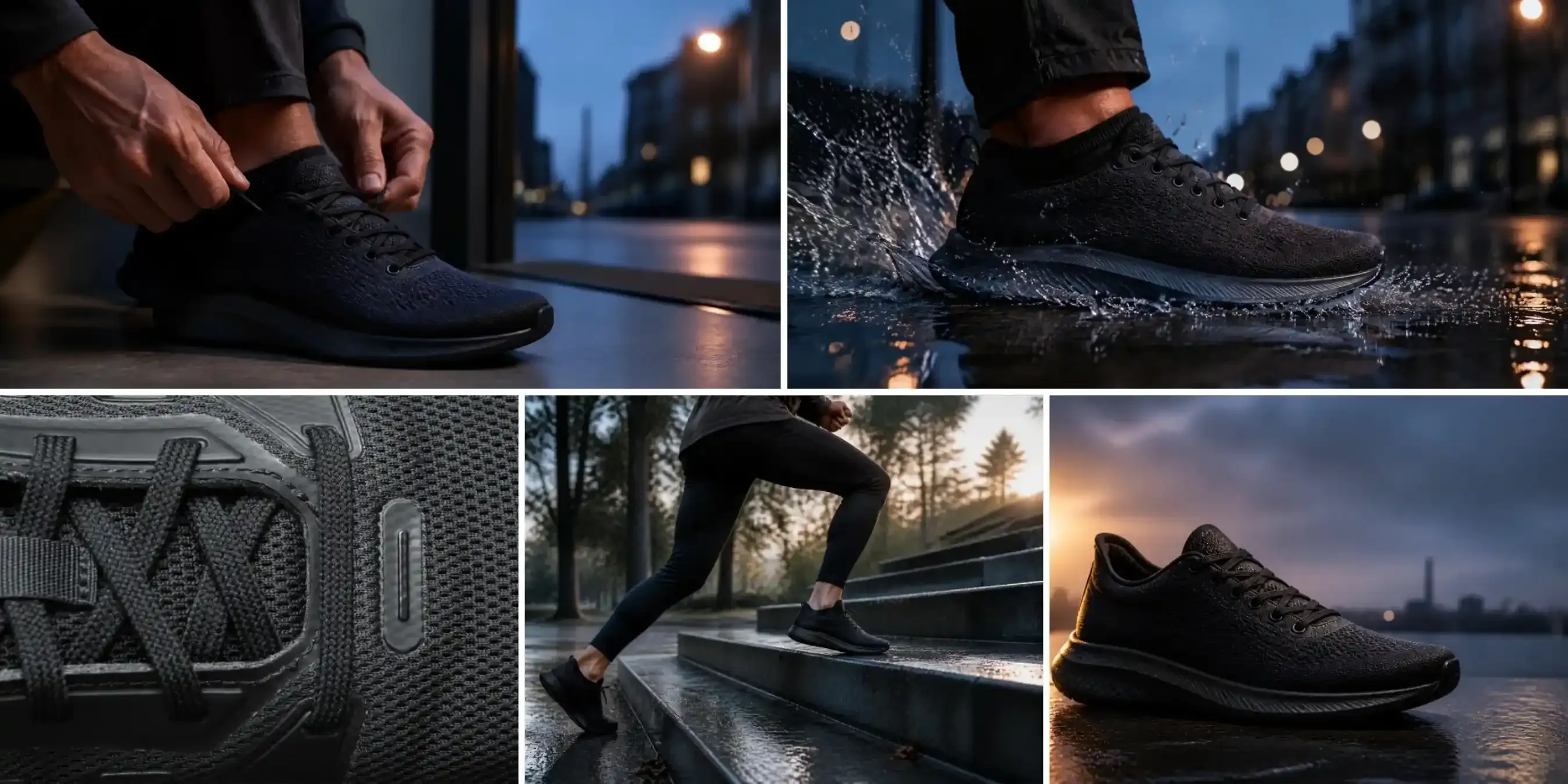
- Objective: Test if a running shoe retains its outsole tread geometry, woven knit upper texture, and lace structure across continuous motion, puddle impacts, and high-angle camera tracking.
- Input Assets: Five images of black performance running shoes in different settings.
Test Prompt
0–2s: Ground-level tracking shot of a black running shoe stepping into a rain puddle, water splashing dynamically.
2–5s: Close-up macro transition highlighting the breathable mesh upper and lace structure as the runner moves forward.
5–8s: High-angle tracking shot following the runner ascending outdoor concrete stairs at sunset. Maintain shoe geometry, sole tread pattern, and fabric texture across all cuts.
Reference images:
Side-by-Side Video Benchmark
Seedance 2.5 Output
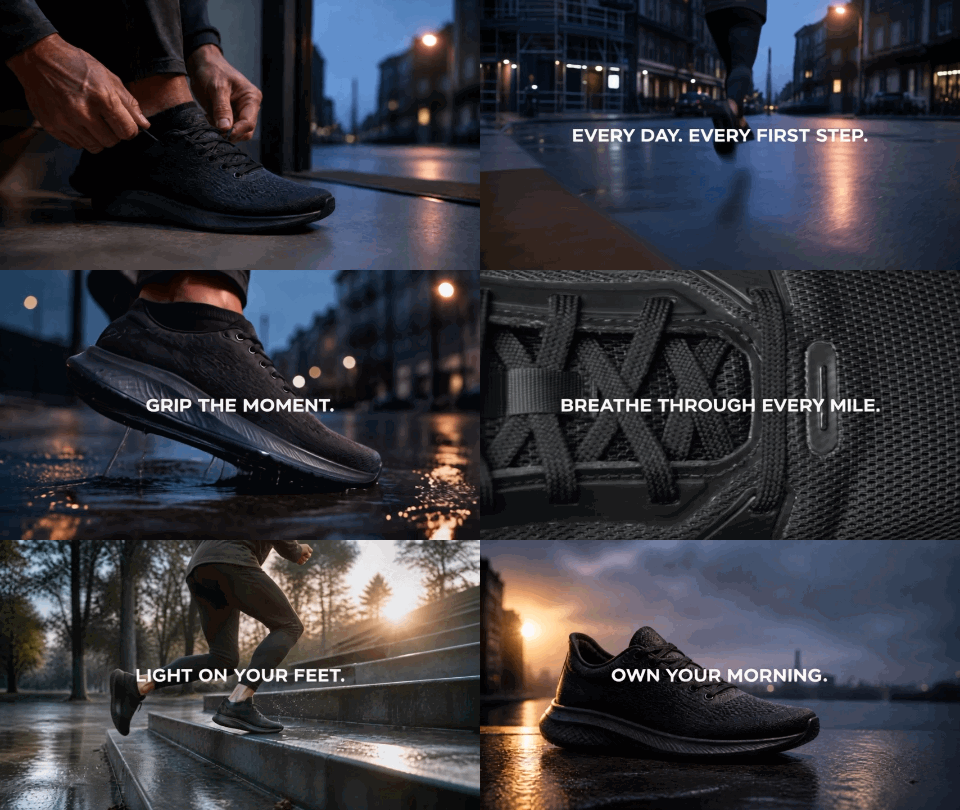
Key Timecodes: Observe the high mesh definition at 0:05 and sole geometry stability at 0:07 stairs.
Kling 4.0 Flash Output
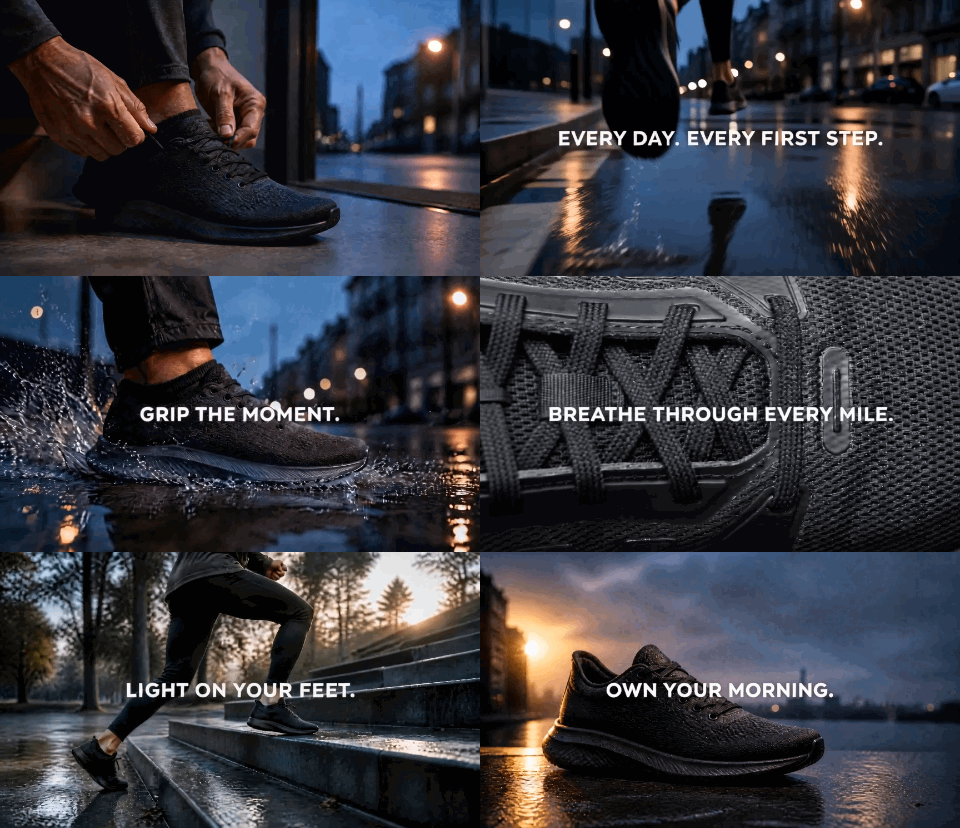
Key Timecodes: High-impact fluid physics at 0:03, followed by feature smoothing and tread drift at 0:06.
Performance Comparison
| Evaluation Parameter | Kling 4.0 Flash | Seedance 2.5 (Winner) |
| Outsole & Tread Lock | Stable sole profile; minor texture smoothing on edge boundaries during micro-movements | High geometry retention; sole thickness remains constant |
| Material Texture Retention | Dark knit pattern stays intact initially, with subtle softness in fine mesh details during hand interaction | Knit mesh texture stays distinct across close-up macro shifts |
| Splash & Particle Physics | High-velocity liquid splash effects with strong dynamic motion | Natural fluid physics without obscuring shoe profile |
| Shot Sequence Adherence | Executes staircase shot, but with lower transition smoothness | Executes all requested camera angles and scene changes in order |
In Test 1, Seedance 2.5 demonstrated superior structural lock. Kling 4.0 Flash delivered high rendering speed and energetic fluid particle motion, but the shoe geometry mutated across camera cuts. The outsole tread flattened, and the upper mesh lost its woven definition during the transition from the puddle splash to the macro close-up.
Seedance 2.5 preserved the physical boundaries of the shoe throughout the entire sequence. The lace eyelets, heel collar shape, and tread depth remained locked even as the lighting transitioned from dark wet street reflection to warm sunset tones on the concrete stairs. For commercial product video production where brand accuracy is mandatory, Seedance 2.5 provides significantly higher usable yields.
Test 2: Character Consistency and Identity Retention Across Multi-Angle Cuts
Maintaining facial geometry across camera cuts remains one of the highest hurdles in generative AI video. A single identity swap or morphing mole instantly ruins narrative immersion.
Benchmark Setup
- Objective: Evaluate character identity persistence, lip-sync accuracy, and scene lighting continuity across multi-shot dialogue sequences involving two distinct subjects.
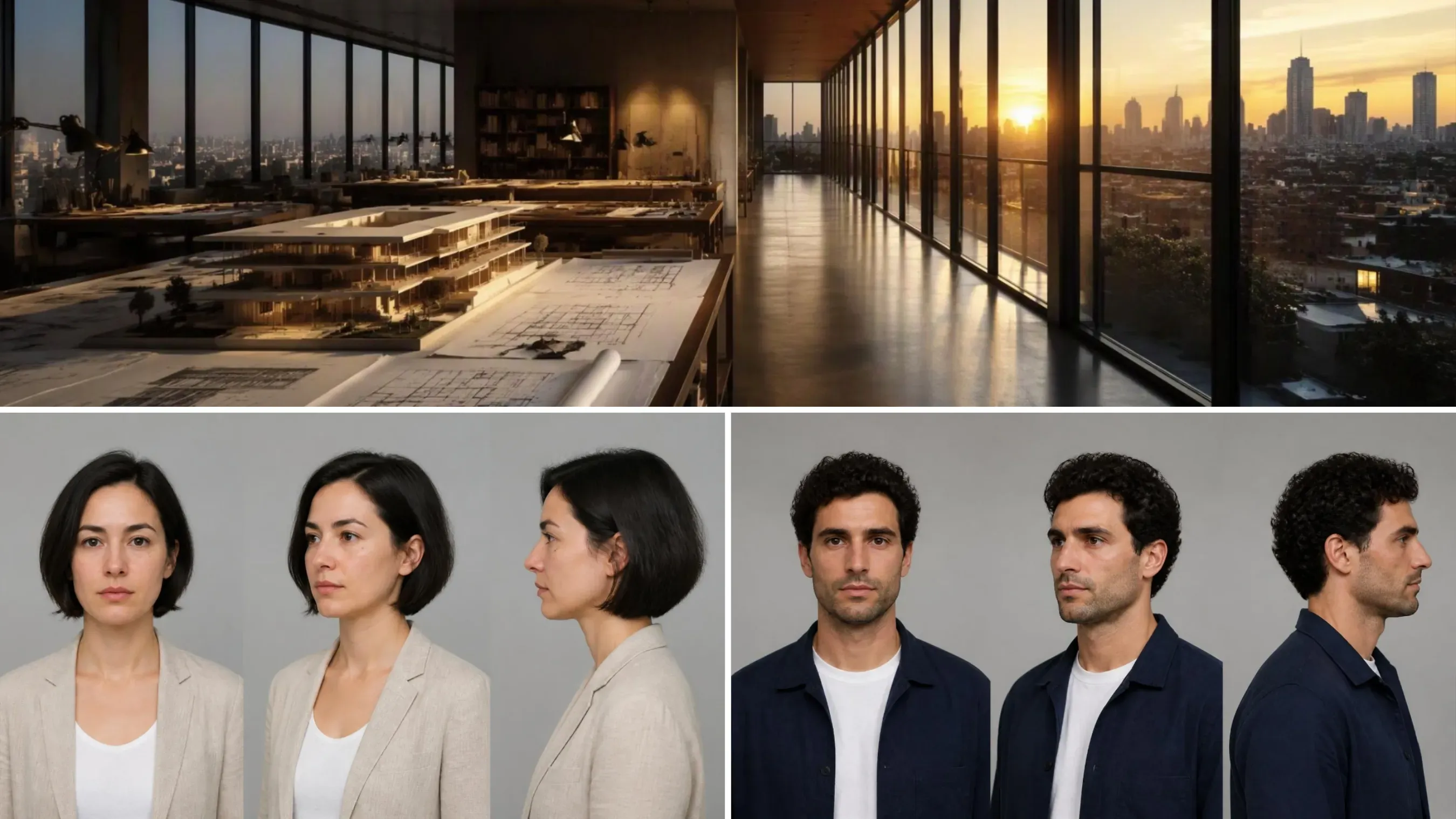
- Input Assets: Three reference files: front/profile reference sheets for the female architect and male colleague, along with an architectural studio environment shot.
Test Prompt
Create a 10-second cinematic scene using @image1 and @image2 as exact character references, and @image3 as the architectural setting.
A female architect with a short dark bob, a small mole under her right eye, and a beige linen jacket studies a blueprint with her male colleague, who has curly dark hair and wears a navy overshirt. She points to a building model and says, “Look at the east facade.” Cut to the man as he looks at her and asks, “At sunset?”
They walk together into a glass corridor glowing with golden evening light. The woman smiles and replies, “Exactly. That's the moment.” Use natural dialogue and accurate lip-sync, cinematic camera movement, and realistic lighting transitions. Preserve both characters’ facial identities, hairstyles, clothing, and body proportions across every shot.
Reference images:
Side-by-Side Video Benchmark
Seedance 2.5 Output
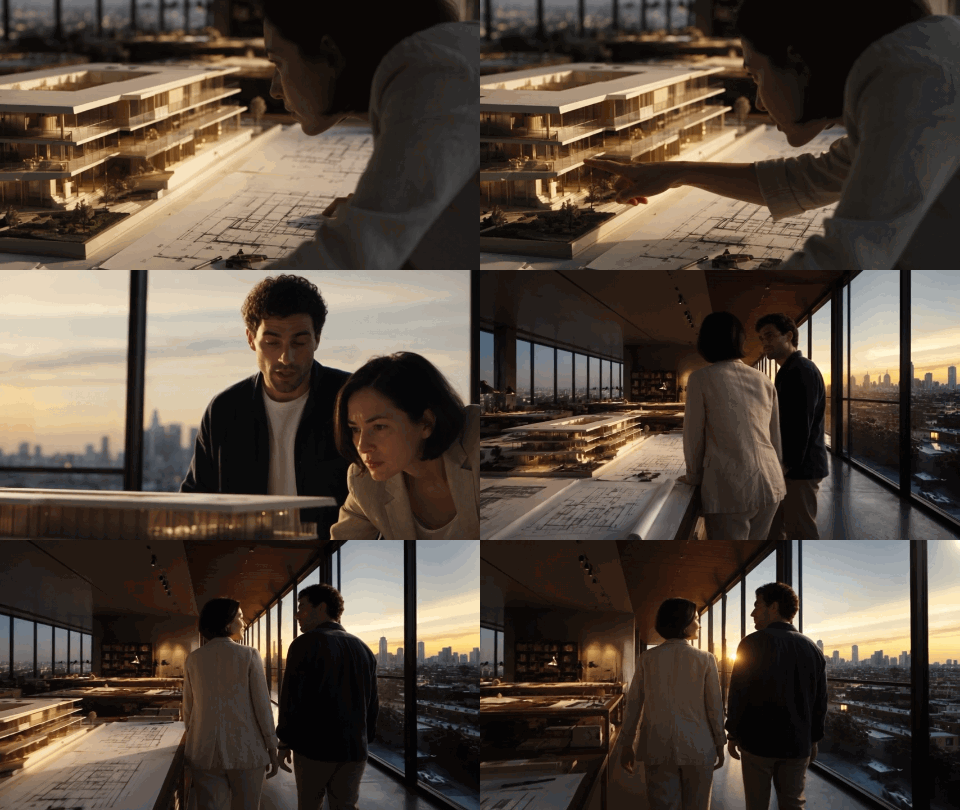
Key Timecodes: Check facial feature persistence at 0:02 and lighting transition in the glass corridor at 0:06.
Kling 4.0 Flash Output

Key Timecodes: Jarring shot transitions around 0:03, with an impossible double-sunset lighting glitch and spatial inconsistency between 0:06–0:08.
Performance Comparison
| Evaluation Parameter | Kling 4.0 Flash | Seedance 2.5 (Winner) |
| Facial Feature Stability | Maintains consistent structure; slight loss of fine texture in wide angles | Exceptional consistency; maintains precise facial structure, jawline, and proportions across angle changes |
| Multi-Subject Distinction | Clear subject separation, but suffers from abrupt camera cuts | Clear separation between female (beige jacket) and male (navy shirt) |
| Lighting & Scene Integration | Lighting glitch: Unnatural double-sunset reflection and harsh lighting cuts | Smooth transition into sunset rim lighting inside the glass corridor |
| Lip-Sync & Dialogue | Accurate phonetic alignment and lip shape matching throughout spoken dialogue | Frame-accurate mouth movements matching English voice tracks |
Seedance 2.5 provides temporal identity retention, locking micro-features across complex dialogue. While Kling 4.0 Flash yields fast composition renders, multi-character setups often require dedicated Kling 4 dialogue and lip-sync tuning to prevent phonetic drift on longer phrases.
Test 3: Keyframe Interpolation Trajectory and Boundary Adherence
Interpolating motion between two fixed keyframes often exposes critical flaws in AI video models. A single physics error or floating limb destroys a scene.
Benchmark Setup
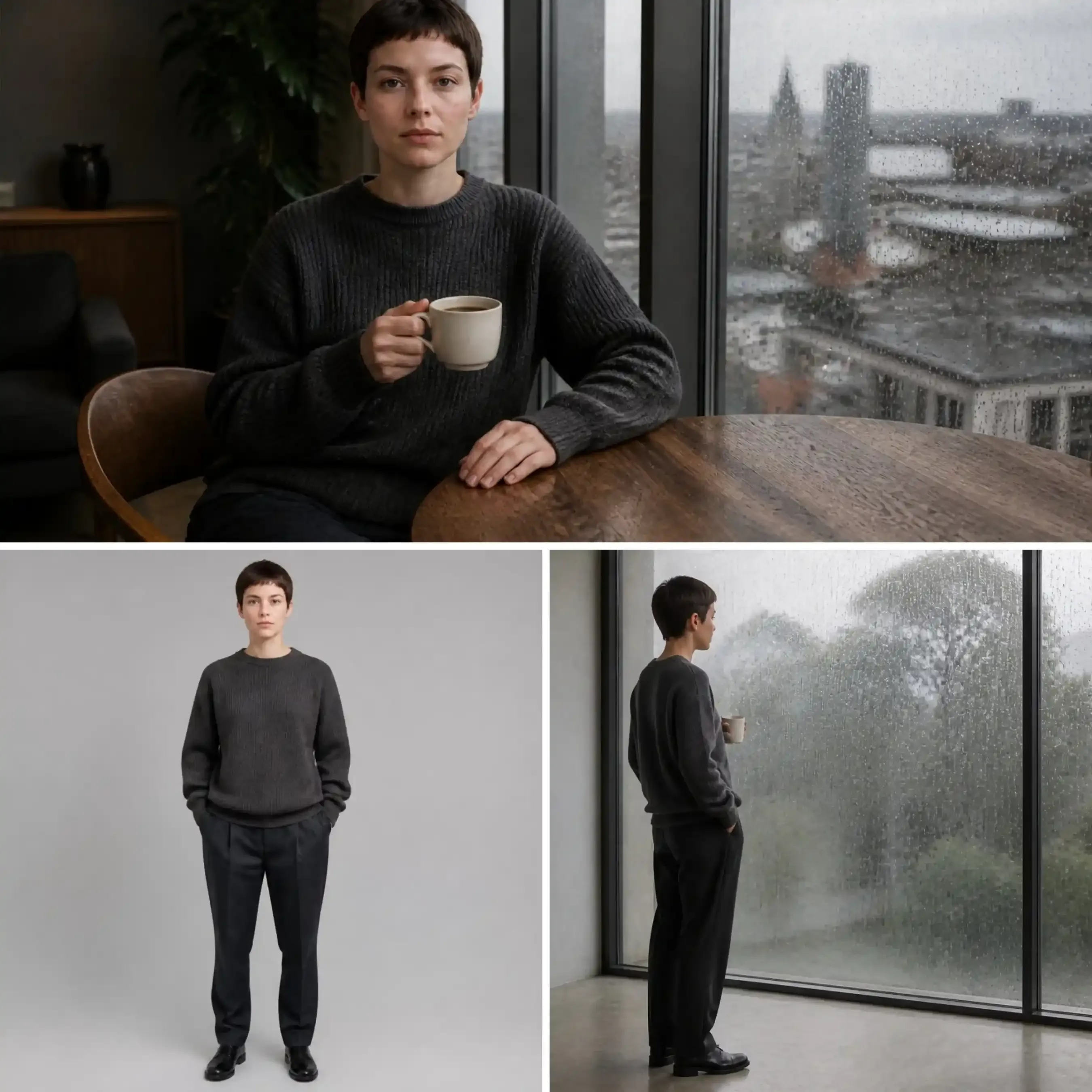
- Objective: Test movement continuity, character lock, and environmental adherence between a seated start frame and standing end frame.
- Evaluation: Measure posture, weight shift, object handling, and alignment with the target keyframe.
Test Prompt
Animate a continuous 10-second shot between keyframes. The person rises from the table with a ceramic coffee cup, walks to the rainy window, and looks outside. Maintain weight transfer, natural arm motion, stable cup positioning, character identity, and room layout. Match the final pose to the end keyframe with no cuts or morphing.
Reference images:
Side-by-Side Video Benchmark
Seedance 2.5 Output

Critical Flaw: Features a noticeable camera jump/cut around 0:03–0:04 instead of a continuous physical walk. Keyframe visual locks hold, but full trajectory motion fails.
Kling 4.0 Flash Output
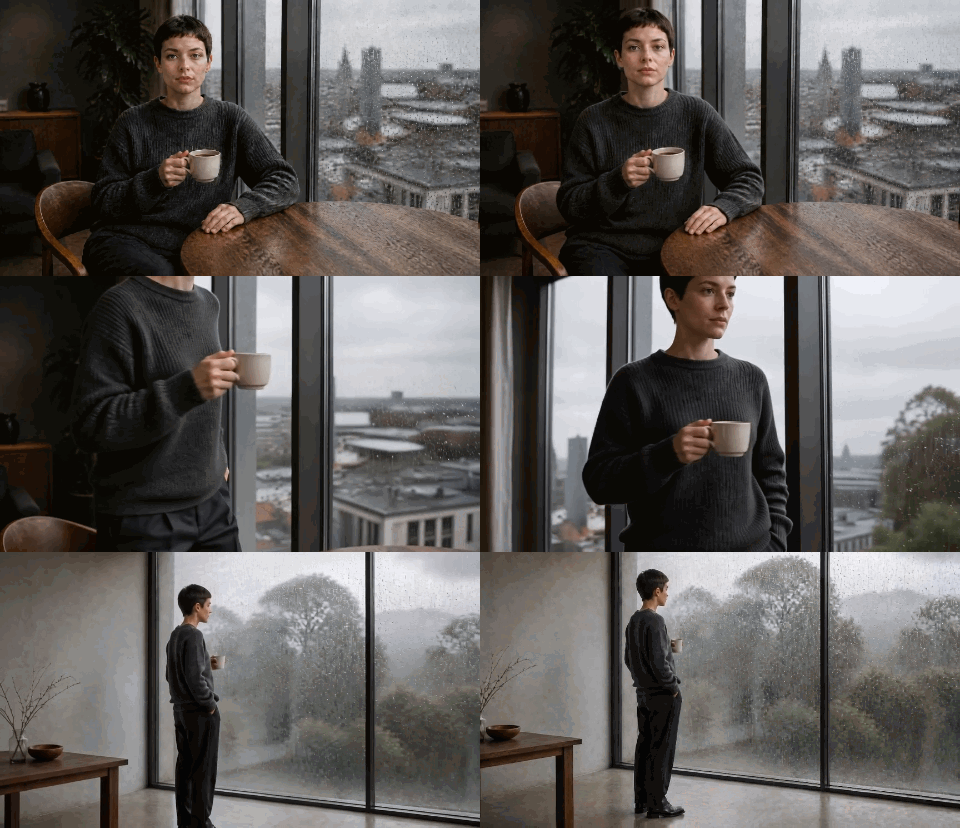
Critical Flaw: Severe background warping and spatial mismatch between 0:02–0:05 as the city skyline mutates into trees.
Performance Comparison
| Evaluation Parameter | Kling 4.0 Flash | Seedance 2.5 |
| Start/End Frame Anchor | Matches start frame; background mutates before target end frame | Matches start and end frames, but masks the middle motion |
| Motion & Cut Continuity | Severe spatial morphing during turn; jerky trajectory | Fails true single-take continuity; relies on a match-cut transition |
| Spatial & Background Lock | Background changes unnaturally mid-shot like city to forest? | Preserves room assets but jumps framing scales abruptly |
| Object Hold (Coffee Cup) | Scale and grip perspective warp during rotation | Shape and orientation hold across the abrupt cut |
Neither model passed the true continuous interpolation test. While Seedance 2.5 successfully preserves asset details and keyframe appearances, it cheats the physical walk using an internal shot cut. Kling 4.0 Flash attempts the continuous camera motion but suffers from severe spatial warping. For multi-keyframe pipelines, creators must still prepare for manual editing and masking.
The harsh jump cut and background morphing were likely caused by background inconsistency between the reference keyframes, alongside vague spatial prompting. Bridging structurally mismatched initial and target assets remains a major hurdle for current frame-anchored AI video pipelines.
Workflow Efficiency and Yield Economics: Credits vs. Production-Ready Clips
Burning credits on 20 rerolls just to get a single shot where a presenter's face does not morph halfway through is a quick way to drain a production budget. Managing AI video credit burn rates effectively requires balancing speed against consistency.
Render Speed vs. Reroll Rates
Kling 4.0 Flash generates draft clips 3x faster than full base models, serving as an agile tool for rapid storyboard exploration. However, its accelerated output requires a higher reroll frequency when pinning fine human facial details across complex camera moves.
Seedance 2.5 takes slightly longer per generation pass, but delivers a significantly higher success rate for multi-reference identity retention. This reliability drops the reroll count on commercial character shots, reducing the total cost per usable asset.
| Operational Metric | Kling 4.0 Flash | Seedance 2.5 |
| Generation Speed | Fast (Ideal for draft passes) | Moderate (Focused on structural hold) |
| Reroll Requirement (Complex Shots) | High (Requires multiple runs for face lock) | Low (High identity persistence) |
| Primary Economic Value | Low credit burn for visual testing | Lower total cost per finalized commercial shot |
The Hybrid Production Pipeline
To optimize both compute budget and production turnarounds, adopt a two-phase architecture:
plaintext1[Phase 1: Motion & Framing Exploration] 2 └─► Engine: Kling 4.0 Flash 3 └─► Output: Draft camera paths, lighting dynamics, and fluid physics 4 5 │ 6 ▼ Export Winning Keyframes 7 8[Phase 2: Final Asset & Character Locking] 9 └─► Engine: Seedance 2.5 10 └─► Output: Multi-reference identity retention, product geometry lock, and final renders
Production Tip: Never burn credits rendering high-cost final passes until your shot composition is validated in Phase 1.
Final: Building Your Next-Gen AI Video Pipeline
The competition between Kling 4.0 Flash and Seedance 2.5 highlights a broader shift in AI video production: raw length is no longer the metric that matters. Production value hinges entirely on structural control, keyframe persistence, and budget efficiency.
- Choose Seedance 2.5 if your studio focuses on narrative storytelling, commercial character continuity, or complex dialogue where facial micro-features and exact brand geometries must hold pixel-locked across cuts.
- Choose Kling 4.0 Flash if your focus is high-speed commercial product rotations, dynamic liquid physics, or rapid visual ideation where iteration speed outweighs long-term feature stability.
For most commercial production houses, the highest ROI comes from adopting the Hybrid Pipeline—leveraging Kling 4.0 Flash for agile motion drafts and Seedance 2.5 for keyframe-anchored final assemblies.





