Type "AI kissing video generator" into Google and most results promise the same thing: upload a photo, get a video, done. Open a handful of them and some quietly hand back a still picture instead. That mismatch is not an accident.
A real AI Kissing Video Generator is usually two separate tools stitched into one landing page: something that blends two photos into a kiss, and something else that turns a photo into motion. This guide splits the two apart, runs both on Atlas Cloud, and shows exactly where the free versions stop helping.
Key Takeaways
- Most tools sold as an AI Kissing Video Generator are really two different jobs under one label: a kiss-photo step, then a photo-to-video step. Confusing the two is the easiest way to end up disappointed with the result.
- Atlas Cloud's free AI kissing generator makes a still kiss photo. Getting motion out of it means running that photo through a separate image-to-video model.
- PixVerse V6 image-to-video, the same engine behind PixVerse's KissKiss template, bills per second with adjustable duration and resolution instead of a flat per-generation credit.
- The single biggest factor in whether a kiss video looks natural or warped is the source photo: one frame, both faces visible, matched lighting.
- The same generation works two ways: point and click in a playground, or a three-step API call for anyone building this into a product.
An "AI Kissing Video Generator" Is Actually Two Tools, Not One
Search the term today and the results split into two buckets, whether the landing page admits it or not. One bucket blends two portraits into a single kiss photo. The other starts from one photo and adds motion, sound, and a few seconds of runtime. A few pages promise both and only deliver one.
| What it makes | How it works | What it usually costs |
|---|---|---|
| A kiss photo | Blends two portraits into one still image | Free or a low flat fee per image |
| A kiss video | Animates one photo into a short clip | Flat credits per clip, or billed per second |
Knowing which bucket a tool sits in saves an upload. Landing pages advertise video more often than they deliver it, because video is the search term with the traffic. The way to check for certain: look at the actual output panel, not the headline copy above it.
Step 1: Turn Two Portraits Into an AI Kissing Photo
Atlas Cloud's free AI kissing generator needs exactly two photos, one clear portrait of each consenting adult.
The tool blends the two faces into one kiss photo in about 30 seconds. Nothing else to configure.
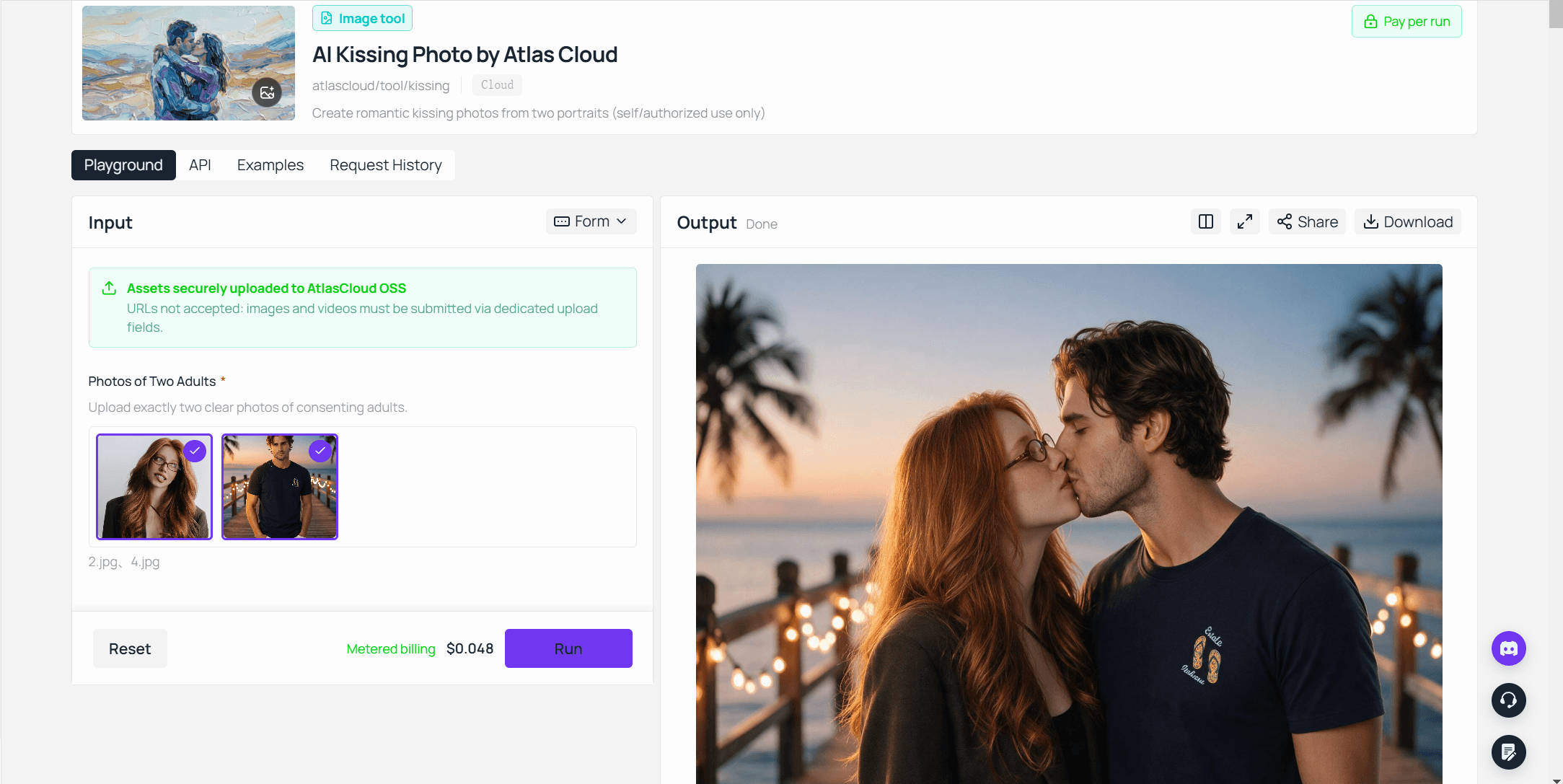
The output panel confirms what the tool's own three-step flow describes: a finished kiss photo, ready to download. If the goal is a moving clip, that download becomes the input for step two.
It's one of several free tools inside Atlas Cloud's AI Tools collection, alongside an image upscaler, a background remover, and an object eraser.
Step 2: Turn the Photo Into an AI Kissing Video
Turning a still kiss photo into motion needs an image-to-video model. Atlas Cloud hosts PixVerse's image-to-video models among hundreds of others.
The one already proven on exactly this use case is PixVerse V6 image-to-video, the same engine behind PixVerse's own KissKiss template that sent kiss clips across TikTok in several languages.
Our [KissKiss template guide](pixverse-ai-kiss.md?utm_source=blog&utm_medium=article&utm_campaign=ai-kissing-video-generator) covers where that trend came from and where PixVerse draws the consent line. This section covers the version you drive yourself.
Demo generated with PixVerse V6 image-to-video on Atlas Cloud from the Step 1 kiss photo, 5 seconds, with audio.
Method 1: Make the Kissing Video in the Playground
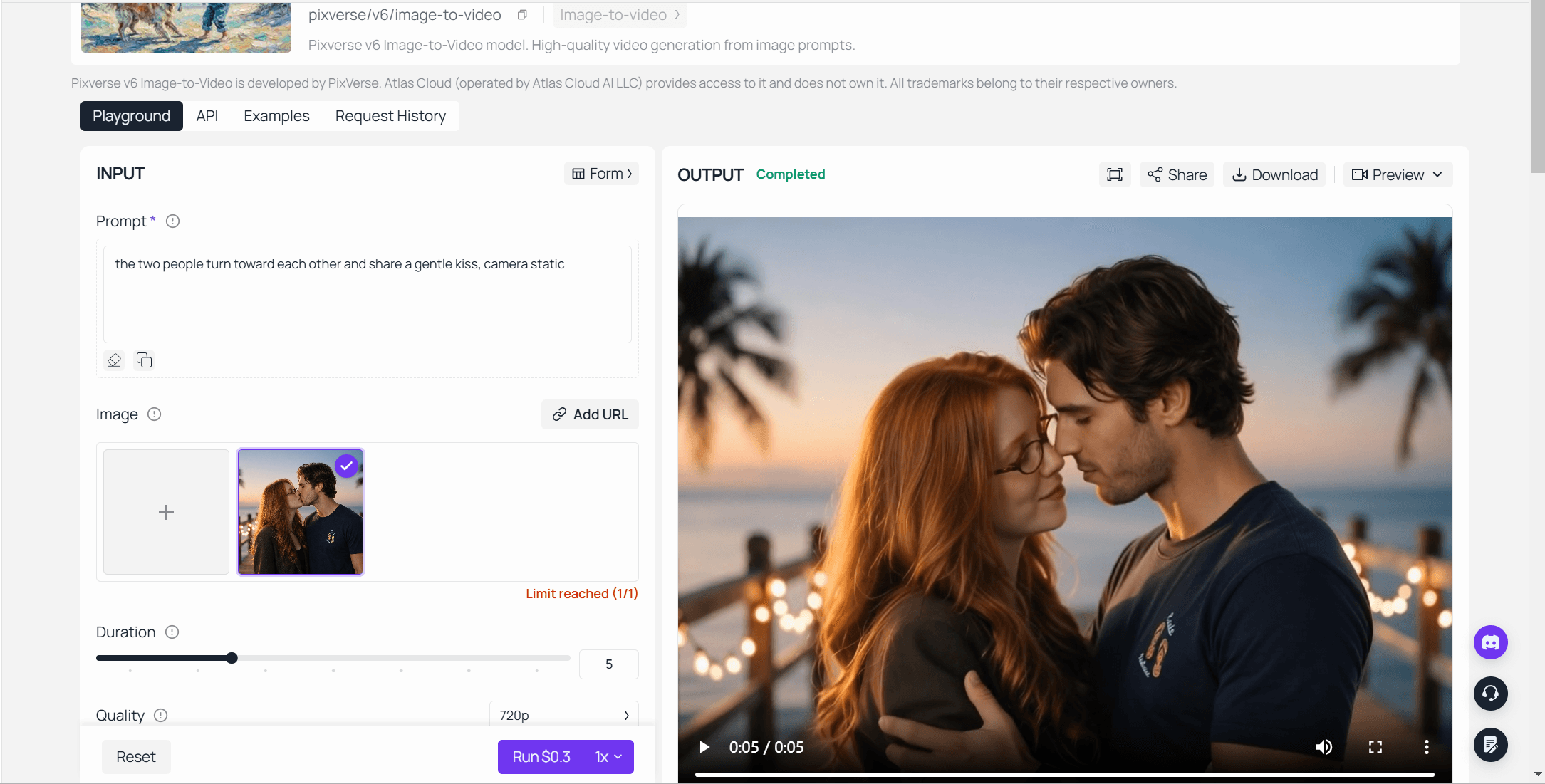
- Open the PixVerse V6 image-to-video playground and upload the kiss photo from step one.
- Describe the motion: "the two people turn toward each other and share a gentle kiss, camera static."
- Pick a duration from 1 to 15 seconds and a resolution from 360p to 1080p.
- Toggle audio on or off and run. The panel quotes the exact price before you commit.
Method 2: Call the API in Three Steps
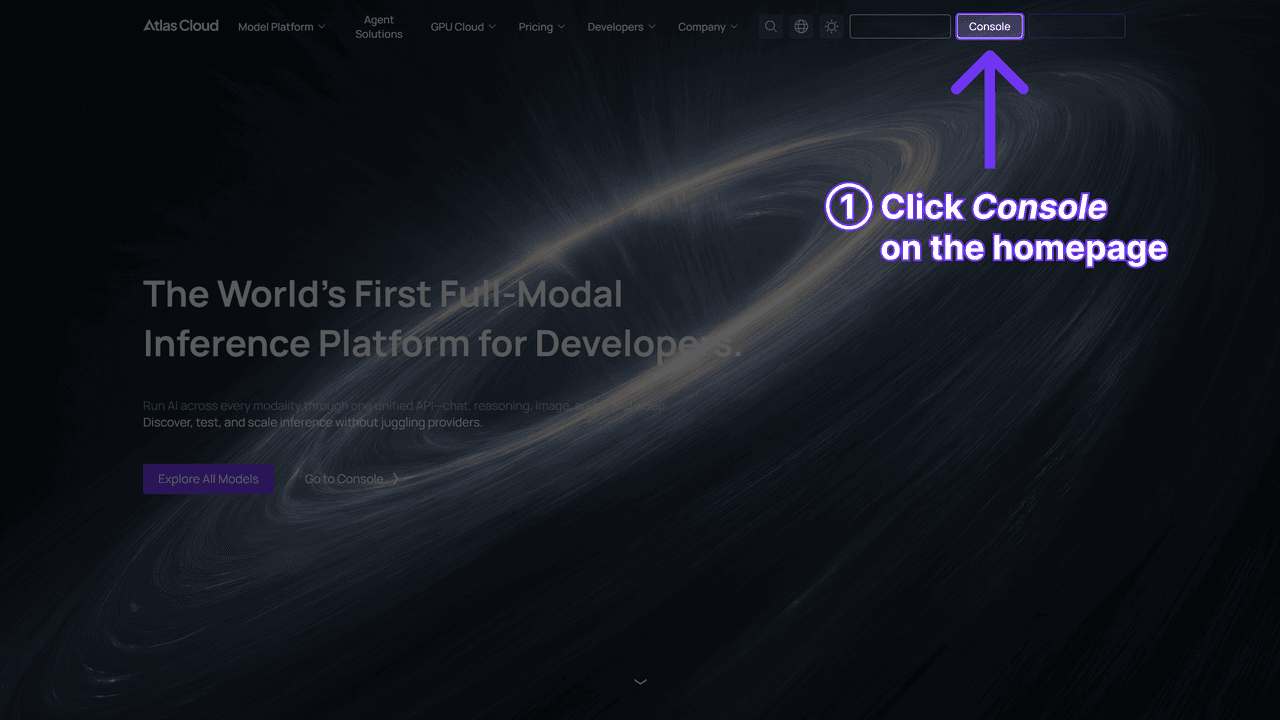
Step 1: Get your API key. Create one in the Atlas Cloud console dashboard and copy it.
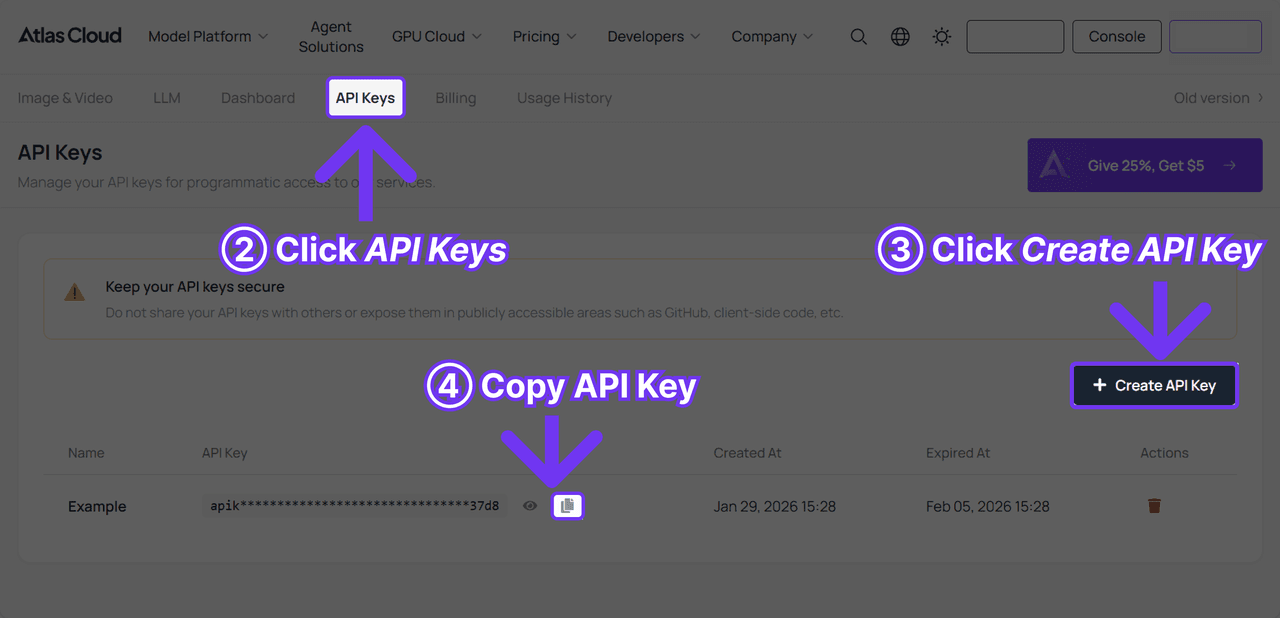
Step 2: Check the API docs. Endpoints, parameters, and authentication live in the API documentation.
Step 3: Make your first request. Submit the job:
plaintext1curl -X POST https://api.atlascloud.ai/api/v1/model/generateVideo \ 2 -H "Content-Type: application/json" \ 3 -H "Authorization: Bearer $ATLASCLOUD_API_KEY" \ 4 -d '{ 5 "model": "pixverse/v6/image-to-video", 6 "image": "<your_kiss_photo_url>", 7 "prompt": "The two people turn toward each other and share a gentle kiss, soft window light, camera static", 8 "duration": 5, 9 "quality": "720p", 10 "sound": true 11 }'
Poll the prediction until it completes:
plaintext1curl https://api.atlascloud.ai/api/v1/model/prediction/<prediction_id> \ 2 -H "Authorization: Bearer $ATLASCLOUD_API_KEY"
Atlas Cloud runs one API across the platform, so the same key and the same submit-and-poll loop work for every model it hosts. Swap the model string later and the rest of the integration stays put.
What Makes a Kissing Clip Look Real Instead of Warped
Every image-to-video model, PixVerse included, inherits whatever the source photo gives it. A blurry crop turns into a blurry clip with motion smear layered on top.
| Source photo | What the video usually looks like | Better input |
|---|---|---|
| Two people side by side, faces visible, similar lighting | Clean lean-in motion, stable faces | Already usable |
| Two separate photos stitched together | Warped faces where the seam sits | Merge and match brightness before step one |
| Tight crop on just the faces | Stiff motion, clipped shoulders | Leave headroom to the shoulders |
| Mixed or low light across the two faces | Flickering or shifting skin tone during motion | Reshoot or brighten evenly before uploading |
The prompt does the rest of the work. "They kiss" gives the model too little to act on. "She leans in first for a slow two-second kiss, warm afternoon light, camera holds steady" gives it a sequence, a pace, and a mood it can actually follow.
French Kiss, Cheek Kiss, or Cinematic: Picking a Kiss Style
PixVerse V6 has no style dropdown for kissing. The style lives entirely in the prompt line, so a few words change the whole clip.
| Style | Prompt phrase to use | Best for |
|---|---|---|
| Classic | "a soft, brief kiss, camera static" | Anniversary posts, save-the-date cards |
| French kiss | "a slow, romantic french kiss, camera holds steady" | Couple content aimed at a mature audience |
| Cheek kiss | "a warm kiss on the cheek, one person smiling" | Family or friend content, lower intensity |
| Cinematic | "a slow-motion kiss with a gentle camera push-in, warm rim light" | Save-the-date videos, wedding teasers |
None of these need a new model or a hidden setting, just a different sentence in the same prompt field. For longer prompts, negative prompts, or non-English phrasing, our [PixVerse prompt guide](pixverse-prompts-guide.md?utm_source=blog&utm_medium=article&utm_campaign=ai-kissing-video-generator) has the format PixVerse's own testing favors.
Is There a Free Way to Make an AI Kissing Video?
Step one is close to free. Atlas Cloud's kissing photo generator costs nothing to try, and the page does not put a hard number on it: trying it costs nothing, and Atlas Cloud credits take over once you want more.
Step two is where free gets harder. Atlas Cloud's PixVerse V6 image-to-video has no free tier; it bills per second from the first request.
PixVerse's own consumer app is the closer-to-free route instead: sign in, use the KissKiss effect or whatever kiss template is currently on the shelf, and the app deducts its own credits with a watermark on free exports. Our KissKiss template guide, linked above, has the current credit numbers and what that watermark looks like.
| Step | Free mechanism | Where it stops being free |
|---|---|---|
| Kiss photo (Atlas tool) | Free to try per the tool's own page | Metered at $0.048 per generation after that, per the playground |
| Kiss video (Atlas API) | No free tier | Billed per second from the first request |
| Kiss video (PixVerse app) | Limited free credits, watermark on export | Once credits run out or you want no watermark |
Frequently Asked Questions
Why did my AI kissing generator give me a photo instead of a video?
Because it is a photo generator, not a video one, even if the word "video" shows up somewhere on the page. Check the output panel instead of the headline. A still image means you have finished step one; run it through an image-to-video model next to get motion.
Can I turn a kissing photo I already made into a video?
Yes. Any clear photo works as the input for an image-to-video model, including one made somewhere else. Upload it in place of your own portraits and describe the kiss motion in the prompt.
How much does an AI kissing video cost to make?
On Atlas Cloud, the kissing photo generator shows metered billing of $0.048 per generation in the playground, verified in September 2026. Turning that photo into video costs more: PixVerse V6 image-to-video bills $0.025 to $0.115 per second depending on resolution and audio, verified on the model page in September 2026 with no active discount. A 5-second 720p clip with audio costs $0.30; the same length at 1080p costs $0.575.
Is it okay to make an AI kissing video of someone else?
Only with their consent. PixVerse's own terms of service prohibit sexually suggestive content of real people made without their permission, and that same expectation should hold no matter which platform you use. Our KissKiss template guide, linked above, covers the exact policy language and what happens when a generation gets flagged.
Conclusion
A working AI kissing video generator is really two separate jobs. One turns two photos into a kiss. The other turns that kiss into motion. Expect a single tool to do both and you will keep wondering why your video generator keeps handing back a picture.
Both jobs run on Atlas Cloud today: the photo step free to try, the video step billed per second with no watermark and no daily credit ceiling. Feed one into the other, adjust the prompt for the kiss style you actually want, and the clip in your downloads folder is the one you were looking for an AI Kissing Video Generator to make.





