

A black coat can vanish into a black frame in one generation. In the next, a narrow strip of hard light gives it shape, texture, and purpose. Kling 4 Flash Black-and-White Cinematic Fashion Style is a directing problem: lock the person and clothing first, then direct the light, tonal range, movement, and camera through the dark areas.
Kling 4.0 Flash is currently a limited early-access product. Atlas Cloud's Kling V4 page is still marked coming soon, so this article does not pretend that its real example is a Flash output. It gives you a transferable prompt structure and a current Kling V3.0 Turbo test route on Atlas Cloud. Kling says Flash is designed for frequent creation within the early 4.0 rollout, while wider availability remains in progress (Kling AI release announcement, September 2026).
Key takeaways
- Describe the person, clothing, and action before the black-and-white treatment.
- Name deep blacks, clean whites, and midtone separation. “Black and white” alone often produces gray wash.
- Give a 10-second clip an action arc and distinct camera beats. A slow push-in has little GIF value.
Kling 4 Flash Black-and-White Cinematic Fashion Style: Quick Answer
This is not a preset. It is a combined instruction for one locked subject, a simple physical action, directional light, controlled tonal hierarchy, and intentional shot timing. Start with the model, coat, and walk. Add noir or cinematic only after those concrete anchors are established.
The aim is readable separation. A black subject needs a background, reflection, edge, or material response at a different brightness. Camera-brand name drops do less work than a visible side key, a white shirt, rain-darkened stone, and wool that catches light.
Build the Kling 4 Flash Black-and-White Cinematic Fashion Style
Use these five control blocks in one prompt. They translate to a current Kling workflow without claiming that every 4.0-series feature belongs to Flash.
| Control block | Include in the prompt | Problem it prevents |
|---|---|---|
| Subject lock | Adult age group, hair shape, coat silhouette, shirt, trousers, boots | Face and wardrobe drift |
| Action | Walk, stop, turn once, adjust lapel, coat hem movement | A clip that behaves like a still |
| Tonal design | Deep blacks, clean whites, visible midtone separation | Flat gray monochrome |
| Lighting and material | Hard side key, wet-pavement reflection, wool texture | A black coat disappearing into the set |
| Camera beats | A timed wide track, profile stop, and final pull-back | Default slow push-in or purposeless cuts |
Kling 4 Flash Black-and-White Cinematic Fashion Style Prompt
Copy this as a full directing brief. It uses one subject and one action arc so the model has fewer competing instructions.
plaintext110-second, 16:9 black-and-white cinematic fashion film. One adult fashion model with a sharp dark bob wears a structured black wool overcoat, white shirt, slim trousers and polished black boots. The location is a rain-darkened stone arcade at night, with one hard side key light cutting across the face and coat. Preserve deep blacks in the coat, clean white highlights on the shirt and wet pavement, and clear separation through midtones. Fine 35mm film grain, crisp fabric texture, no color tint. 2 3Shot 1, 0-3 seconds: full-body low-angle lateral tracking shot as the model walks through reflected light; the coat hem moves naturally. 4Shot 2, 3-7 seconds: medium profile shot as the model stops under the light, turns toward camera once, and one hand adjusts the lapel. 5Shot 3, 7-10 seconds: close shot of the face and wool texture, then pull back to reveal the model alone in the arcade. 6 7Editorial fashion-film pacing, controlled exposure, natural body mechanics, coherent face and wardrobe across every shot. No text, logos, subtitles, color accents, extra people, sudden camera jumps, or distorted hands.
“One adult fashion model” establishes a single identity before the visual styling arrives. The wording is deliberately plain. Adding vague character backstory usually gives the generation more places to wander.
Deep blacks, clean white highlights, and midtone separation form the tonal brief. They tell the system where the coat can stay dark, where the shirt and pavement may lift, and where texture must remain visible between those extremes.
The coat, stone, water, and side light also have a physical relationship. The result needs reflected light on the ground and sculpted light on the lapel. That interaction creates contrast without an arbitrary color tint.
The three time windows give a short clip a visible rhythm: travel, pause, then reveal. They are story beats, not empty transitions.
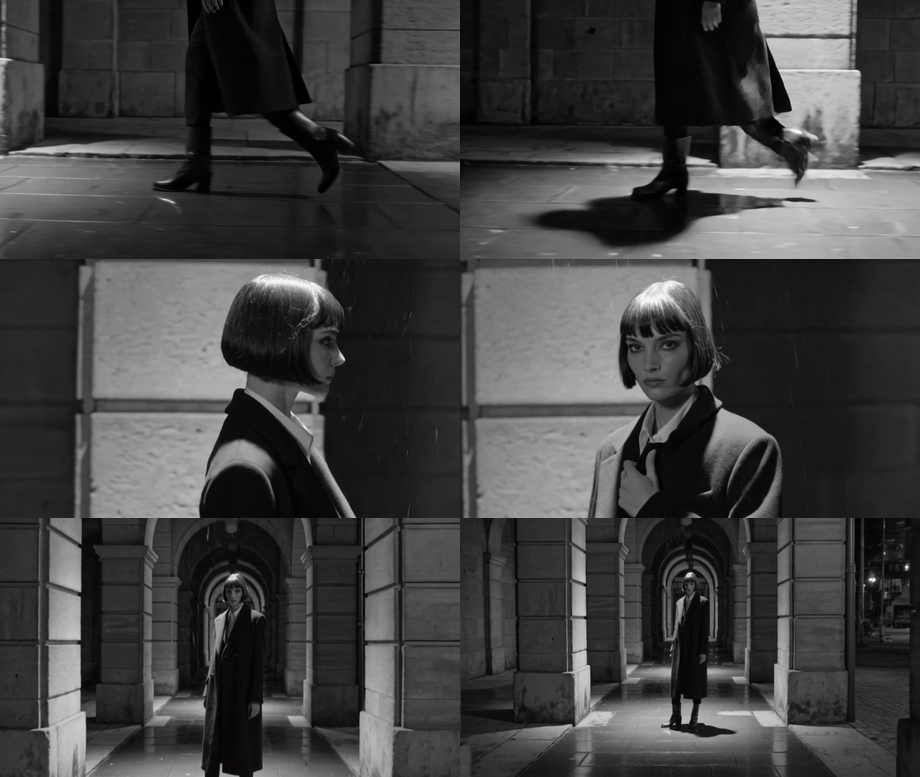
User-supplied 10-second baseline test, converted to a silent GIF. The monochrome sequence moves from a low tracking view of the model’s boots to a close portrait, then reveals the full figure beneath the arcade arches.
A Second Case: Ivory Couture in a Sunlit Rotunda
This case changes the wardrobe and setting from the black coat and rain-darkened arcade. The ivory pleated gown, curved concrete gallery, and reflecting pool test monochrome contrast, fabric motion, and subject continuity in a brighter scene.
plaintext1Create a 10-second, 16:9 black-and-white cinematic fashion film. A single adult woman with short sculpted hair wears a flowing ivory pleated couture gown inside a vast circular brutalist gallery with a shallow mirror pool at dawn. 2 3Use high-contrast monochrome: deep sculpted architectural shadows, clean highlights on the gown without losing fabric detail, and rich gray midtones that preserve natural skin tones and every pleat. No color tint. 4 5She walks slowly beside the pool, pivots once, and lets the gown fan out in a gentle breeze before it settles. She pauses and looks over her shoulder. Use one continuous camera move: begin with a symmetrical wide view, track sideways as she walks, then make a smooth arc as she turns, ending with her full reflection visible in the pool. 6 7Keep the same face, dress, body proportions, gallery, pool, and lighting throughout. Show natural steps, believable fabric movement, and a stable reflection. Restrained editorial pacing, fine film grain. 8 9No cuts, extra people, color accents, text, logos, subtitles, warped limbs, flicker, or sudden zooms.
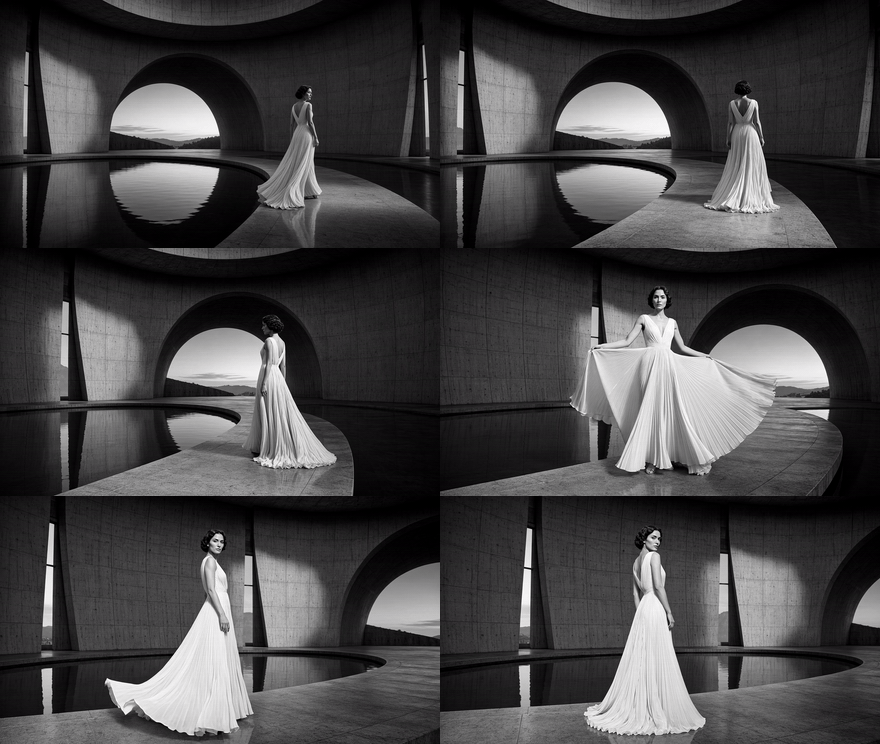
User-supplied 10-second, 16:9 example converted to a silent GIF. The ivory pleats move against the gallery’s deep shadows while the reflecting pool remains in frame. The original MP4 is retained in the article assets.
Review whether the face, gown, and curved architecture remain consistent through the turn. Check that the skirt movement and pool reflection follow the same motion without flicker.
Kling 4 Flash Black-and-White Cinematic Fashion Style Workflow
Check the Release State First
Before publishing a client promise or retesting the prompt, check the Kling V4 status page. If it still says coming soon, keep your output captioned as a current Kling test. Do not transfer 4.0-series claims such as native 30-second generation, multi-keyframes, or HDR to Flash unless Flash’s live panel confirms them.
Run a Kling 4 Flash Style Test Today
- Open Kling V3.0 Turbo Text-to-Video.
- Paste the full prompt above. Choose text-to-video, 16:9, 720p, and 10 seconds. Turn audio off if the current panel offers that control because this example proves picture, not sound.
- Keep only a result where the figure stays whole, the black coat reads against the arcade, the lateral movement and stop are present, no color seepage appears, and hands and lapel remain plausible.
- Turn the complete short clip into one GIF. Do not split it into separate shot files.
Correct a Gray Result
The corrected run below keeps the scene and action consistent while testing tonal separation.
plaintext1Keep the same single model, black wool overcoat, rain-darkened arcade, action timing and camera beats. Increase tonal separation: true deep blacks in the coat and shadows, bright but unclipped white shirt and pavement highlights, sculpted side light on cheekbones and lapel, visible texture in black wool. Remove gray wash, flat overcast lighting, color casts, foggy low-contrast exposure, and muddy shadows.
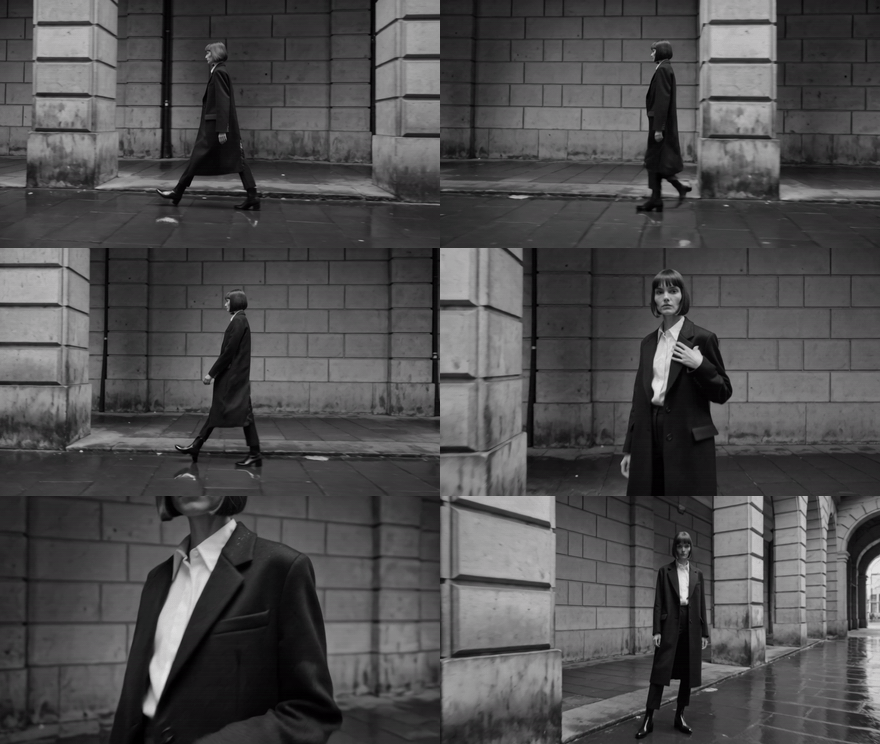
Corrected black-and-white test, converted from the supplied 10-second video to a silent GIF. The dark overcoat stays distinct from the pale stone wall and white shirt as the model walks, turns, and faces the camera.
Fix the Kling 4 Flash Black-and-White Cinematic Fashion Style
| Symptom | Likely cause | Prompt correction |
|---|---|---|
| The image resembles a gray filter | Only “black and white” was specified | Add deep blacks, clean whites, and midtone separation |
| The black outfit disappears | Subject and background share the same brightness and material | Add wet reflections, a hard side key, pale stone, or a white shirt |
| The clip feels like a poster | The action has no arc | State walk, stop, turn, adjust lapel with time windows |
| Model or clothing changes | The subject was never fully locked | Put hair, coat, shirt, trousers, and boots in the opening sentence; ask for consistency across every shot |
| The camera only creeps forward | Each shot has no assigned job | Specify lateral track, profile stop, then pull-back |
Availability, Price, and Atlas Cloud
The official 4.0 release says Flash reached a limited group in early access and positions it for frequent creation. Its wider 4.0 rollout remains distinct from a universal Flash entitlement (Kling developer release, September 2026). Atlas Cloud has no published V4 or Flash price at the time of this check, so a V3 quote should never be used as a Flash quote.
| Route checked on 10 October 2026 | Status | What to use it for | Price context |
|---|---|---|---|
| Kling 4.0 Flash | Limited early access at Kling; no Atlas Cloud route | Validate availability in the live Flash panel | No Atlas Cloud final price published |
| Kling V4 on Atlas Cloud | Coming soon | Monitor for a live model ID before making a V4 claim | No published final price |
| Kling V3.0 Turbo Text-to-Video | Current Atlas Cloud workspace | Run this 10-second monochrome test today | Atlas’s model catalog lists $0.095/second versus $0.112 standard, a 15% discount, subject to the selected configuration |
For the live rate, use Atlas Cloud Models and inspect the exact model, resolution, duration, and market before you budget a batch. The table records a publication-date check, not a permanent offer.
Run the same black-and-white fashion test in the current Kling workspace. It gives your team a reproducible baseline while the Kling 4 Flash Black-and-White Cinematic Fashion Style route reaches broader availability.
Frequently Asked Questions
Is Kling 4 Flash Available to Everyone Yet?
No. Kling describes Flash as a limited early-access option within the 4.0 rollout. Check the live account panel for eligibility rather than relying on a prompt gallery or an unofficial price list.
What Kling 4 Flash Prompt Avoids a Gray Fashion Video?
Ask for deep blacks, clean whites, and visible midtones, then connect those values to materials and light. A black wool coat, white shirt, wet pavement, and hard side key offer concrete places for tonal separation to appear.
Can I use a reference image for a Kling 4 Flash fashion film?
Use only images you have rights to use, and treat the live Flash panel as the source of truth for its available reference controls. For a current text-to-video test, a written subject lock is enough to evaluate the prompt’s camera and contrast plan.
How do I keep the same model and outfit across a fashion video?
Describe the adult subject, hairstyle, garment shapes, and footwear once in the opening sentence. Keep the action simple, ask for a coherent face and wardrobe across every shot, and do not introduce extra people.
What is the best duration for a black-and-white cinematic fashion clip?
Ten seconds works well for a GIF-ready test because it has room for a walk, a stop, a turn, and a final reveal. If the live model only offers another duration, preserve the same beat order and revise the timestamps.
Can I test this Kling 4 Flash style on Atlas Cloud today?
You can test the transferable prompt structure today with Kling V3.0 Turbo Text-to-Video. Label the result accurately. Do not call it a Kling 4 Flash output until Atlas Cloud publishes a live V4 or Flash route and you rerun the proof.





