衝突は説得力があるように見えるかもしれない。その瞬間の後もシーンは筋が通っているか? Genie 4を評価する有用な方法は、明確な衝突を観察し、接触後に何が起こるかを確認することだ。この衝突とオブジェクト移動のためのGenie 4物理シミュレーションガイドでは、オブジェクトの同一性、方向変化、シーンの連続性について、再現可能な観察プロトコルを提供する。また、生成されたビューが示せることと、質量、速度、物理法則について証明できないことも説明する。
主なポイント
- Genie 4はインタラクティブな生成ワールドモデルであり、状態変数を公開する従来の物理エンジンではない。
- 固定されたシーンと1回の衝突のほうが、接触、衝突後の動き、オブジェクトの連続性を判断しやすい。
- 説得力のあるクリップは、数値的な正確性やエンジニアリング・安全テストへの適合性を証明するものではない。
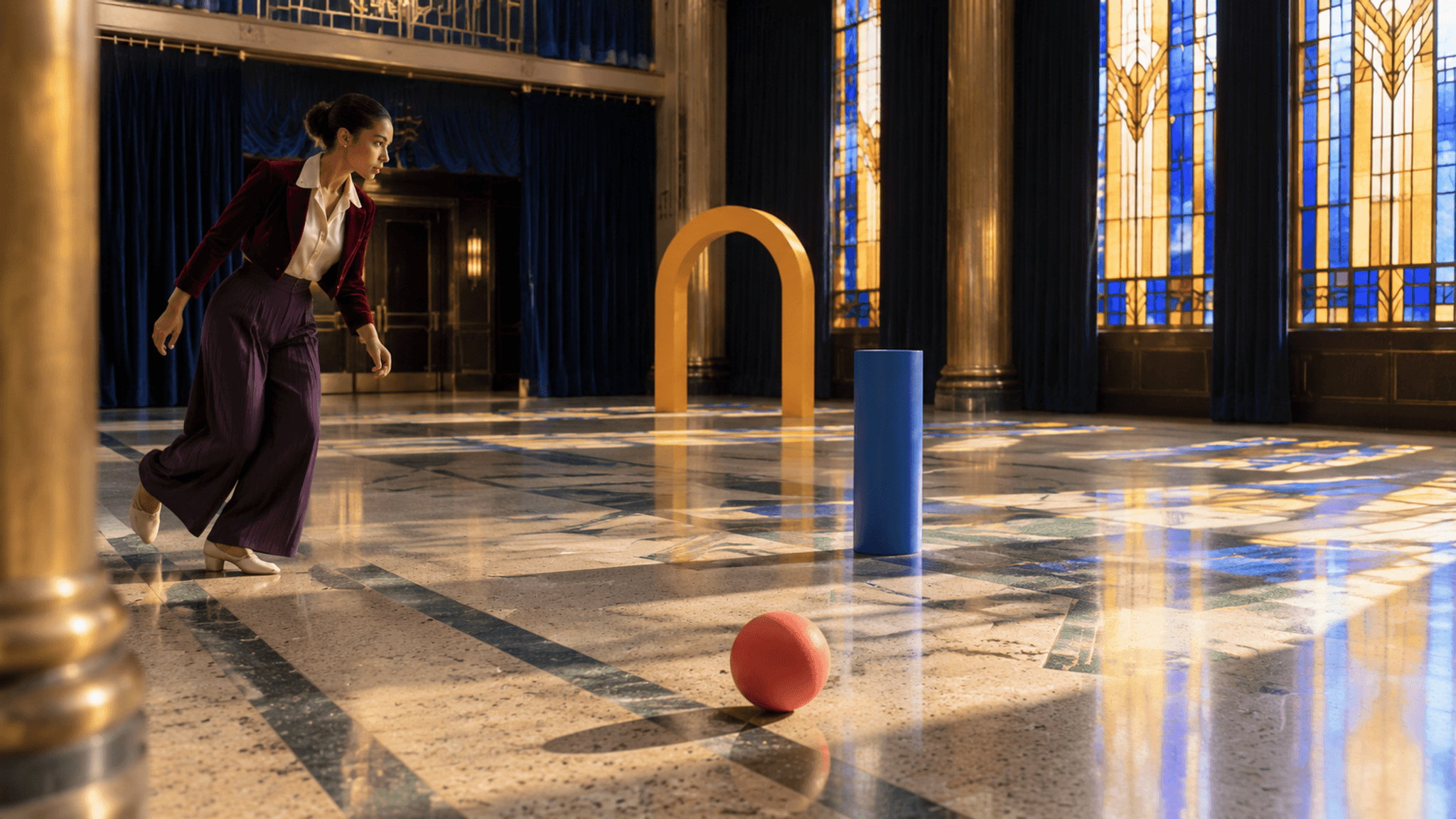
アールデコ調ホワイエのケースの参照フレーム:動きが始まる前のダンサー、ボール、シリンダー、アーチ。
Genie 4における「物理シミュレーション」の意味
従来の物理エンジンは、位置、速度、衝突ジオメトリ、材質特性などの明示的な量を、設定されたルールに従って更新する。一方、ワールドモデルはインタラクティブなシーンを生成し、ユーザーの操作や指示に応答する。その出力は因果関係を描くことがあるが、目に見える結果がその描写の背後にある数値やルールを自動的に明らかにするわけではない。
GoogleはGenie 4を、物体が衝突し、水が流れ、木々が揺れる環境を生成できるワールドモデルとして説明している。また、カメラの変更やオブジェクトの追加など、自然言語によるリアルタイムの変更についても説明している。そのため、このモデルはシーンを探索し、次に何が起こるかを問いかけるうえで興味深い。ただし、それ自体が、描写された各衝突を測定された物理結果にするわけではない(Google DeepMind, Genie 4)。
開発者にとって、この区別は実用的だ。インタラクティブな生成ワールドは、メカニクスの探索、ビジュアルの方向性の決定、後続イベントのプロンプトに利用できる。反発係数、摩擦、質量、衝突形状を調整するのに適しているのは、依然として従来のエンジンだ。それらはそこで明示的かつ検査可能な入力だからだ。システムがそれらの値と検証方法を公開しない限り、「リアルな物理」はベンチマークの主張ではなく視覚的な説明として扱うべきだ。
Genie 4の衝突テストを設計する方法
まず、視聴者が起こったかどうかを判断できるほど単純なイベントから始める。静止したブロックにボールが当たるほうが、賑やかなシーンで動く物体の山を評価するより簡単だ。カメラは固定し、両方のオブジェクトを見える状態にし、床はシンプルにする。各オブジェクトに特徴的な色と形状を与え、同一性の変化に気づきやすくする。
これが衝突とオブジェクト移動のためのGenie 4物理シミュレーションテストの核心だ。1つの単純なイベントと、実行間で比較できるその後を用意する。
GoogleのProject Genieのプロンプトガイダンスでは、環境とキャラクターまたはオブジェクトの動作を直接的な言葉で記述することが推奨されている。このガイダンスはProject Genie向けであり、公開されたGenie 4のプロンプト構文ではない。それでも、明確なテストブリーフの妥当な出発点にはなる。設定、オブジェクト、初期状態、イベント、検査したいポイントを指定する(Google, Project Genie prompt tips, March 2026)。
提案するテストプロンプトは次のとおり。
plaintext1In a plain studio with a flat floor, show one red ball rolling from left to right toward one stationary blue block. Keep both objects fully visible from a fixed side view. The ball contacts the center of the block. Continue the same view after contact so the ball and block remain visible. Keep their colors and shapes consistent. No extra objects or scene changes.
これはテスト仕様であり、Genie 4がこれらの正確なコントロールを受け入れる、または特定の結果を生成するという主張ではない。利用可能なセッションでテストする際は、文言、表示されるコントロール、画面録画を保存する。システムがライブ操作を提供する場合は、各指示と入力した時刻を記録する。こうした詳細は、モデルの挙動をプロンプト変更やカメラ移動と区別するのに役立つ。
各実行には衝突観察カードを使用する:
| 観察項目 | 記録内容 |
|---|---|
| 開始状態 | 表面、オブジェクトの位置、初期の動き、カメラアングル |
| 接触 | 接触が見えるか、衝突時にどちらかのオブジェクトが隠れていないか |
| 即時の反応 | 目に見える方向転換、跳ね返り、転がり、傾き、滑り、停止 |
| 連続性 | 色、形状、数、相対位置が認識可能なまま保たれているか |
| 再実行 | 同じプロンプトで何が似ていて何が変わったか |
一度に1つの条件だけ変更する。たとえば、まずブロックを静止させ、次にブロックがすでに動いている状態で別のテストを実行する。カメラ、表面、文言も変更した場合、それらを1つの変数を分離したかのように比較してはならない。各バリエーションに明確な理由がある場合、小さなテストセットのほうが情報量が多い。
衝突後のオブジェクトの動きを読み取る方法
接触前の瞬間、接触そのもの、その直後の数瞬を別々の観察として確認する。ボールが壁に目に見えて触れ、方向を変えることは、そのシーンが衝突応答を描いている証拠となる。ボールが壁をすり抜ける、色が変わる、消える、別の場所に再出現する場合は、連続性の問題が生じる。なぜそうなったかを説明する前に、画面に映っていることを記録する。
観察カードは意図的に定性的だ。「接触後、ボールは左に動いた」は目に見える描写だ。「ボールは運動量を保存した」は、レンダリングされたクリップだけでは提供できない量についての主張だ。その主張を裏付けるには、関連する状態の信頼できる測定、定義された単位と条件、イベントを再現・分析する方法が必要だ。見かけの圧縮、跳ね返り高さ、または遠近法での移動距離は誤解を招くことがある。
アクセスが許すなら、同じテストを数回繰り返す。実行間の一貫性は、プロンプトが同様のシーンを生成する傾向があるかどうかを教えてくれる。それでも、1回の実行が物理法則に従っていることを証明することはできない。反復された出力は、基盤となる計算を明かさずに視覚的パターンを共有する可能性がある。イベントの明瞭さ、オブジェクトの連続性、再現性については別々にメモする。これらは有用なプロトタイプ観察であり、1つに結合された「物理スコア」ではない。
エンジンとの公正な比較のために、シナリオの記述を一定に保ち、各システムが実際に何を公開するかを書き留める。エンジンは座標と速度を提供するかもしれない。生成ワールドはライブの視覚的インタラクションを提供するかもしれない。動画と数値シミュレーションを交換可能な証拠として扱うのではなく、答える必要のある問いに対して出力を比較する。
Genie 4が証明できることとできないこと
Genie 4は、インタラクティブなシーンを作成・操作する方法として探求できる。公式資料は生成された環境を示し、複雑なイベントを直接説明する一方で、一貫性とインタラクションに関する研究上の限界も挙げている。これらのデモンストレーションは製品の意図された能力を示すものであり、測定された衝突精度のベンチマークではない。公式ページは現在の状態と限界を説明している。アクセスや機能が作業にとって重要なら、再度確認する。
公式ページでは、複雑なイベントとオブジェクトの持続性が依然として研究課題であるとも述べている。これは衝突テストに直接関係する。きれいな衝突フレームの後でも、オブジェクトが形を変えたり、消えたり、以前の位置を失ったりする可能性がある。連続性を信頼できる挙動として扱う前に、その後を確認し、実行を繰り返す。製品デモは可能な結果を示すものであり、精度の主張を裏付けるには独立した測定が必要だ。
その境界は、有用な役割分担を示唆する:
- ゲームや映画の初期アイデア出し: 衝突がどのように見えるか、またはインタラクティブなシーンがどう展開するかを探る。
- メカニクスの実装: ゲームエンジンの衝突システムを使い、そのパラメータと状態を検査する。
- 科学またはエンジニアリング分析: 問いに適した検証済みシミュレータまたは測定セットアップを使う。
- ロボットの安全性または展開: 生成された視覚シーンだけを検証方法として頼らない。
ワールドモデルは、チームが有望なシナリオを発見したり、アイデアを伝えたりするのに役立つかもしれない。しかし、挙動を計算または検証しなければならないシステムを置き換えるものではない。チームメイトと共有する際は、生成物を視覚的プロトタイプとしてラベル付けし、例示的な結果を検証済みのシミュレーション結果と誤解しないようにする。
1つのビジュアルケース:アールデコ調ホワイエの衝突
ビジュアルリファレンスは、庭ではなく、空のアールデコ調劇場ホワイエで行われる。午後の遅い光が幾何学的なステンドグラスを通り、ヒスイ色とクリーム色のテラゾーに落ちる。インディゴのベルベットカーテンと真鍮の柱が、明確な床の通路を縁取る。クロップド丈のバーガンディのベルベットジャケット、アイボリーのシルクブラウス、ディーププラムのワイドレッグパンツ、クリームのレザーダンスシューズを身につけたダンサーが、コーラル色のゴムボールをコバルト色の木製シリンダーに向かって掃くように蹴り出す。シリンダーがサフラン色の木製アーチを押す。彼女の表情は、集中した期待から驚きへ、そして動く物体の周りを動くにつれて遊び心のある安堵へと変わる。提供された6本の10秒クリップは、その連鎖の異なる部分を示している。これらは生成されたビデオストーリーボードであり、Genie 4の出力や完了した物理テストではない。成功した動きと連続性の失敗の両方に注目する。
共有のオープニングフレームはSeedream v5.0 Pro Text-to-Image(bytedance/seedream-v5.0-pro/text-to-image)で作成する。再実行では、Seedance 2.5 Image-to-Video(bytedance/seedance-2.5/image-to-video、16:9の最初のフレーム)で10秒クリップを生成する。再実行では、前のクリップの明確な最終フレームを次の最初のフレームとして使用する。そのそばに、元のキャラクターとロケーションの参照を置いておく。この記事のために提供された6本のダウンロード済みMP4はGIFに変換され、以下に掲載されている。それらの埋め込みメタデータは生成モデルや元のプロンプトを特定していないため、ここに記載されたモデル名とプロンプトは再現可能な推奨であり、これらのファイルの検証済みの出所ではない。これらのクリップはインタラクティブなGenie 4の録画や測定されたシミュレーションではない。
Seedream v5.0 Pro用の共有最初のフレームプロンプト:
plaintext1Wide 16:9 cinematic photograph inside an empty 1930s Art Deco theater foyer, designed as a clear stage for a kinetic collision scene. Cream-and-jade terrazzo floor with long geometric inlay lines, two brass-clad columns, deep indigo velvet curtains, and tall amber-and-cobalt stained-glass windows. Late-afternoon sun enters from camera right, casting sharply defined colored window shapes across the floor. At frame left stands one young adult dancer with warm brown skin, expressive dark eyes, and hair in a secure sculpted bun. She wears a cropped burgundy velvet jacket over an ivory silk blouse, deep-plum pleated wide-leg trousers, and cream leather dance shoes. Her posture is coiled for movement, one heel lifted, gaze fixed on one matte coral-red rubber ball in the foreground. A single cobalt-painted wooden cylinder stands three meters ahead on the ball's path; a single lightweight saffron-painted wooden arch stands behind it. All three movable objects are fully visible and clearly separated. Low 35 mm camera, strong floor leading lines, one softly blurred brass column at the edge, tactile velvet, silk, wood, and terrazzo, controlled coral-cobalt-saffron accents against rich indigo and warm ivory. Elegant photographic realism, natural shadows and slight film grain. No garden, plants, crowd, stage performance, text, signage, logos, extra balls, extra dancers, floating objects, or UI.
別の生成パスでは、6本すべてのクリップで同じダンサー、衣装、オブジェクト数、床のジオメトリ、建築、太陽光の方向、カラーグレーディングを維持する。各10秒セグメントには、目に見えるアクションと変化するカメラ方向が必要だ。提供されたクリップはそのまま表示されている。接触や遷移が不明瞭な場合は、キャプションでその旨を述べている。
ショット1:最初のタッチ
確認するポイント: 開始位置、足とボールの接触、ボールの初期方向。
plaintext1Use the supplied Art Deco foyer still as the exact first frame. Ten seconds of continuous, expressive movement. From 0-3 seconds, track laterally at knee height as the dancer glides diagonally along the jade-and-cream terrazzo toward the single coral ball. Her gaze stays on the ball; her expression shifts from focused anticipation to a quick playful smile, while her burgundy velvet jacket and deep-plum pleated trousers move with natural inertia. From 3-6 seconds, she makes a precise side step, rotates her shoulders and hips, and sweeps one cream dance shoe into clear contact with the ball exactly once. The ball begins rolling toward the stationary cobalt cylinder. Pan smoothly from her foot to the rolling ball without hiding the touch. From 6-10 seconds, follow the ball in a low three-quarter view while the dancer completes a controlled turn, catches her balance, and raises her eyebrows as she watches its path. Keep the ball, cylinder, and saffron arch distinct and spatially stable. Amber-and-cobalt stained-glass light, indigo curtains, brass columns, crisp shadows, natural 35 mm motion, rich but controlled color. No dialogue, text, crowd, plants, extra props, duplicated limbs, teleportation, or zoom-only motion. Wide 16:9.
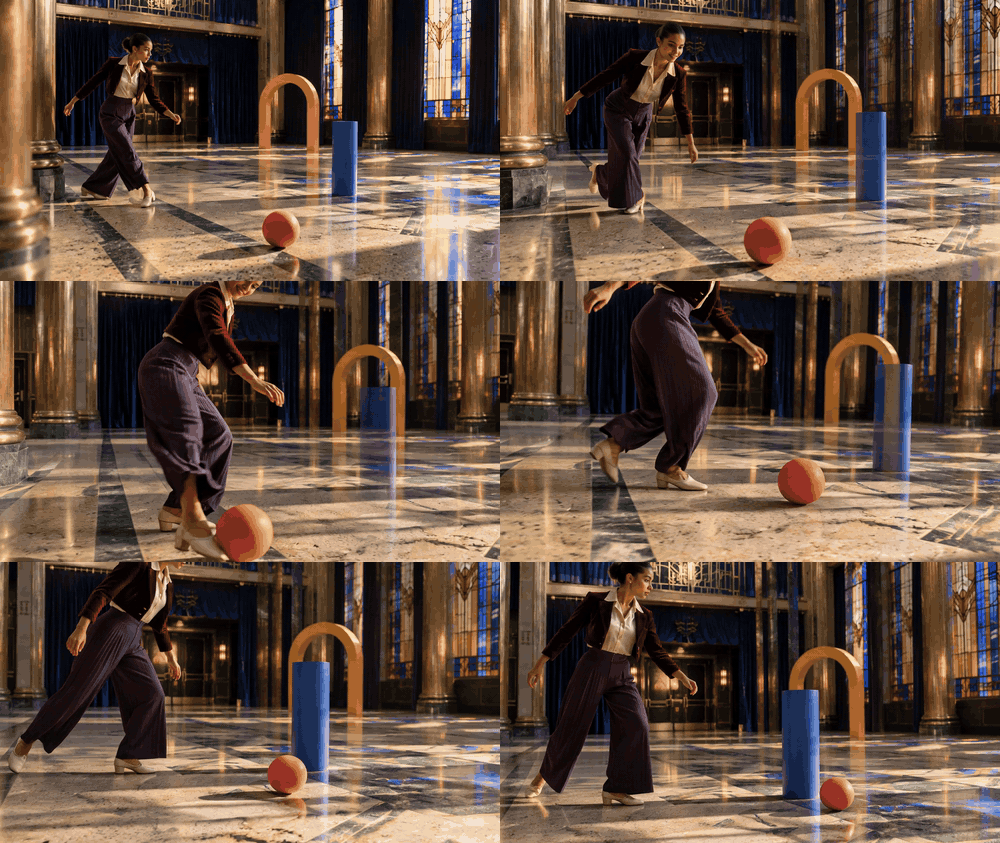
ダンサーが近づき、ボールを動かし始めるように見える。足とボールの接触は短いため、このクリップは制御された力積の証明ではなく視覚的参照である。
ショット2:主要な衝突
確認するポイント: ボールとシリンダーの接触、ボールの方向変化、シリンダーの最初の反応。
plaintext1Begin from the chosen final frame of shot one in the identical empty Art Deco theater foyer. Preserve the dancer's warm brown skin, sculpted bun, burgundy velvet jacket, ivory blouse, deep-plum trousers, cream dance shoes, and the exact coral ball, cobalt cylinder, and saffron arch. Ten seconds. From 0-3 seconds, a low front three-quarter tracking view follows the ball across the terrazzo inlay lines toward the still cylinder; show a clean gap until contact. From 3-5 seconds, the camera arcs to a clear side angle while staying wide enough to show both complete objects. The coral ball strikes the cylinder once at its lower half. The ball deflects diagonally left; the cylinder tips and begins rotating right. Make the contact point visible and do not let either object pass through the other. From 5-10 seconds, track laterally to hold both resulting motions in one frame. In the background, the dancer reacts with widened eyes and an open-mouthed smile, then pivots sharply around the cylinder's path. Stained-glass sunlight moves across real terrazzo texture, brass surfaces remain fixed, indigo curtains stay in place. Smooth cinematic 35 mm motion, believable gravity, no hidden impact, dialogue, text, crowd, plants, duplicate objects, or slow push-in. Wide 16:9.
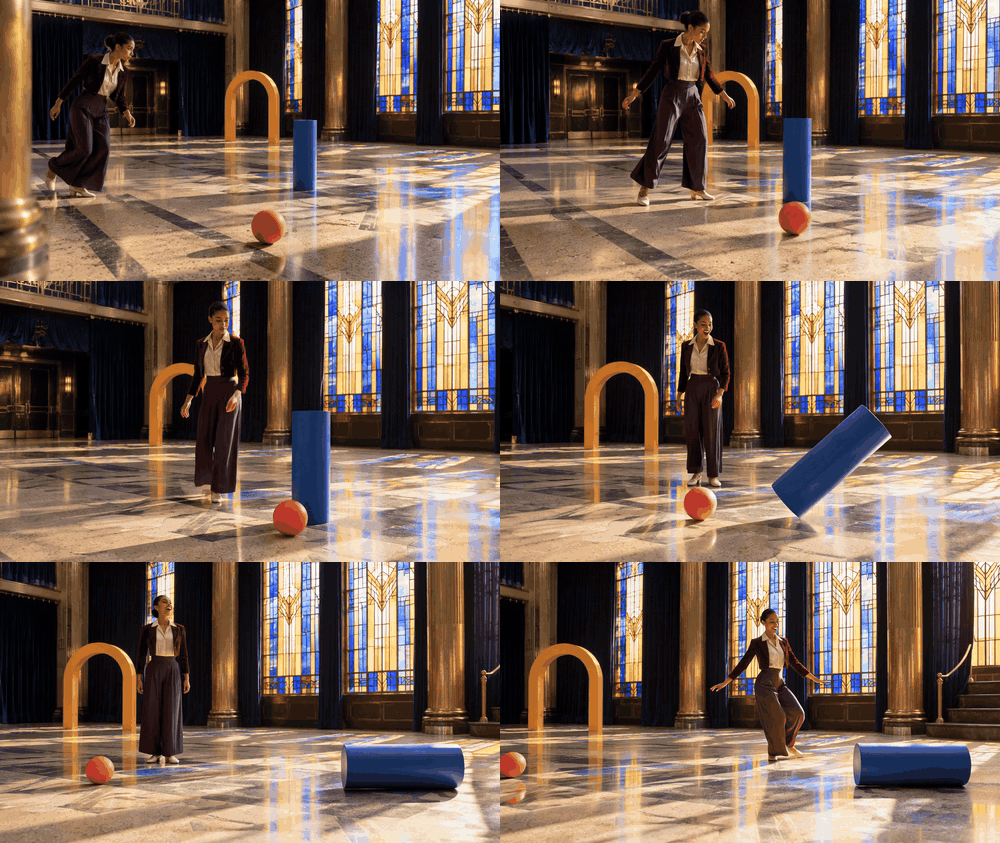
ボールが届くとシリンダーが傾く。測定された衝突応答を主張する前に、接触フレームを確認する。
ショット3:シリンダーのフォロースルー
確認するポイント: 青いシリンダーが最初の衝突後も同じ形状を保ち、一貫して動くかどうか。この追加提供クリップは、元の5ショットプロンプト計画には含まれていなかった。正確な元の生成プロンプトは入手できないため、以下は再実行のための提案プロンプトである。
plaintext1Continue from the final frame of the ball-to-cylinder impact in the same empty Art Deco theater foyer. Ten seconds. Keep one coral rubber ball, one cobalt-painted wooden cylinder, one saffron wooden arch, and the same dancer in a burgundy velvet jacket, ivory blouse, deep-plum wide-leg trousers, and cream dance shoes. From 0-3 seconds, track low beside the ball as it rolls away from the cylinder on the cream-and-jade terrazzo. From 3-7 seconds, shift to a clear three-quarter side angle as the cylinder tips, rocks on its edge, and gradually falls to the floor, keeping its blue color, size, and solid shape. From 7-10 seconds, widen the view to show the ball, fallen cylinder, arch, and dancer together; she crosses the background in two quick dance steps, then turns her head toward the moving cylinder with a surprised expression. Preserve the stained-glass light pattern, brass columns, indigo curtains, gravity, and object count. Smooth camera movement, no hidden collision, extra objects, text, plants, teleportation, or zoom-only motion. Wide 16:9.
ボールが視界にとどまる間、シリンダーが傾いて落ち着く。2つのセグメントを連続した映像として扱う前に、その開始位置をクリップ02と比較する。
ショット4:二次衝突
確認するポイント: シリンダーからアーチへの動きの伝達、すべてのオブジェクトが同一性を保っているか。
plaintext1Use the selected final frame of shot two as the first frame in the same Art Deco foyer. Maintain the exact burgundy-and-plum outfit, dancer's face and bun, coral ball, cobalt cylinder, saffron arch, terrazzo pattern, brass columns, indigo curtains, and light direction. Ten seconds. The cylinder is already rotating toward the stationary arch. From 0-3 seconds, track at waist height beside the cylinder while the dancer crosses behind it in a quick, elegant chasse step; her expression tightens from delight to alert concentration. From 3-6 seconds, drop to a low three-quarter angle and show the cobalt cylinder making one clear contact with the arch's lower left side. The light wooden arch rocks back, while the cylinder rolls a short additional distance; neither changes shape or color. From 6-10 seconds, orbit gently to keep both objects and their slowing motion visible as the dancer makes a small airborne turn, lands softly beyond them, and steadies herself with one extended hand. The pleated trousers and velvet jacket settle naturally. Colored stained-glass light cuts across cream-and-jade terrazzo, warm brass glints remain restrained, realistic 35 mm film texture. No shattering, magical sparks, speech, captions, crowd, plants, teleports, duplicate objects, or zoom-only motion. Wide 16:9.
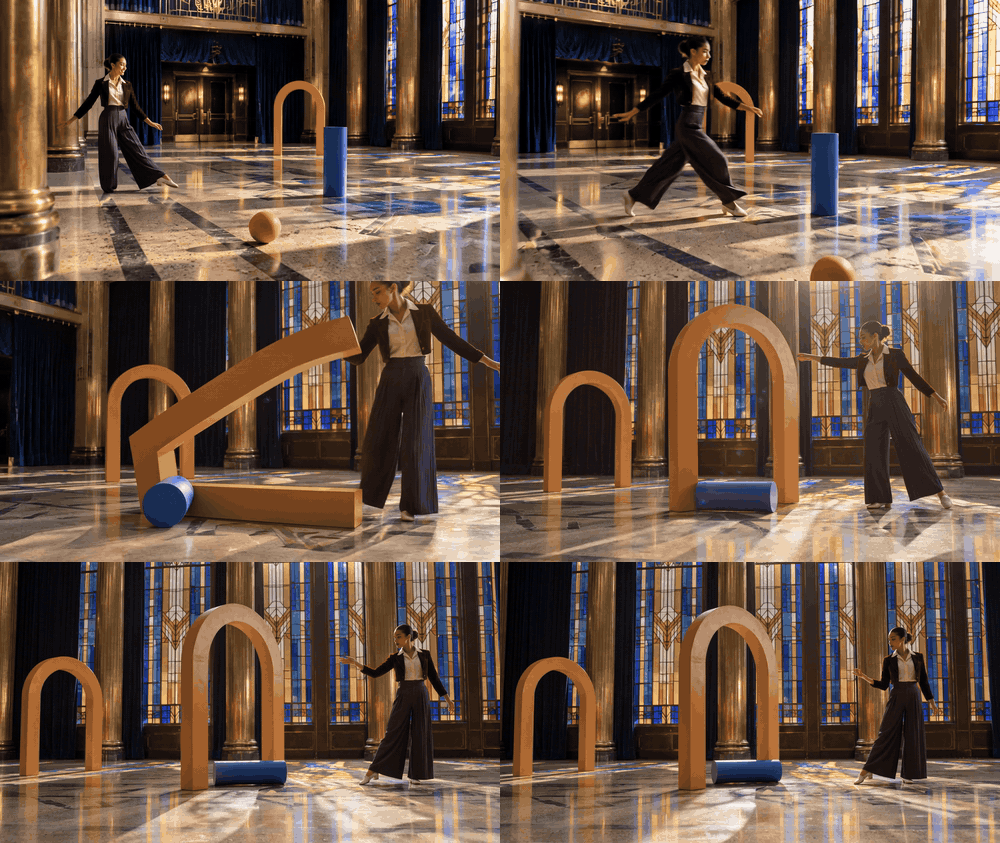
アーチはシリンダーの近くで傾くが、正確な接触点は不明瞭だ。これは意図された二次衝突のストーリーボードであり、描写された伝達が物理的に正しいことの証明ではない。
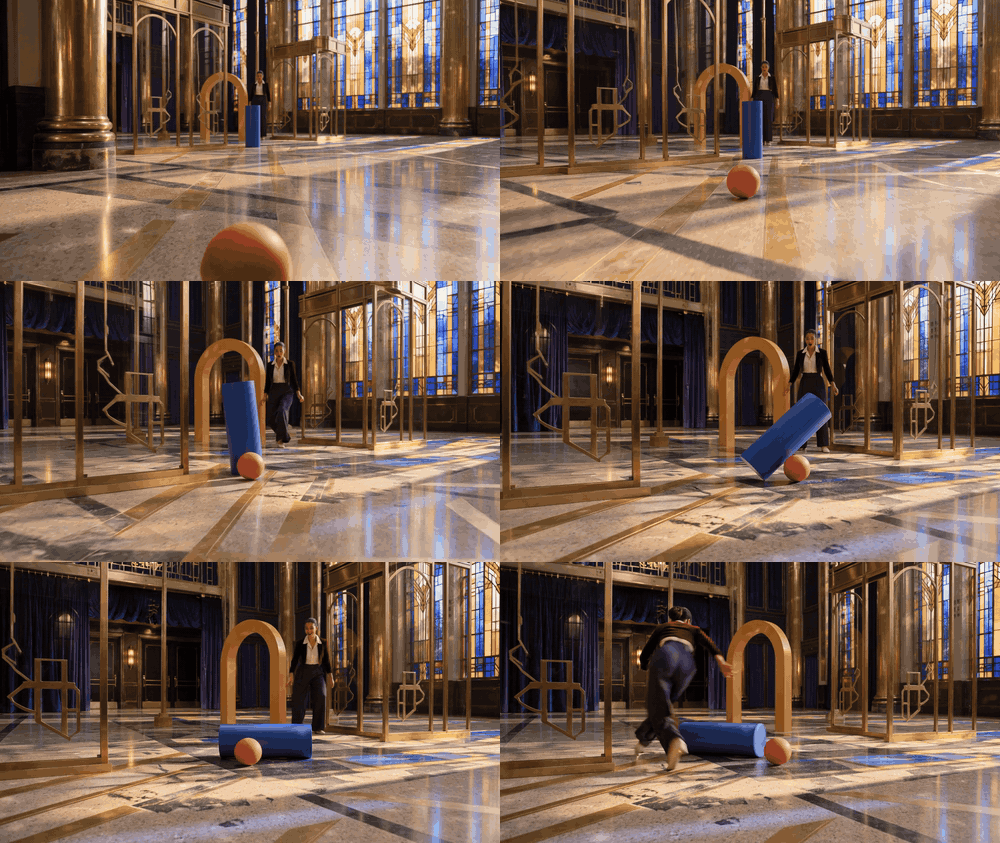
ショット5:遮蔽と復帰
確認するポイント: 固定された柱の後ろを通過した後、同じボールが再出現するかどうか。
plaintext1Continue from the preceding shot's final frame in the same empty Art Deco foyer. The single coral ball is still rolling slowly; the cobalt cylinder has shifted, and the saffron arch is rocking toward rest. Ten seconds. From 0-3 seconds, follow the dancer from slightly behind as she takes two fast, fluid dance steps across the geometric terrazzo and spots the ball. Her brows draw together in concentration, then one corner of her mouth lifts. From 3-6 seconds, slide the camera behind a fixed brass-clad column so the ball becomes briefly hidden by the column itself. Keep the column, floor pattern, and dancer spatially consistent while the ball continues its established direction. From 6-10 seconds, emerge at a low three-quarter angle as the same single coral ball rolls out from the far side with unchanged size, color, and direction. The dancer turns her shoulders, reaches toward it, stops short, and lets it pass, breaking into a delighted grin. Keep the cylinder and arch in plausible background positions. Amber-and-cobalt stained-glass light, indigo velvet curtains, tactile silk and terrazzo, smooth 35 mm camera movement. No speech, titles, crowd, plants, duplicate ball, object morphing, location jump, or empty slow zoom. Wide 16:9.
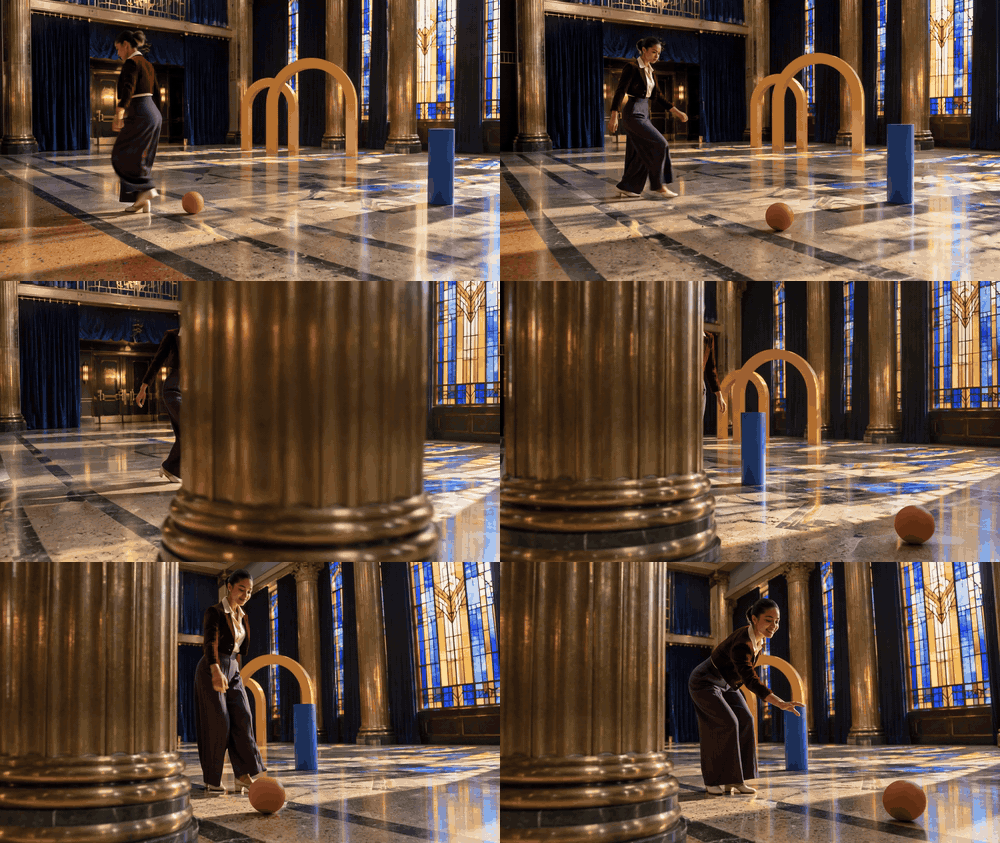
ボールは固定された柱によって一時的に隠れる。遮蔽の前後で色、サイズ、方向を比較する。
ショット6:その後
確認するポイント: 最終的な相対位置、落ち着く動き、シーン全体の連続性。
plaintext1Use the final frame of shot four as the first frame, preserving the dancer's burgundy cropped velvet jacket, ivory silk blouse, deep-plum wide-leg trousers, cream dance shoes, the same coral ball, cobalt cylinder, saffron arch, brass columns, indigo curtains, stained-glass windows, and terrazzo floor. Ten seconds. From 0-3 seconds, begin low beside the coral ball as it decelerates along the floor inlay lines; the saffron arch completes a small believable rocking motion farther back. From 3-6 seconds, crane smoothly into a wide three-quarter view that reveals all three objects at once in their changed positions. Do not reset them to their starting places. The dancer travels around the settled cylinder with two flowing steps and a full controlled spin, her pleated trousers describing a clear arc. From 6-10 seconds, arc the camera to face her as she catches her balance, checks the ball and arch, exhales, then smiles with visible relief and playful pride. Hold the final composition long enough to read every object's position. Warm directional window light and colored glass shapes, cream-and-jade terrazzo, rich indigo and burgundy, restrained film grain, physically plausible settling. No speech, captions, crowd, plants, duplicate props, sudden camera teleport, or push-in-only movement. Wide 16:9.
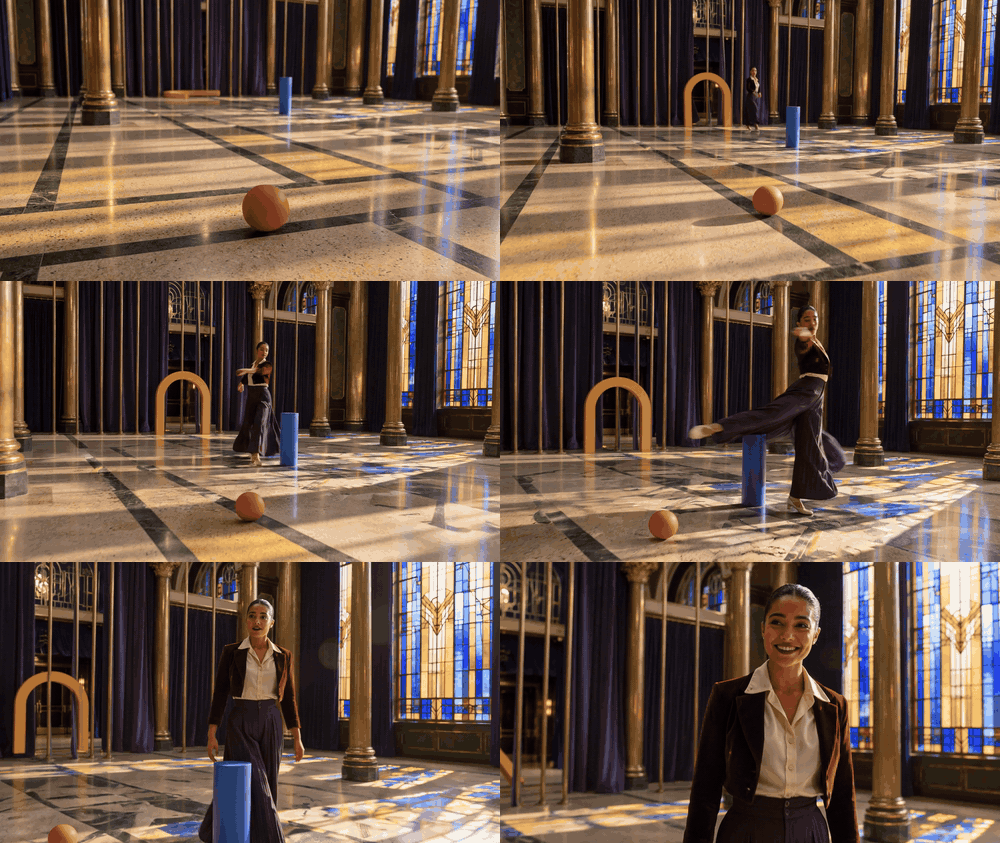
ワイドな結末はダンサーのスピンと最終シーンを示している。アーチの位置をクリップ04と比較する。見かけ上のリセットは連続性の失敗となる。
提供された6つの結果を1つのケースとして確認する。足の接触が見えない、ショット間で偏向が変わる、オブジェクトが複製される、最終位置が跳ぶ場合は、失敗を率直に記録する。ストーリーボードはアイデアを伝えられるが、数値的な物理を検証することはできない。実際のGenie 4セッションでは、上記のよりシンプルな固定カメラプロトコルを使用し、実際のインタラクションを保存し、その目に見えるその後を同じ観察カードで比較する。
アクセスと次のステップ
Googleの発表では、Genie 4は信頼できるテスターから始まる研究プレビューであり、Project Genieと選ばれたパートナーに関連するより広範な提供計画があると説明されている。これは変化する展開であるため、すべての読者が今日試せると思い込まず、アクセスについては現在の公式Genieページを参照する。Project Genieの以前の公開プロンプトのアドバイスは有用な文脈だが、Genie 4へのアクセスや同一のコントロールを保証するものではない。
Genie 4にアクセスできる場合は、固定カメラの衝突を1つから始め、プロンプトと録画を保存する。結論を出す前に観察カードに記入する。アクセスできない場合でも、今すぐプロトコルを準備するか、テキストから動画へのモデルで明確にラベル付けされたビデオ参照を作成できる。衝突とオブジェクト移動のためのGenie 4物理シミュレーションにおいて、中心的な問いは、1つの衝突が説得力があるように見えるかどうかではない。接触後もシーンが解釈可能かどうか、そしてその証拠が必要な意思決定に十分な強さがあるかどうかだ。
よくある質問
Genie 4は物理エンジンか?
GoogleはGenie 4を、シミュレーション環境を生成し操作するためのワールドモデルとして説明している。従来の物理エンジンは、シーンの設定されたプロパティと計算された状態を公開する。生成ワールドが同じデータを公開したり、検証済みの数値シミュレーションを提供すると仮定してはならない。
Genie 4はボールの跳ね返りや2つのオブジェクトの衝突を表示できるか?
公式のGenie資料は、オブジェクトの衝突がある環境を説明している。特定のプロンプトやセッションは異なる可能性があるため、実際の実行を評価し、接触と衝突後の動きが見えるままかを記録する。製品デモは、要求されたすべての衝突を保証するものではない。
Genie 4はゲームやエンジニアリングの物理に十分な精度があるか?
生成されたシーンは視覚的探索を支援できるが、レンダリングされた結果だけでは数値的な正確性を証明しない。実装、エンジニアリング分析、安全判断には、ゲームエンジンまたは適切な検証済みシミュレータを使用する。
AIビデオジェネレータはオブジェクトの動きをテストできるか?
提案された動きの視覚的参照を作成するのに役立つ。生成されたクリップは物理エンジンと同じインタラクションや測定可能な状態を提供せず、実際にGenie 4から来たものでない限り、Genie 4の出力として提示すべきではない。


