Seed 3D API: 92.8% Win over Tripo 3.0
The Seed 3D API delivers ByteDance's Seed3D V2.0, a second-generation foundation model that turns a single image into a fully textured 3D asset with unified PBR maps for albedo, normal, metallic, and roughness produced in one pass. Its coarse-to-fine Diffusion Transformer won 92.8% of blind comparisons against Tripo 3.0. Atlas Cloud serves it on one OpenAI-compatible endpoint at $0.353 per generation with pay-as-you-go pricing and Day-0 access. Start building today.
Seed 3D is developed by ByteDance. Atlas Cloud (operated by Atlas Cloud AI LLC) provides access to it and does not own it. All trademarks belong to their respective owners.
Explore the Leading Seed 3D
Atlas Cloud provides you with the latest industry-leading creative models.


Inside the Seed 3D API: One Image In, a Textured 3D Asset Out
A per-endpoint look at what the Seed 3D API takes as input and the production-ready assets it hands back.
| Modality | Description |
|---|---|
| Seed 3D API (Image to 3D) | Feed a single reference image and the Seed 3D API returns a fully textured, PBR-shaded 3D model packaged as a downloadable .zip archive in your choice of GLB, OBJ, USD, or USDZ. Mesh density is tunable across low, medium, and high subdivision levels, ranging from 100K up to one million polygons, so detail and file size can be matched to the target pipeline. This makes it a fit for game asset prototyping, e-commerce AR previews, and design visualization at $0.353 per generation with pay-as-you-go pricing. |
Inside the Seed 3D API: From One Photo to Textured 3D
From a single image, the Seed 3D API produces fully textured assets with one-pass PBR materials, selectable mesh density up to one million faces, and GLB, OBJ, USD, or USDZ output delivered in a single archive.

One-Pass PBR from the Seed 3D API
Seed3D V2.0 generates a complete PBR material set, albedo, normal, metallic, and roughness, in a single unified pass rather than decomposing them from an RGB layer afterward. Because every channel comes from one model, surfaces stay physically consistent under any lighting, so metal reads as metal and rough stone reads as stone. This gives you render-ready assets that drop straight into engine-based lighting without manual material rebuilds.

Pick Your Polygon Budget
Need a lightweight prop or a hero asset? The Seed 3D API exposes three subdivision levels, low at 100K faces, medium at 500K, and high at 1M faces, so you set polygon density per request. Lower counts keep real-time scenes fast, while the high tier preserves fine sculptural detail for close-up renders. One parameter matches geometry weight to each pipeline without re-exporting from another tool.
Four Formats, One Zip
Export to GLB, OBJ, USD, or USDZ and receive everything inside a single downloadable .zip archive. GLB and OBJ import cleanly into Unity, Unreal Engine, Blender, and Three.js, while USDZ targets Apple AR Quick Look on iOS and iPadOS. Selecting the right container per platform means one generation serves game engines, web viewers, and mobile AR with no external conversion step.

Geometry Verified Against Tripo 3.0
A coarse-to-fine two-stage Diffusion Transformer drives the geometry, resolving the soft edges and topological distortion common to single-stage models. In blind evaluations by 60 professional 3D modelers, Seed3D V2.0 reached a 92.8% win rate over Tripo 3.0 on geometry quality. Clean topology and crisp bevels mean less manual retopology before your assets enter a production render or a real-time scene.
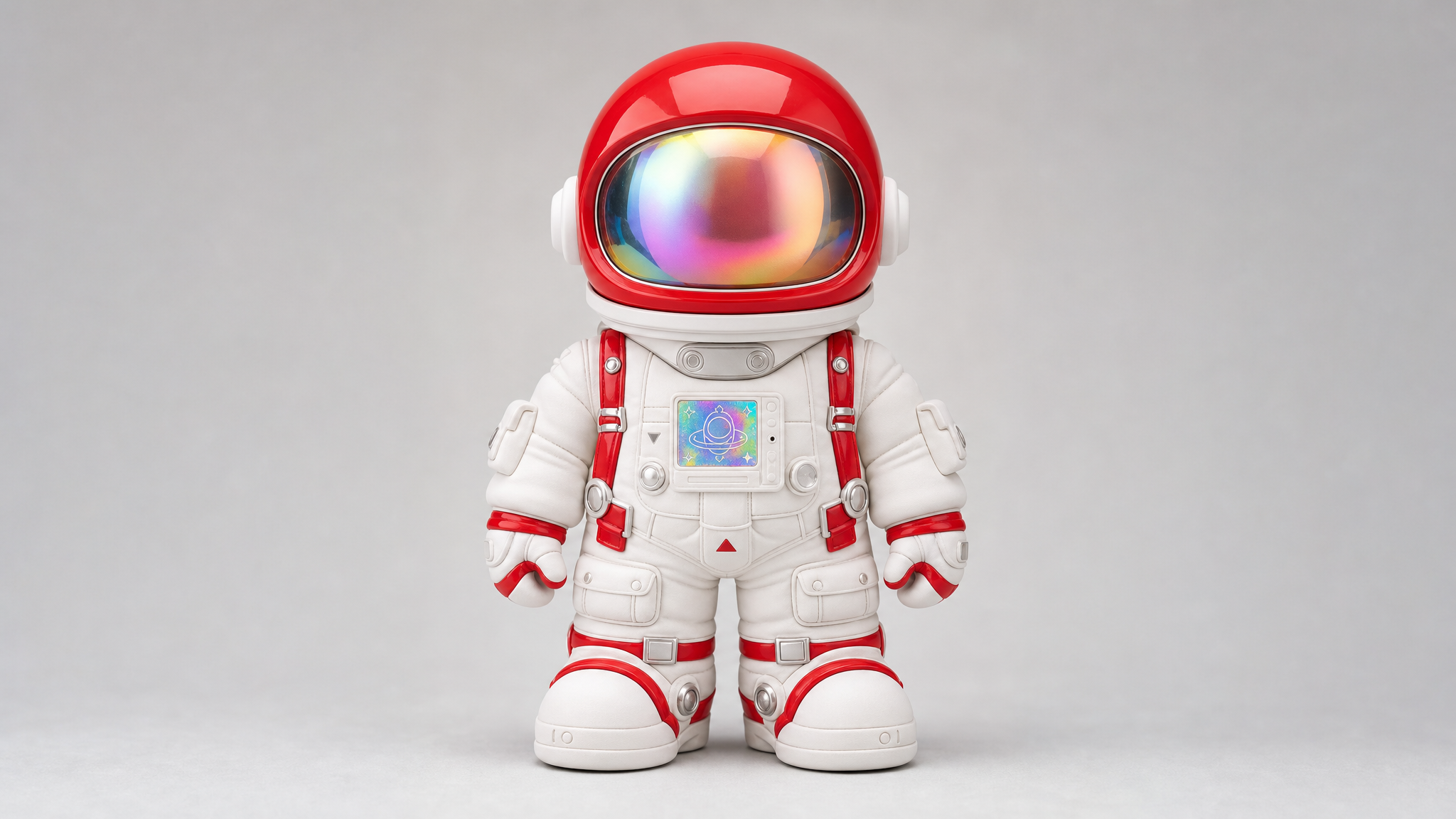
Ship the Seed 3D API in One Key
Call the Seed 3D API through one OpenAI-compatible endpoint with transparent pay-as-you-go pricing at $0.353 per generation and no subscription. Feed any image up to 4096 by 4096 pixels and 10 MB, then take results as a hosted URL or an inline base64 string when you prefer to skip file handling. Day-0 access on Atlas Cloud keeps integration to a single request. Start building today.
One Prompt, Three Renders: The Seed 3D API Compared
Watch a single reference prompt travel through the Seed 3D API alongside rival image-to-3D engines, revealing how each one rebuilds the very same object into a textured, PBR-ready mesh.
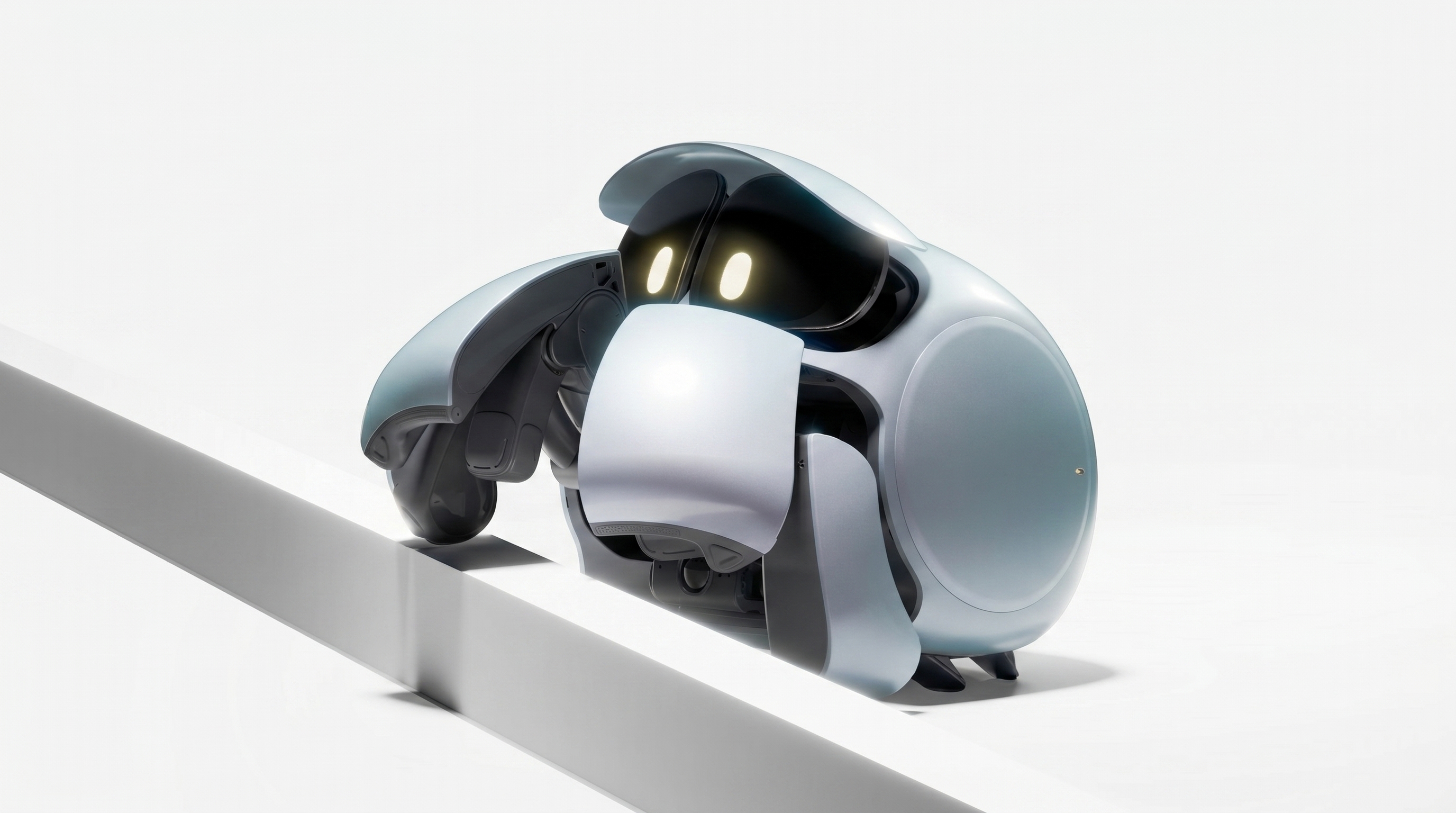
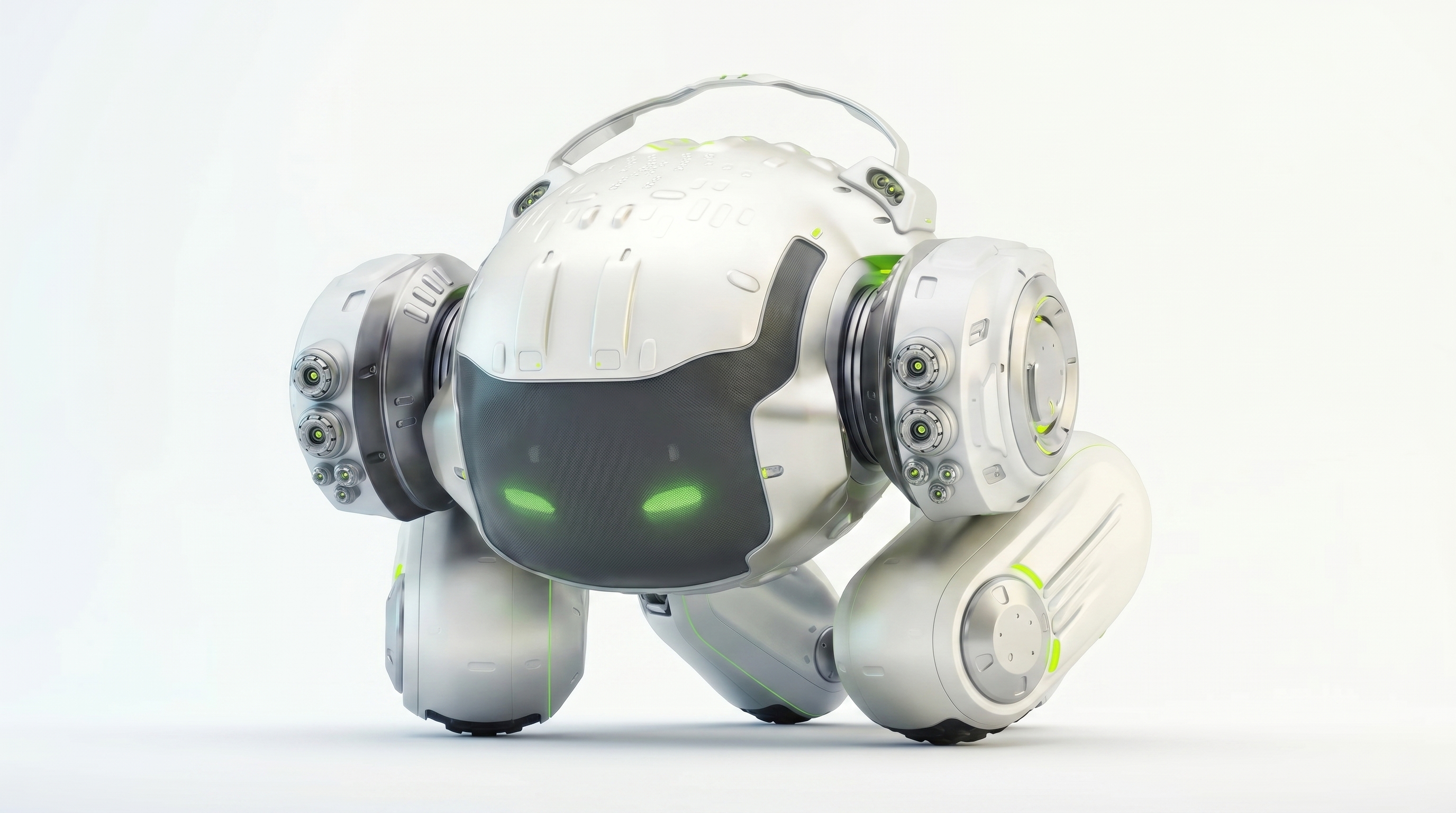
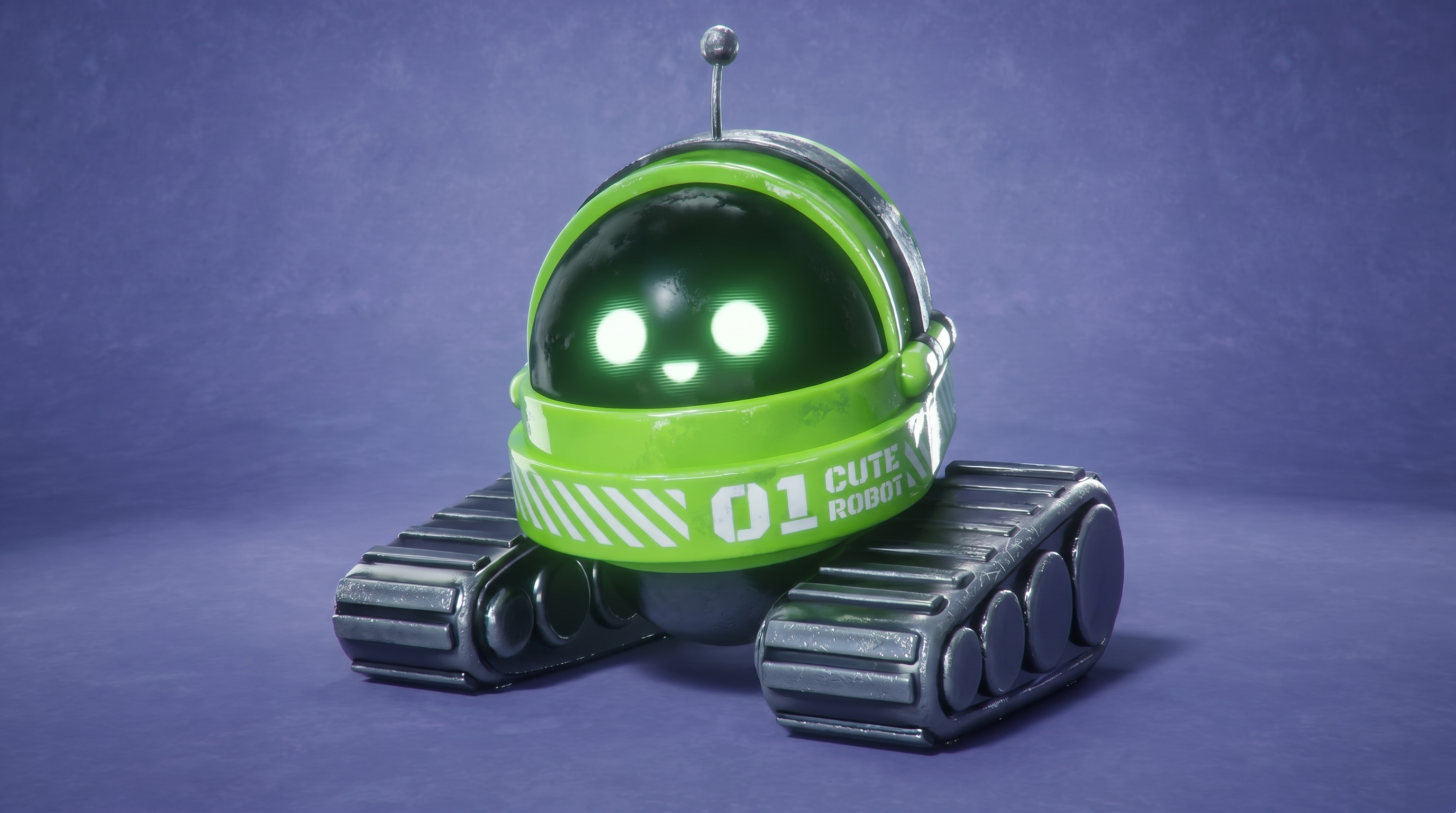
A 1930s Bonneville land-speed streamliner racer, single teardrop-shaped one-seater body in mirror-polished aircraft aluminum with a soft silver-grey sheen, its tail fin and pointed nose cone lacquered in saturated racing orange-red; rings of hand-set rivets trace the seams beside an exposed mesh intake grille, and the front cowl is hinged open to reveal a radial engine's cooling fins, coiled copper oil lines and leather strap bindings; four slender wire-spoke wheels wear white-wall narrow tires, and a curved plexiglass bubble canopy tops the cockpit. Three-quarter view, gentle directional studio light rakes across the curved metal so specular highlights, rivet shadows and glossy paint separate cleanly. single object, centered, full view, clean soft neutral studio background, photorealistic product photography
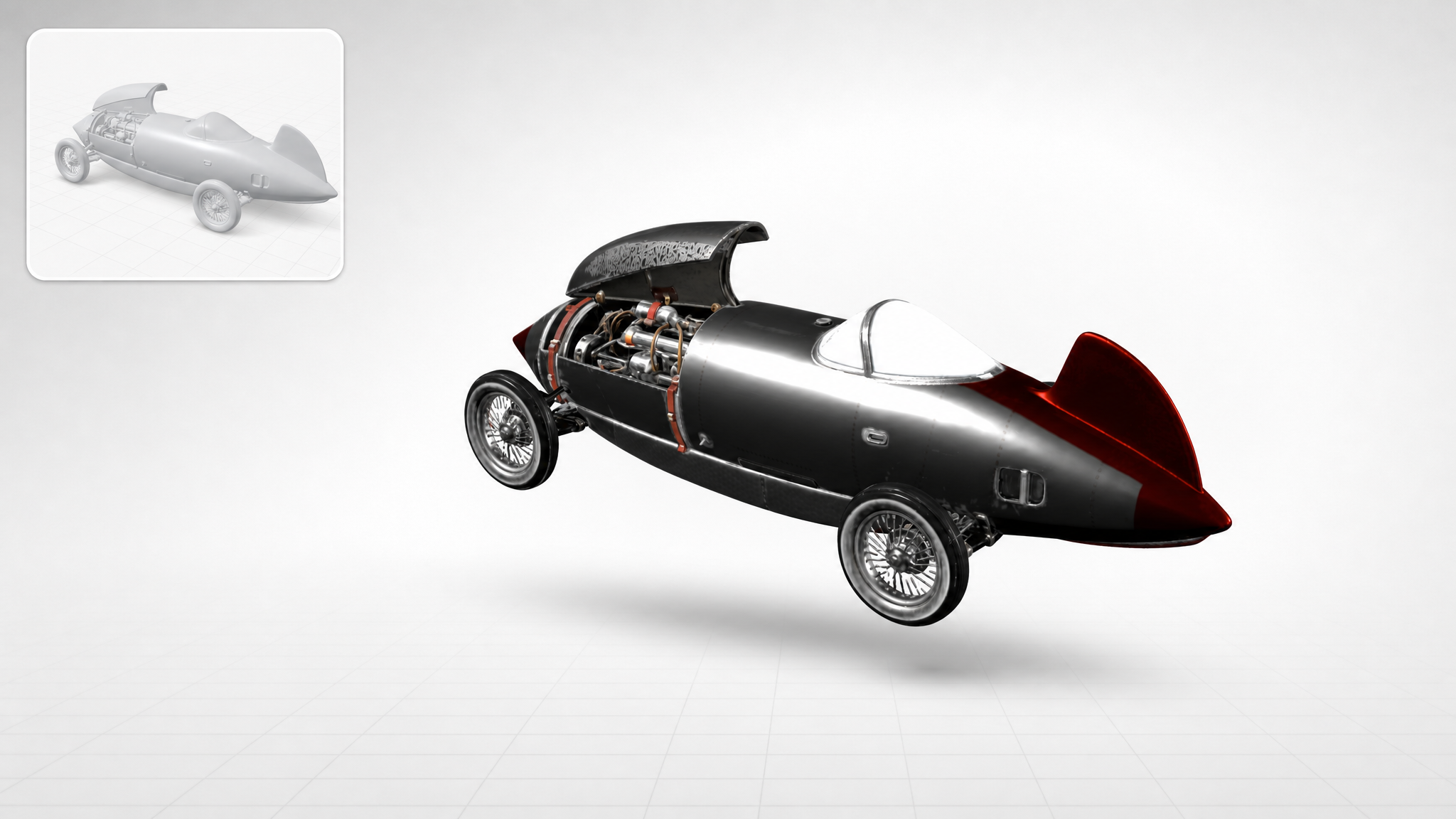
Generated with Seed3D 2.0 Image-to-3D on Atlas Cloud
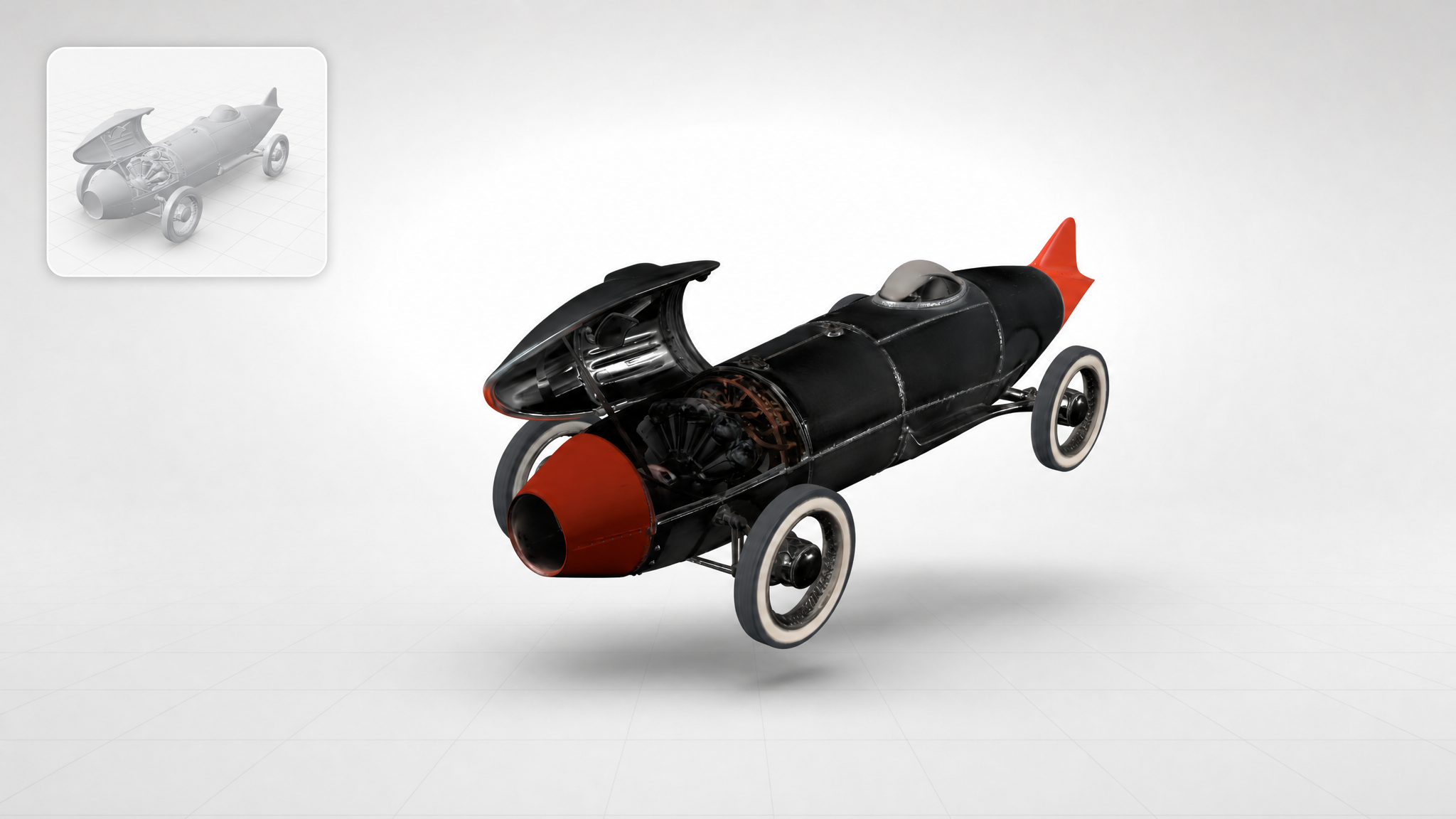
Generated with Hunyuan 3D Pro Image-to-3D on Atlas Cloud
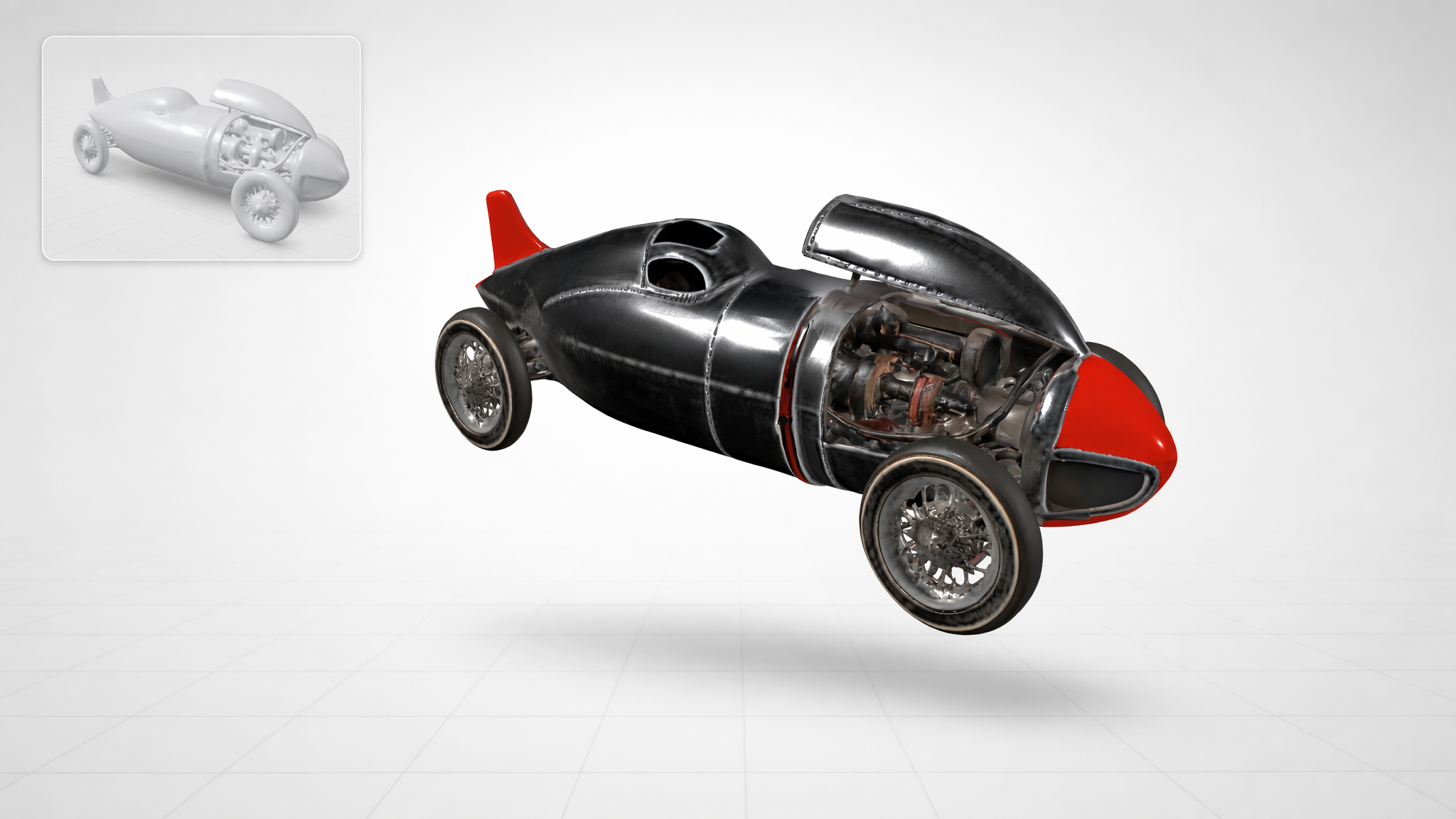
Generated with Hunyuan 3D Rapid Image-to-3D on Atlas Cloud
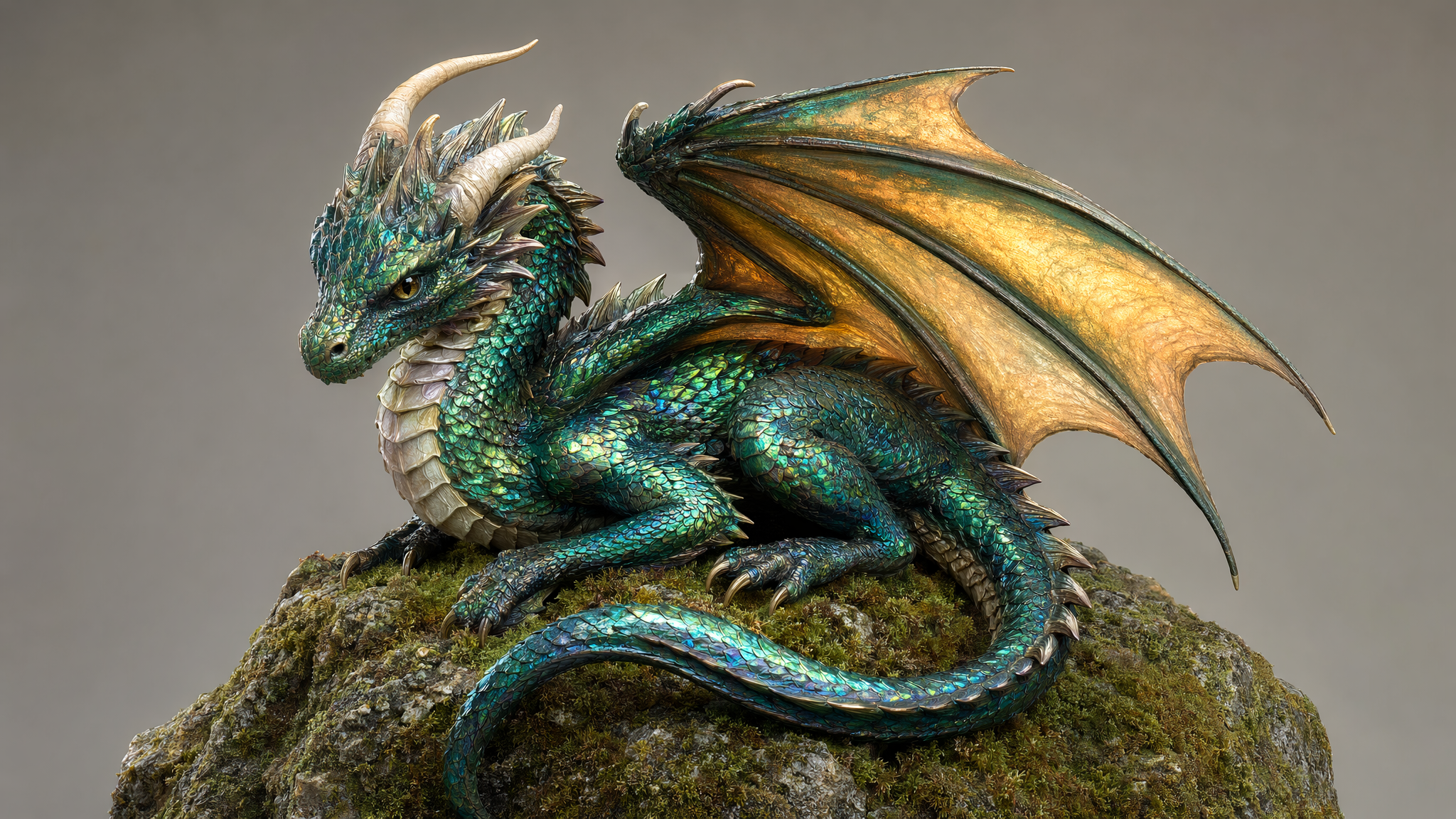
A small sleeping baby dragon curled into a gentle spiral, its body sheathed in overlapping iridescent teal and violet scales that shift hue as the light moves. Delicate translucent membrane wings fold softly over its back, thin bone ridges visible beneath a warm amber glow that passes through the skin. Two ivory horns sweep back from its head, and a line of tiny spines runs down the coiled tail. Soft directional studio light catches the smooth belly plates and the subtle sheen on every individual scale. single object, centered, full view, clean soft neutral studio background, photorealistic product photography
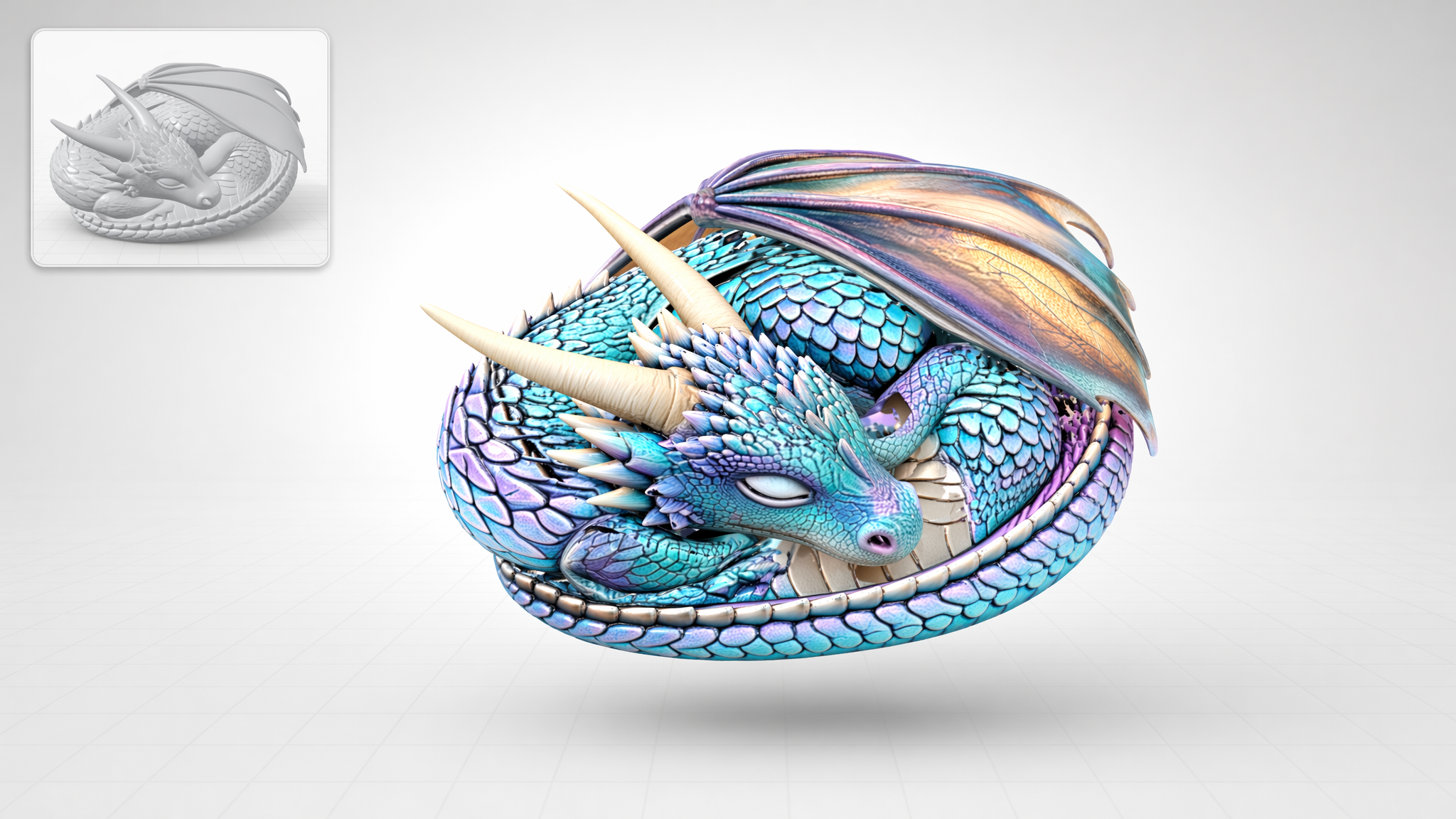
Generated with Seed3D 2.0 Image-to-3D on Atlas Cloud
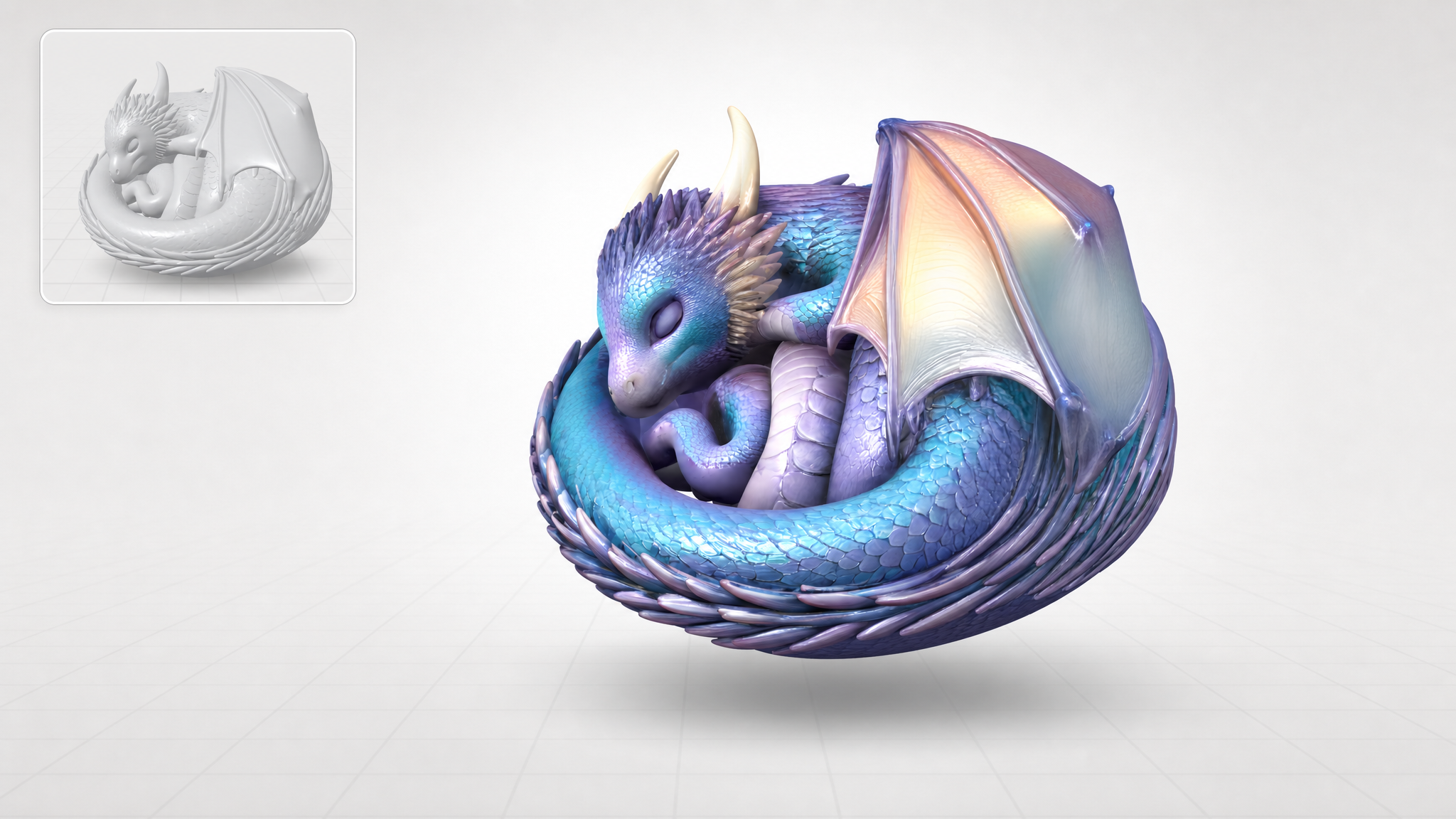
Generated with Hunyuan 3D Pro Image-to-3D on Atlas Cloud
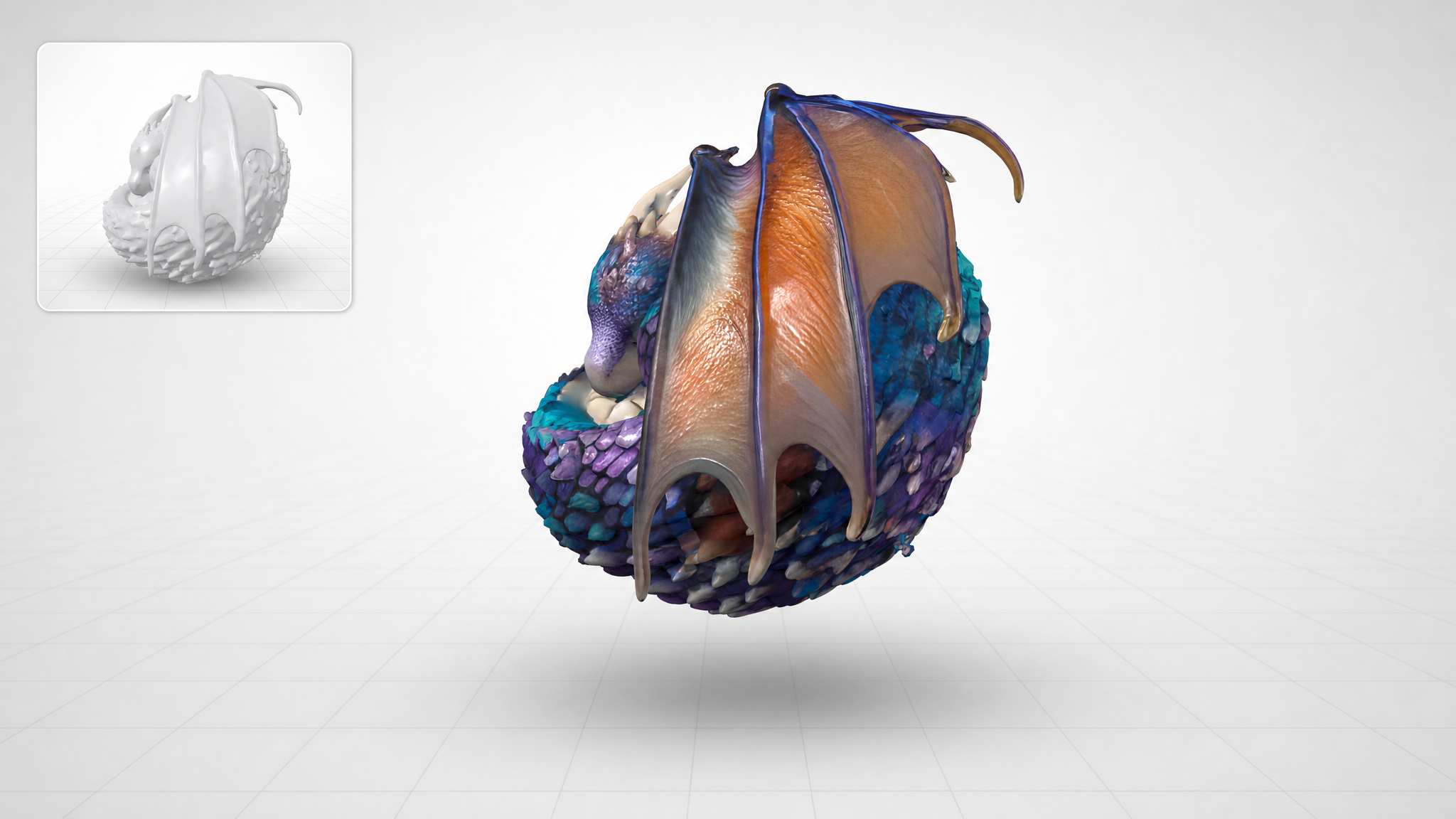
Generated with Hunyuan 3D Rapid Image-to-3D on Atlas Cloud
Real Workflows Powered by the Seed 3D API
From storefront AR and game-ready assets to architectural concepts, digital twins, and cross-platform XR, the Seed 3D API turns a single photo into textured, production-ready 3D across every stage of your pipeline.

AR Commerce and Product Previews
Turn a clean product photo into a USDZ asset that loads directly into Apple AR Quick Look. Online stores gain interactive previews so buyers can view items at home, with no photo studio required.

Game-Ready Assets with the Seed 3D API
The Seed 3D API exports GLB models with albedo, normal, metallic, and roughness maps ready for real-time rendering. Studios drop props, characters, and environment pieces into Unity or Unreal in minutes instead of days.

Polygon Budgets and Level-of-Detail Control
When a scene needs several detail tiers, subdivision presets cap each mesh at 1M, 500K, or 100K polygon faces. Teams tune geometry to mobile, web, or cinematic targets without ever remodeling an asset.

Architecture and Interior Concept Modeling
Seed3D V2.0 converts a rendering or reference photo into a textured concept model with physically accurate PBR surfaces. Designers walk clients through interiors, facades, and product forms long before any prototype is built.

Digital Twins and Industrial Prototyping via the Seed 3D API
Reference images of parts and assemblies become USD or OBJ files that slot into standard DCC pipelines. Manufacturers and design teams build digital twins for visualization and inspection without commissioning manual CAD work.

XR and Web 3D Delivery with the Seed 3D API
Export GLB for browser-based 3D viewers and USDZ for iOS augmented reality from a single generation. Metaverse builders and interactive marketers ship assets across web and mobile without maintaining separate export toolchains.
Seed 3D API Compared: Image-to-3D Model Options on Atlas Cloud
Weigh the Seed 3D API against other 3D generation models reachable through one Atlas Cloud endpoint, from accepted inputs and export formats to PBR output and per-call price.
| Model | Provider | Input Type | Output Formats | PBR Texture Maps | Price (origin) |
|---|---|---|---|---|---|
| Seed3D 2.0 Image-to-3D | ByteDance | Image | GLB, OBJ, USD, USDZ | √ single-pass (albedo, normal, metallic, roughness) | $0.353 / generation |
| Hunyuan 3D Pro Image-to-3D | Tencent | Image | GLB | √ optional | $0.02 / generation |
| Hunyuan 3D Rapid Image-to-3D | Tencent | Image | GLB | √ optional | $0.02 / generation |
| Hunyuan 3D Pro Text-to-3D | Tencent | Text | GLB | √ optional | $0.02 / generation |
How to Use Seed 3D on Atlas Cloud
Get started in minutes — follow these simple steps to integrate and deploy models through Atlas Cloud's platform.
Create an Atlas Cloud Account
Sign up at atlascloud.ai and complete verification. New users receive free credits to explore the platform and test models.
Why Use Seed 3D on Atlas Cloud
Combining the advanced Seed 3D models with Atlas Cloud's GPU-accelerated platform provides unmatched performance, scalability, and developer experience.
Performance & flexibility
Low Latency:
GPU-optimized inference for real-time reasoning.
Unified API:
Run Seed 3D, GPT, Gemini, and DeepSeek with one integration.
Transparent Pricing:
Predictable per-token billing with serverless options.
Enterprise & Scale
Developer Experience:
SDKs, analytics, fine-tuning tools, and templates.
Reliability:
99.99% uptime, RBAC, and compliance-ready logging.
Security & Compliance:
SOC 2 Type II, HIPAA alignment, data sovereignty in US.
Seed 3D API Questions, Answered for Developers
The Seed 3D API gives developers programmatic access to ByteDance's Seed3D V2.0, a foundation model that turns a single image into a production-ready 3D asset. Each call returns a textured, PBR-shaded mesh delivered as a downloadable .zip archive through Atlas Cloud's OpenAI-compatible platform. Released April 23, 2026, Seed3D V2.0 reached a 92.8% win rate over Tripo 3.0 on geometry quality in blind evaluations by 60 professional 3D modelers.
From a single reference photo you can generate game props, characters, e-commerce AR previews, and architectural concept models without manual modeling. Because every output ships with full PBR material maps, the assets drop straight into Unity, Unreal Engine, and web 3D viewers with realistic surfaces already applied. Studios rely on it to compress asset production from days to minutes while keeping clean topology suitable for real-time rendering.
Sign up, generate one API key, then send a POST request with the model set to bytedance/seed3d-v2.0/image-to-3d and either an image URL or a base64 input. The Seed 3D API is OpenAI-compatible and billed pay-as-you-go, so there is no subscription or minimum commitment to begin. Start building today.
The model accepts a single image in jpg, jpeg, png, webp, or bmp format, up to 4096 by 4096 pixels and 10 MB in size. Aspect ratios between 0.4 and 2.5 are supported, and each image can be passed as either a URL or a base64 data URI. Clear, well-lit subjects on simple backgrounds tend to produce the most accurate geometry.
Every generation returns GLB, OBJ, USD, and USDZ files together in one .zip archive, each carrying the same PBR texture set. You can also select a subdivision level of low, medium, or high, corresponding to roughly 100,000, 500,000, and 1,000,000 polygon faces. GLB suits Unity, Unreal, and web workflows, while USDZ targets Apple AR Quick Look on iOS and iPadOS.
The Seed 3D API uses pay-as-you-go pricing at $0.353 per generation, with no subscription, seat fees, or hidden platform charges. Since billing is per call, you pay only for the assets you actually create, which keeps both quick experiments and large batch runs predictable. One OpenAI-compatible key covers access with no upfront commitment.
In blind evaluations by 60 professional 3D modelers, Seed3D V2.0 reached a 92.8% win rate over Tripo 3.0 on geometry and won more than 69% of texture comparisons against leading benchmarks. Its coarse-to-fine two-stage Diffusion Transformer resolves sharp edges and thin-walled structures that single-stage models often soften. A unified PBR pipeline then produces albedo, normal, metallic, and roughness maps in one pass, keeping material properties physically consistent.
Yes. Its clean topology and engine-ready GLB and OBJ exports fit directly into real-time game and AR pipelines. That said, ByteDance still recommends human review before final deployment, since fine geometry detail and UV mapping edge cases can vary across object categories. Note also that the Atlas Cloud endpoint is image-to-3D, so it builds assets from a single image rather than from text or video prompts.
Explore More Families
Kling 4.0
Developed by Kuaishou, Kling V4 is a 4K HDR video model built for professional production. It pairs stable complex motion with a 21:9 ultrawide format and targeted editing for expressions, camera angles, backgrounds, visual styles, and dialogue. Atlas Cloud serves it through one OpenAI-compatible key with transparent pay-as-you-go pricing. Start building today.

Seedance 2.5
Seedance 2.5 API is now available on Atlas Cloud! It gives developers ByteDance's newest video model. It generates up to 30 seconds of native video in a single pass from text, a single image, or as many as 50 multimodal references, with synchronized audio and in-frame multilingual text. On Atlas Cloud you reach it through one key, with subject consistency and improved physics keeping long shots coherent. (Update: Seedance 2.5 1080P API Is Available NOW!)
Wan 3.0
Wan 3.0 API is the next generation of Alibaba's Wan video family, built to push long-form generation, multi-reference control, and audiovisual quality to new heights. Atlas Cloud already hosts Wan 2.7, 2.6, and 2.5, and Wan 3.0 runs on the same unified key with no separate setup. Start building today. Scroll down to the showcase to see what Wan 3.0 can create.
MiniMax H3
MiniMax H3 is MiniMax's multimodal video family for text, image, and reference guided creation. Across supported routes, it preserves subjects from reference media, offers flexible aspect ratios, and pairs generated sound with visuals through H3 Developer, with output profiles selected by endpoint. Atlas Cloud unifies the family behind one OpenAI-compatible key with transparent pay-as-you-go pricing from the standard rate of $0.038 per second. Start building today.
GPT Image 2.5
The gpt-image-2.5 family from OpenAI gives developers a choice of Flare and Sunburst for production image workflows. Render at arbitrary resolutions up to 3840x2160 and select from five quality tiers, including xhigh and max, to match specific output requirements. Atlas Cloud provides ready-to-use REST inference with no cold starts and standard pricing from $0.004 per generation. Start building today.
Seedream 5.0 Pro
Seedream 5.0 Pro API gives developers ByteDance's controllable image editing model on Atlas Cloud. It places edits precisely with anchors and coordinates, separates images into editable layers, fuses multiple references, and matches exact colors and materials, with multilingual text at 2K and 3K. On Atlas Cloud you reach it through one key!
Seedance 2.0
Seedance 2.0 is ByteDance’s production video model for precise shot creation. Turn prompts into video, animate a first-frame image with optional last-frame guidance, or shape results with reference media and optional web search. Atlas Cloud brings these workflows into one unified API with transparent pay-as-you-go pricing and one OpenAI-compatible key. Start building today.
Kling V3.0
The Kling 3.0 API brings Kuaishou's flagship video suite to Atlas Cloud through one OpenAI-compatible key. It spans two models, Kling 3.0 for AI Director storytelling, multilingual lip-sync, and precise on-screen text, and Kling 3.0 Omni (O3) for subject and voice cloning from a short video or image. Both generate native audio in the same pass, with output up to 4K. Build cinematic narratives, global marketing, multilingual ads, and serialized character content on reliable infrastructure.
Grok Imagine Video
Grok Imagine Video gives developers access to xAI’s video family for creating, animating, extending, and editing clips. Generate 1 to 15 second videos from prompts, guide people, objects, or styles with up to seven reference images, and work at 480p or 720p. Atlas Cloud brings these capabilities together through OpenAI-compatible endpoints with transparent pay-as-you-go pricing. Start building today.
Vidu Q4 Preview
Vidu Q4 is Vidu's latest flagship video model, designed for image-to-video and reference-to-video generation. It can animate a single still image and create automatic scene transitions, giving developers two input paths for different product workflows. Atlas Cloud provides dedicated API endpoints with published parameter schemas at the verified standard price of $0.04 per second. Start building today.
Gemini Omni 1.1 Flash
Gemini Omni 1.1 Flash is Google DeepMind’s natively multimodal video family for flexible production workflows. Edit existing footage through text instructions, maintain visual consistency with up to 10 reference images and 3 video clips, or extend a shot in chainable segments to 40 seconds. Access every workflow on Atlas Cloud with one OpenAI-compatible API key, pay-as-you-go pricing, and Day-0 availability. Start building today.
Nano Banana 2.1
Nano Banana 2.1 is Google's image model family built on Gemini 3.6 Flash. It delivers Pro-level generation and editing at Flash-level speed, supports natural-language edits and merges across 1 to 14 input images, and maintains consistency for up to 4 characters and 10 objects. Through Atlas Cloud, developers can access the family with one OpenAI-compatible key, reliable uptime, and Day-0 availability. Start building today.
Recommended Articles
Guides, tutorials, and product updates to help you get the most out of Atlas Cloud.





