

Cerca "migliori generatori di video AI per pubblicità prodotto 2026" e la maggior parte dei risultati è un venditore che mette il proprio modello al primo posto. Quella non è una lista neutrale, e non è la scelta che un brand deve realmente fare prima di spendere un budget di produzione su un prompt testuale. La distinzione onesta funziona così. Alcuni modelli puntano alla rifinitezza cinematografica: primi piani del prodotto, luce controllata, movimenti di camera che sembrano girati su un set reale. Altri puntano al realismo crudo, quello che sopravvive a un fotogramma in pausa. Un altro gruppo ancora ha solo bisogno di essere veloce, economico e pensato per il feed verticale. Questa guida classifica i migliori generatori di video AI per pubblicità prodotto in base a quale di questi compiti ciascun modello svolge davvero bene, modello per modello, non con un punteggio medio unico.
Punti chiave
- I migliori generatori di video AI per pubblicità prodotto si dividono in due compiti diversi. Alcuni generano pura cinematografia di prodotto; altri generano invece un presentatore con voce, e la scelta giusta dipende da quale dei due serve davvero alla pubblicità.
- Seedance 2.5 alza il tetto di risoluzione e durata per gli spot cinematografici hero, mentre MiniMax H3 e PixVerse V6 scambiano parte di quella rifinitezza con velocità e un prezzo più piatto e prevedibile.
- Il costo effettivo varia di oltre 15 volte tra i modelli una volta considerata la risoluzione, e diversi venditori stanno applicando sconti attivi in questo momento che un prezzo di partenza quotato non mostrerà.
- Per uno spot finito con zero configurazione, il generatore gratuito di annunci UGC prodotto di Atlas Cloud trasforma una foto prodotto in un annuncio con voce senza toccare un'API di modelli.
- I tagli verticali pronti per TikTok e i brevi bumper da 6 a 10 secondi favoriscono un modello diverso rispetto a uno showcase cinematografico da 30 secondi, quindi abbina la scelta al canale di pubblicazione, non il contrario.
Confronto generatori di video AI per pubblicità prodotto
Valuta ogni modello su quattro aspetti: qualità dell'immagine, controllo di camera e movimento, realismo fisico e quanto costa davvero una volta considerata la risoluzione, non il numero "a partire da" sulla pagina dei prezzi. Questo è il metro di giudizio per ogni voce qui sotto, e ignora deliberatamente due cose che molte liste dei "migliori strumenti UGC" includono: il realismo degli avatar e il lip-sync, che è un confronto separato, e i casi d'uso creativi generali al di fuori della pubblicità, che il nostro confronto più ampio sui generatori video copre già.
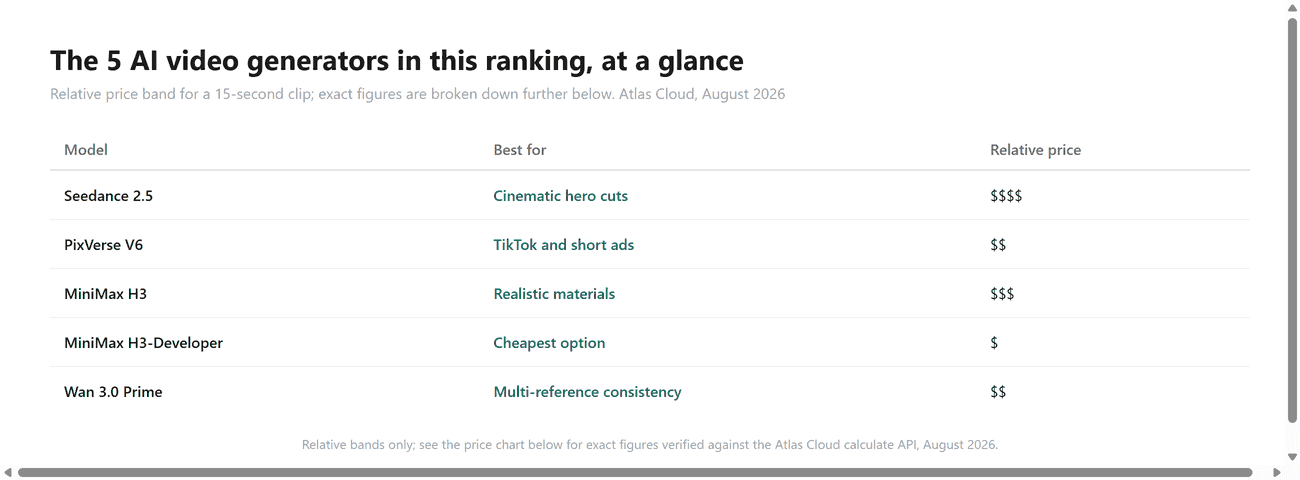
1. Atlas Cloud: Miglior generatore di video AI per pubblicità prodotto in assoluto
Atlas Cloud è dove vivono davvero la maggior parte dei modelli di questa classifica: un account, una chiave API, e ogni modello qui sotto sta dietro la stessa piattaforma e la stessa fatturazione. Questo conta più per le pubblicità prodotto che per la maggior parte degli altri contenuti, perché un brand raramente si ferma a un solo modello. Uno spot hero cinematografico potrebbe venire dalla famiglia di modelli Seedance e un lotto veloce di cutdown per TikTok da PixVerse V6 nella piattaforma, tutto nello stesso pomeriggio, senza aprire due account venditore separati.
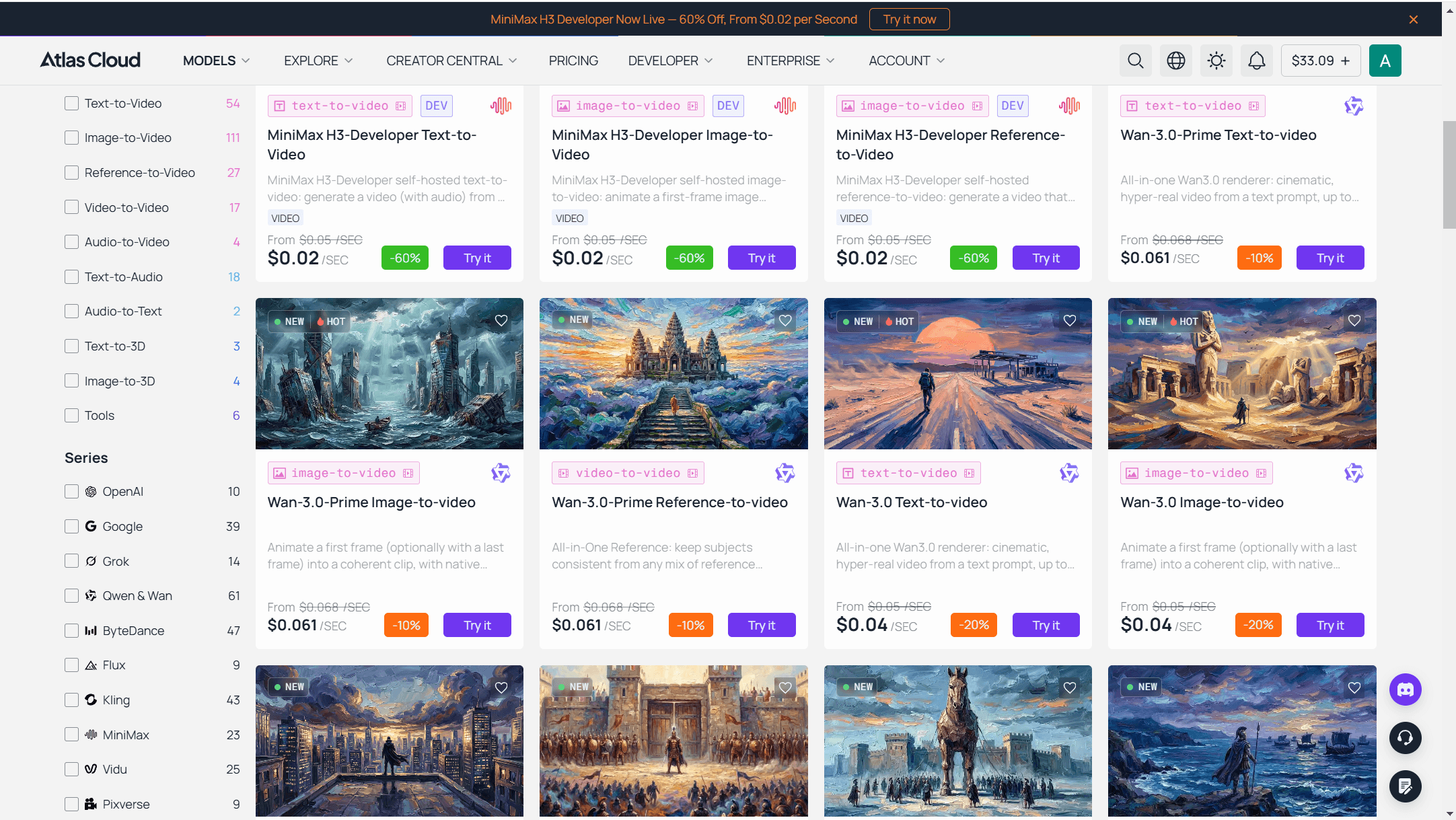
Metodo 1: Genera una pubblicità prodotto all'istante con lo strumento gratuito di generazione video AI di Atlas Cloud
Ogni modello in questa guida è misurato al secondo, il che va bene una volta che un brand sa cosa vuole, ma è un punto di partenza strano da zero. Lo strumento gratuito di annunci UGC prodotto di Atlas Cloud non richiede selezione del modello né codice: carica fino a quattro foto prodotto, scrivi una riga sul prodotto, e genera un annuncio con presentatore parlante invece di una semplice ripresa del prodotto, completo di parlato naturale e movimento labiale corrispondente.
Il menu sotto quel brief di una riga è profondo per uno strumento gratuito: 16 formati pubblicitari, 11 hook di apertura e 11 impostazioni di scena, più una scelta da 4 a 15 secondi e cinque proporzioni che coprono verticale, quadrato e widescreen. Sotto il cofano non è un modello solo ma una breve staffetta: Gemini 2.5 Flash espande il brief di una riga in una descrizione completa dell'inquadratura, un modello Nano Banana genera il primo fotogramma da quella descrizione, e Seedance 2.0 image-to-video anima quel fotogramma nel clip finale. Niente di tutto ciò appare come un'impostazione da configurare; è un piano davvero gratuito, senza watermark sull'output, e vale la pena usarlo prima di decidere se un progetto ha bisogno della B-roll cinematografica qui sotto o se uno spot con voce fa già il suo lavoro.
L'intera collezione di strumenti AI in cui si trova ha altri strumenti gratuiti di preparazione che vale la pena conoscere, e se un annuncio in stile presentatore è l'intero lavoro piuttosto che una delle tante opzioni, abbiamo classificato dieci piattaforme dedicate esattamente su quel flusso di lavoro.
Metodo 2: Automatizza la generazione di pubblicità prodotto con l'API di Atlas Cloud
Quando un brand ha bisogno di più di una manciata di clip, generare tramite API è ciò che evita che un lotto di varianti pubblicitarie si trasformi in centinaia di clic manuali.
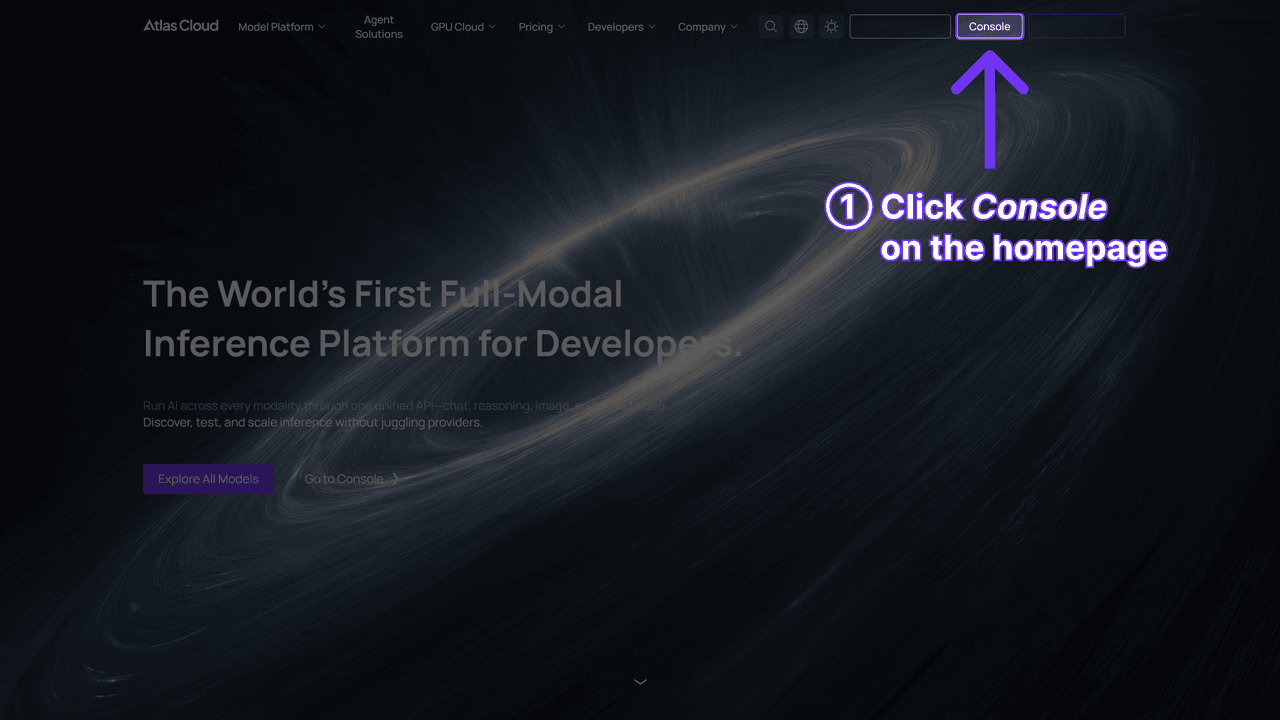
Passo 1: Ottieni una chiave API. Creane una dalla console di Atlas Cloud e copiala prima che venga nascosta.
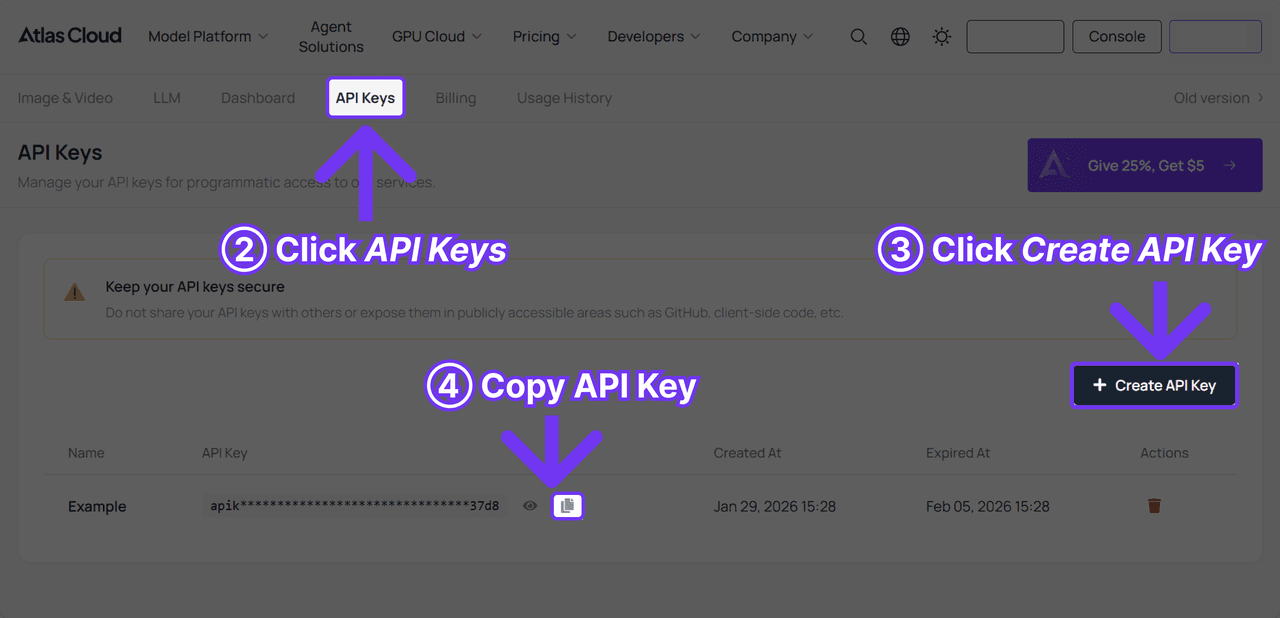
Passo 2: Controlla i parametri del modello. Lo schema delle richieste di ogni modello, incluse opzioni di risoluzione, limiti di durata e proporzioni, è documentato nella documentazione di Atlas Cloud.
Passo 3: Invia la richiesta e verifica il risultato.
plaintext1curl -X POST https://api.atlascloud.ai/api/v1/model/generateVideo \ 2 -H "Authorization: Bearer YOUR_API_KEY" \ 3 -H "Content-Type: application/json" \ 4 -d '{ 5 "model": "bytedance/seedance-2.5/text-to-video", 6 "prompt": "A matte black wireless speaker on a rotating turntable, soft key light, slow push-in, shallow depth of field", 7 "resolution": "1080p", 8 "duration": 10 9 }'
plaintext1curl https://api.atlascloud.ai/api/v1/model/prediction/YOUR_PREDICTION_ID \ 2 -H "Authorization: Bearer YOUR_API_KEY"
Il punto di forza dell'instradare le pubblicità prodotto tramite Atlas Cloud specificamente è che questo è l'unico passaggio che cambia tra i modelli. Stesso endpoint, stessa intestazione di autorizzazione, stessa chiamata di verifica. Scambia la stringa del modello da Seedance a PixVerse o MiniMax e tutto il resto della pipeline rimane invariato.
2. Seedance 2.5: Miglior generatore di video AI per pubblicità prodotto cinematografiche
Seedance 2.5 è il modello di ByteDance, e su Atlas Cloud attualmente è in cima a questa lista per tetto tecnico: una singola generazione fino a 30 secondi, opzioni di risoluzione fino al 4K e fino a 50 asset di riferimento multimodali in un'unica operazione per bloccare la forma esatta, il testo dell'etichetta e il colore di un prodotto in un'intera pubblicità. Il testo nell'inquadratura viene reso nativamente in oltre 10 lingue, il che conta per una pubblicità prodotto più di quasi qualsiasi altro caso d'uso video, poiché il testo sulla confezione e le callout sullo schermo sono spesso il punto centrale dell'inquadratura.
Quel tetto ha un prezzo reale. Un clip di 10 secondi a 1080p attualmente costa $5.94 dopo uno sconto attivo del 20%, rispetto a un prezzo di listino di $7.42, verificato direttamente sul calcolatore di prezzi di Atlas Cloud. Scendi a 480p e gli stessi 10 secondi costano $1.40 scontati. Un lavoro batch ad alto volume brucerà il budget in fretta a questa tariffa. Dove Seedance 2.5 dimostra il suo valore è nell'unico spot hero che deve sembrare girato, non generato.
In un test pratico con la stessa foto prodotto e lo stesso riferimento del presentatore attraverso tutti i modelli di questa rassegna, Seedance 2.5 è risultato il più naturale del gruppo, sia nell'aspetto del filmato sia nel modo in cui il presentatore ha effettivamente maneggiato la bottiglia: niente oggetti fluttuanti, niente fisica che rompeva il personaggio.
Provalo direttamente nella piattaforma text-to-video di Seedance 2.5, oppure parti da una foto prodotto esistente con la variante image-to-video se l'inquadratura esiste già e deve solo muoversi.
3. PixVerse V6: Miglior generatore di video AI per TikTok e pubblicità prodotto brevi nel 2026
Corto, verticale e veloce da iterare è ciò che un feed TikTok premia davvero, ed è l'opposto di ciò per cui è costruito un passaggio cinematografico da 30 secondi. PixVerse V6 si adatta a quel compito per due motivi. I clip vanno da 1 a 15 secondi, quindi un bumper da 6 secondi e un explainer da 15 secondi vengono dallo stesso modello senza cambiare strumento, e le sue 8 opzioni di proporzioni includono 9:16 insieme a 1:1 e le opzioni widescreen di cui potrebbe aver bisogno un cutdown riadattato.
Anche i prezzi giocano a favore dei test TikTok. PixVerse V6 addebita un flat $0.045 al secondo indipendentemente dalla risoluzione: un clip di consegna a 1080p e una bozza grezza a 360p costano esattamente gli stessi $0.45 per 10 secondi. Testare un hook a piena risoluzione non è una decisione premium qui come lo è su altri modelli; non esiste un livello di bozza più economico a cui ripiegare, e non serve.
Lo stesso test pratico ha però evidenziato un vero compromesso. La coerenza fisica aveva margini di miglioramento, il movimento della bottiglia in mano non sempre risultava del tutto realistico nel peso, e il fotogramma iniziale non si riproponeva in modo altrettanto pulito dalla foto prodotto di riferimento come su altri modelli. Velocità e prezzo sono davvero ottimi qui; il realismo del prodotto non è il motivo per sceglierlo.
Generane uno direttamente dalla pagina text-to-video di PixVerse V6.
4. MiniMax H3: Miglior generatore di video AI per pubblicità prodotto realistiche nel 2026
MiniMax H3 legge testo, immagini, video e audio come un unico contesto combinato piuttosto che gestire ciascuno come un compito separato, e una singola richiesta può includere fino a nove immagini di riferimento, tre clip video e tre tracce audio insieme. Per una pubblicità prodotto, questo significa dargli la foto reale della confezione, un clip di riferimento del prodotto in movimento e un campione vocale in un'unica chiamata, invece di sperare che un prompt testuale da solo renda il materiale e il peso correttamente. La risoluzione nativa arriva fino a 2K con una colonna sonora sincronizzata generata nello stesso passaggio, e le proporzioni vanno da 21:9 fino a 9:16.
Qui i prezzi sono sensibili alla risoluzione in un modo che quelli di PixVerse non sono: un clip di 10 secondi costa $0.80 a 768p e $1.30 a 2K, nessuno dei due attualmente scontato. Quel livello 2K è quello che vale la pena pagare quando la pubblicità vive o muore davvero sulla texture: la superficie di un prodotto, il tessuto o la condensa su una bottiglia, dove una risoluzione di rendering inferiore mostra prima i difetti.
La logica di movimento e gestione ha retto bene nello stesso test pratico: la bottiglia si è comportata come farebbe una vera in ogni battuta del copione. L'unico punto debole era l'illuminazione sul viso del presentatore, che risultava un tono meno simile alla luce naturale diurna rispetto alla foto di riferimento; vale la pena verificarlo sul proprio materiale prima di affidarsi a questo modello per una pubblicità incentrata sul volto.
Eseguilo dalla pagina text-to-video di MiniMax H3. Se la consegna vocale naturale conta più del puro realismo del prodotto, abbiamo separatamente testato MiniMax H3 su cinque spot UGC per vedere dove emerge davvero il suo limite a 768p.
5. MiniMax H3-Developer: Miglior generatore di video AI economico per pubblicità prodotto nel 2026
MiniMax H3-Developer è il fratello economico di MiniMax H3 qui sopra: stessa gestione dell'input multimodale, stesso audio nativo, limitato a 768p invece che 2K. È proprio quel limite a renderlo il modello più economico dell'intera lista.
Un clip di 10 secondi a 768p costa attualmente $0.32, uno sconto attivo del 60% su un prezzo di listino di $0.80. Scendi a 480p e la tariffa scontata scende a $0.20 per gli stessi 10 secondi. Per un lotto di cutdown quasi identici dove il dettaglio superficiale 2K non è il punto, testare una dozzina di varianti di hook o cambiare gli sfondi in una linea di prodotti, è qui che la matematica per singolo clip appare migliore dell'intera lista.
I compromessi sono emersi proprio dove il prezzo suggeriva che sarebbero stati. Nello stesso test pratico, il tappo della bottiglia non si è mai aperto visibilmente prima che il liquido uscisse in una semplice inclinazione, il che non corrispondeva all'istruzione di bottiglia sigillata che avevamo dato a ogni modello, e il filmato complessivamente appariva meno rifinito del livello MiniMax H3 standard. Anche la voce generata suonava più sintetica di una voce parlante naturale. Va bene per un taglio grezzo ad alto volume, non è il livello da cui pubblicare uno spot hero.
Generane uno dalla pagina text-to-video di MiniMax H3-Developer.
6. Wan 3.0 Prime: Miglior generatore di video AI per pubblicità prodotto multi-riferimento
Wan 3.0 Prime è il livello superiore del più recente modello video di Alibaba su Atlas Cloud, e il suo endpoint reference-to-video specificamente è quello che vale la pena conoscere per le pubblicità prodotto. La sua variante image-to-video accetta solo una singola immagine del primo fotogramma, lo stesso limite di Seedance 2.5 e MiniMax H3-Developer, ma reference-to-video accetta fino a 10 immagini, clip video e tracce audio misti in una sola richiesta. Questo è ciò che consente davvero a una pubblicità di bloccare sia una foto prodotto sia una foto del presentatore nella stessa generazione, piuttosto che ancorarsi a una e descrivere l'altra nel testo.
Un clip di 10 secondi a 720p costa attualmente $1.26, scontato da un prezzo di listino di $1.40. Wan 3.0 standard offre la stessa struttura reference-to-video a una tariffa inferiore per i team che non hanno bisogno della gestione dei riferimenti più robusta di Prime.
Lo stesso test pratico ha retto bene qui. La logica di gestione ha seguito correttamente l'intero copione, e il filmato non aveva quell'aspetto leggermente sintetico che alcuni modelli più economici mostravano. Tuttavia, risultava ancora un gradino dietro Seedance 2.5 sulla naturalezza complessiva, il che corrisponde più o meno al divario di prezzo tra i due.
Eseguilo dalla pagina reference-to-video di Wan 3.0 Prime.
Altri generatori di video AI che vale la pena conoscere
Lo standard Wan 3.0 arriva allo stesso tetto di 30 secondi in un singolo passaggio del suo livello Prime qui sopra, con audio nativo, a un prezzo notevolmente inferiore: $0.80 per 10 secondi a 720p in questo momento, scontato da $1.00. Quel tetto di durata conta quando una pubblicità prodotto deve fare più che mostrare uno spot hero: una sequenza di unboxing completa o una presentazione multi-angolazione che non entra in un taglio da 10 secondi.
Fuori da Atlas Cloud, modelli come Kling e Google Veo restano punti di riferimento comuni per il realismo cinematografico in questa categoria, e vale la pena confrontarli se uno dei due fa già parte dello stack esistente di un brand.
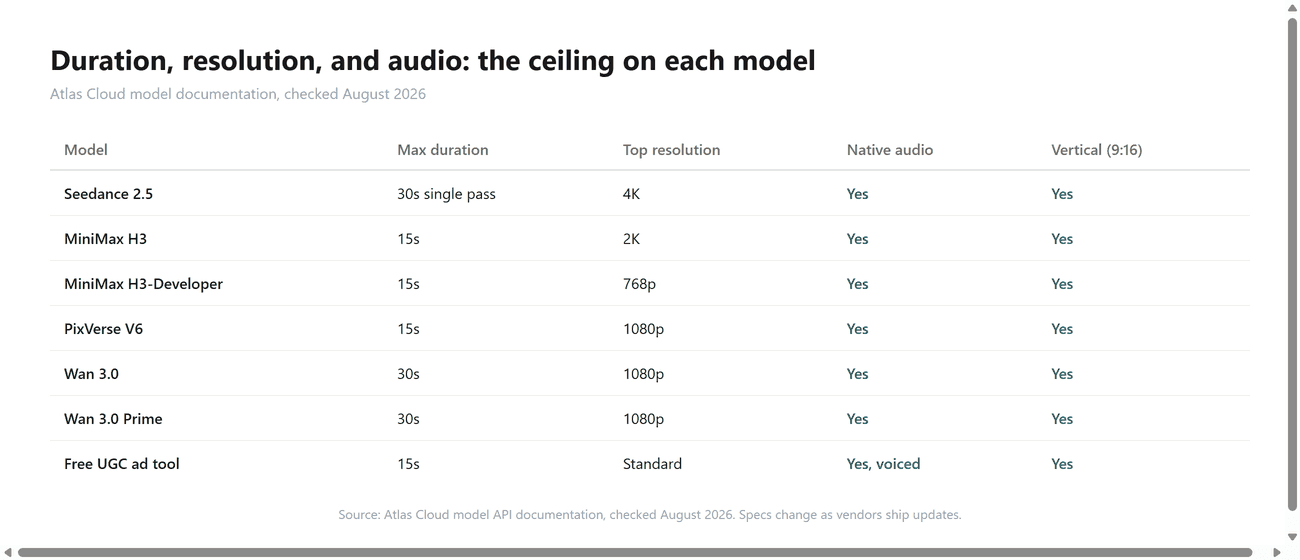
Per uno sguardo più approfondito su come tre di questi modelli si confrontano realmente su prompt identici, non solo su schede tecniche, abbiamo eseguito dieci test su Wan 3.0, Seedance 2.5 e MiniMax H3 affiancati.
Quale generatore di video AI dovresti usare per le pubblicità prodotto DTC ed e-commerce?
Un brand DTC raramente ha bisogno di un solo modello. Un video hero di lancio, una dozzina di bumper TikTok e un loop per la pagina prodotto Shopify sono tre lavori diversi che condividono una foto prodotto come asset di partenza, e le varianti image-to-video di Seedance 2.5, PixVerse V6 e MiniMax H3 accettano tutte quella stessa foto come input, quindi il prodotto stesso non ha bisogno di un nuovo shooting per ogni formato.
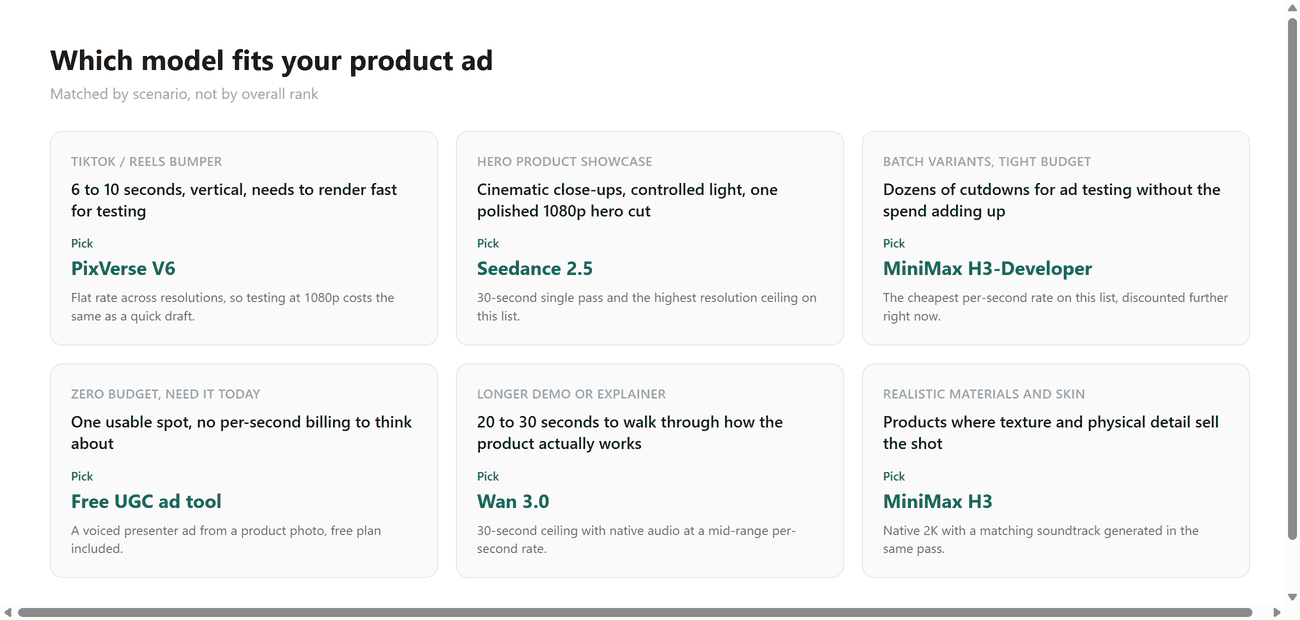
Abbina la scelta a ciò che la pubblicità serve davvero, non al modello che è risultato più alto in assoluto. Le pubblicità prodotto brevi pensate per un feed TikTok non hanno bisogno di un tetto 4K; devono renderizzare abbastanza in fretta e a basso costo da testare dieci hook in una sola seduta, ed è ciò che porta PixVerse V6 e MiniMax H3-Developer in cima a quella shortlist rispetto a un modello come Seedance 2.5. I cataloghi e-commerce con decine di SKU affrontano la stessa matematica moltiplicata per ogni linea di prodotto, quindi la tariffa per secondo più economica si accumula in fretta quando un lotto smette di essere un test una tantum.
Domande frequenti
Qual è il miglior generatore di video AI per pubblicità prodotto nel 2026?
Non esiste un unico vincitore per ogni caso d'uso. Seedance 2.5 è in testa per rifinitezza cinematografica e tetto di risoluzione, PixVerse V6 è pensato per test TikTok rapidi a tariffa fissa, e MiniMax H3 gestisce materiali e texture realistici meglio di entrambi al suo livello di risoluzione massimo. Scegli in base al compito, non a un punteggio complessivo.
Esistono generatori di video AI gratuiti per pubblicità prodotto?
Lo strumento gratuito di annunci UGC prodotto di Atlas Cloud genera un annuncio in stile presentatore con voce da una foto prodotto su un piano gratuito, senza API di modelli. È uno stile di output diverso dai modelli cinematografici sopra, un portavoce piuttosto che puro filmato di prodotto, ma è la via più rapida per uno spot finito e utilizzabile a costo zero.
Quale generatore di video AI produce le pubblicità prodotto più realistiche?
MiniMax H3 al suo livello 2K attualmente gestisce il realismo dei materiali: tessuto, condensa, superfici riflettenti, meglio degli altri modelli trattati qui, principalmente perché può prendere un'immagine di riferimento, un clip video e un campione audio insieme in un'unica richiesta invece di dedurre la texture da un prompt testuale da solo. Il tetto di risoluzione più alto di Seedance 2.5 aiuta anche, ma l'input multimodale di MiniMax H3 è il fattore più importante per sopravvivere a un fotogramma in pausa.
Questi generatori di video AI possono gestire annunci in formato breve per TikTok e Reels?
Sì. PixVerse V6 va da 1 a 15 secondi con un'opzione di proporzioni 9:16 e addebita la stessa tariffa fissa indipendentemente dalla risoluzione, il che lo rende il default pratico per i bumper verticali brevi. La maggior parte degli altri modelli in questa lista supporta anche l'output 9:16, quindi la scelta di solito si riduce a velocità di rendering e costo piuttosto che al fatto che il formato sia supportato o meno.
Ho bisogno di una troupe di ripresa se uso un generatore di video AI per pubblicità prodotto?
No, è esattamente lo scopo di questa categoria. I modelli image-to-video generano filmato direttamente da una foto prodotto esistente, e i modelli text-to-video possono costruire un'inquadratura da una descrizione scritta da sola. Una domanda aperta che vale la pena verificare prima che una campagna vada live è la trasparenza: TikTok richiede che i contenuti generati dall'AI con immagini, audio o video realistici portino un'etichetta, e altre piattaforme pubblicitarie stanno inasprendo regole simili, quindi conferma la policy attuale del canale su cui gira la pubblicità.
Conclusione
Classificati in base al compito che ciascun modello svolge davvero bene, il campo si distingue in modo netto piuttosto che in un unico vincitore. Seedance 2.5 possiede la rifinitezza cinematografica e il tetto più alto su risoluzione e durata, PixVerse V6 e MiniMax H3-Developer possiedono velocità e costo piatto e prevedibile per i test in stile TikTok, MiniMax H3 possiede il realismo quando un'inquadratura deve sopravvivere a un fotogramma in pausa, e Wan 3.0 Prime è quello pensato per bloccare un prodotto e un presentatore nella stessa generazione insieme. I test pratici dietro questa classifica sono stati allineati con la tabella dei prezzi più del previsto: anche i due modelli più economici del gruppo hanno mostrato i bordi più grezzi, mentre Seedance 2.5 era in cima sia alla lista dei prezzi sia alla scala del realismo, una correlazione che vale la pena ricordare la prossima volta che un demo reel sembra troppo rifinito per ciò che suggerisce il prezzo. Lo strumento gratuito di Atlas Cloud sta sotto tutto questo come punto di partenza a costo zero, uno stile di output diverso ma reale, prima che entri in gioco qualsiasi fatturazione al secondo.
Qualunque modello finisca nella pipeline, lo stesso test vale per ogni voce qui. Uno showcase appariscente è facile da pubblicare e dice poco su se l'output funzionerà davvero per un dato canale di pubblicazione, budget e prodotto. I migliori generatori di video AI per pubblicità prodotto sono quelli che sopravvivono a quel confronto specifico, e tutto ciò che è sopra è stato verificato con questo standard piuttosto che con la promessa di un venditore.





