
 Atlas Cloud is now an authorized U.S. reseller of Dreamina Seedance 2.5 and Seedream 5.0 Pro.Atlas Cloud is now an authorized U.S. reseller of Dreamina Seedance 2.5 and Seedream 5.0 Pro.

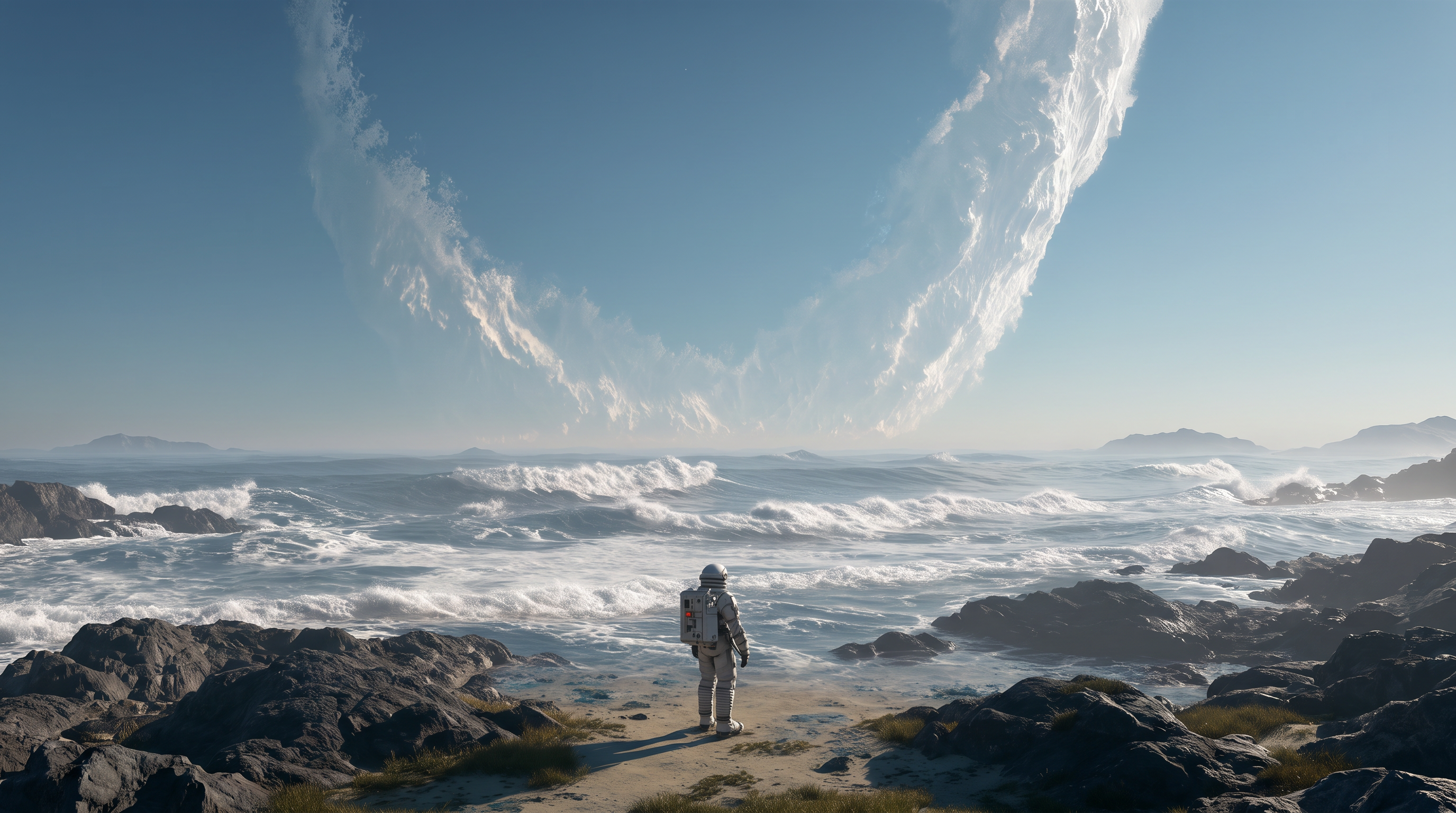
Vidu Q2 is a video generation family designed for controllable production workflows. Define start and end frames to shape a sequence, animate static visuals with smooth motion, and choose Turbo, Pro, or Pro Fast variants for different workflow needs. Atlas Cloud provides access through one OpenAI-compatible API key with transparent pay-as-you-go pricing and straightforward integration. Start building today.
Vidu Q2 is developed by ShengShu Technology. Atlas Cloud (operated by Atlas Cloud AI LLC) provides access to it and does not own it. All trademarks belong to their respective owners.
Atlas Cloud provides you with the latest industry-leading creative models.
Explore each Vidu Q2 modality and choose the endpoint that matches your source material, creative workflow, and intended video output.
| Modality | Description |
|---|---|
| Vidu Q2-Turbo I2V API (Image To Video) | Animate a reference image by describing the motion you want to create. Smooth animation, optional audio, and cinematic output up to 1080p suit product teasers, social clips, and visual storytelling. |
| Vidu Q2-Pro RTV API (Reference To Video) | Built for reference-driven generation, this endpoint converts uploaded imagery and motion instructions into polished video. Its optional audio and output up to 1080p support character scenes, branded visuals, and cinematic sequences. |
| Vidu Q2 RTV API (Reference To Video) | Turn reference imagery and written motion direction into smoothly animated video with the Vidu Q2 API. Generate optional audio and cinematic output up to 1080p for concept visualization, promotional content, or narrative scenes. |
| Vidu Q2-Pro-Fast S2V API (Start End To Video) | Provide opening and closing images to define the visual endpoints of a generated sequence. The model creates smooth animation between them, with optional audio and quality up to 1080p for transitions, reveals, and scene transformations. |
| Vidu Q2-Pro S2V API (Start End To Video) | When a video must begin and finish with predetermined visuals, use start and end images to guide the sequence. Smooth motion, optional audio, and output up to 1080p make it suitable for controlled narrative progression. |
| Vidu Q2-Turbo S2V API (Start End To Video) | Use fixed start and end images to shape the direction of an animated video. This Vidu Q2 endpoint supports smooth transitions, optional audio, and cinematic quality up to 1080p for before-and-after scenes or visual morphs. |
| Vidu Q2-Pro-Fast I2V API (Image To Video) | Designed for image-led creation, this endpoint adds described motion to an uploaded reference image. It produces smooth animation with optional audio and output up to 1080p for campaign assets, previews, and short-form video. |
| Vidu Q2-Pro I2V API (Image To Video) | Choose an image and specify how the subject or scene should move. Vidu Q2-Pro generates a cinematic video with smooth animation, optional audio, and quality up to 1080p for storytelling, advertising, or creative production. |
| Vidu Q2 T2V API (Text To Video) | Start from a written prompt and generate a complete video without supplying source imagery. Smooth animation, optional audio, and cinematic output up to 1080p support concept previews, social media production, and original visual narratives. |
Vidu Q2 combines text, image, multi reference, and first to last frame video generation with output up to 1080p, clips as long as 10 seconds, optional audio, four motion levels, and transparent pay as you go access through one OpenAI-compatible API.
Vidu Q2 spans text to video, image to video, reference to video, and start and end frame generation across nine Atlas Cloud endpoints. Choose Turbo, Pro Fast, Pro, or standard routes without rebuilding your integration. A shared OpenAI-compatible API key lets product teams match each request to the right balance of input control, output quality, and standard pricing.
Reference to video endpoints accept 1 to 7 subjects with a total of 1 to 7 images. Attach faces, products, props, or scene references, then use the prompt to describe how they should appear and move together. Outputs can reach 1080p and 10 seconds, making this route suited to character led sequences, product stories, and ensemble shots that depend on supplied visual anchors.
Vidu Q2 start and end routes use one opening image and one closing image to anchor a generated transition. Direct the motion between them with a positive prompt, four movement amplitude settings, and a reproducible seed. Depending on the endpoint, clips run from 1 to 8 seconds and render at 720p or 1080p, with 540p also available on Pro and Turbo variants.
Shape each deliverable with resolution, duration, aspect ratio, and style controls that vary by endpoint. The family reaches 1080p, image based routes support clips up to 10 seconds, and text generation offers five framing options from 16:9 to 3:4. Select general or anime styling on text to video, then use seed control when repeatable iterations matter.
Motion amplitude can be set to auto, small, medium, or large, giving developers a direct control for scene energy. Several endpoints also expose generated audio and background music, while reference routes can request all audio, speech only, or sound effects only. Combine restrained movement with dialogue or stronger action with effects to prepare clips for portraits, ads, and short narrative beats.
Standard Vidu Q2 pricing starts at $0.03 per second for Turbo image and start and end video endpoints. Pro and Pro Fast image or transition routes list $0.04 per second, while text and reference options use their own published standard rates. With transparent pay as you go billing and one OpenAI-compatible key, developers can prototype, compare variants, and scale without separate provider integrations.
Compare how Vidu Q2 and two alternative video models interpret identical prompts across cinematic action, motion continuity, camera control, visual style, and narrative timing.
An 8–10 second continuous cinematic sequence titled “Mirror Horse Taming on the Eclipse Salt Lake”: beneath a colossal lunar eclipse over a vast mirror-like salt lake, a young woman in a flowing indigo robe races at full speed on a powerful black horse, its hooves shattering the thin salt crust and spraying crystalline shards and silver mist. Begin with an extreme ground-level tracking shot beside the pounding hooves, rushing through sharp bursts of salt crystals and rippling reflections; then whip-pan into a fast lateral tracking shot as the horse’s reflection breaks free from the water and transforms into a luminous silver-white spectral horse, surging upward through the mirrored surface and galloping alongside the real horse in perfectly matched anatomy, stride timing, and rider continuity. Rise rapidly into an aerial view, then execute a diving orbital camera move around both horses as they weave across each other without collision, their black and silver bodies tracing mirrored arcs through layered indigo, silver-white, and deep violet haze. At the climax, they enter the dark center of the moon’s reflection and leap simultaneously, forming a precise vertical mirror-symmetry composition above and below the horizon; on landing, the silver light horse folds back into the black horse’s reflection and both become one again as the rider races onward. Fluid high-speed animal motion throughout, physically convincing hoof impacts, salt-fragment trajectories, water ripples, robe and mane dynamics, stable character identity, consistent horse proportions, no slow motion, no static filler. Cold lunar backlight sharply rims the rider’s fabric, flying mane, muscular contours, and salt fog; surreal Chinese ink-wash atmospherics fused with premium high-detail fantasy game CG, elegant ink blooms, cinematic contrast, volumetric moonlight, polished realistic textures. Audio: thunderous synchronized hoofbeats, crisp salt cracking, crystal spray, rushing wind, a resonant watery surge as the spirit horse emerges, and tense low percussion rising to a luminous orchestral accent at the final leap. No screens, software interfaces, dashboards, progress bars, charts, captions, subtitles, logos, watermarks, or explanatory text. 16:9 aspect ratio.
Generated with Vidu Q2-Pro Reference-to-Video on Atlas Cloud
Generated with Seedance 2.5 Reference-to-Video on Atlas Cloud
Generated with Vidu Q2 Reference-to-Video on Atlas Cloud
Create an 8 second handcrafted clay stop motion adventure inside a miniature bakery at sunrise. A tiny fox chef kneads dough, tosses it overhead, and chases it across the counter when it unexpectedly rolls away. Open with a close tracking shot following the dough, pull back as the fox vaults over mixing bowls, then switch to an overhead view when the dough lands perfectly inside the oven tray. End with the oven opening and a loaf shaped like a smiling fox emerging in a puff of flour. Maintain expressive character motion, tactile clay textures, lively object interactions, warm window light, playful stop motion timing, 16:9 aspect ratio.
Generated with Vidu Q2-Pro Reference-to-Video on Atlas Cloud
Generated with Seedance 2.5 Reference-to-Video on Atlas Cloud
Generated with Vidu Q2 Reference-to-Video on Atlas Cloud
Vidu Q2 supports product launches, storyboards, character moments, transitions, social campaigns, and explainers by turning prompts and visual inputs into smooth cinematic video for production workflows.

Static product images gain smooth motion and cinematic quality up to 1080p. Marketing teams can turn catalog shots into polished launch clips, product reveals, or storefront videos without rebuilding every asset.

Start with a written concept and generate cinematic video directly through Vidu Q2 text to video generation. Directors and designers can explore story beats, pitch visuals, or early scene ideas before production.

When reference images guide the generation, the source artwork stays central to the resulting smooth animation. Creative teams can produce campaign variants, branded character clips, or recurring social assets from established artwork.

Can two endpoint images define a clearer visual journey? Start end generation creates the motion between them for cinematic transitions, before and after sequences, or reveals with controlled narrative endpoints.

Turn portraits or illustrations into smooth animated moments with Vidu Q2 image to video. Creators can build character introductions, mood pieces, or cinematic teasers, with optional audio supporting the finished clip.

For explainers and educational stories, developers can combine prompts, images, or chosen start and end frames. The Vidu Q2 API turns these inputs into smooth video for apps, lessons, or guided narratives.
Compare Vidu Q2 endpoints with MiniMax H3, Seedance 2.0, and Veo 3.1 Lite across workflow, maximum resolution, clip length, and standard per-second pricing.
| Model | Workflow | Max Resolution | Clip Length | Standard Price |
|---|---|---|---|---|
| Vidu Q2-Turbo Image-to-video | Image to video | 1080p | 1–10 sec | $0.03/sec |
| Vidu Q2-Pro Reference-to-video | Reference to video | 1080p | 1–10 sec | $0.10/sec |
| Vidu Q2 Reference-to-video | Reference to video | 1080p | 1–10 sec | $0.075/sec |
| Vidu Q2-Pro-Fast Start-end-to-video | Start and end frame | 1080p | 1–8 sec | $0.04/sec |
| Vidu Q2-Pro Start-end-to-video | Start and end frame | 1080p | 1–8 sec | $0.04/sec |
| Vidu Q2-Turbo Start-end-to-video | Start and end frame | 1080p | 1–8 sec | $0.03/sec |
| Vidu Q2-Pro-Fast Image-to-video | Image to video | 1080p | 1–10 sec | $0.04/sec |
| Vidu Q2-Pro Image-to-video | Image to video | 1080p | 1–10 sec | $0.04/sec |
| Vidu Q2 Text-to-video | Text to video | 1080p | 1–8 sec | $0.05/sec |
| MiniMax H3 Image-to-Video | Image to video | 2K native, 4K ESR | 4–15 sec | $0.038/sec |
| Seedance 2.0 Image-to-Video | Image to video | 4K native | 4–15 sec | $0.112/sec |
| Veo 3.1 Lite Image-to-video | Image to video | 1080p | 4, 6, or 8 sec | $0.05/sec |
Get started in minutes — follow these simple steps to integrate and deploy models through Atlas Cloud's platform.
Sign up at atlascloud.ai and complete verification. New users receive free credits to explore the platform and test models.
Combining the advanced Vidu Q2 models with Atlas Cloud's GPU-accelerated platform provides unmatched performance, scalability, and developer experience.
Low Latency:
GPU-optimized inference for real-time reasoning.
Unified API:
Run Vidu Q2, GPT, Gemini, and DeepSeek with one integration.
Transparent Pricing:
Predictable per-token billing with serverless options.
Developer Experience:
SDKs, analytics, fine-tuning tools, and templates.
Reliability:
99.99% uptime, RBAC, and compliance-ready logging.
Security & Compliance:
SOC 2 Type II, HIPAA alignment, data sovereignty in US.
Vidu Q2 is a family of AI video generation models available through Atlas Cloud. It supports text-to-video, image-to-video, reference-to-video, and start-end-to-video workflows, with optional audio and output resolutions up to 1080p.
You can generate a video from a text prompt, animate a still image, guide subject identity with reference images, or control a transition using specified first and last frames. These routes support workflows such as concept clips, character scenes, product motion, and visual storytelling.
Create an Atlas Cloud API key, then send an authenticated POST request to /api/v1/model/generateVideo with the required model ID and inputs. Save the returned task ID because video generation runs asynchronously.
Use text-to-video for prompt-only generation, image-to-video to animate one image, reference-to-video for subject-guided scenes, and start-end-to-video when both boundary frames matter. Within that workflow, select the exact Turbo, Pro, or Pro Fast model ID and evaluate it against your application's quality and latency targets.
Available controls vary by endpoint but can include prompts, duration, resolution, aspect ratio, movement amplitude, seed, background music, and audio generation. Reference-to-video accepts 1 to 7 subjects with 1 to 7 images in total, while start-end routes require separate first and last frame inputs.
Atlas Cloud documents 540p, 720p, and 1080p outputs across the reviewed video routes. Text-to-video and start-end-to-video accept durations from 1 to 8 seconds, while documented image-to-video and reference-to-video routes accept up to 10 seconds.
Yes, the listed models support optional audio generation. Depending on the route, controls can include generated audio, background music, or audio types such as speech only, sound effects only, and combined audio.
Standard base prices are $0.03 for Turbo image-to-video and start-end-to-video, $0.04 for Pro and Pro Fast image-to-video and start-end-to-video, $0.05 for text-to-video, $0.075 for reference-to-video, and $0.10 for Pro reference-to-video. Atlas Cloud uses pay-as-you-go billing, so confirm the selected endpoint and displayed request price before submission.
Poll /api/v1/model/prediction/{prediction_id} or provide a public HTTPS webhook URL, then read the outputs field after the task completes. If a request fails, inspect the status and error response, verify the Bearer key, model ID, content type, and endpoint-specific inputs, and retain the X-Request-ID for support tracing.
Seedance 2.5 API is now available on Atlas Cloud! It gives developers ByteDance's newest video model. It generates up to 30 seconds of native video in a single pass from text, a single image, or as many as 50 multimodal references, with synchronized audio and in-frame multilingual text. On Atlas Cloud you reach it through one key, with subject consistency and improved physics keeping long shots coherent. (Update: Seedance 2.5 1080P API Is Available NOW!)

Wan 3.0 API is the next generation of Alibaba's Wan video family, built to push long-form generation, multi-reference control, and audiovisual quality to new heights. Atlas Cloud already hosts Wan 2.7, 2.6, and 2.5, and Wan 3.0 runs on the same unified key with no separate setup. Start building today. Scroll down to the showcase to see what Wan 3.0 can create.
MiniMax H3 is MiniMax's multimodal video family for text, image, and reference guided creation. Across supported routes, it preserves subjects from reference media, offers flexible aspect ratios, and pairs generated sound with visuals through H3 Developer, with output profiles selected by endpoint. Atlas Cloud unifies the family behind one OpenAI-compatible key with transparent pay-as-you-go pricing from the standard rate of $0.038 per second. Start building today.
Seedream 5.0 Pro API gives developers ByteDance's controllable image editing model on Atlas Cloud. It places edits precisely with anchors and coordinates, separates images into editable layers, fuses multiple references, and matches exact colors and materials, with multilingual text at 2K and 3K. On Atlas Cloud you reach it through one key!
Seedance 2.0 is ByteDance’s production video model for precise shot creation. Turn prompts into video, animate a first-frame image with optional last-frame guidance, or shape results with reference media and optional web search. Atlas Cloud brings these workflows into one unified API with transparent pay-as-you-go pricing and one OpenAI-compatible key. Start building today.
The gpt-image-2.5 family from OpenAI gives developers a choice of Flare and Sunburst for production image workflows. Render at arbitrary resolutions up to 3840x2160 and select from five quality tiers, including xhigh and max, to match specific output requirements. Atlas Cloud provides ready-to-use REST inference with no cold starts and standard pricing from $0.004 per generation. Start building today.
The GPT Image 2 API gives developers access to OpenAI's latest image model, the successor to GPT Image 1.5. It generates and edits images with accurate text rendering across Latin and CJK scripts, plus strong composition for posters, mockups, and infographics. On Atlas Cloud you reach it through one unified API alongside 300+ models, with free credits, 99.99% uptime, and no OpenAI organization verification required.
Gemini Omni is Google DeepMind's natively multimodal video family for prompt guided creation and editing. Generate from text, animate still images, or revise existing footage with optional visual references while preserving untouched content. Flexible resolution, aspect ratio, and duration controls support varied production workflows. Atlas Cloud unifies access with transparent pay-as-you-go pricing. Start building today.
Grok Imagine Image is xAI's family for generating polished visuals and revising one or more reference images through natural language instructions. Its standard and quality endpoints cover text to image creation, single image changes, and indexed multi-image composition. Atlas Cloud brings these workflows into one API, with standard generation and editing priced at $0.02 per image. Start building today.
Google's most powerful creative models are all available on Atlas Cloud. Veo 3.1 delivers cinematic video generation, Nano Banana 2 powers high-fidelity image creation, and Gemini brings multimodal intelligence to every workflow. Access the full Google model suite through one API key with Day-0 availability and pay-as-you-go pricing.
The Seedance 2.0 Mini API is the lightest, lowest-cost tier of ByteDance's Seedance video line, built for teams where throughput and unit cost matter more than maximum polish. Use it for batch generation, rapid prototyping, and draft passes, all through one OpenAI-compatible key on Atlas Cloud.
From cinematic video generation to high-fidelity image creation, ByteDance's most powerful models are live on Atlas Cloud. Run Seedance and Seedream at scale with the lowest inference pricing and zero infrastructure overhead.
Guides, tutorials, and product updates to help you get the most out of Atlas Cloud.



