

Wynik może być jednocześnie rezultatem, środowiskiem pomiarowym, stosem narzędzi i decyzją budżetową. Jeśli wybierasz agenta na przyszłotygodniowe testy przeglądarki, kodowanie lub pracę badawczą, benchmarki GPT-6 Astra są użytecznym dowodem, a nie werdyktem o wdrożeniu.
Krótka odpowiedź: wyniki Astry w obsłudze komputera i terminalu to liczby z premiery o najjaśniejszej drodze do praktycznego zastosowania. Wynik 99,9% na ARC-AGI-3 to uderzający sygnał dotyczący konkretnego środowiska testowego, ale sam w sobie nie przewidzi Twojego wskaźnika awarii w produkcji. Traktuj każdy wynik jako twierdzenie do sprawdzenia względem uprawnień, narzędzi, ponowień, testów akceptacyjnych i ścieżki przeglądu.
OpenAI raportuje 72,6% na OSWorld 2.0, 57,9% na Terminal-Bench 4.0, 64,6% na Terminal-Bench Science 0.1, 41,4% na AutomationBench, 95,9% na BenchCAD, 61,2 w Artificial Analysis Intelligence Index oraz 99,9% na ARC-AGI-3. Te siedem liczb odpowiada na różne pytania. Dobry pilotaż zaczyna się od trzymania ich osobno.
Najważniejsze wnioski
- Obsługa komputera to sygnał premierowy, który większość zespołów może przetestować.
- Czytaj wynik, wersję, środowisko, narzędzia i nakład pracy razem.
- OSWorld, Terminal-Bench i AutomationBench testują różne rodzaje pracy.
- Wyniki nasycone nie sprawiają, że awarie produkcyjne znikają.
- 15-minutowy audyt może zdefiniować bezpieczny pierwszy pilotaż.

Ilustracyjna sekwencja audytu dowodów z benchmarków z papierowymi kartami, teczkami, stoperem i recenzentami
Ilustracyjna sekwencja audytu czytania wyniku benchmarku: karty dowodów i notatki czasowe są sprawdzane przed decyzją o pilotażu. Przedstawia nadzorowany proces przeglądu, a nie wynik benchmarku.
Dlaczego benchmarki GPT-6 Astra budzą emocje i dlaczego pilotaże zawodzą
Wysokie liczby pojawiły się razem z demonstracjami, które wyglądają niemal jak zwykła praca profesjonalna. Przykład z KiCad od OpenAI zamienia schemat w układ płytki. Przykład z Blendera do Unreal przenosi model domu do sceny, po której można chodzić. Przykład Tidal Rush kończy się grywalną grą wyścigową z kartami. To znacznie bardziej konkretne niż benchmark czatu.
Pułapka nagłówkowa polega na traktowaniu modelu jako całego systemu. Działający agent obejmuje środowisko benchmarkowe, włączone narzędzia, przeglądarkę lub terminal, ponowienia, dozwolone poświadczenia oraz politykę decydującą, kiedy człowiek musi zatwierdzić działanie. Zmiana któregokolwiek z tych elementów może zmienić skuteczność wykonywania zadań.
OSWorld 2.0 to najbliższy tutaj punkt wejścia do nadzorowanej pracy na komputerze i w przeglądarce. OpenAI raportuje 72,6% w swoim offline’owym zbiorze wyników częściowych oraz z grubsza 47% mniej czasu na zadanie w symulacji opóźnień. To powód, by przetestować kontrolowany przepływ, taki jak kontrola formularzy lub lista kontrolna w narzędziu projektowym. To nie powód, by przyznawać szeroki dostęp produkcyjny.
Terminal-Bench 4.0 sprawdza, czy agent wykonuje złożone zadania terminalowe, takie jak inżynieria, konfiguracja i analiza danych. OpenAI raportuje 57,9% dla Astry. Tabela liderów właściwa dla tej wersji to użyteczne przypomnienie, aby do każdego porównania dołączać wersję benchmarku, środowisko, koszt i kontekst ufności (tabela liderów Terminal-Bench, wrzesień 2026). Wyniku z jednego wydania nie należy beztrosko łączyć z wykresem z innego.
ARC-AGI-3 wymaga podobnej ostrożności. Wynik 99,9% od OpenAI to rezultat przy maksymalnym nakładzie pracy, uzyskany z użyciem środowiska Responses API. Firma mówi wprost, że jej środowisko badawcze lub API może różnić się od produkcyjnego ChatGPT, ponieważ prompty systemowe i narzędzia mogą się różnić. Publiczna dyskusja skupiła się na tym rozróżnieniu środowiska, bo zmienia ono to, co jest porównywalne. Nie przekreśla to wyniku. Mówi Ci dokładnie, co trzeba zapisać, zanim przeniesiesz go na decyzję produktową.
Demonstracja z Blendera do Unreal to użyteczny pozytywny przypadek. Ma jasne wejście, ograniczony zestaw narzędzi, obserwowalne pliki pośrednie i widoczny stan końcowy. To czyni ją lepszym kandydatem do nadzorowanej próby wewnętrznej niż niejednoznaczne zadanie ze zmiennymi danymi i nieodwracalnymi działaniami zewnętrznymi.

Ilustracyjna sekwencja przekazania prototypu opakowania z próbkami materiałów, suwmiarką i recenzentami
Ilustracyjna sekwencja przekazania w dyskusji między narzędziami: fizyczny prototyp opakowania przechodzi przez kontrolę materiału, pomiaru i recenzenta przed przekazaniem. To odrębny nadzorowany scenariusz, a nie wynik benchmarku.
Przepływ pracy z benchmarkami GPT-6 Astra: zbuduj małą kontrolę rzeczywistości
Nie potrzebujesz laboratorium benchmarkowego, aby uważnie przeczytać benchmark. Potrzebujesz jednego ustalonego wiersza źródłowego, jednego parsera twierdzeń, jednego niezależnego krytyka i planu pilotażu powiązanego z własnym testem akceptacyjnym. Ta sekwencja może działać w jednej karcie przeglądarki, a sam pilotaż pozostaje w autoryzowanym środowisku testowym.
W lekkiej grupie kontrolnej Atlas Cloud może pomóc rozdzielić dwie role przeglądowe. To nie jest twierdzenie, że hostuje Astrę, ani że odtwarza oficjalny benchmark. Według stanu na 4 września 2026 r. katalog nie wymienia GPT-6 Astra.
| Zastosowanie | Rola w tym artykule | Granica dostępności |
| Audytowane twierdzenie | Cytuj wyłącznie oficjalne publiczne wyniki | Nie twierdź, że działa na Atlas Cloud |
| Parser twierdzeń | Wyodrębnij warunki i pominięcia | Przeglądaj wyłącznie cytowany materiał źródłowy |
| Niezależny krytyk | Podważ wniosek o wdrożeniu | Nie twierdź, że ma dostęp do Astry |
Utrzymuj audyt niezależnie od nagłówków premierowych. Sprawdź ponownie oficjalne źródło i katalog w momencie publikacji, ponieważ dostępność w katalogu i ceny tokenów mogą się zmienić. Oficjalna strona premiery podaje cenę API Standard dla Astry i osobną cenę trybu Fast. (Profil modelu w Artificial Analysis, wrzesień 2026) niezależnie podaje wartość Intelligence Index wynoszącą 61 dla konfiguracji max i odnotowuje cenę tokenów $10/$50.
Krok 1: Zamroź twierdzenie, zanim zaczniesz je interpretować
Skopiuj oryginalny wiersz benchmarku, wersję, wiersz porównawczy, przypisy i datę publikacji. To zapobiega po cichu uzupełnianiu brakujących ustawień przez recenzenta. Na pierwszym przejściu użyj twierdzenia OSWorld/PCB, a następnie powtórz je dla każdego wyniku, który wpływa na Twoją decyzję zakupową.
plaintext1You are a benchmark-audit analyst. Read only the source text below. 2 3Create a claim card with exactly these fields: 41. benchmark name and version 52. reported GPT-6 Astra score 63. compared system and score 74. task the benchmark actually measures 85. harness, tools, retries, or reasoning settings explicitly disclosed 96. what is not disclosed 107. one deployment claim this evidence supports 118. one deployment claim this evidence does not support 12 13Rules: 14- Do not infer missing settings. 15- Label vendor-reported, benchmark-owner-reported, and community interpretation separately. 16- If a fact is absent, write “not disclosed”. 17 18SOURCE: 19[PASTE THE OFFICIAL BENCHMARK ROW AND FOOTNOTES HERE]
Ustawienia: temperatura 0.2; top_p 1; max_tokens 900; stały seed 20260904. Uruchom ten sam materiał 3 razy i zapisz, czy pola się zmieniają. To analiza kontrolna, a nie ponowne uruchomienie benchmarku Astry.
Krok 2: Przeprowadź kontrargument
Poproś o najsilniejszy powód, aby opóźnić pilotaż. Drugie podsumowanie często powtarza tekst promocyjny; przegląd zakupowy ujawnia zależności, których nagłówek nie niesie.
plaintext1Act as a skeptical AI procurement reviewer. 2 3Using the benchmark claim card below, write a concise red-team review for a team deciding whether to pilot GPT-6 Astra for browser QA. 4 5Return: 6- evidence that transfers to this workflow 7- evidence that does not transfer 8- three hidden operating assumptions 9- the smallest safe pilot 10- a pass/fail acceptance metric 11- a reason to delay adoption 12 13Do not rank vendors. Do not invent external benchmark results. Do not claim access to GPT-6 Astra. 14 15CLAIM CARD: 16[PASTE STEP 1 OUTPUT]
Ustawienia: temperatura 0.2; top_p 1; max_tokens 1,100; stały seed 20260904. Uruchom 3 razy z tą samą kartą twierdzenia. Zachowaj wersję, która wymienia założenia, zamiast jedynie stwierdzać, że system wymaga testów.
Krok 3: Zamień twierdzenie w jeden testowalny pilotaż
Wykorzystaj oba wyniki, aby zdefiniować wycinek zadania, który Twój zespół może uruchomić na autoryzowanych kontach testowych i danych nieprodukcyjnych. Nie dodawaj wyszukiwania w sieci ani zewnętrznych poświadczeń. Człowiek przegląda każde działanie, które może wpłynąć na inny system.
plaintext1Turn the audit below into a one-week pilot plan. 2 3Context: 4- We evaluate a tool-using assistant for a real workflow. 5- We will use only authorized test accounts and non-production data. 6- Human review is required before any external action. 7 8Return a table with: 9Task slice | starting input | allowed tools | completion definition | 10human review checkpoint | failure condition | cost cap | sample size. 11 12Then write one sentence that states exactly what result would justify moving from pilot to production. 13 14AUDIT: 15[PASTE STEP 1 AND STEP 2 OUTPUTS]
Ustawienia: temperatura 0.1; max_tokens 1,000; bez wyszukiwania w sieci zewnętrznej; wygeneruj raz, a następnie każ człowiekowi sprawdzić macierz względem rzeczywistych kont i uprawnień.
Warianty benchmarków GPT-6 Astra: 3 obciążenia, 3 odpowiedzi
Wariant A: PCB i nadzorowana obsługa komputera. Przypadek KiCad jest obiecujący dla oprogramowania inżynierskiego, w którym reguły są jednoznaczne, a wyniki można sprawdzić. Przetestuj, czy agent konsekwentnie przestrzega kontroli reguł projektowych i ograniczeń producenta na próbce, a nie to, czy raz poprowadził ścieżki na jednej płytce. Zachowaj zatwierdzenie przed każdym przekazaniem do produkcji.
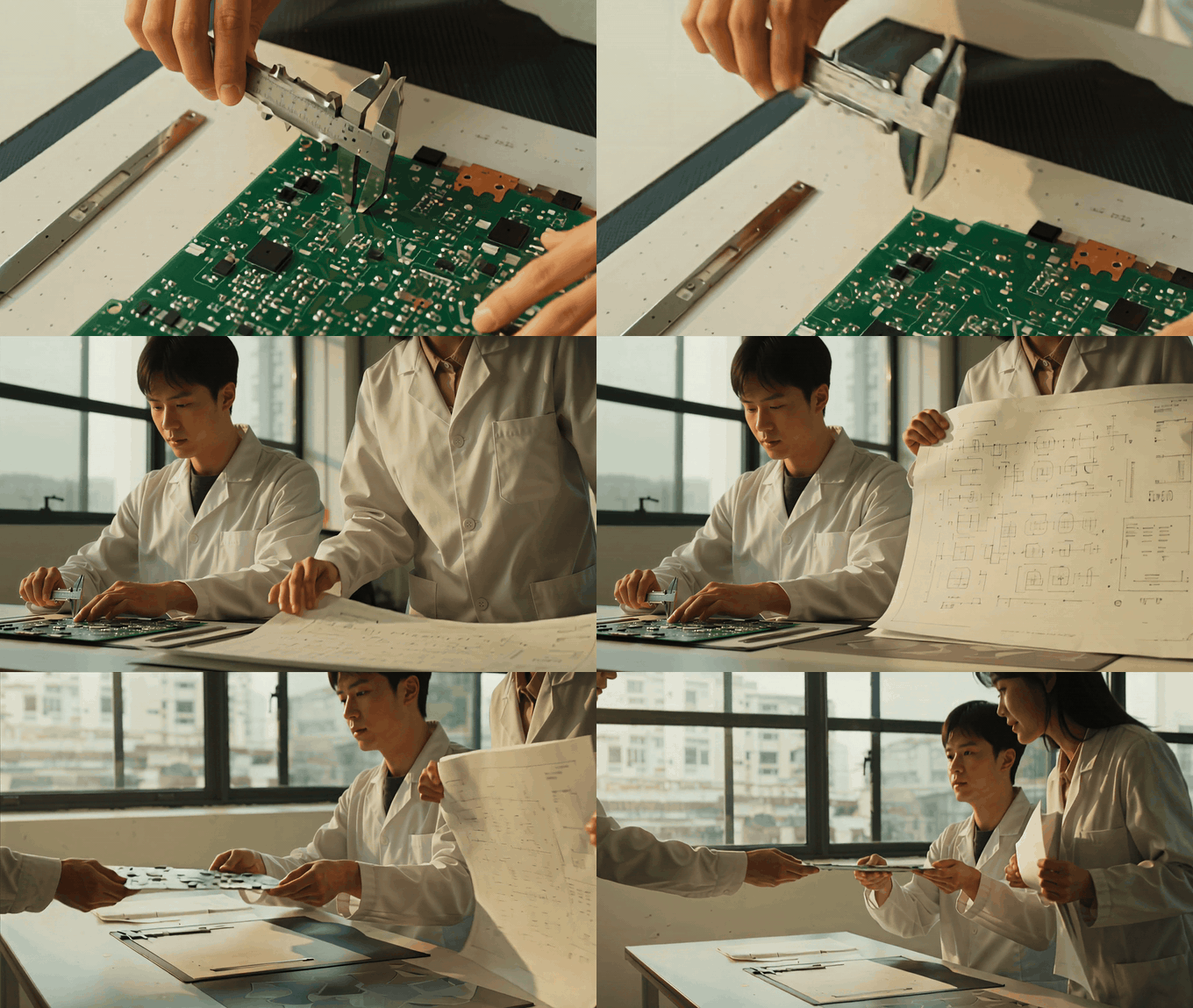
Ilustracyjna sekwencja przeglądu PCB: pomiar płytki, przegląd schematu i przekazanie do zatwierdzenia przez człowieka
Ilustracyjny przypadek ruchomy dla wariantu A: kontrola płytki z góry przechodzi do przeglądu bocznego, a następnie do szerokiego przekazania do zatwierdzenia. Klip przedstawia nadzorowany scenariusz pilotażowy, a nie wynik benchmarku.
Wariant B: Blender do Unreal i produkcja między narzędziami. Konwersja zasobów, przekazywanie między narzędziami i odwracalna praca wewnętrzna to dobrzy kandydaci, gdy pliki pośrednie można sprawdzić. Test akceptacyjny powinien obejmować zgodność formatów, oczekiwaną strukturę zasobów i wskazanego recenzenta. Dopracowany pokaz nie zastępuje zatwierdzenia projektowego ani inżynieryjnego.

Ilustracyjna sekwencja przekazania między narzędziami z makietą domu, przeglądem planu i zatwierdzeniem zespołu
Ilustracyjny przypadek ruchomy dla wariantu B: sekwencja przechodzi od fizycznej makiety i planu do przekazania, a następnie do szerokiego przeglądu zespołowego. Przedstawia nadzorowany scenariusz pilotażowy, a nie wynik benchmarku.
Wariant C: Tidal Rush i przepaść między demem a produktem. Grywalny prototyp może pomóc zespołowi szybko doprecyzować brief. Mówi mniej o pokryciu testami, własności kodu, triage’u błędów, dostępności, pipeline’ach budowania i koszcie utrzymania projektu po dniu pokazowym.

Ilustracyjna sekwencja przeglądu prototypu z zabawkowym karterem, kontrolerami, notatkami z testów i recenzentami
Ilustracyjny przypadek ruchomy dla wariantu C: ujęcie karta na torze przechodzi do testów praktycznych, a następnie do przeglądu pisemnych notatek z testów. Grywalny deliverable wciąż wymaga pokrycia testami, utrzymania i walidacji poprawek błędów, zanim stanie się produkcyjnym przepływem pracy. To nie jest wynik benchmarku.
Koszty, dostęp i granice bezpieczeństwa benchmarków GPT-6 Astra
Dostęp. Strona premiery mówi, że Astra jest wdrażana najpierw w ograniczonej grupie organizacji, a następnie w ciągu kolejnych dni dla użytkowników Plus, Pro, Business, Enterprise, API, Azure i Bedrock. Administratorzy przedsiębiorstw muszą ją włączyć, a dostęp domyślnie jest wyłączony w momencie premiery. Planuj w oparciu o stan dostępu, który faktycznie możesz zweryfikować, a nie obiecany przyszły rollout.
Koszt. Cena tokenów to tylko widoczna pozycja. Nakład rozumowania, wywołania narzędzi, ponowienia, nieudane zadania i przegląd ludzki decydują o koszcie ukończonego zadania. Uruchom ten sam wycinek zadania z nakładem, który zamierzasz wdrożyć, a następnie dodaj czas przeglądu do porównania.
Bezpieczeństwo. Daj pilotażowi najmniejszy działający zestaw uprawnień. Używaj piaskownic, kont testowych, dzienników działań i bramek zatwierdzających dla zmian zewnętrznych. W pracy wrażliwej cybernetycznie utrzymuj działania defensywne, autoryzowane i możliwe do przeglądu. OpenAI mówi, że dodatkowe kontrole bezpieczeństwa mogą spowolnić, wstrzymać lub zatrzymać zadanie, co czyni te mechanizmy częścią planowania operacyjnego, a nie myślą po fakcie.
Jeśli potrzebujesz uruchomić ten sam stały prompt przez role kontrolne, sprawdź aktualny katalog modeli Atlas Cloud przed wyborem grupy kontrolnej. To sposób na uporządkowanie audytu, a nie dowód, że GPT-6 Astra jest tam dostępna.
Często zadawane pytania
Jakie są najważniejsze benchmarki GPT-6 Astra?
Dla zespołów wdrażających agentów zacznij od OSWorld 2.0 dla obsługi komputera, Terminal-Bench 4.0 dla pracy w terminalu, AutomationBench dla automatyzacji profesjonalnej i Terminal-Bench Science dla naukowych przepływów narzędziowych. Czytaj ARC-AGI-3 jako odrębny wynik abstrakcyjnego rozumowania z podanymi warunkami środowiska i nakładu pracy.
Czy wynik GPT-6 Astra na ARC-AGI-3 dowodzi AGI?
Nie. To dowód na temat wydajności na ARC-AGI-3 w ujawnionym środowisku. Nie ustanawia niezawodnej wydajności, bezpieczeństwa ani ogólnych możliwości w każdym rzeczywistym przepływie pracy.
Jak zespół powinien oceniać GPT-6 Astra pod kątem agentów kodujących?
Użyj dopasowanego zadania repozytoryjnego, zestawu testów, polityki narzędzi i limitu kosztów. Oficjalne oceny kodowania są użytecznym dowodem, ale wniosek dla Twojego zespołu wymaga tych samych warunków operacyjnych i testu akceptacyjnego.
Ile kosztuje korzystanie z GPT-6 Astra?
OpenAI podaje cenę API Standard w wysokości $10 za milion tokenów wejściowych i $50 za milion tokenów wyjściowych w momencie premiery. Wywołania narzędzi, wysoki nakład rozumowania, ponowienia i przegląd ludzki zwiększają koszt ukończonego zadania.
Kto może teraz uzyskać dostęp do GPT-6 Astra?
Według stanu na 4 września 2026 r. OpenAI opisuje ograniczony początkowy rollout organizacyjny, a szersza dostępność w ChatGPT i API nastąpi w ciągu najbliższych dni. Ustawienia administratora przestrzeni roboczej również mogą wpływać na dostęp.
Czy GPT-6 Astra jest dostępna na Atlas Cloud?
Nie. W momencie pisania tego artykułu katalog Atlas Cloud jej nie wymienia, więc benchmarki GPT-6 Astra należy traktować jako dowód zewnętrzny, a nie wynik na platformie.





