

Veo 3.1 Fast for Rapid Iteration
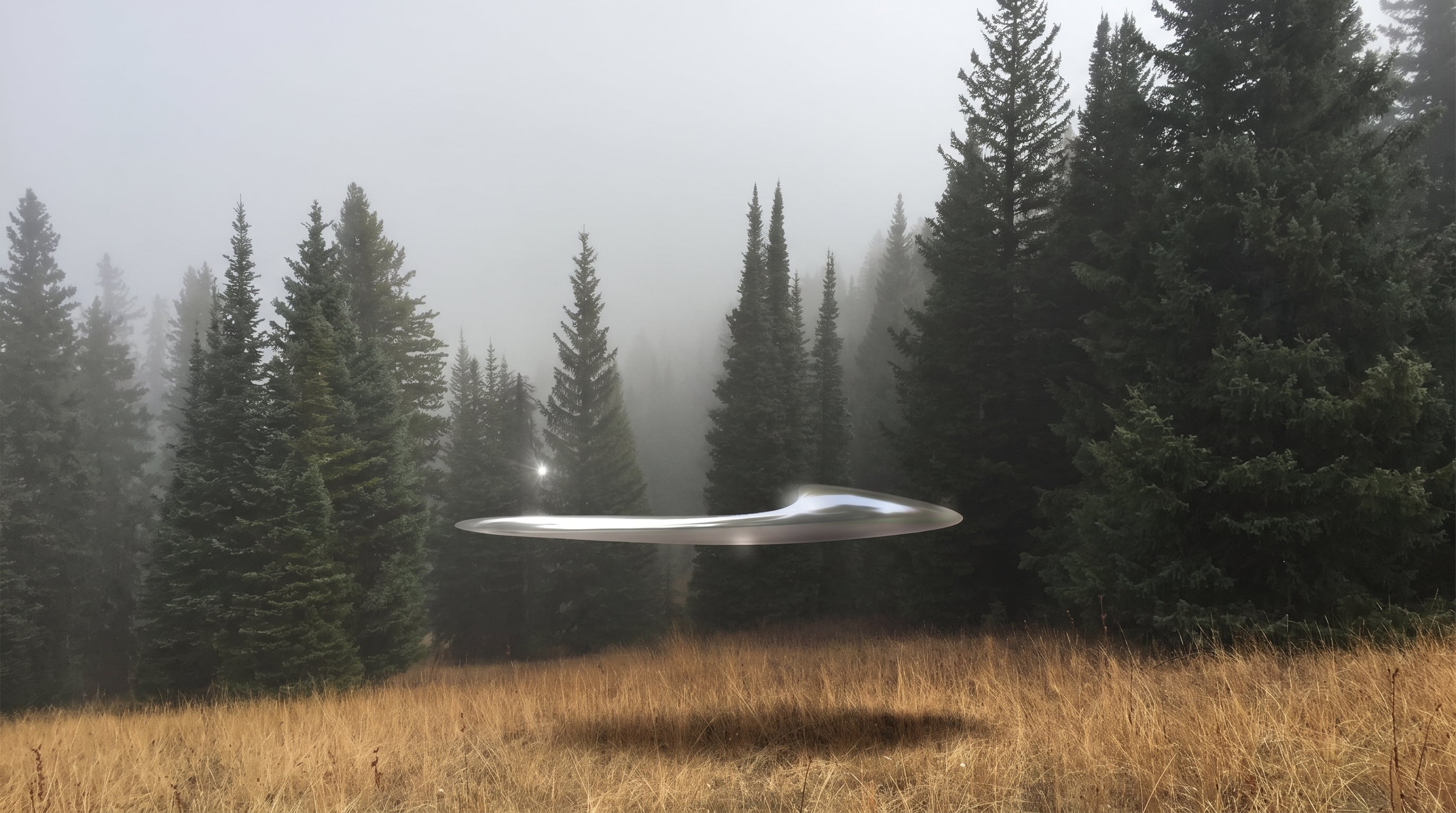
Veo 3.1 Fast is Google's speed-focused video generation family, built for responsive production workflows and rapid creative iteration. Its prompt and keyframe workflows maintain impressive visual fidelity while producing smooth, expressive motion. Atlas Cloud adds Day-0 access, one unified key, transparent pay-as-you-go pricing, and a verified standard base price of $0.08. Start building today.
Veo 3.1 Fast is developed by Google. Atlas Cloud (operated by Atlas Cloud AI LLC) provides access to it and does not own it. All trademarks belong to their respective owners.
Explore the Leading Veo 3.1 Fast
Atlas Cloud provides you with the latest industry-leading creative models.


Choose Your Veo 3.1 Fast Video Workflow
Compare Veo 3.1 Fast endpoints for turning written prompts, photos, or keyframes into expressive video.
| Modality | Description |
|---|---|
| Veo 3.1 Fast I2V API (Image To Video) | Bring a photo or keyframe to life as a cinematic video sequence with smooth, expressive motion. Realistic continuity and sound make this endpoint suitable for animating still visuals while preserving a coherent scene. |
| Veo 3.1 Fast T2V API (Text To Video) | Written prompts become visually compelling videos through an endpoint designed for speed and responsiveness. It maintains impressive visual fidelity while supporting rapid creative iteration from text. |
Inside the Veo 3.1 Fast Creation Engine
Veo 3.1 Fast combines text and image driven video, native audio, 4K output, first and last frame control, repeatable settings, and flexible Atlas Cloud access for rapid production.
Veo 3.1 Fast, Two Creation Paths
Veo 3.1 Fast accepts either a written prompt or a source image through dedicated Atlas Cloud endpoints. Text generation turns scene directions into video, while image generation adds smooth, expressive motion to a still or keyframe. Both routes support prompt guidance for camera movement, atmosphere, and action, making this pair useful for storyboards, campaign concepts, and rapid creative exploration.
4K Output in Two Formats
Choose 720p, 1080p, or 4K output in landscape 16:9 or portrait 9:16. Clips can run for 4, 6, or 8 seconds, while 1080p and 4K generations require the 8 second setting. Direct 4K generation also keeps the resolution choice inside the request. These verified controls let teams match widescreen campaigns, vertical social placements, and high resolution review masters without changing models.
Native Audio in the Same Generation
Sound can be generated with the video through the optional generate_audio control. Veo 3.1 Fast pairs its motion with synchronized native audio, so a single request can return a more complete audiovisual scene. Enable it for dialogue driven shorts, action beats, atmospheric landscapes, or product moments where timing between what viewers see and hear carries the experience.
First and Last Frame Control
Start with one image, then optionally supply a last image to define where the sequence should arrive. The image to video endpoint uses the prompt to shape the motion, camera path, mood, and transition between those visual anchors. This setup turns two selected keyframes into a controlled 8 second arc, ideal for reveals, transformations, and storyboard transitions.
Repeatable Creative Iteration
When a concept needs refinement, select 4, 6, or 8 seconds and use a fixed seed to make repeated runs easier to compare. A negative prompt helps steer the result away from unwanted elements while the Fast model prioritizes speed and responsiveness. Developers can iterate on movement, framing, and tone before choosing a polished direction for production.
One Key for Veo 3.1 Fast
Access both Veo 3.1 Fast generation routes with one Atlas Cloud API key and transparent pay as you go pricing. The verified standard base price is $0.08 per second, so developers can pay for usage without committing to a fixed plan. Switching between text and image inputs stays within the same API workflow, helping teams prototype video features, control spend, and scale varied content pipelines.
Veo 3.1 Fast Faceoff: One Prompt, Three Models
See how Veo 3.1 Fast and two Atlas Cloud video models interpret identical prompts across cinematic realism, motion continuity, camera control, and stylized action.
An 8–10 second high-speed micro-adventure titled “Otter Express Beneath the Ice”: at dawn, a photorealistic river otter grips one luminous purple-blue blueberry gently in its teeth and races beneath a crystal-clear frozen lake, its soaked fur streaming naturally as it twists through intersecting reed roots while a flashing school of silver minnows playfully pursues it. Begin with an extreme close, low-angle parallel tracking shot beside the otter’s belly, maintaining continuous forward motion and realistic water resistance; follow a rising spiral of bubbles as the camera barrel-rolls smoothly into a top-down view through the cracked transparent ice, then whip-pan ahead as the otter accelerates toward a small ice hole. It bursts through with a physically accurate spray of water, ice chips, and bubbles; transition seamlessly into a split-level half-above/half-underwater shot as it slides to a waiting otter pup and places the glowing blueberry into the pup’s tiny open paws—then the berry unexpectedly squirts a vivid puff of purple juice across both their surprised faces, ending on their playful reaction. Early-morning diagonal sunlight refracts through fractures in the ice, with the ice sheet forming a strong horizontal compositional divide; an ice-blue and silver-white palette with purple as the only saturated focal color. Premium high-realism wildlife documentary cinematography blended with a witty, polished commercial tone, crisp natural detail, coherent anatomy, consistent characters, continuous fluid motion, realistic wet-fur dynamics, buoyancy, bubbles, refraction, splashes, and ice interaction, smooth camera transitions, no slow motion. Synchronized audio: muffled underwater rush, rapid bubbles, swishing reeds, shimmering fish movement, a sharp icy splash, the pup’s tiny chirp, and a playful juicy pop on the final gag, supported by a light rhythmic pizzicato pulse. No text, captions, logos, watermarks, screens, software interfaces, dashboards, progress bars, charts, diagrams, borders, split-screen panels, extra limbs, duplicated animals, morphing anatomy, discontinuous motion, flicker, jump cuts, floating objects, or unrealistic fluid physics. 16:9 aspect ratio.
Generated with Veo 3.1 Fast on Atlas Cloud
Generated with Kling V3.0 Turbo on Atlas Cloud
Generated with Veo 3.1 Lite on Atlas Cloud
An 8–10 second high-energy micro-story titled “Goldfish Escape from the Zero-Gravity Orbital Laundry Bay.” Inside a cramped retro-futurist spacecraft laundry module, a young female astronaut urgently propels herself after a huge free-floating sphere of water that has escaped from a small portable fish tank; a terrified goldfish darts and pivots inside the wobbling sphere while socks and brightly colored clothes tumble chaotically through zero gravity. Open with an extreme low-angle macro shot skimming forward along the rim of a spinning washer door, then accelerate toward the astronaut as she pushes off the bulkhead. The water sphere strikes the cabin wall, visibly deforms, rebounds, and sheds tiny droplets; the camera rapidly rolls 180 degrees and orbits around it, keeping the same astronaut and goldfish sharply identifiable as her body rotates continuously and loose fabric wraps, unfurls, and collides naturally around her. Whip-pan into first-person helmet POV as she reaches out with both gloved hands, catches the entire water sphere in an open yellow raincoat, and pulls it safely toward her chest—then the goldfish suddenly spits a cluster of bubbles that splatter across her visor, obscuring the view for the final comic beat. Layered circular composition using the hatch, water sphere, and washer drum; physically coherent complex fluid motion, surface tension, droplets, collisions, weightless cloth simulation, and continuous human rotation. Cold white cabin lighting with cobalt-blue rim light reflected from Earth, subtle film grain, practical miniature texture, high-realism 1970s retro space-cinema aesthetic, crisp motion, seamless subject continuity, no slow motion, no screens, interfaces, dashboards, captions, diagrams, logos, or visible text. Audio: washer rumble, metallic cabin creaks, fluttering fabric, watery impacts, strained breathing, an accelerating playful orchestral pulse, and a wet bubble splat precisely synchronized with the final visor gag. 16:9 aspect ratio.
Generated with Veo 3.1 Fast on Atlas Cloud
Generated with Kling V3.0 Turbo on Atlas Cloud
Generated with Veo 3.1 Lite on Atlas Cloud
Veo 3.1 Fast in the Creative Pipeline
Put Veo 3.1 Fast into advertising, product, social, previsualization, keyframe, and creator workflows to turn text prompts or still images into compelling video with speed, expressive motion, realistic continuity, and sound.

Veo 3.1 Fast Ad Iteration
Veo 3.1 Fast turns campaign briefs into visually compelling video concepts with speed and responsive iteration. Developers can generate creative variations quickly for testing hooks, scenes, and messaging before production.

Product Stills in Motion
Bring product stills to life with smooth, expressive motion while preserving realistic continuity and sound. This image-to-video workflow gives ecommerce teams polished hero clips, launch visuals, and animated catalog assets from existing photography.

Rapid Social Video
Need short-form content on a tight schedule? Veo 3.1 Fast converts text prompts or still images into engaging video, helping social teams produce timely posts and explore multiple creative directions quickly.

Veo 3.1 Fast Previsualization
When a scene needs an early visual check, Veo 3.1 Fast turns written ideas into cinematic previews. Filmmakers can evaluate pacing, visual direction, and narrative concepts before a full shoot.

Keyframe Story Moments
A photo or keyframe becomes a moving scene with smooth motion, realistic continuity, and sound. This approach suits character moments, atmospheric inserts, and story beats that need more life than a static image.

Creator Tools with Veo 3.1 Fast
Build creator workflows that accept either a written prompt or an existing image as the starting point. Fast, responsive generation supports repeated experimentation for video tools, campaign platforms, and content applications.
Veo 3.1 Fast Versus Speed Focused Video Models
Compare Veo 3.1 Fast with ByteDance alternatives across input modes, clip lengths, framing options, native audio, and standard pricing.
| Model | Input Mode | Clip Length | Aspect Ratio Options | Native Audio | Standard Price |
|---|---|---|---|---|---|
| Veo3.1 Fast Image-to-video | Image, text prompt | 4, 6, or 8 sec | 16:9, 9:16 | √ | $0.08/sec |
| Veo3.1 Fast Text-to-video | Text prompt | 4, 6, or 8 sec | 16:9, 9:16 | √ | $0.08/sec |
| Seedance 2.0 Fast Image-to-Video | Image, optional last frame, text prompt | 4 to 15 sec, or auto | 7 options, including adaptive | √ | $0.09/sec |
| Seedance 2.0 Fast Text-to-Video | Text prompt | 4 to 15 sec, or auto | 7 options, including adaptive | √ | $0.09/sec |
How to Use Veo 3.1 Fast on Atlas Cloud
Get started in minutes — follow these simple steps to integrate and deploy models through Atlas Cloud's platform.
Create an Atlas Cloud Account
Sign up at atlascloud.ai and complete verification. New users receive free credits to explore the platform and test models.
Why Use Veo 3.1 Fast on Atlas Cloud
Combining the advanced Veo 3.1 Fast models with Atlas Cloud's GPU-accelerated platform provides unmatched performance, scalability, and developer experience.
Performance & flexibility
Low Latency:
GPU-optimized inference for real-time reasoning.
Unified API:
Run Veo 3.1 Fast, GPT, Gemini, and DeepSeek with one integration.
Transparent Pricing:
Predictable per-token billing with serverless options.
Enterprise & Scale
Developer Experience:
SDKs, analytics, fine-tuning tools, and templates.
Reliability:
99.99% uptime, RBAC, and compliance-ready logging.
Security & Compliance:
SOC 2 Type II, HIPAA alignment, data sovereignty in US.
Veo 3.1 Fast API Questions, Answered
Veo 3.1 Fast is Google DeepMind's speed focused video generation model for rapid creative iteration. Atlas Cloud provides dedicated endpoints for generating video from either text prompts or source images.
Turn a written scene description into a video, or animate a still image or keyframe with smooth motion, visual continuity, and optional audio. These capabilities suit storyboards, advertisements, social clips, product concepts, and other short form video workflows.
Create an Atlas Cloud API key and send an authenticated POST request to /api/v1/model/generateVideo. Select google/veo3.1-fast/text-to-video or google/veo3.1-fast/image-to-video and include the required inputs. The asynchronous response provides a prediction ID that you can poll for completion.
Atlas Cloud offers separate text to video and image to video endpoints. The first requires a prompt, while the second requires both a prompt and an input image and can optionally accept a last image.
Yes. Set generate_audio to true when synchronized sound is needed, or leave it disabled for silent footage and separate post production audio.
Choose a 16:9 or 9:16 aspect ratio, a duration of 4, 6, or 8 seconds, and 720p, 1080p, or 4K resolution. Additional controls include audio generation, a negative prompt, and a seed, while the image endpoint also supports an optional last image.
Atlas Cloud lists the standard base price at $0.08 per second under pay as you go billing. The text to video and image to video endpoints share this base rate.
The Fast version prioritizes speed and responsiveness, making it better suited to prompt testing and repeated creative iterations. Standard Veo 3.1 is positioned for workflows where maximum output quality matters more than turnaround speed.
First, inspect the returned error and confirm the model ID, required inputs, parameter values, and API authentication. Safety filters may reject certain prompts or images, so revise policy sensitive content before retrying. If the task is still processing, continue polling the prediction endpoint until it reports completed, succeeded, or failed.
Explore More Families
Seedance 2.5
Seedance 2.5 API is now available on Atlas Cloud! It gives developers ByteDance's newest video model. It generates up to 30 seconds of native video in a single pass from text, a single image, or as many as 50 multimodal references, with synchronized audio and in-frame multilingual text. On Atlas Cloud you reach it through one key, with subject consistency and improved physics keeping long shots coherent. (Update: Seedance 2.5 1080P API Is Available NOW!)

Wan 3.0
Wan 3.0 API is the next generation of Alibaba's Wan video family, built to push long-form generation, multi-reference control, and audiovisual quality to new heights. Atlas Cloud already hosts Wan 2.7, 2.6, and 2.5, and Wan 3.0 runs on the same unified key with no separate setup. Start building today. Scroll down to the showcase to see what Wan 3.0 can create.
MiniMax H3
MiniMax H3 is MiniMax's multimodal video family for text, image, and reference guided creation. Across supported routes, it preserves subjects from reference media, offers flexible aspect ratios, and pairs generated sound with visuals through H3 Developer, with output profiles selected by endpoint. Atlas Cloud unifies the family behind one OpenAI-compatible key with transparent pay-as-you-go pricing from the standard rate of $0.038 per second. Start building today.
Seedream 5.0 Pro
Seedream 5.0 Pro API gives developers ByteDance's controllable image editing model on Atlas Cloud. It places edits precisely with anchors and coordinates, separates images into editable layers, fuses multiple references, and matches exact colors and materials, with multilingual text at 2K and 3K. On Atlas Cloud you reach it through one key!
Seedance 2.0
Seedance 2.0 is ByteDance’s production video model for precise shot creation. Turn prompts into video, animate a first-frame image with optional last-frame guidance, or shape results with reference media and optional web search. Atlas Cloud brings these workflows into one unified API with transparent pay-as-you-go pricing and one OpenAI-compatible key. Start building today.
GPT Image 2.5
The gpt-image-2.5 family from OpenAI gives developers a choice of Flare and Sunburst for production image workflows. Render at arbitrary resolutions up to 3840x2160 and select from five quality tiers, including xhigh and max, to match specific output requirements. Atlas Cloud provides ready-to-use REST inference with no cold starts and standard pricing from $0.004 per generation. Start building today.
GPT Image 2
The GPT Image 2 API gives developers access to OpenAI's latest image model, the successor to GPT Image 1.5. It generates and edits images with accurate text rendering across Latin and CJK scripts, plus strong composition for posters, mockups, and infographics. On Atlas Cloud you reach it through one unified API alongside 300+ models, with free credits, 99.99% uptime, and no OpenAI organization verification required.
Gemini Omni Flash
Gemini Omni is Google DeepMind's natively multimodal video family for prompt guided creation and editing. Generate from text, animate still images, or revise existing footage with optional visual references while preserving untouched content. Flexible resolution, aspect ratio, and duration controls support varied production workflows. Atlas Cloud unifies access with transparent pay-as-you-go pricing. Start building today.
Grok Imagine
Grok Imagine Image is xAI's family for generating polished visuals and revising one or more reference images through natural language instructions. Its standard and quality endpoints cover text to image creation, single image changes, and indexed multi-image composition. Atlas Cloud brings these workflows into one API, with standard generation and editing priced at $0.02 per image. Start building today.
Google's most powerful creative models are all available on Atlas Cloud. Veo 3.1 delivers cinematic video generation, Nano Banana 2 powers high-fidelity image creation, and Gemini brings multimodal intelligence to every workflow. Access the full Google model suite through one API key with Day-0 availability and pay-as-you-go pricing.
Seedance 2.0 Mini
The Seedance 2.0 Mini API is the lightest, lowest-cost tier of ByteDance's Seedance video line, built for teams where throughput and unit cost matter more than maximum polish. Use it for batch generation, rapid prototyping, and draft passes, all through one OpenAI-compatible key on Atlas Cloud.
ByteDance
From cinematic video generation to high-fidelity image creation, ByteDance's most powerful models are live on Atlas Cloud. Run Seedance and Seedream at scale with the lowest inference pricing and zero infrastructure overhead.
Recommended Articles
Guides, tutorials, and product updates to help you get the most out of Atlas Cloud.





