

71% konsumentów z pokolenia Z i milenialsów twierdzi, że widziało już reklamę wygenerowaną przez AI, w porównaniu z 54% w fali badania z 2024 roku, wynika z badań IAB przeprowadzonych do stycznia 2026 roku. Coraz większy udział w tych reklamach ma jedna kategoria: AI UGC, czyli kreacje reklamowe generowane przez AI, które wyglądają, jakby nagrał je klient telefonem. Ten przewodnik wyjaśnia, co oznacza ten termin, jak wygląda proces produkcji, jakie formaty obecnie dominują oraz jakie są rzeczywiste dane dotyczące odbioru przez konsumentów. Możesz też samodzielnie wygenerować taką reklamę za darmo, zanim skończysz czytać.
Najważniejsze wnioski
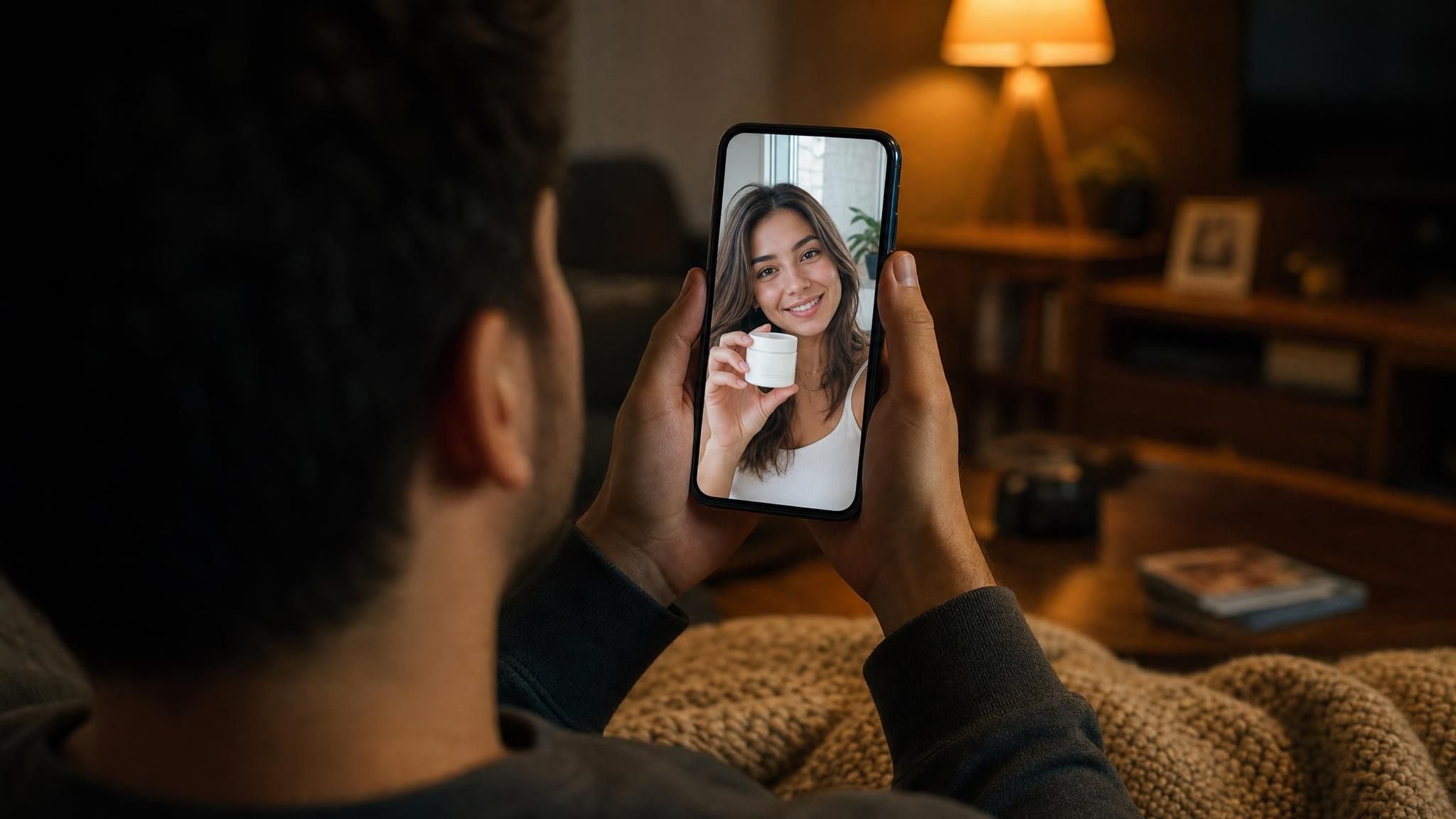
- AI UGC to kreacja reklamowa generowana przez AI w stylu treści tworzonych przez użytkowników: syntetyczny prezenter, prawdziwy produkt i swobodna kompozycja nagrania telefonem z rekomendacją.
- Kluczowy jest proces. Pozyskanie twórcy trwa zwykle od kilku dni do kilku tygodni; wygenerowanie klipu z głosem na podstawie zdjęcia produktu zajmuje minuty, a możesz przetestować to twierdzenie za darmo na swoim własnym produkcie.
- AI szybko przeszło z praktyki niszowej do standardowego wyposażenia: 83% dyrektorów ds. reklamy twierdzi, że ich firma korzystała z AI w kreacjach reklamowych, w porównaniu z 60% w 2024 roku, według badań IAB.
- TikTok i Meta wymagają oznaczania realistycznych treści AI, a to samo badanie IAB wykazało, że 73% konsumentów twierdzi, że etykieta informująca o AI nie obniżyłaby ich zamiaru zakupu.
- Najsilniejszym argumentem za AI UGC jest testowanie wolumenu obok ludzkich twórców, a nie całkowite ich zastąpienie.
Czym dokładnie jest AI UGC?
UGC, czyli treści generowane przez użytkowników, to nagrane telefonem, nieprzetworzone materiały, które prawdziwi klienci publikują na temat produktów. AI UGC zapożycza ten wygląd i generuje go: prezenter, który nie istnieje, wypowiadający kwestie, których nie napisał żaden klient, trzymający produkt, który jest całkowicie prawdziwy. Zobaczysz to samo określenie zapisane jako UGC AI, AI-generated UGC lub AI UGC content, a wszystko to wskazuje na to samo: syntetyczne reklamy stylizowane na rekomendacje.
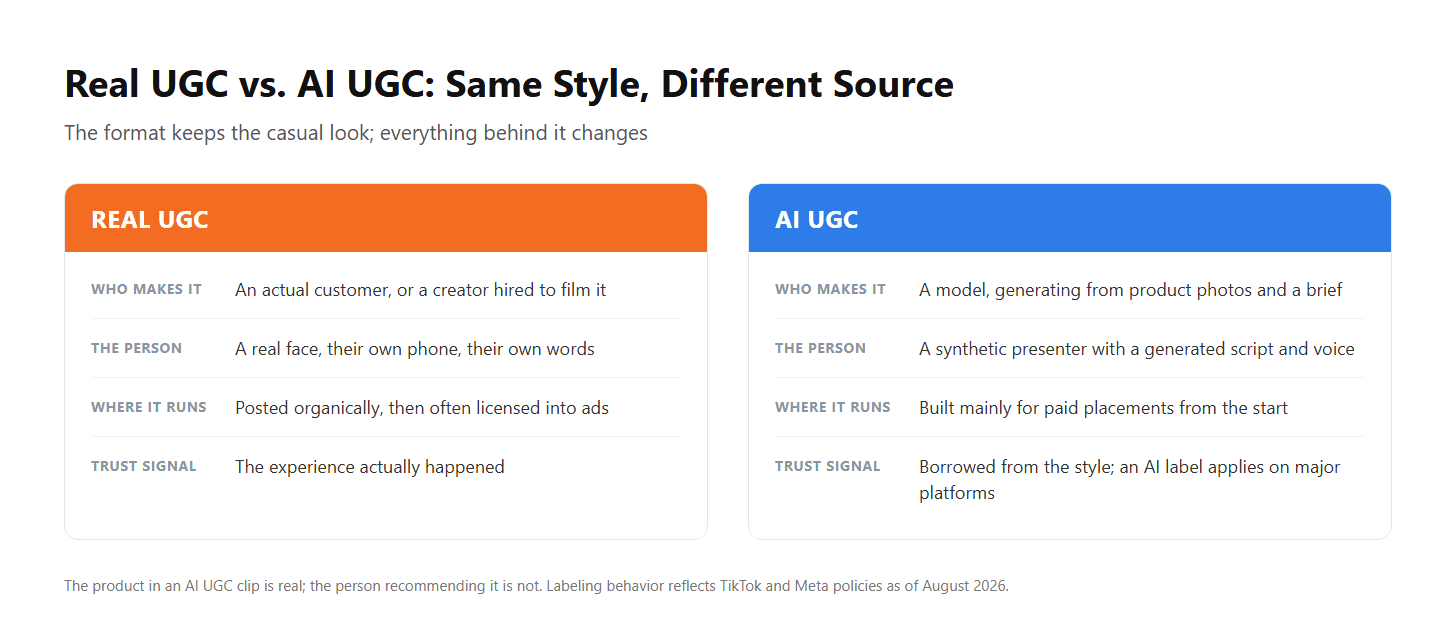
Ściśle rzecz ujmując, nazwa stoi w sprzeczności z samą sobą. Nic w tym nie jest tworzone przez użytkownika; branża zachowała tę etykietę, ponieważ opisuje styl, a nie źródło. Styl jest tym, co reklamodawcy faktycznie kupują: kadr dopasowany do feedu, mowa bezpośrednio do kamery i sygnały zaufania, jak w przypadku recenzji rówieśnika, a nie reklamy.
Większość dzisiejszych AI UGC to wideo – krótkie pionowe klipy przeznaczone na TikToka, Reels i Shorts, zazwyczaj z awatarem AI lub wygenerowanym prezenterem. Istnieją również wersje statyczne, czyli stylizowane zdjęcia produktów, które uchodzą za zdjęcia klientów, ale to wideo AI UGC stanowi większość tej kategorii, ponieważ feedy je nagradzają, a konta reklamowe konsumują je w dużych ilościach.
Jak działa tworzenie treści AI UGC
Każde narzędzie w tej przestrzeni kompresuje ten sam proces. To, co kiedyś było relacją z twórcą, staje się formularzem: dostarczasz produkt, oprogramowanie dostarcza osobę, scenariusz, głos i materiał wideo.
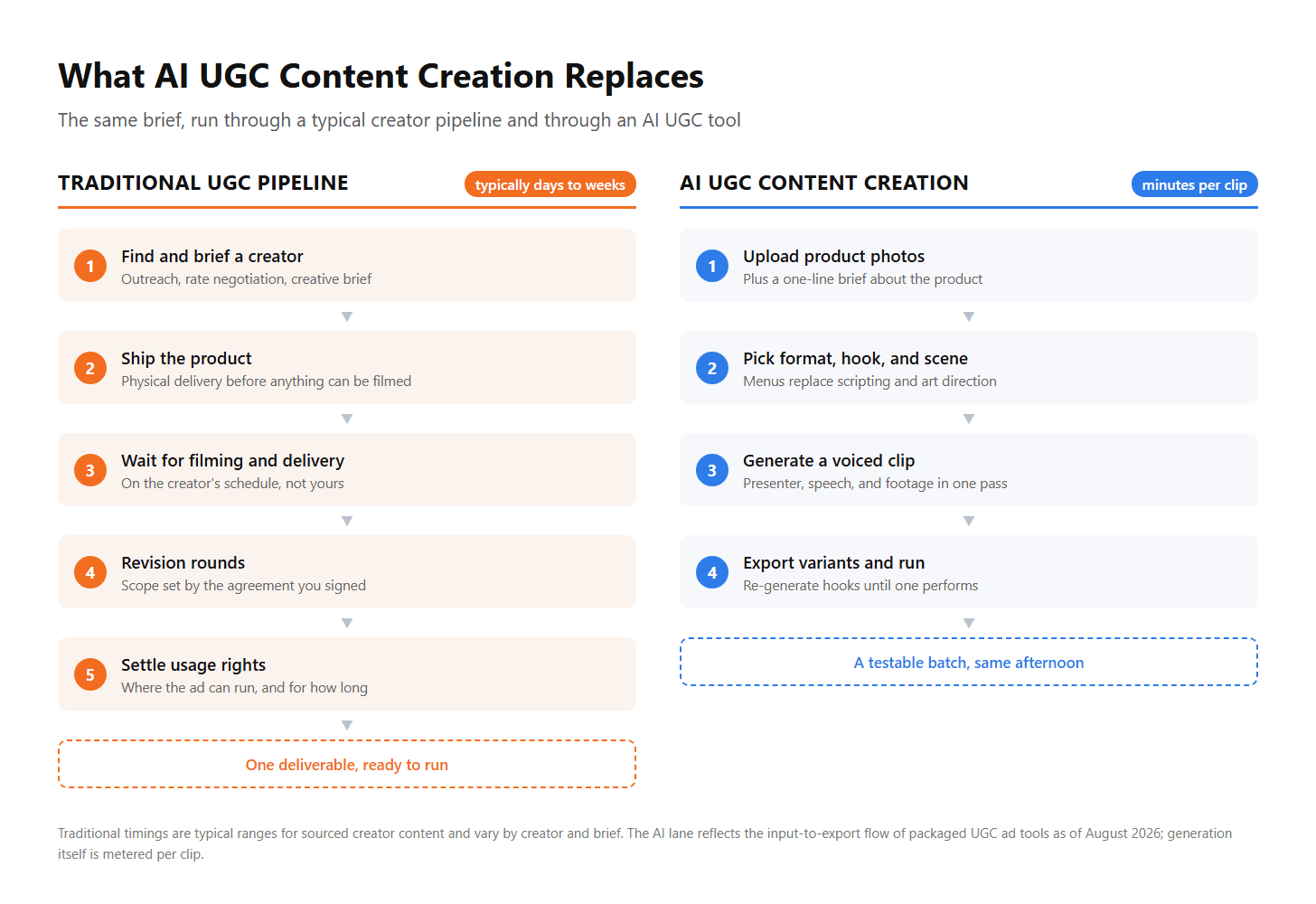
Lewa ścieżka to część, którą ludzie lekceważą. Znalezienie twórcy, wysyłka produktu, oczekiwanie na nagranie i negocjowanie, gdzie reklama może być emitowana – to wszystko czas w kalendarzu i żaden z tych kroków nie skaluje się, gdy konto reklamowe potrzebuje dwudziestu wariantów. Prawa ścieżka zastępuje te kroki menu: zasoby produktu na wejściu, presety zamiast pisania scenariusza i kierowania artystycznego, jedna generacja zamiast sesji zdjęciowej. W następnej sekcji przejdziemy przez ten przepływ na żywym narzędziu.
Jedna praktyczna uwaga do kroku 1: gotowy klip jest zbudowany wokół zdjęcia twojego produktu, więc to ten jeden plik decyduje o jakości wyniku bardziej niż jakiekolwiek menu. Jeśli zdjęcia z katalogu są zaśmiecone, obróbka obrazu naprawia to przed etapem wideo; przepływy pracy z kreacjami reklamowymi zbudowane na Seedream 5.0 Pro pokazują, jak taka przygotówka wygląda w praktyce.
Wygeneruj swoje pierwsze wideo AI UGC za darmo
Czytanie o procesie jest wolniejsze niż jednorazowe uruchomienie go. Atlas Cloud hostuje modele, na których zbudowana jest ta kategoria, a jego darmowe narzędzie UGC Product Ad to najszybszy sposób, aby zobaczyć ten format na swoim własnym produkcie, zamiast na czyimś demo.
Wygenerowane za pomocą darmowego narzędzia UGC Product Ad z jednego zdjęcia produktu i jednozdaniowego briefu, sierpień 2026.
Oto cały proces. Prześlij do czterech zdjęć swojego produktu i napisz jedno zdanie o tym, czym jest. Wybierz spośród 16 formatów reklam, 11 początkowych haczyków i 11 ustawień sceny, a następnie ustaw długość od 4 do 15 sekund oraz jeden z pięciu proporcji obrazu, przy czym 9:16 dla TikToka i Reels oraz 1:1 dla feedu to najczęstsze wybory. Generuj. Klip wraca z prezenterem, naturalną mową i dopasowanym ruchem ust w jednym przebiegu, bez osobnego etapu lektora. Jeśli chcesz, aby konkretna twarz występowała w reklamie, dodaj zdjęcie tej osoby; w przeciwnym razie narzędzie dobierze kogoś za ciebie.
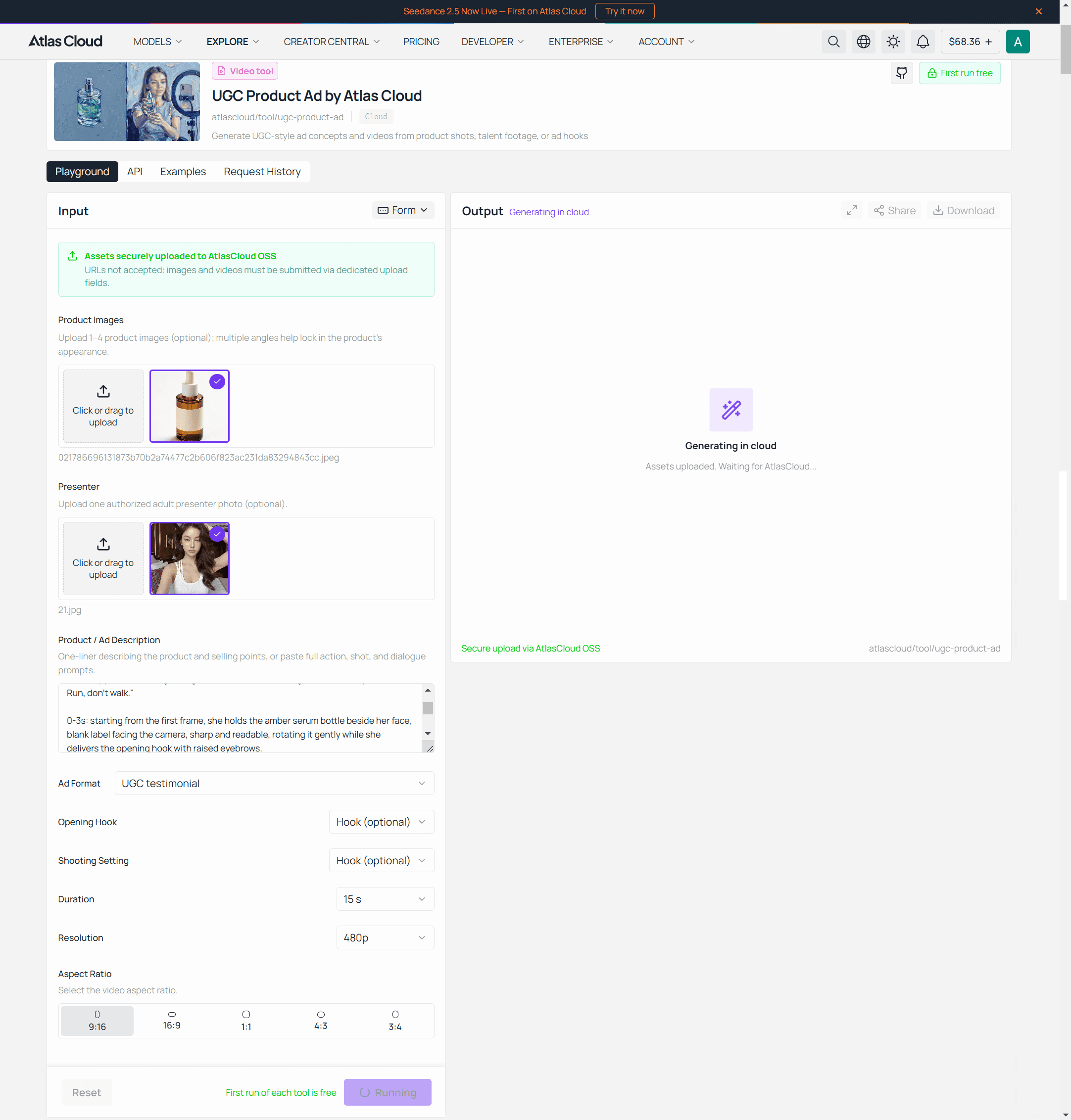
Znajduje się ono w ramach większej kolekcji darmowych narzędzi AI do przygotowywania i edycji zasobów, co ma znaczenie, gdy zaczniesz iterować: zdjęcie produktu, prezenter i sama reklama mogą pochodzić z tego samego konta.
Przykłady AI UGC: 3 formaty, które będziesz stale widzieć
Przewiń dowolną niszę produktową na TikToku, a przykłady AI UGC układają się w kilka powtarzających się struktur. Trzy z nich są tak ugruntowane, że narzędzia oferują je teraz jako presety jednym kliknięciem.
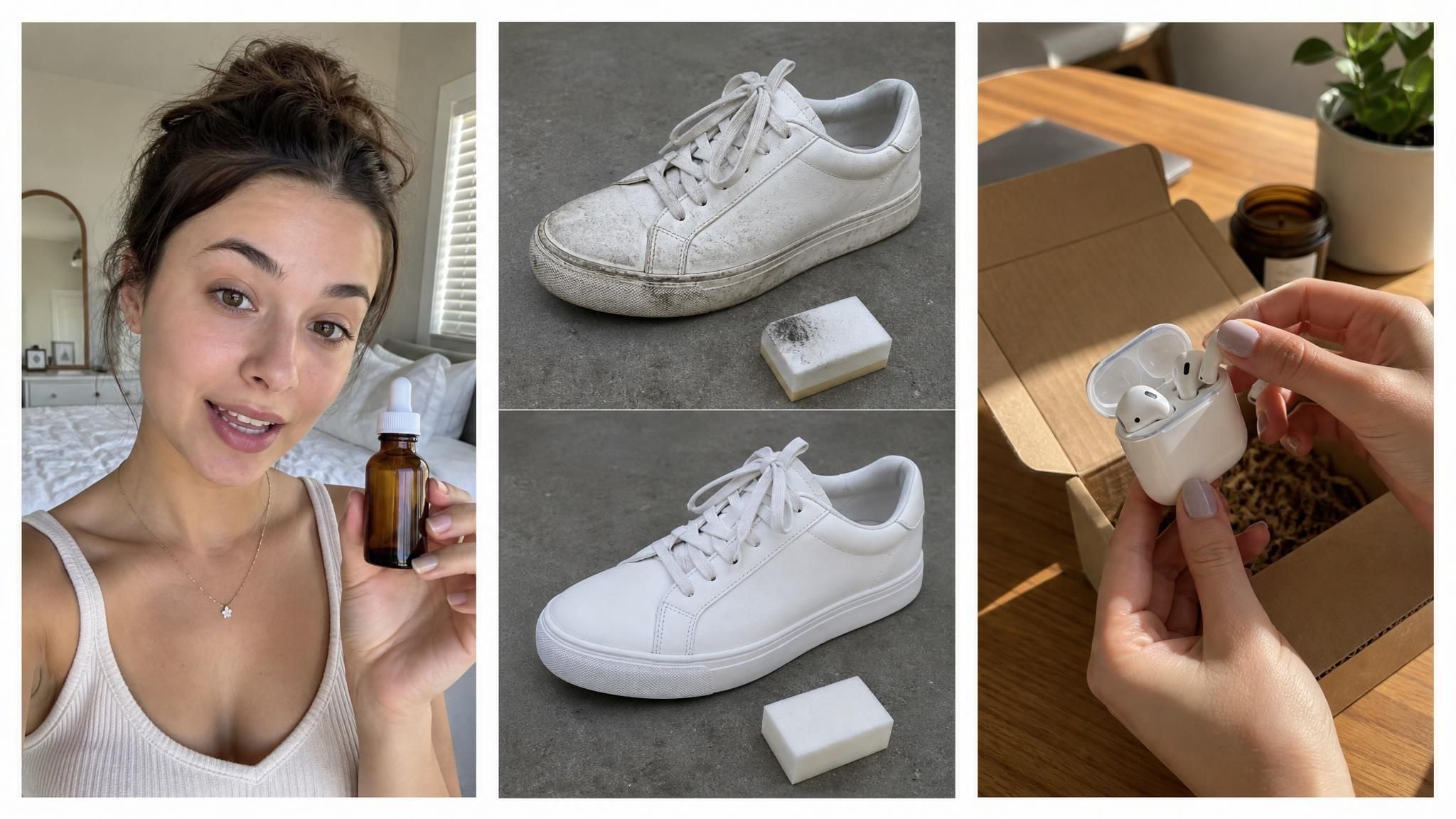
Rekomendacja twórcy jest najczęstsza z trzech – prezenter mówi do kamery tak, jak przyjaciel poleciłby coś. Format przed i po sprawdza się wszędzie tam, gdzie produkt daje widoczną zmianę, ponieważ kontrast działa przekonująco, a prezenter tylko go opisuje. Unboxing i formaty demonstracyjne sprzedają produkty dotykowe; widzowie chcą zobaczyć skalę i obsługę, zanim padną jakiekolwiek twierdzenia.
Praktyczne zastosowanie tych kategorii: są to hipotezy. Ten sam brief produktu uruchomiony we wszystkich trzech formatach, każdy z dwoma lub trzema różnymi haczykami, daje małą macierz testową zamiast jednego strzału. To jest przepływ pracy, który AI UGC faktycznie zmieniło, ponieważ ludzki twórca tworzący dziewięć wariantów to projekt, a generator tworzący dziewięć wariantów to popołudnie.
Czy AI UGC działa? Rzetelne dane
Szybkie sprawdzenie rzeczywistości, zanim popadniemy w entuzjazm: najlepsze dostępne dane z badań mówią, że reklamy tworzone przez AI podobają się reklamodawcom znacznie bardziej niż konsumentom.
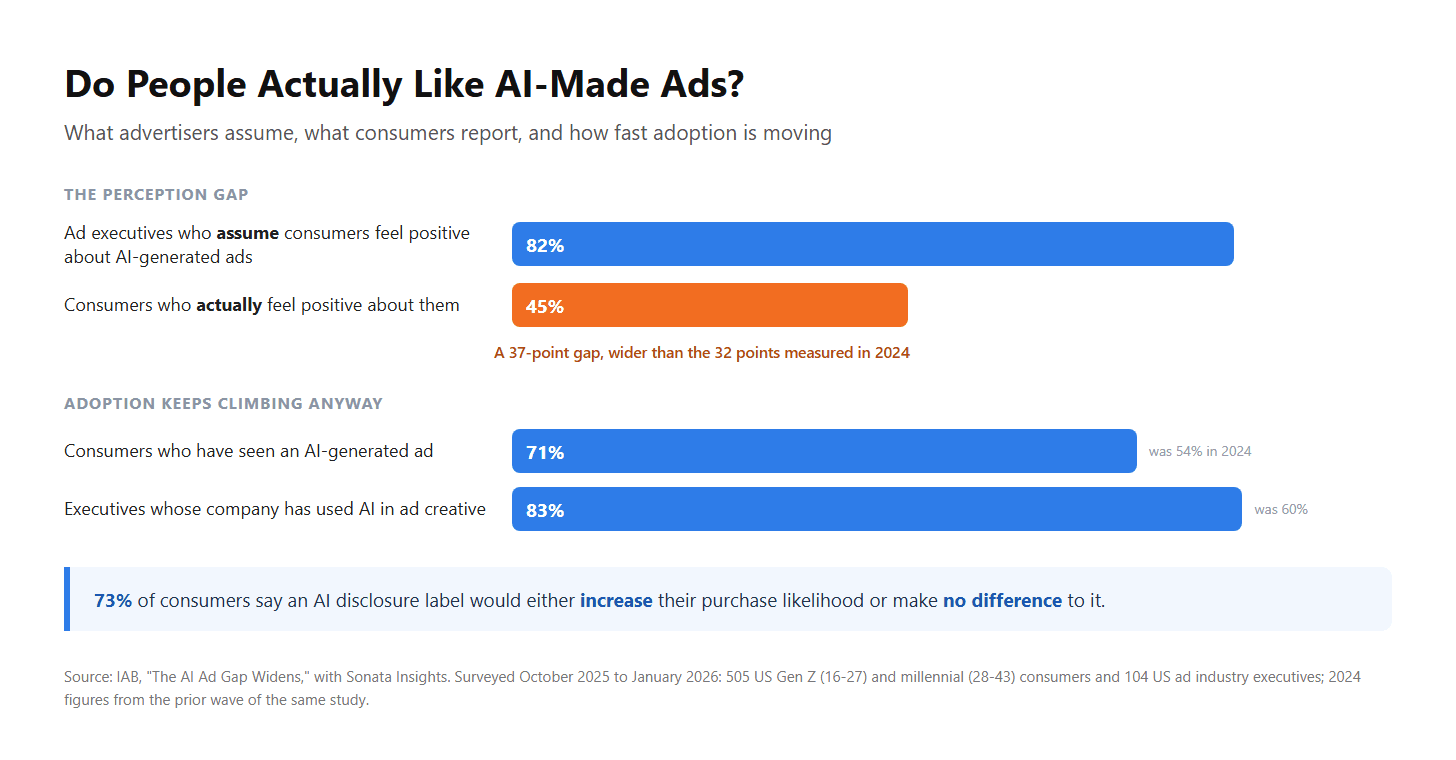
Liczby pochodzą z badania AI Ad Gap study przeprowadzonego przez IAB we współpracy z Sonata Insights, w którym przebadano 505 konsumentów z pokolenia Z i milenialsów oraz 104 dyrektorów ds. reklamy w USA w okresie od października 2025 do stycznia 2026. 82% dyrektorów zakłada, że konsumenci pozytywnie oceniają reklamy generowane przez AI. Tak naprawdę myśli 45% konsumentów. Ta 37-punktowa różnica powiększyła się z 32 punktów w 2024 roku, nawet gdy odsetek dyrektorów, których firmy korzystają z AI w kreacjach, wzrósł z 60% do 83%.
Przeczytaj obie strony. Sceptycyzm jest realny i najbardziej dotyka pokolenie Z. Jednocześnie ekspozycja stale rośnie, adopcja stale rośnie, a format jest nadal kupowany, co oznacza, że kwestia skuteczności jest rozstrzygana konto po koncie, a nie przez badania nastrojów. To samo badanie oferuje jedną naprawdę zachęcającą liczbę: 73% konsumentów twierdzi, że etykieta informująca o AI zwiększyłaby ich prawdopodobieństwo zakupu lub nic by nie zmieniła.
Ujawnianie jest również tym, na czym opierają się zasady platform. TikTok wymaga od twórców oznaczania realistycznych obrazów, dźwięku i wideo generowanych przez AI od czasu ogłoszenia etykiet treści we wrześniu 2023 roku. Meta, zgodnie z aktualizacją dotyczącą przejrzystości reklam GenAI z lutego 2025 roku, automatycznie wykrywa treści AI stron trzecich w reklamach i dołącza etykietę informacyjną o AI, a także osobno wymaga od reklamodawców ujawniania treści stworzonych lub zmienionych cyfrowo w reklamach dotyczących spraw społecznych, wyborów lub polityki. Żadne z tych przepisów nie zakazuje AI UGC. Oznacza to jednak konieczność budowania kampanii, które przetrwają widoczną etykietę, na co, jak wskazuje liczba 73%, jest szansa.
AI UGC a ludzcy twórcy: koszt, szybkość i kontrola
Porównanie staje się użyteczne dopiero wtedy, gdy przestaniesz traktować je jako kwestię zastąpienia.
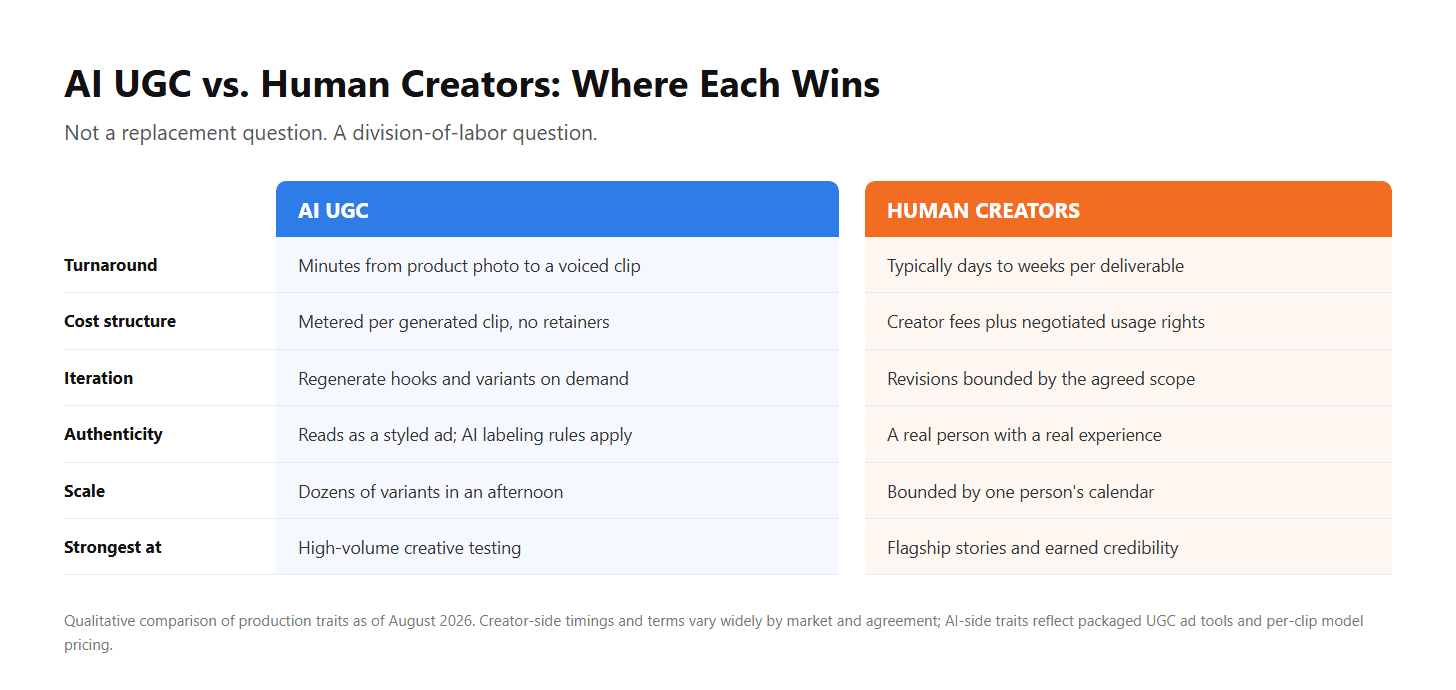
Wygenerowane klipy wygrywają we wszystkim, co mierzy się szybkością i powtarzalnością: czas realizacji, liczba wariantów, koszt na próbę i swoboda odrzucenia kilkunastu wersji bez niezręcznej rozmowy. Ludzcy twórcy wygrywają we wszystkim, co mierzy się zaufaniem: prawdziwa twarz z prawdziwą publicznością, doświadczenie, które nie jest wyreżyserowane, oraz treści, które platformy i odbiorcy traktują jako autentyczne, ponieważ takie są.
Kiedy nadal potrzebujesz ludzkiego twórcy
Niektóre zadania pozostają ludzkie. Reklamy z whitelistingu, które są emitowane z konta twórcy, zależą od istnienia tego twórcy. Historie założycieli i treści budujące społeczność tracą sens, gdy są syntetyzowane. Produkty, których przekaz opiera się na prawdziwych wrażeniach zmysłowych – smak, zapach, faktura materiału – wymagają osoby, która faktycznie je wypróbowała, a kategorie regulowane niosą ryzyko związane z twierdzeniami, których żaden wygenerowany prezenter nie powinien improwizować. Zespoły, które najlepiej wykorzystują AI do treści UGC, zwykle korzystają z obu ścieżek: wygenerowanego wolumenu, aby znaleźć zwycięski kąt, a następnie ludzkich twórców, aby opowiedzieć ten kąt z pełną wiarygodnością.
Wybór AI do treści UGC: 5 rzeczy, które mają znaczenie
Gdy już zdecydujesz się przetestować format, wybór narzędzia sprowadza się do dopasowania do przepływu pracy, a nie jakości dema. Pięć punktów kontrolnych obejmuje większość.
- Dane wejściowe, które akceptuje. Narzędzie, które zaczyna od zdjęcia produktu lub URL, pasuje do katalogu e-commerce; narzędzie, które zaczyna od scenariusza, zakłada, że masz scenarzystę.
- Głębokość presetów. Opcje haczyków, formatów i scen zapobiegają temu, by każdy klip wyglądał identycznie.
- Głos w jednym przebiegu. Czy mowa i synchronizacja ust są renderowane razem z materiałem, czy dodawane jako osobny krok, ponieważ osobne kroki mnożą się przy większej liczbie.
- Zachowanie wsadowe. Ile kliknięć dzieli cię od dziesięciu wariantów.
- Prawa i znaki wodne. Reklama, której nie możesz legalnie wyemitować, nie jest tania przy żadnej cenie.
Oceniliśmy dziesięć platform pod kątem tego kryterium przepływu pracy w naszym rankingu platform, jeśli chcesz wersję narzędzie po narzędziu.
Najczęściej zadawane pytania
Co to jest wideo AI UGC?
Wideo AI UGC to krótki klip reklamowy, zwykle pionowy i poniżej 30 sekund, wygenerowany przez AI w celu naśladowania treści nagranych przez klienta: prezenter mówi do kamery o produkcie w swobodnym kadrze przypominającym nagranie telefonem. Prezenter, scenariusz, głos i materiał są wygenerowane; produkt jest prawdziwy. Jest tworzony głównie do płatnych umieszczeń na TikToku, Reels i Shorts, choć te same klipy coraz częściej pojawiają się jako posty organiczne.
Czy AI generowane UGC jest dozwolone na TikToku i Meta?
Tak, ale z oznakowaniem. TikTok wymaga, aby realistyczne obrazy, dźwięk i wideo generowane przez AI były opatrzone informacją o ujawnieniu, stosowaną za pomocą wbudowanej etykiety, naklejki lub podpisu. Meta automatycznie wykrywa treści generowane przez AI w reklamach i dołącza etykietę informacyjną o AI, a reklamy dotyczące spraw społecznych, wyborów lub polityki dodatkowo wymagają od reklamodawcy ujawnienia treści stworzonych lub zmienionych cyfrowo. Zasady stale ewoluują, więc przed skalowaniem kampanii sprawdź aktualne przepisy każdej platformy.
Ile kosztuje AI UGC?
Pakietowe narzędzia subskrypcyjne zwykle rozliczają się za pomocą miesięcznych kredytów, co w przypadku planów podstawowych przekłada się na kilka dolarów za krótki klip. Alternatywą jest rozliczenie za klip: w naszych testach z sierpnia 2026 roku narzędzie UGC Product Ad w Atlas Cloud wyceniło pełną 15-sekundową reklamę na 1,772 USD, czyli około 0,12 USD za sekundę przy obecnej jakości 480p, na koncie, które doładowujesz od 19 USD bez miesięcznej opłaty. Ceny się zmieniają, więc rzeczywistą cenę podaj kwota, którą narzędzie pokazuje przed wygenerowaniem.
Czy mogę tworzyć treści AI UGC za darmo?
Tak. Narzędzie UGC Product Ad w Atlas Cloud generuje kompletną reklamę z głosem na podstawie zdjęcia twojego produktu za darmo, co wystarczy, aby ocenić, czy format pasuje do twojego produktu, zanim podejmiesz jakąkolwiek decyzję budżetową. Kilka platform subskrypcyjnych oferuje również darmowe poziomy lub kredyty próbne, zazwyczaj z ograniczeniami dotyczącymi znaków wodnych lub liczby wyników.
Czy AI UGC zastąpi ludzkich twórców UGC?
Dane wskazują na współistnienie. Wygenerowane klipy dominują w testowaniu kreacji o wysokim wolumenie, ponieważ kosztują minuty zamiast tygodni, ale zaufanie konsumentów nadal faworyzuje prawdziwych ludzi, a whitelisting, treści założycielskie i produkty sensoryczne wymagają ich. Typowym wzorcem w 2026 roku jest używanie AI UGC do znalezienia konwertującego kąta, a następnie inwestowanie w ludzkich twórców, aby skalować zwycięzcę.
Podsumowanie
Odkładając na bok szum, AI UGC to zmiana produkcyjna, a nie nowy rodzaj perswazji. Format, który naśladuje, już działał; zmieniło się to, że zdjęcie produktu i jedno zdanie produkują teraz w minutach to, co proces z twórcą produkował w tygodniach, przy koszcie na klip, który sprawia, że nieudane testy są prawie darmowe. Dowody są dwojakie: adopcja i ekspozycja stale rosną, sceptycyzm konsumentów jest realny, ale możliwy do przetrwania dzięki ujawnieniu, a zespoły, które odnoszą sukcesy, używają wygenerowanego wolumenu do nauki, a ludzkiej wiarygodności do finalizacji.
Najtańszym sposobem na wyrobienie sobie własnej opinii jest empiria. Uruchom swój produkt przez darmową generację, porównaj wynik z obecną kreacją i oceń, czy zasługuje na budżet testowy. Ten pojedynczy klip powie ci o AI UGC więcej niż jakakolwiek definicja.





