

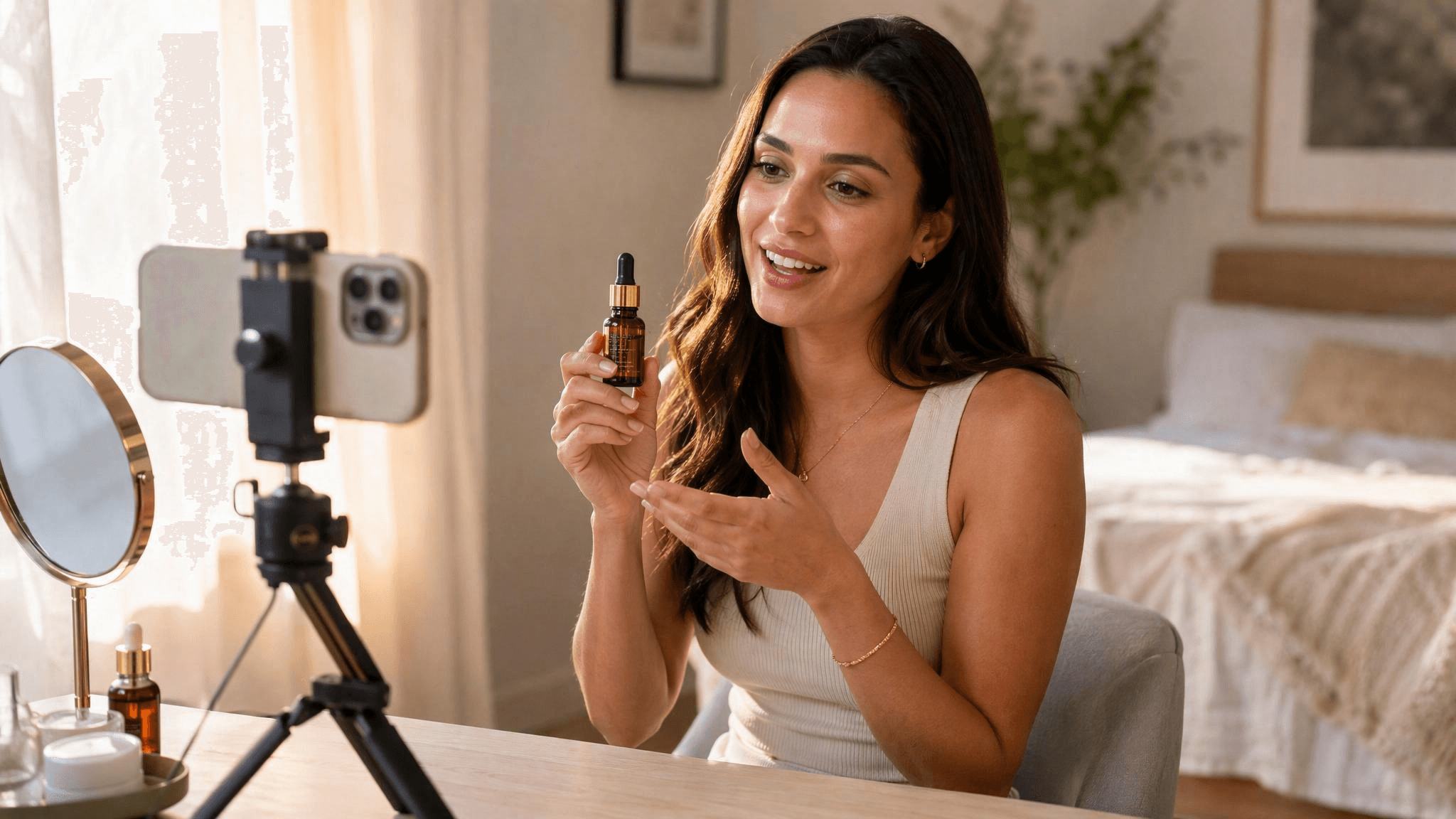
ใบเสนอราคาปรากฏในอินบ็อกซ์ของคุณที่ 175 ดอลลาร์ต่อวิดีโอ ผ่านรายการสี่บรรทัดต่อมา ต้นทุนของแอสเซ็ตเดียวกันกลับใกล้เคียง 398 ดอลลาร์ และคุณยังไม่ได้จ่ายค่าฮุกที่สอง ช่องว่างนั้นคือส่วนที่ขาดหายไปจากพิตช์เด็คส่วนใหญ่ คู่มือนี้ครอบคลุมว่า เอเจนซี่วิดีโอ UGC คิดค่าใช้จ่ายเท่าใดเมื่อนับออปชันเพิ่มเติมแล้ว คำถามแปดข้อที่เผยให้เห็นสัญญาที่อ่อนแอก่อนที่คุณจะเซ็น และสามสถานการณ์ที่การจ้างเอเจนซี่จะทำให้การทดสอบของคุณช้าลงแทนที่จะเร็วขึ้น
ประเด็นสำคัญ
- ใบเสนอราคาจากเอเจนซี่คืออัตราพื้นฐาน สิทธิ์การใช้งาน การไวท์ลิสต์ และฮุกเพิ่มเติมมาเป็นรายการแยกและอาจทำให้ราคาเพิ่มขึ้นมากกว่าสองเท่า
- ขั้นต่ำของแคมเปญที่ประกาศไว้เป็นตัวตัดสินว่าคุณเป็นลูกค้าที่เหมาะสมหรือไม่ ก่อนที่คุณภาพงานสร้างจะเข้าสู่การสนทนาอย่างมาก
- งานหลายภาษาถูกแบ่งเป็นสามเส้นทาง และมีเพียงเส้นทางเดียวเท่านั้นที่ทำให้ภาพเห็นข้ามตลาดได้
- การค้นพบว่าฮุกใดแปลงเป็นยอดขายคือการใช้เรตต่อวิดีโอที่แย่ที่สุด เพราะวาเรียนต์ที่แพ้มีต้นทุนเท่ากับตัวที่ชนะ
- สร้างโฆษณาที่ทดสอบได้จากรูปภาพผลิตภัณฑ์ก่อนด้วย เครื่องมือ UGC Product Ad ฟรี แล้วค่อยตัดสินใจว่าอะไรสมควรได้การถ่ายทำจริง
เอเจนซี่วิดีโอ UGC ส่งมอบอะไรจริงบ้าง
โมเดลธุรกิจสี่แบบที่แตกต่างกันตอบโต้กับคำเดียวกัน ร้านบริการเต็มรูปแบบเขียนบรีฟของคุณ คัดเลือกครีเอเตอร์ จัดส่งสินค้า ตรวจสอบฟุตเทจ ตัดต่อ และส่งคืนแอสเซ็ตพร้อมสิทธิ์ที่แนบมา มาร์เก็ตเพลสครีเอเตอร์ยื่นรายชื่อที่คัดเลือกมาให้คุณแล้วถอยออก ฟรีแลนซ์โดยตรงถ่ายทำและตัดต่อ และทุกอย่างรอบนั้นเป็นของคุณ ซอฟต์แวร์สร้างวิดีโอข้ามขั้นตอนการคัดเลือกครีเอเตอร์ไปเลย
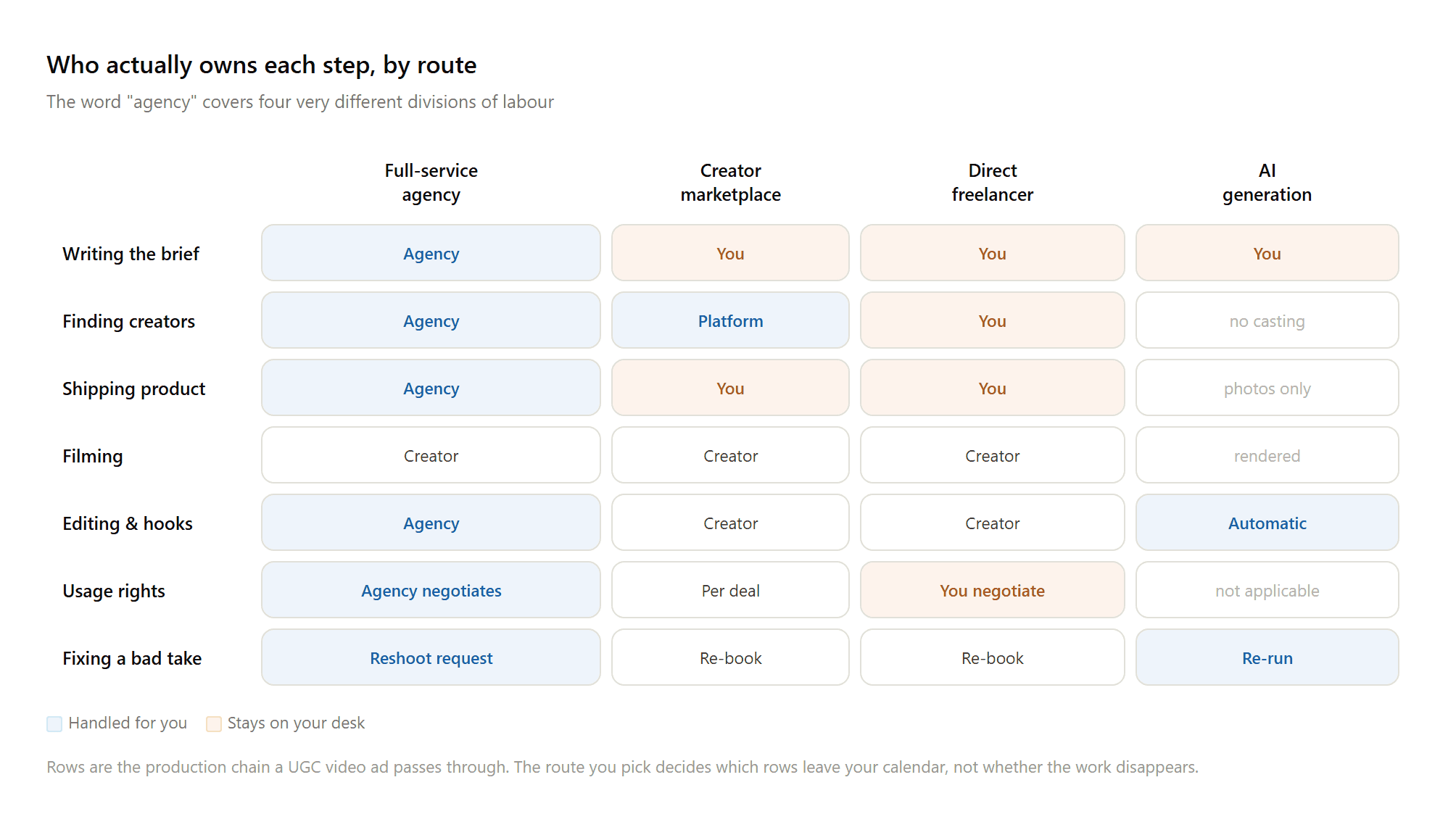
อ่านตารางนั้นเป็นปฏิทิน ไม่ใช่รายการฟีเจอร์ ไม่มีอะไรในห่วงโซ่การผลิตที่หายไปเมื่อคุณเอาท์ซอร์ส การหาแหล่งที่มา การจัดส่ง การอนุมัติ และการเจรจาสิทธิ์ยังคงเกิดขึ้นทั้งหมด คำถามเดียวคือสัปดาห์ของใครที่ถูกใช้ไปและค่าโอนงานนั้นเท่าไร
หนึ่งแถวสมควรได้รับความสนใจมากกว่าที่มักได้รับ การแก้เทคที่ไม่ดีคือจุดที่เส้นทางแยกกันชัดที่สุด การถ่ายใหม่ภายใต้สัญญาครีเอเตอร์หมายถึงการจองรอบใหม่ การจัดส่งชุดใหม่ และการรอคอยอีกครั้ง ขณะที่การเรนเดอร์ใหม่หมายถึงการเปลี่ยนบรรทัดหนึ่งในบรีฟ
ราคาของเอเจนซี่โฆษณา UGC แบ่งออกอย่างไร
ใบเสนอราคาจากเอเจนซี่ผลิตโฆษณา UGC หรือร้านใดก็ตามที่ขายตัวเองว่าเป็นบริการผลิตวิดีโอ UGC มืออาชีพ มีความหลากหลายน้อยกว่าที่คุณคาดไว้ในระดับผลงานส่งมอบ คู่มืออัตราของ Influee ระบุรายได้ทั่วไปของครีเอเตอร์ที่ 150 ถึง 300 ดอลลาร์ต่อวิดีโอ โดยค่ามัธยฐานใกล้เคียง 175 ดอลลาร์ มือใหม่เริ่มที่ประมาณ 100 ดอลลาร์ และครีเอเตอร์ที่ตั้งตัวแล้วได้เกิน 500 ดอลลาร์
จากนั้นออปชันเพิ่มเติมก็มาถึง คู่มือเดียวกันนี้กำหนดราคาสิทธิ์การใช้งานและไวท์ลิสต์เป็นเปอร์เซ็นต์ของอัตราพื้นฐานแทนค่าธรรมเนียมคงที่ โดยสิทธิ์อยู่ที่ 30% ถึง 50% การไวท์ลิสต์อยู่ที่ 30% ของอัตราพื้นฐานต่อเดือน และวาเรียนต์ฮุกหรือ CTA อย่างละ 50 ดอลลาร์ งานเร่งด่วนบวกเพิ่ม 25% ถึง 50% ตัวเลขเหล่านั้นเผยแพร่ในเดือนเมษายน 2025 ดังนั้นให้ถือว่าเป็นโครงร่างมากกว่าคำเสนอราคาล่าสุด
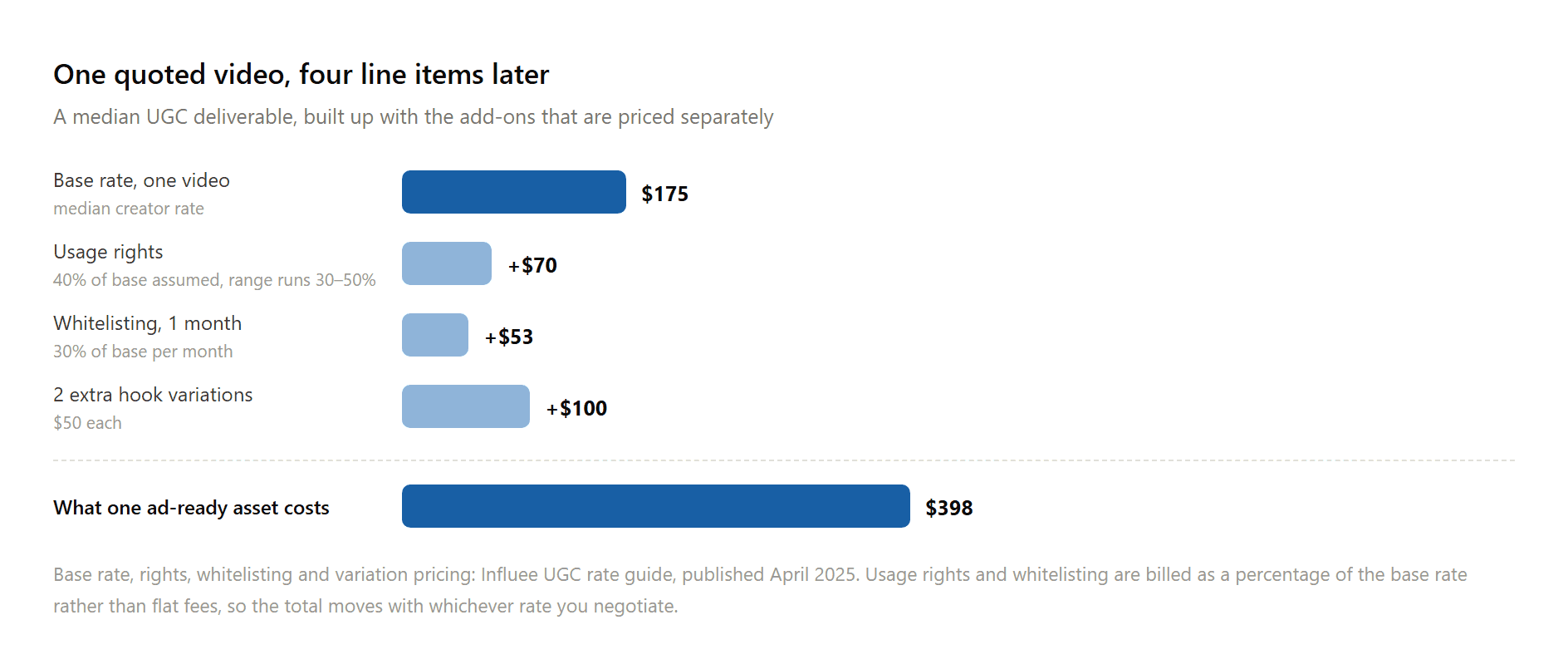
รวมรายการบรรทัดธรรมดาสี่รายการ แล้วใบเสนอราคา 175 ดอลลาร์กลายเป็นแอสเซ็ต 398 ดอลลาร์ ไม่มีอะไรตรงนั้นเป็นการหลอกลวง ทุกรายการคืองานจริงหรือความเสี่ยงจริงที่โอนให้คนอื่น มันไม่ใช่สิ่งที่แบรนด์ส่วนใหญ่ใช้ตั้งงบประมาณเมื่อได้ยินตัวเลขต่อวิดีโอ
ราคาแบบจำนวนมากช่วยให้ตัวเลขเบาลงเล็กน้อย โดยมีส่วนลดประมาณ 15% ถึง 25% เมื่อคุณตกลงซื้อห้าวิดีโอขึ้นไป ถึงแม้การผูกมัดกับห้าวิดีโอก่อนรู้ว่าแองเกิลใดได้ผลก็เป็นความแพงอีกแบบหนึ่ง
เอเจนซี่เพิ่มชั้นเหนือสิ่งเหล่านี้ทั้งหมด และชั้นที่สำคัญที่สุดคือขั้นต่ำ การรวบรวมรายชื่อเอเจนซี่ของ Influencer Marketing Hub ซึ่งอัปเดตเมื่อกุมภาพันธ์ 2026 ระบุขั้นต่ำของแคมเปญตั้งแต่ 1,000 ดอลลาร์ที่ระดับเข้าถึงได้ ไปจนถึง 20,000 ดอลลาร์ขึ้นไปที่ระดับองค์กร ต่ำกว่าขั้นต่ำ คุณภาพงานสร้างไม่ใช่ตัวตัดสิน เพราะคุณไม่เคยเข้าถึงการสนทนาด้วยซ้ำ
สร้างโฆษณาหนึ่งชิ้นก่อนที่จะบรีฟใคร
นี่คือการก้าวแรกที่ถูกกว่า สร้างเวอร์ชันด้วยตัวเอง ดูมัน แล้วให้สิ่งนั้นช่วยกำหนดสิ่งที่คุณจะจ่ายคนทำจริง คลิปด้านล่างเป็นโฆษณาแกะกล่องที่สร้างขึ้น: พรีเซนเตอร์ ห้อง เสียง และลิปซิงก์ทั้งหมดมาจากรูปภาพผลิตภัณฑ์และบรีฟที่เขียน
สิ่งนั้นสร้างด้วย Atlas Cloud ซึ่งไลน์อัป เครื่องมือ AI รวมถึง ตัวสร้าง UGC Product Ad ฟรี สี่ขั้นตอนจากรูปภาพไปจนถึงคลิปที่เสร็จสมบูรณ์:
- อัปโหลดรูปภาพผลิตภัณฑ์ 1 ถึง 4 รูป ภาพแพ็คเกจสะอาดๆ บวกภาพรายละเอียดหนึ่งภาพก็เพียงพอแล้ว เพิ่มรูปพรีเซนเตอร์หากคุณต้องการใบหน้าที่เฉพาะเจาะจง
- เขียนหนึ่งบรรทัดอธิบายผลิตภัณฑ์ ผู้ซื้อ และสไตล์ครีเอเตอร์ที่คุณต้องการ
- เลือกจากรูปแบบโฆษณา 16 แบบ ฮุกเปิดเรื่อง 11 แบบ และฉาก 11 แบบ การแกะกล่อง รีวิวเซลฟี่ การทดสอบการบด และจากรกสู่สะอาดอยู่ในเมนูเดียวกัน
- ตั้งความยาวระหว่าง 4 ถึง 15 วินาที เลือกอัตราส่วน 9:16 หรือหนึ่งในสี่อัตราส่วนอื่น แล้วสร้าง
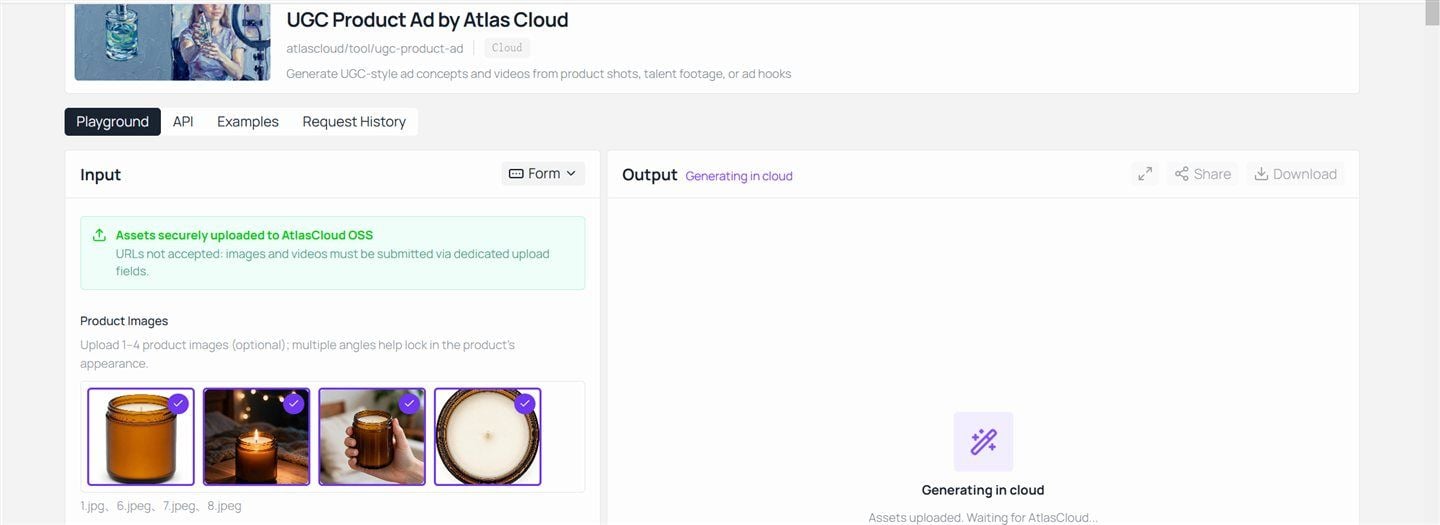
บันทึกเชิงปฏิบัติสองข้อจากการทดสอบเครื่องมือนี้ บรีฟที่จัดฉากอย่างชัดเจนได้ผลดีกว่าบรีฟที่บรรยายอารมณ์ ดังนั้นให้เขียนการจัดเฟรม ("วางโทรศัพท์บนโต๊ะ มุมกล้องคงที่") ควบคู่กับสคริปต์ และเมื่อพรีเซนเตอร์ถือโทรศัพท์ ให้จำกัดการกระทำไว้ที่มือข้างที่ว่างหนึ่งข้างสามารถทำได้
เพื่อให้เห็นสเกล แนวคิด 15 วินาทีเดียวกันที่สร้างแทนว่าจ้างมีต้นทุนประมาณ 1.77 ดอลลาร์ที่ความละเอียด 480p เมื่อเราวัดในเครื่องมือในเดือนสิงหาคม 2026 ตัวเลขนั้นไม่ใช่สิ่งทดแทนตัวเลข 398 ดอลลาร์ด้านบน มันซื้อเรนเดอร์ไว้ทดสอบ ไม่ใช่ใบหน้าของบุคคลหรือสิทธิ์อนุญาตให้ลงโฆษณา สิ่งที่ดีคือใช้ตัดสินใจว่าแนวคิดใดสมควรได้การถ่ายทำจริงก่อนที่คุณจะจ่ายค่าถ่ายทำจริง
บริการผลิตวิดีโอ UGC หลายภาษา: แต่ละเส้นทางมีค่าใช้จ่ายเท่าไร
เมื่อส่งบรีฟแบบนั้นให้ผู้ให้บริการภายนอกที่ครอบคลุมห้าตลาด การเปรียบเทียบจะไม่เรียบง่ายอีกต่อไป บริการผลิตวิดีโอ UGC หลายภาษาสามารถหมายถึงครีเอเตอร์เจ้าของภาษาในแต่ละตลาด การถ่ายทำครั้งเดียวกับแทร็กพากย์ห้าภาษา หรือการเรนเดอร์แยกห้าครั้ง และสิ่งเหล่านั้นคือผลิตภัณฑ์ที่แตกต่างกันอย่างมากในราคาที่แตกต่างกันอย่างมาก
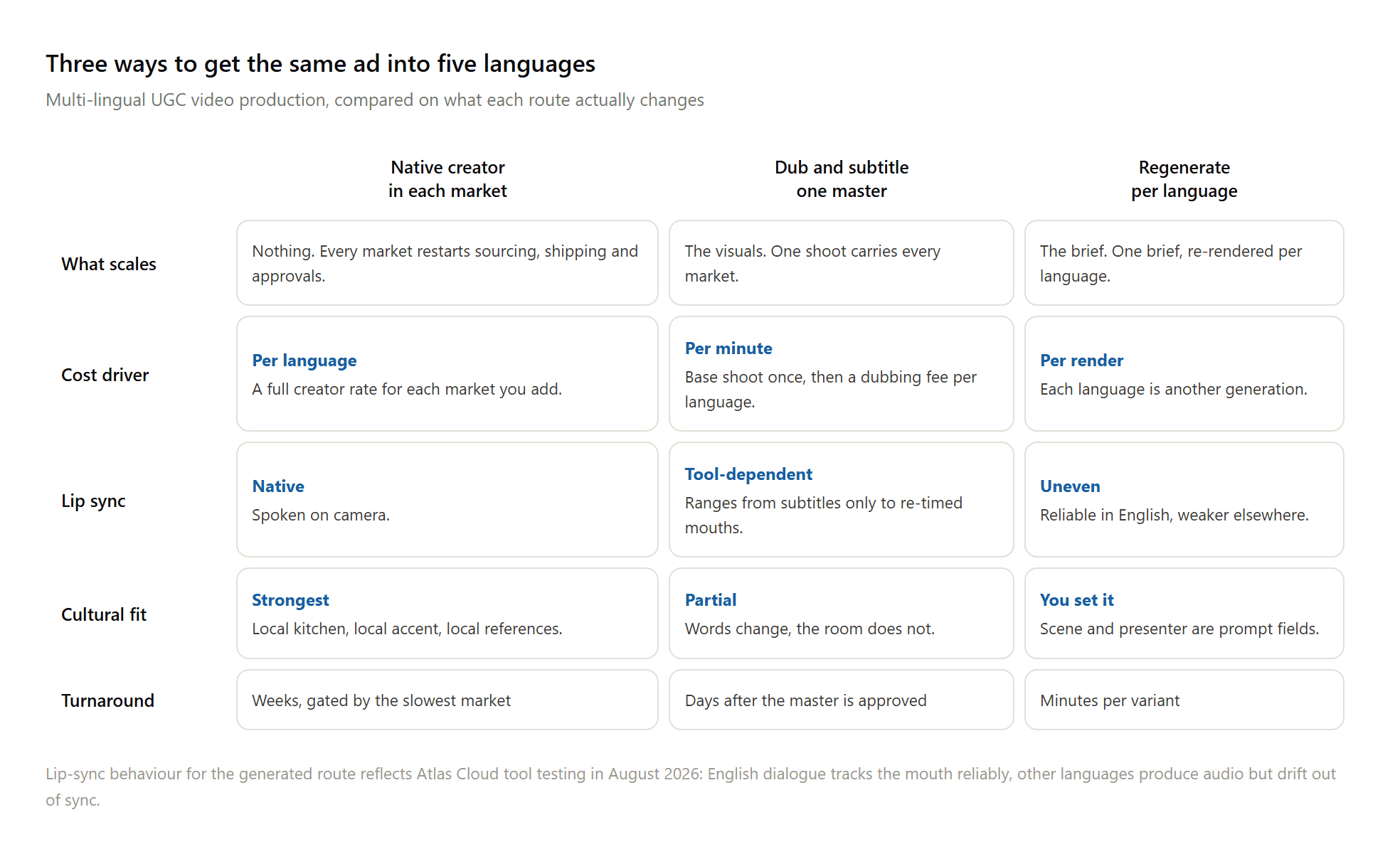
ถามให้ชัดว่าคุณกำลังซื้อแบบไหนก่อนเปรียบเทียบตัวเลข ครีเอเตอร์เจ้าของภาษาในแต่ละตลาดให้ความเหมาะสมทางวัฒนธรรมที่แข็งแกร่งที่สุดและปฏิทินที่ช้าที่สุด เพราะทุกตลาดเริ่มต้นการหาครีเอเตอร์จากศูนย์ การพากย์ต้นฉบับรักษาภาพและงบประมาณไว้ได้ แต่ห้องยังคงผิด: ห้องครัวที่ดูเป็นแบบอเมริกันก็ยังดูเป็นแบบอเมริกันเมื่อมีเสียงสเปนพากย์ทับ
การสร้างใหม่ตั้งอยู่ระหว่างสองเส้นทาง และมาพร้อมข้อจำกัดที่ตรงไปตรงมา ในการทดสอบเดือนสิงหาคม 2026 ของเรา บทสนทนาภาษาอังกฤษตรงกับปากของพรีเซนเตอร์อย่างน่าเชื่อถือ ในขณะที่ภาษาอื่นให้เสียงที่ใช้งานได้แต่หลุดจากการซิงก์ สำหรับตลาดที่ลิปซิงก์เป็นตัวแบกโฆษณา เส้นทางนี้ยังไม่พร้อม สำหรับตลาดที่คุณปรับโลคัลไลซ์ฉากและอุปกรณ์ประกอบมากกว่าบทสนทนา นี่คือตัวเลือกที่เร็วที่สุด
เมื่อคุณไม่จำเป็นต้องใช้เอเจนซี่โฆษณา UGC
การตรวจสอบสามข้อ และข้อใดข้อหนึ่งก็สามารถเป็นเหตุผลให้เลื่อนการเซ็นสัญญาออกไปได้
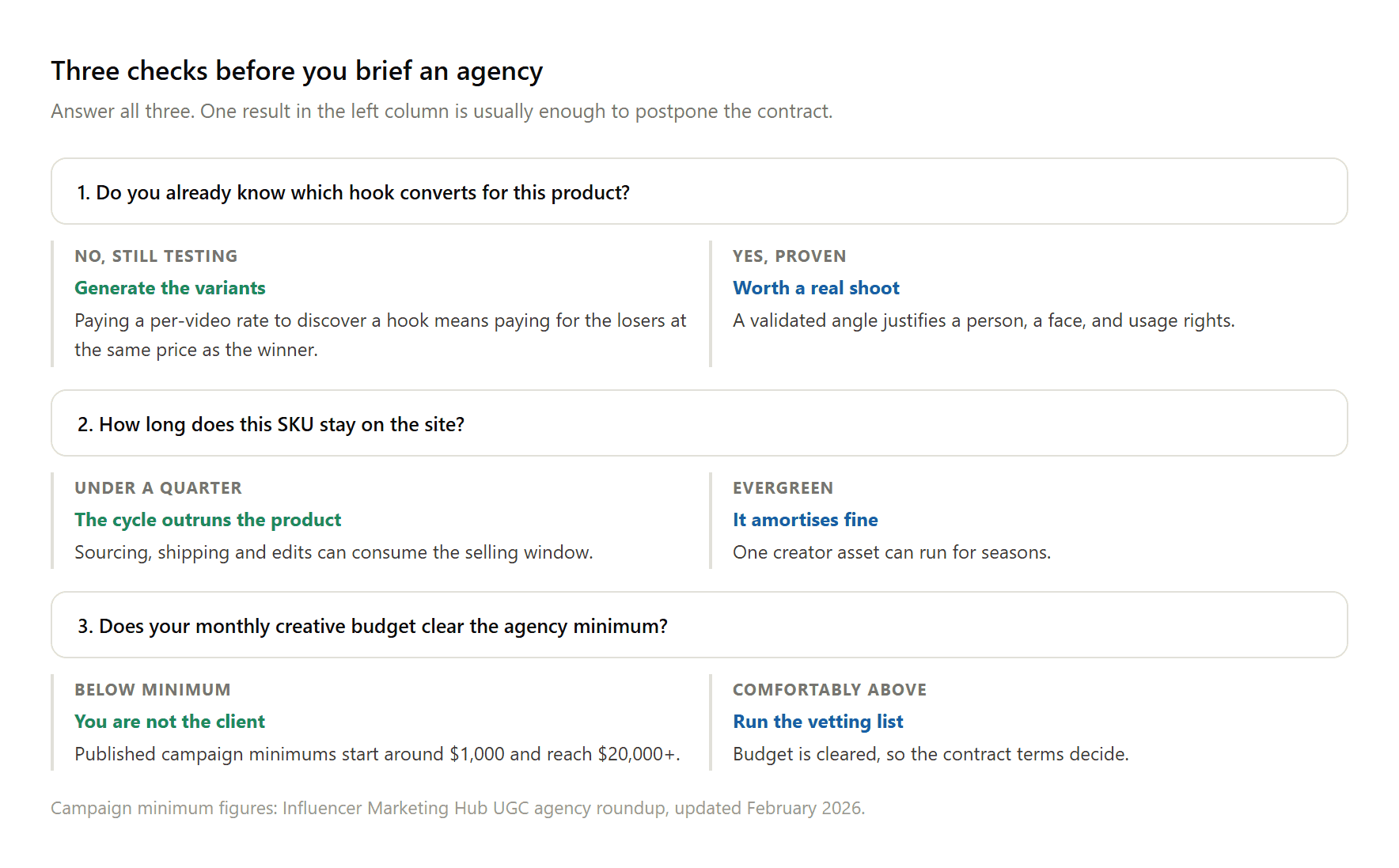
ข้อแรกคือข้อที่แบรนด์มักเข้าใจผิดบ่อยที่สุด การจ่าย 175 ถึง 398 ดอลลาร์ต่อแอสเซ็ตเพื่อค้นหาว่าฮุกใดได้ผลหมายความว่าวาเรียนต์ที่ล้มเหลวมีต้นทุนเท่ากับตัวที่ชนะ การค้นหาต้องการปริมาณและความล้มเหลวราคาถูก และนั่นคือรูปแบบทางเศรษฐกิจที่แตกต่างจากการผลิต
แคตตาล็อกที่หมุนเร็วชนเข้ากับข้อตรวจสอบที่สอง หาก SKU ขายได้เพียงซีซันเดียว วงจรการหาครีเอเตอร์และการจัดส่งอาจกินช่วงเวลาขายก่อนที่คัทแรกจะออกมา
ข้อสามคือเลขคณิต เมื่องบประมาณงานสร้างรายเดือนของคุณอยู่ต่ำกว่าขั้นต่ำที่ประกาศไว้ แสดงว่าคุณกำลังเลือกซื้อผิดชั้น และทางเลือกที่ควรค่าแก่การเปรียบเทียบคือแพลตฟอร์มแบบบริการตนเอง มากกว่าเอเจนซี่ขนาดเล็ก
คัดกรองเอเจนซี่ผลิตวิดีโอ UGC: 8 คำถาม
พอร์ตโฟลิโอเป็นสัญญาณที่อ่อนแอ ทุกร้านโชว์โฆษณาที่ได้ผล และเอเจนซี่ UGC ที่ดีที่สุดสำหรับโฆษณาบนกระดาษไม่จำเป็นต้องเป็นเอเจนซี่ที่สัญญาแข็งแรง เงื่อนไขสัญญาคือสัญญาณที่ซื่อสัตย์ และแปดข้อในนั้นบอกคุณเกือบทั้งหมดที่คุณต้องการ
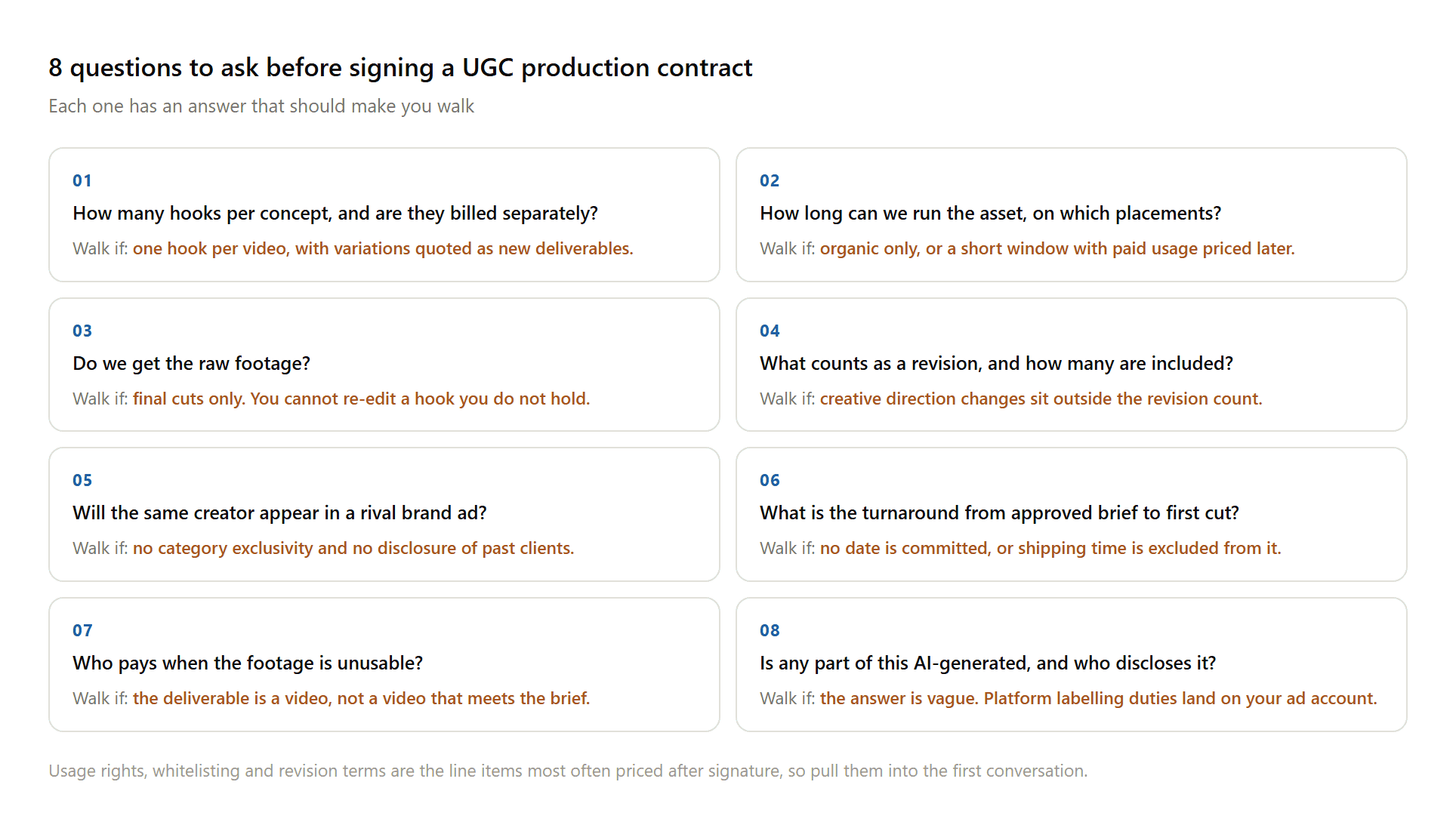
คำถามข้อ 3 จับปัญหาได้มากกว่าข้ออื่นรวมกัน หากคุณไม่เคยได้รับฟุตเทจดิบ การทดสอบฮุกในอนาคตทุกครั้งคือใบสั่งซื้อใหม่ และรายได้ของเอเจนซี่ต้องพึ่งพาความจริงข้อนั้น
การผลิตวิดีโอเอนด์ทูเอนด์สำหรับโฆษณา TikTok ควรรวมอะไรบ้าง
"เอนด์ทูเอนด์" เป็นคำทางการตลาดจนกว่าจะมีใครสักคนระบุจุดเริ่มต้นและจุดสิ้นสุด บริษัทที่ให้บริการผลิตวิดีโอเอนด์ทูเอนด์สำหรับคอนเทนต์ที่ผู้ใช้สร้างขึ้นควรสามารถระบุทุกขั้นตอนที่ตนรับผิดชอบ: การพัฒนาบรีฟ การคัดเลือกครีเอเตอร์ โลจิสติกส์ผลิตภัณฑ์ การถ่ายทำ การตัดต่อ คำบรรยายและการออกแบบเสียงสำหรับแพลตฟอร์ม การเคลียร์สิทธิ์ และการส่งมอบในอัตราส่วนภาพที่บัญชีโฆษณาของคุณใช้
สำหรับเอเจนซี่ UGC ที่ผลิตวิดีโอเอนด์ทูเอนด์สำหรับโฆษณา TikTok โดยเฉพาะ ให้เพิ่มอีกสองคำถาม ถามว่าการไวท์ลิสต์ Spark Ads รวมอยู่หรือคิดเงินรายเดือน เพราะนั่นคือจุดที่ต้นทุนที่เกิดซ้ำซ่อนอยู่ และถามว่าใครเป็นผู้ติดป้ายกำกับคอนเทนต์ AI หากขั้นตอนใดในเวิร์กโฟลว์ถูกสร้างขึ้น เนื่องจากภาระผูกพันในการเปิดเผยข้อมูลตามบัญชีโฆษณาของคุณ ไม่ใช่ตามใบแจ้งหนี้ของพวกเขา
บรีฟเฉพาะกลุ่ม: โรงแรม อาหารเสริม และอะไรก็ตามที่ถูกควบคุม
บางหมวดหมู่เปลี่ยนบรีฟก่อนที่จะถ่ายทำอะไรก็ตาม บริการผลิตโฆษณาวิดีโอ UGC สำหรับโรงแรมที่แบรนด์ฮอสพิทาลิตี้ในสหรัฐฯ จ้างคือการถ่ายทำในสถานที่จริงที่มีแขกอยู่ในเฟรม ซึ่งต้องมีการขออนุญาตสถานที่และเอกสารยินยอมความเป็นส่วนตัวที่การถ่ายสกินแคร์บนเคาน์เตอร์ครัวไม่ต้องใช้ อาหารเสริมมีข้อจำกัดด้านการกล่าวอ้างที่ต้องบรีฟให้ครีเอเตอร์เข้าใจ ไม่ใช่มาคอยแก้ทีหลังหลังส่งมอบ
แบรนด์ DTC ในหมวดหมู่เหล่านั้นพอดี อาหารเสริม สกินแคร์ที่มีการกล่าวอ้างส่วนผสมออกฤทธิ์ อะไรก็ตามที่หน่วยงานกำกับดูแลมีความเห็นด้วย ล้วนอยู่ในกลุ่มนี้ มองหาเอเจนซี่โฆษณา UGC สำหรับ DTC ที่ผสานการตรวจสอบการปฏิบัติตามข้อกำหนดไว้ในเวิร์กโฟลว์แล้ว มากกว่าที่จะมองว่าเป็นปัญหาของคุณที่ต้องตามจับหลังส่งมอบ หากคำตอบคือการตรวจสอบทางกฎหมายเป็นงานของคุณ ให้รวมชั่วโมงงานของทีมคุณเข้าไปในใบเสนอราคาด้วย
จุดที่เอเจนซี่ UGC แบบ AI เข้ากับครีเอเตอร์มนุษย์ตรงไหน
นี่คือสิ่งที่การค้นหาส่วนใหญ่สำหรับเอเจนซี่ผลิตคอนเทนต์ UGC แบบ AI สำหรับโฆษณาโซเชียลมีเดียแบบเสียเงินกำลังชี้ไปจริง ๆ: การจัดลำดับ ไม่ใช่การแทนที่ วิดีโอที่สร้างขึ้นเก่งเรื่องคำถาม ว่าในสิบสองตัวเปิดนี้ตัวไหนรอดจากคอลด์ทราฟฟิก รูปแบบไหนดึงความสนใจเกินสามวินาที ครีเอเตอร์ที่ได้ค่าจ้างเก่งเรื่องคำตอบ ในการวางใบหน้าที่แท้จริงและมีชื่ออยู่เบื้องหลังแองเกิลที่มีตัวเลขรองรับแล้ว
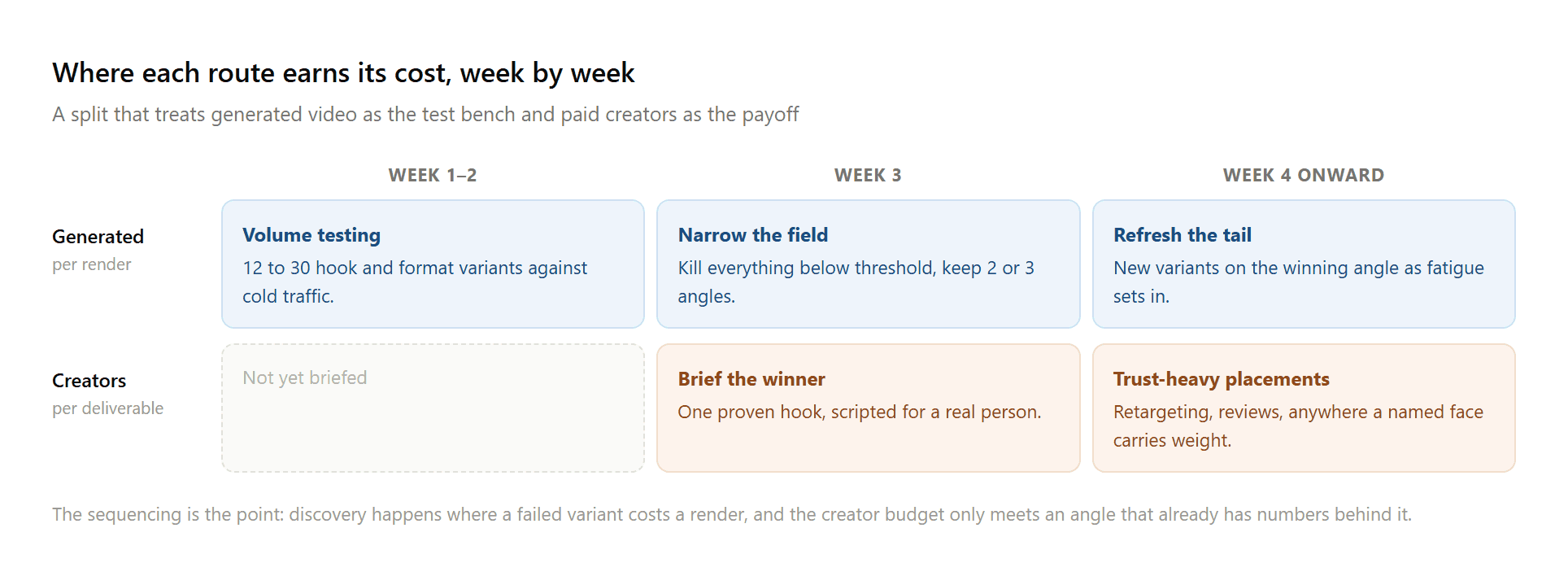
ให้ดำเนินการตามลำดับนั้น งบประมาณครีเอเตอร์จะพบกับฮุกที่ตรวจสอบแล้วเท่านั้น แบรนด์ที่ตามหาเอเจนซี่ครีเอทีฟที่ดีที่สุดสำหรับการขยายการผลิตโฆษณา UGC มักต้องการผลลัพธ์นั้นมากกว่าตัวเลขผลผลิตที่สูงขึ้น: แอสเซ็ตที่สูญเปล่าน้อยลงต่อวินเนอร์ที่เปิดตัว แนวทางเมทริกซ์ฮุกและรูปแบบโฆษณา ครอบคลุมวิธีวางแผนเวฟทดสอบเพื่อให้วาเรียนต์ยังเปรียบเทียบกันได้ และ เพลย์บุกรีทาร์เก็ตติ้งตามสเตจ ครอบคลุมสิ่งที่ต้องทำกับวินเนอร์เมื่อคุณมีแล้ว
ข้อควรระวังหนึ่งที่ควรพูดตรง ๆ เอเจนซี่ UGC แบบ AI ที่สัญญาว่าจะให้สัญญาณความน่าเชื่อถือระดับครีเอเตอร์กำลังขายเกินจริง พรีเซนเตอร์ที่สร้างขึ้นไม่ใช่ลูกค้า และไม่สามารถกล่าวอ้างแบบรีวิวเกี่ยวกับผลิตภัณฑ์ที่พวกเขาไม่ได้ใช้ ในจุดที่ความแท้จริงคือแอสเซ็ต คนจริงยังคงเป็นสิ่งที่ต้องซื้อ
คำถามที่พบบ่อย
เอเจนซี่วิดีโอ UGC ทำอะไร?
เอเจนซี่วิดีโอ UGC แบบบริการเต็มรูปแบบจัดการห่วงโซ่การผลิตเอนด์ทูเอนด์: เขียนบรีฟครีเอทีฟ หาและคัดกรองครีเอเตอร์ ประสานงานการจัดส่งผลิตภัณฑ์ ตรวจสอบฟุตเทจ ตัดต่อ เจรจาสิทธิ์การใช้งาน และส่งมอบแอสเซ็ตที่ปรับขนาดสำหรับตำแหน่งโฆษณาของคุณ มีโมเดลที่เบากว่า และมาร์เก็ตเพลสหรือข้อตกลงฟรีแลนซ์จะปล่อยหลายขั้นตอนเหล่านั้นไว้กับคุณ
เอเจนซี่โฆษณา UGC คิดเงินต่อวิดีโอเท่าไร?
อัตราครีเอเตอร์โดยทั่วไปอยู่ระหว่าง 150 ถึง 300 ดอลลาร์ต่อวิดีโอ โดยค่ามัธยฐานประมาณ 175 ดอลลาร์ ตามคู่มืออัตราเดือนเมษายน 2025 ของ Influee ราคาเอเจนซี่สูงกว่านั้น โดยสิทธิ์การใช้งานเพิ่ม 30% ถึง 50% ของอัตราพื้นฐาน การไวท์ลิสต์เพิ่ม 30% ของอัตราพื้นฐานต่อเดือน และวาเรียนต์ฮุกพิเศษแต่ละตัวคิดเงินแยกต่างหาก ขั้นต่ำแคมเปญของเอเจนซี่ที่ประกาศไว้อยู่ระหว่างประมาณ 1,000 ถึง 20,000 ดอลลาร์ขึ้นไป
เอเจนซี่โฆษณา UGC แบบ AI คืออะไร?
คำเรียกนี้ครอบคลุมสองสิ่งที่แตกต่างกันมาก บางแห่งเป็นเอเจนซี่ทั่วไปที่ใช้เครื่องมือ AI ภายในเวิร์กโฟลว์ของมนุษย์ บางแห่งเป็นผลิตภัณฑ์ซอฟต์แวร์ที่สร้างวิดีโอจากรูปภาพผลิตภัณฑ์และบรีฟโดยไม่มีครีเอเตอร์เกี่ยวข้อง ถามว่าคุณกำลังซื้อแบบไหน เพราะผลงานส่งมอบ สถานะสิทธิ์ และภาระผูกพันในการเปิดเผยข้อมูลต่างกันทั้งหมด
การผลิตโฆษณา UGC ภายในองค์กรถูกกว่าไหม?
ต่อแอสเซ็ต ใช่ ถูกกว่ามาก: การสร้างคลิปมีต้นทุนไม่กี่เซนต์ถึงสองสามดอลลาร์ เทียบกับประมาณ 398 ดอลลาร์สำหรับแอสเซ็ตครีเอเตอร์ที่เคลียร์สิทธิ์ครบถ้วนหนึ่งชิ้น สิ่งที่ซื้อไม่ได้คือใบหน้าของคนจริงและสิทธิ์อนุญาตให้นำไปใช้ ดังนั้นให้ถือว่าการสร้างในองค์กรเป็นชั้นทดสอบ มากกว่าที่จะใช้แทนทุกตำแหน่งโฆษณาโดยตรง
โฆษณา UGC ที่สร้างด้วย AI ต้องมีป้ายกำกับเปิดเผยข้อมูลหรือไม่?
กฎต่างกันตามแพลตฟอร์ม TikTok กำหนดให้คอนเทนต์ที่สร้างด้วย AI แบบสมจริงต้องมีป้ายกำกับ Meta พึ่งพาการตรวจจับ โดยเพิ่มป้าย "AI info" ให้กับงานครีเอทีฟ GenAI ที่ระบุได้ โดยการเปิดเผยตนเองแบบบังคับใช้เฉพาะโฆษณาที่เกี่ยวกับประเด็นทางสังคม การเลือกตั้ง และการเมือง ไม่ว่าทางไหน บัญชีโฆษณาเป็นของคุณ ดังนั้นจงสร้างขั้นตอนการเปิดเผยข้อมูลไว้ในเวิร์กโฟลว์ของคุณเอง และยืนยันเป็นลายลักษณ์อักษรว่าใครเป็นผู้ติดป้ายเมื่อมีการเอาท์ซอร์สการผลิต
บทสรุป
เงินส่วนใหญ่ในสัญญา UGC ไม่อยู่ในตัวเลขที่ผู้คนต่อรองกัน มันอยู่ในกรอบระยะเวลาสิทธิ์ เดือนที่ไวท์ลิสต์ นิยามของการแก้ไข และใครเป็นเจ้าของไฟล์ดิบ นำสี่อย่างนั้นเข้ามาในการโทรครั้งแรก แล้วใบเสนอราคาที่คุณเปรียบเทียบอยู่ก็จะกลายเป็นสิ่งที่เทียบเคียงกันได้ทันที
อีกครึ่งหนึ่งของการตัดสินใจคือการจัดลำดับ ทดสอบอย่างประหยัด หาแองเกิลที่ได้ผล แล้วใช้จ่ายงบประมาณครีเอเตอร์กับฮุกหนึ่งเดียวที่สมควรได้รับ เอเจนซี่วิดีโอ UGC คุ้มทุกดอลลาร์เมื่อผลิตสิ่งที่คุณรู้อยู่แล้วว่าแปลง และเป็นวิธีแพง ๆ ในการทดลองเมื่อมันไม่ผลิตสิ่งนั้น





