

Seedream v5.0 Flash: Up to 16 Layers
Seedream v5.0 Flash is ByteDance’s image model family for generation, editing, and structured asset extraction. Its layer decomposition endpoint separates one image into a base image and up to 16 ordered PNG layers, complete with bounding boxes, names, descriptions, and z-index data. Atlas Cloud provides pay-as-you-go access across three dedicated endpoints with a verified standard base price of $0.018. Start building today.
Seedream V5.0 Flash is developed by ByteDance. Atlas Cloud (operated by Atlas Cloud AI LLC) provides access to it and does not own it. All trademarks belong to their respective owners.
Explore the Leading Seedream v5.0 Flash: Up to 16 Layers
Atlas Cloud provides you with the latest industry-leading creative models.


Seedream v5.0 Flash Image Workflows Compared
Compare each Seedream v5.0 Flash endpoint by input, output, core capabilities, and production use cases.
| Modality | Description |
|---|---|
| Seedream v5.0 Flash Layer Decomposition API (Image To Layers) | Turn one image into a base image and up to 16 transparent PNG layers, complete with stacking order, bounding boxes, names, and descriptions. Use the structured output for rapid design asset extraction and bulk production workflows. |
| Seedream v5.0 Flash Edit API (Image To Image) | Designed for single and multi-reference editing, this endpoint processes up to 10 input images and supports precise modifications with transparent-background output. It suits latency-sensitive mobile assistants, UGC tools, and large-scale content production. |
| Seedream v5.0 Flash Text-to-Image API (Text To Image) | From a text prompt, the endpoint generates one image in seconds at 1K, 1.5K, or 2K resolution. Its high-speed, cost-optimized generation fits mobile assistant experiences, UGC creation, and bulk image production. |
Seedream v5.0 Flash: Speed Across Every Image Workflow
Seedream v5.0 Flash combines image generation in seconds, precision editing with up to 10 references, and decomposition into a base image plus up to 16 transparent PNG layers, all accessible through Atlas Cloud with a standard base price of $0.018 per call.

Seedream v5.0 Flash at Production Speed
Seedream v5.0 Flash turns a text prompt into one image in seconds, with 1K, 1.5K, and 2K output tiers. Its high-speed, cost-optimized design shortens the path from an idea to a usable visual. Choose the resolution that fits a mobile surface, social asset, or production batch without changing models. This makes frequent generation practical for responsive assistants, UGC tools, and high-volume content pipelines.
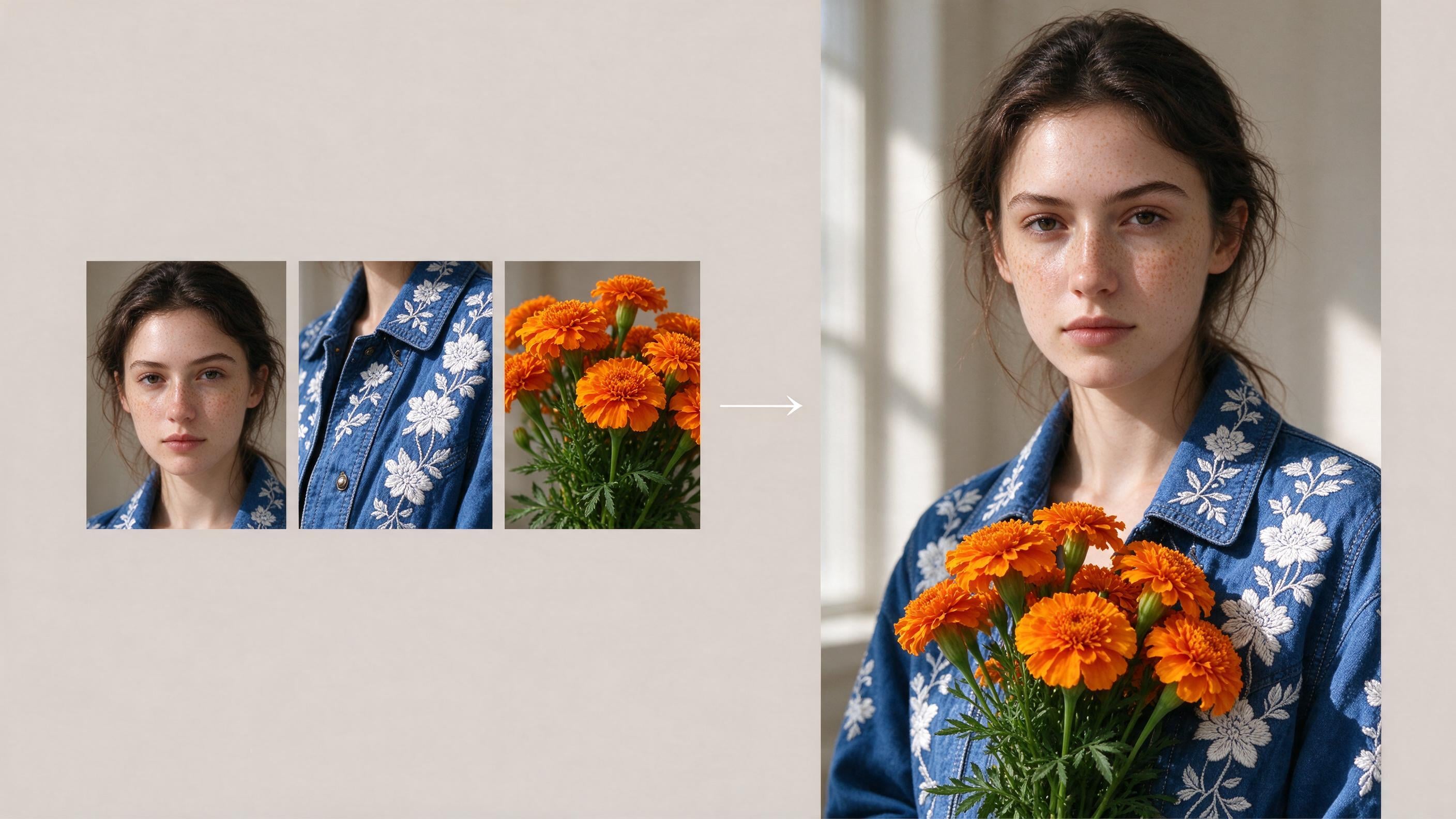
Precision Editing with 10 References
Guide Seedream v5.0 Flash Edit with a single source image or as many as 10 references. Precise editing lets a prompt reshape selected visual details, while multiple inputs guide the requested transformation across a controlled workflow. Output with a transparent background keeps the result ready for downstream layout work. It suits mobile assistants, UGC editors, and repeatable campaign production.

Seedream v5.0 Flash Layer Decomposition
Break one finished image into a base image plus up to 16 transparent PNG layers with Seedream v5.0 Flash. Each layer carries stacking order through z_index, bounding boxes, a name, and a description. These structured outputs make isolated elements easier to organize and reuse. The workflow fits design-asset extraction, compositing, and bulk creative operations at scale.

Three Image Workflows, One Family
Move from generation to editing and layer decomposition without leaving the Seedream v5.0 Flash family. Use text-to-image for new visuals, Edit for single- or multi-reference changes, and Layer Decomposition for reusable assets. The three purpose-built endpoints share a high-speed, cost-optimized production focus. This breadth supports responsive apps and bulk content systems with one consistent model family.

One Key, $0.018 Base Price
Run all three Seedream v5.0 Flash endpoints on Atlas Cloud with a verified standard base price of $0.018 per call. Pay-as-you-go billing keeps experiments and production volume aligned with actual usage, while one OpenAI-compatible key simplifies access across Atlas Cloud. Developers can prototype generation, editing, and layer workflows without adding separate provider accounts to their stack.
Seedream v5.0 Flash in a Same Prompt Image Showdown
See how Seedream v5.0 Flash, a leading external alternative, and its previous generation interpret two identical prompts across documentary photography and crafted still life.
Editorial-grade documentary fashion photograph, captured from a drone in a perfectly vertical top-down view above coastal salt pans: four young salt workers struggle together to unfurl an extraordinarily long bolt of vermilion cotton across the crystalline basins at the decisive instant when a sudden sea gust twists the fabric into a colossal dynamic spiral; one worker is yanked off balance and stumbling, while a wooden salt rake and a bamboo basket simultaneously skid toward the edge of a shallow crystallization pool, creating tense yet subtly absurd physical comedy. Make every person’s pose, grip, limb placement, weight shift, and interaction anatomically clear and mechanically believable; render convincing wind-driven fabric physics, with sections stretched taut, billowing, curling, and dragging wetly across the salt. Noon hard sunlight from one precise direction, crisp short shadows, bright restrained exposure. The rectilinear salt-pond grid forms bold repeating geometry, while the sweeping red fabric cuts diagonally across the horizontal frame as a powerful spiral and leading curve. Strict limited palette of salt white, pale cyan, and vermilion only; no stray colors. Exceptional tactile realism: granular salt crystals, damp cotton weave and heavy wet folds, weathered wooden tools, woven bamboo, translucent shallow brine, thin specular reflections and subtle ripples. Graphic fashion-editorial discipline fused with candid photojournalistic immediacy, natural young faces and skin, slight motion blur only at the fastest fabric edges, clean tonal separation, refined film grain, no posing, no text, no borders, no greasy over-rendering, no HDR look, no plastic skin, no muddy colors, no ubiquitous glow, no cheap epic atmosphere — ultra-wide landscape composition, wide 16:9 aspect ratio, full-bleed.

Generated with Seedream v5.0 Flash Text-to-Image on Atlas Cloud

Generated with Nano Banana 2 Text-to-Image on Atlas Cloud

Generated with Seedream v4.7 Text-to-Image on Atlas Cloud
1990s nighttime editorial fashion photograph inside a closed retro supermarket: three stylish young adults in tomato-red, cream-yellow, and ice-blue outfits wear colorful quad roller skates and hold hands while making a sudden sharp turn down a refrigerated aisle; their connected arms, hands, and bodies form one clear, anatomically coherent chain, while the last skater nearly crashes into a carefully stacked pyramid of oranges. Capture the decisive instant as several oranges burst loose and roll toward the low-positioned camera, one fruit slightly out of focus in the extreme foreground; spontaneous wide-eyed surprise, laughter, and genuine imbalance, never posed. A large convex security mirror near the ceiling creates a strong frame-within-a-frame and shows the same three people, clothing colors, hand connections, orange spill, and direction of movement correctly reversed from its reflected viewpoint. Tilted shelf edges, freezer doors, and floor grout lines sweep diagonally across the entire image as dynamic leading lines. Hard on-camera flash freezes crisp faces, hands, skates, and flying fruit with authentic sharp-edged flash shadows, while cyan refrigerator light produces only a restrained trailing motion blur around wheels, loose fabric, and hair. Strict limited palette of tomato red, cream yellow, and ice blue, with natural orange fruit as the sole warm accent; clean color separation, no muddy tones. Rich tactile realism: brushed metal freezer trim, scuffed plastic packaging, densely stocked shelves, believable legible retro product names and price labels, worn terrazzo floor tiles, woven fabric grain, natural skin texture, subtle sweat and flyaway hair, fine 35mm film grain, slight halation, imperfect late-night snapshot energy. Low wide-angle perspective, 28mm lens, close foreground action, deep aisle perspective, candid flash exposure, premium 1990s fashion-magazine photography, photorealistic yet unpolished and alive. Avoid glossy plastic skin, greasy over-rendering, HDR micro-detail overload, excessive glow, neon-everything lighting, dirty color grading, cinematic “epic” effects, staged expressions, duplicated people, extra limbs or fingers, broken handholds, impossible reflections, unreadable text, floating products, or chaotic clutter without hierarchy. Wide horizontal 16:9 aspect ratio, edge-to-edge landscape composition, full-bleed.

Generated with Seedream v5.0 Flash Text-to-Image on Atlas Cloud

Generated with Nano Banana 2 Text-to-Image on Atlas Cloud
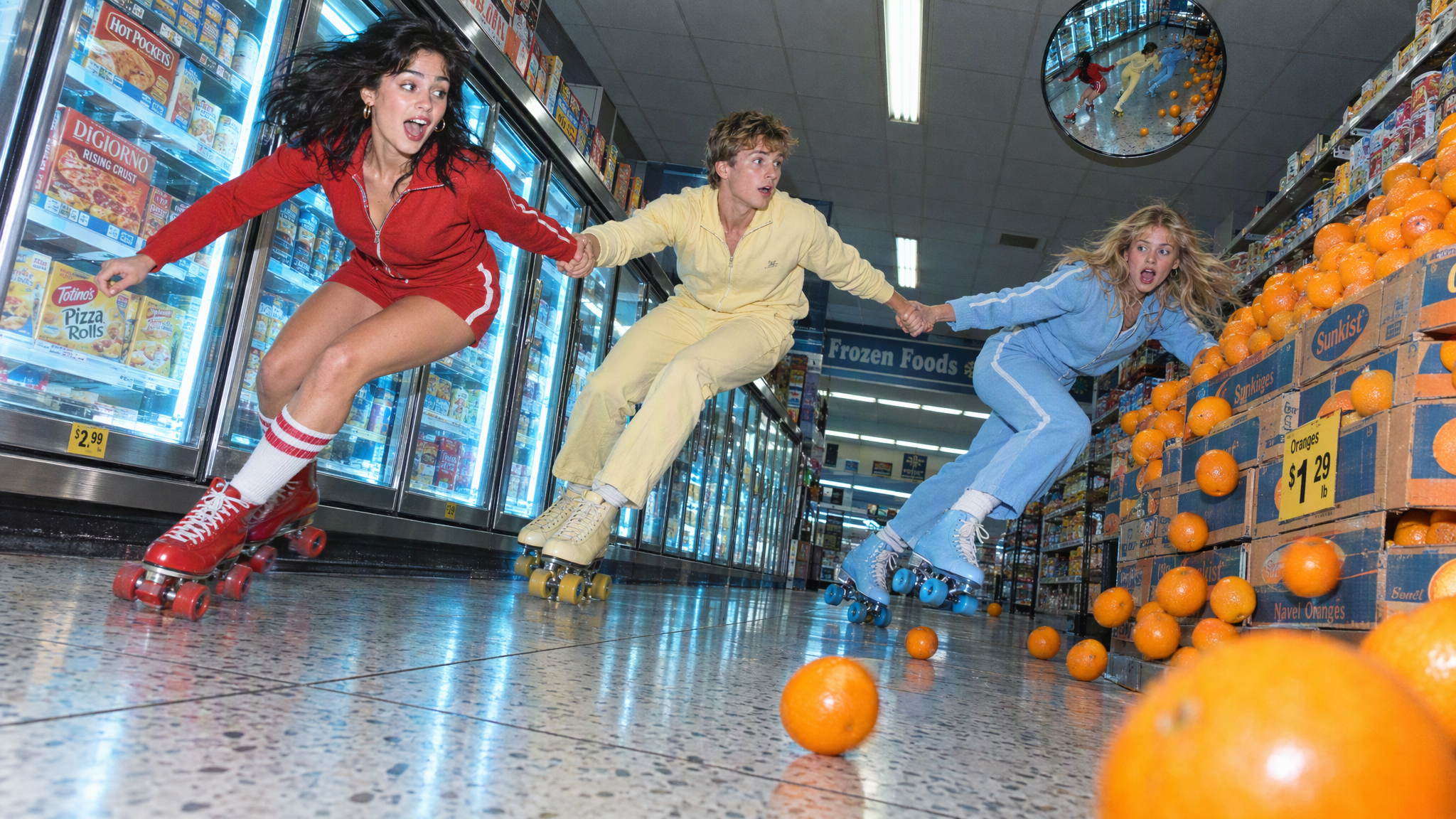
Generated with Seedream v4.7 Text-to-Image on Atlas Cloud
Build Faster Visual Products with Seedream v5.0 Flash
From mobile assistants and UGC tools to campaign production and editable design systems, Seedream v5.0 Flash turns prompts and reference images into fast visual workflows while decomposing finished images into reusable transparent layers.

Seedream v5.0 Flash Creative Apps
Seedream v5.0 Flash turns text prompts into 1K, 1.5K, or 2K images in seconds. Creative app developers can serve rapid concept previews, personalized illustrations, and responsive visual experiences inside user facing products.

Campaign Visual Pipelines
Generate campaign concepts from text, then apply precise edits to selected visuals through the same model family. Marketing teams can produce ads, social posts, thumbnails, and channel variations for bulk content pipelines.

Multi Reference Product Scenes
With up to 10 reference images, the edit endpoint can combine product, style, and scene guidance in one request. Commerce teams gain controlled product variations and campaign assets across multiple contexts.

Seedream v5.0 Flash Mobile Assistants
Need visual responses without slowing the interaction? Seedream v5.0 Flash generates a single image in seconds, helping mobile assistant teams deliver prompt based creation within latency sensitive experiences for everyday user requests.

Editable Asset Extraction
Turn a flat image into a base image plus up to 16 transparent PNG layers. Design systems can reuse named elements with stacking order, bounding boxes, and descriptions for compositing.

Seedream v5.0 Flash UGC Workflows
For high volume UGC production, use Seedream v5.0 Flash to generate or edit visuals at scale. Transparent background output helps creator platforms prepare stickers, cutouts, overlays, and reusable content elements.
Seedream v5.0 Flash Across Image API Workflows
Compare Seedream v5.0 Flash with four Atlas Cloud alternatives by workflow, image input capacity, output resolution, layer decomposition, and standard per-image pricing.
| Model | Workflow | Max Image Inputs | Max Output Resolution | Dedicated Layer Decomposition | Original Price |
|---|---|---|---|---|---|
| Seedream v5.0 Flash Text-to-Image | Text to image | - | 1K / 1.5K / 2K | - | $0.018/image |
| Seedream v5.0 Flash Edit | Image editing | 10 | - | - | $0.018/image |
| Seedream v5.0 Flash Layer Decomposition | Layer decomposition | 1 | - | √ | $0.018/image |
| MAI-Image-2.6-Flash Text-to-image | Text to image | - | Up to 1.5K | - | $0.044/image |
| MAI-Image-2.6-Flash Edit | Image editing | 5 | Up to 1.5K | - | $0.047/image |
| Qwen Image 3.0 Text-to-Image | Text to image | - | Up to 2048×2048 | - | $0.03/image |
| Qwen Image 3.0 Edit | Image editing | 3 | Up to 1440×1440 | - | $0.03/image |
How to Use Seedream v5.0 Flash: Up to 16 Layers on Atlas Cloud
Get started in minutes — follow these simple steps to integrate and deploy models through Atlas Cloud's platform.
Create an Atlas Cloud Account
Sign up at atlascloud.ai and complete verification. New users receive free credits to explore the platform and test models.
Why Use Seedream v5.0 Flash: Up to 16 Layers on Atlas Cloud
Combining the advanced Seedream v5.0 Flash: Up to 16 Layers models with Atlas Cloud's GPU-accelerated platform provides unmatched performance, scalability, and developer experience.
Performance & flexibility
Low Latency:
GPU-optimized inference for real-time reasoning.
Unified API:
Run Seedream v5.0 Flash: Up to 16 Layers, GPT, Gemini, and DeepSeek with one integration.
Transparent Pricing:
Predictable per-token billing with serverless options.
Enterprise & Scale
Developer Experience:
SDKs, analytics, fine-tuning tools, and templates.
Reliability:
99.99% uptime, RBAC, and compliance-ready logging.
Security & Compliance:
SOC 2 Type II, HIPAA alignment, data sovereignty in US.
Seedream v5.0 Flash FAQ
Seedream v5.0 Flash is ByteDance's image creation model optimized for speed and cost. On Atlas Cloud, the family includes separate endpoints for text to image generation, image editing, and layer decomposition. It suits mobile assistants, user generated content, and large scale production.
It can create an image from a text prompt, edit existing images with reference inputs, or separate a finished image into reusable visual layers. Choose the workflow that matches whether you are creating, revising, or extracting design assets.
To begin, create an Atlas Cloud API key and select the endpoint for your intended workflow. Submit the required inputs shown in that endpoint's Playground schema, and keep the API key on your server rather than exposing it in client applications.
Select bytedance/seedream-v5.0-flash/text-to-image for prompt based creation and bytedance/seedream-v5.0-flash/edit for reference guided changes. Use bytedance/seedream-v5.0-flash/layer-decomposition when you need editable transparent layers from an existing image.
Text to image generation supports 1K, 1.5K, and 2K output. Each request produces one image, allowing applications to choose the resolution that best fits their delivery and processing requirements.
The Edit endpoint accepts single reference workflows and multiple reference workflows with up to 10 images. It also supports transparent background output for assets that need to be placed into other designs.
Layer Decomposition splits one source image into a base image and up to 16 transparent PNG layers. Each layer includes its stacking order, bounding box, name, and description, making the result easier to organize in downstream design workflows.
Atlas Cloud lists a standard base price of $0.018 for each of the three Seedream v5.0 Flash endpoints. Billing is pay as you go, so review the displayed request cost before launching large production batches.
ByteDance positions Flash as offering the same core capabilities as Pro while generating images faster and at a lower cost. Flash is therefore the practical choice for applications that prioritize latency, throughput, and predictable production costs.
Explore More Families
Seedance 2.5
Seedance 2.5 API is now available on Atlas Cloud! It gives developers ByteDance's newest video model. It generates up to 30 seconds of native video in a single pass from text, a single image, or as many as 50 multimodal references, with synchronized audio and in-frame multilingual text. On Atlas Cloud you reach it through one key, with subject consistency and improved physics keeping long shots coherent. (Update: Seedance 2.5 1080P API Is Available NOW!)

Wan 3.0
Wan 3.0 API is the next generation of Alibaba's Wan video family, built to push long-form generation, multi-reference control, and audiovisual quality to new heights. Atlas Cloud already hosts Wan 2.7, 2.6, and 2.5, and Wan 3.0 runs on the same unified key with no separate setup. Start building today. Scroll down to the showcase to see what Wan 3.0 can create.
MiniMax H3
MiniMax H3 is MiniMax's multimodal video family for text, image, and reference guided creation. Across supported routes, it preserves subjects from reference media, offers flexible aspect ratios, and pairs generated sound with visuals through H3 Developer, with output profiles selected by endpoint. Atlas Cloud unifies the family behind one OpenAI-compatible key with transparent pay-as-you-go pricing from the standard rate of $0.038 per second. Start building today.
Seedream 5.0 Pro
Seedream 5.0 Pro API gives developers ByteDance's controllable image editing model on Atlas Cloud. It places edits precisely with anchors and coordinates, separates images into editable layers, fuses multiple references, and matches exact colors and materials, with multilingual text at 2K and 3K. On Atlas Cloud you reach it through one key!
Seedance 2.0
Seedance 2.0 is ByteDance’s production video model for precise shot creation. Turn prompts into video, animate a first-frame image with optional last-frame guidance, or shape results with reference media and optional web search. Atlas Cloud brings these workflows into one unified API with transparent pay-as-you-go pricing and one OpenAI-compatible key. Start building today.
GPT Image 2.5
The gpt-image-2.5 family from OpenAI gives developers a choice of Flare and Sunburst for production image workflows. Render at arbitrary resolutions up to 3840x2160 and select from five quality tiers, including xhigh and max, to match specific output requirements. Atlas Cloud provides ready-to-use REST inference with no cold starts and standard pricing from $0.004 per generation. Start building today.
GPT Image 2
The GPT Image 2 API gives developers access to OpenAI's latest image model, the successor to GPT Image 1.5. It generates and edits images with accurate text rendering across Latin and CJK scripts, plus strong composition for posters, mockups, and infographics. On Atlas Cloud you reach it through one unified API alongside 300+ models, with free credits, 99.99% uptime, and no OpenAI organization verification required.
Gemini Omni Flash
The gemini omni API brings Google DeepMind's natively multimodal Gemini Omni Flash family, including Gemini Omni 1.1 Flash, to developers. Create cinematic video with synchronized native audio, animate still images with precise start and end frame control, or revise existing footage through text guided edits that preserve untouched content. Atlas Cloud provides one OpenAI-compatible key, unified access, and transparent pay-as-you-go pricing. Start building today.
Grok Imagine
Grok Imagine Image is xAI's family for generating polished visuals and revising one or more reference images through natural language instructions. Its standard and quality endpoints cover text to image creation, single image changes, and indexed multi-image composition. Atlas Cloud brings these workflows into one API, with standard generation and editing priced at $0.02 per image. Start building today.
Google's most powerful creative models are all available on Atlas Cloud. Veo 3.1 delivers cinematic video generation, Nano Banana 2 powers high-fidelity image creation, and Gemini brings multimodal intelligence to every workflow. Access the full Google model suite through one API key with Day-0 availability and pay-as-you-go pricing.
Seedance 2.0 Mini
The Seedance 2.0 Mini API is the lightest, lowest-cost tier of ByteDance's Seedance video line, built for teams where throughput and unit cost matter more than maximum polish. Use it for batch generation, rapid prototyping, and draft passes, all through one OpenAI-compatible key on Atlas Cloud.
ByteDance
From cinematic video generation to high-fidelity image creation, ByteDance's most powerful models are live on Atlas Cloud. Run Seedance and Seedream at scale with the lowest inference pricing and zero infrastructure overhead.
Recommended Articles
Guides, tutorials, and product updates to help you get the most out of Atlas Cloud.





